Interesting Games of 2017: Games Telling Stories

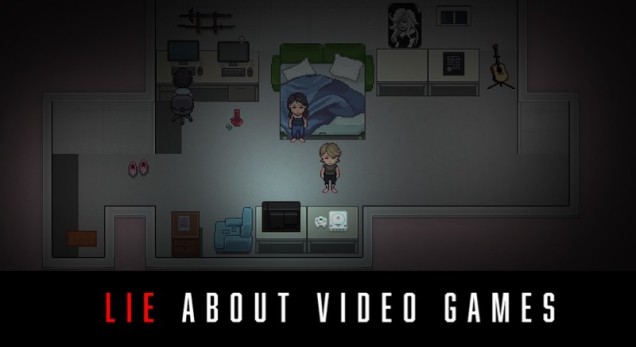
last_day_of_june_screenshot-02.jpg

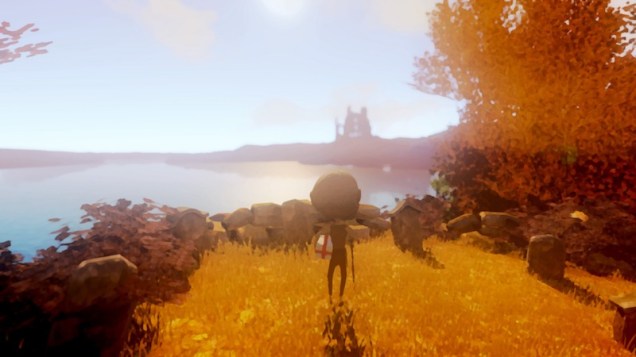
I’m facing a quickly-approaching deadline for some genuine academic writing, so I’ve got to put a cap on my efforts to play every game that came out in 2017. This is the final post of this series I have planned, and it’s admittedly a bit slapdash. The theme is basically just “remaining games that did interesting things with storytelling,” which is admittedly pretty broad. Still, good games in here.

Ground rules: Unlike in previous entries, I’m not going to include any games that got a mention in my mid-2017 round-up. My time is too tight to indulge in such redundancies.

Continue reading

Interesting Games of 2017: GUIness

emily_is_away_too_screenshot-02

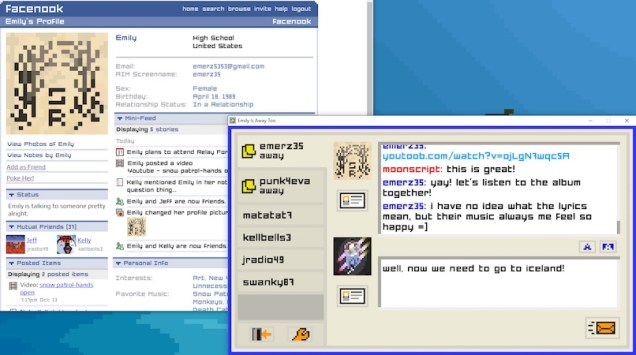
I first broached the topic of GUIness in the context of talking about cinema and television. In recent years, everyday, quotidian technology has thrown visual storytellers for a loop. Telephone conversations are well-built into the foundations of cinematic storytelling. Even the most mediocre director can successfully weave a phone conversation into a variety of scenarios, from suspense to romance.

Texting presents far more of a challenge. It’s sort of ironic, really: Even working within the medium of silent film, D. W. Griffith realized how powerfully cinematic a telephone conversation could be, as illustrated in his 1909 film The Lonely Villa. Today, though, texting makes some directors pine for the intertitle, that vestigal bit of cinematic vocabulary that lost most of its relevance with the coming of sound. The most advanced forms of experimentation along these lines have thrown out the traditional language of moving image storytelling altogether, instead telling stories by directly throwing GUIs on the screen.

Google’s 53-second “Parisian Love” ad for the 2010 Superbowl marked an early instance of this trend, but the style soon leaked out of advertising and into commercial narrative filmmaking. The experimental student film Noah (Walter Woodman and Patrick Cederberg, 2013) seems to have been a bellwether here. In its wake, both The Den (Zachary Donahue, 2013) and Unfriended (Leo Gambriadze, 2014) used the technique as a twist on the “found-footage” horror trope. The Modern Family episode “Connection Lost” (2015) brought the GUI style to mainstream television.

When I first considered this trend, I connected it to videogames in only the most slantwise manner. 2017 made me reconsider this, though. We are very clearly in the middle of a GUIness trend in gaming.

Continue reading

Interesting Games of 2017: The Personal Is (Still) The Political

butterfly_soup_screenshot-02.jpg

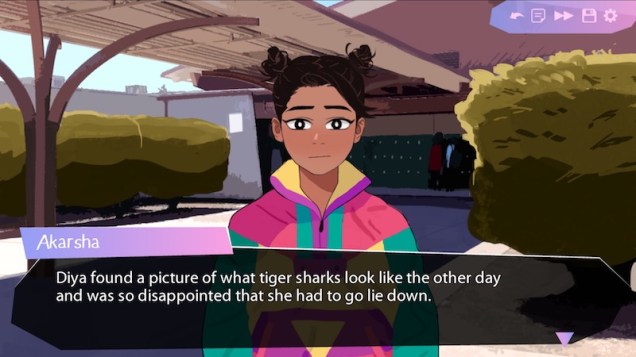
Back in November, I questioned rather “personal games” (or “zinester games,” or what have you) were still a thing. My provisional answer was that they weren’t, at least not in the well-defined “scene” sense that seemed to be the case around 2013–2013. There are simply far too many things being released these days. I can’t even keep up with everything itch.io recommends for me, let alone everything that’s actually put out there.

Still, though, if there’s less of a distinct personal game “scene” these days, no one would deny that there are still small, personal, semi-autobiographical games dealing with delicate subjects out there. There’s just too many of them. But that’s one of the things that criticism is for: to curate. I’ve decided to do my part. The most interesting (which is not necessarily to say successful) personal games I’ve encountered in 2017 are below the fold.

Continue reading

Interesting Games of 2017: The Dream of the ’90s is Alive in Portland in 2017

dekker_screenshot-header-image

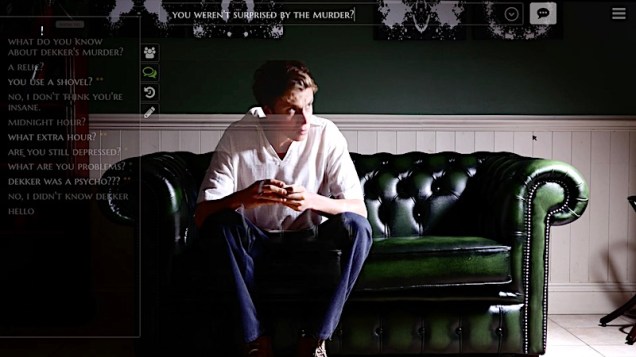
In the past 12 months, three full-motion video adventure games were released. The big tech companies are in the midst of a full-on push to get us to strap VR headsets to our face. And Hidden Agenda (Supermassive Games, 2017), specially crafted to highlight Sony’s brand new PlayLink system, looks for all the world like an evolutionary outgrowth of I’m Your Man (Bob Bejan, 1992), Loews’ experiment in audience-polling interactive cinema.

To quote a 1990s-era television series that itself returned in 2017: What year is it? Because it certainly seems that the game industry is partying like it’s 1993. At this rate, it’s astonishing that we haven’t seen the release of a “3DO Classic” console to accompany the SNES Classic Edition.

I have been observing this trend more than I have been directly participating in it.(Despite positioning myself as a scholar specializing on the intersection of cinema and videogames, I haven’t yet gotten a group together to play Hidden Agenda, and I’ve fallen behind on the stead stream of FMV games.) Still, though, the trend has been noteworthy enough to comment upon as the year wraps up. Below the fold you’ll find two capsule reviews of things that piqued my interest.

Continue reading

Interesting Games of 2017: Six Worthy Follow-ups

finding_paradise_screenshot-02

Among the inordinate number of truly superb games released in 2017 were some hotly-anticipated (by me, anyway) follow-ups to indie games of past years. Some were sequels. Others were sophomore efforts. Whichever the case, 2017 was a very good year for promising indie developers releasing something new after a couple years of silence (or, heck, three or four or five years of silence), and having that new release not disappoint. Below the fold are my six favorite releases that followed up on the promise of something a developer made before.

Continue reading

Interesting Games of 2017: Labor Party

infra_screenshot-03

‘Tis that time again: the waning days of December, when the unwrapping of gifts is accompanied by the wrapping-up of a year. I have been trying to keep up with interesting releases this year, and over the next several days I will be attempting a final run-down.

(Just to be clear: “Interesting” is my way of circumventing the “best” trap. There are hundreds of voices you could find promising to reveal the “best” games of the year. These, by contrast, are games that made me think—about the subject matter presented, and/or the possibilities and limitations of the medium. Some of them are noble failures. All of them deserved to be remembered in some way, as a game that contributed to the medium in 2017.)

These little retrospectives will undoubtedly stretch into January, as there have been exciting releases stretching all the way into December (Finding Paradise!) that I will need to catch up on. 2017 has been, overall, exceptionally chock-full of exciting indie releases. Back when I was doing my “Games of the Decade” retrospective, I wrote that, following tremendous excitement about the indie scene in 2012–2013, the diabolical duo of Gamergate and the Trump election put a damper on my naïve enthusiasm for this budding art form. And yet, while the current moment certainly finds me hardened, pessimistic, and politically preoccupied, I also can’t deny that 2016 and 2017 have witnessed the release of an inordinate number of truly superb games. It really does seem that the medium is rediscovering its creative mojo, a few years after everyone had to go into hiding from being harassed by ‘gaters. Best of times, worst of times, and all that.

Anyway, I have a lot of ground to cover, and I’ve chosen to split my retrospective into themed posts. Up today: games about labor, a topic I have developed something of an interest in over the course of 2017.

Continue reading

Let’s Study Tacoma

Hello, dear readers. It’s been a while since my last post, and to make up for the gap, I have come bearing a video. Specifically, another video in my “Let’s Study” series. This one is fairly short, zooming in on the technique of “scrubbable narrative” in Tacoma (The Fullbright Company, 2017).

Special thanks to Amy Stebbins on this one, who directed me Alan Alston’s 2013 article “Audience Participation and Neoliberal Value: Risk, Agency and Responsibility in Immersive Theatre,” which ended up forming the backbone of most of the observations in this one.

As always, transcript below the jump.

Continue reading

Meta/stasis: Little Red Lie

little_red_lie_header_image

Are “personal games” a thing, in 2017?

They most certainly were a thing back in 2013, as evinced here, and here, and here. I think the case can be made that they were still a thing in January 2016, when That Dragon, Cancer, one of the most buzzed-about “personal games” in existence, finally released. But are they a thing in 2017?

Signs point to “no.” Not in the sense that people stopped making them—au contraire. What happened was that the floodgates opened. Digital distribution made its way to the masses, in the form of itch.io, and Steam’s post-Greenlight non-exclusivity. Twine went from a footnote in Anna Anthropy’s Rise of the Videogame Zinesters to a designated week in every digital media course offered in North America. People are even making and distributing dreary anti-consumerist Super Mario Maker levels.

So, the games themselves have not abated. But the writing about them, the treatment of them as a definable “scene”: yeah, I think that has gone away. Part of this might be about queasy caution among game journalists, who pointedly remember how a non-existent review of Zoë Quinn’s Depression Quest (2013) sparked Gamergate. But mostly, I think, it’s that there are now just far too many of these games to keep track of, and treat as a coherent thing. Now that seemingly everyone is making games about their deepest and most private anxieties, there is little incentive to build any sort of critical consensus on how to survey the how to survey the zinester scene, who to determine what games are worth checking out (if only to pointedly critique), and which creators should be checked in on every now and then, to see if they’ve done anything interesting.

Case in point: in 2013, Will O’Neill released Actual Sunlight. The game became a central text in the conversation around “personal games” movement, and cemented O’Neill as a figure to watch in the interactive fiction/visual novel scene. Fast forward to June of 2017. Will O’Neill (now operating under the moniker WZO Games Inc.) releases Little Red Lie, to absolutely no fanfare whatsoever. It is by sheer chance that it didn’t slip under my radar entirely. As of this writing in November, I have found precious little writing about it anywhere online.

Which is a shame, because Little Red Lie deserves to be talked about. So I’m going to do my own part.

Continue reading

Wii Hardly Knew U

wii_u_miiverse_main_menu

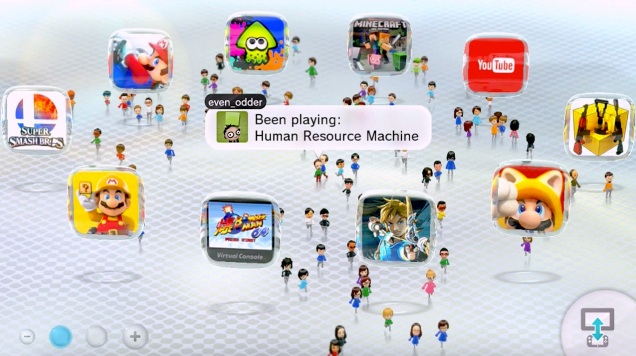
So, last night, Nintendo pulled the plug on its Miiverse social network. This means I just lost a convenient method to take screenshots of Wii U games. Not only that, I also lost the only method I had to take screenshots of the video feed on the Wii U Gamepad.* I hope the screenshots I’ve saved so far are enough to illustrate any future writing!

Of course, we could ask why players ever needed to connect to a social network to take screenshots of a game in the first place. (Certainly, the ever-reliable twelve seconds required to reach the Miiverse servers was never welcome.)

But, in honor of its passing, let’s cut the Miiverse some slack. The Wii U was, after all, the first console to launch with a built-in screenshot taking mechanism, catching up to Steam’s well-worn “F12” key. And it remained, up until last night, admirably responsive. Despite the network-induced downtime, you were still guaranteed to capture the exact frame up on the screen when your thumb hit the “home” button, with none of the guesswork-inducing delay of the PlayStation 4’s “share” function.

That’s not the only feature the Wii U sported that was demonstrably superior to those of its competitors. It gave the world the first web browser for a home console that didn’t completely suck. To this day, I still curse the Steam and PS4 browsers for not auto-filling your browser search bar with the game you have suspended, a cherished Wii U feature. And the notion that strategy tips posted on Miiverse would transform every game on the console into a pseudo Souls-like was intriguing, even if never got implemented beyond a few choice first-party titles like Super Mario 3D World.

Ah, and now I’m getting all misty-eyed. I missed a prime moment to post a retrospective on the Wii U console, back in March when the Switch launched. But the Miiverse’s death seems like a worthy milestone, so let’s commemorate.

Continue reading

Less Efficient Means

less_efficient_means_post_header_image

In The Grasshopper: Games, Life and Utopia, Bernard Suits offers the following definition of a game:

[T]o play a game is to engage in activity directed towards bringing about a specific state of affairs, using only means permitted by rules, where the rules prohibit more efficient in favour of less efficient means, and where such rules are accepted just because they make possible such activity.[i]

What does Suits mean by the favoring of “less efficient means“? Well, we could imagine a reductio ad absurdum version of any given game, in which players truly want nothing more than to achieve the game’s end goal. Suits offers this famous description of golf: “if my end were simply to get a ball into a number of holes in the ground, I would not be likely to use a golf club in order to achieve it, nor would I stand at a considerable distance from each hole.”[ii] Of course, the real goal of golf is not to get a ball into holes in the ground. The real goal of golf is to be good at … well, golfing. This leads Suits to his pithiest formulation: “playing a game is the voluntary attempt to overcome unnecessary obstacles.”[iii] Games aren’t really about their purported end goals. They are about consenting to manufactured inefficiencies, accepted as the constraints that make play possible.

One means of introducing “less efficient means” into the completion of a task is by using deliberately abstruse user-experience design. We see this in analog game design in classic party games like Twister or Operation. We see this in digital game design in the fumblecore genre, which I have written about before.

Today, I’ll be writing about two games, both of which harness deliberately inefficient control schemes as a key component of user experience: Affordable Space Adventures (KnapNok Games, 2015) and Duskers (Misfits Attic, 2016). Neither precisely qualifies as “fumblecore” (at least according to my own definition), as neither involves the control of a human body. Instead, both games task players with piloting spacefaring vessels, using a technologically-aided science-fiction setup to justify their cumbersome controls.

Despite this congruence in abstract terms, you’d be hard pressed to find two games more tonally divergent, which made pairing them together even more irresistible.
Continue reading