Inscrutability in Game Design: Perils and Possibilites

rooftop_cop_screenshot_01

Ian here—

Earlier this week, I sat down with some friends to play David OReilly’s Everything (2017). We were all suitably hyped, and ready for an evening of being different things while chuckling over the political indefensibility of object-oriented ontology. (Yes, really. We’re those people.)

But our evening hit a snag. Somewhere along the line, in our first playthrough, beginning as a cougar, we encountered a weird bug. One of the little “gain a new ability” thought bubbles failed to pop up in the environment. No matter how far we traveled, or how many objects’ thoughts we listened to, we simply could not unlock the ability to scale up or down into bigger or smaller entities. We were doomed to be a cougar. (Or, cougars, rather. We were able to expand our ranks, and become about a dozen cougars, rolling across the rocky landscape. But being a dozen rolling cougars is small consolation in a game that promises that you can be, well, everything.) For 75 minutes, we wailed at the screen. “I thought you could be lint particles and galaxies and stuff!”

We tried, to no avail, to look up walkthroughs for Everything. Everywhere we looked, we found glowing reviews of how chill the game was, how it allowed you to sit back and let the experience of being everything wash over you. We couldn’t fathom how we got stuck in a game with no real objectives. To pour salt in the wound, the game seemed to be actively mocking us. “As long as you keep moving, in any direction you choose,” thought a tree, “that will take you where you need to go.” “Over time,” thought a rock, “you might find there’s no right or wrong path to take here.” We were seriously stuck, and the only feedback we were getting were Zen aphorisms that told us to take it easy and not worry so much.

Eventually, we deleted our save file and started over. Thankfully, this solved the problem, and we spent the rest of the evening enraptured. But it did get me thinking about the trickiness presented by purposefully inscrutable game design.

Continue reading

A Practical Guide to Gone Home

Gone_Home_header_image_family_portrait.jpg

Ian here—

Two weeks ago, I taught Gone Home (The Fullbright Company, 2013) for my “Frames, Claims and Videogames” course. I hadn’t played the game in quite some time, so, in the run-up to the course, I re-played it, searching through the house exhaustively, reminding myself of where every last note and prop was, re-acquainting myself with the ins and outs of everyone’s story. Taking some notes, it occurred to me that it would be nice if there was a guide to it online. Not just a guide to picking up all of the items that give you achievements, or something like that—there are plenty of those online, already. Rather, a guide to the stories Gone Home tells, and where exactly you can find the environmental elements that move those stories forward, and flesh it out.

Well, I guess it falls to me to create what I’m looking for. Again.

My guide to Liz Ryerson’s Problem Attic (2013) was just a walkthrough. This is a bit more, as I have specifically designed it to aid in things like class prep and analysis. It isn’t, by itself, analysis, but tends closer to that direction than the Problem Attic one does. (I’d place it roughly in the realm of my Virginia videos.) Enjoy!

Continue reading

A Practical Guide to Problem Attic

problem_attic_header_image

Ian here—

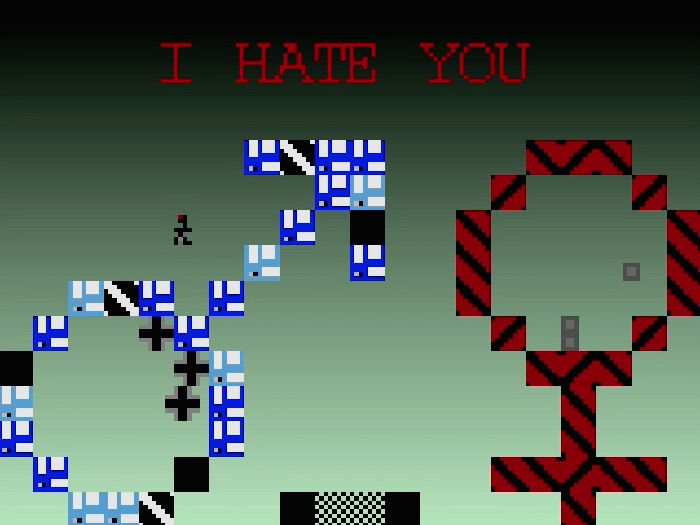
Liz Ryerson’s Problem Attic (2013) is a classic of the personal games movement. It is also notoriously difficult, for a number of overlapping reasons. I have come to realize that there are no real walkthroughs of it online, to help players that might be interested in examining Ryerson’s game and seriously considering its themes, but simply cannot get through an especially tricky area without help. I have decided to rectify this, before I teach the game for a class.

If you are looking for pedagogical notes or analysis, be forewarned: there will be none of that in in this post. This is a walkthrough, pure and simple. I’m planning on posting something more genuinely analytical on this game in the weeks ahead, but first I thought I’d do the world a public service. (If only making walkthroughs was something one could put on a CV…)

Continue reading

Five Questions About We Are Chicago

we_are_chicago_screenshot_02

Ian here—

Wow, okay, so, deep breaths. Let me repeat the mantra: “I critique, because I care.”

We Are Chicago (Culture Shock Games, 2017) arrives at very particular time for me. I just finished up with a panel on Chicago game cultures for SCMS 2017, and I have also been working through some ideas on the limits of the concept of “empathy” in games.

Given these two facts, there’s no real way I could get away with not playing it, and not taking a couple of moments to try an translate my thoughts on it into some coherent writing. This task, though, is one that needs to be approached with care. In order to be fair, an acknowledgment of the commendable intentions of Culture Shock games must be balanced with a corresponding acknowledgment of the very real shortcomings of their final product. It does nobody any good to mince words, and to pretend that intention can overcome execution.

So, buckle up. I have five questions to ask about We Are Chicago.

Continue reading

Feeling Through Computers: Videogames and the Bleeding Edge of Empathy

feeling_through_computers_header_image_GIF

Ian here—

What follows is an invited talk I gave last month at a university that will remain unnamed. Here, things get a little awkward: the talk in question was actually a job talk, and I am technically still waiting to hear back on the school’s final decision. Hence, the location of the talk remaining unnamed.

Originally, I was going to wait to post this talk until I had heard official word back on the status of the position (whether that news was good, or bad). I’ve decided to post it now, though, mostly because I attended an excellent panel at SCMS 2017, “Video Games and Queer Affect,” chaired by Bonnie Ruberg (an old compatriot of mine from Bard College) with papers by Whitney Pow (with whom I co-organized this conference) and Diana Pozo. Bonnie and Diana’s papers, especially, shared considerable overlap with the trends outlined here, down to including some of same case studies. It seems, then, that this material is very “of the moment,” and I didn’t want to let the opportunity to make is publicly available pass. I’m planning on moving this material forward into an article in the coming months. It’s exciting to be part of a community of peers who finds it as interesting as I do, and I’m definitely going to alter the direction and focus of aspects of this piece in response to the work I saw happening on the panel.

Continue reading

The Process Genre in Videogames: Sunset

sunset_screenshot_header_image
In all seriousness, call your elected representatives and tell them to oppose defunding the NEA and NEH.

Ian here—

This post is part of a series that borrows the term process genre from Salomé Aguilera Skvirsky’s work in cinema studies, and explores its utility for videogame analysis. A quick definition: “process genre” films are films about labor, films that focus on processes of doing and making, that are fascinated with seeing tasks through to their completion. They are deliberately paced, meditative, and often political, in that they cast a penetrating eye on labor conditions. Are there games that the same chords? Posts in the series so far can be seen here.

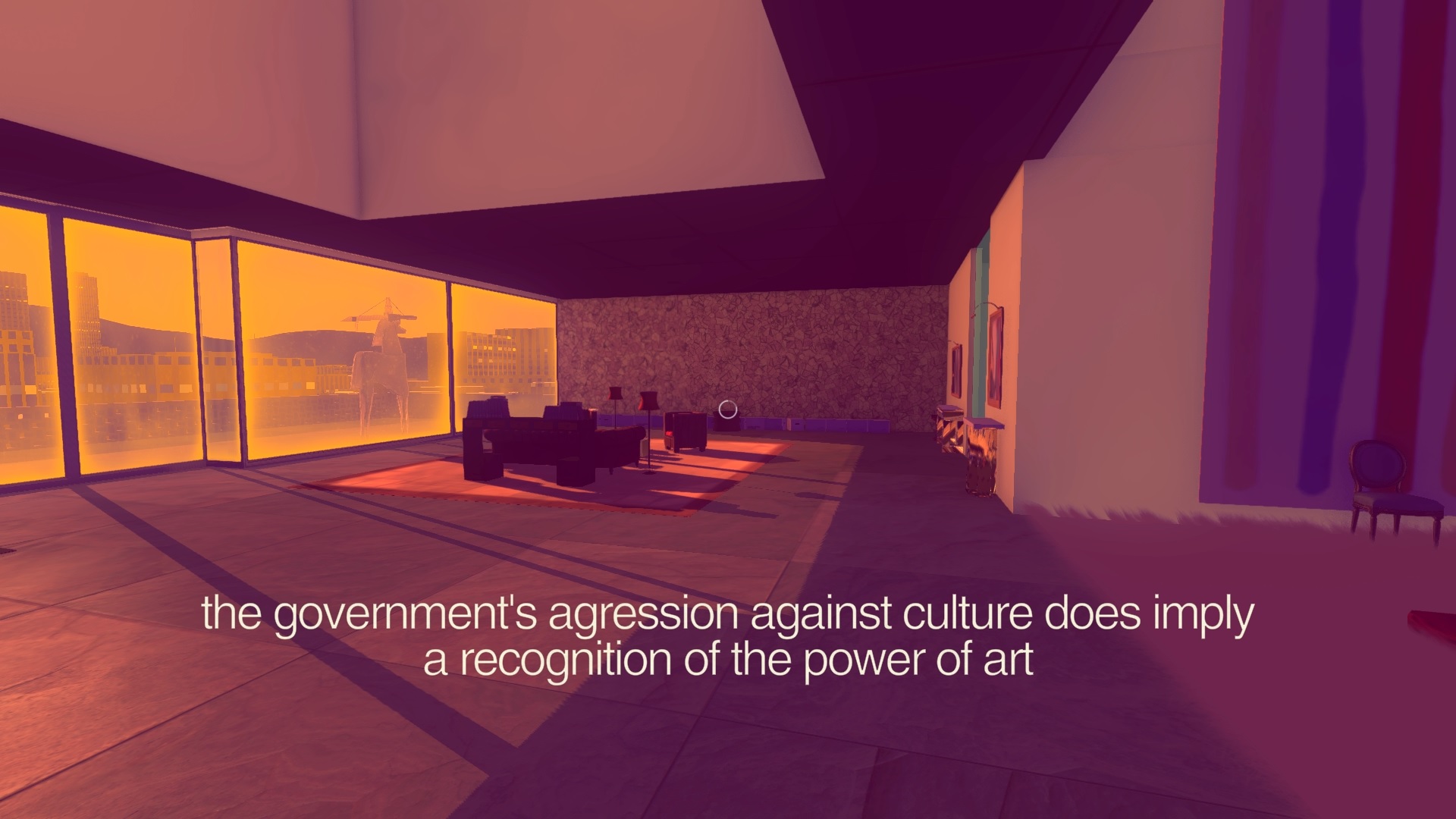
I reserve the right to sporadically post future entries in this series, but with Sunset (Tale of Tales, 2015), it really does feel as if things have come full circle. As I laid out in the first post in this series, the process genre finds its most archetypal manifestation in Belgian filmmaker Chantal Akerman’s Jeanne Dielman, 23 Commerce Quay, 1080 Brussels (1975), and Skvirsky has been tracking its development in contemporary Latin American cinema. Sunset was created by Belgian artist duo Auriea Harvey and Michaël Samyn, and is about the daily life of a housekeeper in a (fictional) Latin American country. The parallels are easily drawn, but there’s also more going on here than this brief description suggests.

Continue reading

Misty-eyed Modernism

Ian here—

In 1982, longtime Village Voice film critic J. Hoberman penned a famous essay entitled “Vulgar Modernism.” In it, he pointed out that medium-specific reflexivity—the use of “art to call attention to art” that Clement Greenberg proposed as the defining feature of modernist painting—was, in fact, everywhere in American mass culture in the 1940s and 1950s.[i] It was in Tex Avery and Chuck Jones’ Daffy Duck cartoons, chock to the brim with distanciation jokes and forthright acknowledgements of film form. It was in Bill Elder’s Mad Magazine cartoons, parodies that sometimes literally broke through their own frame. Hoberman coined the term vulgar modernism to name this “popular, ironic, somewhat dehumanized mode reflexively concerned with the specific properties of its medium or the conditions of its making.”[ii] Vulgar modernist works hold no pretensions toward being anything other than mass culture, but they demonstrate an astute awareness of the history of their own medium, and puckishly call attention to its conventions.

Hoberman’s essay is a helpful reminder that artistic devices don’t come pre-packaged with aesthetic aims. Greenberg observed painters embracing flatness, brushstrokes, and the properties of pigment, and considered such medium-consciousness as a crucial element of modernism in the fine arts. Hoberman observed similar devices employed by Warner Bros. and Mad, bent toward parody rather than Kantian self-criticism.

I offer this opening excursus because I’ve noticed a growing popularity of “modernist” devices in videogames. As in Hoberman’s case studies, these devices aren’t offered up in the spirit of intellectualized self-criticism. Rather, they constitute what I’ll call misty-eyed modernism: reflexive devices used to emphasize the vulnerability of a fictional character, a foregrounding of the specific properties of a medium for the purposes of empathy or tear-jerking.

About a month ago, I professed to not having played enough games from 2016 to name any as among my “favorites.” I have taken decadent advantage of the past 30 days, however, and I’m in a position where, yes, I can actually count the two discussed below as among my “favorite.” And, wouldn’t you know it, they both share misty-eyed modernist tendencies. Significant spoilers for both Oxenfree (Night School Studio, 2016) and OneShot (Team OneShot, 2016) below. If you’re spoiler-averse, then you should just take these above-the-fold recommendations and do with them as you see fit. If you don’t mind spoilers (of if you’ve already played the games in question), continue … but don’t say I didn’t warn you.

Continue reading

The Process Genre in Videogames: In the Shadow of Papers, Please

westport_independent-screenshot-01
The Westport Independent (Double Zero One Zero, 2016)

Ian here—

This post is part of a series that borrows the term process genre from Salomé Aguilera Skvirsky’s work in cinema studies, and explores its utility for videogame analysis. A quick definition: “process genre” films are films about labor, films that focus on processes of doing and making, that are fascinated with seeing tasks through to its completion. They are deliberately paced, meditative, and often political, in that they cast a penetrating eye on labor conditions. Are there games that strike the same notes? Posts in the series so far can be seen here.

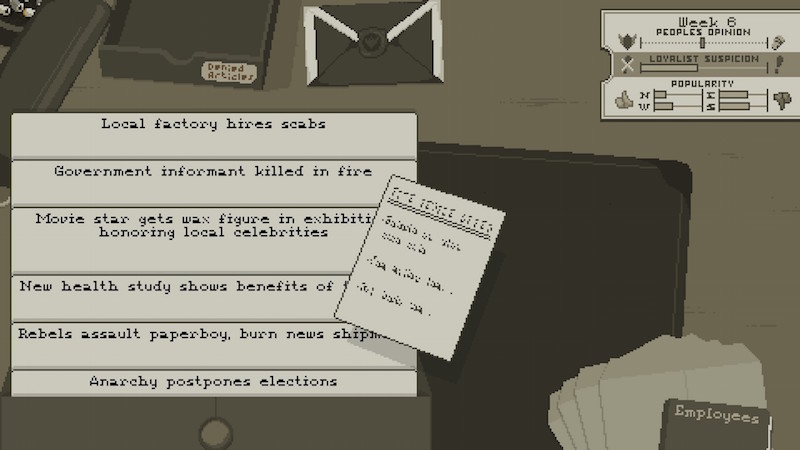
In this entry, I turn not to one game, but to a whole slew of them. Particularly, I will be looking at games that have popped up in the wake of Lucas Pope’s lauded Papers, Please (3909, 2013), which I considered earlier in the series, here.

Continue reading

The Process Genre in Videogames: Cart Life

cart_life-screenshot_header_image

Ian here—

This post is part of a series that borrows the term process genre from Salomé Aguilera Skvirsky’s work in cinema studies, and explores its utility for videogame analysis. A quick definition: “process genre” films are films about labor, films that focus on processes of doing and making, that are fascinated with seeing tasks through to their completion. They are deliberately paced, meditative, and often political, in that they cast a penetrating eye on labor conditions. Are there games that the same chords? Posts in the series so far can be seen here.

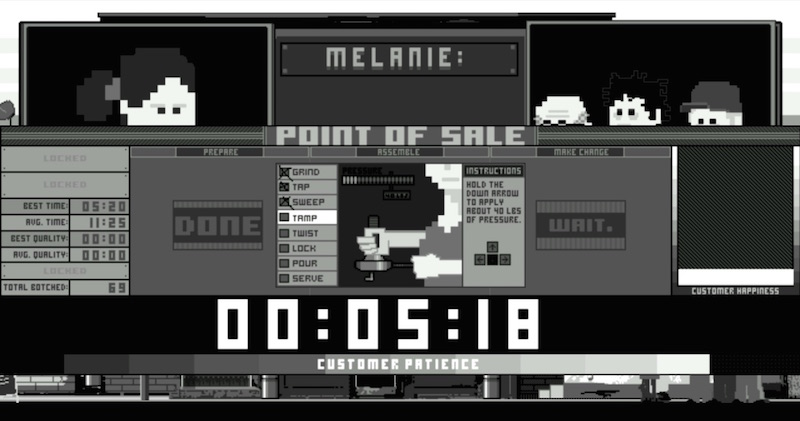
Cart Life (Richard Hofmeier, 2011) was part of the opening volley of what would eventually be termed “personal games.” Although some of the best known games slotted under this designation told stories of queer lives—for instance Dys4ia (Anna Anthropy, 2012), Consensual Torture Simulator (merritt kopas, 2013), and Gone Home (The Fullbright Company, 2013)—this is far from a requirement. Hofmeier’s game pursues an alternate tactic, telling the personal stories of characters whose lives might normally be overlooked, considered too humdrum for the purposes of mass entertainment. If you squint, you can see Hofmeier importing aspects of cinema’s neorealist tradition to the medium of videogames, in the game’s focus on the working class lives, on the effects of financially precarity on family relations, and even its use of black-and-white imagery. There is one major difference, though: The neorealist tradition in the Cesare Zavattini mold was often devoted to slow pacing, using empty moments to model the often-incident-free rhythm of everyday life. (Contemporary films in the process genre continue this tradition, hyperbolizing it beyond anything found in 1940s-era neoralist cinema.) Hofmeier, by contrast, enforces a frantic pace. In Cart Life‘s version of working class life, there is no time for idleness. When you’re trying to prove to a judge that you’re financially stable enough to have custody of your daughter, or trying to save up enough for a security deposit on an apartment so that you can move out of a hotel, every minute counts.

Continue reading

Stream Pools: Space and Narrative Pacing in Games

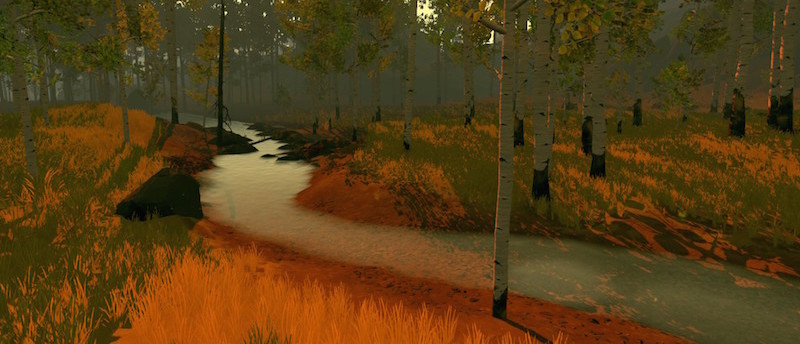
Firewatch_stream_pools_header_image.jpg

Ian here—

I spent the first week of 2017 catching up on things I hadn’t played from 2016. But all play and no work makes Ian a dull boy, so it’s time to get back to writing, even if it’s of the casual sort.

Fair warning: In this post I’m going to dip into some unapologetic formalism as a way of best expressing some otherwise entirely subjective reactions. Obviously, there are pitfalls to this. Formalism puts off some. Unabashedly subjective attempts at criticism puts off others. But, whatever—this is my blog, and sometimes I like to post things that aren’t lesson plans. (Also, a note: I’m going to have fewer of those posted in the foreseeable future. I’ve posted most of my best lessons from past courses at this point, and I’m only teaching one class this term, one I’ve taught before.)

Below the fold, I play with some vocabulary, and offer thoughts on three more interesting games of 2016. These are short takes, and it is quite likely that I will be writing more on some of these in the near future.

Continue reading