Interesting Games of 2017: Six Worthy Follow-ups

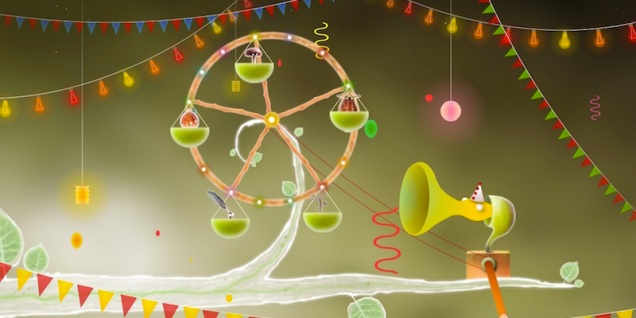
finding_paradise_screenshot-02

Among the inordinate number of truly superb games released in 2017 were some hotly-anticipated (by me, anyway) follow-ups to indie games of past years. Some were sequels. Others were sophomore efforts. Whichever the case, 2017 was a very good year for promising indie developers releasing something new after a couple years of silence (or, heck, three or four or five years of silence), and having that new release not disappoint. Below the fold are my six favorite releases that followed up on the promise of something a developer made before.

Continue reading

Meta/stasis: Little Red Lie

little_red_lie_header_image

Are “personal games” a thing, in 2017?

They most certainly were a thing back in 2013, as evinced here, and here, and here. I think the case can be made that they were still a thing in January 2016, when That Dragon, Cancer, one of the most buzzed-about “personal games” in existence, finally released. But are they a thing in 2017?

Signs point to “no.” Not in the sense that people stopped making them—au contraire. What happened was that the floodgates opened. Digital distribution made its way to the masses, in the form of itch.io, and Steam’s post-Greenlight non-exclusivity. Twine went from a footnote in Anna Anthropy’s Rise of the Videogame Zinesters to a designated week in every digital media course offered in North America. People are even making and distributing dreary anti-consumerist Super Mario Maker levels.

So, the games themselves have not abated. But the writing about them, the treatment of them as a definable “scene”: yeah, I think that has gone away. Part of this might be about queasy caution among game journalists, who pointedly remember how a non-existent review of Zoë Quinn’s Depression Quest (2013) sparked Gamergate. But mostly, I think, it’s that there are now just far too many of these games to keep track of, and treat as a coherent thing. Now that seemingly everyone is making games about their deepest and most private anxieties, there is little incentive to build any sort of critical consensus on how to survey the how to survey the zinester scene, who to determine what games are worth checking out (if only to pointedly critique), and which creators should be checked in on every now and then, to see if they’ve done anything interesting.

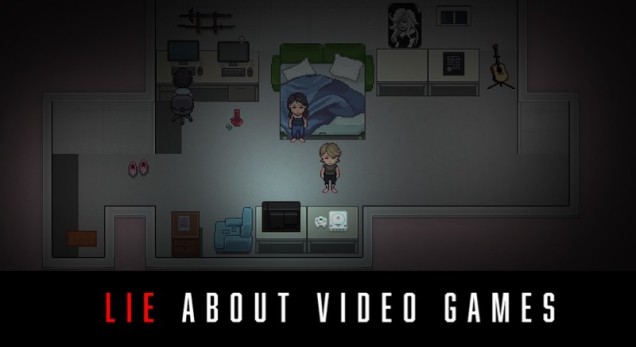
Case in point: in 2013, Will O’Neill released Actual Sunlight. The game became a central text in the conversation around “personal games” movement, and cemented O’Neill as a figure to watch in the interactive fiction/visual novel scene. Fast forward to June of 2017. Will O’Neill (now operating under the moniker WZO Games Inc.) releases Little Red Lie, to absolutely no fanfare whatsoever. It is by sheer chance that it didn’t slip under my radar entirely. As of this writing in November, I have found precious little writing about it anywhere online.

Which is a shame, because Little Red Lie deserves to be talked about. So I’m going to do my own part.

Continue reading

Games of the Decade, 2007-2017: The Complete List

happy_birthday_portal

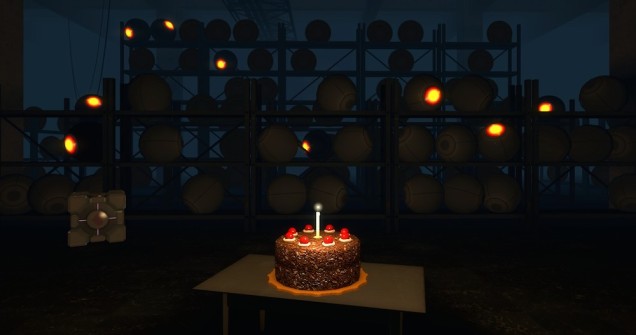
Alright, here they are. These are my fifty most highly-recommended games of the decade. It is, admittedly, an unusually demarcated decade, stretching from October 10, 2007 to October 10, 2017, as a way of celebrating the 10th anniversary of the release of Portal.

Happy birthday, Portal. Enjoy the cake.

Again, I make no claims that these fifty games are the “best” games of the past decade. They are not even necessarily my personal favorites. They are, instead, the games I recommend the most highly. They are the games I feel are the most representative of the new horizons artists working in the medium have pursued over the past decade. I would recommend them to anyone interested in the outer edges of what the medium can do: students, teachers, family, friends. I am recommending them to you, right now.

Continue reading

Games of the Decade: Endings

games_of_the_decade_the_last_of_us_01.jpg

A week ago, I laid out that videogames typically have bad pacing. Did I also mention that videogames far too frequently to have bad endings, too?

No? Well, they do. So often, in fact, that I can lay out five distinct schools of bad videogame endings. Below, I list out those five traps of videogame endings, and how the games I have chosen to end my own list with escape those traps.

Continue reading

Games of the Decade: Mood

games_of_the_decade_journey.jpg

I’ve already compiled a list of games that make me deliriously happy and agape with wonder. But not all art aims to create positive emotions such as these. Much to the continued consternation of aesthetic philosophers, human beings have been proven, time and time again, to also like art that makes them sad, that makes them scared, and even art that makes them angry.

The games listed under this category excel at provoking feelings. Not all of these feelings are what I’d call “emotions.” Some of them are too inchoate and undirected to attain that designation. This is raw, bodily stuff we’re talking about here. And unlike my delight category, not all of the feelings provoked in these games are positive ones. Happiness might be undercut by a sense of melancholy. Wonder might be mixed in with dread.

But whatever the feelings are that these games actually offer up, they all display an airtight control of tone. Some might find the end results to be manipulative. And, for some of these games, I wouldn’t deny that charge. But even if we grant it, there is still no denying that these games display top-notch craft in mood-modulation. If nothing else, they are a wild ride.

Continue reading

Games of the Decade: Delight

games_of_the_decade_botanicula_01

A couple years back, I wrote a dissertation on Heidegger and videogames. This was, from the outset, a contradictory endeavor. Heidegger would not have liked videogames.

Already in his lifetime, Heidegger did not like the cultural changes brought about by newly emerging digital technologies. “Cybernetics transforms language into an exchange of news,” he wrote in 1972, the very year Nolan Bushnell debuted Pong. “The arts become regulated-regulating instruments of information.”[i]

Moreover, Heidegger wasn’t big on moving-image culture, in general. He had no particular love for the cinema, which he saw as sapping our sense of the wondrous (das Er-Staunen, Heidegger’s translation of the Greek θαυμαστόν) in lived experience. “We might think in passing of all the extraordinary things the cinema must offer continually,” he writes, “what is new every day and never happened before becomes something habitual and always the same.” The uncommon acquires an “insidious habituality.” Genuine wondrousness is supplanted by manufactured spectacle.[ii]

In titling this category, I fought against a perverse desire for maximal irony: I didn’t call it “wondrousness.” I wanted to, though. Absent the burden of context, “wonder” is precisely the word I would use to describe the feeling these games provoke in me.

I chickened out, though. I went with the word “delight,” instead.

Continue reading

Games of the Decade: Intimacy

games_of_the_decade_oneshot_02.jpg

The games in my “ambition” category all “aimed big.” They tried to simulate the daily lives of an entire community, or put the entire history of videogame storytelling in their satirical sights. This category can be seen as the reverse of that. If my “ambition” games were large in scope, these games are small. They are cozier, more intimate, content to make sharp observations on a small scale, or to experiment within a tighter and more focused domain.

You can also think of this category as an extension of sorts to my “stakes” category, from two days ago. Much like Gravitation or That Dragon, Cancer, many of these are about interpersonal relationships. They are about acting ethically as a parent, or a sibling, or a lover, or … an interstellar salvager who has rescued a couple of AIs.

Okay, so, the connection might not be obvious at first. But, much like the games in my “stakes” sub-list, these are games that give you stranger, more precise goals than saving the princess or saving the world. They give you goals that are deeply intertwined with the hopes and fears of characters you get to know … well, intimately.

Continue reading

Games of the Decade: Sense of Place

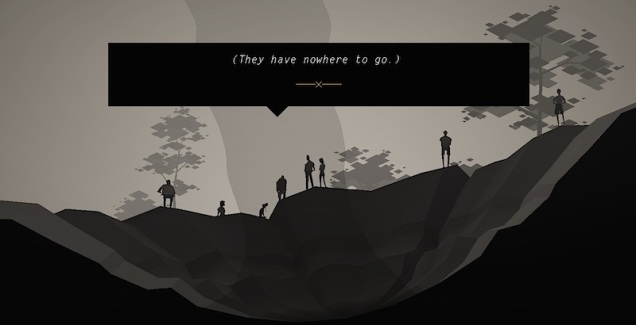
games_of_the_decade_kentucky_route_zero_01

I will shock no one by saying that videogames, like architecture, sculpture, or gardening, have the potential to be a richly spatial art form. It has been twenty years now since Janet Murray, after playing DOOM (id Software, 1993), reported that “the fluid navigation through the enormous three-dimensional spaces was rapturous in itself.”[i] It has been nearly as long since Espen Aarseth characterized games as being, above all else, “essentially concerned with spatial representation and negotiation.”[ii]

And so, while my last three categories (“pacing,” “characters,” “stakes”) have been elements of storytelling common to any form of narrative, I wanted to call this category something other than simply “setting.” Videogames don’t have “settings” in the same way that literary works do. They offer up spaces, places, worlds: opportunities for virtual exploration that exceed the possibilities of non-interactive media in their richness.

And so the games on this list don’t just just represent my favorite “settings.” They offer up some of my favorite places to visit, to spend time in, to explore, to discover.

Continue reading

Games of the Decade: Stakes

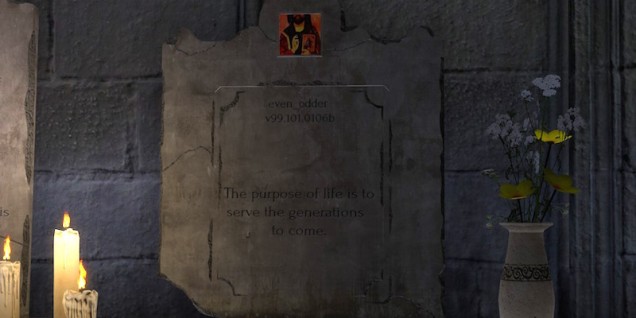
games_of_the_decade_talos_principle_02

It has become a set of dual clichés: in videogames, you either save the princess, or you save the world. Those are the only sets of storytelling stakes offered. The only things that can imbue our actions with importance is to tie our success or failure to the fate of humankind, or the fate of a particular monarchic lineage.

Which is, frankly, alarmingly dumb. By way of contrast, here are some of the resolutions of the great works of cinema: A boy loses respect for his father after the father resorts to thievery. A group of reporters trying to decipher a newspaper tycoon’s last words ponder whether it’s truly possible to know and understand another person. A man and his dying wife are struck by the kindness of their widowed daughter-in-law. The fate of the world does not hang in the balance in any of these scenarios. The stakes in play are emotional, familial, and cultural.

So, whenever a game comes along that gives you a different motivation for caring about its central conflict, that is something to be savored and celebrated. The games listed here all roundly reject tired “save the princess/save the world” narrative stakes. Instead, they offer up goals, character motivations, and resoultions that are more personal, more intimate, or more philosophical. There is, if it can be said, much more at stake in these games than the fate of the world.

Continue reading

Games of the Decade: Characters

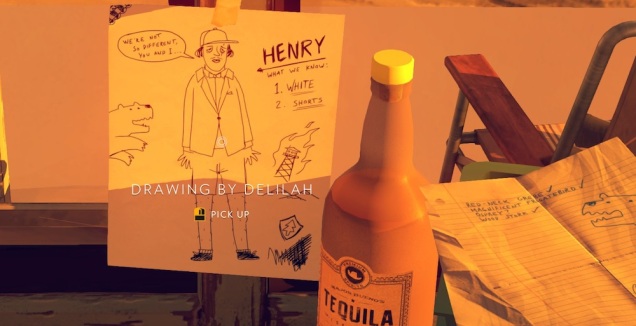
games_of_the_decade_firewatch_01

Falstaff. Miss Havisham. Anton Chigurh.

Much like yesterday’s category, today’s sub-list is partially a lament that baseline competency in storytelling seemed so long unachievable in games. Defending games as a potential storytelling medium seemed like a silly project, as the games stories had opted to tell just simply weren’t very good. Good stories need good characters. Creating characters as good as the ones listed above, in any medium, is probably an unrealistic goal. But it’s not unrealistic to ask for characters with interesting personalities and motivations.

If I am being perfectly fair, games have historically struggled less with characters than they have with pacing. The 1990s and early 2000s are filled with RPGs and adventure games with memorable characters, even as they might struggle to recount their stories efficiently. In the wake of GLaDOS, though, the ante has been upped. I am happy to report that developers have risen to the challenge. The past decade has been awash in sharply-penned dialogue, superb voice acting, and richly emotional character beats. Here are a few of my highest recommendations.

Continue reading