Games of the Decade: Stakes

games_of_the_decade_talos_principle_02

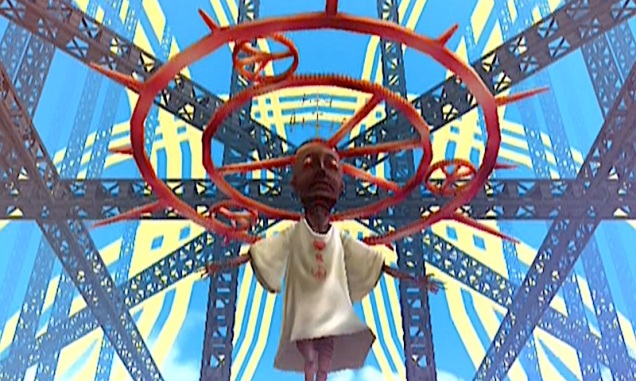
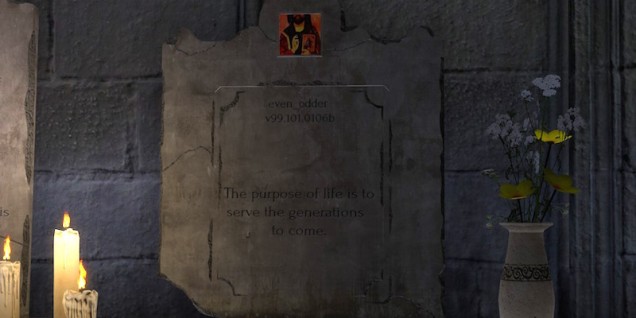
It has become a set of dual clichés: in videogames, you either save the princess, or you save the world. Those are the only sets of storytelling stakes offered. The only things that can imbue our actions with importance is to tie our success or failure to the fate of humankind, or the fate of a particular monarchic lineage.

Which is, frankly, alarmingly dumb. By way of contrast, here are some of the resolutions of the great works of cinema: A boy loses respect for his father after the father resorts to thievery. A group of reporters trying to decipher a newspaper tycoon’s last words ponder whether it’s truly possible to know and understand another person. A man and his dying wife are struck by the kindness of their widowed daughter-in-law. The fate of the world does not hang in the balance in any of these scenarios. The stakes in play are emotional, familial, and cultural.

So, whenever a game comes along that gives you a different motivation for caring about its central conflict, that is something to be savored and celebrated. The games listed here all roundly reject tired “save the princess/save the world” narrative stakes. Instead, they offer up goals, character motivations, and resoultions that are more personal, more intimate, or more philosophical. There is, if it can be said, much more at stake in these games than the fate of the world.

Continue reading

Games of the Decade: Characters

games_of_the_decade_firewatch_01

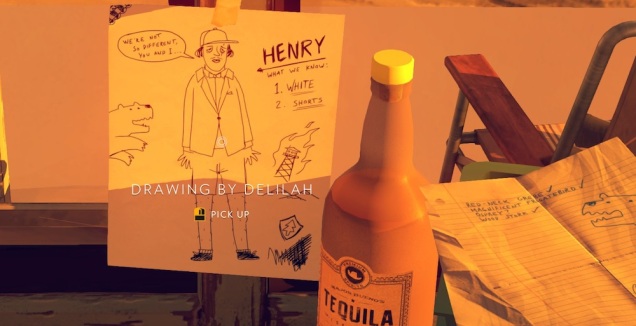
Falstaff. Miss Havisham. Anton Chigurh.

Much like yesterday’s category, today’s sub-list is partially a lament that baseline competency in storytelling seemed so long unachievable in games. Defending games as a potential storytelling medium seemed like a silly project, as the games stories had opted to tell just simply weren’t very good. Good stories need good characters. Creating characters as good as the ones listed above, in any medium, is probably an unrealistic goal. But it’s not unrealistic to ask for characters with interesting personalities and motivations.

If I am being perfectly fair, games have historically struggled less with characters than they have with pacing. The 1990s and early 2000s are filled with RPGs and adventure games with memorable characters, even as they might struggle to recount their stories efficiently. In the wake of GLaDOS, though, the ante has been upped. I am happy to report that developers have risen to the challenge. The past decade has been awash in sharply-penned dialogue, superb voice acting, and richly emotional character beats. Here are a few of my highest recommendations.

Continue reading

Games of the Decade: Pacing

games_of_the_decade_ghost_trick_02

The question of whether videogames should attempt to tell stories was all the vogue in game studies in the late 90s and early 2000s. You’re less likely to encounter the issue in academia today (unless said academics are writing think pieces at The Atlantic.) But it is still very much an ongoing debate in game development: it isn’t too difficult to still find opinionated developers launching screeds against linearity, against the single-player campaign, and against games’ subservience to the logic of cinematic storytelling.

As is so often the case in such conversations, there is a temptation to jump directly to a categorical assessment, leaping over qualitative assessment entirely. The categorical question “should games tell stories?” is a good way to start a rousing bar fight of a debate. Alternately, the qualitative question “do games, as we know them, have a history of telling stories well?” will most likely lead to the reasoned response, “no.” This, in turn, will possibly lead to further avenues of polite and potentially incisive inquiry, such as “why do you suppose that is?” and “are there any ways that we could chart new types of storytelling that might be more compatible with games’ basic features?”

I’m going take the polite and careful qualitative route, not really because I prefer it (I enjoy a rousing debate as much as anyone else), but because I actually think it’s necessary to set the groundwork before making any larger qualitative claims.

Continue reading

Games of the Decade: Ambition

games_of_the_decade_persona_4_01.jpg

It was important for me to immediately follow up my elegance sub-list with one on ambition. There’s a simple reason for this: these two are often incompatible.

The games on here are among the most rough-hewn of all the games I’m listing. In terms of visuals and audio, I would have to admit that two of them are outright ugly and grating. In terms of features, there are parts of these games that just don’t quite work. They don’t always succeed in doing what they set out to do.

But what they set out to do is something utterly fantastic, and their failures are, at the very least, interesting.

Continue reading

Games of the Decade: Elegance

games_of_the_decade_the_witness_01

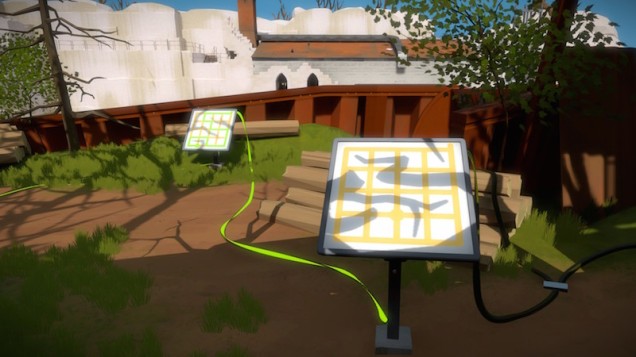
Even those who would reject the idea that videogames are an “art form” could agree that games can exhibit certain traditional aesthetic values. One prominent one is elegance. If we look toward traditional, analogue games, it seems inarguable to me that Go is elegant, and that Chess is elegant. Over the course of centuries, the tumbler of human culture has worn them down to their most perfect, least messy forms. (And they often come in supremely visually pleasing packages, to boot.) Looking to the history of videogames, it seems uncontroversial to propose that Tetris (Alexey Pajitnov, 1984) and Breakout (Atari, 1972) also exhibit this serene mixture of simplicity and grace.

Of course, videogames can also be bloated and unrefined. On the audiovisual level, the public imagination has long associated the medium all that is cacophonous and retina-searing: a ceaseless stream of crude stimulation optimized for goldfish-like attention spans. A peek at the output of PlatinumGames or Treasure over the past decade demonstrates that this conception is not entirely unearned. On the design side of things, games often come packaged with an inordinate amount of mechanical cruft. To boot up a contemporary Ubisoft game is to be assaulted by map icons, as the core activities of the game are augmented with collectibles and minigames and side-challenges and online player “invasions” and microtransactions and and and and and and and and and….

Sometimes, though, you can point to a game and say, “this is exactly what it needs to be, and no more.” Sometime a game stands as a perfectly-cut gem of craft, with every element contributing to an overall sense of balance. Its user interface is a triumph of usability, compact and graceful. Its color scheme is tamped-down and meaningful. Its sound design is minimal and expertly-deployed. It is thematically tight: if there is a narrative involved, it is a lean and coherent one. It is, overall, soothing in its form, even if it might simultaneously be stressful in its challenge.

The first five games of this list all chase this sort of technical perfection. Some are small, and some are large, but they all are careful not to hit one unnecessary note.

Continue reading

Games of the Decade, 2007–2017

games_of_the_decade_main_header_image

Wait … what? Who does that? Who makes a decade-long retrospective in a year ending in anything but a 9? And who publishes a retrospective in any month but December?

Well, I do. And I have my reasons for it.

Chief among these is that the true purpose of any “best of” list is to be wrong in fun and provocative ways. What better way to start things out, then, than by choosing an utterly arbitrary set of dates?

But, really, I do have reasons, which you’ll find below the fold, as well as the categories I’ll be announcing the games in. The list itself will start tomorrow, and continue until October 10th. (And there’s a reason for that!)

Continue reading

Worlds Viewed: Spring Breakers

spring_breakers_frame_grab_17

One of my long-standing dreams is to teach a class on cinema and the concept of world. It’s a topic that runs through the writings of numerous film theorists. (Possible readings would include Stanley Cavell, André Bazin, Annette Michelson, V. F. Perkins, Parker Tyler, Daniel Yacavone, and Jennifer Barker.) It is also, frankly, one that I have found to be somewhat ill-expressed in most film theory, which is why I would split the course readings between film theorists and figures in phenomenology. (Possibilities here include Heidegger, Arendt, Merleau-Ponty, Aaron Gurwitch, Iris Marion Young, Hubert Dreyfus, and Maxine Sheets-Johnstone.)

The screenings for this course would all center around characters encountering a new world. I don’t mean this in a fantasy sense. There would be no stepping through wardrobes into uncharted realms, here. Instead, I mean encountering a new configuration of possibilities: adjusting to a new social role, learning new skills, abiding by new constraints, adopting new goals … or, in the worst case, failing to, and losing the meaning of one’s life as a result. Screenings would potentially include Woman in the Dunes (Teshigahara Hiroshi, 1964), Jeder für sich und Gott gegen alle (Werner Herzog, 1974), Perfumed Nightmare (Kidlat Tahimik, 1977), My Brother’s Wedding (Charles Burnett, 1983), Beau travail (Claire Denis, 1999), Une prophète (Jaques Audiard, 2009), How to Train Your Dragon (Dean DeBlois and Chris Sanders, 2010), and Snowpiercer (Bong Joon-ho, 2013).

And, as the title of this post implies, Spring Breakers (Harmony Korine, 2012). Since its theatrical debut four years ago, Spring Breakers has been a favorite in University of Chicago Intro to Film courses, particularly as a way of illustrating nontraditional editing techniques. I’ve never taught it in that context, but I have been itching to include it in a class, as it remains one of my favorite films of the past decade. Below the jump, you’ll find a long-overdue appreciation of it.

Continue reading

1-Year Anniversary of the Blog

Janie_Geiser_Ghost_Algebra_clock-frame_grab-02

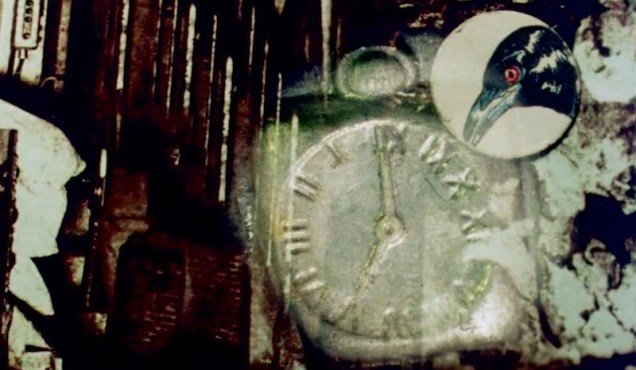
I first established Intermittent Mechanism in 2015. At the time, I conceived of it purely as a blog for hosting my classes’ student projects. I have gradually added to it since then, beefing it up a bit every academic job market cycle. It wasn’t until September 17, 2016, though, that I posted my first lesson plan.

In the past year, I have transformed the site into a proper blog. We’re now at the 1-year anniversary of this transition, so I wanted to take a look back at some milestones. If you’re a newcomer to Intermittent Mechanism, consider this your beginner’s guide.

In the past year, I posted 29 lesson plans, syllabi, and discussion notes from courses I taught during the 2016–2017 academic year. I also posted an additional 16 “greatest hits” lesson plans from courses I have taught in the past. Some hand-picked highlights from the lesson plans and pedagogical materials posted in the past year:

I created a practical pedagogical guide for teaching games, filled with syllabus-ready game recommendations. I continue to update this, sporadically.

I started posting a bunch of film and game criticism on the blog. I serially explored some central areas of interest. My series “The Process Genre in Videogames” considers labor in games. My series “A Hodology of Videogames” examines movement and path-making in game space. I wrote a series of reviews for the “Troubling the Image” screenings of experimental cinema curated by Patrick Friel and Julia Gibbs. I made some video essays.

I started to write a silly history of the representation of cats in videogames. This project concluded with me having to eulogize one of my best friends. Life is shitty, sometimes.

My blogging attracted some recognition. My blog posts “The Process Genre in Videogames: Sunset” and “Double Blind” both got promoted on Critical Distance, an aggregator of serious game criticism online. My post “Personal Puzzles” got a Twitter shout-out from Liz Ryerson, the creator of Problem Attic.

All and all, I wrote approximately 100,000 words of videogame criticism in the past year, if one includes the scripts for video essays. I suppose I could have finished my book, instead. (Oops?)

What’s in store for year 2? Well, I have something massive brewing for late-September/early-October. Aside from that, I’m just going to keep writing, and keep producing video criticism. This is my 117th post on the Intermittent Mechanism blog section. I doubt I’ll be able to keep up with that rate over the next year, but I will also do my part to keep things fresh and updated.

Wow, I’m Old: Syndromes and a Century

syndromes_and_a_century_still_16.jpg

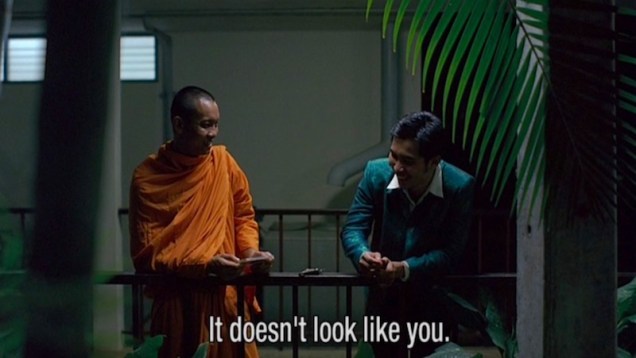
I no longer remember the exact date at which I first saw Syndromes and a Century (Apichatpong Weerasethakul, 2006). I do know that it was at a screening at the Boston Museum of Fine Arts, which screened all of the films made for the New Crowned Hope Festival sometime in the first week of September 2007. That means that I first saw Syndromes and a Century a decade ago … a disheartening thought.

I keenly remember an energy crackling in the MFA screening room while I was watching Syndromes and a Century, in excess of the film itself. Syndromes isn’t just a great film. It was also a personal revelation. For a moment, in that theater, I felt as if I had reached out and directly touched the beating heart of contemporary cinema. I felt privileged to be seeing a work so vital. I carried that energy with me for several years, as I moved to Chicago and immersed myself in its film culture, wearing out my CTA card traveling to the Gene Siskel Film Center, the Music Box Theatre, the Nightingale, Facets, Chicago Filmmakers, the Chicago International Film Festival (where I saw Uncle Boonmee Who Can Recall His Past Lives), the Chicago Underground Film Festival, Onion City Film Festival, and of course the neighborhood treasure that was Doc Films. I kept up with the cutting edge of world cinema, of art cinema, of experimental cinema, riding a high that began that September in Boston.

I no longer feel as if I have my finger on the heartbeat of contemporary cinema. The movies I see these days tend to be new works by directors I already like, and have liked for a decade. Every now and then I’ll take advantage of the footwork done by stellar programmers and expose myself to something entirely new. But I have fallen off the cutting edge of cinema. True, a lot of this is because I now devote my time and energies to keeping up with the indie game scene. (And, of course, television is better these days.) But it still makes me feel out of touch. And, frankly, old.

Anyway, I decided to take this 10-year anniversary as an opportunity to do something that I tried to do for a decade and never succeeded at: actually write about Syndromes and a Century.

Continue reading

On Ones (and Zeroes): A Tribute to Hannah Frank

Today, the friends, family, and colleagues of Hannah Frank held a special Chicago memorial for her, hosted at the University of Chicago. I already wrote quite a bit about Hannah in the past two weeks, so for my presentation at this memorial I decided to do something different: a short found-footage celebration of Hannah’s audiovisual interests.

As you might imagine, this compilation video includes things that Hannah wrote about. But it also includes things Hannah shared on social media that she liked. And things Hannah shared on social media that she made. It includes things Hannah and I shared a mutual love of. It includes things Hannah encouraged me to teach and/or write about. And it includes things I encouraged Hannah to teach and/or write about. I’ve arranged these clips to the tune of “Deeper into Movies,” by Hannah’s fellow Hobokeners Yo La Tengo.

Special thanks to Will Carroll, Chris Carloy, Sierra Wilson, Jordan Schonig, and James Rosenow.

If you’d like to explore Hannah’s own output as a video artist and animator, check out her Vimeo page here.

If you’re curious about the sources for all of the visual bits, a full list is below the fold.

Continue reading