The Process Genre in Videogames: Cart Life

cart_life-screenshot_header_image

Ian here—

This post is part of a series that borrows the term process genre from Salomé Aguilera Skvirsky’s work in cinema studies, and explores its utility for videogame analysis. A quick definition: “process genre” films are films about labor, films that focus on processes of doing and making, that are fascinated with seeing tasks through to their completion. They are deliberately paced, meditative, and often political, in that they cast a penetrating eye on labor conditions. Are there games that the same chords? Posts in the series so far can be seen here.

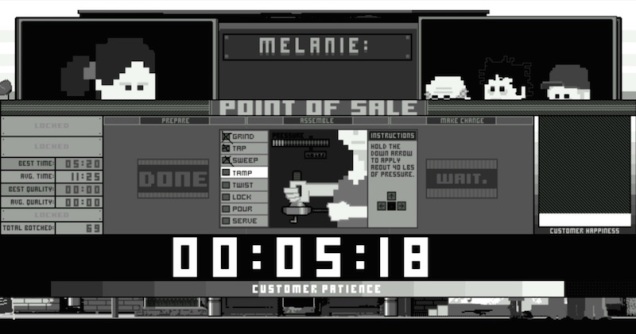
Cart Life (Richard Hofmeier, 2011) was part of the opening volley of what would eventually be termed “personal games.” Although some of the best known games slotted under this designation told stories of queer lives—for instance Dys4ia (Anna Anthropy, 2012), Consensual Torture Simulator (merritt kopas, 2013), and Gone Home (The Fullbright Company, 2013)—this is far from a requirement. Hofmeier’s game pursues an alternate tactic, telling the personal stories of characters whose lives might normally be overlooked, considered too humdrum for the purposes of mass entertainment. If you squint, you can see Hofmeier importing aspects of cinema’s neorealist tradition to the medium of videogames, in the game’s focus on the working class lives, on the effects of financially precarity on family relations, and even its use of black-and-white imagery. There is one major difference, though: The neorealist tradition in the Cesare Zavattini mold was often devoted to slow pacing, using empty moments to model the often-incident-free rhythm of everyday life. (Contemporary films in the process genre continue this tradition, hyperbolizing it beyond anything found in 1940s-era neoralist cinema.) Hofmeier, by contrast, enforces a frantic pace. In Cart Life‘s version of working class life, there is no time for idleness. When you’re trying to prove to a judge that you’re financially stable enough to have custody of your daughter, or trying to save up enough for a security deposit on an apartment so that you can move out of a hotel, every minute counts.

Continue reading →

Janie Geiser’s Flowers of the Sky

janie_geiser_flowers-frame_grab-02

Ian here—

Any occasion to see a new film by Janie Geiser is a happy one, but I am especially lucky in that the context in which I saw Flowers of the Sky (2016) was during the inaugural screening of “Troubling the Image,” a series of recent (or recently-restored) avant-garde/experimental films being put on at the University of Chicago’s Film Studies Center. Programmed by Julia Gibbs and Patrick Friel, the series promises to be a stream of delights, and I’m hoping to post some more dispatches from it in the future.

There was plenty of great work on display in this first screening, entitled “Color My World.” (I was especially glad to see more videos from T. Marie, whose work I had fallen behind on in recent years. 2014’s Panchromes I-III certainly did not disappoint, together forming one of the greatest examples of “cinema as painting” that I can think of.) But I’ve decided to limit my thoughts here to Geiser, and Flowers of the Sky.

Continue reading →

The Process Genre in Videogames: Papers, Please

papers_please-screenshot-01

Ian here—

This post is part of a series that borrows the term process genre from Salomé Aguilera Skvirsky’s work in cinema studies, and explores its utility for videogame analysis. A quick definition: “process genre” films are films about labor, films that focus on processes of doing and making, that are fascinated with seeing tasks through to their completion. They are deliberately paced, meditative, and often political, in that they cast a penetrating eye on labor conditions. Are there games that the same chords? Posts in the series so far can be seen here.

On the docket for today: Lucas Pope’s Papers, Please (3909, 2013), a simulation of being a border guard in the fictional Soviet-bloc-style nation of Arstotzka in 1982. As you scrutinize people’s documents, weeding out the undesirables, stamping the passports of some travelers and detaining others, there is plenty of opportunity for political drama—in particular, do you do your best as a servant of your obviously oppressive government, or do you quietly aid rebel factions? But there’s also just the matter of making enough money to keep your house heated, your son fed, and getting medication for your elderly uncle. Since you’re paid by the number of entrants you correctly service, this means being good at your job: memorizing the bureaucratic rules, getting good at both quickly and carefully examining documents, and keeping your desk clean and orderly. It is, all things considered, as much a game about a desk as it is about a family, or a nation.

Continue reading →

Series: The Process Genre in Videogames

shenmue_docks_job_screenshot_04

Ian here—

This post inaugurates a series of posts, of as-yet indeterminate length. All of them riff on a term developed by Salomé Aguilera Skvirsky, a scholar who I’ve had the privilege of knowing (if only on a casual basis) the past few years.

The term in question is the “process genre.” Films in the process genre are films about labor—and not in an abstract thematic sense, in the way that Godard’s Tout va bien (1972) is about labor. Rather, process genre films are very specifically about watching the stages of a production process, from its beginning to its ending. There most salient characteristic is what Skvirsky describes as “careful attention to processes of doing and making.”[i]

We see the roots of the process genre all the way back in things like Robert Flaherty’s Man of Aran (UK, 1934), and the genre finds perhaps its most emblematic manifestation in Jeanne Dielman, 23 Commerce Quay, 1080 Brussels (Chantal Akerman, Belgium, 1975), with its lengthy and hypnotic food preparation scenes. Latin American cinema—Skvirsky’s own special focus—gives us more examples. Araya (Margot Benacerraf, Venezuela, 1959) is about the processes of mining salt by hand. Aruanda (Linduarte Noronha, Brazil, 1960), is about the processes of cotton-harvesting and ceramic-making. Quilombo (Vladimir Carvalho, Brazil, 1975) is about the process of making quince marmalade. Much more recently, Parque vía (Enrique Rivero, Mexico, 2008) is about the processes of custodial work and groundskeeping. Some of these films are documentaries; others present fictional narratives. What binds them all together is a rapt fascination with the way humans busy themselves, and produce things.

Continue reading →

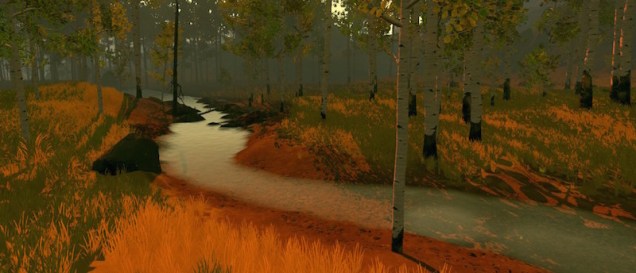
Stream Pools: Space and Narrative Pacing in Games

Firewatch_stream_pools_header_image.jpg

Ian here—

I spent the first week of 2017 catching up on things I hadn’t played from 2016. But all play and no work makes Ian a dull boy, so it’s time to get back to writing, even if it’s of the casual sort.

Fair warning: In this post I’m going to dip into some unapologetic formalism as a way of best expressing some otherwise entirely subjective reactions. Obviously, there are pitfalls to this. Formalism puts off some. Unabashedly subjective attempts at criticism puts off others. But, whatever—this is my blog, and sometimes I like to post things that aren’t lesson plans. (Also, a note: I’m going to have fewer of those posted in the foreseeable future. I’ve posted most of my best lessons from past courses at this point, and I’m only teaching one class this term, one I’ve taught before.)

Below the fold, I play with some vocabulary, and offer thoughts on three more interesting games of 2016. These are short takes, and it is quite likely that I will be writing more on some of these in the near future.

Continue reading →

whoami: 2016 Edition

that_dragon_cancer-screenshot-header-image

Ian here—

So, I’ve been struck by a fit of mania. Although it’s an arbitrary gesture, I am determined to write up a few of my thoughts on some more interesting games of 2016 before midnight strikes and the calendar year ends.

Below the fold: three games from the past year that do interesting things with perspective, embodiment, and intersubjectivity. Consider this a follow-up to yesterday’s post.

Continue reading →

whoami

simmons-screenshot-01

Ian here—

For those of you who aren’t in the know, “whoami” is a command that was first implemented in Unix-based systems, allowing the user to see what account, with which types of access, they are currently recognized by the machine as being logged in under.

This post offers two quick takes on two games. (They both happen to be from 2012, for whatever reason—something in the water?) While playing both of them, “who am I?” is a surprisingly rich one. Sometimes, they keep the player’s role vague, surprising them with the amount of agency they have, and the degree to which they seem to be inside or outside the game’s story. Other times, they are quite clear on who the player “is,” but leave plenty of room for interpretation as to what occupying this role means. Take care below: spoilers aplenty.

Continue reading →

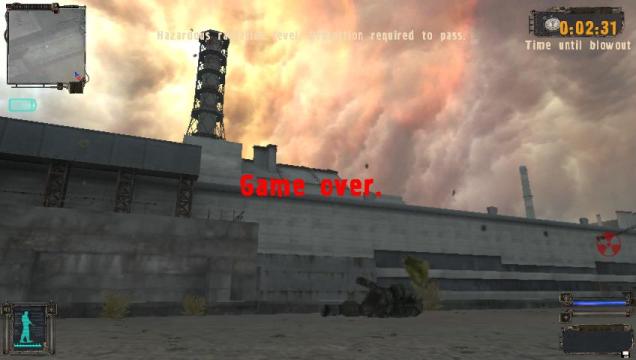
A Zone Is a Zone Is a Zone: Narrativization in the Digitized Remnants of Chernobyl (A Journal)

stalker_screenshot-01_header_image

Ian here—

What follows is an essay I wrote in 2007, one of the first things I ever wrote on the topic of videogames. I originally intended it to be an alumni submission to the Bard College Journal of the Moving Image. That publication, however—which I had previously been an editor of—had fallen on some hard times in the 2007–2008 academic year, and so that plan fell through.

For nearly a decade, now, this piece of writing has never seen the light of day. It’s absurdly long for a blog post, but I nonetheless figured I might as well belatedly make it publicly available here (even though its psychoanalytic underpinnings seem quite foreign to me now).

Continue reading →

Postmortem: Comedy and the Moving Image

prezi_screenshot-comedy_postmortem-header_image
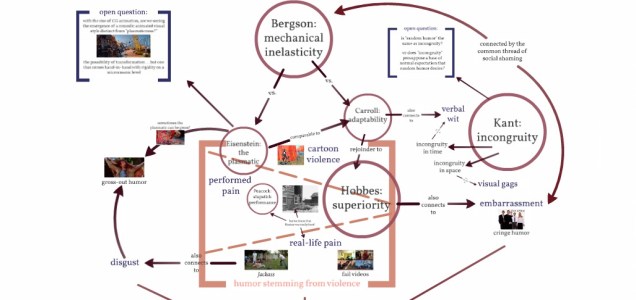
An attempt to capture everything that was written on the chalkboard after class discussion in week 13 of the course. (I can’t promise that this isn’t a glimpse into madness.)

Ian here—

Grades for the School of the Art Institute of Chicago’s Fall 2016 semester were due today, and I wanted to take the occasion to do a quick postmortem on “Comedy and the Moving Image,” which I consider to be the most successful course I taught this term—as well as one of my most fun and productive courses ever taught. I’ve posted several lesson plans from this course already throughout the past couple of months. Links to those will be provided below, as I sketch out a skeletal version of the course’s themes, and some of its most interesting surprises.

I put this visual presentation together for our final class meeting. You should feel free to follow along with it … although I admit that, as you can see from the above image, it gets increasingly messy as you click through.

Continue reading →

Off Menus

rcalendula-screenshot_header_image

Ian here—

Ah, the game menu. So often in PC games, it is accessed by hitting the “esc” key, and so often it is just that: an escape from the pressures of the game. A place where players can put things on pause, and can retreat into a familiar suite of low-pressure activities. Saving. Loading. Inventory management. Party management. Gamma settings. Resolution settings. Pretending to know the difference between trilinear and anisotropic texture filtering, and then getting up to pee. So calming. So safe.

Except when it’s not.  Because sometimes, one encounters a menu that is just a little … off. An “off menu,” shall we say.

Below the fold, an appreciation of two games, including one from 2016. Tis the season for year-end retrospectives and “best of” lists. Unfortunately, I had neither the time nor the budget to expose myself to many of 2016’s releases in the calendar year of 2016, so I’m not well-positioned to mount a case that CALENDULA (Blooming Buds Studios, 2016) is actually one of my “favorite” games to release this year. But I did want to slip in a write-up of it before December gives up the ghost. (Spoiler warning for both games … including one that’s over a decade old.)

Continue reading →