Recommending the ENIGMA TRILOGY

Ian here—

In celebration of Halloween, I’ve posted a new video recommending the Enigma Trilogy, a series of games by Enigma Studio including MOTHERED (which I’ve raved about before), THE ENIGMA MACHINE, and this year’s [ECHOSTASIS]. This also serves as the eighth video in my ongoing Shape Up! series.

Script below the jump.

Continue reading

The Women of Rear Window – Sallie Hinkle

In general, Alfred Hitchcock’s treatment of women in his films is a subject of considerable analysis and debate. On one hand, some critics argue that Hitchcock’s portrayals of women can be seen as problematic due to the recurring themes of obsession, manipulation, and violence against female characters in many of his films. These portrayals often fit within the framework of the “Hitchcock Blonde” archetype, characterized by icy beauty, vulnerability, and often serving as objects of desire or victims of male aggression.


However, others argue that Hitchcock’s treatment of women is more complex and nuanced. While his female characters may sometimes fall victim to violence or manipulation, they are also often depicted as resourceful, intelligent, and capable of agency. Many of his films feature strong female protagonists who actively engage in the plot and challenge traditional gender roles. Additionally, Hitchcock’s films often explore themes related to gender, power dynamics, and the complexities of human relationships. His portrayal of women can be seen as a reflection of these broader themes rather than a straightforward endorsement of sexist attitudes.


While watching Rear Window, I found the gender dynamics particularly intriguing, especially concerning the roles each character assumed in the unfolding investigation. As the narrative progressed, a notable shift emerged in the portrayal of women and their involvement in the investigative process. Initially, Lisa was depicted solely as Jeffries’ youthful, fashionable girlfriend. Similarly, Stella was confined to the role of a nurse, “Ms. Torso” served as little more than eye candy, and Mrs. Thorwald appeared as a stereotypical nagging wife.


During the film’s early stages and well into the investigation, these women predominantly functioned as objects of desire and victims of male dominance (with Stella being a possible exception, albeit still constrained within a nurturing, feminine role). However, as the plot advanced, a transformation unfolded, granting these characters opportunities to showcase resourcefulness, courage, and intelligence. This evolution is what captivated me the most and what I intend to explore further in the rest of this blog post.

For starters, Lisa is often seen as the epitome of the Hitchcock Blonde archetype I previously mentioned—beautiful, elegant, and sophisticated. Initially, she appears to be the quintessential socialite, concerned primarily with fashion and parties. However, as the film progresses, Lisa’s character evolves. She demonstrates intelligence, courage, and a willingness to challenge societal expectations. Her determination to prove herself to Jeffries by participating in his investigation of Thorwald is seen as a departure from traditional gender roles. Despite initial skepticism from Jeffries and others, Lisa’s determination and resourcefulness ultimately prove invaluable to the investigation.


Her willingness to challenge traditional gender roles by involving herself in the dangerous pursuit of truth signifies a shift within her, and allows her to become more aligned with Jeffries (who, as a photographer, regularly pursues the truth in dangerous situations). Ultimately, we see this shift represented in the final moments of the film that depict Lisa, now wearing jeans and reading Beyond the High Himalayas by William O. Douglas, as she lounges in Jeffries apartment. The more casual nature of their duo in this scene suggests that the character arc Lisa had through the movie was significant in moving her and Jeffries relationship to the next level.


In addition to this, Stella serves as Jeffries’s pragmatic and down-to-earth confidante. As his nurse, she provides valuable insight and commentary on the events unfolding outside Jeffries’s window. Stella is portrayed as wise and observant, offering a contrast to the more glamorous Lisa. Her role highlights the importance of female intuition and practicality in navigating the complexities of life.


Stella possesses keen observational skills and an interest in the gorey details that rival even those of Jeffries himself. Her pragmatic insights and practical advice contribute to Jeffries’ understanding of the events unfolding outside his window. As a character, Stella serves to reinforce the idea that effective investigation often requires a combination of intuition and practicality, qualities traditionally associated with femininity. While, ultimately, Stella’s role in the investigation is not as in depth as Lisa’s, her contributions are incredibly helpful to the team as they attempt to piece everything together. Also, like Lisa, the investigation changes Stella as a person, evolving her character from “the nurse” to a key investigator.


Lastly, Mrs. Thorwald is a key figure in the film, despite her limited screen time. Her absence from the apartment and Jeffries’s suspicions about her well-being drive much of the suspense. Mrs. Thorwald’s character is largely defined by her relationship with her husband, Lars Thorwald, and her mysterious disappearance is what fuels Jeffries’s investigation. As the victim, Mrs. Thorwald is one of the only main women in the film to not go through a significant transformation, instead relegated only to an object of mens aggression.


Some interpretations suggest that Mrs. Thorwald’s plight serves as a commentary on the vulnerability of women within the confines of domestic life, with her mysterious disappearance, as well as the glimpses of other women observed through Jeffries’s window, offer a lens through which to explore the themes of vulnerability and victimization. Throughout the film, Jeffries observes various women in the apartments across from his own, each offering glimpses into their lives and relationships, indicating unequal power dynamics between them. Despite being physically confined to his apartment, Jeffries exercises a form of voyeuristic control over the women he watches, a dynamic that raises questions about agency, consent, and the ethics of surveillance.


Overall, though, I believe women are portrayed in a very positive light in this film. I believe it to be intentionally subversive to have these women begin the film in very limited roles, as objects of men’s desire and/or aggression, but then through the course of the film and the investigation to break those gender roles, to be transformed by the experience. – Sallie
SHAPE UP!: Hostile Loop

Ian here—

Fourth episode of the Shape Up! series is here, this time on a game I’ve taught several times in classes and long wanted to do a video about: P.T.

Due to the busyness of this academic quarter, I won’t be able to keep up with the one-video-per-month schedule I’ve set for myself since October. Hoping to get at least one more episode of the Shape Up! series out between now and summer, and then return to the one-video-per-month schedule during the summer.

The script that follows below the jump is the shooting script for the video. (It differs from the actual transcript in one key respect.)

Continue reading

Digital Identification Within Unfriended

A video essay on the film Unfriended (2014) that tries to mimic the style of the movie as best as possible.

(Set to 1080p HD)

https://www.youtube.com/watch?v=qsFzevVRoVc: Youtube link if there is any trouble.

Transcription of Video Essay:

There exists a common trope within horror movies to use point of view shots in order to convey a sense of identification with either the killer or characters. With the killer taking the reins, you are given an added layer of suspense for their victim–as you the audience members see the innate danger they are in; Carol Clover in her essay “Men, Women, & Chainsaws” simplifies this theory to the formula identification = point of view; she will l later add layers onto what she means but this credence always stays true. With this understanding in place, I want to examine the 2014 film Unfriended and how it further immerses the viewer into the shoes of its protagonist Blaire Lily by giving us a framing mechanism completely attached to her. As the film is framed entirely within the full window screen of Blaire’s computer—albeit except for the last final jumpscare—the identification that is happening comes down to how we see her interact with the various programs on her device. 

The simple act of enabling the view of her mouse cursor as it browses across the screen gives us a greater level of intimacy with a character that both few horror and regular films do; we see her exact thought processes reflected in the way she moves across the scene or frantically changes messages on the fly before sending them. While watching the film, it is easy to believe that you yourself are in control of the computer for the actions Blaire takes to emulate a true experience of navigating a computer are realistic. 

There are certain fabulations that we make when watching a screen that draw us to understand where the cursor is going to go next; whether that is at closing message board or clicking on hyperlinks, because these are acts we have done thousands of times before are brain fills in the gaps on how to achieve them. The experience is also out-of-body in a way for we rarely interact with computer screens not controlled by ourselves, especially the intimate act of typing and revising is something so revealing of an isolated experience. All this to say, Unfriended use of identification creates a greater sense of connection and fear. 

The control Blaire has over at least the viewing of the murders and what we are presented with are completely thrown out with the last shots of the movie, leaving the viewer in deep peril for the lack of agency the main character now has. All control has been stripped from Blaire and she is at the complete whim of the monster, the final girl now is the one who jumps out at her. This final scene would not have been as effective had the movie varied its framing device. Allan Cameron’s piece, Facing the Glitch: Abstraction, Abjection, and the Digital Image notes that in Unfriended quote “to have a face, in this context, is to be at a disadvantage,” for the faceless killer remains the strongest entity in the film as the characters who are merely just their face are always in a victim role; this final scene shifts this perspective. It is because we stick so closely to Blaire’s mouse and cursor the whole movie that we are frightened when they are removed from us. By isolating us away from the one true point of identification with the film, we are left to ourselves in the closing shots–completely defenseless with no more screens of separation to protect us. 

Glitches and the Unknown: An Exploration of the “Found Footage” Trope in Horror

Hi everyone,

My name is Cameron. Before you start reading this blog post, I want to take you through a thought exercise. Think to the last time you took a picture that may not have turned out the way you wanted it to. Why didn’t it turn out the way you wanted it to? Was the lighting off? Did the picture not take all the way? Did the picture maybe crop in a weird way? Within the realm of photography and art, a glitch can mean anything that causes a product to not turn out the way the artist intended. However glitches don’t work the same way. For the horror genre, and found footage specifically, glitches are primarily used as points of entry for aspects of the unknown realm to enter the known realm. 

Before we can define glitches, we must define what constitutes as “the realm of the unknown” and “the realm of the known.” In order to first understand this, it can be helpful to establish a boundary of difference between the two. “The realm of the known” within horror is the realm that houses the fictional world on-screen. While this can be a bit of a hazy definition within horror, this definition can be reasonably diluted to mean the world where the action takes place on-screen. For example, within V/H/S/2’s short “A Ride in the Park,” all of the action that takes place takes place inside a forest with hiking trails and picnic tables. “The realm of the unknown” is the realm that houses anything that is not established as a fact within the fictional world. It is important to note that “the realm of the unknown” is not simply anything that shows up in the fictional world without explanation. Rather, “the realm of the unknown” is the realm of explanations that happen outside of the fictional world. For example, while the audience knows that being bitten by a zombie will turn someone into one in “A Ride in the Park,” the audience does not know what originally started the zombie plague. Thus, the origin of the zombie plague in “A Ride in the Park” belongs to the realm of the unknown. The boundary between “the realm of the known” and “the realm of the unknown” in found footage horror is literally the edge of the camera shot.

Once one understands what constitutes the boundary, it is much easier to define glitches. Glitches are essentially points of entry for things from “the realm of the unknown” to enter “the realm of the known.” If “the realm of the unknown” houses the explanations for things seen on-screen, glitches are where those things enter “the realm of the known.” It is important to note that this definition ignores most technical definitions of glitches in order to allow glitches to better accommodate the horror genre. Continuing with the example from “A Ride in the Park,” glitches in this short are zombie bites. Zombie bites spread the plague from one person to another, working as an explanation within “the realm of the known” for the horror present within the world of “A Ride in the Park.” There is an important distinction between “the realm of the unknown” and glitches, though both work as explanations. The “realm of the unknown” is an explanatory location, while glitches are an explanatory force. Both are provide explanations for different aspects of horror within the horror genre; however, glitches function as essentially a tear in the boundary between “the realm of the known” and “the realm of the unknown” that invites horror on-screen. 

In order to better define glitches, it can be helpful to think about how glitches work within V/H/S/2. Glitches within V/H/S/2 work primarily as hauntings and as visual obstacles, best seen within “Phase 1 Clinical Trials” and “Slumber Party Alien Abduction” respectively. In “Phase 1 Clinical Trials,” glitches are established as a literal tear in the boundary between the living and the dead. In this sense, “the realm of the unknown” contains both the realm of the dead and how they are able to return to the realm of the living. “The realm of the known” contains both the realm of the living and, technically, the technology that allows Herman and Clarissa to commune with the dead. “Phase 1 Clinical Trials” is technically the only short within V/H/S/2 to use glitches in the literal sense in this way; however, it is this simplicity that allows glitches to be so easily, cleanly defined. In “Slumber Party Alien Abduction,” glitches are much more disorganized. Within this short, glitches are primarily used to obscure visuals of the aliens. While this obscuration does make it difficult to clearly see the aliens, it also draws attention to them, effectively allowing them to enter “the realm of the known” through what the audience can see of them through the glitches. “The realm of the unknown” contains the aliens, and “the realm of the known” contains their intent to kidnap the children, as seen when the glitches obscure both the children and the aliens. Within V/H/S/2, glitches both obscure information and provide hauntings; however, in both cases, glitches allow aspects of the unknown realm to enter “the realm of the known.”

The Haunted PS1 Aesthetic and Medium-Specific Noise

Ian here—

I’m making some plans for some all-new series of videos to start premiering in 2023. But since it’s been such a long gap, I wanted to make sure I posted at least one thing to YouTube in 2022, and Halloween gave me a nice external deadline.

The low-poly aesthetic in horror has been one I’ve been interested in for awhile, all the way back since Back in 1995 was released in 2016. 2022 was the year I devoted to finally diving into a scene that’s become quite deep and diverse in recent years, to coincide with the horror class I taught in the spring quarter, and am teaching again right at this moment.

Script below the jump.

Continue reading

Mother isn’t Mother anymore

by Selma

I found Relic to be a much more interesting film when it ditched the shadowy figure and addressed the audience head on with its commitment to the real horror: growing old. 

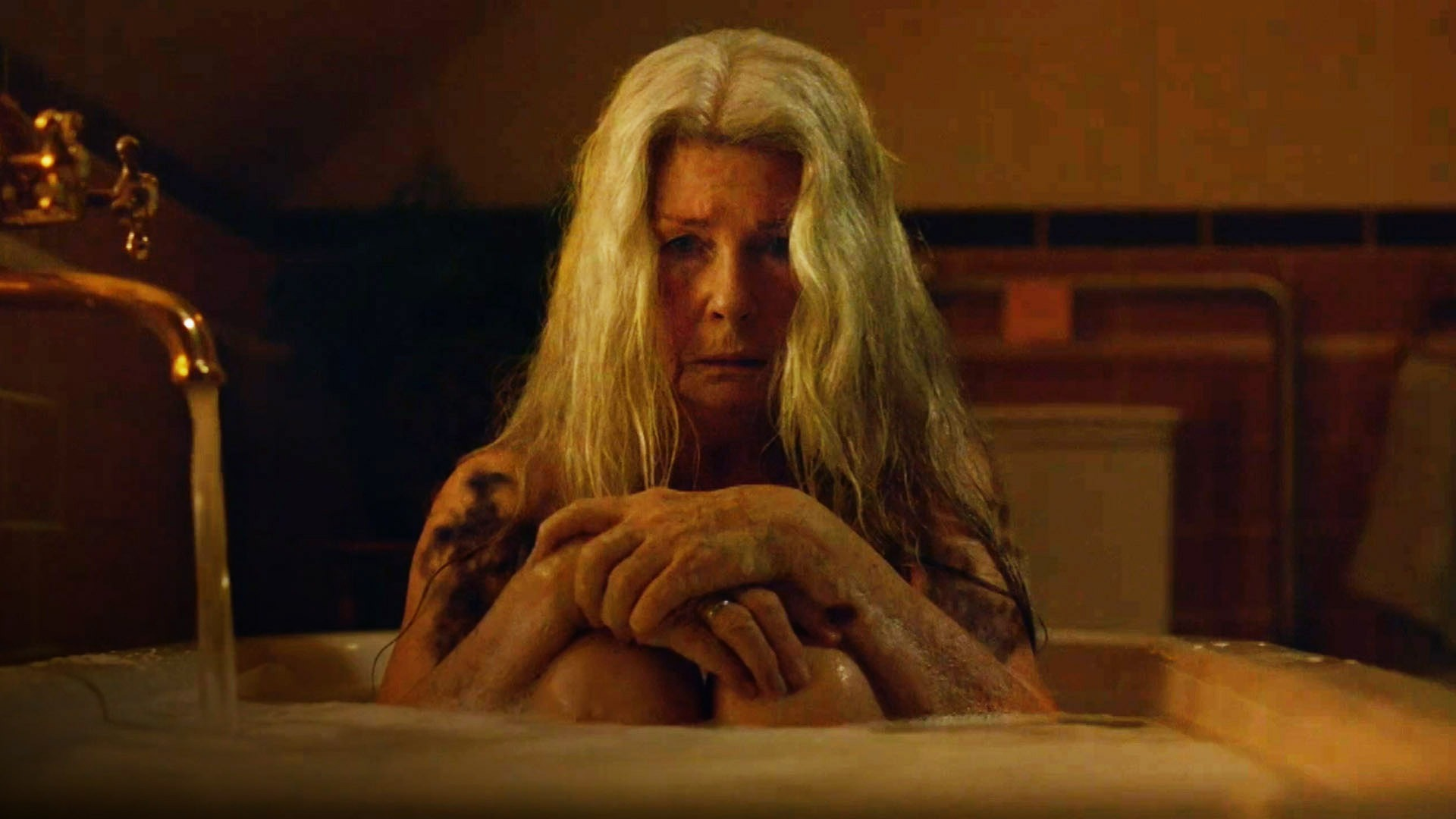
Relic (2020) begins in a dark house. An old woman– her name is Edna, but I’ll call her Grandmother– stands naked in the living room, water running from the bath upstairs is spilling down. Grandmother seems unconcerned. She is distracted, looking at a thin, dark figure, unseen by the audience until its hand moves out of frame. The opening scene ends there. It’s disturbing. And it generates a huge question: who is the dark figure? 

We transition to Mother and Daughter, they fill in the other two generations of Grandmother’s relatives. Mother and Daughter are driving to visit Grandmother. The police contact them because Grandmother hasn’t been seen for a few days. Grandmother is old. She is prone to forgetfulness, bouts of anger, signs that some audience members may recognize as dementia in their own aging relatives. Relic traverses the line between supernatural hyperbole and the reality of growing older. 

And that might be an issue for the film. 

I liked Relic but I only started to like it during its final 20 minutes. Throughout the film I was understanding the haunting of the three women to be literal. It’s a horror movie after all, and anything is fair game: ghosts, zombies, demons, you name it. And the viewer was told to expect that in a sense. As mentioned before, the shadowy black figure is established immediately in the opening scene. It seems like it should be an antagonistic force throughout the film. There are even numerous nightmare sequences in which the shadowy figure’s identity could be hinted at. Mother has a recurring nightmare about her great-grandfather whose old house makes up the foundation of Grandmother’s home. The great-grandfather is shown in a horrifying montage of decay and his figure is black and skeletal, it seems like a precursor to what the black figure developed into. 

So with those scenes, the foundations of the old house within Grandmother’s now haunted house, the shadowy black figure, etc. It was hard not to take the haunting as a literal and specific occurrence. However, I found Relic to be a much more interesting film when it ditched the shadowy figure and addressed the audience head on with its commitment to the real horror: growing old. 

After a dizzying and anxiety-inducing maze sequence toward the end of the film. Mother and Daughter successfully escape a deranged Grandmother who has turned completely against them and has been trying to harm them. Daughter wants to run. She beckons Mother to come and to leave Grandmother who, to her, is no longer Grandmother. But Mother can’t. She sees the decay and realizes her responsibility– wonderfully foreshadowed by an earlier quote “she changed your diapers, now you change hers.” A reversal of care from parent to child to child to parent. Daughter flees, seemingly unable to fathom this kindness and grace Mother is showing to Grandmother. 

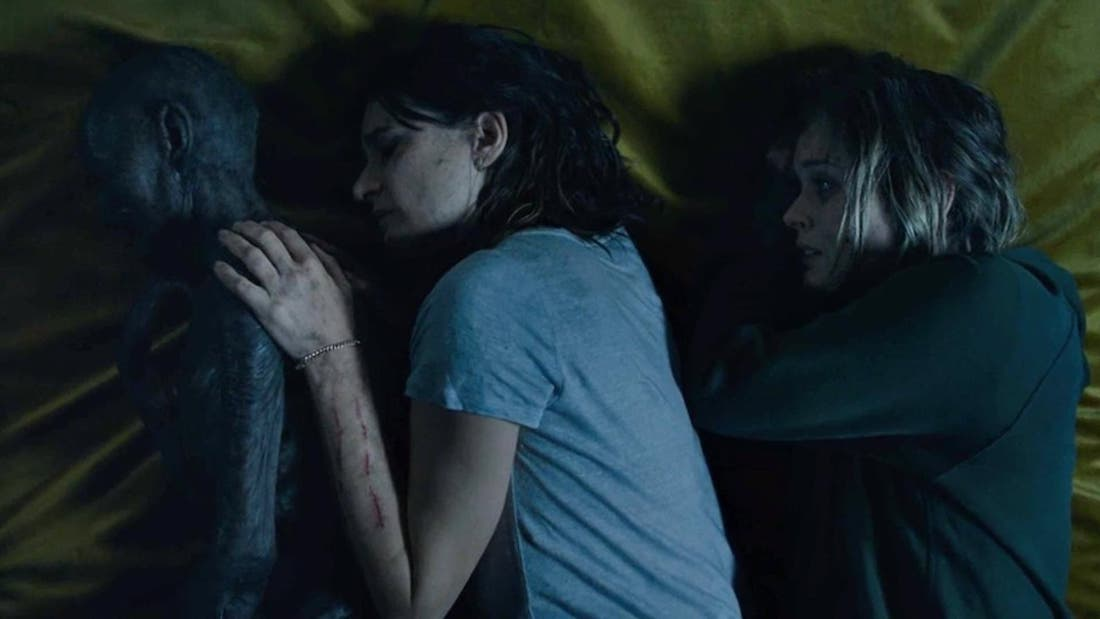
A disgusting yet tender moment follows. Mother carries Grandmother upstairs to her bedroom. Grandmother is covered with black flesh wounds that have been growing deeper throughout the film. Mother slowly begins to peel the skin away, revealing a black, tar-like skeletal body– just like the great-grandfather’s body of the nightmare sequences. After skinning Grandmother and laying her down on the bed, Mother cuddles her, in a fetal position. The Mother’s duty to her parent has been completed. Now, Grandmother can rest and be at peace. Daughter even returns. She sees the passiveness of Grandmother and realizes that she was no monster, she was just alone and afraid. Daughter joins the two on the bed and completes the generational cycle. As she stares at the back of Mother’s neck, she notices the beginnings of the black decay…

So what does this say? The ending of Relic left me with a really fantastic metaphor for the cycle of aging. The decaying process from the ending scene altered the literal grounding that might have been established by the decay Grandmother undergoes at the beginning. It might be taken as a specific curse, but as the decay spreads to Mother, the film seems to be saying that this is a process that happens to everyone. What is unique is the conditions by which it happens. For the great-grandfather, it seems that he was abandoned, left to rot by his family who could have cared for him but didn’t. Grandmother seemed to be heading towards that fate, but the appearance of Mother and the tenderness of the final scene indicate that Grandmother has completed her transformation somewhat gracefully. Now, looking toward the future, Daughter must maintain the relationship she has with Mother and make sure that she does not have a demented breakdown like Grandmother did. The decay seemed to be presented as an inevitability. What happens during that inevitability of aging is dependent on who is there for you in your older years and the support they can offer. 

Relic sort of misleads you to thinking there is more to the haunting until it tells you, by the end, that this was no haunting after all. It is simply a terrifying reality. 

Rule of Rose and the Tidiness of Unreality

Ian here—

Whoops! I made sure to give myself enough time to finish this video by Halloween … but then I neglected to post the announcement here! Happy belated Halloween, everyone.

I really relished the opportunity to talk about Rule of Rose, one of my favorite odd little games that I’ve never written about in any fashion before. Unfortunately copies of the game have become real collector’s items over the years, and it’s sad to praise a piece of media that so few will have access to. But hey, I also write about experimental film, so I know the feeling.

Script below the jump.

Continue reading

Siren: Tension, Frustration and Visibility

Group project summary, by leader John Churay

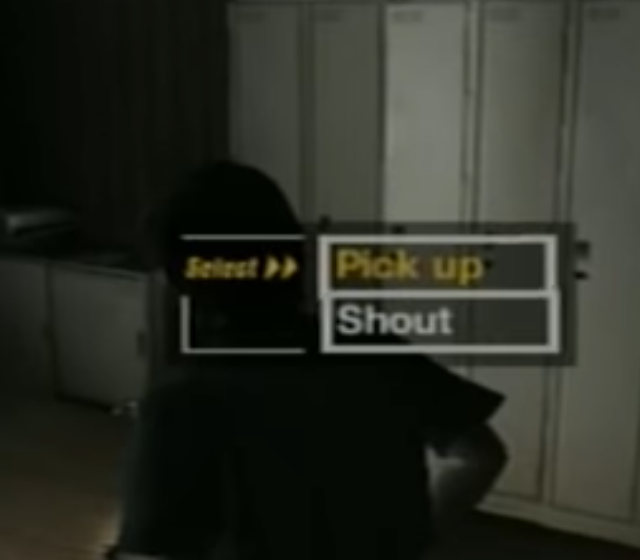
Siren is a survival horror/stealth game developed by Sony Computer Entertainment Japan Studio. The game takes a third-person over the shoulder point of view. Movement in the game uses tank controls, so left and right on the movement stick rotate the character instead of moving them. Unlike more traditional third-person viewpoints, the camera does not move around your avatar. Moving the right stick can change the camera’s orientation, but it is stuck squarely behind your character. The game consists of levels that often revolve around moving from one spot on a map to another. Along the way, you pick up items, defeat enemies known as “Shibito,” and escort AI companions. To pick up items, you must open a menu using triangle and select to pick up that item.

Screen Shot 2020-04-16 at 11.12.31 PM.png(Image credit: exceeding09 at https://www.youtube.com/watch?v=A7zmvKPlC8g)

You use this process to interact with almost all objects in the game, including unlocking doors and entering specific key locations. In the reboot Siren: Blood Curse, this process is streamlined to pressing the X button. However, using the flashlight in the remake requires using a menu, which is not the case in the original. In each level, you can access a map of the area. In the remake only, this is decorated with your position and the locations you need to visit to accomplish tasks. There are multiple characters who you will play as throughout the game; however, there is no choice on who you play in any given level.

Continue reading

Videogames and Genre Storytelling Week 2 Video Lecture: Special Topics in Horror and Character Alignment

Please find some time to view this 22-minute video lecture between now and our Zoom conference call, which will convene at the normal time. You can expect our Zoom conference call to be shorter and more discussion-based as a result.