Lesson Plan: The Politics of Punching in American Comedy

punch_the_trump_promo_image
Promotional image for mobile game Punch the Trump (Brutal Studio, 2016)

Ian here—

Hoo, boy.

Since November 9th, I’ve been coasting on lesson plan blog posts that I already had previously finished and scheduled. Now, here we are, with my first real “live” post since the 2016 election.

In the coming months, many peoples’ lives will be disrupted more than mine, and it is on me to make sure I contribute as much as possible to make those people feel welcome in this country, and to oppose the policies, appointment, and general behavior of our new president elect. I acknowledge that the disruption I will be facing is much lesser than the disruption many others will be facing. Nevertheless, my own life has been disrupted in its own small ways—as I’m sure many peoples’ has in this nation, even those who are not undocumented, or Latinx, or Muslim, or women, or disabled, or LGBTQIA, or, well, children (who, after all, will bare the brunt of Trump’s bullish climate denial). For me, the most immediate effects (as small as they may be, in the long run), were grappling with the syllabus I had created for my course “Comedy and the Moving Image” at the School of the Art Institute of Chicago.

Continue reading

Lesson Plan: You’re There. You’re a Square. Get Over It.

lim_screenshot-01
Lim (merritt kopas, 2012)

Ian here—

The first time I taught a unit on the concept of procedural representation, it was in my course “The Moving and Interactive Image” at the School of the Art Institute of Chicago. The theme I wanted to explore that week was the limits of thinking about games as moving images, at all. Are there some games that get such a large percentage of their meaning from rules and interactions that it is not even productive to think about them as images at all anymore? To this end, I assigned students the chapter “Art” from Ian Bogost‘s book How to Do Things with Videogames, where he lays out the idea of what he calls the “proceduralist style” in art games. Bogost characterizes this style of games in the following way:
In these games, expression arises primarily from the player’s interaction with the game’s mechanics and dynamics, and less so (in some cases almost not at all) in their visual, aural, and textual aspects. These games lay bare the form, allowing meaning to emanate from a model.[i]

I also set up a unit on proceduralist games in my Intro to Mass Communication course at DePaul University, which I taught three times, in the Fall 2015, Winter 2016, and Spring 2016 quarters. As I repeatedly taught this unit, I segued away from using Bogost’s “Art” chapter from How to Do Things with Videogames. (I found that the chapter’s engagement with the tired “are videogames art?” debate was too much of a lure, pulling student attention away from the core issues I wanted to address.) Instead, I subbed in “Procedural Rhetoric,” the first chapter of Persuasive Games, with very heavy excisions. (It really is a shame that, at 64 pages, that chapter is so unreasonably gargantuan. It definitely makes for some headaches when deciding on reading assignments.) And, over time, I gravitated toward some specific games to play in-class: a group of games I affectionately refer to as “games about squares.”

Continue reading

Lesson Plan: Peter Greenaway’s Vertical Features Remake

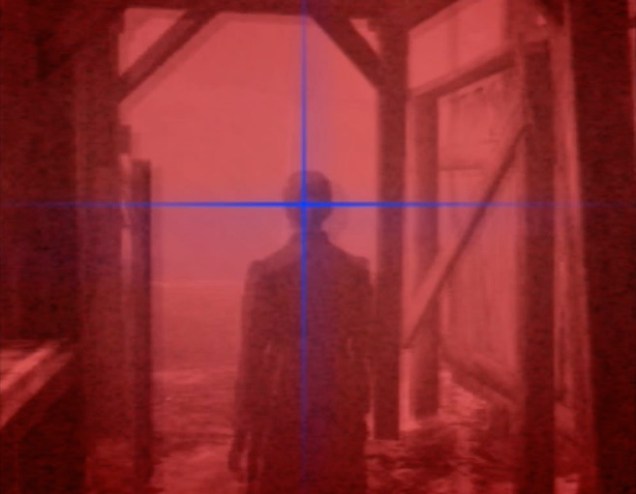
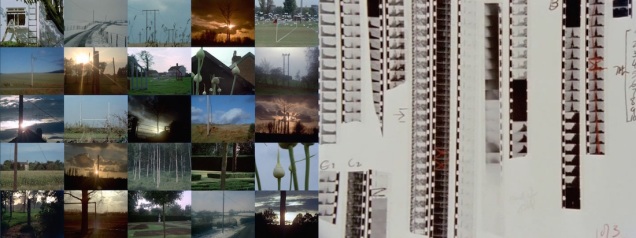
Greenaway-Vertical_Features_Remake-banner_mosaic.jpg

Ian here—

This particular lesson came late in my “Avant-Garde Film and Video Art” course, late enough where it could act as a sort of a postscript on many of the movements we had talked about so far in the course. Thoughts on structural film, narrative, and theories of play below!

Continue reading

Lesson Plan: Peggy Ahwesh’s Martina’s Playhouse

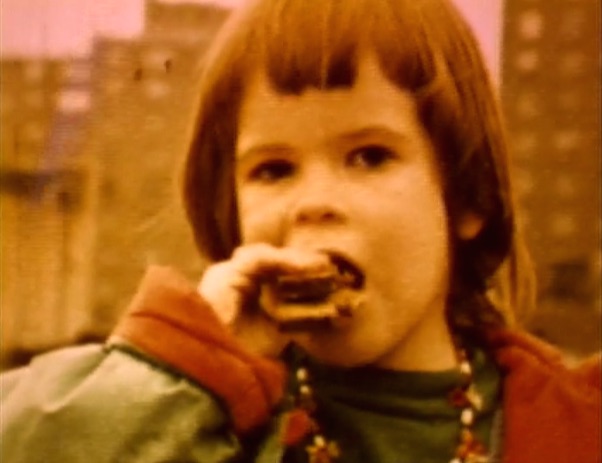
martinas_playhouse-screenshot-01

Ian here—

What follows will be quick, because I did not spend an entire day on Martina’s Playhouse (1989) when I taught it in my “Avant-Garde Film and Video Art” course. It shared a day with Gunvor Nelson and Dorothy Wiley’s Schmeerguntz (1965) and Nelson’s My Name Is Oona (1969), for a week themed around parenthood.

I assigned Ahwesh’s interview with Scott MacDonald as reading for this week. I was interested in what sort of reactions the prominent child nudity and role-play in this film would provoke, particularly given that, all things considered, the events we see onscreen aren’t all that strange. (MacDonald puts it well when he reminisces that “The minute I would turn on my little Super-8 camera to make home movies, two of my boys would drop their pants … Any parent sees that kind of nudity all the time.”[i]) There is, however, a real difference between private family moments and public exhibition, and I was hoping that my students had some strong reactions I could bounce ideas off of.

Continue reading

Lesson Plan: Animation Week

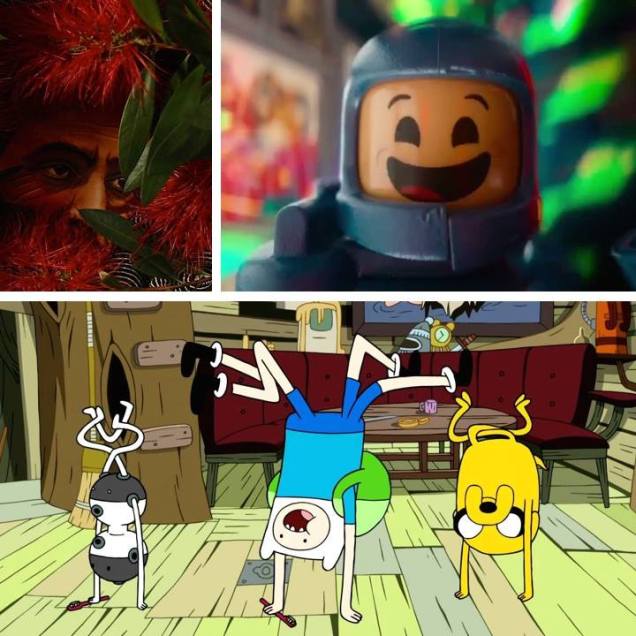
animation_week_mosiac

Ian here—

It is a shame to only teach one week on animation in an Intro to Film class, but I bowed to departmental tradition when I taught Intro to Film in spring 2015 and devoted only my final week of class to it. My screening for this week included Hummingbird Wars (Janie Geiser, 2014)Adventure Time S1E6, “The Jiggler” (Larry Leichliter, 2010), and The Lego Movie (Phil Lord and Christopher Miller, 2014).

This lesson preceded that screening, and pursued the following learning objectives: 1) I wanted students to understand that animators can work with individual frames of cinema, which can lead to the illusion of movement, but doesn’t have to. This would prep them for the flicker effects and broken motion of Geiser’s Hummingbird Wars. 2) I wanted to direct student attention to the salient aspects of Eisenstein’s theory of the “plasmatic” potential of animation, which finds expression in the Adventure Time episode. 3) I wanted students to be able to express some key aesthetic differences between hand-drawn and computer generated animation—specifically, that while hand-drawn animation excels at fulfilling Eisenstein’s “plasmatic” potential, CG animation excels at accurately simulating the physics of our everyday world.

Continue reading

Two Lesson Plans on Childhood and the Found

Janie_Geiser-Lost_Motion-Screenshot-01.jpg
Lost Motion (Janie Geiser, 1999)

Ian here

I have decided to collect two lessons together in this post, since they have a similar scope.

The first lesson is a guest lecture I gave when I was a teaching assistant for Tom Gunning’s winter 2015 course “The Post-war American Avant-Garde Film” at the University of Chicago. This lecture followed a screening of films by Phil Solomon, Lewis Klahr, and Janie Geiser. The second lesson is from my own course, “Avant-Garde Film and Video Art,” taught at the School of the Art Institute in spring 2016. This lesson centered on Geiser, Klahr, and Joseph Cornell.

Continue reading

Lesson Plan: Irony and Lies, pt 2

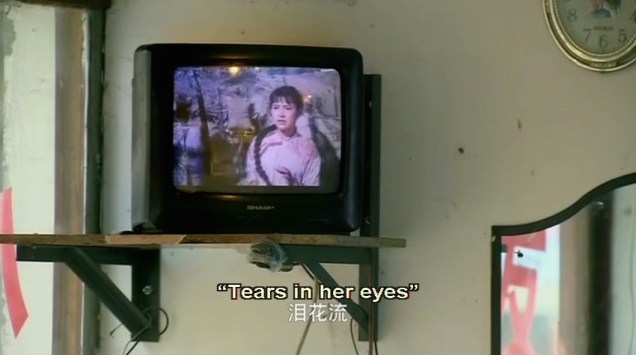
24_city-screenshot-05
24 City (Jia Zhangke, China, 2008)

Ian here

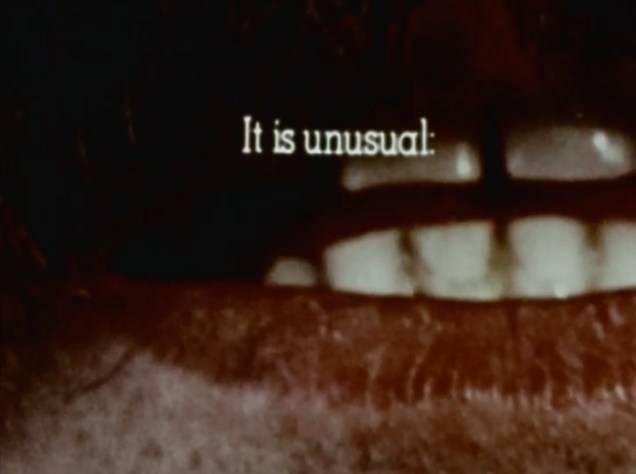
Here’s the second week in my “Ironic Narration and Lying Photographs” section for my course “Moving Images and Arguments.” Below the fold: Mitchell Block’s …no lies (1973), Luis Buñuel’s Land without Bread (1933), and Jia Zhanke’s 24 City (2008). Let the beguilement commence!

Continue reading

Lesson Plan: Irony and Lies in Photography and Cinema, pt 1

pierre_vallieres-screenshot_01
Pierre Vallieres (Joyce Weiland, Canada, 1972)

Ian here—

In my fall 2016 course “Moving Images and Arguments,” a survey of rhetorical techniques across cinema (including plenty of documentaries and essay films), video art, and videogames, I devoted two separate class sessions to the theme of “Ironic Narration and Lying Photographs.” What follows is the first. (I’ll be posting the second later.)

One learning objective for this week was to get students thinking critically about where, exactly, the “lies” come from in photographs that we consider untrustworthy. To this aim, I assigned “Two Futures for Electronic Images,” a chapter from D. N. Rodowick’s The Virtual Life of Film, as reading. I also directed students to the website for “Altered Images,” the Bronx Documentary Center’s exhibition of manipulated documentary photography, to peruse the images and stories collected there. My second learning objective, though, was to slide away from issues of documentary and “lying,” toward issues of humor and irony. Where do we draw the line between lies that are meant to deceive, and lies that are meant as entertaining winks?

Continue reading

Lesson Plan: Horror, Paranoia, and Suspense in Cinema and Videogames

siren-blood_curse_screenshot-1Ian here—

The following is a lesson plan that I first used in my “Comparative Media Poetics: Cinema and Videogames” course taught at U Chicago in spring 2013. It didn’t really come into its own, however, until I re-taught some of the same material, with much greater success, in my course “The Moving and Interactive Image” at the School of the Art Institute of Chicago in the fall of 2015. I’m especially indebted to the students in my SAIC course for helping me direct this material into its current form.

Continue reading

Lesson Plan: The Uncanny Valley

repliee_r1

Ian here

Week 7 of the “Image” section of the U Chicago Humanities Core course “Media Aesthetics” is devoted to Freud’s essay on the uncanny. It’s a tough week: students have to work through the usual trickiness of disentangling Freud’s ideas from the ideas he cites from Ernst Jentsch, and, on top of this, the week has to act as a general introduction to psychoanalysis, which will return in the form of Laura Mulvey’s “Visual Pleasure and Narrative Cinema.” After a tough lecture in the first class meeting of this week, I decided to give my students something that was both more fun, and more hands-on. For the week’s second meeting, I gave them small group work based around Mori Masahiro‘s concept of the uncanny valley.

Continue reading