A Hodology of Videogames: Post-Socialist Rails

For this entry in my series on “hodological space,” I decided to do something a bit different: a video.

Way back in January, I promised that I would write some further thoughts on 35MM (Sergei Nosgov, 2016). The more I tried to pull my thoughts together, though, it became clear that, as much as I like that game, I was lacking in concrete ideas about it. In place of the concrete, 35MM left me with nebulous impressionsfeelings, and half-formed memories. My quest to craft a container for these impressions led to something that is not quite a video essay. The embedded video here is really more of a piece of meditative, impressionistic experimental machinima than it is an analytical work.

This video encapsulates my fascination with the prevalence of abandoned or poorly-maintained railroads and rail stations in post-apocalyptic games coming out of former Eastern Bloc countries. Sometimes, there is a clear lineage on display here, as when the Ukrainian studio 4A Games adapts the Russian science fiction author Dmitri Glukhovsky’s Metro books into the complementary Metro game series. More diffuse influences envelope these games as well, though. Some go back to the Soviet era. In the video, I pick out Andrei Tarkovsky’s Stalker (USSR, 1979) as a distinct visual reference point. Although the S.T.A.L.K.E.R. series developed by Ukrainian team GSC Gameworld hews much closer to the atmosphere of the Strugatsky novel Roadside Picnic on which Stalker is based, I think it’s undeniable that Tarkovsky’s film left a visual mark on post-Soviet apocalyptic fiction. (He was doing “ruin porn” before it was cool.)

As to why, exactly, the decaying rail line has become such a staple of former Eastern Bloc post-apocalyptic fiction … I have no answer. But that’s one of the things you can get away with when choosing this sort of video work over the written word.
A Hodology of Videogames: Silent Hill

silent_hill_screenshot_01

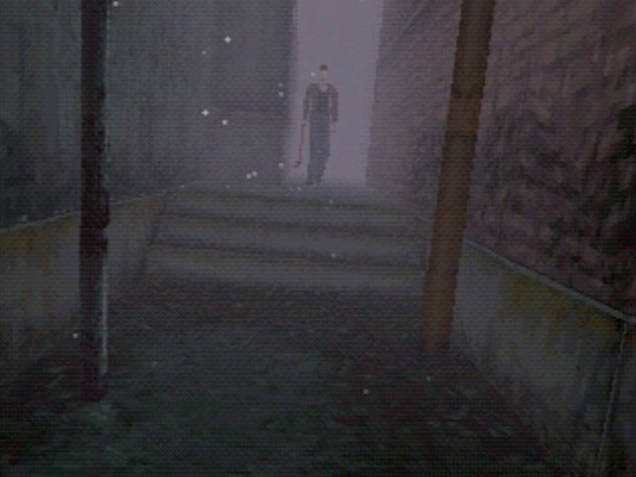
I have wanted to write about the original Silent Hill (Konami Computer Entertainment Tokyo “Team Silent,” 1999) for a very long time. But it has been difficult to find a “way in.” Unlike its pseudo-remake, Silent Hill: Shattered Memories (Climax, 2009), which I have successfully gotten around to writing aboutSilent Hill doesn’t have much in the way of interesting flaws to pick apart. It has flaws, to be sure. But its flaws are banal. It falls prey to the “let’s belatedly explain our incoherent story via some back-loaded cutscenes” problem so typical of games of the original PlayStation era, especially those produced in Japan that I have only ever experienced in English translation. Its successes, meanwhile, are numerous. But I’ve never found a way to approach them with intellectual rigor. My reaction to the game is a primal one, and I have struggled to conjure critical thoughts beyond, “my, it really is surprising how effectively scary this game still is, despite the limitations of its visual style.”

But, what the hell: I’m going to give it a shot, in the form of one of my “hodology of videogames” series of posts. Since it’s been awhile, here’s a quick refresher on the ground rules: “Hodological space” refers to the space that humans inhabit: not a space made up of strict coordinates, but a thicket of preferred paths, affected by factors such as interest, distraction, fatigue, and urgency. It’s a term that originated in the writings of psychologist Kurt Lewin, and which traveled by way of Sartre into the realm of phenomenology. Today, I’ll be thinking about the paths players take through the town of Silent Hill.

Continue reading

Let’s Study The Witness

This past March, at SCMS, I walked out on a paper being delivered by Oscar Moralde on The Witness (Thekla, Inc, 2016). I did so not out of disinterest. (I’ve enjoyed Moralde’s papers in the past.) Nor did I do so out of rudeness. Rather, I did it because of spoilers. Moralde was kind enough to warn ahead of time that his paper would spoil a small portion of the joy of teasing out the behaviors of The Witness’ world, and advised those who hadn’t played it to leave, lest they deny themselves a rich intellectual—and some would even say emotional—experience of personal discovery. And, in my eternal shame, as of March of 2017, I still had not played The Witness. Even though it had been sitting right there in my Steam library for months. (Ashlyn Sparrow and Whitney Pow can attest to the truth of this story.)

Moralde’s paper was a wake-up call to me that I needed to get better about my gaming backlog, if for none other than purely academic reasons. And I think I’ve done a pretty good job of keeping up on things in real-time since that moment. (I played Tacoma, already!) I offer this story, though, not (strictly) as a chance to to advertise my newfound dedication to keeping up with recent releases, but also as a warning. Basically, the heads-up Moralde offered in front of his talk also applies here. The pleasures of The Witness are the pleasures of discovering puzzle mechanics, and you will deny yourself a small portion of those if you watch this new video essay I’ve whipped together.

That said, if you don’t mind spoiling such things, or if you’ve played The Witness already, go ahead and dash right in. This video is considerably shorter and more focused than my previous experiments in the “Let’s Study” format. It focuses on the pedagogical aspects of the game’s puzzle design, in particular its fondness for safe failure. Whether it’s encouraging assumptions about its mechanics that quickly get proved wrong, or setting up perceptual bad habits only to nip them in the bud, Jonathan Blow’s puzzle design in the best portions of The Witness front-load failure, so as to hammer home lessons. I hope you enjoy my short tour through this technique!

As before, a full transcript of my narration is below the fold. (I’d love to eventually add these as subtitles to the YouTube upload for accessibility reasons, but that is beyond my abilities, at the moment.)

Continue reading

The Process Genre in Videogames: Walden, a game pt 2

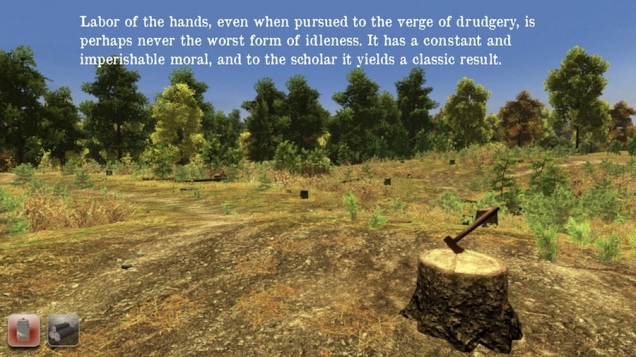
walden_process_genre_screenshot_03

Today marks the 163rd anniversary of the publication of Henry David Thoreau’s Walden; or, Life in the Woods. I am celebrating the occasion by resurrecting my old “Process Genre in Videogames” blog post series, and turning an eye toward the USC Game Innovation Lab’s recently-released Walden, a game, across two posts.

In this series, I borrow the term process genre from Salomé Aguilera Skvirsky’s work in cinema studies. According to Skvirsky’s definition, “process genre” films are films about labor, films that focus on processes of doing and making, that are fascinated with seeing tasks through to their completion. They are deliberately paced, meditative, and often political. In this series of posts (you can see them all here), I examine games that strike some of the same chords.

Yesterday, I compared and contrasted Walden with Minecraft, including a consideration of the Life in the Woods: Renaissance mod pack, which heightens Minecraft‘s Thoreauvian aspects. Of central concern was each game’s treatment of the natural world as a collection of resources. Today, I turn to the matter of “inspiration,” and how Walden, a game transforms enlightened, deliberate living into a game.

Continue reading

The Process Genre in Videogames: Walden, a game pt 1

walden_process_genre_header_image.jpg

Tomorrow marks the 163rd anniversary of the publication of Henry David Thoreau’s Walden; or, Life in the Woods. I have decided to celebrate the occasion by resurrecting my old “Process Genre in Videogames” blog post series, turning an eye toward the USC Game Innovation Lab’s recently-released Walden, a game. I ended up having too a bit too much to say about it to fit into a single blog post, so I’ve split up my thoughts across two days.

Just a quick refresher: in this series, I borrow the term process genre from Salomé Aguilera Skvirsky’s work in cinema studies. According to Skvirsky’s definition, “process genre” films are films about labor, films that focus on processes of doing and making, that are fascinated with seeing tasks through to their completion. They are deliberately paced, meditative, and often political. In this series of posts (you can see them all here), I examine games that strike some of the same chords. Today, that means turning to the life and work of everybody’s favorite environmentalist pseudo-hermit, Henry David Thoreau.

The itch.io page for Walden, a game claims that the game is the product of a “very small core team” at the USC Game Innovation Lab working on the project for “the past ten years.” I first became aware of it in November 2011, when Tracy Fullerton sat down and had a wonderful talk with students during a session of the University of Chicago’s New Media Workshop. Back then, Fullerton described the project as a difficult balancing act, balancing the quantitative and systems-heavy “gamey” aspects of games—which are actually right there in Thoreau’s text, making this entire project of adaptation especially tempting—with the need to present nature, and the labor one does when living in it, as a source of unpredictable inspiration, worthy of our respect and wonder.

Continue reading

“The scariest stuff is like really really boring”: Night in the Woods

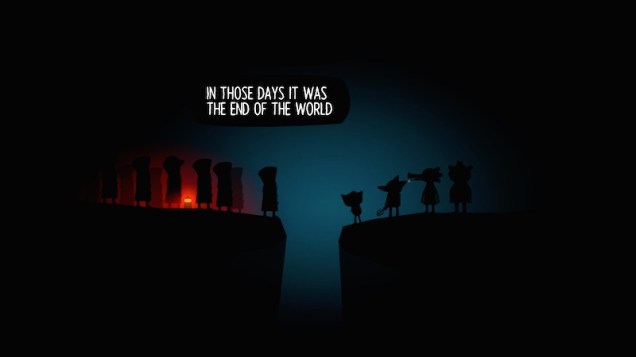
night_in_the_woods_screenshot_04.jpg

Night in the Woods tells the most vital story of any game in 2017. We’re only halfway through the year, but I doubt very much that it will be bested in this regard. Find out why below the fold, but beware of spoilers if you haven’t played it yet, and plan to. I will be discussing how this very important game’s themes resonate all the way to its ending.

Continue reading

Interesting Games of 2017: The Year So Far

dream_machine_ch_6_screenshot_01

My goodness. It’s been awhile since I’ve done a non-silly post. The new job has kept me busy, and on top of that I have made a real push to catch up on games released in 2017, now that we have passed the year’s halfway point. This latter task has given me plenty to mull over, and while I’m not yet prepared to write longer critical thoughts on the games in question, I thought I would collect some “quick takes,” as a way of priming the pump.

I still have a substantial backlog of big releases from 2017. I have not yet played Nier: Automata (PlatinumGames, 2017), or RiME (Tequila Works, 2017). I’m making my way through Resident Evil 7: biohazard (Capcom, 2017) right now. And although I recently bought Prey (Arkane Studios, 2017), I’m afraid that my 2012-built PC might not run it smoothly, and have been putting off installing it.

I have, though, found the time to play over a dozen other games released in the past six months. Thoughts below are listed in order of the release date of the game. I’ll set up links in this page if and when I write fuller pieces on any of these games.

Continue reading

Here on My Side of the Screen

Hate_Plus_screenshot_02

(I’m officially retiring my usual “Ian here” greeting, as, in the absence of student posts, there will be no one but me posting on this blog for the foreseeable future.)

Early in his book Pilgrim in the Microworld, a phenomenological account of videogame expertise that stands as landmark work of first-person game criticism, David Sudnow attempts to describe, to a presumably completely ignorant reader, the experience of playing Breakout (Atari, 1972). “There’s that world space over there, this one over here,” he writes, “and we traverse the wired gap with motions that make us nonetheless feel in a balanced extending touch with things.”[i]

Today, the term “wired gap” is archaic—we sit comfortably in the age of wireless game controllers. But the general logic of this gap, and how it is traversed, nonetheless persists. On the one side, we have the electronic world represented on the screen. On the other side, we have ourselves, cordoned off from the world of the game by virtue of being flesh-and-blood. If we act upon that other world from our side of the screen, it must be by virtue of some sort of electronic input device: keyboard and mouse, DualShock 4, Wii Remote, Jungle Beat bongo drum, what have you. Wired or not, the relationship we have with that world on the other side of the screen is necessarily mediated by technology: sever that particular link, and our involvement with it ceases.

Not all games follow this logic, however. In this post, I’ll be looking at three games, all of which came out around 2012–2014, that ask you to do more, as a player, than simply manipulate an electronic interface. These games have a different sort of contract with their player. They ask you agree to more wide-ranging sets of behaviors over on your side of the screen, which, by their very nature, cannot be regulated in strict procedural terms. These are games that re-map the points of contact between our fleshy, spacious realm and the realm of bits and pixels.

Continue reading

Double Blind

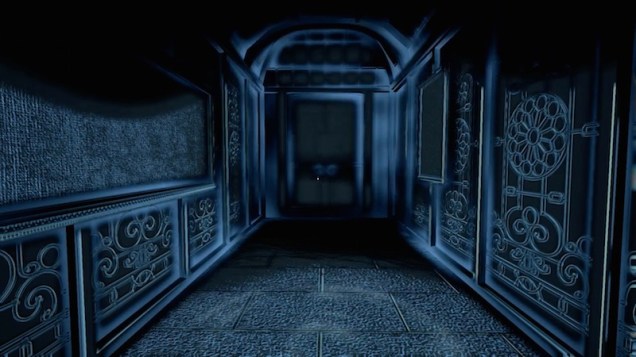
perception_screenshot_01.jpg

Ian here—

I’ve written about synesthetic interfaces before: that is, interfaces that perform a sensory substitution, translating the information normally associated with one sense modality into the phenomenal forms normally associated with another. In my previous work, I’ve usually focused on forms of nonhuman perception and certain modes of perceptual expertise. The release of Perception (The Deep End Games, 2017) yesterday, however, gives me an opportunity to dip into a new topic: disability.

Perception is a horror game about a blind woman exploring a haunted house. Unlike a game such as Papa Sangre (Somethin’ Else, 2010), however—an experiment in audio-only digital game design that has sadly been taken off of the iOS App Store as of this writing—Perception doesn’t court blind and other low-vision players. Rather than featuring robust, binaural sound localization simulation, Perception re-imagines the auditory perception of its blind protagonist Cassie as a kind of sonar vision, thrown up on the player’s screen in spooky, warbly monochrome.

This isn’t the first time games nominally about blindness have been served up to sighted players. In this post, I take up a comparative investigation of Perception alongside Beyond Eyes (Tiger and Squid / Team17 Digital Ltd, 2015), which drops the horror angle in favor of child-friendly, colorful adventure.

Continue reading

A Hodology of Videogames: Proteus

proteus_screenshot_01

Ian here—

Welcome to the third of a series of posts I’ll be doing on hodological space in games. “Hodological space” refers to the space that humans inhabit: not a space made up of strict coordinates, but a thicket of preferred paths, affected by factors such as interest, distraction, fatigue, and urgency. It’s a term that originated in the writings of psychologist Kurt Lewin, and which traveled by way of Sartre into the realm of phenomenology.

If, as Jean-Luc Godard once famously said, all you need to make a movie is a girl and a gun, than all you need to make a videogame is an island.

The island-game gave us Myst (Cyan, 1993), and it gave us last year’s The Witness (Thekla, Inc., 2016). It has also already made an appearance in this very series, with Miasmata (IonFX, 2012). But my favorite island game of all time might be Proteus (Ed Key and David Kanaga, 2013). And to really talk about what it gets right, we have to dip into issues of genre. So, buckle up: it’s going to be a bumpy ride.

Continue reading