Joana Pimenta’s An Aviation Field

an_aviation_field.jpg

Ian here—

So I’ve done a couple dispatches now from the University of Chicago Film Studies Center’s “Troubling the Image” series. I’ve especially like the recent material that Julia Gibbs and Patrick Friel have pulled together from filmmakers and video artists around the world. As it turns out, 2016 was an especially good year for experimental cinema.

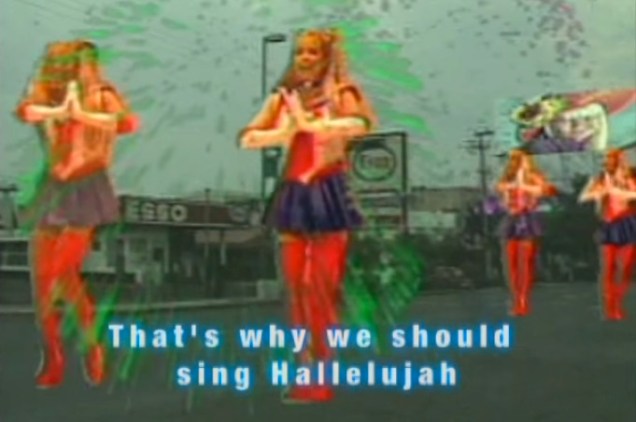
In fact, although there’s a truly embarrassing array of films I need to catch up on from 2016 (been playing too many games …), I think it’s likely the case that my favorite film from 2016 will be an experimental short: Portuguese-American filmmaker Joana Pimenta’s video An Aviation Field.

Continue reading

Lesson Plans: SEE YOU IN COURT (or, SCOTUS ponders whether the medium is the message)

see_you_in_court_image_diptych

Ian here—

In this post I’m going to be mashing together several lesson plans from two very different courses: my Intro to Mass Communication course at DePaul University, and the course “Frames, Claims, and Videogames,” which I’m currently teaching at the School of the Art Institute right now. Despite their different origins, these lessons speak to common themes, and in fact they could be productively combined in the future. At issue in all of them: the US Supreme Court’s shifting views on various media, their potential for socially valuable expression, and their first amendment protections (or lack thereof). We could call it a vernacular legal theory of medium specificity, moments in which those whose job it is to interpret the law dip their toes into defining the specific affordances and dangers of a given medium.

What is our country coming to when a so-called judge can define a medium’s potential as a mode of expression?  THE DEFINITIONS OF OUR MEDIA ARE AT STAKE.

Continue reading

Let’s Study Virginia

Ian here—

So, awhile back I promised further thoughts on Virginia. After mulling it over, I decided to put them in video form. The end result is a sort of let’s play/video essay hybrid, which I’m calling a “let’s study.” (This sounded less presumptuous than “let’s analyze,” which I didn’t want to use because this video isn’t particularly academic. At the same time, though, it sounded more sturdy than “let’s think about,” or some other wishy-washy formation.)

This video is slightly under an hour, and it’s only the first half of what I’m planning on making into a two-video sequence. I’ll update the embedded video above so that it plays the whole playlist rather than just the first video once I’ve finished the second one. [UPDATE 2017-02-28: I’ve updated the embedded video! If it doesn’t auto-play the entire sequence, it should at the very least recommend the second after you finish the first.]

Full transcript of the script below the fold, for those of you who prefer reading things.

Continue reading

Lesson Plan: Basic Terms of Cinema Studies + Their Relevance for Avant-Garde Cinema

prezi_screenshot-key_terms_header_image

Ian here—

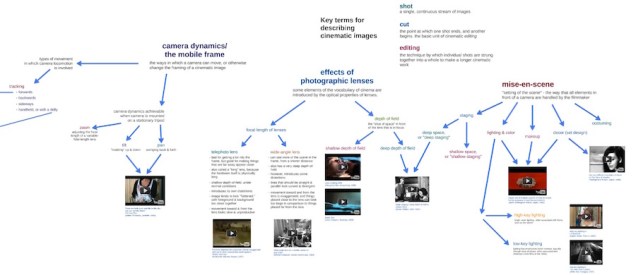
I suspect that every cinema studies teacher has their own favorite examples to use when teaching key vocabulary terms, and I would not be so presumptuous as to prescribe my own favorites! Nevertheless, though, it’s an important part of the job, so I wanted to share my own approach here.

Over the past couple of years, I have gotten used to teaching these terms in a very specific context. At the School of the Art Institute, I teach first-year seminar courses. They are courses designed so that all students have some basis in college-level writing as they go through their time at SAIC. Instructors are given enormous freedom to teach whatever they like. This makes it a great venue for testing out new and interesting course ideas, but the flip side of that is that your courses never have prerequisites, and there’s no telling the level of expertise students who enroll will actually have.

What I do, then, is devote one day early on in the semester to a quick-and-dirty Intro to Film in a single lecture. I take a lot of the examples and explanations I first started using when I taught Intro to Film at U Chicago in 2015, but I condense them down into something that can fit into an hour or so. It’s potent stuff.

You can access my go-to presentation here. I’ve set the privacy and sharing settings to their most open, so if you’re a Prezi user you should feel free to copy it if you like it, subbing in your own preferred definitions and clips as you feel necessary! I’m here to share, and not here to impose.

Continue reading

Lesson Plan: Deren, Anger, and Their Films Today

maya_deren

Ian here—

This is not a full lesson plan. It is only a few remarks, which I made at the beginning of my class before moving on to the lesson proper, which was much more discussion-based.

I consider these remarks to be necessary in the current moment, and I plan to continue delivering such remarks during future lessons. Many filmmakers associated with North American avant-garde cinema are wild fabulators, building up grand mythologies for themselves and their careers. The figures examined here are certainly no exception. However, it is important that, as instructors, we do not get too caught up in telling these stories. These filmmakers were not just Great Geniuses. They were people, human beings living in a particularly historically-situated time, within the realities of a certain political regime. Acknowledging this reality is crucial, as it helps us better understand our own era.

It is useful to keep the following things in mind, and to repeat them whenever possible:

Meshes of the Afternoon (Maya Deren with Alexander Hackenshmied, 1943), often considered the precipitating film of American avant-garde cinema, was made by two immigrants.

Continue reading

Cursory Knoweldge

outlast-screenshot-01

Ian here—

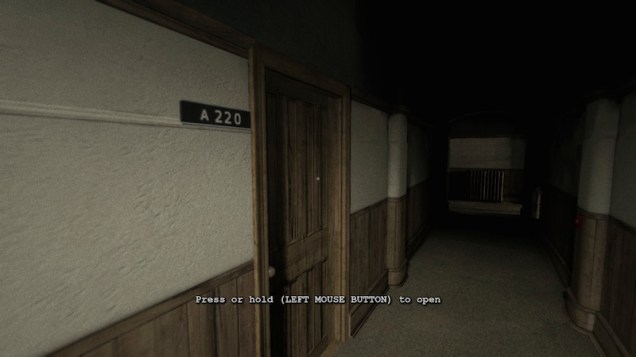
If I had to sum up a significant portion of the writing I do on videogames, I would offer the following formulation as a précis: The establishment of character in videogames isn’t achieved solely through writing. It is also established through user interface design.

Sometimes, something as simple as how a cursor behaves can tell us a lot about a character. Be forewarned—the breezy tour through the issue below contains significant spoilers for Firewatch (Campo Santo, 2016).

Continue reading

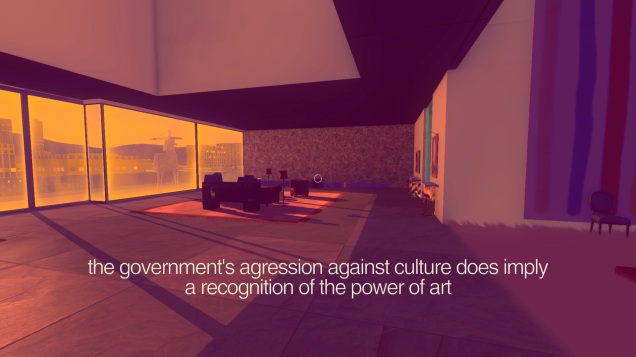
The Process Genre in Videogames: Sunset

sunset_screenshot_header_image
In all seriousness, call your elected representatives and tell them to oppose defunding the NEA and NEH.

Ian here—

This post is part of a series that borrows the term process genre from Salomé Aguilera Skvirsky’s work in cinema studies, and explores its utility for videogame analysis. A quick definition: “process genre” films are films about labor, films that focus on processes of doing and making, that are fascinated with seeing tasks through to their completion. They are deliberately paced, meditative, and often political, in that they cast a penetrating eye on labor conditions. Are there games that the same chords? Posts in the series so far can be seen here.

I reserve the right to sporadically post future entries in this series, but with Sunset (Tale of Tales, 2015), it really does feel as if things have come full circle. As I laid out in the first post in this series, the process genre finds its most archetypal manifestation in Belgian filmmaker Chantal Akerman’s Jeanne Dielman, 23 Commerce Quay, 1080 Brussels (1975), and Skvirsky has been tracking its development in contemporary Latin American cinema. Sunset was created by Belgian artist duo Auriea Harvey and Michaël Samyn, and is about the daily life of a housekeeper in a (fictional) Latin American country. The parallels are easily drawn, but there’s also more going on here than this brief description suggests.

Continue reading

Arash Nassiri’s Darwin Darwah

darwin_darwah-frame_grab

Ian here—

Another quick reflection on something screened for the Film Studies Center’s so-far excellent “Troubling the Image” series. This time, Arash Nassiri’s video Darwin Darwah (2016), screened as part of their “Tales of Sound and Vision” night, last Friday. The screening was full of great stuff—including The Inner World of Aphasia (Edward R. Feil, 1958), which I would recommend to anyone who always wished Sam Fuller and Owen Land had made a film together—but Nassiri’s piece left me with the most coherent thoughts.

Continue reading

Preview: Frames, Claims, and Videogames

porp_ultra_business_tycoon_header_image.jpg

Ian here—

So I got an email last Saturday from the Liberal Arts Department at the School of the Art Institute, saying they’re short one First-Year Seminar I instructor, and asking me if I could sub in. I agreed.

I’ve already taught First-Year Seminar I at SAIC three times, and have three separate courses ready to go for it. So, of course I did what any sane person would do.

I designed an entirely new course, basically from scratch, in five days.

And it was such a pleasure! Up until now, I’ve never taught any course entirely on videogames. I’ve taught courses that were about half-and-half cinema and videogames, and I’ve thrown short modules on games into just about every course I’ve ever taught, from U Chicago’s Media Aesthetics to DePaul’s Intro to Mass Communication. I had somehow gone my entire teaching career without devoting an entire class to games, though. It seemed high time to rectify that.

Continue reading

Preview: Avant-Garde Cinema and Video Art

avant-garde_spring_2017_header_image

Ian here—

The School of the Art Institute spring 2017 semester begins tomorrow, and I wanted to take a moment this week to introduce this term’s classes, as you will likely be seeing posts related to these classes in the near future. First up: the section I’m teaching for SAIC’s First-Year Seminar II course, “Avant-Garde Film and Video Art.”

Now, I’ve taught this course before, and in fact this blog is littered with previous lesson plans I’ve used for it. But I decided to shuffle my syllabus up considerably this time around.

Continue reading