Games of the Decade: Pacing

games_of_the_decade_ghost_trick_02

The question of whether videogames should attempt to tell stories was all the vogue in game studies in the late 90s and early 2000s. You’re less likely to encounter the issue in academia today (unless said academics are writing think pieces at The Atlantic.) But it is still very much an ongoing debate in game development: it isn’t too difficult to still find opinionated developers launching screeds against linearity, against the single-player campaign, and against games’ subservience to the logic of cinematic storytelling.

As is so often the case in such conversations, there is a temptation to jump directly to a categorical assessment, leaping over qualitative assessment entirely. The categorical question “should games tell stories?” is a good way to start a rousing bar fight of a debate. Alternately, the qualitative question “do games, as we know them, have a history of telling stories well?” will most likely lead to the reasoned response, “no.” This, in turn, will possibly lead to further avenues of polite and potentially incisive inquiry, such as “why do you suppose that is?” and “are there any ways that we could chart new types of storytelling that might be more compatible with games’ basic features?”

I’m going take the polite and careful qualitative route, not really because I prefer it (I enjoy a rousing debate as much as anyone else), but because I actually think it’s necessary to set the groundwork before making any larger qualitative claims.
Continue reading

Games of the Decade: Elegance

games_of_the_decade_the_witness_01

Even those who would reject the idea that videogames are an “art form” could agree that games can exhibit certain traditional aesthetic values. One prominent one is elegance. If we look toward traditional, analogue games, it seems inarguable to me that Go is elegant, and that Chess is elegant. Over the course of centuries, the tumbler of human culture has worn them down to their most perfect, least messy forms. (And they often come in supremely visually pleasing packages, to boot.) Looking to the history of videogames, it seems uncontroversial to propose that Tetris (Alexey Pajitnov, 1984) and Breakout (Atari, 1972) also exhibit this serene mixture of simplicity and grace.

Of course, videogames can also be bloated and unrefined. On the audiovisual level, the public imagination has long associated the medium all that is cacophonous and retina-searing: a ceaseless stream of crude stimulation optimized for goldfish-like attention spans. A peek at the output of PlatinumGames or Treasure over the past decade demonstrates that this conception is not entirely unearned. On the design side of things, games often come packaged with an inordinate amount of mechanical cruft. To boot up a contemporary Ubisoft game is to be assaulted by map icons, as the core activities of the game are augmented with collectibles and minigames and side-challenges and online player “invasions” and microtransactions and and and and and and and and and….

Sometimes, though, you can point to a game and say, “this is exactly what it needs to be, and no more.” Sometime a game stands as a perfectly-cut gem of craft, with every element contributing to an overall sense of balance. Its user interface is a triumph of usability, compact and graceful. Its color scheme is tamped-down and meaningful. Its sound design is minimal and expertly-deployed. It is thematically tight: if there is a narrative involved, it is a lean and coherent one. It is, overall, soothing in its form, even if it might simultaneously be stressful in its challenge.

The first five games of this list all chase this sort of technical perfection. Some are small, and some are large, but they all are careful not to hit one unnecessary note.

Continue reading

Games of the Decade, 2007–2017

games_of_the_decade_main_header_image

Wait … what? Who does that? Who makes a decade-long retrospective in a year ending in anything but a 9? And who publishes a retrospective in any month but December?

Well, I do. And I have my reasons for it.

Chief among these is that the true purpose of any “best of” list is to be wrong in fun and provocative ways. What better way to start things out, then, than by choosing an utterly arbitrary set of dates?

But, really, I do have reasons, which you’ll find below the fold, as well as the categories I’ll be announcing the games in. The list itself will start tomorrow, and continue until October 10th. (And there’s a reason for that!)

Continue reading

The Process Genre in Videogames: Walden, a game pt 2

walden_process_genre_screenshot_03

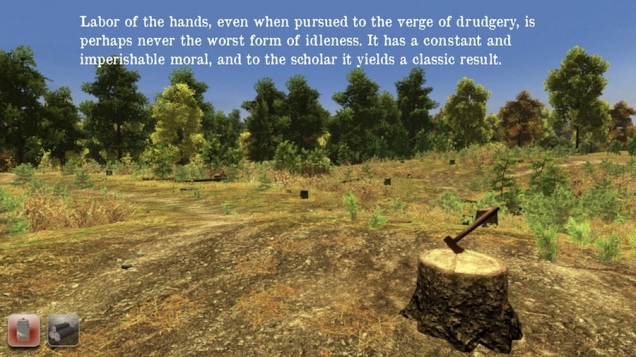
Today marks the 163rd anniversary of the publication of Henry David Thoreau’s Walden; or, Life in the Woods. I am celebrating the occasion by resurrecting my old “Process Genre in Videogames” blog post series, and turning an eye toward the USC Game Innovation Lab’s recently-released Walden, a game, across two posts.

In this series, I borrow the term process genre from Salomé Aguilera Skvirsky’s work in cinema studies. According to Skvirsky’s definition, “process genre” films are films about labor, films that focus on processes of doing and making, that are fascinated with seeing tasks through to their completion. They are deliberately paced, meditative, and often political. In this series of posts (you can see them all here), I examine games that strike some of the same chords.

Yesterday, I compared and contrasted Walden with Minecraft, including a consideration of the Life in the Woods: Renaissance mod pack, which heightens Minecraft‘s Thoreauvian aspects. Of central concern was each game’s treatment of the natural world as a collection of resources. Today, I turn to the matter of “inspiration,” and how Walden, a game transforms enlightened, deliberate living into a game.

Continue reading

The Process Genre in Videogames: Walden, a game pt 1

walden_process_genre_header_image.jpg

Tomorrow marks the 163rd anniversary of the publication of Henry David Thoreau’s Walden; or, Life in the Woods. I have decided to celebrate the occasion by resurrecting my old “Process Genre in Videogames” blog post series, turning an eye toward the USC Game Innovation Lab’s recently-released Walden, a game. I ended up having too a bit too much to say about it to fit into a single blog post, so I’ve split up my thoughts across two days.

Just a quick refresher: in this series, I borrow the term process genre from Salomé Aguilera Skvirsky’s work in cinema studies. According to Skvirsky’s definition, “process genre” films are films about labor, films that focus on processes of doing and making, that are fascinated with seeing tasks through to their completion. They are deliberately paced, meditative, and often political. In this series of posts (you can see them all here), I examine games that strike some of the same chords. Today, that means turning to the life and work of everybody’s favorite environmentalist pseudo-hermit, Henry David Thoreau.

The itch.io page for Walden, a game claims that the game is the product of a “very small core team” at the USC Game Innovation Lab working on the project for “the past ten years.” I first became aware of it in November 2011, when Tracy Fullerton sat down and had a wonderful talk with students during a session of the University of Chicago’s New Media Workshop. Back then, Fullerton described the project as a difficult balancing act, balancing the quantitative and systems-heavy “gamey” aspects of games—which are actually right there in Thoreau’s text, making this entire project of adaptation especially tempting—with the need to present nature, and the labor one does when living in it, as a source of unpredictable inspiration, worthy of our respect and wonder.

Continue reading

“The scariest stuff is like really really boring”: Night in the Woods

night_in_the_woods_screenshot_04.jpg

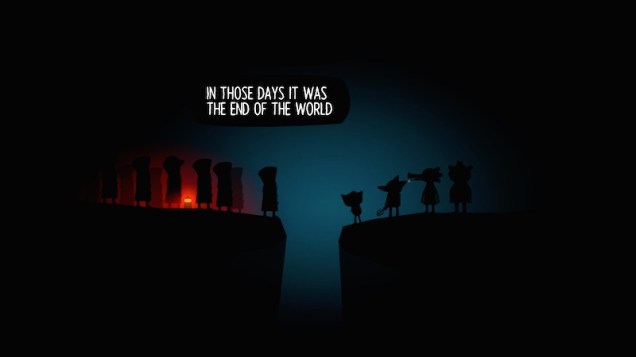
Night in the Woods tells the most vital story of any game in 2017. We’re only halfway through the year, but I doubt very much that it will be bested in this regard. Find out why below the fold, but beware of spoilers if you haven’t played it yet, and plan to. I will be discussing how this very important game’s themes resonate all the way to its ending.

Continue reading

Interesting Games of 2017: The Year So Far

dream_machine_ch_6_screenshot_01

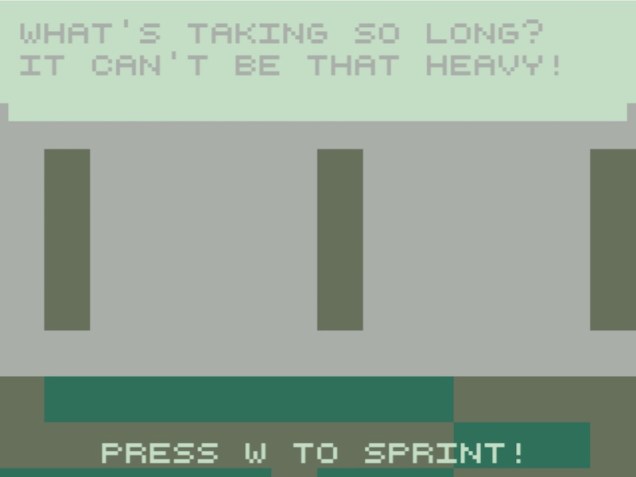
My goodness. It’s been awhile since I’ve done a non-silly post. The new job has kept me busy, and on top of that I have made a real push to catch up on games released in 2017, now that we have passed the year’s halfway point. This latter task has given me plenty to mull over, and while I’m not yet prepared to write longer critical thoughts on the games in question, I thought I would collect some “quick takes,” as a way of priming the pump.

I still have a substantial backlog of big releases from 2017. I have not yet played Nier: Automata (PlatinumGames, 2017), or RiME (Tequila Works, 2017). I’m making my way through Resident Evil 7: biohazard (Capcom, 2017) right now. And although I recently bought Prey (Arkane Studios, 2017), I’m afraid that my 2012-built PC might not run it smoothly, and have been putting off installing it.

I have, though, found the time to play over a dozen other games released in the past six months. Thoughts below are listed in order of the release date of the game. I’ll set up links in this page if and when I write fuller pieces on any of these games.

Continue reading

Here on My Side of the Screen

Hate_Plus_screenshot_02

(I’m officially retiring my usual “Ian here” greeting, as, in the absence of student posts, there will be no one but me posting on this blog for the foreseeable future.)

Early in his book Pilgrim in the Microworld, a phenomenological account of videogame expertise that stands as landmark work of first-person game criticism, David Sudnow attempts to describe, to a presumably completely ignorant reader, the experience of playing Breakout (Atari, 1972). “There’s that world space over there, this one over here,” he writes, “and we traverse the wired gap with motions that make us nonetheless feel in a balanced extending touch with things.”[i]

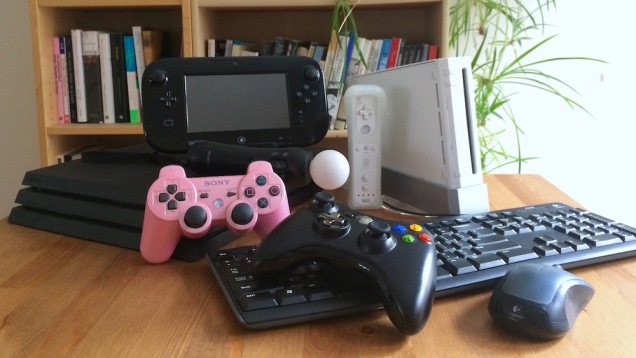
Today, the term “wired gap” is archaic—we sit comfortably in the age of wireless game controllers. But the general logic of this gap, and how it is traversed, nonetheless persists. On the one side, we have the electronic world represented on the screen. On the other side, we have ourselves, cordoned off from the world of the game by virtue of being flesh-and-blood. If we act upon that other world from our side of the screen, it must be by virtue of some sort of electronic input device: keyboard and mouse, DualShock 4, Wii Remote, Jungle Beat bongo drum, what have you. Wired or not, the relationship we have with that world on the other side of the screen is necessarily mediated by technology: sever that particular link, and our involvement with it ceases.

Not all games follow this logic, however. In this post, I’ll be looking at three games, all of which came out around 2012–2014, that ask you to do more, as a player, than simply manipulate an electronic interface. These games have a different sort of contract with their player. They ask you agree to more wide-ranging sets of behaviors over on your side of the screen, which, by their very nature, cannot be regulated in strict procedural terms. These are games that re-map the points of contact between our fleshy, spacious realm and the realm of bits and pixels.

Continue reading

The Limits of Disempowerment

realistic_female_fps_anthropy_02

Ian here—

For years, I didn’t know what to do with Anna Anthropy’s Realistic Female First-Person Shooter (2012).

It is, shall we say, a “minor Anthropy.” It’s not one of the games that she includes on her itch.io storefront. If you want to play it, you have to head over here. (It is, unfortunately, Windows-only, although Mac users should feel free to look at this video of the game in action on YouTube).

But despite its somewhat tossed-off status, it is a game I was serious considering including in my article on fumblecore games. There was just one problem: it seemed completely incompatible with my argument. So I swept it under the rug, but kept it in my memory, blinking in the back of my brain, challenging me, keeping me honest.

I think I’ve finally figured out what I want to say about it now, and it’s mostly thanks to the students in my “Frames, Claims, and Videogames” class. I didn’t even teach Realistic Female First-Person Shooter in that class. Instead, my thoughts began crystalizing as students reacted of Alyson Macdonald’s Twine game Female Experience Simulator (2013), one of the most contentious games we played in the course.

Continue reading

A Hodology of Videogames: Miasmata

miasmata_screenshot_05

Ian here—

Welcome to the second of a series of posts I’ll be doing on hodological space in games. “Hodological space” refers to the space that humans inhabit: not a space made up of strict coordinates, but a thicket of preferred paths, affected by factors such as interest, distraction, fatigue, and urgency. It’s a term that originated in the writings of psychologist Kurt Lewin, and which traveled by way of Sartre into the realm of phenomenology.

Up today: the survival simulation game Misasmata (IonFX, 2012). Accepted onto the Steam storefront in October 2012 as part of Valve’s second batch of games approved through the now-defunct Greenlight submission process, one of Miasmata‘s most notable traits was being on the leading edge of the “goodness, there are too many indie games than one could ever keep up with” moment we are currently in. Miasmata, though, is worth remembering for more than that. It also possesses a genuinely innovative movement system, one that, in its own weird way, serves as a nice counterpoint to the subject of my previous entry in this seriesThe Legend of Zelda: Breath of the Wild (Nintendo EDP, 2017).

Continue reading