“The scariest stuff is like really really boring”: Night in the Woods

night_in_the_woods_screenshot_04.jpg

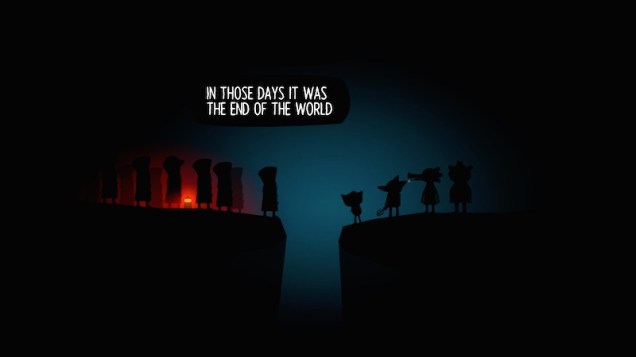
Night in the Woods tells the most vital story of any game in 2017. We’re only halfway through the year, but I doubt very much that it will be bested in this regard. Find out why below the fold, but beware of spoilers if you haven’t played it yet, and plan to. I will be discussing how this very important game’s themes resonate all the way to its ending.

Continue reading →

Lesson Plan: Net Neutrality

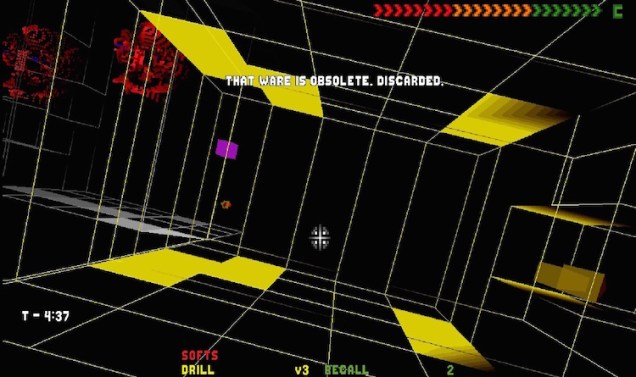
net_neutrality_system_shock.jpg

I have decided to re-post this lesson plan that I originally posted in December of last year. In re-posting it, I am forgoing the doom and gloom I offered in the introduction of the original post. A better attitude is needed. It is our duty as citizens to raise our voices in response to bad policy, so consider this my own humble contribution to the Internet-wide Day of Action to Save Net Neutrality.

Continue reading →

Interesting Games of 2017: The Year So Far

dream_machine_ch_6_screenshot_01

My goodness. It’s been awhile since I’ve done a non-silly post. The new job has kept me busy, and on top of that I have made a real push to catch up on games released in 2017, now that we have passed the year’s halfway point. This latter task has given me plenty to mull over, and while I’m not yet prepared to write longer critical thoughts on the games in question, I thought I would collect some “quick takes,” as a way of priming the pump.

I still have a substantial backlog of big releases from 2017. I have not yet played Nier: Automata (PlatinumGames, 2017), or RiME (Tequila Works, 2017). I’m making my way through Resident Evil 7: biohazard (Capcom, 2017) right now. And although I recently bought Prey (Arkane Studios, 2017), I’m afraid that my 2012-built PC might not run it smoothly, and have been putting off installing it.

I have, though, found the time to play over a dozen other games released in the past six months. Thoughts below are listed in order of the release date of the game. I’ll set up links in this page if and when I write fuller pieces on any of these games.

Continue reading →

Videogame Cat of the Week: Little Devil

cat_of_the_week_little_devil_05.jpg

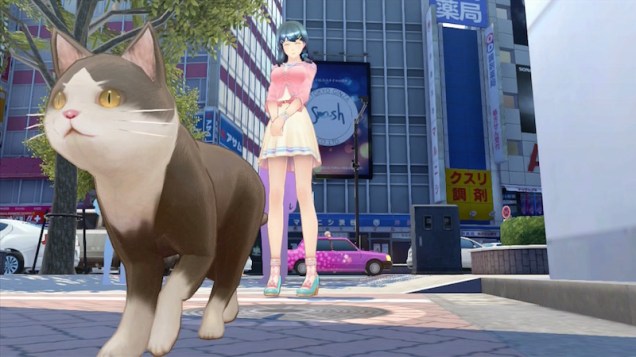
This week, finishing off our run of cats exclusive to Nintendo platforms, I turn to Tokyo Mirage Sessions ♯FE (Atlus, 2015). It’s a game about J-Pop stars using the powers of the performing arts to battle monsters and shake the residents of Tokyo out of their collective ennui, thereby saving them from certain doom. Obviously, it goes without saying that it is one of the most delightful games I have ever played. The cherry on top is that it has a great scene with a great cat, Little Devil.

Continue reading →

Videogame Cat of the Week: Aisha

cat_of_the_week_aisha

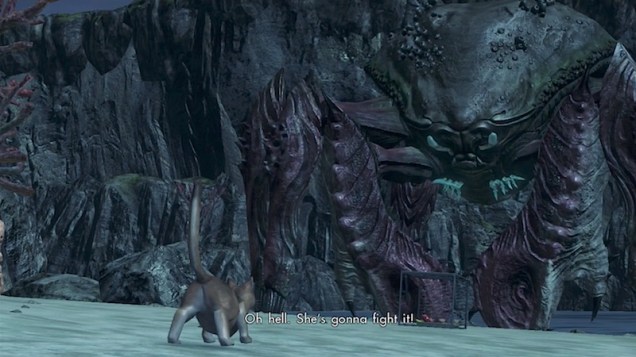
Xenoblade Chronicles X (Monolith Soft, 2015) an enormous game—too big, in fact—and so there is a very real possibility that players will miss the side mission “Nine Lives” when they play. This would be a shame, as they would also miss the opportunity to be acquainted with Aisha, the game’s cat.

Aisha is a badass. In Xenoblade Chronicles X, the entire Earth has been destroyed, but Aisha survived because she was the baddest cat on the planet. Humans recognized her vast potential and brought her aboard on a spaceship headed to a new home, to test the hardiness of felines and their potential to conquer the universe. Spoilers: they totes will. Aisha represents the absolute best of her species, unafraid to pick fights with giant crab monsters that try to steal her food.

Continue reading →

Videogame Cat of the Week: The Post-Apocalyptic Cats of Fragile Dreams

fragile_dreams_screenshot_01

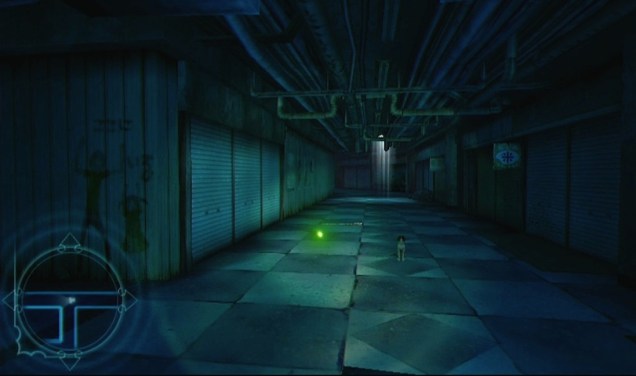
In most Western post-apocalyptic videogames, the broken and ruined remnants of society are populated by bandits, mutants, and Max Max-style ruffians. In the Japanese-developed Fragile Dreams: Farewell Ruins of the Moon (Bandai Namco / tri-Crescendo, 2009), post-apocalyptic Tokyo is populated almost entirely by ghosts, robots, and cats.

Based on what I know about contemporary Japanese society, this seems about right.

Continue reading →

Videogame Cat of the Week: Jeane

cat_of_the_week_Jeane_01

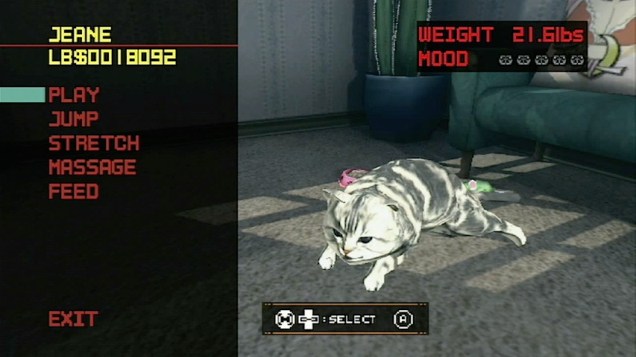
In No More Heroes (Grasshopper Manufacturer, 2007), otaku assassin Travis Touchdown has a kitten named Jeane. In No More Heroes 2: Desperate Struggle (Grasshopper Manufacture, 2010), Jeane has is full-grown, and is now fat. These things happen.

Travis’ main interaction with Jeane in Desparate Struggle takes the form of an exercise regimen. He has decided that Jeane could lose some weight, and is determined to meet this goal. The regimen includes both playing and forms of rigorous petting.

Continue reading →

Here on My Side of the Screen

Hate_Plus_screenshot_02

(I’m officially retiring my usual “Ian here” greeting, as, in the absence of student posts, there will be no one but me posting on this blog for the foreseeable future.)

Early in his book Pilgrim in the Microworld, a phenomenological account of videogame expertise that stands as landmark work of first-person game criticism, David Sudnow attempts to describe, to a presumably completely ignorant reader, the experience of playing Breakout (Atari, 1972). “There’s that world space over there, this one over here,” he writes, “and we traverse the wired gap with motions that make us nonetheless feel in a balanced extending touch with things.”[i]

Today, the term “wired gap” is archaic—we sit comfortably in the age of wireless game controllers. But the general logic of this gap, and how it is traversed, nonetheless persists. On the one side, we have the electronic world represented on the screen. On the other side, we have ourselves, cordoned off from the world of the game by virtue of being flesh-and-blood. If we act upon that other world from our side of the screen, it must be by virtue of some sort of electronic input device: keyboard and mouse, DualShock 4, Wii Remote, Jungle Beat bongo drum, what have you. Wired or not, the relationship we have with that world on the other side of the screen is necessarily mediated by technology: sever that particular link, and our involvement with it ceases.

Not all games follow this logic, however. In this post, I’ll be looking at three games, all of which came out around 2012–2014, that ask you to do more, as a player, than simply manipulate an electronic interface. These games have a different sort of contract with their player. They ask you agree to more wide-ranging sets of behaviors over on your side of the screen, which, by their very nature, cannot be regulated in strict procedural terms. These are games that re-map the points of contact between our fleshy, spacious realm and the realm of bits and pixels.

Continue reading →
Videogame Cat of the Week: Hidden Village Cats

twilight_princess_hidden_village_cats_07.jpg

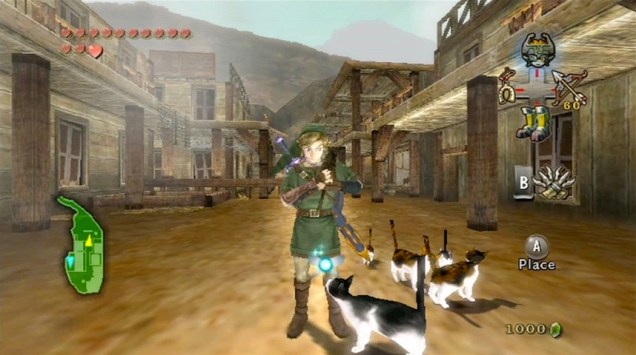
Among home consoles, the library of the Wii is not particularly well-regarded. I consider it to be underrated in several respects. This is especially true in regards to cats. Judged purely on the quality of the cats it offers, the Wii is probably the greatest home console in history.

I’ve chosen three titles from its library as my next three cats of the week. Up first: launch title The Legend of Zelda: Twilight Princess (Nintendo EAD, 2006).

Continue reading →

Videogame Cat of the Week: Mr. Glembovski

cats_in_videogames_cart_life_gif

If you want to read my serious thoughts on Richard Hofmeier’s Cart Life (2011), you should go here. For now, though, let us consider Mr. Glembovski, the cat that Andrus keeps in his hotel room, against the wishes of the management.

As a secret cat, Mr. Glembovski’s life is cruelly constrained, consisting of nothing more than a small room, and sometimes even less than that. But, as the GIF above shows, there is clearly so much love between these two. The nose-touching shows that Andrus knows just how to treat a cat. And who couldn’t love Mr. Glembovski, with his adorably desynchronized blinks and affectionate ways?

Don’t be a monster. If you ever play Cart Life, be sure to feed Mr. Glembovski. I don’t know what happens if you don’t (far be it for me to play that way), but I’m sure it’s awful.