The Binaries in Waltz with Bashir

Heather Choi

As the first ever feature-length animated documentary, Waltz with Bashir (2008) recounts director Ari Folman’s quest to uncover his memories of the role he played 20 years prior in the 1982 Lebanon War. Plagued by his inability to recall any of the events from the time he spent as an Israeli soldier, Folman enlists the help of his old military friends to discover the truth. During his journey, he faces many obstacles that take a toll on his mental state (primarily his memory). Aside from these narrative setbacks, the movie grapples with some greater problems that come in the form of binaries: between the real and the surreal, truth and fabrication, and guilt and innocence. Throughout the film, Waltz with Bashir walks a fine line, dancing back and forth between these conflicting themes. However, the message ultimately becomes clear that the correct path lies in reality, truth and acceptance of one’s own guilt, and the film – in its creation, script, mise en scene, and overall artistic aesthetic – serves as an analogous representation that enhances this viewpoint.

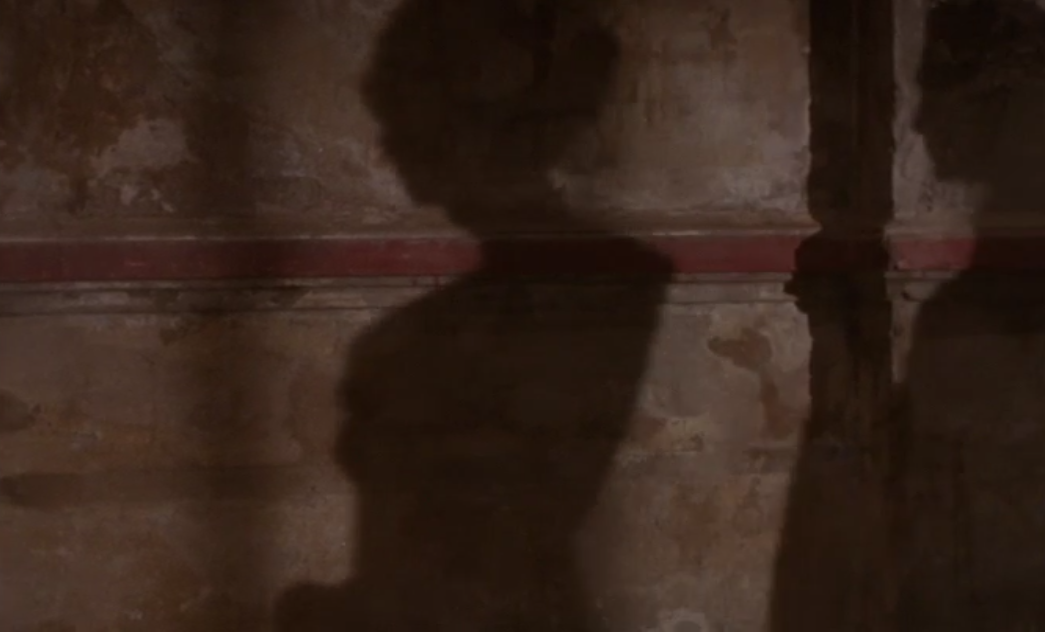
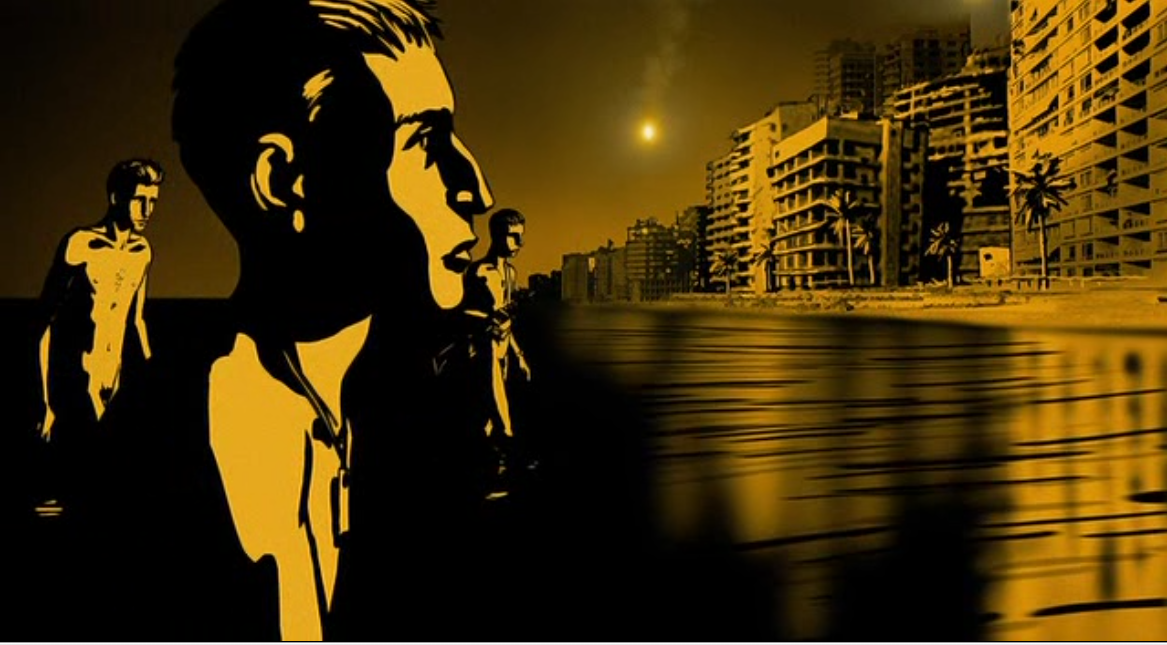
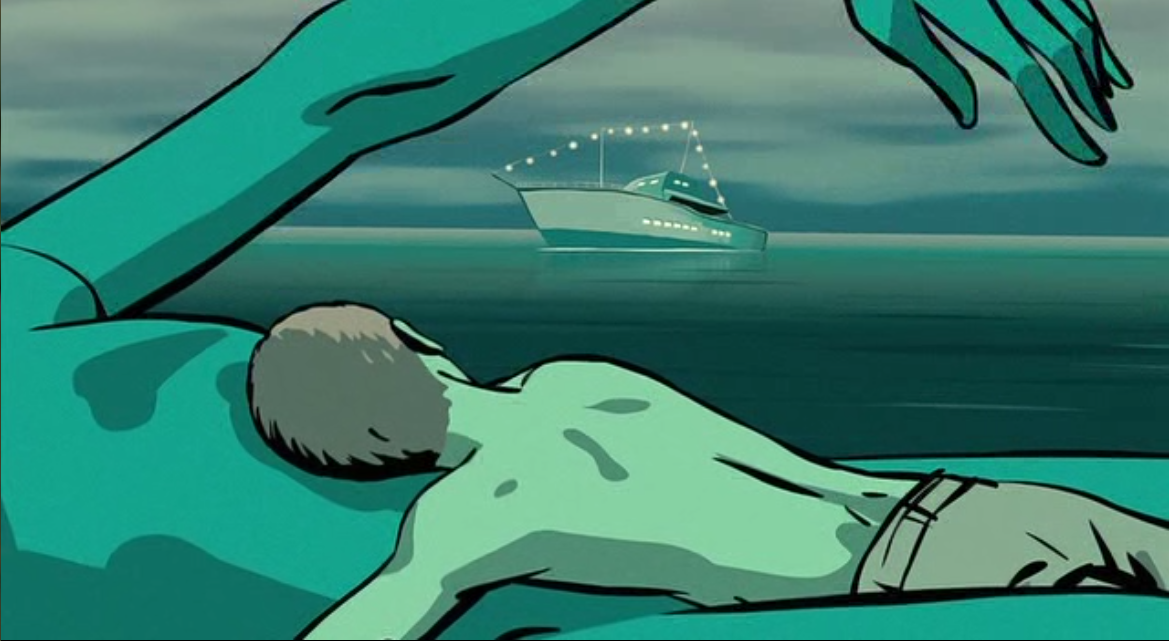
The three main binaries in this film are all interwoven, yet function in distinctive ways. The real versus surreal binary contrasts the events that occurred in real life to the idealized version of reality displayed in the movie, since the latter manages to mask many of the horrors of war through its medium of animation. Instead of using more live footage or making a documentary composed solely of found materials, Folman makes the cinematic choice to romanticize events and blur the distinction between facts and imagination by creating a visual consistency for both reality and fantasy.
Screen Shot 2015-06-09 at 7.44.28 AMScreen Shot 2015-06-09 at 7.46.22 AM

Continue reading

Silhouettes, Shadows, & Smoke: Lighting in In the Mood for Love

Screen Shot 2015-06-09 at 12.09.27 PM

Sherlock Ziauddin

Wong Kar-wei’s In the Mood For Love depicts the story of a man (Chow) and a woman (Su) who, both suspecting that their spouses are involved in extramarital affairs, become close companions to each other in their loneliness. As the story progresses, however, their platonic friendship spills over and they begin to fall in love.

Their story unfolds in carefully controlled sequences that are almost dreamlike in nature as, together, they fabricate a fantasy world for themselves in which they pretend to be in love as their spouses are – and then continue, even when the façade of romantic affection becomes a reality. One of the most obvious visual cues in the mise-en-scène that indicate the portrayal of these moments is in the lighting. In all of these sequences, the lighting is more dramatic: it is low-key, sharp, and almost always artificial, as these scenes overwhelmingly take place under cover of night. This type of lighting is fundamental in setting the mood in these sequences; the subtle expression of emotion and the tension of physical bodies is highlighted, literally, by its use.

Continue reading

Breaking the Glass: Engaging With Space in Playtime

Julia Huang

Jacques Tati often liked to say that the only real star of his film Playtime (1967) was the set itself. With his brilliant manipulation of its mise en scène, those words hold to be quite true. The minimally dialogued, loosely plot-based film is mainly structured around the changing of settings. As the movie goes on, an apparent pattern emerges among the scenery—it almost entirely consists of grey, pristine buildings, from the steely Orly Airport to the shiny new Royal Garden restaurant. Tati establishes this foundation in order to build up and play with the dichotomy of public and private space. Throughout the film, he juxtaposes these two ideas and questions the boundary that divides them.

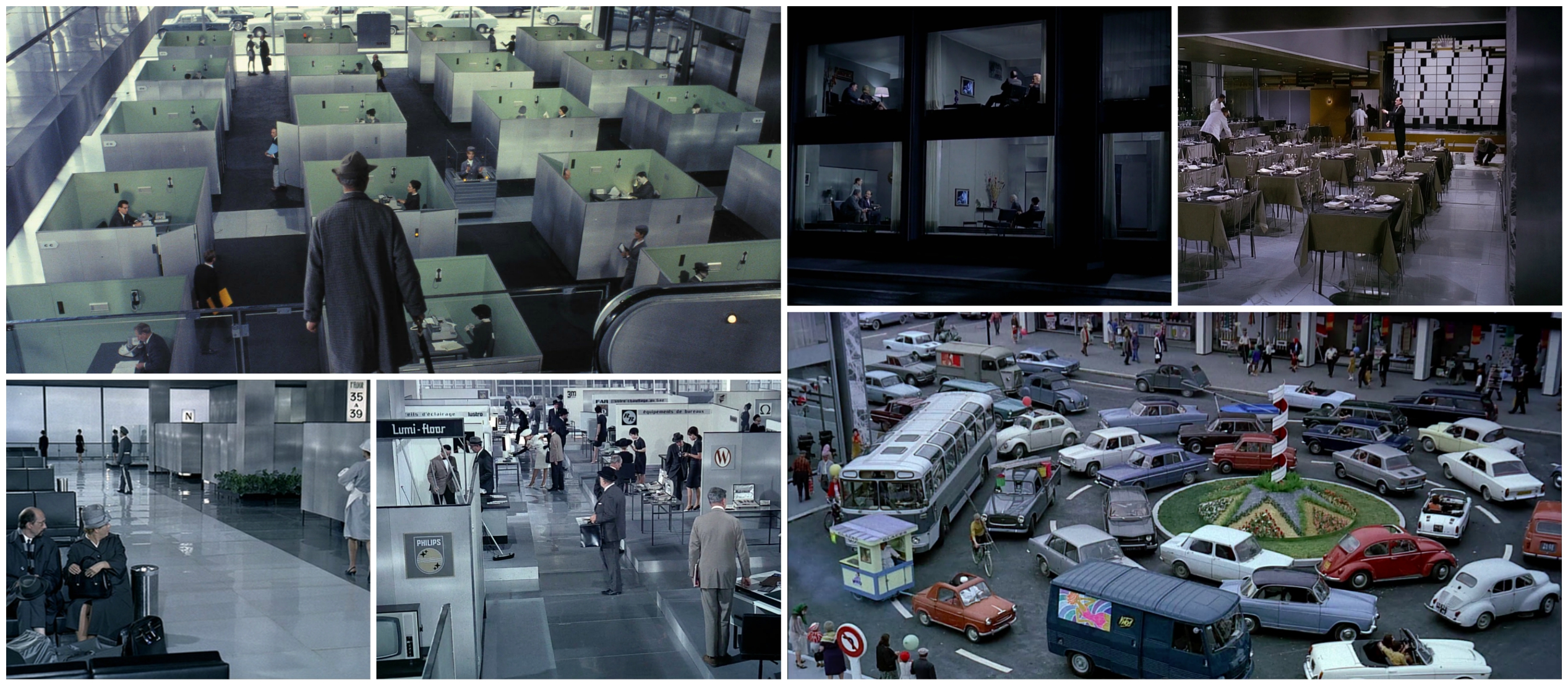
The only moment of private space we see in Playtime is when Monsieur Hulot’s acquaintance from the army invites him into his recently bought apartment. However, Tati takes this scene and challenges the extent to which the space could be deemed personal. First off, the design of the apartment complex remains consistent with the public buildings that we have previously seen—grid-like, silver, and clean-cut. In the below collage of the six main scenes in the movie, the apartment (middle picture of the top row) blends right in with the other buildings of this ultra-modern world. By making the aesthetics of families’ homes parallel that of public locations, the distinction between them becomes slightly blurred, for our expectations of how the two different spaces should look are challenged. Tati creates a disturbance in what we think we know—if we are not certain of how a private space should appear, do we even know how they function?

collage of scenes

Continue reading

Waltz with Bashir and the Sea as Protector

Domitille Colin

Ari Folman’s Waltz with Bashir first stands out to us because of its use of animation despite its identification as a documentary film– how can a non-fiction narrative be justly portrayed using highly stylised illustration? Yet it is evident by the end that the medium of animation not only allows the viewer to easily cross over any visual and temporal boundaries but also turns around and forces the boundary to be redrawn in a harsh awakening. Thus the documentary footage, hallucinations and flashbacks can all be presented on the same visual plane, that is, until the film’s final clip. Similarly, the characters themselves are enveloped in their own safety nets of self-induced amnesia and coping mechanisms that at once shield them from PTSD symptoms but also help to propagate them.

An essential manifestation of these protective mechanisms are the hallucinations that plague many of the characters and exist in a halfway point between memory and dreamscape. Among these hallucinations is the reoccurring motif of the sea and its role as a protection from enemies and a shield from reality. The sea manifests itself in three key scenes, Ari Folman’s first hallucination of the beach, Carmi Cna’an’s dream of the woman, and Ronny Dayag’s escape at sea. These three all reveal the sea to be a place of escape and protection, as Dayag states, a place of “fear [and] feelings.”

Continue reading

Gravity as a Horror Movie: Nature as the Villain

Jack Haggerty

Alfonso Caurón‘s Gravity shares many common elements with the typical horror film, including gripping suspense, the element of surprise and a truly terrifying narrative that sucks the viewer into the protagonist’s plight. However, unlike most horror films, Gravity does not invoke the supernatural or a villainous character to instill terror in its audience. Rather, Gravity relies purely on the natural forces of our universe and the limitation on human capabilities to navigate these forces. The undeniable actuality of these two elements lead to the truly terrifying villain that is the reality of life in space, one that does not ask the audience to suspend its disbelief. Additionally, Gravity holds itself to an incredibly high standard in depicting events in space realistically, including the sound’s inability to propagate in space as well as the accurate portrayal of object movement in space.

Continue reading

Animated Reality: Escaping the Horrors of War

David Tong

Ari Folman’s masterpiece Waltz with Bashir is a film that blends a number of genres together. Despite being in the documentary genre, the film itself is a blend of reality, imagination, and hallucinations. This leads to the question: What is Folman’s animated, fictionalized, docu-autobiography? Its ability to capture so many elements from being a war memoir, to a piece of investigative journalism, to being an artistic creation constructed for self-therapy provides the film life. Its ability to move between dimensions and emotions makes it a film that is both compelling to watch and worth comprehending. Perhaps one of the most important concepts of the film is the transcendence of reality.

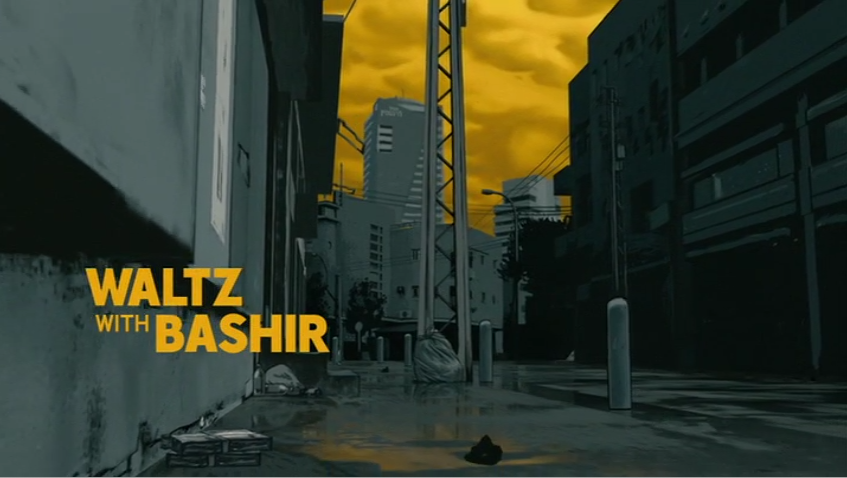
From the very first shot, the viewer is exposed to a number of elements that question dimensional reality.

2015-06-01 06.32.04 pm

Continue reading

Undercover Heroine: The Other Side of Cher in Clueless

Jane Chang

Amy Heckerling’s 1995 classic, Clueless, stars Alicia Silverstone as the infamous Cher – a popular teenage girl learning about both the world and herself through the trials and tribulations of high school. Within the first few minutes of the film, the audience gathers that Cher has her fair share of flaws. She is spoiled, selfish, and painfully clueless. Despite these imperfections, they love her still. Why?Untitled

Continue reading

Excusez-moi: Hulot, Spaces, and Laughter in Mon Oncle

Gus Mosse

The comedy of Jacques Tati and of his character Monsieur Hulot is so laden with humor that laughter is often rendered difficult to muster. This seems contradictory: isn’t there a one to one correspondence between funny things and laughter? Common sense would suggest that the answer is yes, and yet the screening of Tati’s Playtime early in the quarter proved this to be not necessarily true. Tati stuffs a remarkable amount of humorous material into each shot of the film, but not all of it provokes immediate laughter. The goal of this blog post is a close examination of another Tati film, Mon Oncle, with an eye towards his construction of comedic moments. This post will take Monsieur Hulot as its central figure in an examination of his interactions with the spaces through which he travels.

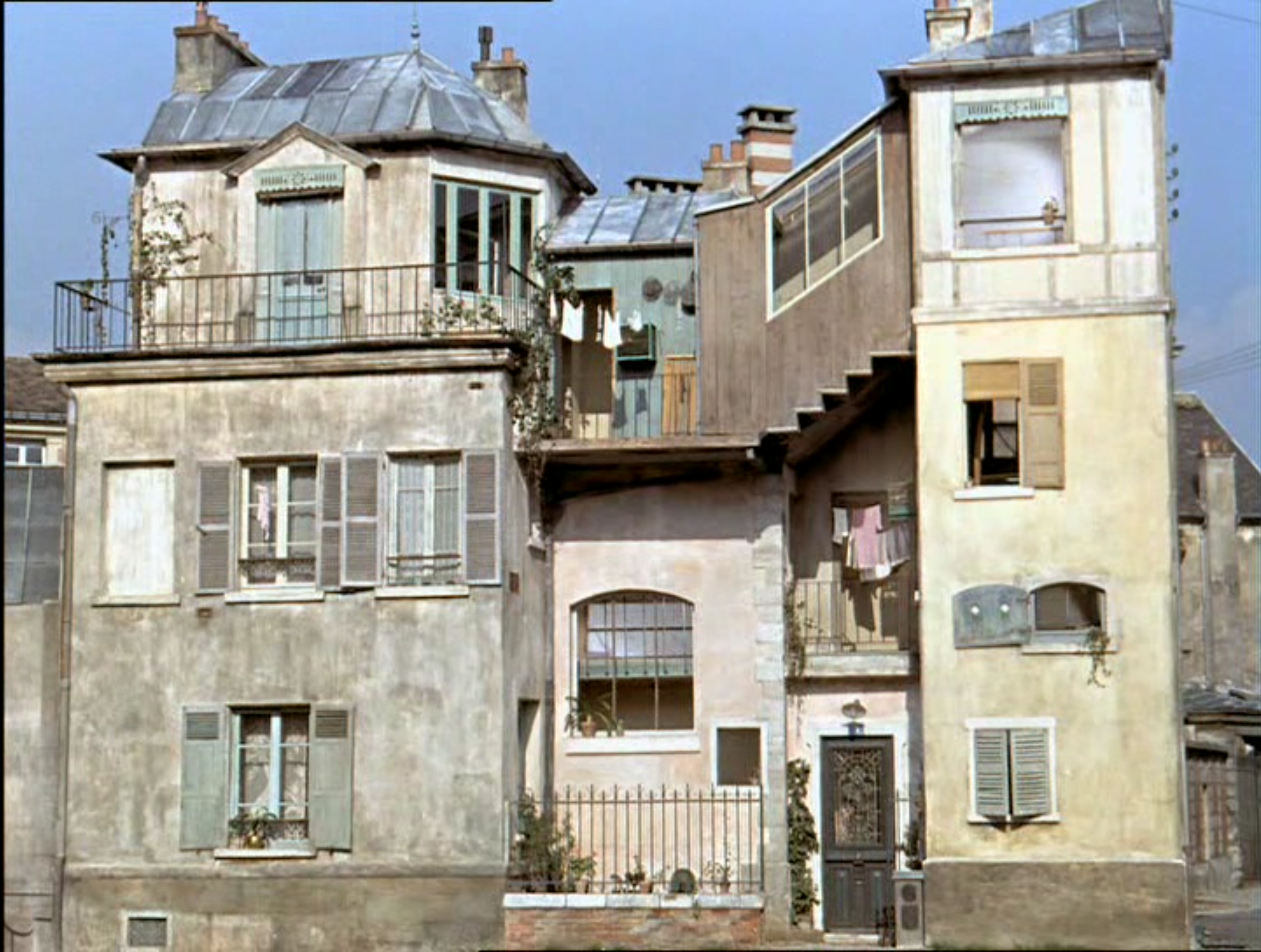
Monsieur Hulot’s home in the old city is characterized by an improvisational nature; the style of comedy associated with this location follows suit. This improvisational nature is evident from Tati’s introductory long shots of the building, even before Hulot has appeared and begun to interact with it.

MO1

Continue reading

The Unseen Hero: Subversion of the War Genre in The Red and the White

Mary Otoo

The Red and the White, a Soviet film released in 1967, depicts the confusion and brutality of the Russian Civil War. At the time of film’s release, war movies, due to their intense popularity, had formed a clearly defined set of tropes and tactics. Director Miklos Jancso could have easily followed these rules to construct a traditional war narrative. Instead, Jancso rejects nearly all the typical elements of a war film. This results in a kind of hybrid film that defies categorization. It is hard to pinpoint exactly which genre The Red and the White belongs in. Can viewers consider a film without a traditional narrative, a drama? Does a piece without archetypal characters count as a fiction film at all? The Red and the White utilizes many techniques that unnerve the viewer in its deviation from the classic war-genre film. These techniques serve to create a depiction of war that falls somewhere between fiction and nonfiction, blurring the lines between art and historical depiction.

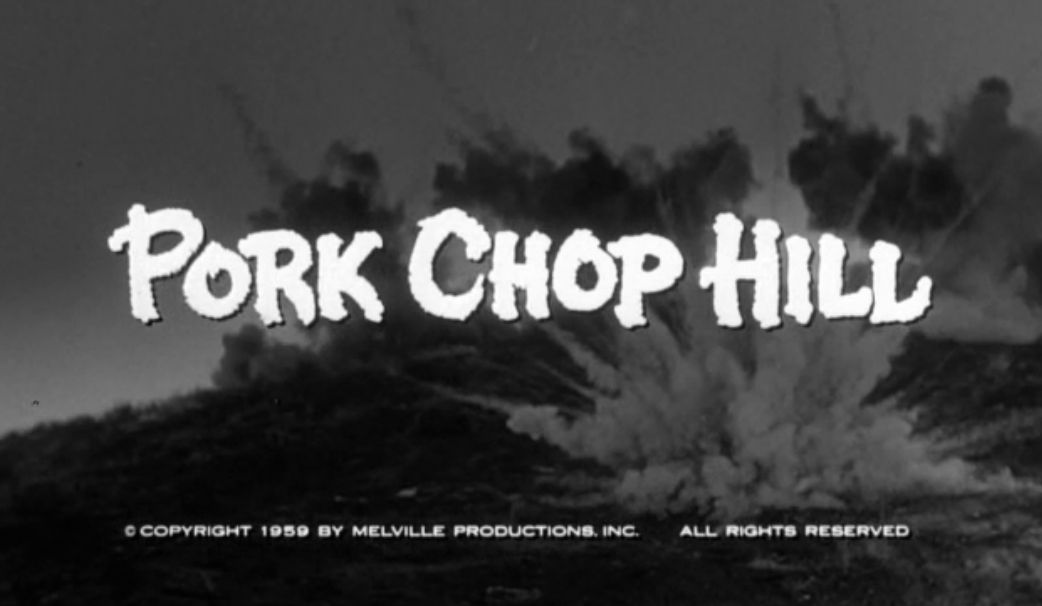
The classic film, Pork Chop Hill, exemplifies the traditional Hollywood war drama at its zenith. The Red and the White and Pork Chop Hill, released in 1959, come from different countries, but similar historical contexts. Audiences were used to seeing certain types of film. Pork Chop Hill, with its sweeping music and opening credits, throws the audience into the world of Hollywood cinema. The opening sequence prominently features its star, Gregory Peck. The director, Lewis Milestone, leaves no room for confusion: this is a war movie. As a result, the audience goes into the first scene with a plethora of ideas and expectations for the film that Milestone gladly meets.

Screen Shot 2015-06-09 at 10.08.56 AM Screen Shot 2015-06-09 at 10.09.09 AM Screen Shot 2015-06-09 at 10.09.33 AM

Continue reading