Silhouettes, Shadows, & Smoke: Lighting in In the Mood for Love

Screen Shot 2015-06-09 at 12.09.27 PM

by Sherlock
University of Chicago CMST 10100, Intro to Film
Spring 2015

Wong Kar-wei’s In the Mood For Love depicts the story of a man (Chow) and a woman (Su) who, both suspecting that their spouses are involved in extramarital affairs, become close companions to each other in their loneliness. As the story progresses, however, their platonic friendship spills over and they begin to fall in love.

Their story unfolds in carefully controlled sequences that are almost dreamlike in nature as, together, they fabricate a fantasy world for themselves in which they pretend to be in love as their spouses are – and then continue, even when the façade of romantic affection becomes a reality. One of the most obvious visual cues in the mise-en-scène that indicate the portrayal of these moments is in the lighting. In all of these sequences, the lighting is more dramatic: it is low-key, sharp, and almost always artificial, as these scenes overwhelmingly take place under cover of night. This type of lighting is fundamental in setting the mood in these sequences; the subtle expression of emotion and the tension of physical bodies is highlighted, literally, by its use.

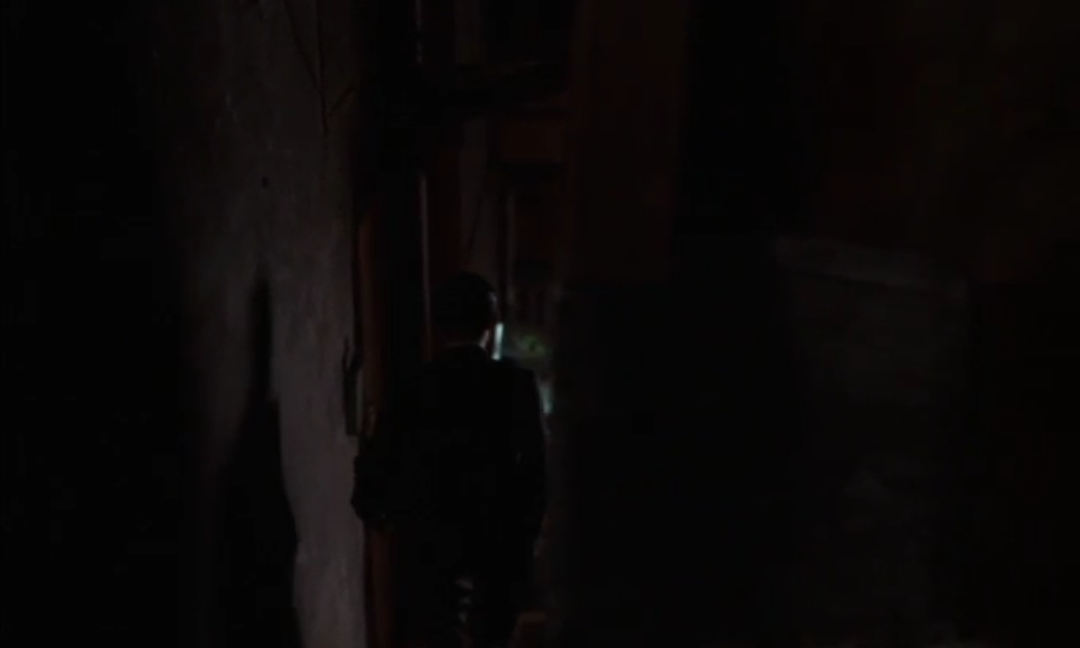
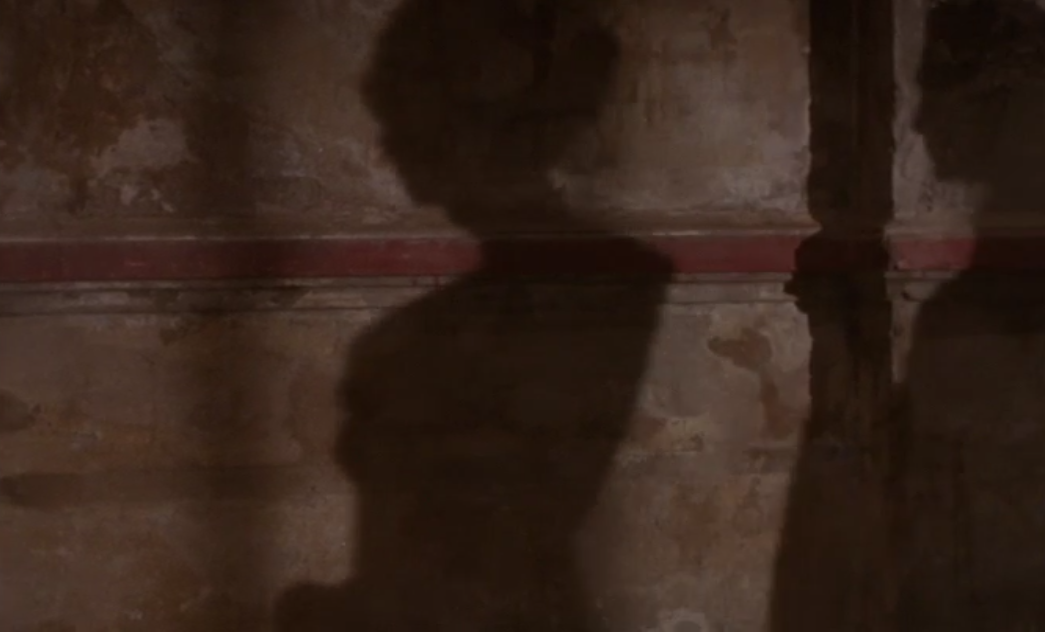
The first major sequence of this nature occurs before their relationship has strictly started but after they are both aware of each other. In this sequence, first Su and then Chow go out to get noodles. The entire scene appears in slow-motion, and the lighting is intensely more dramatic than perhaps any other scene in the film up to this point. It takes place at night, so the only light comes from street lamps; overwhelmingly the world is dominated by shadow. As both characters go up and down the stairs to the noodle stall, we see both their physical figures, in sharp silhouette, and their shadows, on the wall descending with them; this adds an air of intrigue and, it could be even said, mystery to the scene. In this world of shadows, without the light of day, everything is a little more uncertain; the shadows serve as a lingering presence of the characters even when they themselves are no longer visible in the frame, and that presence is tense, tangible, fleeting.

In the sequence we see first Su as she goes down and up the stairs –

Screen Shot 2015-06-09 at 11.19.09 AM

and then later Chow –

Screen Shot 2015-06-09 at 11.20.01 AM

And then, at the culmination of the sequence, we see them both on the stairs at once, meeting as Su ascends and Chow descends, and the tension of both of them at once in a space previously inhabited by just one of them is heightened still more by the lighting, and the fact that we can essentially only see the outline of their frames in silhouette – close, almost touching, like two shadows meshing together on the same expanse of wall. We become, in this fleeting moment, hyper-aware of the possibility of contact, of their silhouetted bodies touching. In the world of shadow, they are the only things moving – dark forms, graced by light.
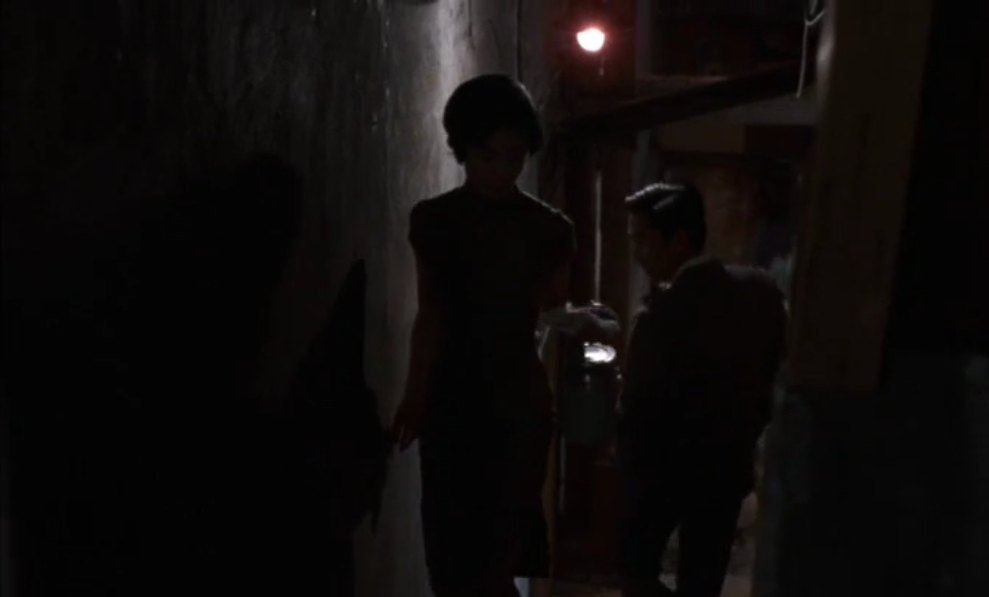
Screen Shot 2015-06-09 at 11.32.09 AM

A second sequence occurs a few minutes later, again with them going to the noodle stand. This scene is similarly lit in artificial, sharp lighting, and similarly serves to heighten dramatic tension.

Here are two still frames of first Chow and then Su from the same sequence:

Screen Shot 2015-06-09 at 11.48.06 AM
Screen Shot 2015-06-09 at 11.50.36 AM

The lighting on Su’s face is sharper and a little brighter, but the lighting on Chow is still sharp enough that his face, hand, cigarette, and collar pop most, and everything else recedes into shadow; similarly, Su’s profile is what pops most immediately in the second frame. It is also interesting to note that their profiles mirror one another.

The next sequence in their constructed reality is the most direct one thus far, by far – they dine together in a restaurant. In this scene, dominated by middle shots and close-ups, the lighting is again artificial and sharp, coming primarily from the point source of a single lamp hanging over their table at the restaurant. It beautifully highlights their faces, capturing subtle, subtle expressions of emotion, minute twitches of facial muscle, fluttering eyelashes, stuttered breath. It also works wonders for capturing Chow’s cigarette smoke.

Screen Shot 2015-06-09 at 12.01.06 PM

This sequence, like most of the other sequences of their constructed reality in the film, feels almost noir with its air of dramatically-lit, subtle intrigue. Chow’s smoking adds to this; it feels suave, sexy, backlit and tinged with the dark, rich red of the seats around them – but if this scene were lit differently the effect would be entirely different. It is the sharp lighting that creates such a powerful atmosphere of mystery, tension, and drama.

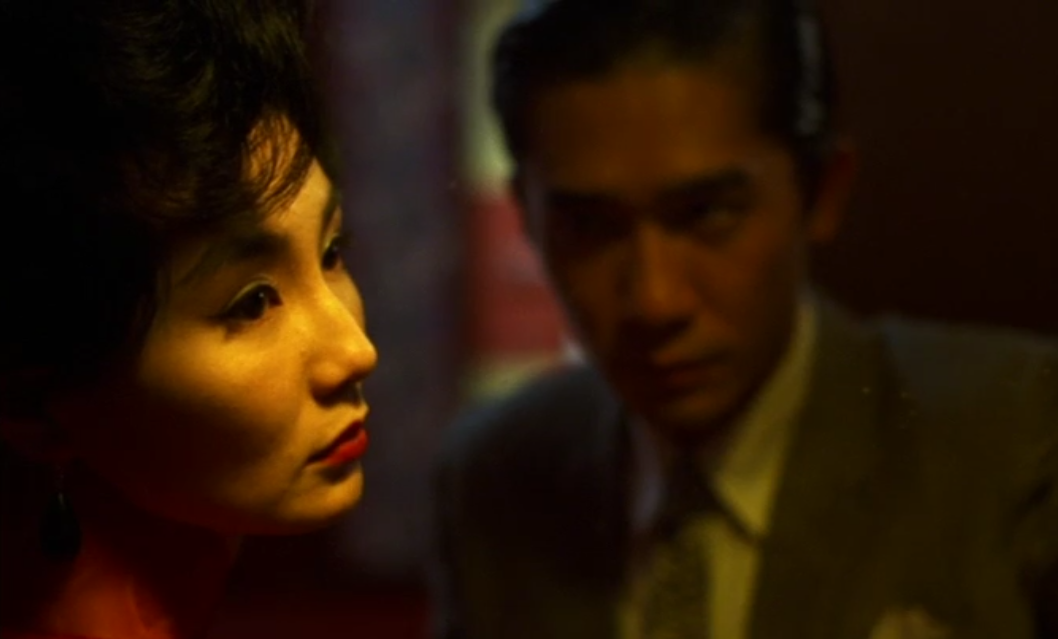
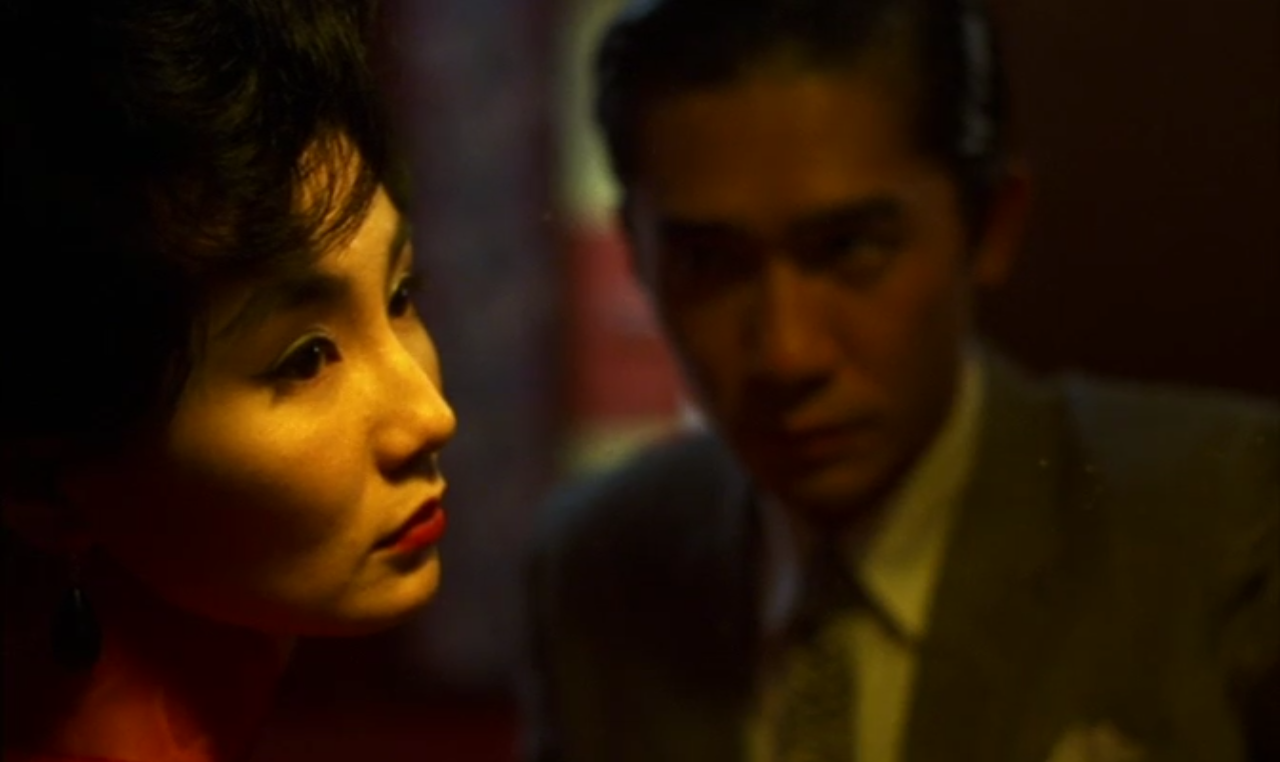
The next sequence of this kind begins with this frame:
Screen Shot 2015-06-09 at 12.11.18 PM

Everything about this shot is utterly stunning. The light on Su’s face is perhaps the most dramatic in the entire film: bright, sharp, highlighting the shadows under her cheekbones and her winged eyeliner, and also very artificially coloured, almost golden, making her lipstick look brighter and her features more defined. Chow is behind her, in a different depth of field; still, we can tell that his gaze is on her, and the resultant tension is incredible. (If there was a visual climax of the film, I would say it’s right here: this moment, more than any, captures the drama, the tension, the subtle intrigue, the possibility of hidden feeling, the hint of passion – and visually, it is incredibly beautiful.)

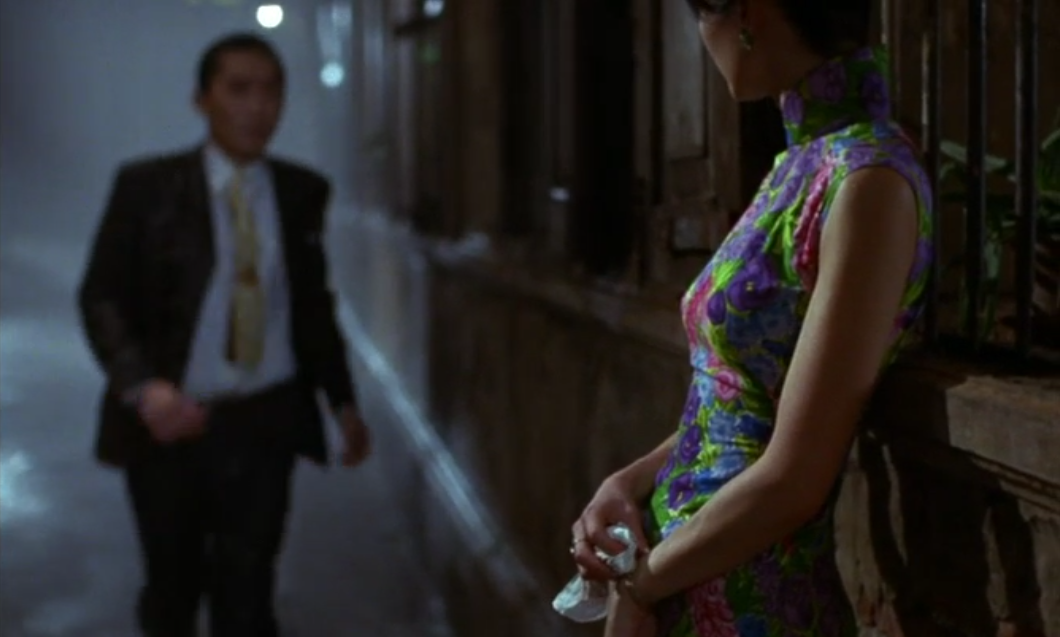
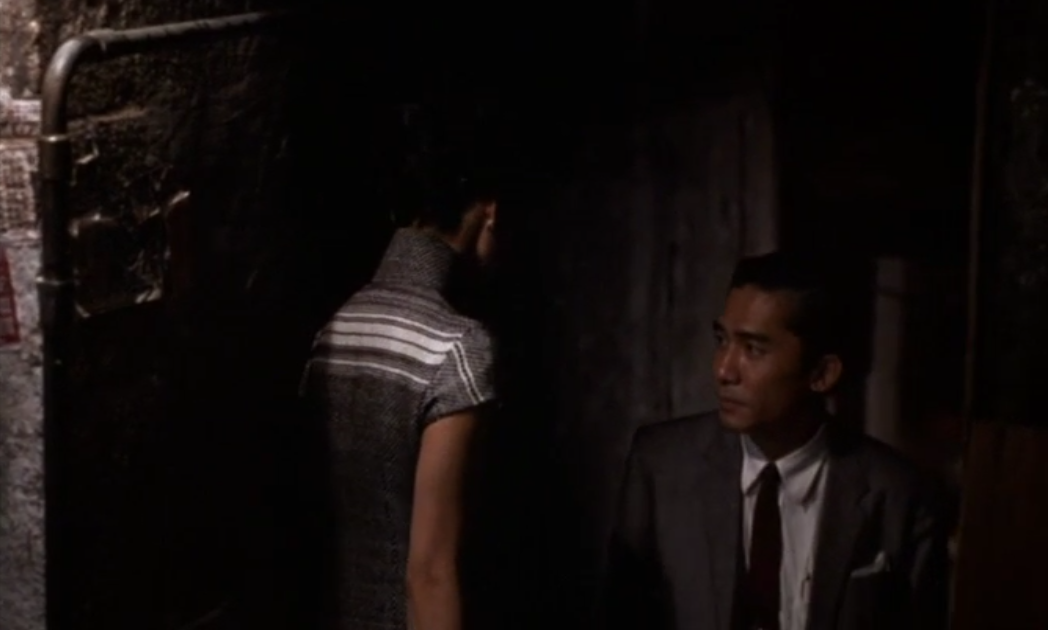
Later, a scene between them betrays a slightly different feeling, but still heightened by the effects of lighting. In this scene they are in the rain, having a conversation about the beginnings of their relationship. This sequence is less cinematically dramatic; singularly, there is no music playing, and they are holding a regular conversation instead of moving in slow-motion like two shadows on the verge of touching. It begins with Chow running towards Su in the rain, in an echo of an earlier scene:
Screen Shot 2015-06-09 at 12.31.00 PM

The two proceed to have perhaps the most honest conversation that takes place over the course of the entire duration of the film. Here we see their fantasy reality of romance being acknowledged directly – a break from tradition – but lighting still serves to heighten the sense of tension and emotion in the scene.

Screen Shot 2015-06-09 at 12.33.00 PM

The light is a dull colour, a soft blue or grey, and more diffuse than it has been previously. In many ways it’s a visual cue that this scene, that the events transpiring between them now, are different than they have been in the past. It is still dark enough that it could be night and there is still sharp lighting on their faces from a streetlight somewhere – but the shadows are no longer as deep, as the barriers between their pretended reality and actual reality break down.

A final scene between them shows them saying good-bye to one another for a final time – or, as we later realise, rehearsing saying good-bye.

Screen Shot 2015-06-09 at 1.03.42 PM

Here the light is once again very dramatic in its sharpness and the dramatic and physical tension it provides. The above frame is particularly poignant because of the shadows present. The single thrown by Chow is lonely and stark against the wall, and also carries narrative significance because it is alone, not accompanied by Su’s shadow – as they are parting. But what is perhaps even more poignant is the shadows of bars that are cast over the characters, because they can be read to have a metaphorical significance: bound by societal convention and scrutiny of neighbours – imprisoned by convention and expectation – Su and Chow must always be secretive and must now even say good-bye (or prepare to) in secrecy.

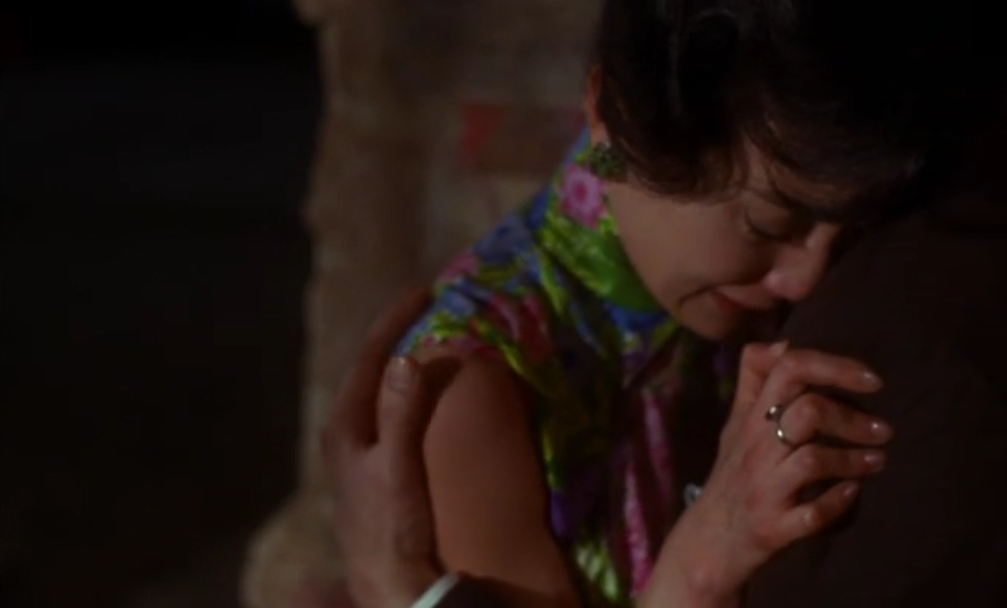
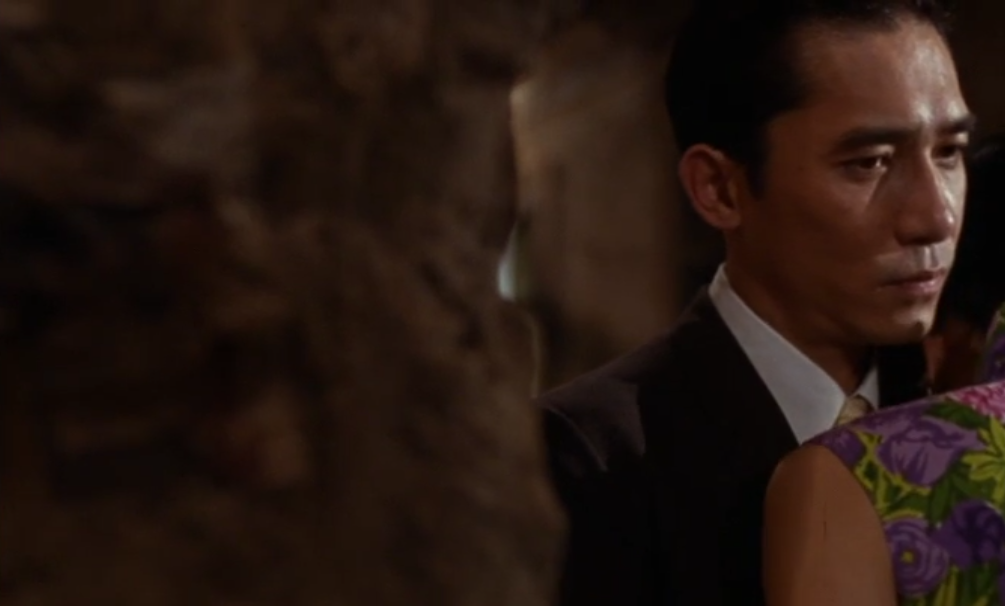
The illusion dissolves in the next moments of the scene as we realise that this good-bye was only a rehearsal – but the lighting remains the same. In this part of the scene it serves to heighten the emotional distress of the characters, as Su weeps in Chow’s arms. They are in a closer embrace than we have ever seen them in before, so much of the physical tension is (finally!) abated, but the emotional intensity remains. Su finally dissolves, in the first time we have seen her lose composure so openly, and Chow, in contrast, visibly struggles to remain stoic.
Screen Shot 2015-06-09 at 1.17.28 PM

Screen Shot 2015-06-09 at 1.19.20 PM

In conclusion, the lighting in the sequences that catalogue the progression of Su and Chow’s relationship is cleverly used to heighten dramatic, narrative, and physical tension; it highlights undercurrents of uncertainty, hesitation, and occasionally sensuality that emotionally charge their interactions, and it allows us as viewers to better see the subtle expressivity of their faces. With this lighting, the tangibility of their interactions becomes at once more fleeting and more real; more satisfying and more infuriating: in these moments of touching or almost touching, the light throws everything into sharp contrast, into a dreamlike world of sharp light and slow, lurking shadow – a murky world in which one can easily fall in love in the shadows and under streetlamps – but also a world in which even silhouettes cast shadows, and the consequences of such actions cannot remain hidden forever.
Screen Shot 2015-06-09 at 11.48.53 AM

Dressing up for Noodles: Costume Design in In the Mood for Love

30a-both

by Wei Yi
University of Chicago CMST 10100, Intro to Film
Spring 2015

In the Mood for Love (2000) is a beautiful study in restraint. Set in 1960s Hong Kong, the film details the intimate relationship that develops between two lonely neighbours, Chow Mo-wan (Tony Leung) and Su Li-zhen (Maggie Cheung). Neglected and later betrayed by their spouses, they foster a special kinship which social mores dictate must be concealed. This is a society that operates not by brute force but by much more subtle ways; through its institutions, through the eyes and ears of one’s neighbors, through the personal values individuals feel compelled to uphold, and the dark desires they actively repress.

The restraint demonstrated by the characters, who are far too disciplined and respectful to enact any sort of revenge or vent their passions, is echoed by the understated nature of storytelling. Wong Kar Wai capitalizes on the cramped living spaces in Hong Kong, which erode the boundaries between social and private life, to create tension that drives the narrative – it is much harder to keep secrets when your neighbors live so close to you. This in turn shapes the way the narrative is told: since most of the dialogue is either vague or dishonest, the truth must be told another way. I wish to analyze how costume design contributes to the film’s overarching narrative and themes, often filling audiences in on what is left unspoken. The costumes are an outward manifestation of characters’ internalization of the gaze of others – of social responsibility and convention. From Su Li-zhen’s cheongsams to Chow Mo-wan’s suits, characters wear a uniform that projects how they wish to be seen by others. But we see that costumes also betray the secrets people keep.

The devil in the details

21e-convo

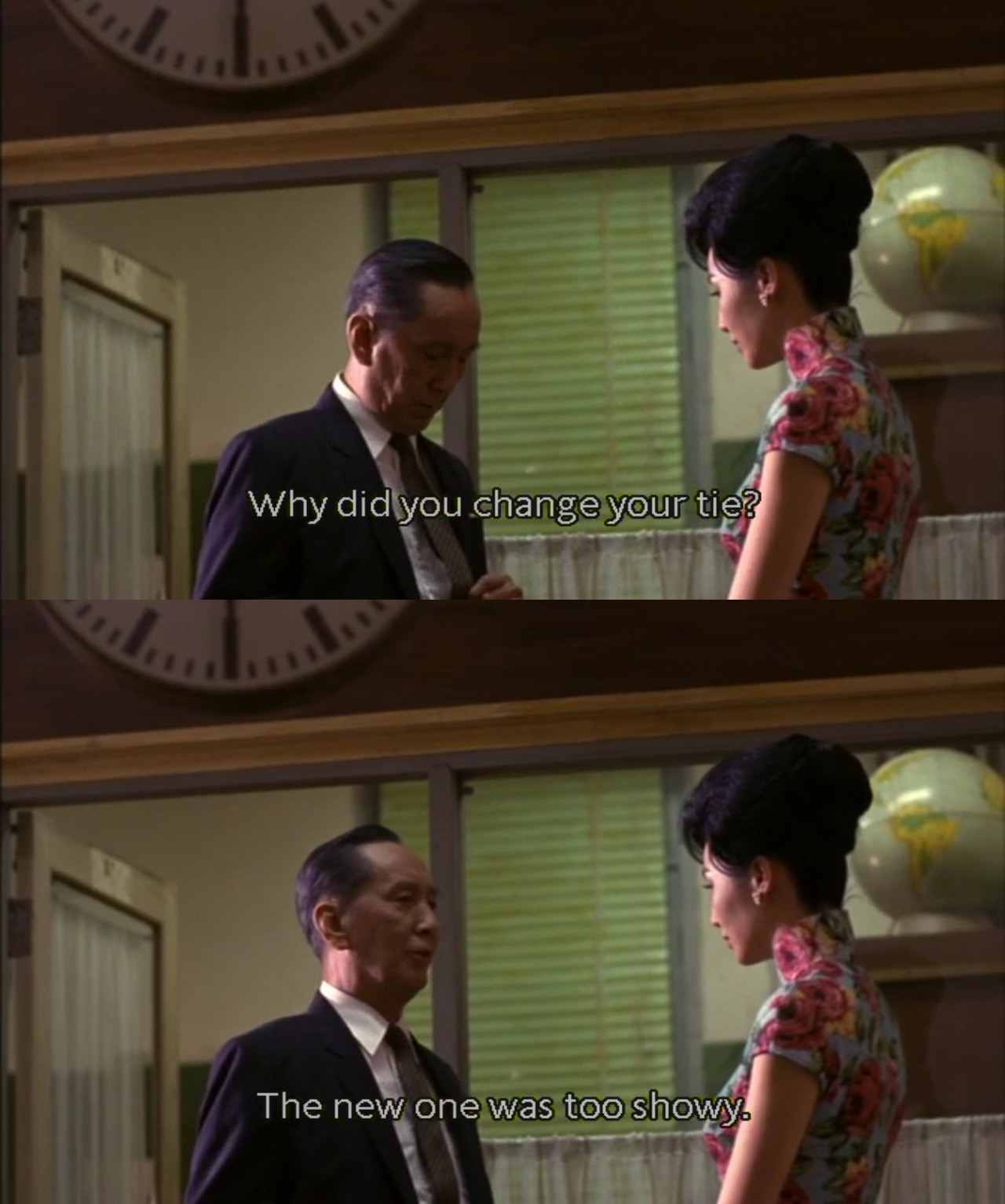
While pursuing the suspicion that her husband and Chow’s wife are having an affair, Su Li-zhen facilitates the infidelity of her boss. In one scene, she informs him that his wife will be at the restaurant at 5.30pm, and hands him a gift from his mistress. Presumably the gift is a tie, because Su Li-zhen casually remarks on it when she returns from getting him coffee:

bosstie1

Later, she catches him as he leaves the office to have dinner with his wife:

bosstie2

In other words, the new tie might have exposed his affair to his wife. This scene hints to us how Su Li-zhen discovered her husband’s infidelity, which is confirmed later in the film. This scene is also significant because it signals to audiences that there is intentionality on the filmmakers’ part in such minor costume details as the choice of tie for a certain actor in a certain scene – you notice things if you pay attention.

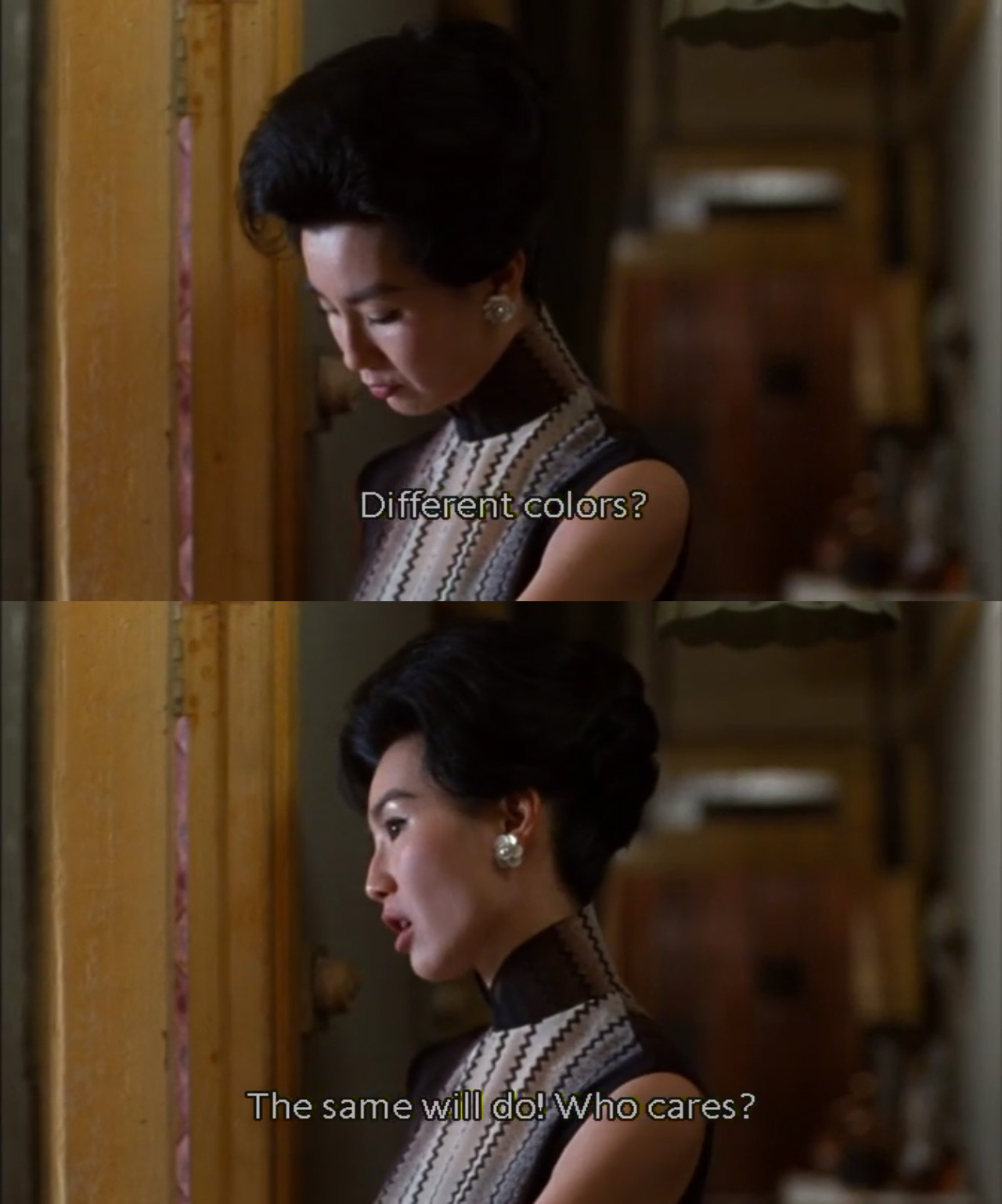
The infidelity of Su Li-zhen’s boss is employed as a parallel to the affair between her husband and Chow’s wife, often used to foreshadow the realization of the latter. Earlier in the film, Su Li-zhen asks her husband to bring back two handbags from Japan for her boss, one for his wife and one for his mistress:

whocares

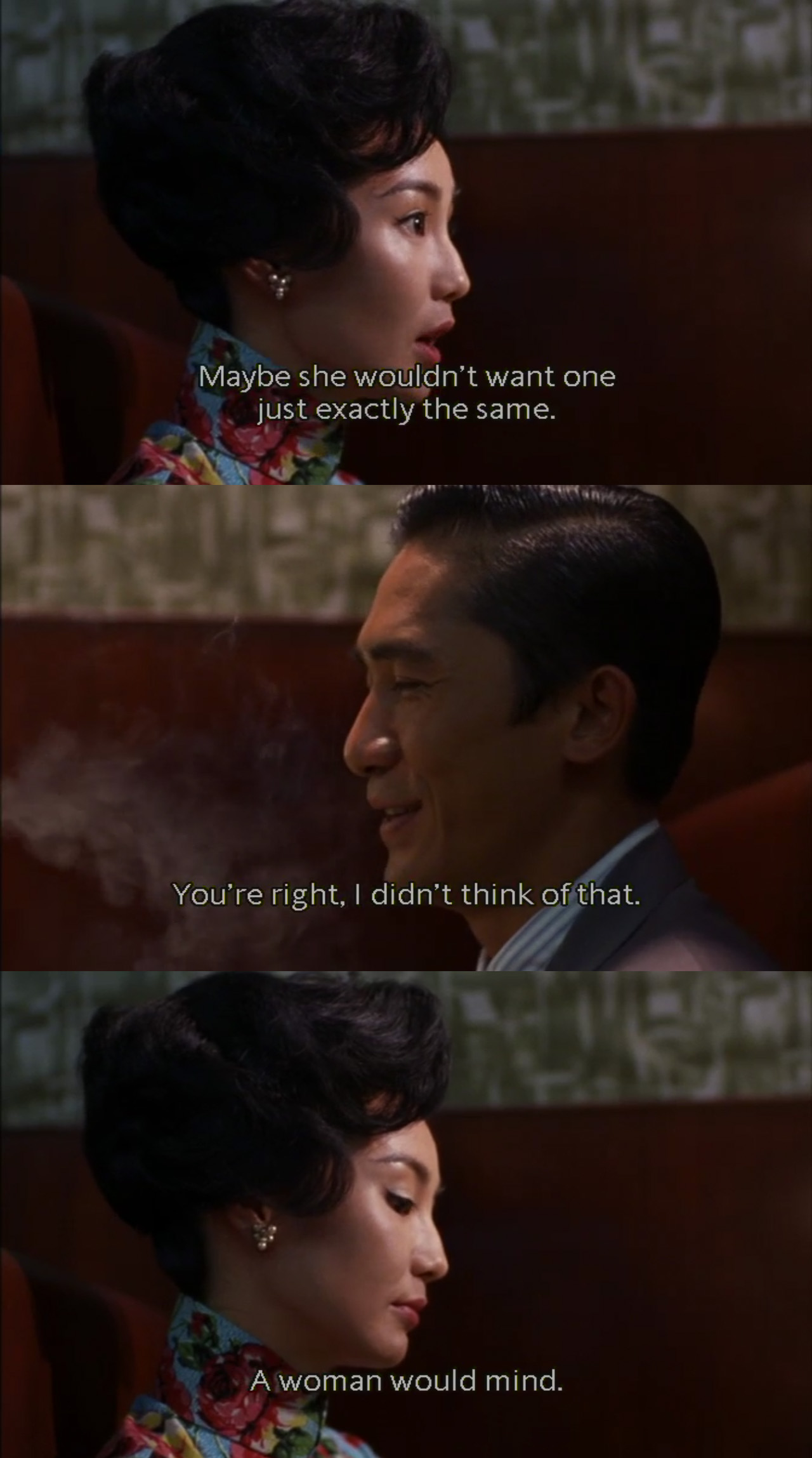
Later in the movie, Chow asks where he can purchase her handbag for his wife:

awomanwouldmind

She would mind, because she knows what it means to have the same handbag as the woman who lives next door, and to see their husbands wearing the exact same tie. Chow knows too; in this scene we discover that despite his verbal dismissals, he is not so naïve as to ignore the evidence before his eyes. He simply plays the fool before the eyes of others. Their astuteness becomes apparent; later on they use their attentiveness to detail to engineer a moment of deception, when Su Li-zhen changes into heels and leaves her slippers in Chow’s apartment to fool the landlords, who return home earlier than expected. The knowledge that any little detail could be used against you is perhaps why both of them take such great care with their own appearance.

Playing dress-up

22k-convo

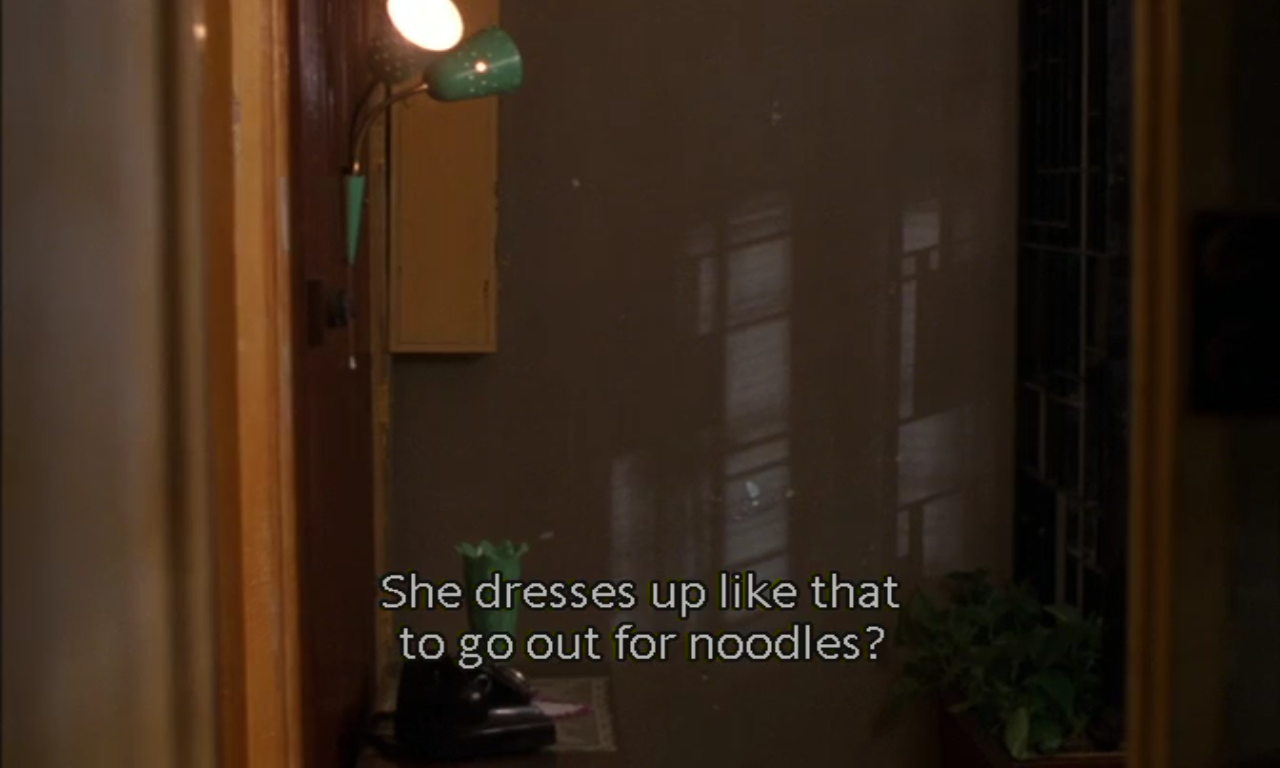
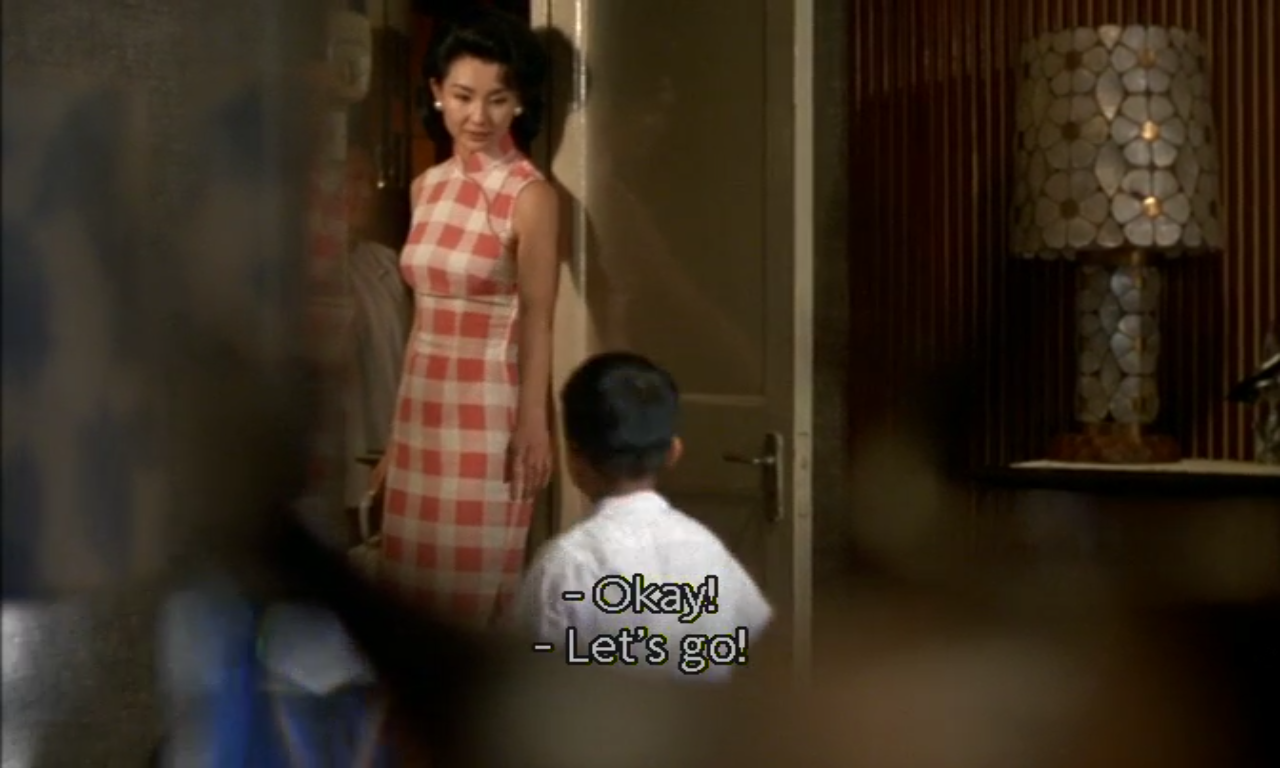
This humorous remark by one of the landladies implies that Su Li-zhen’s commitment to her uniform of beautiful and restrictive cheongsams is distinctive not just to audiences, but to other characters as well. Su Li-zhen alternates between 21 cheongsams over the course of the film (though some of them only appear in one scene), and her wardrobe is one of the most visually arresting elements of In the Mood for Love. Here they are in order of appearance:

21dresses

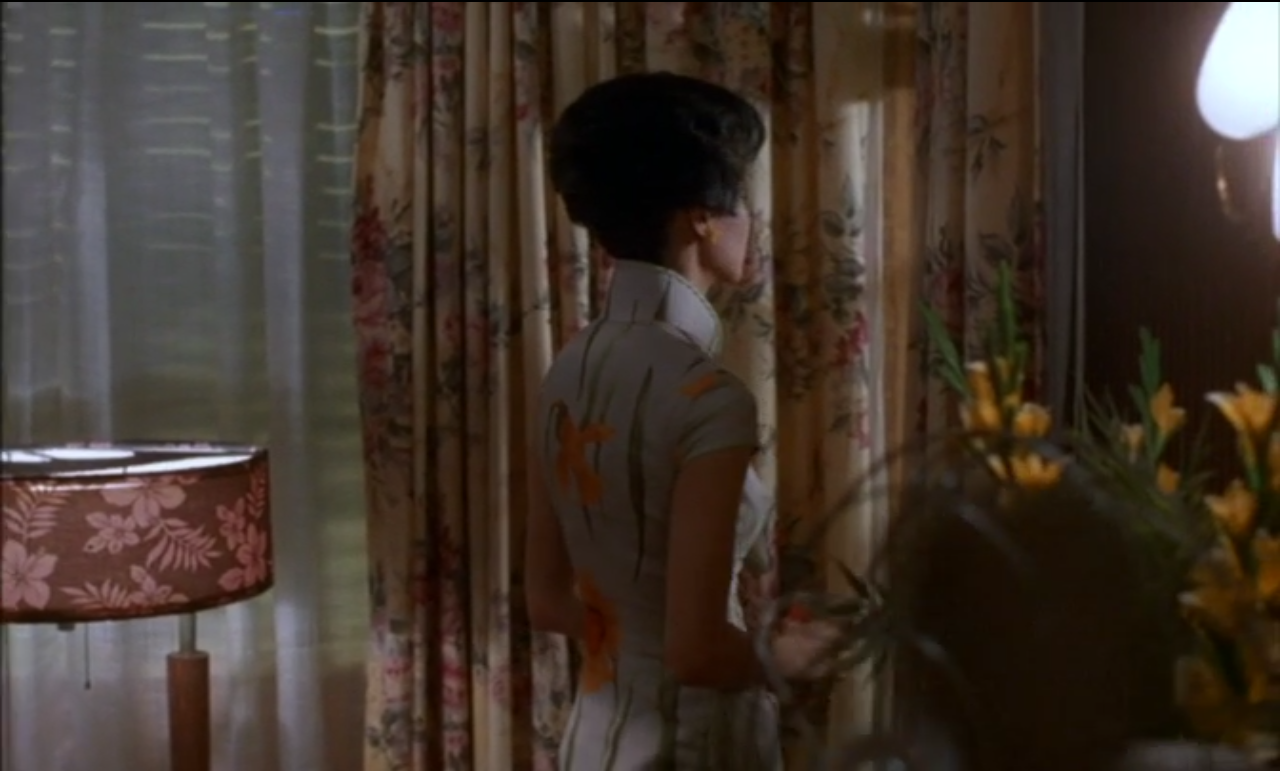
Given that the film returns to the same few interior or nighttime sets (the apartments, their offices, the noodle stand, the corridor) again and again, Su Li-zhen’s changing dresses help indicate to us the passage of time. Often they complement the rest of the mise-en-scène, such as this instance where yellow flowers in the room are echoed by her dress:

41d-dress12

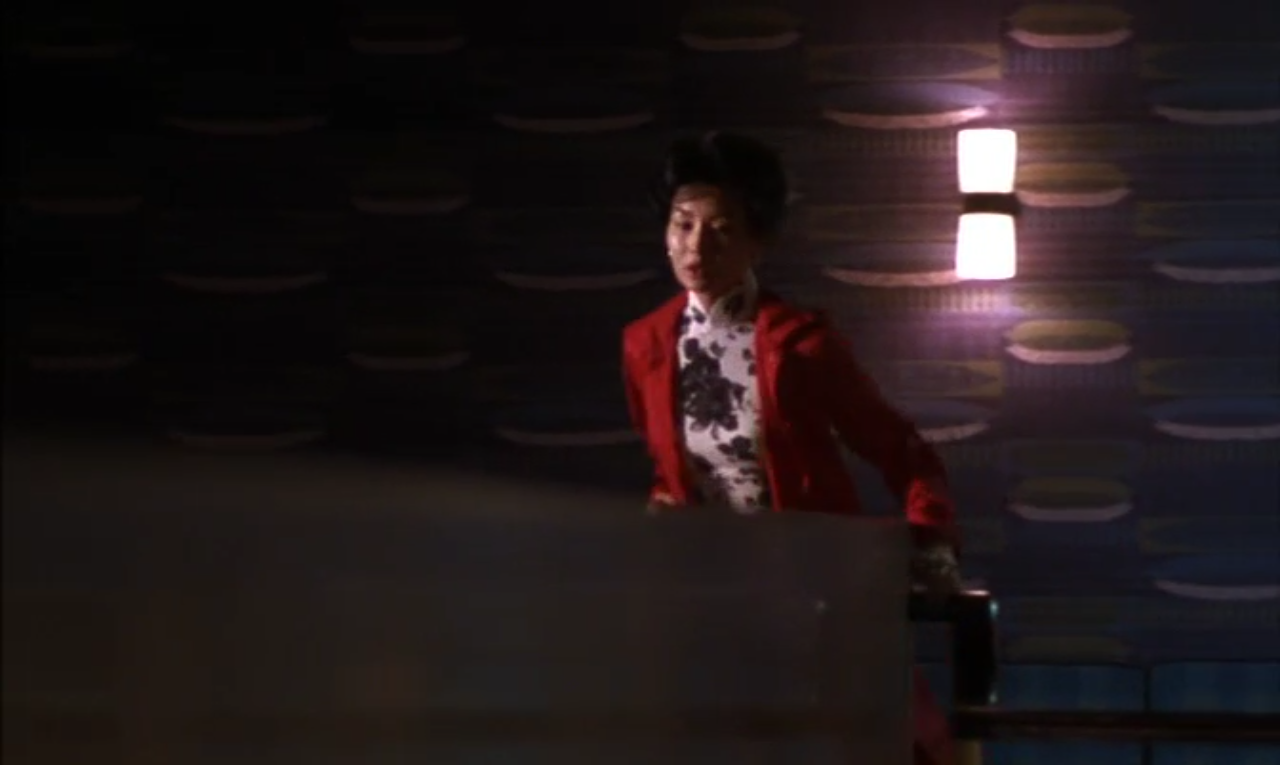
Form-fitting and elaborate, with unusually high collars that can resemble a neck brace, Su Li-zhen’s cheongsams reflect how incredibly self-conscious she is about her image and the restrictions she places on herself in order to ensconce herself in Hong Kong society, especially compared to the more varied and Westernized attire of Chow’s wife. The uniformity of her appearance means that deviations from trend are significant. At a pivotal moment in the film, when visiting Chow after he has been missing for several days, she dons a red coat. The feelings she has for him, that she had previously suppressed, are finally revealed – she literally wears her heart on her sleeve.

37c-dress15 redcoat

Four years later, we note the plainness of her last two cheongsams relative to the others, the lower collar, and a new hairstyle:

Screen Shot 2015-05-29 at 10.14.39 pm

This is the last time we see her. The intertitle immediately preceding this shot reads: “That era has passed. Nothing that belonged to it exists anymore.” Su Li-zhen, by choosing to uphold her public status at the expense of her personal feelings, is able to reintegrate back into society and move into a new stage of her life: motherhood. We have traced the evolution of a character in the way she dresses.

We can do the same for Chow Mo-wan. His uniform consists of a suit and tie, hair slicked back and neatly parted, and an opaquely polite smile:

35a-dress1

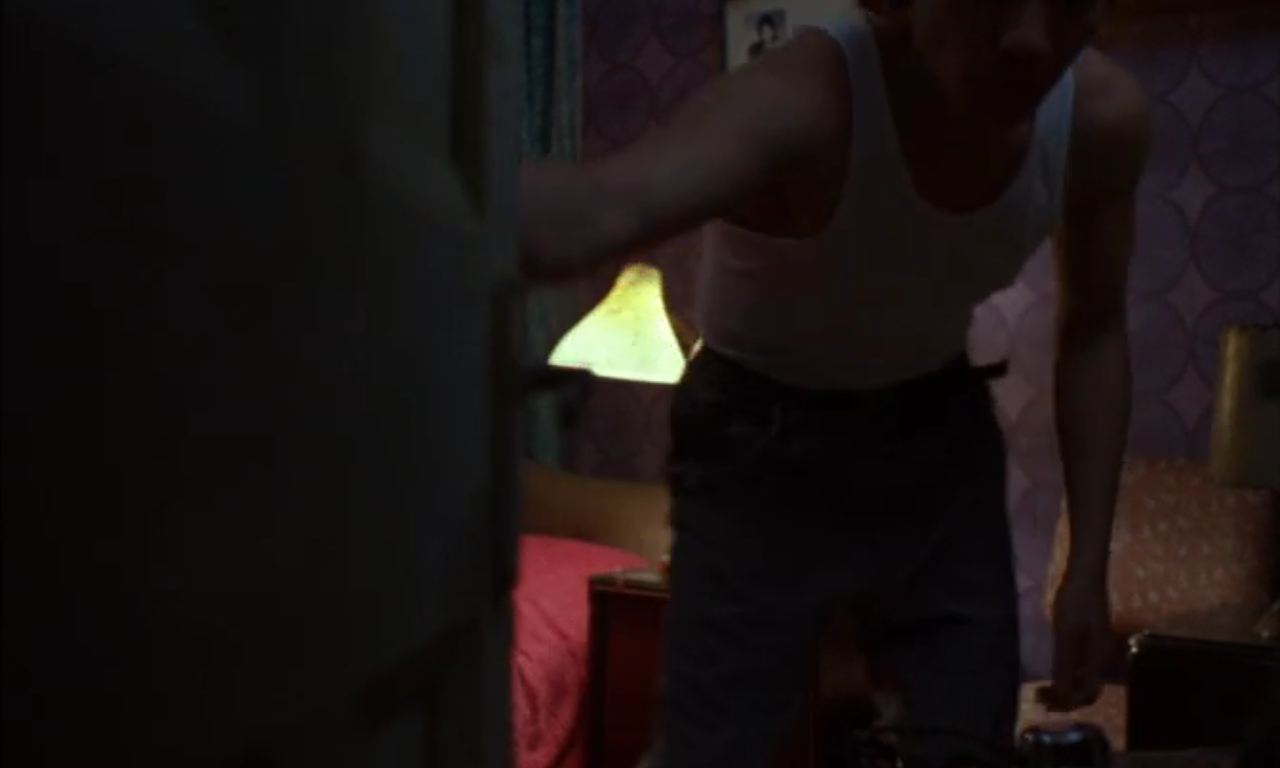
Like Su Li-zhen, Chow is also very conscious of external chatter, and he is as reticent in private as he is among his neighbors. In a rare moment, we see Chow in a singlet reading a letter from his wife, who is in Japan with Su Li-zhen’s husband. He crumples up the letter and shuts the door on the camera:

Screen Shot 2015-05-31 at 11.29.29 pm

As a storyteller, Wong Kar Wai is insistently indirect; often the camera seems to be just outside the locus of activity, like a voyeur peering into the private lives of these individuals. Audiences, too, are implicated in the intrusiveness of the public eye.

Gossip and unrequited love drive Chow away from his apartment to Room 2046. When seeing Su Li-zhen out after her visit, we notice that his normally perfectly gelled hair is partially undone:

37g-unkempt

Given that at no other point has he had a single hair out of place, we can infer that this is a deliberate costuming decision. The internal conflict between his personal desires and his social obligation as a married man has caused him to come undone. Chow cuts himself off from society – he even stops going to work – and eventually leaves Hong Kong entirely, retreating to Singapore. Since he cannot reconcile his public and private lives, he chooses instead to live in exile, only returning years later.

As long as you both shall live

37h-wewontbelikethem

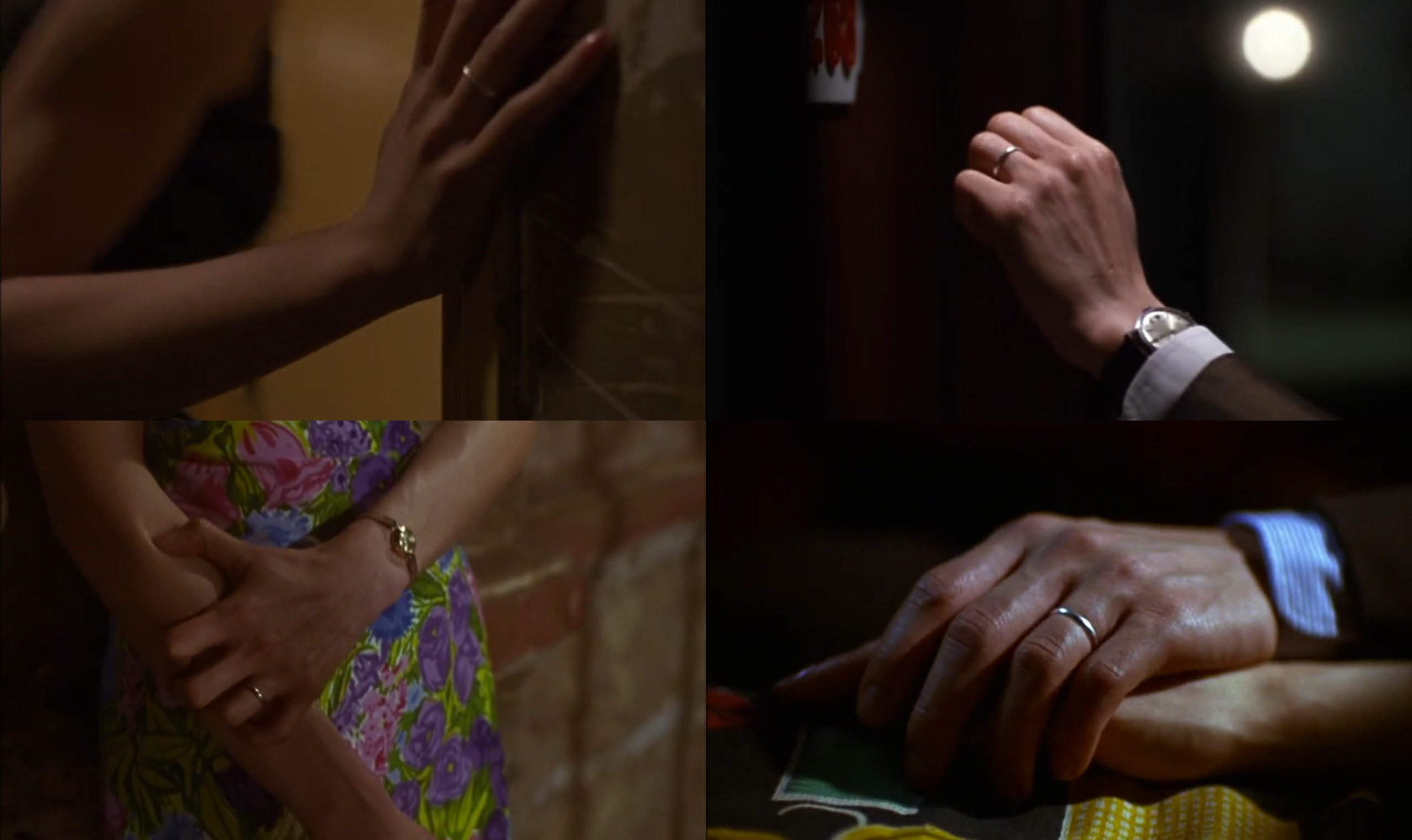
In the Mood for Love is about a love story that never happened. We observe that the relationship between Su Li-zhen and Chow Mo-wan, flush with emotion and possibility, remains unfulfilled within a society that conspires to keep them apart. Yet we also observe the agency by which they determine this outcome. Just as their spouses decide to defy the promises they made in marriage, Su Li-zhen and Chow Mo-wan actively chose to terminate their relationship. The institution of marriage casts a heavy shadow over the actions of these characters, and it is visually depicted in the multiple close-ups on wedding rings we see throughout the film:

rings

Notably, rings are always shown worn on the hand, never removed from it. When the relationship between spouses begins to break down, the rings that once signified a great love become a reminder of a social obligation, an observed and observable commitment. They are therefore tied to image, reputation, integrity – socially determined characteristics. Unwilling to relinquish the moral high ground to their cheating spouses, the bond between Su Li-zhen and Chow Mo-wan ultimately becomes a secret whispered into the hole of a tree: an unrealised wish, a blurred memory.

54a-secrets