The Expiration of Time and Love: Analyzing Speed of Motion in Wong Kar-Wai’s Chungking Express

intro

by Meagan, Emily, Dylan, Joalda, and Haina
University of Chicago CMST 10100, Intro to Film
Spring 2020

California Dreamin’-The Mama’s and the Papa’s (to supplement your reading)

The Chase

The context in which Wong Kar-Wai actually made Chungking Express is interesting to note as it relates to the techniques he uses to alter speed of motion in the film. According to Quentin Tarantino, Wong Kar-Wai was actually working on a different/epic movie, he had been editing for multiple years but had felt stalled in the process. Just as a writer needs to take breaks at times to look at their work with an objective lense, he felt he needed to step away for a bit, and decided to use the time to put out a quickly produced / quick hitting film, which would become Chungking Express. The context in which he made the film – moving from editing a film that was long, slower paced in time, to producing a film that was quick paced in time, and then returning back to the slower paced one – is in various ways actually reflected in his treatment of time in Chungking Express. As the remainder of this post will discuss in different ways, Wong Kar-Wai manipulates time through film techniques that alter the speed of motion. This manipulation of time is not meaningless however, the ways in which he does so is to reflect how time moves differently for different characters/situations, connecting us closer to their stories– instilling empathy in many respects. While Hong Kong films, at least at the time, were known for their fast paced approach, Wong Kar-Wai created a film in Chungking Express that is both fast and slow. And perhaps, his approach and reason to this was in-part to reflect how he perceives time as moving at different speeds within his own career.

Step-printing uses an optical printer to repeat frames, so that in the end, the scene kind of looks like a flip-book. The process, more simply, is basically the duplication of a film frame, creating an interesting type of motion that is hard to define without visuals, but easy to recognize when you see it. In the opening scene of Chungking Express, when Cop 223 is running after a suspect, he is in focus, but the background isn’t, which makes his background look like a blurry string of neon lights behind/around him. The visual effect places him clearly in the scene, but also removes him from it, as the background is blurry and almost seems as though he is not entirely in the same place as the background. The scene is not in slow-motion or fast-motion, but a kind of different motion that is slow and fast at the same time. The step-printing effect aids in both the film’s illusion of time and feeling of isolation. The constant stream of neon lights, the hussle and bussle of the market (never failing to unveil the seedy undergrounds of the city), and the crowd of people is a common sight in Hong Kong food markets, yet Cop 223 is facing two struggles. One, his affinity towards true love has backfired. His love has ended their relationship and the second part of the movie shows Cop 223’s fight to stop the expiration of love and time. In a dream-like performance, Cop 223 wonders the city hoping his ex-girlfriend will chalk their break up to a practical joke. When he realizes this is an impossible scenario, he searches through the city to find his next meaningful love, or at least to feel close to someone again: “ This was the closest we ever got. Just 0.01 of a centimeter between us.” 
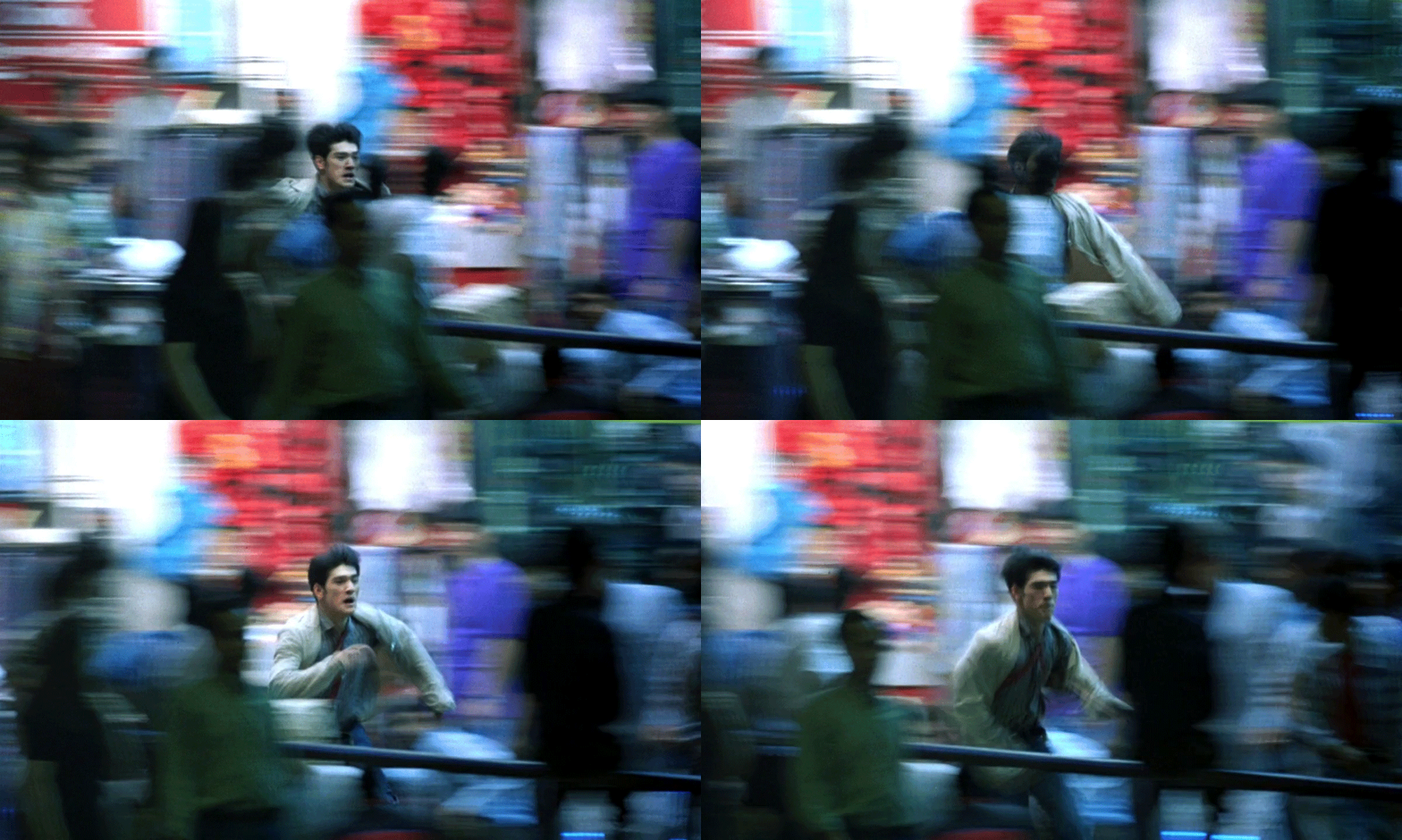
chase

The Letter

In part two of the Chungking Express, Wong Kar-wai’s signature step-printing is back: fueled by the combination of slow motion, time-lapse, and motion blur in a single frame. Cop 663 is also faced with the betrayal of love, in this case from an airline stewardess. It is worth pointing out that part two of the film follows much slower, romantic sequencing in comparison to the first. Yet, the concentration of time that elapses when Faye presents the hand-written note to Cop 663 from his ex-girlfriend is just as listless as the feelings of romantic loss. Instead of seeing a physical change to Cop 663 in this time of mourning, the audience can reflect on how the cinematographers feel about both Faye and Cop 663. In this lapse, we can imagine Cop 663 reminiscing on the life he had with the airline stewardess for the last 5 years. Yet, we can also imagine Faye’s longing for the cop, along with the realization her newfound crush is still emotionally invested in his previous relationship. As twenty-two seconds of step-printing plays, only Faye and Cop 663 remain still, while the rest of the world turns. Although the specificities of the letter are never revealed to the audience, the moment of Cop 663’s acknowledgement of the letter allows for two scenarios: He won’t read it, thus the heartbreak will never be materialized OR he reads it and spirals into emotional pain. The movement between the characters, allowed by step-printing, creates noise in an otherwise silent scene. Time is both the killer of his relationship, while Faye sees time as the nourishment for her budding romance. The subtleties that underlie change is the ultimate heart of the film, and these scenes of step-printing appear to be a mockery of the situations we cannot control. 
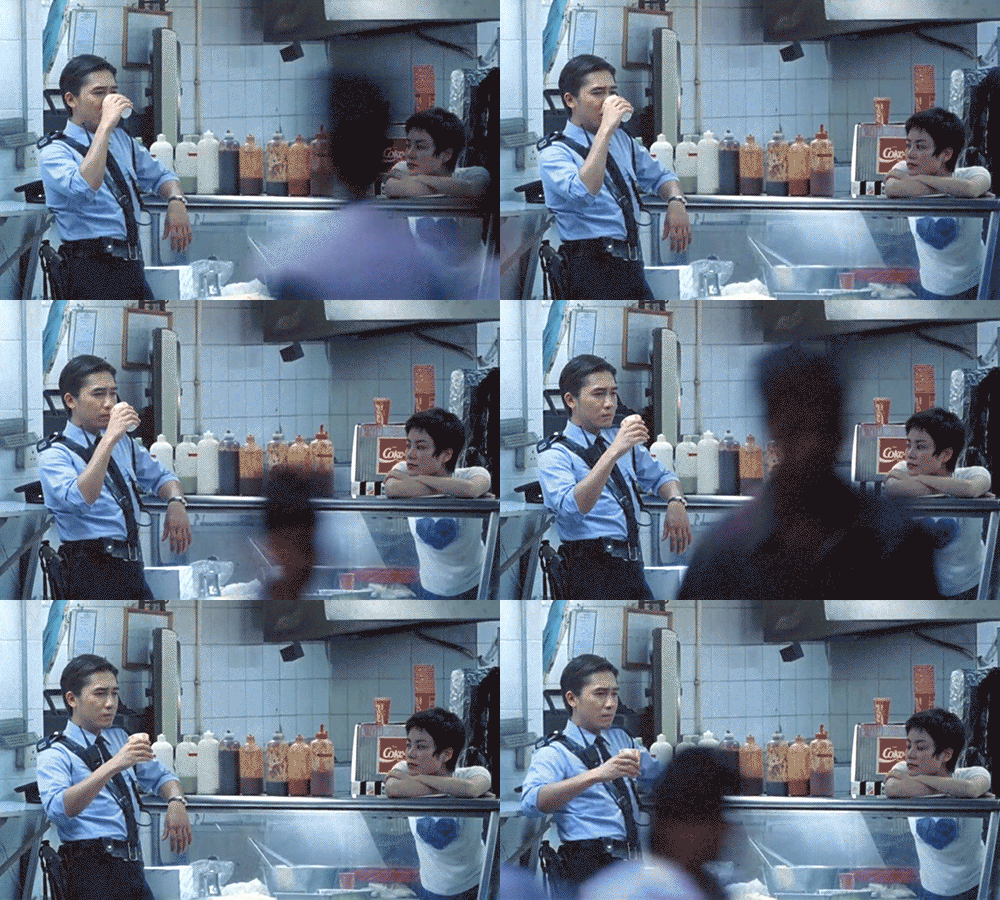
the letter

The California Restaurant

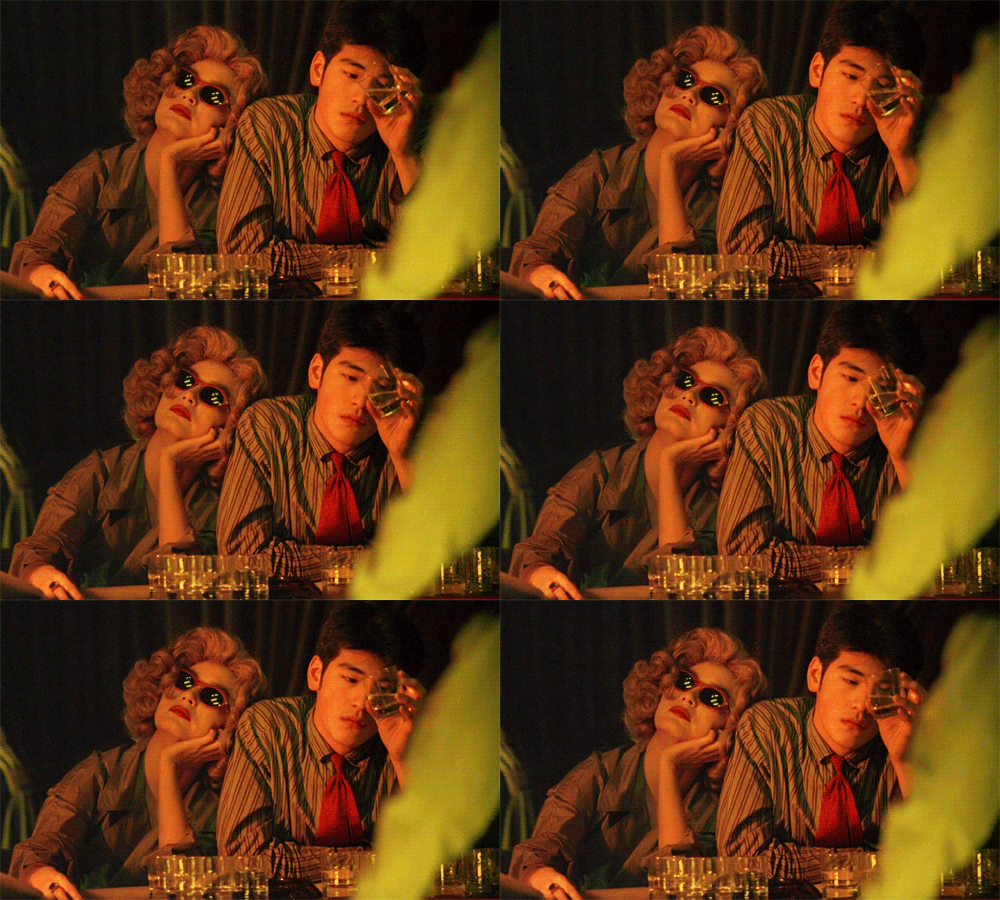
During one of the last scenes of part two of Chungking Express, we see Cop 663 in the California restaurant. After learning Faye’s secret, he decides to ask her out on a date and brings her to this restaurant that represents her dreams and aspirations. But time goes on, and Faye does not seem to be showing up. Wong Kar-wai’s use of step-printing is used to effectively communicate to viewers how Cop 663 is feeling. In this moment, it seems like he is separated from the world around him. As people go by him in the background, Cop 663 is slowly moving within the foreground. This can represent how time and the world around him is continuing even as he wallows in his sadness, waiting for his date to finally come and rescue him from it. The dialogue in these scenes also plays into his loneliness. He describes Faye’s lateness as a flight delay, and later says that the flight was cancelled, signaling that Faye would not be showing up. These descriptions tie into the fact that Cop 663 has yet to let go of his past where he is in love with a flight attendant, and can only seem to describe time and events through terms that can help remind him of the past. Even the music in the background, some sort of slow jazz, captures the slowness and dullness of the moment. The step-printing effect and the other crucial aspects of the film together create this somber tone that seems to continue to encompass Cop 663’s lonely life.
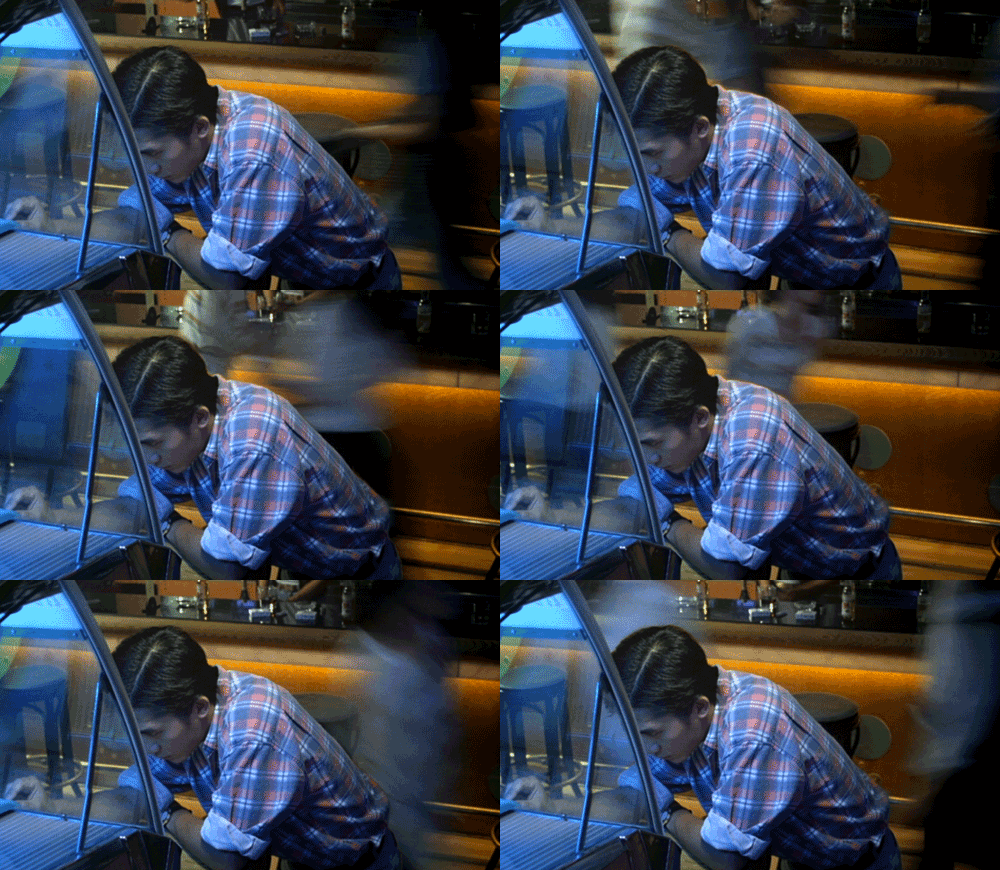
california restaurant

The Cup of Coffee

Faye offers Cop 663 her note after he tells the snack bar about his breakup; in a little over one minute, Wong uses the step-printing process twice to show the perspectives of both Faye and the heartbroken cop. For him, time slows down around him as he drinks his coffee; absorbed in his own residual feelings for his ex-girlfriend. He steps out of this trance as he leaves Faye and her letter behind, who returns to work diligently cleaning the counter at a normal pace. The scene then cuts to focus on a cup of coffee that Faye has brewed after her hours, and step-printing is used again to show her sipping the cup of coffee and grimacing at the flavor. Though there are no more people walking in and out of the frame, the intentional disjointedness of the step-printing process tells us that time is still passing outside, but moves slowly for Faye inside the shop as she tries to sort out her unrequited feelings. Unlike utilizing actual slow motion, step-printing allows for the manipulation of specific frames such that one can be drawn out for a different number of repetitions. Since it is also manually copied, viewers can tell when the placement or angle of the scene shifts slightly, such as in stop-motion films. Here, the shakiness of the transitions add to the cinematic effect in the ways the viewers can interpret and empathize with Faye’s feelings. Perhaps she is annoyed with herself for trying something she doesn’t like; perhaps she wishes to experience the same kind of feelings the cop is experiencing through solidarity; or perhaps she doesn’t understand what it is about coffee that he just enjoys so much. Most likely, she is feeling some combination of all of the above, and her disappointment at her predicament is clear. Placed directly after the other, the viewer experiences the emotional arrays of both characters who are isolated in their own worlds. As hard as Faye tries to empathize or place herself next to Cop 663, she struggles to step out of or make sense of her own emotions.
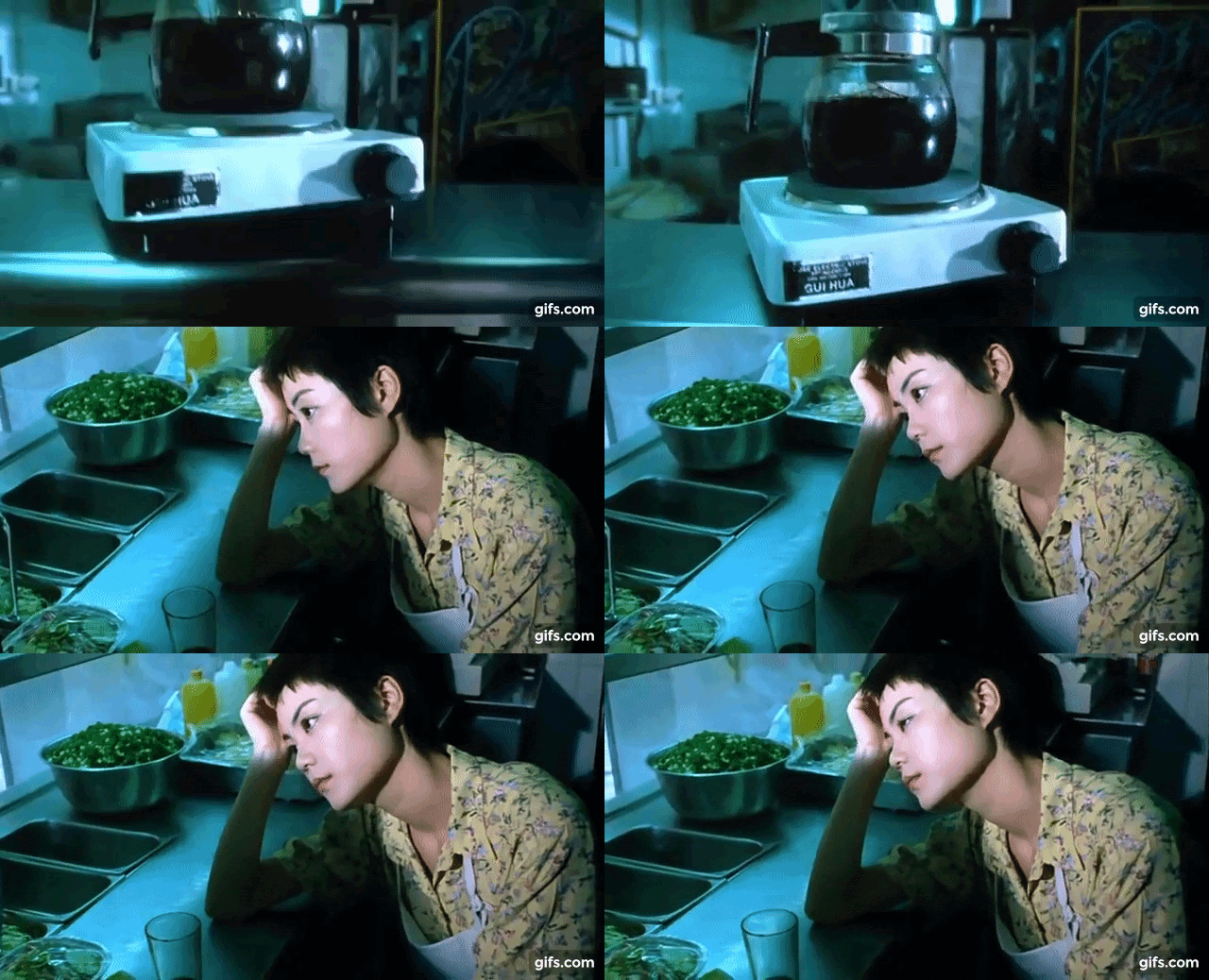
cup of coffee

Silhouettes, Shadows, & Smoke: Lighting in In the Mood for Love

Screen Shot 2015-06-09 at 12.09.27 PM

by Sherlock
University of Chicago CMST 10100, Intro to Film
Spring 2015

Wong Kar-wei’s In the Mood For Love depicts the story of a man (Chow) and a woman (Su) who, both suspecting that their spouses are involved in extramarital affairs, become close companions to each other in their loneliness. As the story progresses, however, their platonic friendship spills over and they begin to fall in love.

Their story unfolds in carefully controlled sequences that are almost dreamlike in nature as, together, they fabricate a fantasy world for themselves in which they pretend to be in love as their spouses are – and then continue, even when the façade of romantic affection becomes a reality. One of the most obvious visual cues in the mise-en-scène that indicate the portrayal of these moments is in the lighting. In all of these sequences, the lighting is more dramatic: it is low-key, sharp, and almost always artificial, as these scenes overwhelmingly take place under cover of night. This type of lighting is fundamental in setting the mood in these sequences; the subtle expression of emotion and the tension of physical bodies is highlighted, literally, by its use.

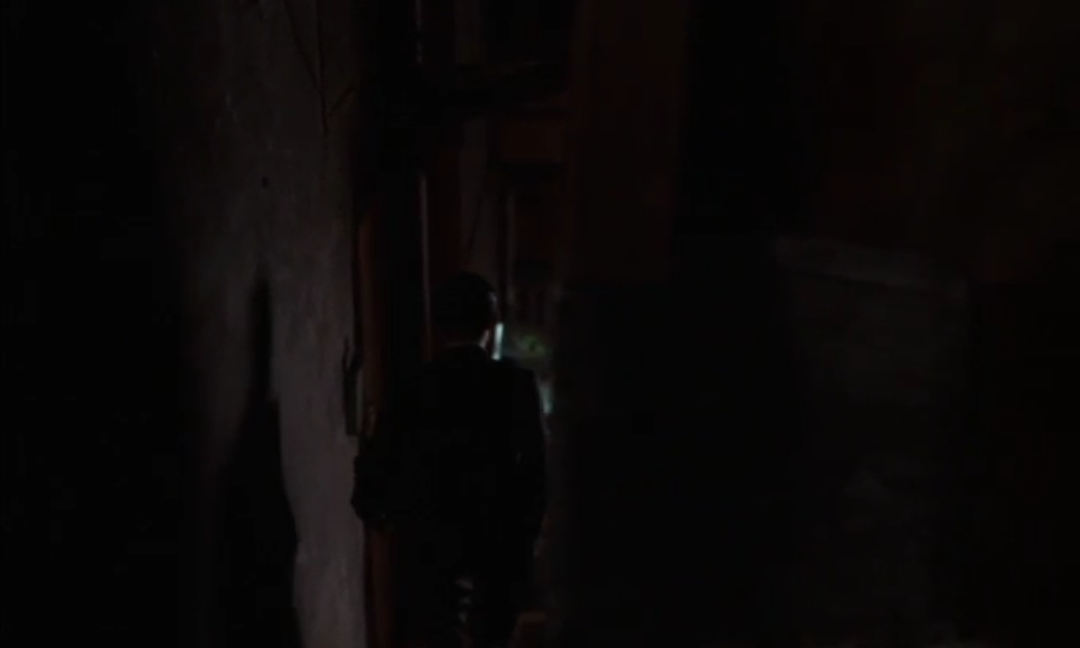
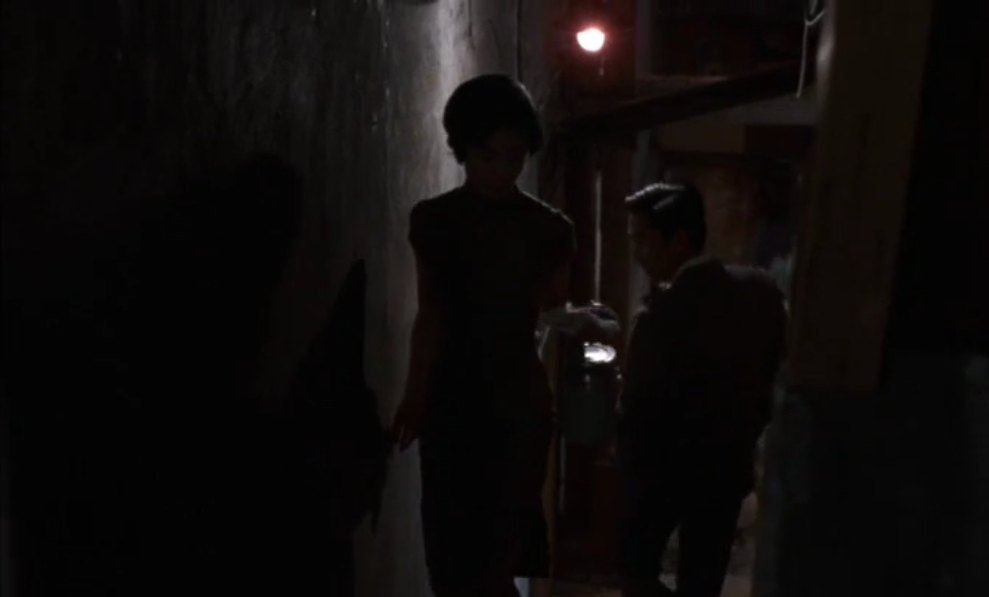
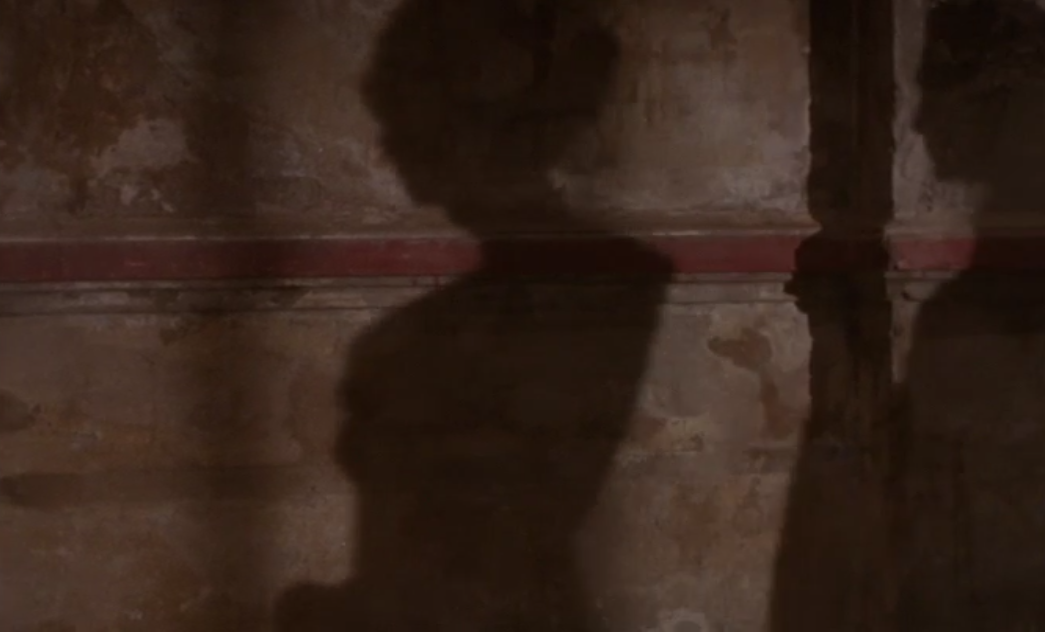
The first major sequence of this nature occurs before their relationship has strictly started but after they are both aware of each other. In this sequence, first Su and then Chow go out to get noodles. The entire scene appears in slow-motion, and the lighting is intensely more dramatic than perhaps any other scene in the film up to this point. It takes place at night, so the only light comes from street lamps; overwhelmingly the world is dominated by shadow. As both characters go up and down the stairs to the noodle stall, we see both their physical figures, in sharp silhouette, and their shadows, on the wall descending with them; this adds an air of intrigue and, it could be even said, mystery to the scene. In this world of shadows, without the light of day, everything is a little more uncertain; the shadows serve as a lingering presence of the characters even when they themselves are no longer visible in the frame, and that presence is tense, tangible, fleeting.

In the sequence we see first Su as she goes down and up the stairs –

Screen Shot 2015-06-09 at 11.19.09 AM

and then later Chow –

Screen Shot 2015-06-09 at 11.20.01 AM

And then, at the culmination of the sequence, we see them both on the stairs at once, meeting as Su ascends and Chow descends, and the tension of both of them at once in a space previously inhabited by just one of them is heightened still more by the lighting, and the fact that we can essentially only see the outline of their frames in silhouette – close, almost touching, like two shadows meshing together on the same expanse of wall. We become, in this fleeting moment, hyper-aware of the possibility of contact, of their silhouetted bodies touching. In the world of shadow, they are the only things moving – dark forms, graced by light.

Screen Shot 2015-06-09 at 11.32.09 AM

A second sequence occurs a few minutes later, again with them going to the noodle stand. This scene is similarly lit in artificial, sharp lighting, and similarly serves to heighten dramatic tension.

Here are two still frames of first Chow and then Su from the same sequence:

Screen Shot 2015-06-09 at 11.48.06 AM
Screen Shot 2015-06-09 at 11.50.36 AM

The lighting on Su’s face is sharper and a little brighter, but the lighting on Chow is still sharp enough that his face, hand, cigarette, and collar pop most, and everything else recedes into shadow; similarly, Su’s profile is what pops most immediately in the second frame. It is also interesting to note that their profiles mirror one another.

The next sequence in their constructed reality is the most direct one thus far, by far – they dine together in a restaurant. In this scene, dominated by middle shots and close-ups, the lighting is again artificial and sharp, coming primarily from the point source of a single lamp hanging over their table at the restaurant. It beautifully highlights their faces, capturing subtle, subtle expressions of emotion, minute twitches of facial muscle, fluttering eyelashes, stuttered breath. It also works wonders for capturing Chow’s cigarette smoke.

Screen Shot 2015-06-09 at 12.01.06 PM

This sequence, like most of the other sequences of their constructed reality in the film, feels almost noir with its air of dramatically-lit, subtle intrigue. Chow’s smoking adds to this; it feels suave, sexy, backlit and tinged with the dark, rich red of the seats around them – but if this scene were lit differently the effect would be entirely different. It is the sharp lighting that creates such a powerful atmosphere of mystery, tension, and drama.

The next sequence of this kind begins with this frame:

Screen Shot 2015-06-09 at 12.11.18 PM

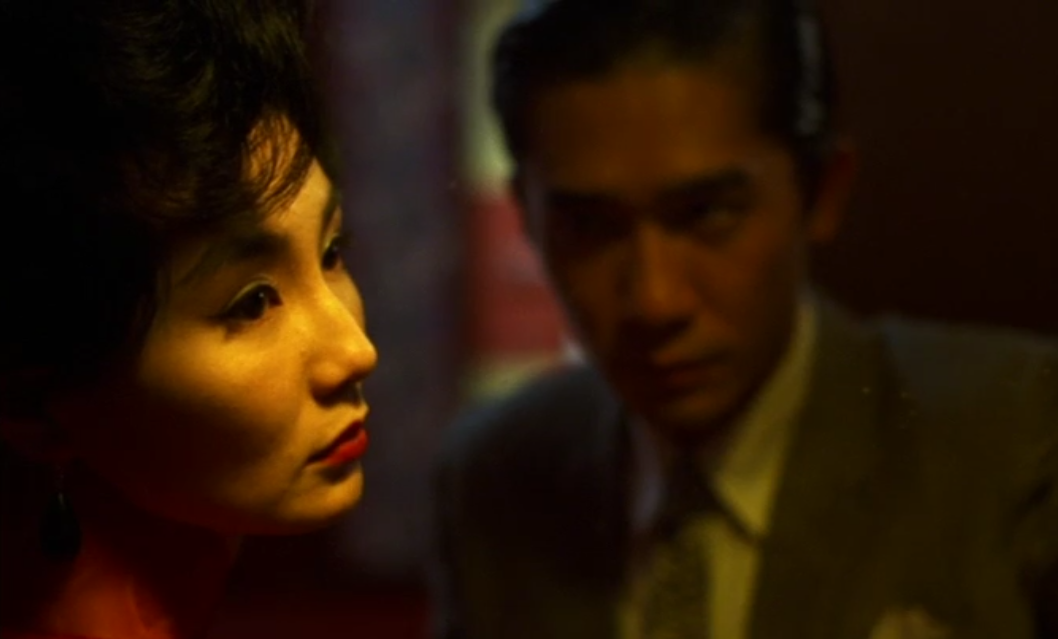
Everything about this shot is utterly stunning. The light on Su’s face is perhaps the most dramatic in the entire film: bright, sharp, highlighting the shadows under her cheekbones and her winged eyeliner, and also very artificially coloured, almost golden, making her lipstick look brighter and her features more defined. Chow is behind her, in a different depth of field; still, we can tell that his gaze is on her, and the resultant tension is incredible. (If there was a visual climax of the film, I would say it’s right here: this moment, more than any, captures the drama, the tension, the subtle intrigue, the possibility of hidden feeling, the hint of passion – and visually, it is incredibly beautiful.)

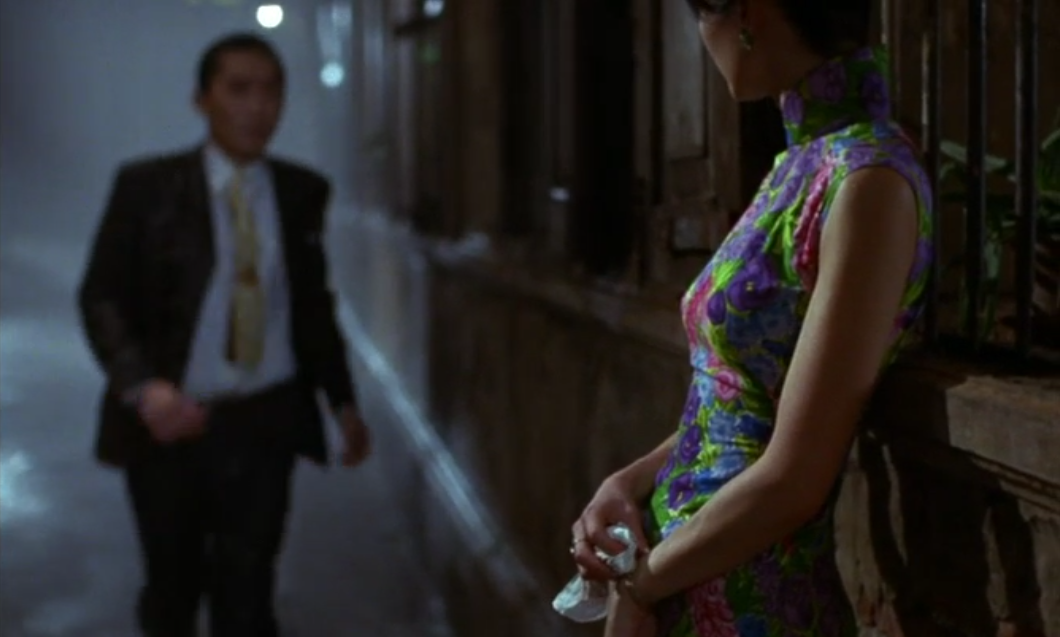
Later, a scene between them betrays a slightly different feeling, but still heightened by the effects of lighting. In this scene they are in the rain, having a conversation about the beginnings of their relationship. This sequence is less cinematically dramatic; singularly, there is no music playing, and they are holding a regular conversation instead of moving in slow-motion like two shadows on the verge of touching. It begins with Chow running towards Su in the rain, in an echo of an earlier scene:

Screen Shot 2015-06-09 at 12.31.00 PM

The two proceed to have perhaps the most honest conversation that takes place over the course of the entire duration of the film. Here we see their fantasy reality of romance being acknowledged directly – a break from tradition – but lighting still serves to heighten the sense of tension and emotion in the scene.

Screen Shot 2015-06-09 at 12.33.00 PM

The light is a dull colour, a soft blue or grey, and more diffuse than it has been previously. In many ways it’s a visual cue that this scene, that the events transpiring between them now, are different than they have been in the past. It is still dark enough that it could be night and there is still sharp lighting on their faces from a streetlight somewhere – but the shadows are no longer as deep, as the barriers between their pretended reality and actual reality break down.

A final scene between them shows them saying good-bye to one another for a final time – or, as we later realise, rehearsing saying good-bye.

Screen Shot 2015-06-09 at 1.03.42 PM

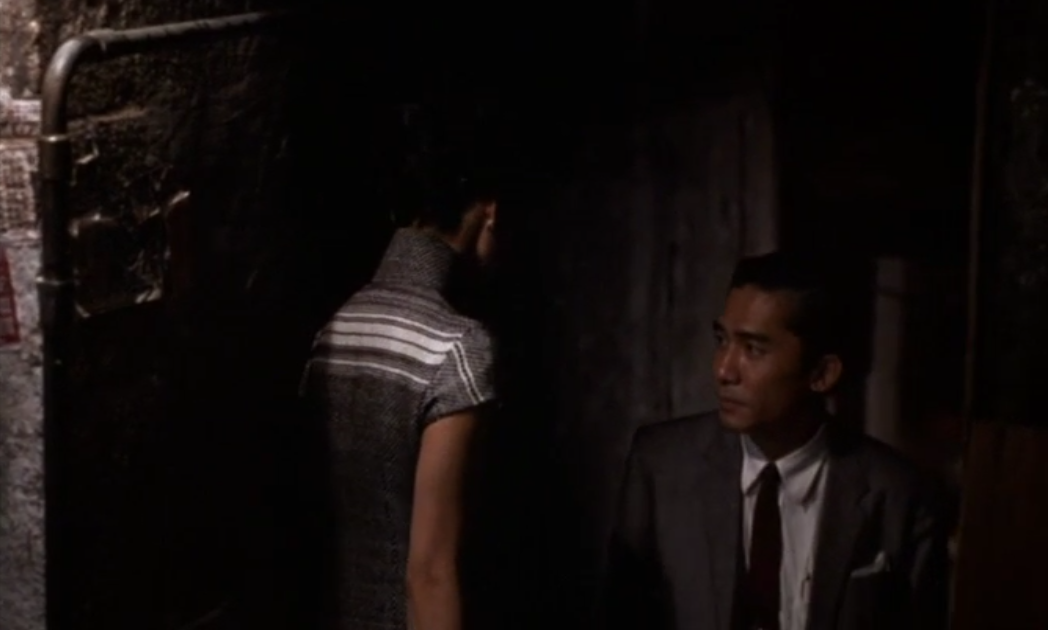
Here the light is once again very dramatic in its sharpness and the dramatic and physical tension it provides. The above frame is particularly poignant because of the shadows present. The single thrown by Chow is lonely and stark against the wall, and also carries narrative significance because it is alone, not accompanied by Su’s shadow – as they are parting. But what is perhaps even more poignant is the shadows of bars that are cast over the characters, because they can be read to have a metaphorical significance: bound by societal convention and scrutiny of neighbours – imprisoned by convention and expectation – Su and Chow must always be secretive and must now even say good-bye (or prepare to) in secrecy.

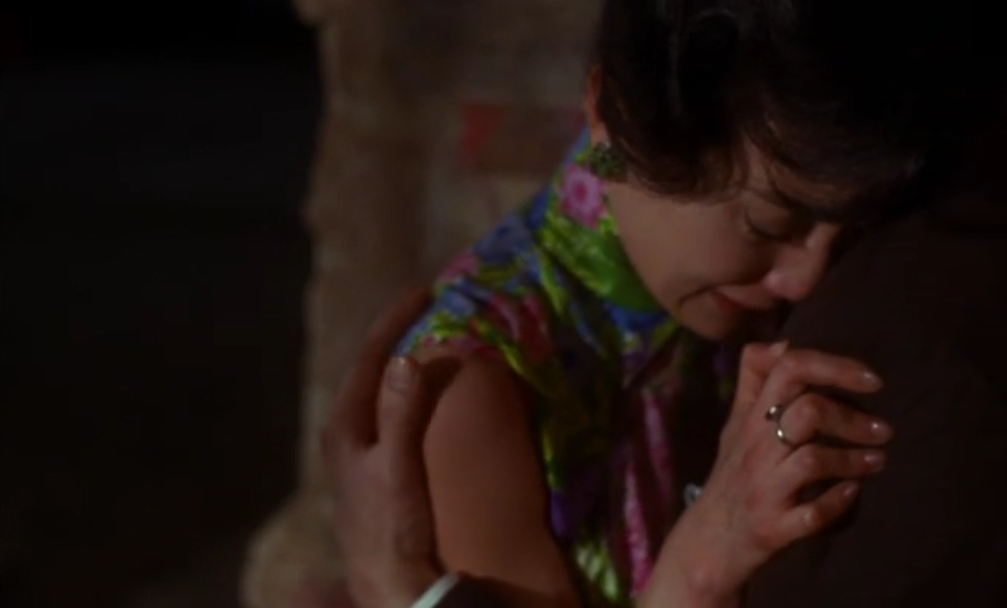
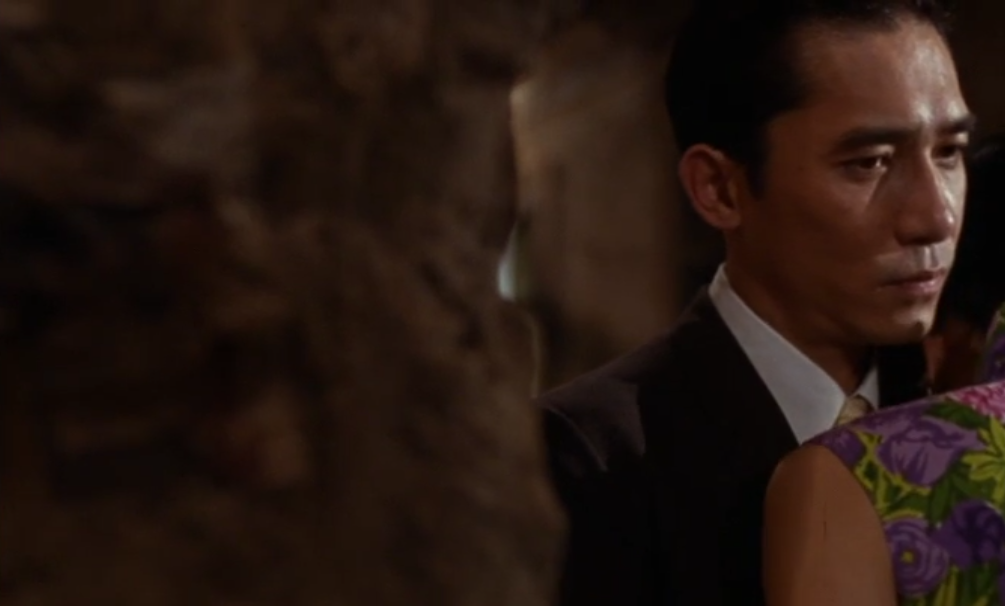
The illusion dissolves in the next moments of the scene as we realise that this good-bye was only a rehearsal – but the lighting remains the same. In this part of the scene it serves to heighten the emotional distress of the characters, as Su weeps in Chow’s arms. They are in a closer embrace than we have ever seen them in before, so much of the physical tension is (finally!) abated, but the emotional intensity remains. Su finally dissolves, in the first time we have seen her lose composure so openly, and Chow, in contrast, visibly struggles to remain stoic.

Screen Shot 2015-06-09 at 1.17.28 PM

Screen Shot 2015-06-09 at 1.19.20 PM

In conclusion, the lighting in the sequences that catalogue the progression of Su and Chow’s relationship is cleverly used to heighten dramatic, narrative, and physical tension; it highlights undercurrents of uncertainty, hesitation, and occasionally sensuality that emotionally charge their interactions, and it allows us as viewers to better see the subtle expressivity of their faces. With this lighting, the tangibility of their interactions becomes at once more fleeting and more real; more satisfying and more infuriating: in these moments of touching or almost touching, the light throws everything into sharp contrast, into a dreamlike world of sharp light and slow, lurking shadow – a murky world in which one can easily fall in love in the shadows and under streetlamps – but also a world in which even silhouettes cast shadows, and the consequences of such actions cannot remain hidden forever.

Screen Shot 2015-06-09 at 11.48.53 AM