SHAPE UP!: Possibility Space

Ian here—

Here is the first real episode of my new Shape Up! series of video essays about form, structure, and pacing in games. My central case study is Skeleton Business’ 2019 game Vignettes, although before I get there I spend a whole lot of time placing it in the context of what Joel Goodwin has termed “secret box games” or “himitsu-bako games.” This has been a topic I’ve written quite a few blog posts on. For years, I wanted to coalesce some of those disparate ideas and game appreciations into a video essay, but I never found the proper way to do that until I inaugurated this series.

Script below the jump.

Continue reading
It’s Finished: Let’s Study Half-Life 2

It’s been a long haul, but my series of video essays on Half-Life 2 is now complete.

I have embedded the entire finished series above. If you just want to watch the seventh and final part, it is here. In it, I look at how Valve’s “herding” techniques were adopted and expanded upon by subsequent developers, taking a peek at things like Insomniac Game’s Resistance 3, Monolith Production’s 2000s-era output, and DICE’s Mirror’s Edge Catalyst. I then investigate how the pleasures of the well-constructed linear first-person shooter have been transformed and absorbed into himitsu-bako/wander games (which I just give up and call “walking simulators” in the video, so that people will know what the hell I’m talking about).

Creating video content takes much longer than other types of blog content, but I also find it much more rewarding. (I was right when I predicted that, because my day job has me writing all day long, I would have less patience for it outside of work.) Expect more in the future.

Script below the jump.

Continue reading

Interesting Games of 2017: Games Telling Stories

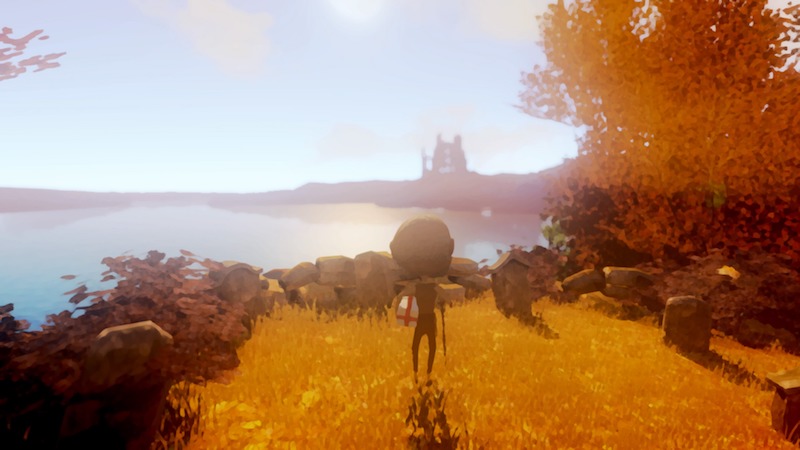
last_day_of_june_screenshot-02.jpg

I’m facing a quickly-approaching deadline for some genuine academic writing, so I’ve got to put a cap on my efforts to play every game that came out in 2017. This is the final post of this series I have planned, and it’s admittedly a bit slapdash. The theme is basically just “remaining games that did interesting things with storytelling,” which is admittedly pretty broad. Still, good games in here.

Ground rules: Unlike in previous entries, I’m not going to include any games that got a mention in my mid-2017 round-up. My time is too tight to indulge in such redundancies.

Continue reading

A Hodology of Videogames: Proteus

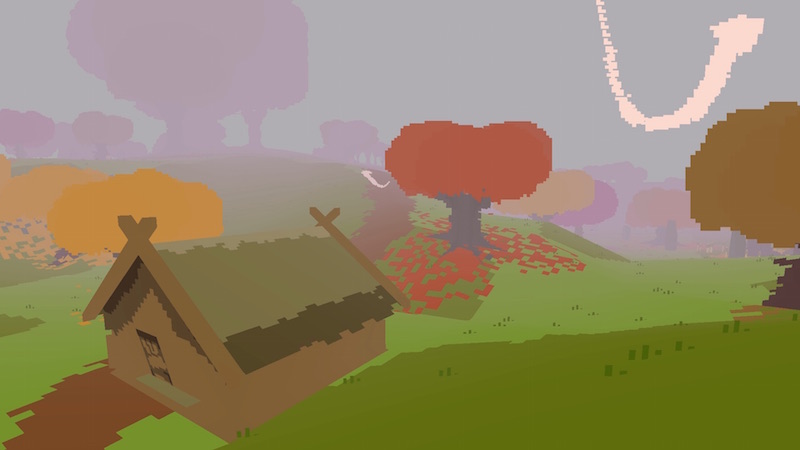
proteus_screenshot_01

Ian here—

Welcome to the third of a series of posts I’ll be doing on hodological space in games. “Hodological space” refers to the space that humans inhabit: not a space made up of strict coordinates, but a thicket of preferred paths, affected by factors such as interest, distraction, fatigue, and urgency. It’s a term that originated in the writings of psychologist Kurt Lewin, and which traveled by way of Sartre into the realm of phenomenology.

If, as Jean-Luc Godard once famously said, all you need to make a movie is a girl and a gun, than all you need to make a videogame is an island.

The island-game gave us Myst (Cyan, 1993), and it gave us last year’s The Witness (Thekla, Inc., 2016). It has also already made an appearance in this very series, with Miasmata (IonFX, 2012). But my favorite island game of all time might be Proteus (Ed Key and David Kanaga, 2013). And to really talk about what it gets right, we have to dip into issues of genre. So, buckle up: it’s going to be a bumpy ride.

Continue reading