Series: The Process Genre in Videogames

shenmue_docks_job_screenshot_04

Ian here—

This post inaugurates a series of posts, of as-yet indeterminate length. All of them riff on a term developed by Salomé Aguilera Skvirsky, a scholar who I’ve had the privilege of knowing (if only on a casual basis) the past few years.

The term in question is the “process genre.” Films in the process genre are films about labor—and not in an abstract thematic sense, in the way that Godard’s Tout va bien (1972) is about labor. Rather, process genre films are very specifically about watching the stages of a production process, from its beginning to its ending. There most salient characteristic is what Skvirsky describes as “careful attention to processes of doing and making.”[i]

We see the roots of the process genre all the way back in things like Robert Flaherty’s Man of Aran (UK, 1934), and the genre finds perhaps its most emblematic manifestation in Jeanne Dielman, 23 Commerce Quay, 1080 Brussels (Chantal Akerman, Belgium, 1975), with its lengthy and hypnotic food preparation scenes. Latin American cinema—Skvirsky’s own special focus—gives us more examples. Araya (Margot Benacerraf, Venezuela, 1959) is about the processes of mining salt by hand. Aruanda (Linduarte Noronha, Brazil, 1960), is about the processes of cotton-harvesting and ceramic-making. Quilombo (Vladimir Carvalho, Brazil, 1975) is about the process of making quince marmalade. Much more recently, Parque vía (Enrique Rivero, Mexico, 2008) is about the processes of custodial work and groundskeeping. Some of these films are documentaries; others present fictional narratives. What binds them all together is a rapt fascination with the way humans busy themselves, and produce things.
Continue reading

Shattered Memories Scattered Thoughts, Pt 2

shattered_memories-screenshot_01

Ian here—

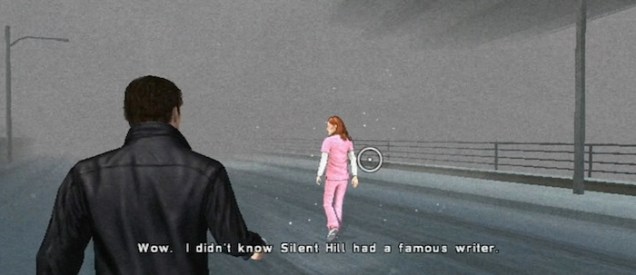
Welcome to part 2 of a 2-part post on Silent Hill: Shattered Memories (Climax Studios, 2009). I’ll admit to a bit of wordplay here. In my first post, “scattered thoughts” referred to my own train of thought, since I’ll be the first to admit that my thoughts in that post weren’t guided by a single, coherent thesis. This post, however, does have a coherent guiding line: it is about how Shattered Memories itself uses distraction and split attention to heighten anxiety. So, the “scattered thoughts” in question here are the player’s.

Continue reading

Shattered Memories Scattered Thoughts, Pt 1

Shattered_Memories-Screenshot_02.jpg

Ian here—

It is 2016. Sam Barlow is widely appreciated today for revitalizing the full-motion video adventure game with HER STORY (2015). Why, then, return to Silent Hill: Shattered Memories (Climax Studios, 2009), which Barlow served as writer and lead designer of, which released seven years ago today? Am I prepared to claim that it is a lost masterpiece, a testament to Barlow’s skill at expanding the narrative possibilities of the videogame medium? No, I am not. Shattered Memories is certainly interesting. But it’s also flawed in too many ways to be considered a masterpiece.

Why these critical musings, then? Well, a bit of biographical detail: Silent Hill: Shattered Memories is the reason I bought a Wii. I had no prior interest in the console until word of this title started leaking out in mid-2009. I had played the first three Silent Hill games (all earlier that year, in fact) and loved them, but skipped the most recent iterations due to a seeming consensus that the series had subsequently lagged, especially following the departure of the original Team Silent. But here was something new: a game that actually seemed as if the designers were using the Wii remote in interesting ways, a game that seemed like it had a shot at leveraging the bodily engagement of the Wii platform in the service of horror, a game that was promising to rescue the survival horror genre from its seemingly inexorable slide into the action genre. In 2009, all three of these things seemed like breaths of fresh air.

So I have a personal attachment to this game, even if my feelings on it are complicated. What follows, as the title of this post suggests, are somewhat messy thoughts—although I’m planning to post a more organized follow-up soon.

Continue reading

Strategies to Achieve Genre Satire in Wes Craven’s Scream

Vladimir Surganov

It is odd to think of Wes Craven’s 1996 film Scream as a comedy, when it is so utterly frightening. However, upon closer inspection, it is most evident that the film is a spoof of the 1980’s “slasher” films like another Wes Craven film A Nightmare on Elm Street (1984) or Friday the 13th (1981). Scream achieves a level of satire from the very beginning scene, the scene that I will be discussing throughout this paper. With strategic staging, canted camera angles, over-the-top acting/writing, low key lighting, and a plethora of movie references, the film appears to be more tongue-in-cheek than it would first appear upon the first viewing.

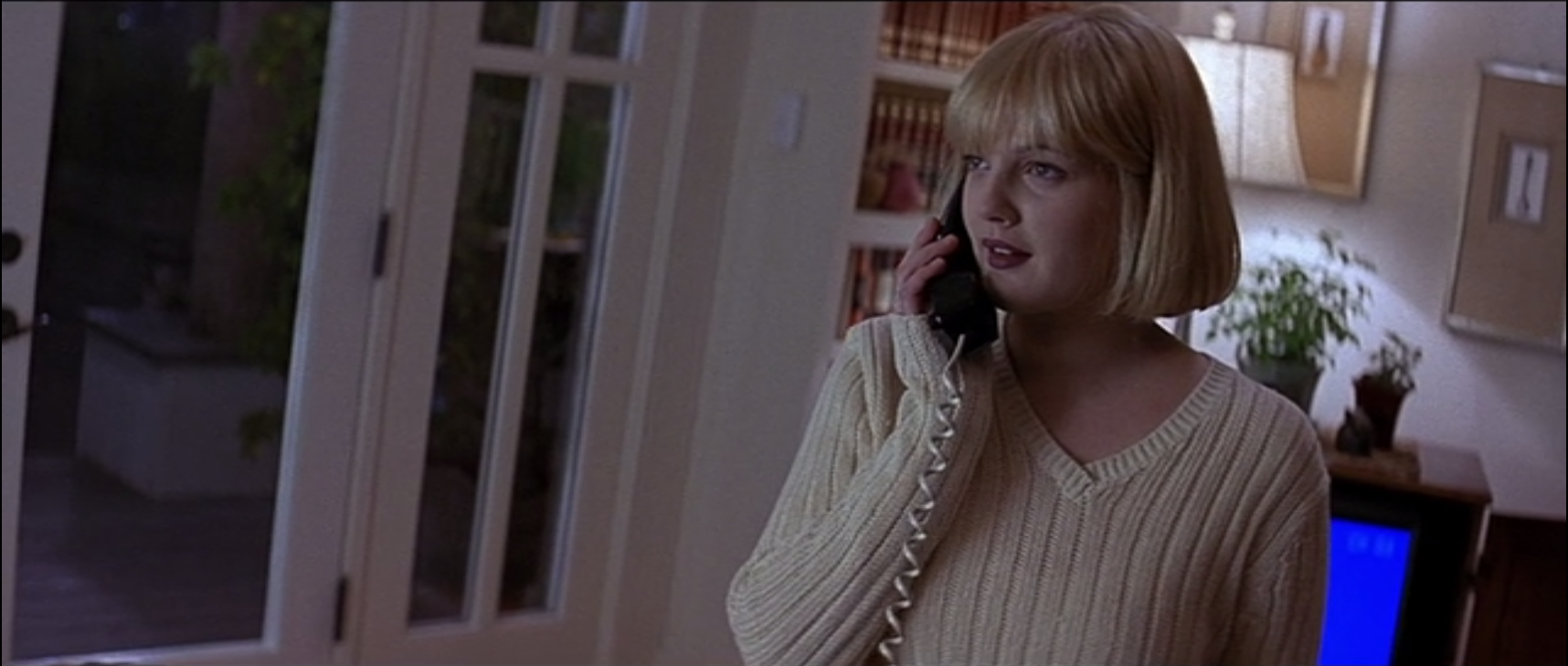
Canted angle frames in film generally signals psychological distress. However, when used over and over again the effect diminishes and actually appears to be more comedic that psychologically unsteadying. One of the first instances of a canted angle is when Drew Barrymore’s character Casey Becker picks up the phone the second time when Ghostface calls.

Untitled

Continue reading

Scream: Subverted Subversion

Justin Bibler

Wes Craven’s 1996 film Scream is something of an anomaly, effectively satirizing the typical American slasher film, but at the same time still completely belonging to the genre. The same cannot be said of the flood of “________ Movie”s that followed its release, which were completely comedy centered and wanted little to do with horror, or rom-coms, or whatever genre they were meant to parody. But just how does Craven allow this film to achieve full, very comedic self-awareness without sacrificing its membership of the slasher genre?

Both the comedy of the film and its thrills often come from the same general mechanism: a subversion of one’s subverted expectations. That is, exactly what one would expect – and exactly what the characters say will happen – is often what occurs. Screenwriter Kevin Williamson created characters who are somehow all horror movie buffs, as they constantly make allusions to other horror movies and their tropes, often saying things such as, “If this were a horror movie…”. Additionally, one character (Randy Meeks) works at a video rental store and is even more aware of horror movie tropes than the others. In fact, at one point, he outlines the three major rules that dictate who survives a horror movie:

Continue reading

The Unseen Hero: Subversion of the War Genre in The Red and the White

Mary Otoo

The Red and the White, a Soviet film released in 1967, depicts the confusion and brutality of the Russian Civil War. At the time of film’s release, war movies, due to their intense popularity, had formed a clearly defined set of tropes and tactics. Director Miklos Jancso could have easily followed these rules to construct a traditional war narrative. Instead, Jancso rejects nearly all the typical elements of a war film. This results in a kind of hybrid film that defies categorization. It is hard to pinpoint exactly which genre The Red and the White belongs in. Can viewers consider a film without a traditional narrative, a drama? Does a piece without archetypal characters count as a fiction film at all? The Red and the White utilizes many techniques that unnerve the viewer in its deviation from the classic war-genre film. These techniques serve to create a depiction of war that falls somewhere between fiction and nonfiction, blurring the lines between art and historical depiction.

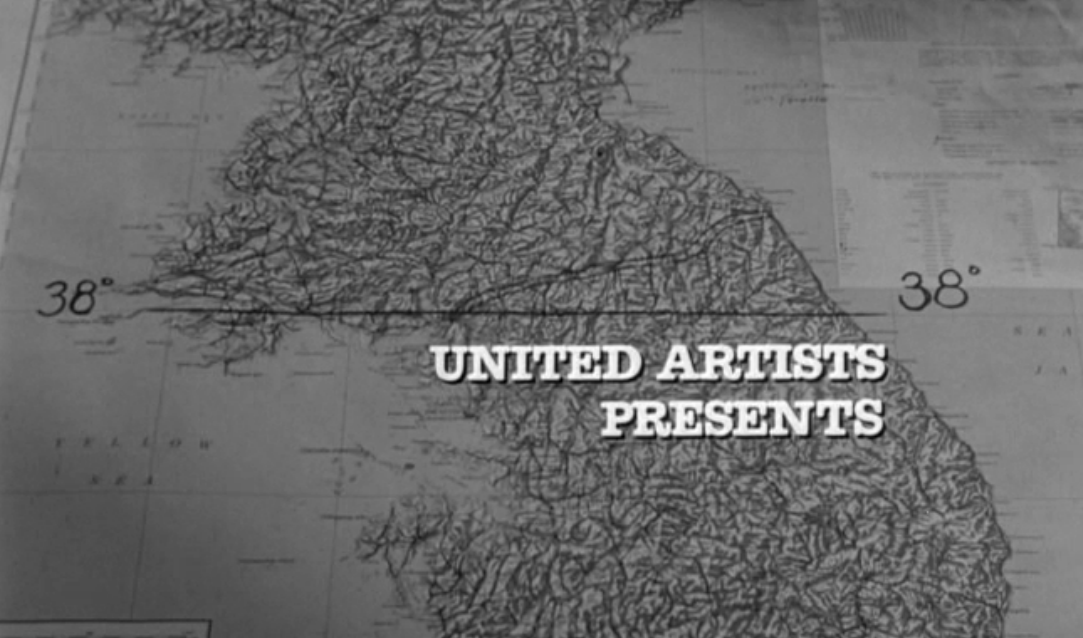
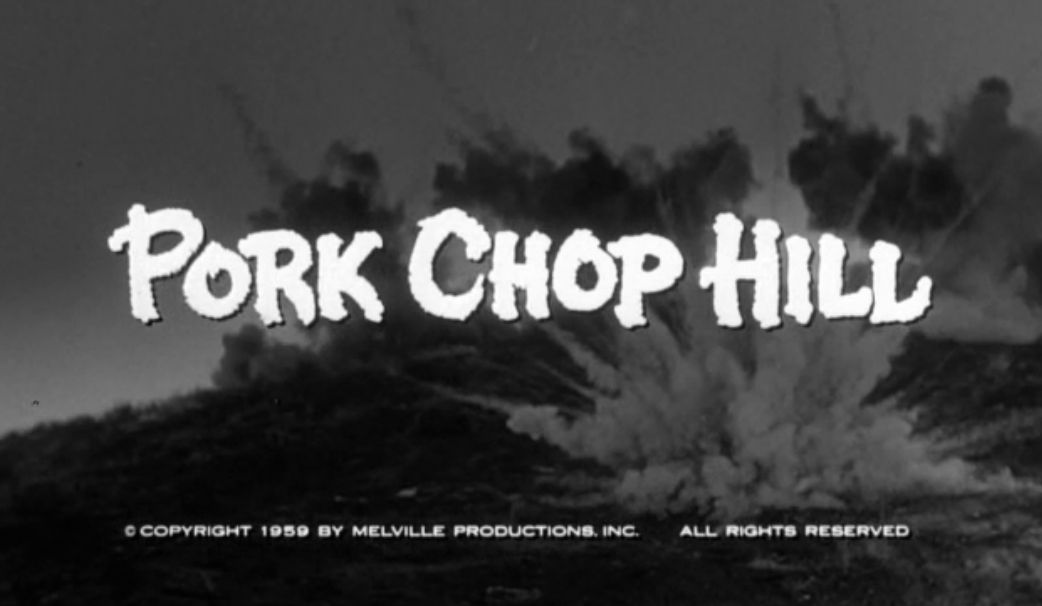
The classic film, Pork Chop Hill, exemplifies the traditional Hollywood war drama at its zenith. The Red and the White and Pork Chop Hill, released in 1959, come from different countries, but similar historical contexts. Audiences were used to seeing certain types of film. Pork Chop Hill, with its sweeping music and opening credits, throws the audience into the world of Hollywood cinema. The opening sequence prominently features its star, Gregory Peck. The director, Lewis Milestone, leaves no room for confusion: this is a war movie. As a result, the audience goes into the first scene with a plethora of ideas and expectations for the film that Milestone gladly meets.

Screen Shot 2015-06-09 at 10.08.56 AM Screen Shot 2015-06-09 at 10.09.09 AM Screen Shot 2015-06-09 at 10.09.33 AM

Continue reading