Let’s Study Half-Life 2, Pt 5

Part 5 is up!

Parts 1 & 2 were adaptations of existing material—namely, the first chapter of my dissertation, and this lesson plan. Parts 3 & 4 consisted mostly of newly-generated material. Part 5 returns to being an adaptation of existing writing—this time around, this blog post.

I had to scale back my ambitions for this particular video. Originally, it was going to feature a tour through some .OBJ outputs of the coastline maps, following in the footsteps of Robert Yang’s visualizations. Everything was going smoothly for awhile: I successfully extracted all the necessary textures with GCFScape, successfully opened the maps in Crafty, and got myself an education license for Maya. But try as I might, I just couldn’t quite pull off the trick that Yang did, and get the textures to affix to the .OBJ files. (He kind of glosses over that crucial step the blog post.) All I could produce were textureless grey blobs of level geometry.

So I fell back on a tried-and-true method of compositing a bunch of noclip screenshots in Photoshop. In addition to not having that cool 3D model look, it was also an enormous time sink, though, and slowed me down a lot. C’est la vie, I suppose.

Script below the jump.

Continue reading

Published: “Do(n’t) Hold Your Breath: Rules, Trust, and the Human at the Keyboard”

with_those_we_love_alive_03

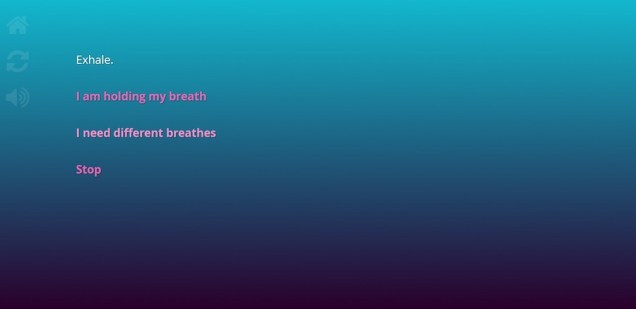
My article “Do(n’t) Hold Your Breath: Rules, Trust, and the Human at the Keyboard” was just recently published in a special issue of New Review of Film and Television Studies entitled Breath: Image and Sound, edited by Jean-Thomas Tremblay. Readers of the blog may recognize it as being built on the bones of this previous blog post. Hooray! Academic blogging acting as a stimulant for future writing, just as it is supposed to.

Abstract:

The maintenance of rules within the ‘black box’ of code, away from human eyes, constitutes a major difference between digital games and the social history of their analog counterparts. Meanwhile, the incorporation of new types of human behavior into digital games’ rulesets has placed games on the cutting edge of machine surveillance technologies. This article examines several digital games that stand in opposition to these trends, by opting out of monitoring certain aspects of player behavior, and opening social dynamics of trust and cheating that digital games have historically avoided or shut down. Chief among these examples are Asphyx (Droqen, circa 2012) and With Those We Love Alive (Porpentine, 2014), two games that incorporate player breathing into their mechanics, while forgoing any technical means of monitoring players’ respiration. In place of the usual command/output logic of human–machine interaction, these games map a more intimate alternative, in which players’ relationship to their avatars and in-game actions is built from a foundation of trust, shared truth, and consent between human bodies and software operations.

DOI link for those with institutional access here. I’ll be uploading a post-print version, suitable for those who don’t have institutional access to New Review, soon. [UPDATE: It’s here.]

Let’s Study Half-Life 2, Pt 4

So, I actually uploaded this one to Youtube on Thursday, but forgot to embed it here until now. Oops!

I’m going to try to teach myself some new tricks for Part 5, so expect a bit of a wait before that appears.

Script below the jump.

Continue reading

Half-Life 3 Confirmed!

Er, that is, “Let’s Study Half-Life 2, Part 3″ confirmed.

(That is to say, it’s live now on Youtube.)

This video is the longest so far, and will likely be the longest video of the whole seven-part series. Putting these together has been taking a lot out of me, so expect somewhat shorter installments in the future, along with longer breaks between each installment. (I won’t be posting more than one a week, now.)

Transcript below the jump.

Continue reading

Goodbye, Final Cut Pro 7

goodbye_final_cut_pro_7

So, I have a confession to make. Apple released Final Cut Pro X in June of 2011. I remember the moment well. In April 2011, the University of Chicago Film Studies Center was lucky enough to score a talk with the legendary editor and sound designer Walter Murch, and the very first question he took in the Q&A was someone who practically leapt from his chair to ask him what he thought about the new program. Murch seemed uncertain, and equivocated in his response, attempting to soften his obvious distaste for the new UI. And, in the coming months, as the software was commercially released, that distaste spread far and wide. Editors weren’t picking up Final Cut Pro X. They were teaching themselves Avid, or Adobe Premier, or announcing that Apple could pry their Final Cut Pro 7 from their cold, dead hands. And Apple did, in fact, continue supporting Final Cut Pro 7 for an unusually long time.

And I stuck with it. At first, I wasn’t editing video much in graduate school, so it made sense to just keep old software on my computer, rather than to attempt to learn a new UI. But then I started making things again. This and this and this and this were made on FCP 7. Less than 4 weeks ago, I made a video on FCP 7. I put up with countless headaches in my continued devotion to software released in 2009. I put up with agonizingly slow rendering. With severe lag that frequently made frame-by-frame viewing of clips untenable. With the program’s complete inability to deal with MPEG-4, which meant hour upon hour spent on transcoding. With the fact that the program would instantly crash to the desktop any time I tried to use some of its titling features. And with the fact that I couldn’t upgrade my main computer to High Sierra, because Apple had finally dropped support for FCP 7 on its most recent operating system.

Well, no more. I got FCP X two weeks ago, and already edited parts one and two of “Let’s Study Half-Life 2” on it. I think I’m adapting pretty well, so far. I have minor quibbles with the UI, but that’s true of any piece of software. And, seven years on since its launch, its benefits far, far outweigh any tradeoffs when it comes to replacing the now-fundamentally-broken FCP 7.

Anyway, just a small life change for me. Probably not worth sharing, but, what do you expect? This is a blog, after all. Oversharing is baked into the format.

Let’s Study Half-Life 2, Part 2: The Horizon

Part two is up!

It will likely take me longer for me to get part three up. (I’m thinking Monday, April 2nd, at the earliest.) This is the last video in the series that borrows heavily from my dissertation and prior course materials—subsequent videos will delve deeply into new material, which means they’ll be spaced out more.

Script below the jump.

Continue reading

Let’s Study Half-Life 2

For the past couple of months, I have been hard at work at a new “Let’s Study,” the most ambitious so far. It’s for Half-Life 2, and I foresee it being spread over seven parts. Part One: Linearity is now posted.

There’s a lot of material in this particular Let’s Study adapted from the first chapter of my dissertation, as well as material I developed when teaching the Half-Life franchise in class (including this lesson from my “Comparative Media Poetics” course). My first “Let’s Study” was just a playthrough with some commentary and a bit of b-roll; for this particular series I’m really leaning in to the video essay format more, trying to create shareable versions of what are basically class lectures, or conference presentations. This particular series is still geared very much toward a general audience, but I’m using it as prep for potential future adaptations of dissertation material into video essay format for submission to a genuine peer-reviewed academic video essay journal.

As usual, the script is below the fold. Part two coming soon!

Continue reading

Wednesday, March 14: Unlimited Animation: A Tribute to Hannah Frank

hannah_frank_quadtych

Well, now that the “Heaven Is a Place” screening is over and done with (and what a screening it was! my hat goes off to all fellow filmmakers & artists), it’s on to the next announcement.

It’s that time of year again: the annual conference of the Society for Cinema and Media Studies. This year, I forwent presenting a paper myself, and instead opted to act as an organizer for a special event. The event in question is “Unlimited Animation: A Tribute to Hannah Frank,” a celebration of the life and scholarship of one of film studies’ most promising young scholars. It’s scheduled for 7:00 PM on the evening of the first night of the conference, Wednesday, March 14. If you find yourself in Toronto then, I invite you to come.

Full schedule and details below the fold.

Continue reading

Tuesday, March 6: Heaven Is a Place

OREO_promo_image

So, this blog became something of a ghost town in February. The reason for that is that I’ve been hard at work on a number of projects, which means that the coming months will contain a slew of announcements.

To inaugurate these announcements: this Tuesday, The Nightingale Cinema is screening a program entitled “Heaven Is a Place,” curated by my friend Jesse Malmed. (It’s an offshoot of the exhibition of the same name he curated at Heaven Gallery.) Each of the filmmakers & video artists showing work in it have been commissioned to create work for another historical exhibition or screening—i.e., it’s a chance for them to finally be a part of Frank Stauffacher’s “Art in Cinema” film series, or Douglas Crimps’ “Pictures” show, or Die Ausstellung “Entartete Kunst,” or whatever catches their fancy.

I have a short video showing in this screening, entitled OREO NABISCO secret planet POISON january 2018 Concealed Information CONFIRMED!!!! The exhibition I’ve chosen to align myself with will remain a secret for now. If you’re in Chicago, and you are able, I invite you to show up—7:30 PM on Tuesday March 6, at The Nightingale. It promises to be a great show. (Indeed, I’m preemptively both honored and embarrassed to have something I put together more or less on a lark to be shown alongside the work of filmmakers I genuinely admire.)

I’ll eventually post the video on Vimeo, but not until after it’s premiered. [UPDATE: I’ve uploaded it onto my Vimeo page, here.]

Depiction and Endorsement in 2018 (or, how to criticize Blade Runner 2049)

blade_runner_2049_screenshot-30

I first envisioned this post as a “New Year’s Resolution,” but I got too bogged down with other stuff in January to post it then. Better late than never, though.

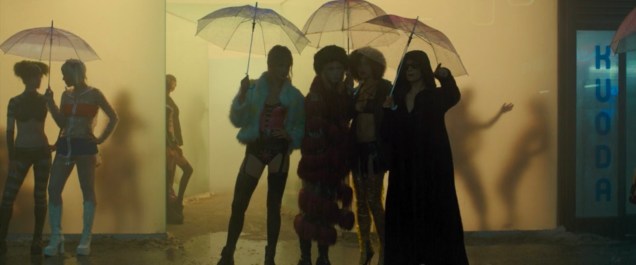
Now that Blade Runner 2049 is out on video formats (meaning that I can take some lovely screenshots of it), I wanted to revisit the critical reception the film was greeted with back in October 2017. Partly, this post is about Blade Runner 2049, and its legitimate faults. But I also consider the film’s reception to be emblematic of trends in political criticism that were ascendent in 2017. I personally consider these trends to be leaning in a direction that is, shall we say, unproductive. Buckle up.

Within 72 hours of its release, a backlash had solidified against Blade Runner 2049. Feminist critics didn’t like its treatment of women. New York Post critic Sara Stewart established the trend early with her October 4th article “You’ll Love the New ‘Blade Runner’—Unless You’re a Woman.” By October 9th, this particular gripe had spread like wildfire, spawning think pieces like Rosie Fletcher and Sam Ashurst’s “Can We Talk About Blade Runner 2049’s Problem With Women?” and Charolette Gush’s “Why Blade Runner 2049 Is a Misogynistic Mess.”

These headlines are clickbait-y. I wouldn’t be surprised at all if they were written by an editor, with no say at all on the part of the author. The actual articles beneath the headlines are more nuanced. Still, though, let’s be realistic. It’s the late 2010s. Plenty of people share articles on social media, hit “like” or “angry face,” offer up their own hot takes, and draw lines in the sand based solely on clickbait headlines, without ever reading the articles in question. It is impossible, in this day and age, to truly separate out the quality of the criticism in these individual pieces from the realities of the ecosystems in which they circulate.

Anyway, within days, lines had indeed been drawn in the sand. (At least on my social media feed.) Blade Runner 2049 was proclaimed to be problematic. It had “iffy politics” that “aren’t that futuristic.” That is to say: it didn’t imagine a future that was particularly progressive. Blade Runner 2049 quickly became a Bad Object, something that no one was willing to defend, less they themselves be labeled “problematic.”

I am not going to defend Blade Runner 2049 in this post. In fact, I am going to criticize it. (Quite harshly, at that.) But, along the way, I’m also going to criticize the dominant forms that cultural criticism had begun to take in 2017. I think that those forms are bad, and I think that we can do better in 2018. Prepare yourself: this is going to be a long post.

Continue reading