The Process Genre in Videogames: Walden, a game pt 1

walden_process_genre_header_image.jpg

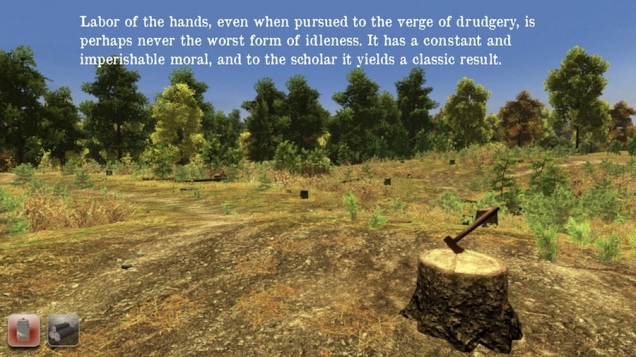
Tomorrow marks the 163rd anniversary of the publication of Henry David Thoreau’s Walden; or, Life in the Woods. I have decided to celebrate the occasion by resurrecting my old “Process Genre in Videogames” blog post series, turning an eye toward the USC Game Innovation Lab’s recently-released Walden, a game. I ended up having too a bit too much to say about it to fit into a single blog post, so I’ve split up my thoughts across two days.

Just a quick refresher: in this series, I borrow the term process genre from Salomé Aguilera Skvirsky’s work in cinema studies. According to Skvirsky’s definition, “process genre” films are films about labor, films that focus on processes of doing and making, that are fascinated with seeing tasks through to their completion. They are deliberately paced, meditative, and often political. In this series of posts (you can see them all here), I examine games that strike some of the same chords. Today, that means turning to the life and work of everybody’s favorite environmentalist pseudo-hermit, Henry David Thoreau.

The itch.io page for Walden, a game claims that the game is the product of a “very small core team” at the USC Game Innovation Lab working on the project for “the past ten years.” I first became aware of it in November 2011, when Tracy Fullerton sat down and had a wonderful talk with students during a session of the University of Chicago’s New Media Workshop. Back then, Fullerton described the project as a difficult balancing act, balancing the quantitative and systems-heavy “gamey” aspects of games—which are actually right there in Thoreau’s text, making this entire project of adaptation especially tempting—with the need to present nature, and the labor one does when living in it, as a source of unpredictable inspiration, worthy of our respect and wonder.
Continue reading

Videogame Cat of the Week: Molly

cat_of_the_week_molly

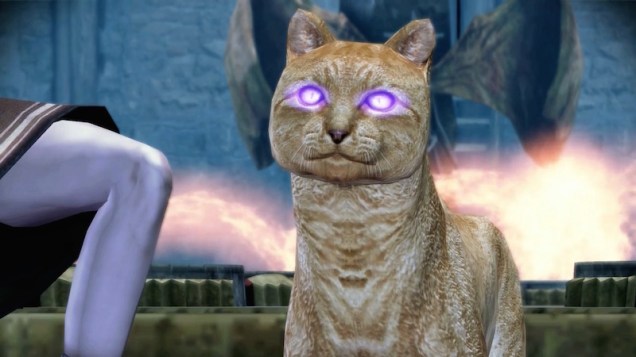
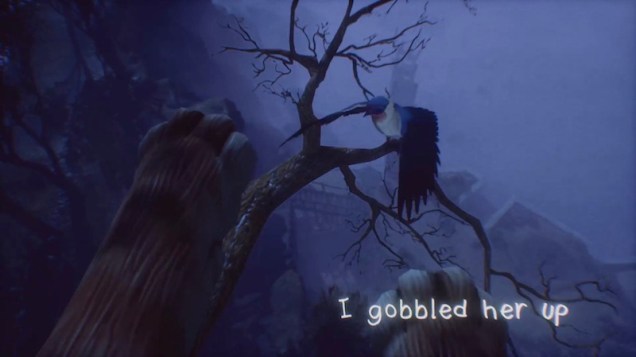
So, at one moment in What Remains of Edith Finch (Giant Sparrow, 2017) you play as a girl named Molly, who suddenly finds that she can inhabit a cat.

The moment happens fairly early on, but I still don’t want to share much about it, since surprise and novelty are such essential parts of Edith Finch‘s toolbox. The above screenshot is about all I’m willing to post. Any further description of this act of possession, and where it leads, would qualify as a spoiler for one of the game’s most hallucinatory and delightful moments. So, I’ll just leave it at this.

Up next week: another first-person cat.

Videogame Cat of the Week: Ronan O’Connor

cat_of_the_week_rowan_oconner

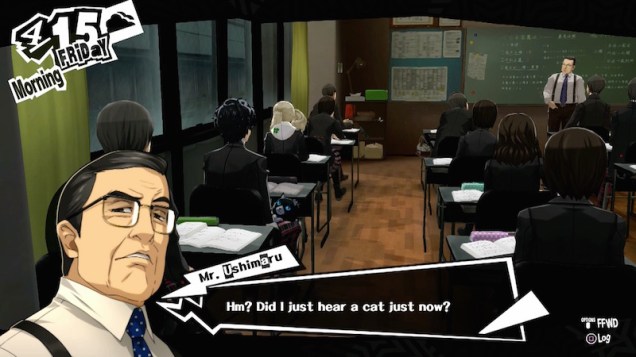
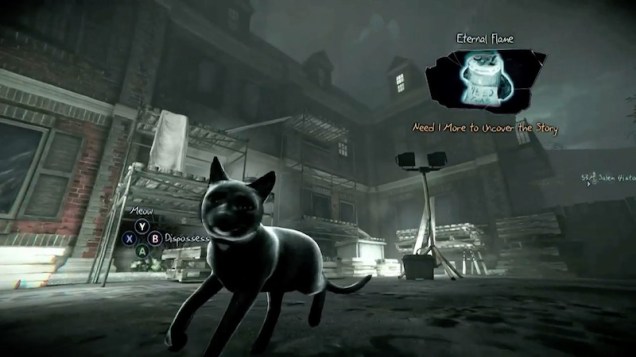
Okay, so technically the name of the cat you play as in Murdered: Soul Suspect (Airtight Games, 2014) isn’t Ronan O’Connor. I don’t know what the cat’s name is. Ronan O’Connor is the name of the man whose ghost you’re playing as, who can possess local cats at will. This is necessary, because cats can do cat parkour, which makes them more mobile than ghosts.

Yes, there is cat parkour in Murdered: Soul Suspect. There is also a dedicated “meow” button, which sadly Ronan doesn’t have when he’s in his human-shaped ghost form, for some reason. Video of some lithe Ronan-possessed cat parkour action below the fold.

Continue reading

Videogame Cat of the Week: Kitty

cat_of_the_week_Kitty

If you’re lucky enough to play The Stone Prisoner DLC for Dragon Age: Origins (BioWare, 2009), you’ll meet Kitty. Kitty is a cat. A cat who can talk. Wouldn’t Kitty’s ability to talk indicate she’s not actually a cat? Nonsense. Kitty is a cat, really. The reason she can talk is that she’s the best cat. A beautiful cat. The most amazing cat in the history of the world.

Some anonymous sources say that Kitty is not a cat at all, but a desire demon, mimicking the form of a cat. But that’s just FAKE NEWS. The single greatest witch hunt of a cat in Thedosian history. No cat in history—and I say this with great surety—has been treated worse, or more unfairly.

For Kitty’s own words on the matter, peek below the fold.

Continue reading

“The scariest stuff is like really really boring”: Night in the Woods

night_in_the_woods_screenshot_04.jpg

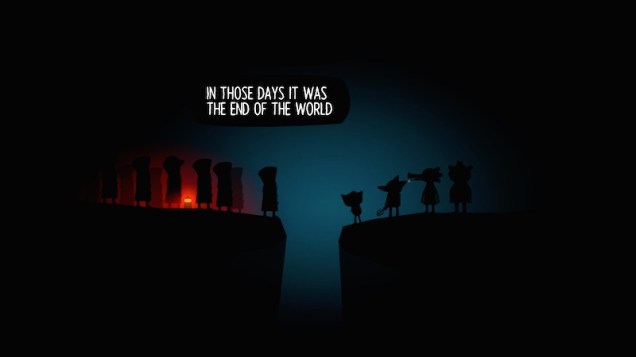
Night in the Woods tells the most vital story of any game in 2017. We’re only halfway through the year, but I doubt very much that it will be bested in this regard. Find out why below the fold, but beware of spoilers if you haven’t played it yet, and plan to. I will be discussing how this very important game’s themes resonate all the way to its ending.

Continue reading

Lesson Plan: Net Neutrality

net_neutrality_system_shock.jpg

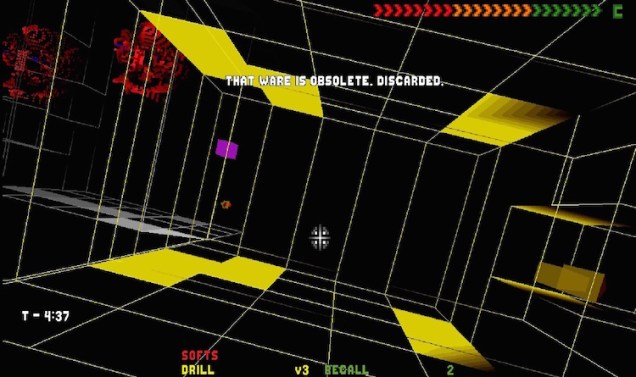
I have decided to re-post this lesson plan that I originally posted in December of last year. In re-posting it, I am forgoing the doom and gloom I offered in the introduction of the original post. A better attitude is needed. It is our duty as citizens to raise our voices in response to bad policy, so consider this my own humble contribution to the Internet-wide Day of Action to Save Net Neutrality.

Continue reading

Interesting Games of 2017: The Year So Far

dream_machine_ch_6_screenshot_01

My goodness. It’s been awhile since I’ve done a non-silly post. The new job has kept me busy, and on top of that I have made a real push to catch up on games released in 2017, now that we have passed the year’s halfway point. This latter task has given me plenty to mull over, and while I’m not yet prepared to write longer critical thoughts on the games in question, I thought I would collect some “quick takes,” as a way of priming the pump.

I still have a substantial backlog of big releases from 2017. I have not yet played Nier: Automata (PlatinumGames, 2017), or RiME (Tequila Works, 2017). I’m making my way through Resident Evil 7: biohazard (Capcom, 2017) right now. And although I recently bought Prey (Arkane Studios, 2017), I’m afraid that my 2012-built PC might not run it smoothly, and have been putting off installing it.

I have, though, found the time to play over a dozen other games released in the past six months. Thoughts below are listed in order of the release date of the game. I’ll set up links in this page if and when I write fuller pieces on any of these games.

Continue reading

Videogame Cat of the Week: Little Devil

cat_of_the_week_little_devil_05.jpg

This week, finishing off our run of cats exclusive to Nintendo platforms, I turn to Tokyo Mirage Sessions ♯FE (Atlus, 2015). It’s a game about J-Pop stars using the powers of the performing arts to battle monsters and shake the residents of Tokyo out of their collective ennui, thereby saving them from certain doom. Obviously, it goes without saying that it is one of the most delightful games I have ever played. The cherry on top is that it has a great scene with a great cat, Little Devil.

Continue reading

Videogame Cat of the Week: Aisha

cat_of_the_week_aisha

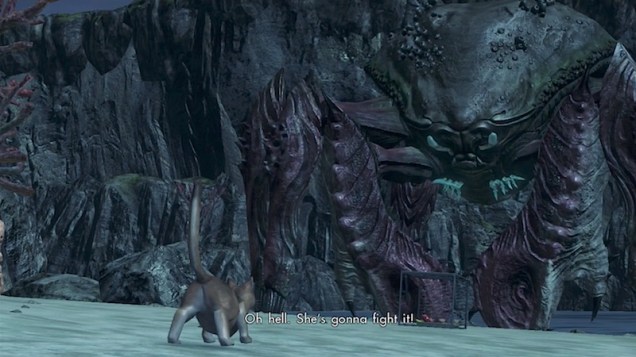
Xenoblade Chronicles X (Monolith Soft, 2015) an enormous game—too big, in fact—and so there is a very real possibility that players will miss the side mission “Nine Lives” when they play. This would be a shame, as they would also miss the opportunity to be acquainted with Aisha, the game’s cat.

Aisha is a badass. In Xenoblade Chronicles X, the entire Earth has been destroyed, but Aisha survived because she was the baddest cat on the planet. Humans recognized her vast potential and brought her aboard on a spaceship headed to a new home, to test the hardiness of felines and their potential to conquer the universe. Spoilers: they totes will. Aisha represents the absolute best of her species, unafraid to pick fights with giant crab monsters that try to steal her food.

Continue reading