by Jacob Briggs
Summary
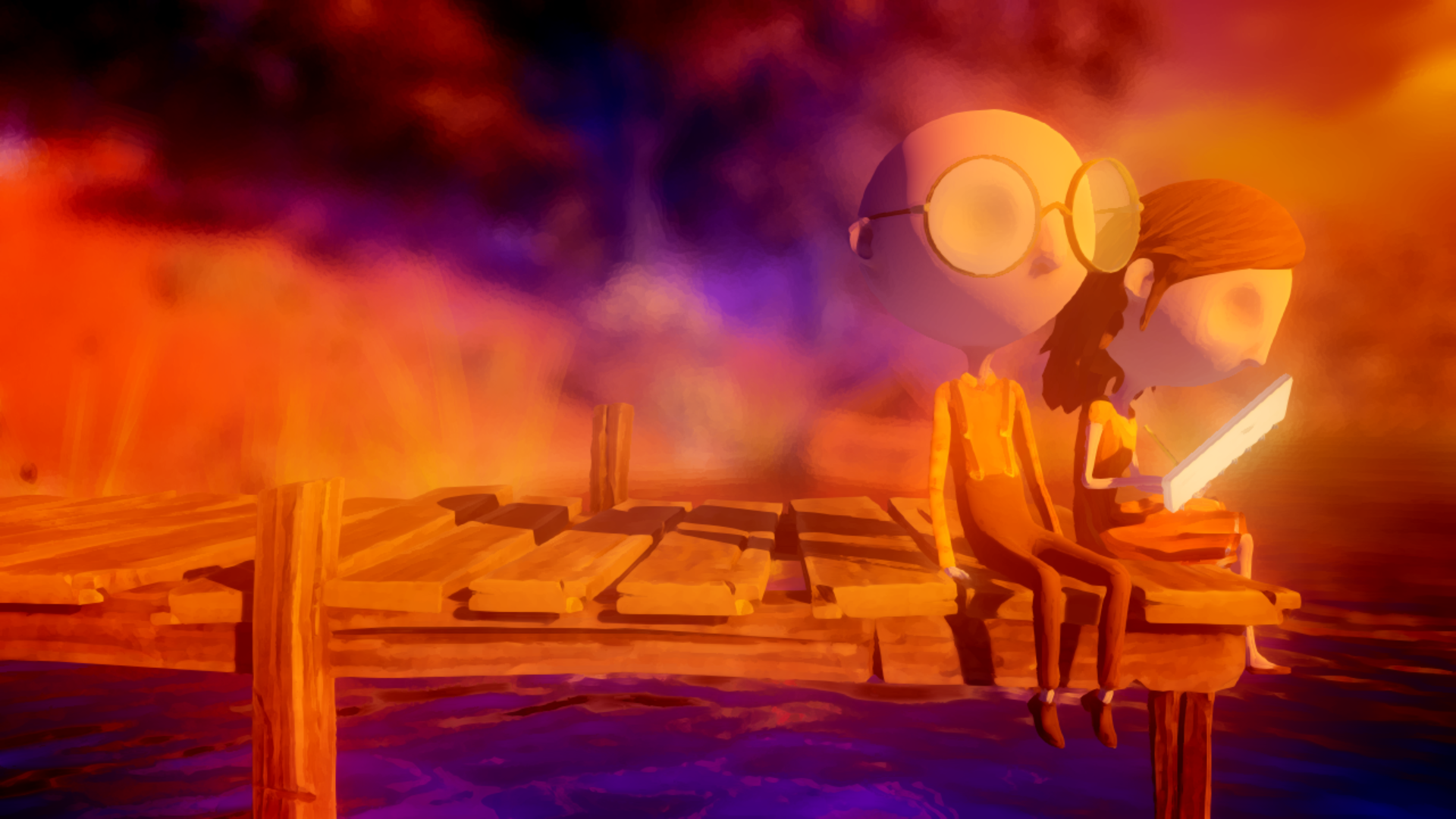
Last Day of June begins with a happy couple, June and Carl, enjoying a romantic evening by the lake. On their way home, however, they get into a car crash which Carl survives, but June does not. Carl struggles with the death of his wife, but he finds a potential solution to his grief in her art studio. Carl can rewind time by interacting with her portraits and change the actions of a specific neighbor. Using this power, he attempts to prevent the car crash from happening over and over again until it is eventually caused by severe weather. Knowing that he cannot prevent the storm or the date, Carl decides to take June’s place in the passenger seat, sacrificing himself so that June and their unborn baby can live. There are some aspects of the game that suggest June never died and was instead imagining this scenario in her grief (one such example being June’s sketchbook, which shows the player’s failed attempts at stopping the crash), but the story in which the player enacts is what I’ve described. For the entire game, we’re led to believe that we’re controlling Carl, and I don’t think either story changes the successes or shortcomings of the game. The June reading is an interesting interpretation, but it is a separate conversation and so I’m going to set that aside for this analysis. If you’d like to read more about it, here is a link to Nate Hohl’s article that proposes the theory: https://ag.hyperxgaming.com/article/3202/last-day-of-june-ndash-figuring-out-the-games-ending.
Continue reading



 Intermittent Mechanism