Mapping the Synesthetic Interface

last_of_us_screenshot-01

Ian here—

The following is the spoken presentation version of my talk from DiGRA’s 2014 conference in Snowbird, UT. The full paper, as drafted up for the conference’s proceedings, is available here. You can follow along with the visual presentation for this spoken version here.

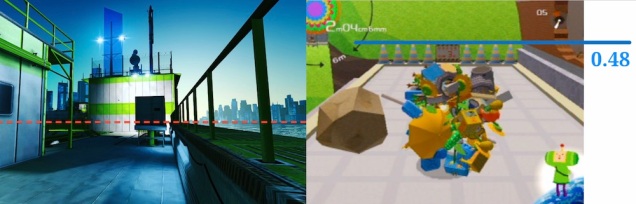
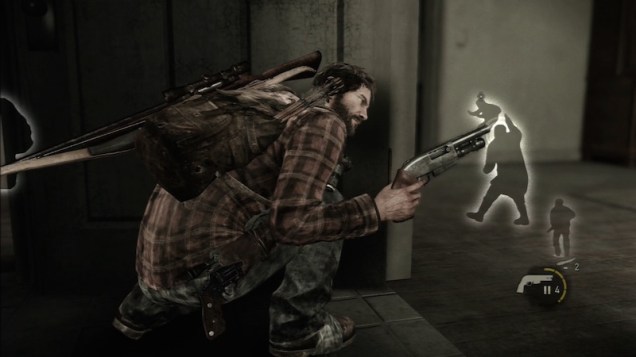
Today, I’d like to address a cluster of game user interface design options that I have lumped together under the category of synesthetic interfaces. By this, I’m referring to interfaces that perform a sensory substitution, translating the information normally associated with one sense modality into the phenomenal forms normally associated with another. This is part of a larger interest of mine of examining approaches within game UI design in terms of the epistemic strategies they enact when establishing the relation of players to their avatars, and avatars to their worlds.
Continue reading

Lesson Plan: Horror, Paranoia, and Suspense in Cinema and Videogames

siren-blood_curse_screenshot-1Ian here—

The following is a lesson plan that I first used in my “Comparative Media Poetics: Cinema and Videogames” course taught at U Chicago in spring 2013. It didn’t really come into its own, however, until I re-taught some of the same material, with much greater success, in my course “The Moving and Interactive Image” at the School of the Art Institute of Chicago in the fall of 2015. I’m especially indebted to the students in my SAIC course for helping me direct this material into its current form.

Continue reading

Lesson Plan: The Uncanny Valley

repliee_r1

Ian here

Week 7 of the “Image” section of the U Chicago Humanities Core course “Media Aesthetics” is devoted to Freud’s essay on the uncanny. It’s a tough week: students have to work through the usual trickiness of disentangling Freud’s ideas from the ideas he cites from Ernst Jentsch, and, on top of this, the week has to act as a general introduction to psychoanalysis, which will return in the form of Laura Mulvey’s “Visual Pleasure and Narrative Cinema.” After a tough lecture in the first class meeting of this week, I decided to give my students something that was both more fun, and more hands-on. For the week’s second meeting, I gave them small group work based around Mori Masahiro‘s concept of the uncanny valley.

Continue reading

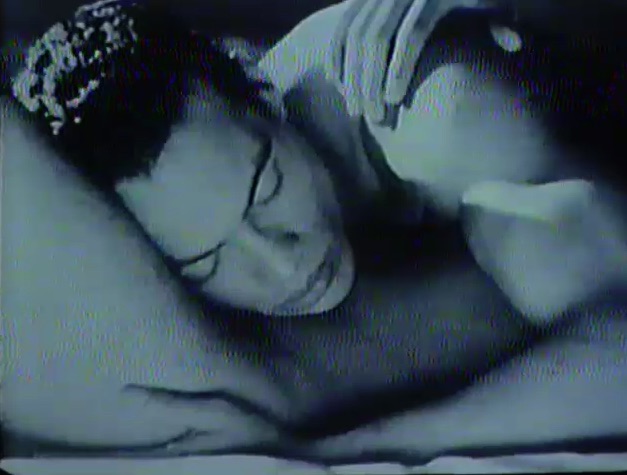
Lesson Plan: Marlon Riggs’ Tongues Untied

marlon_riggs-tongues_untied-still-02

Ian here

In the spring of 2016, I taught two concurrent sections of a seminar on Avant-Garde Film and Video Art at the School of the Art Institute of Chicago. When I tallied up the 25 final papers across my two sections, I received two papers on Maya Deren’s Meshes of the Afternoon (1943), two papers on Stan Brakhage’s The Act of Seeing With One’s Own Eyes (1971), three papers on Carolee Schneemann’s Fuses (1967) … and six papers on Marlon Riggs’ Tongues Untied (1989). Clearly, the video had struck a nerve, above and beyond anything else I had shown in the course had managed to do.

I have subsequently integrated the video into my course “Moving Images and Arguments,” on cinematic rhetoric, and I definitely plan to teach it again in the future, across a variety of possible contexts. I like to take a relatively hands-off approach when teaching Tongues Untied, privileging student conversation over lecture. However, I do have some notes on things I have found it productive to turn to while leading discussion, based primarily around clips I find to be especially rich.

Continue reading

Lesson Plan: Skill, Perception, and Epiphany across Cinema and Videogames

Window_Jump_Bourne+Drake.jpg

Ian here—

What follows is a lesson from my 2013 course “Comparative Media Poetics: Cinema and Videogames” at taught U Chicago. On the docket for this week: displays of intelligence and expertise in cinema (from Buster Keaton films to contemporary action cinema), and the ways in which the needs for interactivity force a very different visual style in games than we see in contemporary cinema.

The screening/play-session hybrid that lead up to this class included clips from The General (Buster Keaton with Clyde Bruckman,1926), College (Buster Keaton with James W. Horne, 1927), Casino Royale (Martin Campbell, 2006), and The Bourne Ultimatum (Paul Greengrass, 2007), the latter of which is our primary concern here. It also included students playing portions of Uncharted 3: Drake’s Deception (Naughty Dog, 2011) and Mirror’s Edge (DICE, 2009). Readings for the week included selections from Noël Carroll’s book on Buster Keaton Comedy Incarnate, and a chapter from James Paul Gee’s book Why Video Games Are Good for Your Soul.

Continue reading

Special Effectivities: On the Intersection of Spatial Knowledge and Bodily Skill

Special_Effectivities_header_image.jpg

Ian here—

The following is the spoken presentation version of my talk from the 2013 Philosophy of Computer Games conference in Bergen, Norway. The full paper, as drafted up for the conference’s proceedings, is available here. You can follow along with the visual presentation for this spoken version here.

Over the past decade, the term “affordances” has nestled itself into a firm and comfortable position within the vocabulary of videogame theory, having found widespread adoption among both academic videogame theorists and practicing videogame designers. Exact definitions of the term vary, but within a fairly predictable range. So, for a few examples, we have:

Continue reading

Lesson Plan: Buster Keaton’s The General

Ian here—

This is another lesson plan from my “Comedy and the Moving Image” course. It’s from the week immediately following the previously-posted week on Bergson’s Laughter, and it follows up several of those ideas, merging with Bergson with the theories of Keaton’s humor forwarded by Noël Carroll in his book Comedy Incarnate: Buster Keaton, Physical Humor and Bodily Coping.

Continue reading

Lesson Plan: Henri Bergson’s Theory of Humor

Ian here—

The following is a lesson plan for a day spent discussing Henri Bergson’s theory of humor in my course “Comedy and the Moving Image.”[i] It’s admittedly unusual, but I found it to be wonderfully productive.

The first third or so of this course was spent discussing some major philosophical theories of humor (Hobbes, Kant, Bergson) and watching silent slapstick comedy shorts. Knowing that devoting a solid block of class to silent cinema came with the danger of alienating students, I also spiced things up by showing a lot of contemporary YouTube videos in class, which kept them engaged. (The “fail video” genre makes a terrific pairing with Hobbes’ theory of humor!) You’ll see some of that back-and-forth in this lesson.

Continue reading

Lesson Plan: The Visual Language of Survival Horror

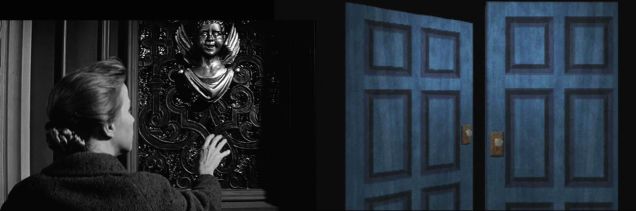
two_opening_doors

Ian here—

What follows is a two-part post, combining lesson plans from two separate days of my course “Comparative Media Poetics: Cinema and Videogames.” The learning objectives for the course centered around three main analytical questions, which animated the course and which students were expected to respond to in their written assignments. When looking at a given text, the course asked: 1) How is this particular film or particular game put together? 2) What effects and functions are engendered by its specific construction? 3) How has the historical development of the medium shaped this construction?

All three of these questions come together in a particularly potent way during this week, where we took a close look at game developers who developed a visual style out of technological necessity, but then paired that style with a genre that worked well with its specific effects. On the agenda: 1990s-era survival horror games.

Continue reading

Lesson Plan: Music Formats, Music Listening Practices

music-collection

Ian here—

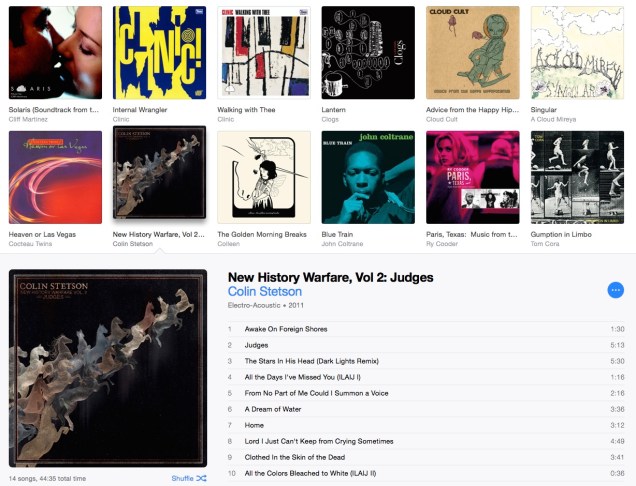
The following is a lesson plan I used for one day on popular music in my “Introduction to Mass Communication” course at DePaul University. I first incorporated it into my syllabus for the winter 2016 quarter, and refined it some for my spring 2016 section of the class.

The overarching theme I try to give the course when I teach it is the relationship between technologies and our use of those technologies. It’s a two-step dance where the two partners frequently get out of synch, and try to adapt to one another in unexpected ways. This week, we examine how specific music format technologies created certain behaviors of listening … which then went on to shape future technologies, and so on and so forth.

Continue reading