Two Lesson Plans on Childhood and the Found

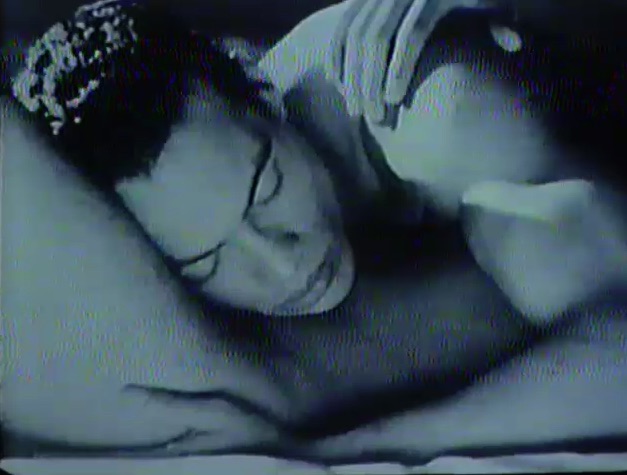
Janie_Geiser-Lost_Motion-Screenshot-01.jpg
Lost Motion (Janie Geiser, 1999)

Ian here

I have decided to collect two lessons together in this post, since they have a similar scope.

The first lesson is a guest lecture I gave when I was a teaching assistant for Tom Gunning’s winter 2015 course “The Post-war American Avant-Garde Film” at the University of Chicago. This lecture followed a screening of films by Phil Solomon, Lewis Klahr, and Janie Geiser. The second lesson is from my own course, “Avant-Garde Film and Video Art,” taught at the School of the Art Institute in spring 2016. This lesson centered on Geiser, Klahr, and Joseph Cornell.
Continue reading

Lesson Plan: Marlon Riggs’ Tongues Untied

marlon_riggs-tongues_untied-still-02

Ian here

In the spring of 2016, I taught two concurrent sections of a seminar on Avant-Garde Film and Video Art at the School of the Art Institute of Chicago. When I tallied up the 25 final papers across my two sections, I received two papers on Maya Deren’s Meshes of the Afternoon (1943), two papers on Stan Brakhage’s The Act of Seeing With One’s Own Eyes (1971), three papers on Carolee Schneemann’s Fuses (1967) … and six papers on Marlon Riggs’ Tongues Untied (1989). Clearly, the video had struck a nerve, above and beyond anything else I had shown in the course had managed to do.

I have subsequently integrated the video into my course “Moving Images and Arguments,” on cinematic rhetoric, and I definitely plan to teach it again in the future, across a variety of possible contexts. I like to take a relatively hands-off approach when teaching Tongues Untied, privileging student conversation over lecture. However, I do have some notes on things I have found it productive to turn to while leading discussion, based primarily around clips I find to be especially rich.

Continue reading

Lesson Plan: Bruce Conner’s A Movie

bruce_conner-a_movie_the_end

Ian here—

Bruce Conner’s A Movie is one of my favorite films to teach. I’ve taught it while covering theories of editing in an Introduction to Film course, I’ve taught it for a course on cinematic rhetoric, and I’ve taught it in courses on the history of American avant-garde cinema. I’ve been lucky enough to teach at a school that had a good-quality 16mm print of it in its collection, and since then I’ve made frequent use of a MPEG-4 rip of a VHS copy of that print (formats upon formats!). It’s less than ideal, but the poor image quality never seems to diminish students’ fascination with it.

Continue reading