The Exterminating Angel and the failure to adapt.

by David Hall

How does an environment shape those who inhabit it? In the wild, animals adapt to survive physical external forces, and only the fittest survive to carry on those traits—those with the fastest legs, the most convincing camouflage, the smartest minds. Following in this evolutionary tradition, we as humans have also adapted to nature, creating shelters, then communities, then societies—our own built environments that keep us safe from the wild.

But… are we really safe with these social mechanisms in place? Luis Buñuel’s 1962 film The Exterminating Angel examines the breakdown of this social environment; by holding dinner party guests hostage with only themselves, they are forced to confront their own social rules and determine whether or not they still hold while in danger. And, not only this, but the physical environment around them takes on surreal qualities that challenge their own notions of reality, constantly adapting itself to the guests’ words and actions.

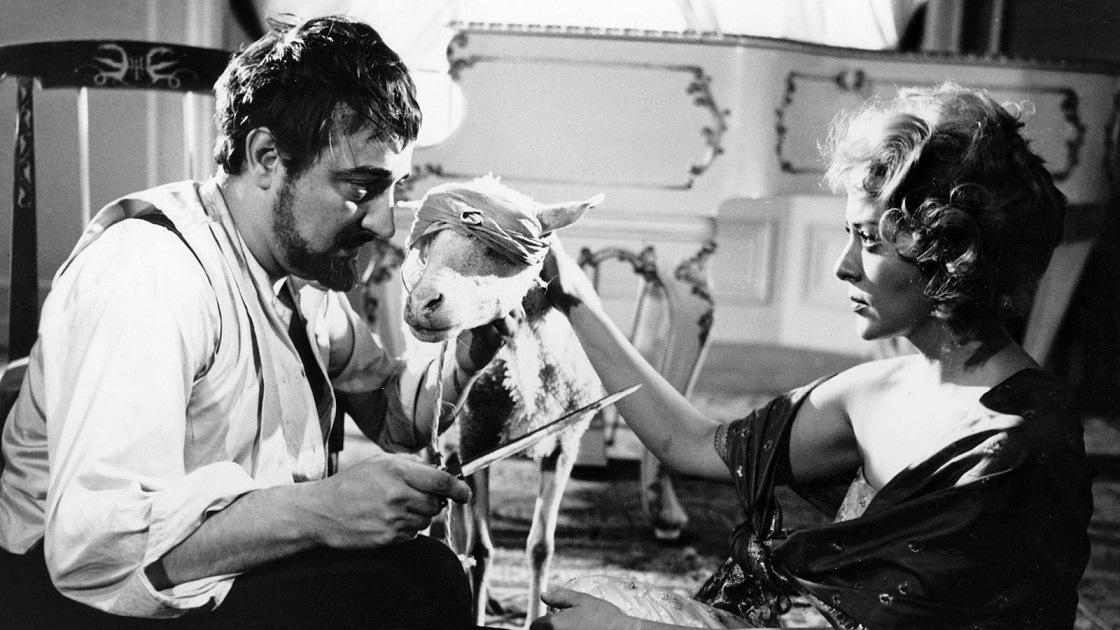
Buñuel’s commentary (obviously) in large part focuses on class dynamics—there is a reason why he chooses to demonstrate the failures of the bourgeoisie, after all. The depravity of the upper class is the ultimate showcase of the bourgeois failure to adapt to a just society. While existing within a surreal world where they are all equal to each other, their social power over others means nothing, so they must learn to re-adapt to a new society. Instead of this, as Roger Ebert notes, they grow “increasingly resentful at being shut off from the world outside” and “their worst tendencies are revealed.” Buñuel constructs his surreal space such that these characters are forced to interact with each other to save themselves, yet their focus is not on teamwork but instead on individual escape. The materialization of specific objects, including opium and other desirable means of escapism, creates competition between the guests, while the lack of necessities like food and water, which the guests must work together to achieve, is only ever acknowledged as a problem without a solution—that is, until lambs wander into their space and are eaten shortly thereafter. (I would mention that the guests chip away at the wall to burst a water pipe, but this short-lived democratization of resources quickly devolves into a free-for-all.) The divine punishment of teamwork is always undesirable in their eyes, and, rather than confronting themselves, they sit in wait for the outside world to rescue them—which never happens.

The outside world, in contrast to the inside world, is a place that the guests have power over. The reason why they are resentful at being shut off from them is not that they have lives to get to, but rather that they hold no power in their surreal space and cannot deal with that reality. Left to their own devices, the upper class, as Buñuel predicts, will break their social rules in an attempt to form some sort of new hierarchy. But, when everyone exists on the same social level, what is there to separate them socially?

The answer to this question is nothing. Below social classes, there is nothing except for age, strength, cunning. This is why conflicts are resolved through physical fights that establish dominance—Raúl establishes himself as a leader with the goal of killing Edmundo—or mental games that shift the flow of resources—or, sneaking opiates. And this is also why the weakest characters are at the fringes of the age spectrum—Sergio, one of the oldest, dies from sickness, and Eduardo and Beatriz, a young couple, kill themselves in a closet. This new social order, entirely removed from the rest of the bourgeoisie, is a step backward for human development. The animalization of the upper class, as Buñuel posits, is inevitable when they realize for themselves that their social rules don’t hold.

To end, I want to talk about a line toward the middle of the film that interests me. Rita says: “Creo que la gente del pueblo, la gente baja, es menos sensible al dolor. ¿Usted ha visto un toro herido alguna vez? Impasible.” Her indifference toward lower classes, going so far as to compare them to bulls, reveals the upper class’ perception of the rest of society as being on the same level as animals. Just like the only thing separating humans from animals is our ability to form a society, the only thing separating the upper class from the lower class is… their ability to form a society? That doesn’t sound right—both classes are made up of humans, so on some level they must be equal. Robert Stam writes that “the ‘Angel’ executes a mission of social justice, an apocalyptic laying low of the noble and the powerful.” But this social justice is not what we know as ‘social justice’ today; it does not work to lift up the lower class from their situation, but rather to tear down the upper class, bringing down the rich to the same level at which they perceive the poor. So now, being on that same animalistic plane as the poor, they can learn for themselves that suffering is very real for those unlike themselves.

Rita’s comparison of the poor to a bull is also fascinating; in bullfighting, is is always the matador who kills the bull in the end, using his skill, grace, and daring to subdue the beast. But Rita does not assume the role of matador—rather, she asks if anyone else has seen a wounded bull, from the perspective of a spectator. This framing leaves the matador’s skills without an owner—the bull lacks these qualities, while the audience is an observer of the dance between the two, enjoying the fact that they are removed entirely from the action, from the danger. In the outside world, they are able to be part of the social audience, but in the inside world, when they are in danger, they become the bull, brutishly angry at the matador of the Angel.

The Portrayal of Mental Illness and its Resulting Helplessness in Digital Texts

by Roshani Shrestha

All five Twine stories in the Depression & Anxiety group created a lack of agency for the player in some way. The technique of manipulating agency at different points of each story forms a representation of the varying degrees to which mental illness can make one feel helpless. This technique is mostly carried out through variations in the choice system, but there are also other ways that this is carried out.

In Depression Quest, a lack of agency is present in the choice system. There are usually choices that are red and crossed out, which a player cannot click. These unclickable choices are ones that you often want to choose but can’t because of your mental state at the moment. This creates a sense of helplessness, which matches how someone with depression could feel. However, these unclickable choices go away if the player goes on a path that benefits them and alleviates their depression. As the lack of agency lifts, so does that feeling of helplessness. 

In Anhedonia, the lack of agency is present in the lack of choices. The narrative mainly goes down a linear path, with a few options here and there to slightly change the text. This creates a similar feeling of helplessness but also monotony, especially because of the repetitive nature of some of it. For example, “dismiss it, repress it, discount it” is a series of phrases that result from clicking the word before “it” several times. A lack of agency also presents itself when there are a bunch of “tic”s (accompanied by a ticking sound) that appear slowly. The player cannot proceed until it ends and the last “tic” is displayed in red. This creates a sense of slowness and monotony that often accompanies depression. 

The Twine story nineteen by Elizabeth Sampat also presents its lack of agency through a lack of choices. The player’s only option is what link to click on a certain page. These links always lead to different parts of Sampat’s story and with no real choices, we can only watch helplessly as her story unfolds. Depending on the path of links one takes, a different “ending” arises. Sampat doesn’t consider them to be endings and I don’t either, especially with how open-ended they feel. I feel that there is one “ending” that increases agency and, therefore, hope and a possibility for help along with it. This ending is the one that involves proving depression wrong when it says you have no friends. She ends this off by saying “If you can’t think of anyone else, think of me.” The phrase “think of me” is linked to her email so that people struggling with depression can contact her if they need to. 

I’m Fine is similar to nineteen in that there is one main story that we are expected to traverse with a lack of options. While there are actually some choices in this story, they all basically lead to the same sequence of events, culminating in the same ending. This ending is very open-ended and doesn’t really leave anything resolved. At the end, you are said to be considering taking steps to move forward, be calmer, and rely on your friends more. Although it seems to be a pretty hopeful ending, the fact that it ends so abruptly and without allowing you to choose something that gets you to a better point in your life hints that the struggle isn’t over. There will continue to be points at which you lack agency and, as a result, start to feel helpless. I personally can’t tell if this is a hopeful ending or a pessimistic one. Or if it’s a mixture of the two as a way of being more in tune with realism.

Mom Is Home also lacks agency in its choice system. There aren’t a lot of choices presented to the player, who plays as Jenni. However, when there are, there is always only one viable option. For example, the first choice you get is a response to your mom, who scolds you for not folding the laundry. Each “option” only leads to the same result—an acknowledgement that you don’t actually say anything to your mom and instead go to fold the laundry. In the second choice, you are presented with options of seeking support and, possibly, a way of feeling better. All of the choices but the last one, which is to “release stress by going for a walk,” prompt you to go back and choose again because they wouldn’t be helpful to you. For example, if you choose “call boyfriend,” it’ll tell you that “you don’t have a boyfriend.” Cleo mentioned during our discussion that these options felt like common things people say to those who are depressed. These types of suggestions can feel generic and not applicable to the person who is struggling. This creates an example of how helplessness when trying to talk to people about your struggles is translated into a lack of agency in choices of a game. If you struggle with mental illness, it can often feel like you’re talking to a brick wall when you’re telling someone about your problems. They can say things that don’t feel applicable to you or wouldn’t work out for you. This is because they often don’t know what it’s like in your head and how the mental illness eats away at you and is harder than it seems to combat. The only ending in this game is a single sentence: “You feel hurt and miserable and alone.” This is followed by “END” and there are no more links. I realize now that this ending sentence is the only one that is written with proper capitalization and punctuation, which is absent in other parts of the story. This effectively creates an ending that feels definitive, which results in a feeling of helplessness through the feeling that there is nothing you can do to change it.

As someone who struggles with mental illness myself, I could definitely relate to this collection of Twine games. The way it portrayed these sorts of struggles often emphasized a helpless feeling due to the illusion of having limited options. It shows how hard it is to actually get help, stick to it, and believe it. I think, sometimes, there is a tendency to oversimplify things. For example, some of us can say things like “just go to therapy,” “just meditate,” or “just try medication” when it isn’t really that simple. Even when going to therapy and/or being on medication, you have to put in tons of work to make change possible. Nothing is easy and I think these games provide some good understanding on what it’s like to live with particular mental disorders, which can help foster empathy surrounding the subject of mental health in general.

A Mockery of Life: Porpentine’s Work

By: Jai Lanka

Is there a more effective method of critiquing something indirectly than through satire? Nobody wants to sit down and read an essay telling us about the perils of modern society. To truly captivate an audience, you need to turn it into a story and there’s one thing you’re always told when telling a story: to not tell it all. Rather you should show the story, which satire excels at. Porpentine has mastered the art of utilizing satire to illustrate the absurd aspects of modern society, refraining from direct exposition in favor of nuanced commentary.

ULTRA BUSINESS TYCOON III is the most obvious example of this. Just the name itself tells us how unserious the game we’re about to play is. We navigate through the game’s exaggerated scenarios, encountering characters and situations that parody real-life corporate culture. One of the game’s strengths lies in its ability to juxtapose the player’s actions with the game’s underlying commentary on societal values. Whether it’s exploiting labor, engaging in unethical business practices, or pursuing relentless profit at any cost, ULTRA BUSINESS TYCOON III presents players with choices that highlight the moral ambiguities inherent in corporate culture. The game’s satire also extends beyond mere mockery however, inviting players to reflect on their own complicity in perpetuating these systems through some of the endings in which you can lose because you realize you were too unethical or that the material wealth wasn’t worth it.

Skulljford has more subtle satire that delivers a similar message as ULTRA BUSINESS TYCOON III. When playing there really was no meaning to most of the actions that I was doing, but that made them more meaningful because I gave them meaning. I have no idea what shoveling the skulls did but simply seeing the number go up made me want to do it more and more. Eventually I realized that the more skulls I shoveled the more often I would receive money from someone visiting the village. With this money I could buy things from the shop and the train ticket. With all those items I could get somewhere and do something? I found myself constantly in this cycle of accumulation and investment reflecting in the insatiable pursuit of wealth and progress often critiqued in satirical works. The game’s ambiguity underscores the absurdity of our relentless pursuit of goals without clear understanding or reflection on their true significance.

I felt like I was going on a mini journey on the hedonic treadmill with this game. First, I had a goal to buy a train ticket. I thought it would lead me somewhere that would be good. It then took me nowhere because I got it too early in the game and I was disappointed. Then I decided to explore the outskirts. At the outskirts I climbed to the peak of the mountain and decided to jump down. I thought surely this would lead me somewhere interesting, but I simply died and respawned in the village. I then did more exploration of the outskirts thinking “surely the end goal has to be around here”. And once again I thought that I had found the answer to the purpose of my existence in this game when I found a brick wall at the end of the ravine that was noted as “strangely humanlike”. I had to go back and forth from the village, sleeping and clawing away one brick at a time until finally I broke through the wall. Behind the wall was a stream of light and a path filled with interesting just for it to all lead up to… a vat of acid that I fell in, died, and respawned in the village. Disappointed again. Then I was issued a letter that I was being transferred to another town and in this town, I had the job of censoring books. It had pretty much nothing to do with everything I did beforehand, and it felt like all the “progress” I had made was for nothing. Then the game just ends. My only thought was “what was the point”. And I’m sure there are people that think the same at the end of their lives when they lived their whole lives on the hedonic treadmill. I think the game is trying to get at the fact that it’s important to recognize that long-term happiness isn’t solely dependent on external factors such as wealth, success, or material possessions. Instead, cultivating sustainable happiness involves prioritizing experiences over possessions, practicing gratitude, fostering meaningful connections with others. This is what will allow us to experience a deeper sense of fulfillment and contentment in life. I found myself skimming through the dialogue because I just wanted to get to my goal at the time, but had I really read everything the game was saying, perhaps I would have felt more fulfilled after playing.

Although porpentine’s use of satire is a staple throughout her games, my personal favorite among the ones we played utilized it the least. Unlike the other games, Howling Dogs feels very real. It still has that social commentary element to it, but the tone is much more serious. One of the things I found most interesting about it is the option for self-care. You can take a shower each day it’s available. You can throw away your trash. In the end though it feels like it doesn’t matter. I played through the game twice. The first time I did as much self-care as possible and the second time, I did the least amount possible. Both times I got the same ending so I’m not sure if it’s even something that affects the outcome. Maybe that is the message itself. It doesn’t matter how well you take care of yourself in reality. Maybe that’s why the game doesn’t even give you the option of self-care as you progress as well. If you ultimately always turn to escapism, your actual situation will deteriorate. At the same time what other option does our protagonist have in the game? Perhaps the difference is that in our reality we do have other options. We should engage in means of entertainment that are grounded in reality. I’ve done my fair share of doom-scrolling on social media. Sometimes it’s nice to just turn your brain off for a bit and hook yourself into something else. It’s the easiest way to keep the boredom away but do it too often and you’ll end up in your 30’s in your mom’s basement, no job, no education just hooked into every reality that is not real forever.

Elsinore: Immersion Through Failure

by Austin Xie

Failure is sometimes cited as a fundamental part of games—after all, what is a game without the threat and challenge of failure? In fact, what is a story without that threat of failure for its characters? Of course, there are exceptions to both these questions, but the affective core of conflict generally remains the same: it is the prospect and possibility of losing that gives a problem stakes, and games have leveraged this since their inception.

Death and failure thus tend to constitute important mechanics in many games, but in a non-diegetic fashion. The main character is not “supposed” to die to some random small fry enemy in the “real” story, and thus the game is reset to a time before the player deviated from the canon, so that they can try again and again until they succeed.

Some games really streamline this process: Celeste resets the player instantly whenever they die attempting its difficult platforming, and Neon White provides a literal level reset key—bound to F by default, right next to its WASD movement controls—so that players can quickly get back to the start and try for faster level times. These mechanics are central to making both of these games work, but it’s not as if Madeline is dying over and over again as she attempts to climb Mt. Celeste, and neither is White really timing and doing his missions over and over again just to shave off an extra tenth of a second. The core gameplay loop of these games is non-diegetic (not that they need to be), but Elsinore handles this differently.

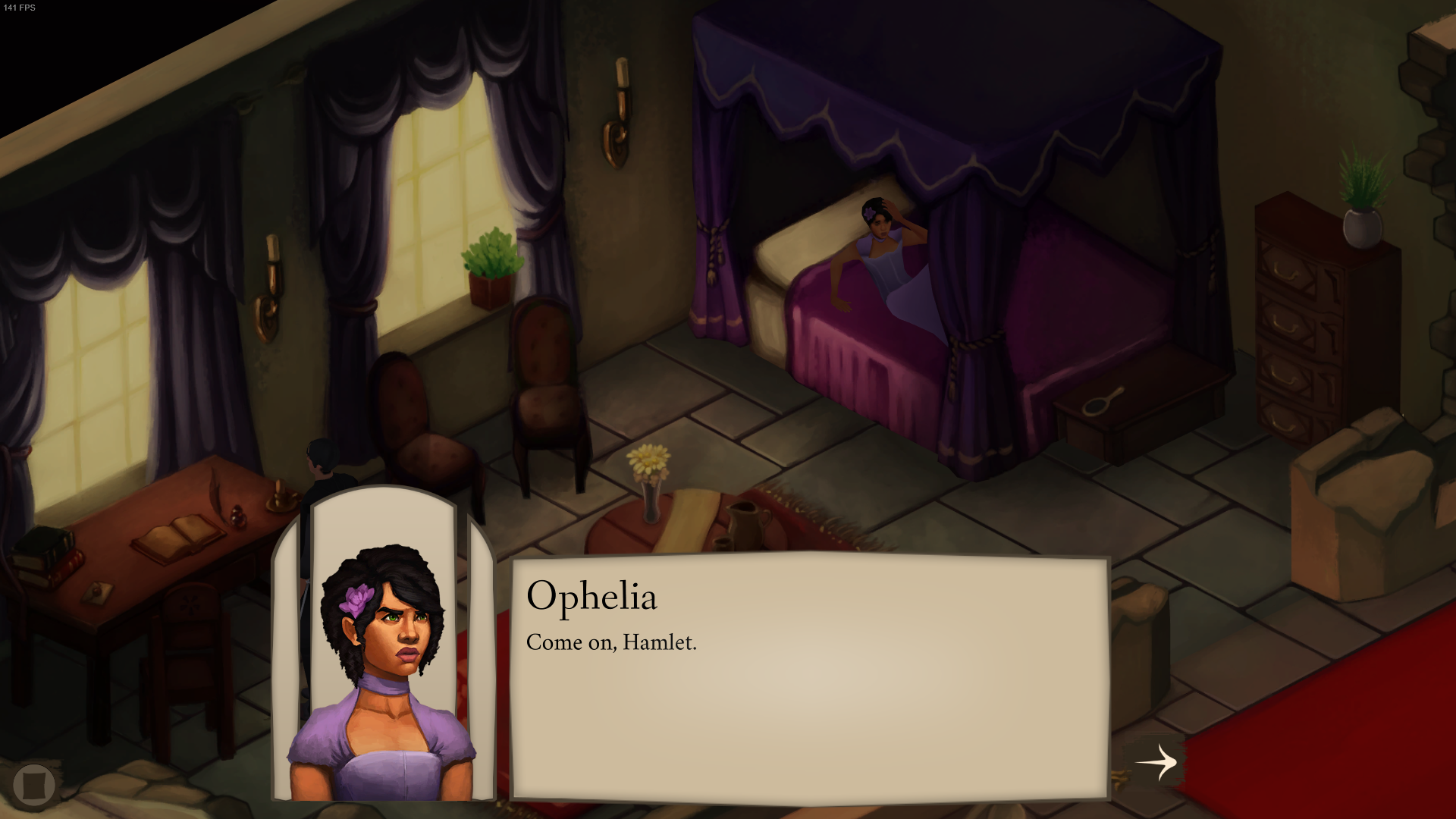
Elsinore plays from the perspective of Ophelia from Shakespeare’s Hamlet, who is trapped in a time loop during the days of the play’s (and thus the game’s) events. Players run around the castle Elsinore talking to its inhabitants, listening in on events, and trying to prevent tragedy, and over and over again Ophelia will die from one series of events or another, only to loop back to the beginning.

The core gameplay of the game, however, comes from the fact that Ophelia remembers these time loops—she retains the information she learns in previous loops, and can use that to further talk to people and manipulate the events happening throughout the castle. This is where Elsinore differs from most other games: her deaths and her failures are all part of the game, part of her experience, just as it is the player’s. It is this crucial mechanic that not only makes the game function, but also brings the avatar of Ophelia closer to the perspective of the player, further immersing them into the game. 

Every time loop opens in Ophelia’s bedroom, where Hamlet waits inside and, upon Ophelia’s waking, is ready to dive into crazed ravings regarding him meeting the ghost of his father—but as the loops continue, Ophelia begins cutting him off before he even begins, echoing exactly what’s sure to be the player’s annoyance with Hamlet’s dialogue. I, for one, skipped through it every time until Ophelia started doing it herself. It is details like these that help interconnect the player’s and Ophelia’s experiences in both directions, and really allow players to embody Ophelia, to feel what she feels and care about who she cares about, which makes the multiple endings to the game—all of which involve some sort of sacrifice—reflect on the player just as much as it does Ophelia in that timeline.

Despite this, the player’s feelings on the game’s characters can still veer towards the apathetic; because of the uneven experience and information between Ophelia and the player versus the rest of the cast (minus King Hamlet’s ghost and the playmaster Quince), Elsinore’s gameplay loop depends on completely manipulating the residents of the castle, and on sometimes sacrificing characters for information or to enact certain conditions in any given timeline. This is not conducive to a caring relationship between players and the characters, and the game knows this—in a timeline where Gertrude kills herself, King Hamlet advises Ophelia to close her heart to Gertrude’s suffering: she will witness thousands of her loved ones die over the course of the loops. This gradual detachment plays into the aforementioned theme of sacrifice in the game’s endings, and creates this sense of encroaching disillusionment throughout the play, which really helps convey the tragedy of its story.

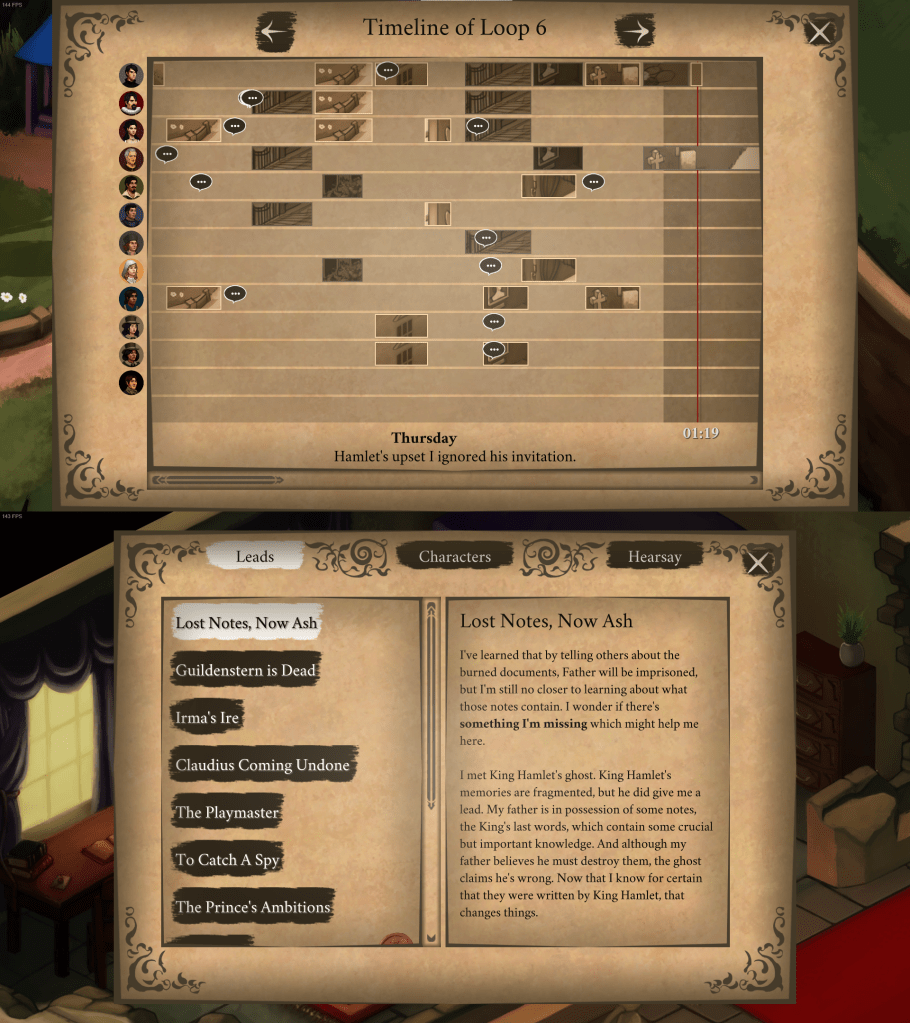
On a more technical level, Elsinore is about navigating databases of information, and its systems are designed to support this. Players have access to a timeline, chronicling both past and future events in the current loop, alongside the option to reference timelines of prior loops. They also can reference three other sources of information: a “leads” page, which lists and describes unresolved questions and problems that Ophelia needs to investigate or address; a “characters” page, which lists (and actively updates with) all known characters alongside information about them and their behavior; and a “hearsay” page, which lists all the information Ophelia knows and can tell people about. In addition to this is also the player’s growing database of knowledge surrounding how characters react to certain information–Hamlet, for instance, will become become uninteractable and resolved to kill his uncle, King Claudius, if Ophelia tells him that she knows Claudius killed King Hamlet.

Compared to other similar games, such as IMMORTALITY, The Infectious Madness of Doctor Dekker, or even Galatea, Elsinore‘s database navigation is much more complicated. Much of the difficulty in those games comes from trying to find and/or elict information, and though obviously this is present in Elsinore as well, most of its difficulty and frustration actually comes from applying that information and trying to create the precise circumstances needed to achieve an ending. This reflects its complexity–or rather, the complexity of the real world interactions the game simultaneously represents.

Winning the game is not so simple as directly telling characters the information they need to know–going around telling people about the time loop and the things that occur will only get Ophelia sent away for her perceived insanity. Navigating, investigating, and exploring the gamespace of Elsinore is supposed to be hard, complicated, and sometimes frustrating, because those feelings are so central to its story. There are constantly real consequences to things Ophelia tells people–it is not like Galatea where most dialogue will not phase the titular character enough to cause significant change, nor is it like Doctor Dekker where players can fiddle around with what exact questions they’re asking their patients, and even jump from one mood to another by interjecting an emotional conversation with a random other question. One wrong move in Elsinore can ruin an entire timeline, forcing Ophelia to either play out a doomed scenario, gathering whatever other information she can, or an early reset–the button to which is a skull, by the way–and another attempt from scratch.

Ultimately, Elsinore is about failure, consequence, sacrifice, and tragedy. Defying those things is nigh impossible, and even a success is not perfect. The game’s mechanics are designed to demonstrate that, to provide an experience proving that, and so it fosters those feelings in the player throughout the game as they try desperately to unweave the tanglings of the world and find a golden path forward.

A Cruel Narrator’s Thesis: The Stanley Parable’s Exploration of Choice in Games

by Chad Berkich

You walk into a room, and are faced with a choice: two doors, two divergent paths that will determine the course of the game. The Narrator instructs you to go left. What do you choose?

This decision is the centerpiece of The Stanley Parable. As stated in the Museum, “the rest of the game emerged as an extension of [the two doors], an exploration of the contradiction this room posed.” Considering the limited interaction and variety of endings, the game is essentially a series of choices that the player makes which leads them to an ending. The game then restarts so that a new path may be taken.

However, the game’s central thesis is that these choices aren’t really choices. The paradox of the aforementioned room is that, while two options are technically afforded to the player, neither is a choice in the truest sense; both are just paths laid out by the developer for the player to follow, two possible avenues for the story to continue along. Therefore, the only meaningful choice we have as players is to “Turn off your Nintendo Switch. There’s no other way to beat this game. As long as you move forward, you’ll be walking someone else’s path. Stop now, and it’ll be your only true choice,” as stated during the Museum ending.

Some have posited that the point of this thesis is to demonstrate the futility of playing video games, that the thesis of the game is pointing to the meaninglessness of the experience. Simultaneously in this view, the game is viewed as a failure because the players find the experience meaningful with its varied, typically humorous, endings.

I would argue, however, that this is the exact opposite of what the game is trying to demonstrate. While it is true that there is very little original agency in the game, that does not make the player’s experience with it meaningless. Rather, the satirization in the game is the idea that there are no original choices in games, even though they are passed off as original, but that does not make the experience any less meaningful.

For example, consider the Bomb Ending. This ending is achieved by turning back on the mind control machine. When the player chooses this, a timer is started as the Narrator admonishes them, which eventually leads to an explosion and Stanley’s death. Despite the different colors and numbers appearing on the screens, there is no way for the player to stop the detonation—their fate has been sealed. However, when I played, I was unaware of this and futily attemptted to find a way to escape. The urgency and worry I felt as I tried to find a way to escape was a real, emotional response. Even though the response is “manufactured” by the game, it is genuine.

For another example, consider the Phone Ending. When the player picks up the phone, it transports the player to outside of your apartment, where Stanley’s wife talks to him from inside before it is revealed to be the Narrator imitating her. If the player attempts to escape, a wall is placed to block them. Moving inside the apartment, the Narrator details the metaphorical death of Stanley as the player is forced to keep pushing buttons, transforming the apartment into Stanley’s office.

This ending is esoteric and strange, and particularly caught me off guard the first time I experienced it. It also delves into psychological territory, with the Narrator discussing how Stanley always did what he was told until he dreamed up a scenario in which he would have agency. It likewise supports the original thesis of there only being one true choice.

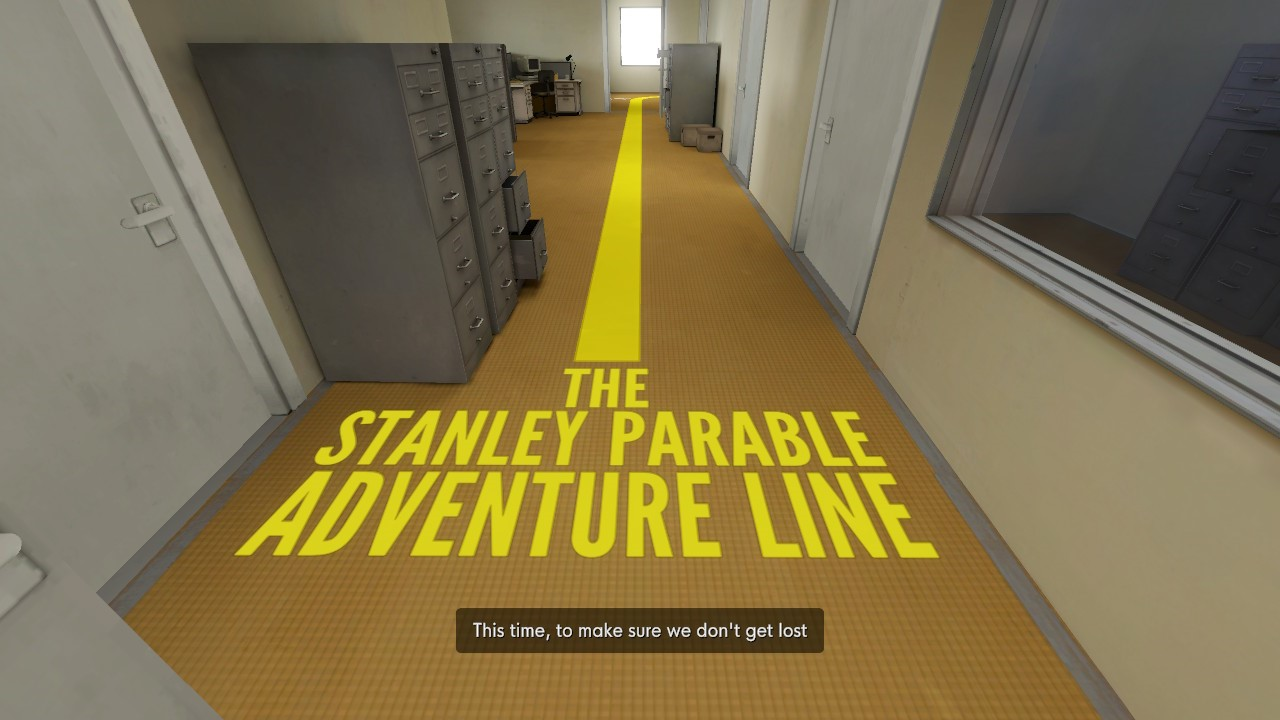
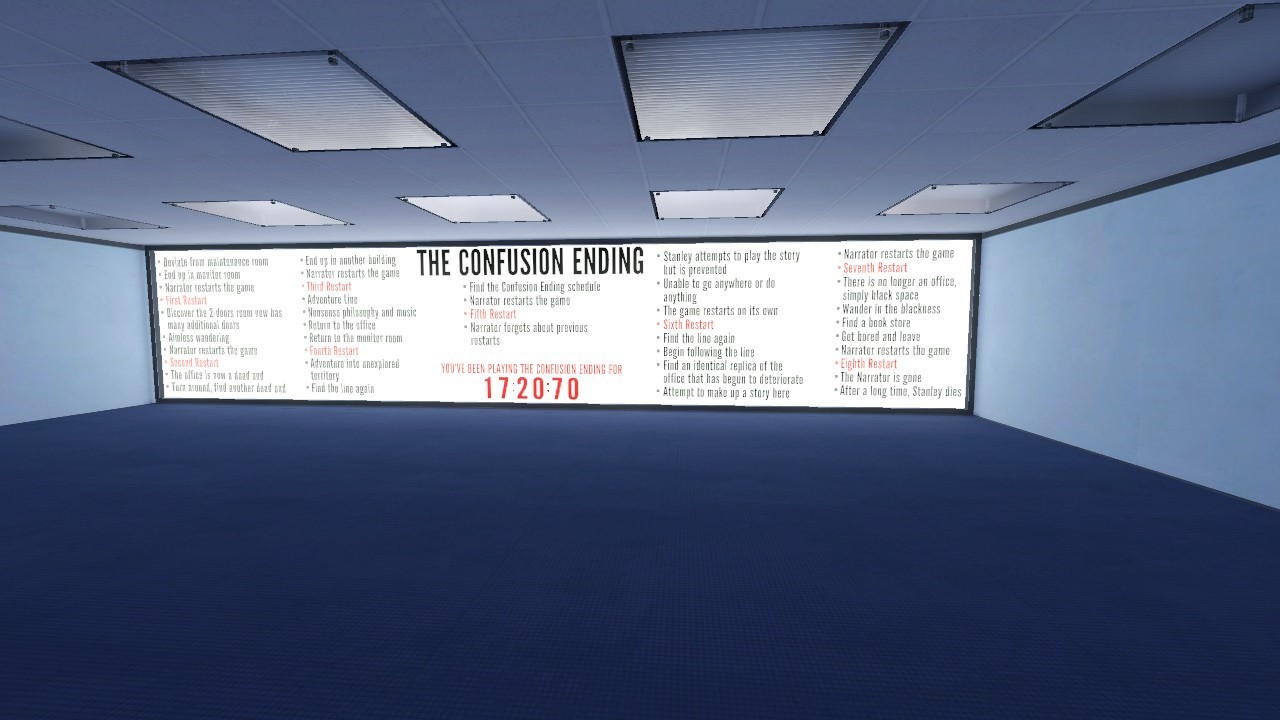
Finally, consider the Confusion Ending. This ending is achieved by going down the elevator between the left and right hallway. The game ends up spoiling itself, and the Narrator restarts it. However, this causes the game to break by introducing more doors to the seminal choice. When the game restarts again, there are no doors. On the next restart, the Narrator introduces The Stanley Parable Adventure LineTM, which is supposed to lead to the story. Music also plays as you follow the LineTM. However, when the LineTM ends up self-intersecting, the Narrator restarts one final time, deciding to ignore the line which occasionally intersects with the path. Eventually, this leads to a room with the Confusion Ending.

This ending is notable for the humor in it. The doors multiplying and then disappearing, the introduction of The Stanley Parable Adventure LineTM and itsTM associated music, and the list detailing the Confusion Ending were all genuinely laugh-out-loud moments. The ending continued to become more and more absurd, and that made the comedy extremely memorable and effective.

What these endings, which are only a sample of The Stanley Parable’s possible conclusions, represent is how the game creates meaning while satirizing choice. While the player does not have any original agency over the stories, the stories still have an effect on the player. There is an anxiety to the Bomb Ending, an eeriness to the Phone Ending, and a comedy to the Confusion Ending, all of which are effective in eliciting the intended emotion from the player. These are also notably varied endings, meaning the game is capable of eliciting a range of emotions. This is one of the primary purposes of narrative, to elicit an emotion or thought in the person experiencing it. The Stanley Parable’s endings do have meaning in a traditional, narrative sense.

What the game is satirizing, then, is the idea of original agency in games. The idea of the player having control over how the narrative plays out has become a key feature in many games; consider Star Wars: Knights of the Old Republic’s morality system or NieR: Automata’s different endings. What The Stanley Parable argues, then, is that these are not really players having control over the games, but rather walking a path the developer has predetermined. These games only offer the illusion of original agency. However, this does not mean that the game is meaningless or bad, as shown with The Stanley Parable’s many different narratives.

The game also argues this with the specific idea of constrained choices as demonstrated by the other games featured. In the Other Games Ending, the player is briefly able to play Firewatch and Rocket League. Firewatch is an open world game, so while there is a general path to follow, it is much less strict than The Stanley Parable. Rocket League is a soccer game, so while the player is not afforded an open world, the player’s actions have a much more important effect on gameplay as well as more options to interact with the game.

Thus, The Stanley Parable’s thesis is that there is only one true choice, whether to play the game or not. However, this thesis is not meant to be completely universal, as shown with Firewatch and Rocket League, nor is it a matter of saying games are meaningless. Rather, The Stanely Parable subverts and satirizes the trope of choice in video games in order to demonstrate how games use an illusion of agency, while simultaneously creating narrative meaning.

Going Fast in Hades: Success in Optimization

Upon completion of their first successful run of Supergiant’s 2020 roguelike Hades, the player is greeted with a review screen. The left side of the screen displays the complete list of boons and other abilities accrued throughout the run, the top left displays the current character setup, and a table on the right side presents the player with some fresh challenges. This table provides the player with the time taken for the escape attempt as well as the player’s personal best time. It also lays out a chart with the player’s fastest time, best heat (heat is a challenge system that can be taken on after the first successful run), and number of clears for each weapon. Hades thus provides an additional set of goals to the player: you can escape. But how fast can you do it? How consistently? How hard can you make it on yourself and still get through? I would like to explore how one of these additional goals, when pursued to an extreme, alters the structures, rhythms, and failure points of Hades.  

The goal of Hades is to take control of Zagreus, the surly prince of the underworld and, aided by the Olympian gods, escape to the surface. In order to do this the player must fight through four regions of shifting rooms full of enemies and helpful items. The game contains a large amount of chance: the orders of the rooms, their resident foes, the helpful NPCs one can encounter, and the items one collects are all randomly generated. The path to success within each escape attempt, though, largely depends on the skill of the player. Jesper Juul suggests that skill as a path to success is closely tied to learning through failure, writing that “[a]s players, we come to a game with a repertoire of skills that we try to apply to the problem at hand. We can continually improve our skills, and whenever we fail, we have the chance to reconsider our strategies, to recalibrate or expand our skillset. Success through skill is hence the path to success that is most closely tied to the experience of learning through failure” (Juul, 74). Through trying again and again to escape, the player develops improvisational skills. Although the rooms are randomly generated, the player learns how best to navigate each underworld region, hitting the highest concentration of helpful rooms. Although boons and items are randomly placed, the player learns how best to develop helpful synergies between the gods, hammers, and weapons provided. Although the enemies are randomly generated, the player learns the breakpoints and pathing to hack and slash their way through anything thrown at them. Chance provides friction rather than failure, and skill offers the player a way through. Each successful escape attempt tells the story of the player succeeding despite all odds and each failure provides an opportunity to learn.  

When attempting to escape quickly, however, the stakes of the game dramatically change. Some strategies and boons are simply faster than others and chance is transformed from a source of obstacles to overcome into a run-killer. Most speedrunning strategies plan to build into a specific duo-boon and as such require a specific pool of gods. Whenever these gods don’t appear or a disadvantageous god does appear, the run must be reset. Most strategies also rely on particular hammers and boons; if these boons don’t show up, the runner resets. A fast escape also depends on helpful room generation; it’s much faster to run through a shop or chaos portal than it is to fight through waves of enemies. Fast escape attempts benefit greatly from a high concentration of free and fast rooms. In addition to an increased weighting of chance, the goal of speed introduces labor to the equation. Labor, Juul says, “corresponds to the Protestant work ethic as described by sociologist Max Weber, where the investment of effort is the path to salvation” (Juul 81). Just setting up for speedrunning attempts in Hades requires a huge expenditure of effort. The player must max out every possible character improvement at the mirror of darkness, purchase all the helpful rooms from the house contractor, acquire every keepsake that could be helpful in a run, and acquire the maxed out special keepsake from Megaera. The player must also unlock and max out their weapon of choice. These tasks require a huge investment of resources (as well as romancing Megaera) and to leave any of them undone would be to leave valuable seconds on the table. These tasks also reduce escape attempts to labor; one is escaping to accumulate resources rather than for the satisfaction of overcoming obstacles. 

Eventually, after investing the time in menial grinding and getting great luck on a run, the player is in a position to secure a personal best. This is where success or failure is truly determined if speed is the goal; not every run is structurally set up to achieve a personal best. When the opportunity eventually presents itself, labor and chance fall away and the player has to put their skills to the test. The player must depend on their game knowledge to determine the optimal path for each room: whole minutes can be gained or lost in poor clearing. Since the in-game timer stops when the game is paused, the player can pause while choosing which room to tackle next and while choosing which boon to pick. These kinds of decisions have cascading effects: more powerful boons often have prerequisite boons that must be picked first and filling one’s pool with mediocre boons leaves a build unfocused and average. Succeeding in going fast thus requires a huge breadth of knowledge and skill; time saves can be eked out of game knowledge, build knowledge, mechanical skill, and pathing. Getting a new personal best therefore incorporates the feeling of succeeding despite all odds from a normal escape attempt, but also carries with it the knowledge of the luck and labor that went into producing the possibility of escape. It becomes much more rewarding to succeed and that much more crushing to fail. 

Unpacking and the potentials of Interactive Storytelling

By Anna German

One thing that has stuck with me as we’ve continued on with the course is questions of the role of narrative vs. interaction. More specifically: why tell a story in an interactive manner? Is there something different to be gained from an interactive versus passive narrative? Would the same story be more or less compelling told in another manner? And are there stories where inserting interaction improves the narrative or is interaction always for some other benefit? 

By looking at Unpacking I think we can start to answer some of these questions and get a deeper understanding of the possibilities of interactive storytelling. 

Unpacking involves the player in a detached and yet personal manner. On one hand you are the person unpacking so it is theoretically your life and yet you have no agency in it. None of the events that we glean from the items we unpack are things that we experience or get to affect in any way. This placement of the player in the narrative can be compared to other media we’ve looked at this quarter. Choose Love, for instance, had a similar mechanic of having a main character outside of the player and yet sort of placing the player in the protagonist’s shoes. Choose Love, however, seems to have a pretty obvious reason for what is gained by adding interactive components to the narrative. The player gets to imagine themselves wooed by three attractive men and is satisfied that they get to watch a movie where what they want to happen happens. Other games we’ve played like Adventure, Zork, or even The Stanley Parable the interaction a player has with the game is what makes the story. The player is placed in a world with set elements but the way they go about playing the game determines what story is told. Unpacking is a different story. The interactive nature of the game does not allow the player to change the story and there is no satisfaction from a desired ending. Unpacking is interesting because while there is a cohesive narrative it is not really a story that is told to players like in other video games or interactive narratives. Moreover the story is secondary to the gameplay, you do not need to understand much to finish the game, and each player is likely to end with a slightly different version of what happened because there’s no official narrative. Unpacking is at its core a game, the point of the interaction is to have fun by placing things in the right spot. So the answer to why interaction is clear but then why narrative? 

The easy and obvious answer is, In order for there to be a game, even the most open world exploration game, the designers must create a world for the player to be in. And creating a world requires creating a narrative. Unpacking was developed with a specific through line to create a consistent story but even if that hadn’t been the case the collection of objects would point to some sort of narrative. In our presentation we asked, “ Does the game have a real narrative/Is the game telling a story?” Considering the earlier explanation that games must have a narrative it seems like the obvious answer is yes, but the second part about telling a story is more complicated. Without any text or a clear official line it is difficult to really define what we get from Unpacking as storytelling. I think, though, that the choice to make specific items have meaningful placements, have certain years be highlighted, and keep some items throughout does mean the game is telling a story. Unpacking, at its core, is about evoking a certain feeling that’s generated when we go through old belongings. The only real places you can fail in the game are in service of developing that feeling and as a result the story. Just a few small choices take it from simply a game that has a needed narrative to an intentional work of storytelling. Winning Unpacking isn’t just about getting to the end and emptying every box but also learning something along the way about the person whose life we’re unpacking and as a result the human condition as a whole. 

Overall, Unpacking stands out for an innovative approach to storytelling. The game is in some ways a mystery; the story can only be gleaned through investigation and deductive leaps and yet, it is not a complicated story or even a particularly exciting one. It is the way we get to interact with the story that is unique. Unpacking differs from other interactive narratives by not having the player in control of driving the story, only discovering it. Having the main goal of the gameplay to be non narrative based also made the small amount of story, and even agency, feel more like fun little surprises than an absence of needed information. The core of the game is the way it evokes feelings and the calm way that we go through makes the game and story enjoyable. The player does not feel stressed to uncover some hidden story but gets to slowly uncover fun (or sad) tidbits. The storytelling mode works because while the player is still interacting with what’s going on they are not actually stressed by needing to look for or drive a story. By separating the agency over the story and the interactive elements, Unpacking offers an approach to interactive narrative that feels stress free and yet fulfilling.

A Stay Within Norwood Suite

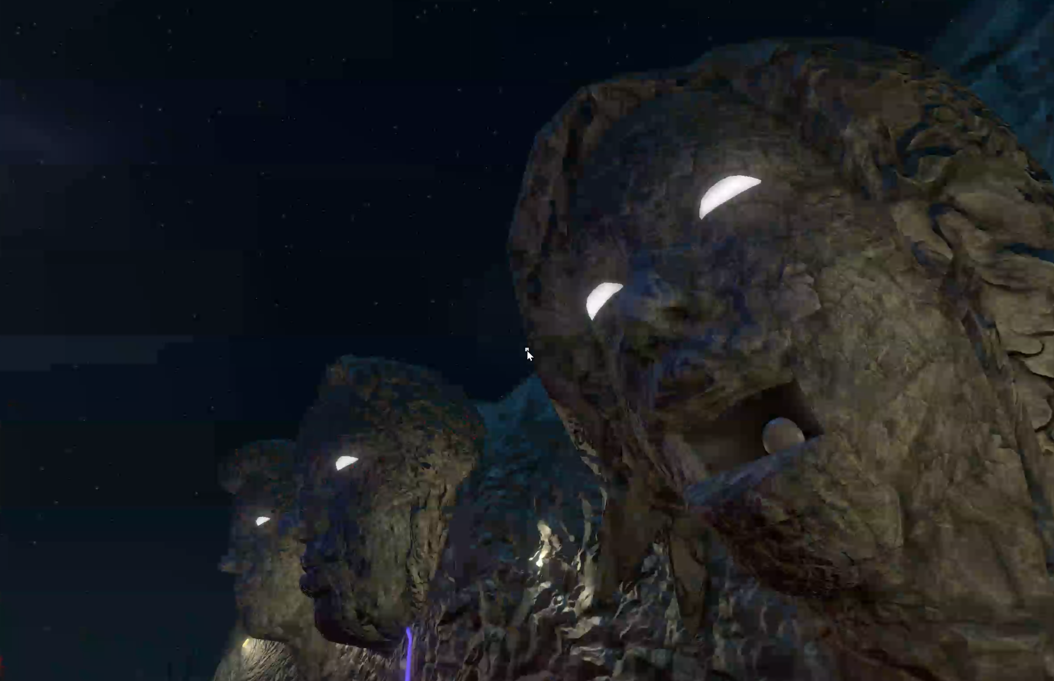
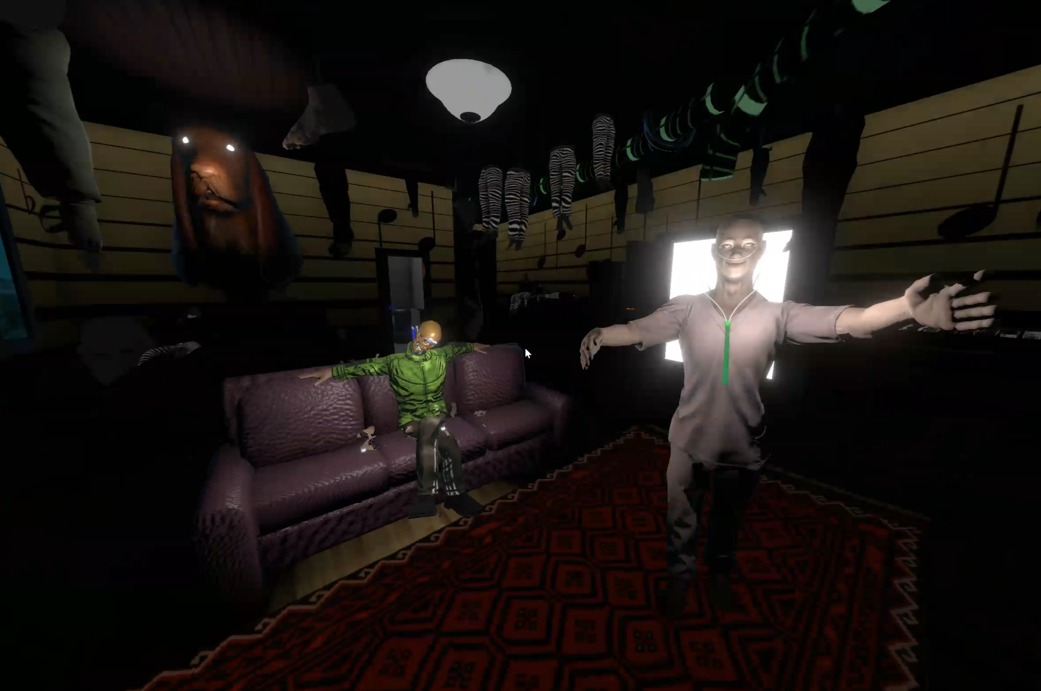
I did not know what to expect when I took on Norwood Suite. Knowing nothing about the game I went in with many questions. I finished the game with many more. What originally drew me in was the unique art style of the game from images online, and the game is definitely unique. Norwood Suite works to make the unusual the norm and creates a hotel where there is always more than what meets the eye. From the art on the walls of the hotel, the unnerving character designs, and constant musical iconography thrown into the game, there is a lot to take in. During your time in Norwood Suite you meet unicyclists, a cook that is more obsessed with playing Zo than making good food, the representative for a drink called Blue Moose with questionable long term health effect, and many others. Something that really brought out the essence of this game was the use of music both in dialogue and the environment. A combination of jazz and techno music reflected what this game was all about, the old clashing with the new.

Developed in 2017 as an adventure game by Cosmo D, this ‘embedded narrative’ game has you exploring Norwood Hotel, a place where wayward musicians, the staff battling threats of new management, and the memory of Peter Norwood, live. The game is filled with music in both the visual and auditory sense. The music is not just in the background but a physical part of the world coming from radios in all the hotel rooms along side the characters’ dialogue. This is a fitting detail for a game focused on the impact of music. It also has its share of unsettling aspects and moments that made my heart skip a beat, like the creepy old man at the concert knocking you out for ruining DJ Bogart’s performance. A fair reaction all things considered. But there is no fail situation in this game, well that is unless you are like me and the game breaks and makes becomes impossible to finish the game, but that is a rare case. Being dropped off at the hotel with a job not quite clear to you, you navigate the halls of Norwood hotel, both those open to the public and the secret tunnels that make up the nine tableau. By doing so you learn about both the past of Peter Norwood alongside the current residents of Norwood Hotel and their struggles.

Before discussing my interpretation of the game’s story I feel I must first discuss the gameplay. I would be lying to say it was not a frustrating endeavor to play this game. It may have just been because of my laptop but there was a continuous battle to get the game to behave correctly. From struggles to open the game, a slow opening loading screen, lagged movements, misloading of areas, characters, and dialogue, multiple game crashes, and worst of all a misload of the game the made it impossible to finish the game during the final stretch without starting all over, it would be an understatement to stay I have some gripes with the game. However looking past all the exposed wiring and creaky floorboard that Norwood Suite provided, there was a lot to be learned from this game. From the humorous dialogue, odd fetch quests, and secrets of Norwood to uncover, there are layers upon layers of story.

I decided not to discuss it in class but the ending of Norwood Suite turns the game completely on its head. That is to say that it is revealed that DJ Bogart is a robot revealed when his head explodes from the audio of the CD you brought him. And moreover, Peter Norwood was also a robot all along as this explosive event happens within a room full of robotic Norwood parts. Freaky. Also confusing. Your guess is as good as mine as to why this is the ending honestly. But according to the developer Cosmo D. “Both Norwood and DJ Bogart are the embodiment of musical ideals. Past and present, people have flocked from all around to see them and be close to them, their creative energy, their inventiveness.” While Cosmo wanted Norwood Suite’s ending to be something for the user to interpret, the themes of the past and the present shine throughout the game.

As I see it, within this hotel there is this rift between old and new throughout the game and the interactions you observe. You meet the old staff of the hotel and Modulo company trying to take over management. You meet a daughter that has come back to the hotel that her old man worked at and reminisces about her time there as a kid while preparing to be on a panel for the conference the next day. There are students and artists there to learn more about the famous artist Peter Norwood that went missing. And then those that are there to enjoy DJ Boggart’s 300th consecutive concert. And at the center of it all is Norwood and Boggart showing different generations of music and the impact they have had. But of course, shocker, neither of them are real, at least not in the fleshy human way. 

So what kind of story does this all tell? It is revealed through the nine tableau that Norwood did not treat his colleagues well. He can be seen acting aggressive towards them in large images in the secret halls of the Hotel. Yet Peter Norwood is seen as a genius of his time and many have come to the hotel to learn more about this musical idol. DJ Boggart is treated in a very similar way and he is ready to move on to bigger and better things and would be doing so if not for you accidently killing him. Both are placed on a pedestal, and yet are unfaced as false idols while the real connections are under your nose the whole time. By helping those in Norwood Hotel you there more about their stories and see them interact with one another. They are the real ones making the music here, quite literally as their voices are music. It is not the long gone Peter Norwood or DJ Boggart locked behind an eight-piece costume door. If you were to speed through the game, as I did on my second run to actually finish the game, you might reach the ending but you would miss the story. The dialogue shared by the characters show a much deeper story and focus more on the present and the lives of the characters, a much more interesting plot in my opinion than uncovering Peter Norwood’s deep dark secrets or going on a DJ Boggart assassination quest.

Outer Wilds and the Meaning of Failure

When I posed the discussion question to the class of what constitutes failure in Outer Wilds, I admittedly was not sure how I would go about answering this question myself. It is a complicated question due to the difficulty of applying medium-specific notions of failure to a game that refuses to fit neatly into most of these boxes.

For instance, while the Juul reading references three different types of goals in videogames—completable goals, transient goals, and improvement goals—Outer Wilds involves a combination of all three. Reaching the “true” ending of Outer Wilds at the Eye of the Universe could be considered as the main completable goal of the game, but many of the individual actions required to achieve this ending are in themselves transient goals, as they must be repeated many times until the player can successfully string them all together. And, of course, given that the only quality persisting from one loop to the next is the player’s knowledge (and perhaps skill at flying the spaceship), there is a constant goal of self-improvement. One may expect that, with so many different types of goals to achieve, failure might be inevitable in Outer Wilds. However, after the discussion in class on Monday, I now feel that I would argue the opposite—that it is impossible to fail in Outer Wilds.

This argument stems primarily from the fact that, due to these varying types of goals in the game, there are just as many ways to succeed as there are to fail, and a partial success seems to triumph over a partial failure in the context of the game. Thus, effectively no gameplay time spent can be a complete failure, as it always leads to progression towards one of these three types of goals.

Before our in-class discussion about this topic, I generally leaned toward the belief that it was quite unlikely to fail in Outer Wilds, given that the accumulation of knowledge is effectively an ever-present fact of playing the game. However, there were still some situations that I would have likely classified as failure that I have since changed my mind about. For one, the majority of the game’s “alternative endings” did initially feel like failures to me. If the player is engulfed by the supernova or simply falls too far and dies, this would not be a failure in my eyes, since the player’s character didn’t not reach their goal—the story is not over yet. Each individual loop is just one step in the player’s (and, at the same time, the playable character’s) journey to reaching the Eye of the Universe, and the beginning of a new loop is merely a fact of life in this universe. However, destroying spacetime or disabling the time loop and then flying outside of the solar system created a different feeling for me. These events, which actually do tell the player they have reached a “Game Over,” are canonical endings to the storyline of the game, unlike repeated iterations of the loop. The playable character is dead, and the time loop will not bring them back to life. The only way to continue from them is by means of the non-diegetic affordance of reloading from a previous save point—which effectively means nothing in Outer Wilds, since nothing changes from one loop to the next. Aside from the ship log being preserved, the player may as well be starting a new playthrough with a new character after reaching each of these “endings,” since there is no other narrative explanation for the character coming back to life. In these cases, the player did bring their character to an end of their story, and it was not the one that has been equated to success.

However, a point that Nicole brought up in our class discussion caused me to shift my perspective on this. Although reaching the Eye of the Universe is generally treated as the “true” ending of Outer Wilds, this is determined by little more than it being the most “satisfying” and complicated ending to reach. While there are a particular few key secrets that are necessary in order to figure out how to achieve this ending, reaching the Eye is not necessarily a sign that the player has seen all that there is to see in the universe, nor that they have “won” or “saved” anything. Therefore, reaching any ending at all could be argued to be a completable goal of Outer Wilds, since it brings canonical closure to the game’s story and ends the playthrough, even if it is not the conventionally accepted “good” ending. If these endings are just as valid as reaching the Eye of the Universe, it makes more sense to view all of them as some form of success in Outer Wilds, rather than a sign of failure.

An additional point from class I wanted to focus on was King’s comment about how missing certain timed events and having to restart the loop could be considered failures. In one of my discussion questions, I hoped to draw attention to how Outer Wilds’ lack of many real consequences for making mistakes affected the perception of failure, and reflecting on timed events brought me to a new perspective about this theme. While it is true that dying in a videogame can always be frustrating, it is an incredibly minor setback in Outer Wilds, merely requiring the player to return to the location they died at and keep searching. However, the inclusion of timed events makes this a trickier topic, as a player may end up having to wait 10 or 15 minutes after the start of a new loop before being able to return to the same location or event. In a way, this causes the stakes for missing such an event to feel higher, since the player knows they will have to spend time waiting before making another attempt. However, despite the fact that these higher stakes can lead to frustration, it still does not feel accurate to label these situations as failure, since each attempt ultimately brings the player more knowledge and skill that advance them toward Juul’s perpetual goal of improvement, and lessons learned from past mistakes can always be applied on the next iteration of the loop.

Based on my own experience with the game and the points brought up by several members of class, I feel it is reasonable to assert that there is no such thing as failure in Outer Wilds. Due to the time loop’s diegetic purpose in narrative, the great number of goals of varying types, and the lack of consequence for making mistakes, virtually every second spent playing Outer Wilds leads in some capacity to the success of the player.

–Madelyn

Unpacking Narratives: A Journey Through Time, Space, and Growth

By Lucy Huang

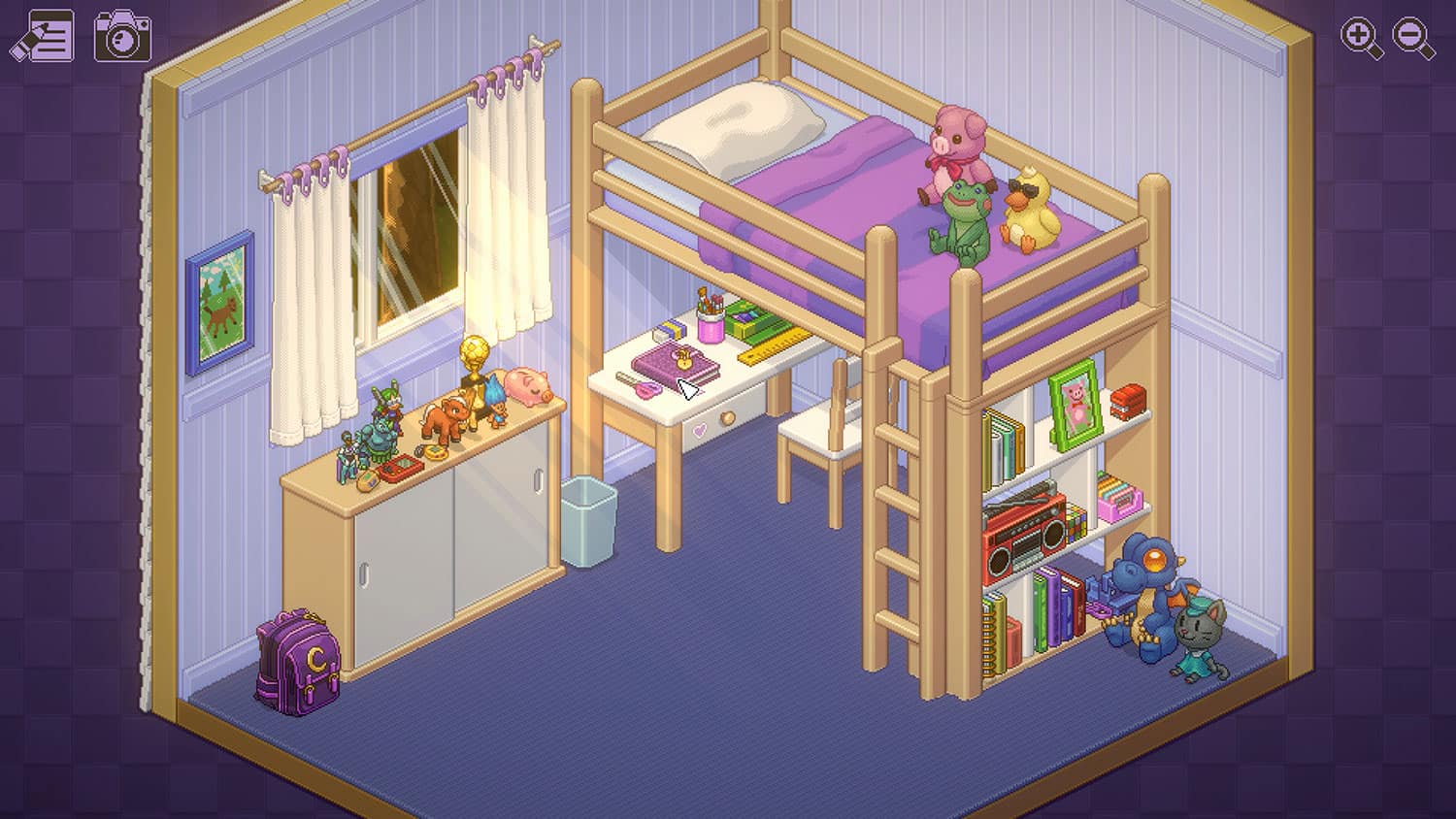
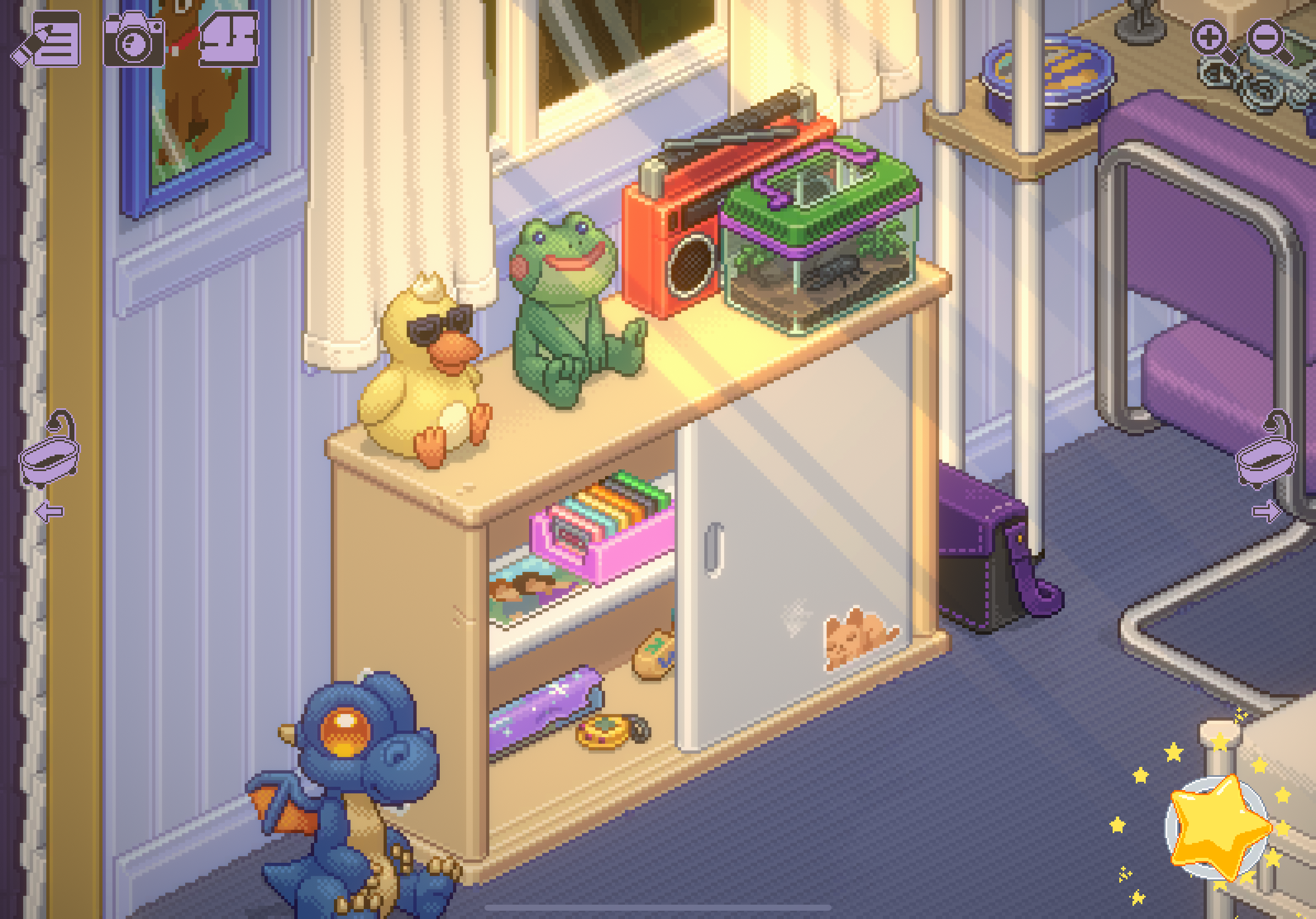
From the moment I laid eyes on Unpacking, its vibrant interface drew me in. As I delved into it, the gentle background music accompanied my exploration of various items hidden in cardboard boxes and navigation of different spaces. Transitioning from one time period to another, from one home to the next, I began to discern distinct trends and a developing storyline. Each year brought changes in interior design and room layouts, symbolizing the character’s personal growth from childhood to adulthood, from a dorm room dweller to a homeowner with a family. The gradual introduction of modern objects, like upgrading from a heavy computer to a laptop with a drawing pad, echoed the passage of time, while subtle shifts in lighting from the window as you are unpacking enhanced the immersive experience of unpacking. Repetitive objects, such as art supplies and musical instruments, hinted at the character’s interests and pastimes. I started learning more about this character personally-She is an artist, gamer, musician, and her earlier soccer trophies also indicate that she might have used to play football as a kid.

In class, we discussed the role of “failure” in games. Unpacking‘s form of failure is its rules on specific object placements, and sometimes they are asked to be placed in unexpected places. Specifically, players are asked to place certain objects in unexpected or unconventional places, which requires multiple “failures” or attempts to be able to achieve. However, the multiple attempts to discern the correct positioning, often revealing hidden narratives. For example, one of the 5 photos is asked to be placed in a corner of a cabinet. We could guess for example, that the photo must have been a photo with her ex and our character went through a break up that year. While these unconventional placements contribute to the game’s narrative depth, they can also frustrate players if it takes too long after it happens multiple times. Others in class have also raised similar concerns that sometimes the placement did not make sense and while some unveiled interesting narratives, some just created pure frustration for them.

Photo of ex in the cabinet ^

This was a game with limited dialogue, and the narratives are discovered almost purely through the player’s interaction with the space and objects. Although the overall narrative can be discovered through different methods I have mentioned above, there are still small details I realized I missed through conversations with other players. For example, the rock climbing gear that was replaced by painkillers in the next house, and that one year where her boyfriend moved into the same house that she is in. These details discovered by different people made me realize that there are still more narratives I can unveil even if I have played through the whole game. I could see myself returning back and discovering new narratives in the next play through.

Comparing Unpacking to other spatial narrative games raised questions about player perspective and agency. Unlike first-person games where the player is discovering the space as one of the characters in the game, Unpacking makes the player look from above the room, and makes it clear that you are simply unpacking the room for someone else. Does this make the game less immersive and engaging? Although some people might agree, I started thinking about the role I assigned myself in the game. It almost felt like I was a parental figure of the character, seeing her growth, and it reminded me of times where I moved around dorms or houses, and my mom helped me with unpacking the room. As I play through different time periods, I find myself feeling a sense of empathy for the character, feeling bad for her when I discovered the photo of the ex, and cheering when finding out she has a baby. The cozy interiors depicted by the graphics and gentle music also helped to contribute to the heartwarming atmosphere. In regards to limited agency, it was interesting to play this game after playing contrasting “choose your own adventure” game, where the player decides or contributes to the narrative. Here, the interaction is not from shaping the narrative, but discovering the story through interactions with the objects and space. I do not feel like I prefer one over the other, but it was inspirational to see another methodology of interactive narrative.

Through this project, it has inspired me to think about my experience growing up too. Some objects stay with you and some do not— some just need to be thrown or originally important objects are now put underneath your bed. It got me thinking about the theme of nostalgia, time, and how individual objects hold their value and carry unique narratives despite looking ordinary to others. It also inspired me artistically. Having moved around a lot, and it being core experiences in my life, Unpacking gave me ideas of potentially implementing similar techniques in future personal projects. I would like to narrate my life story through interaction design with spatial elements and the objects acquired during various life stages, and tell my journey around different cultures and environments this way.