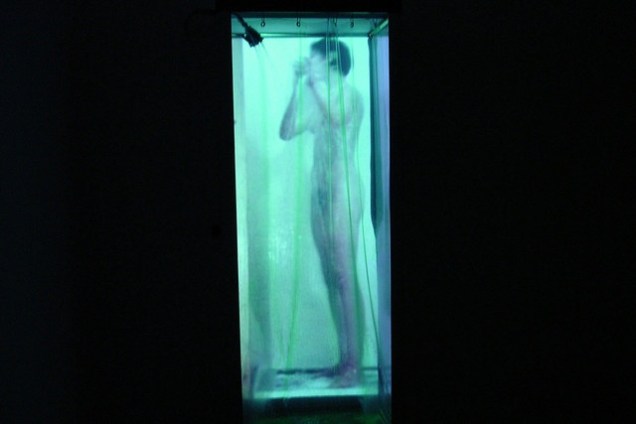
Yilin She
The author Eamon Christopher discusses the temporality and the multidisciplinarity of art is important to explore the relationship between film and video art. “Happening”, a term coined by the Fluxus artist Dick Higgins, mainly refers to performance art and is valued by its temporality in time. In Fluxus, experimental actions and the multidisciplinary aspect are important. The methods that are used in the filmmaking lead to the formation of the experimental cinema and the video art.
Christopher starts by stating that Jackson Pollock’s drip painting is a Happening, to explain that Pollock’s involvement of his body action in his drip painting allows the artist and the audiences to experience the same feeling in the same work. This method gets Allan Kaprow thinking. By the time Kaprow admired Pollock’s method, John Cage influences Kaprow on the time-based, recordable, and projectable medium of film. Cage creates 4’33’’, which contains a repetition of creating music through an unconventional way. Later, he makes Theatre Piece No.1, which allows the audiences to be a part of the film by using their own actions to fill up the time of the film. Cage’s use of multidisciplinarity in his music makes Kaprow bring connections to his thinking of film.



 Intermittent Mechanism