Lesson Plan: Film Scores Addendum

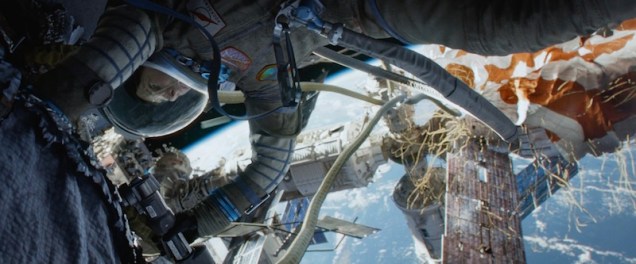
gravit_screenshot-01-for-second-post

Ian here—

This is just a quick addendum to my music-themed lesson on Alfonso Cuarón’s Gravity (2013) from my Intro to Film course, which I posted earlier. This bit doesn’t have as much to do with synesthesia, which is why I separated it out, but it is something that I incorporated into the same lesson.

Continue reading

Lesson Plan: Lying Narration in Cinema and Videogames

Heavy_Rain_Scott_Shelby_load_face.jpg

Ian here—

In my 2013 “Comparative Media Poetics: Cinema and Videogames” course, I devoted a week to the genres of mystery and suspense. In this first class of this week, we discussed theory. Students read a portion of David Bordwell’s Narration in the Fiction Film, in which he discusses the concept of communicativeness of narration, and the specific ways communicativeness is clamped down in the detective genre. We also discussed the ways in which mysteries play with time, using the formalist conceits of fabula and syuzhet that Bordwell draws from. This dovetailed with our second reading, Jesper Juul’s 2004 article “Introduction to Game Time,” in which he expresses skepticism that videogames could ever pull off a flashback-based story structure.

The screening for this week included the entirety of Alfred Hitchcock’s Stage Fright (1950), as well as selected chapters of Heavy Rain (Quantic Dream, 2010), which I had students play live, and discuss. We re-convened during the next class session for a discussion on unreliable narration and the relative “fairness” of twists. Readings included Kristin Thompson’s chapter on Stage Fright in Breaking the Glass Armor, and Emily Short’s writings on Heavy Rain. Spoilers on the (potentially unfair) twists of both texts below.

Continue reading

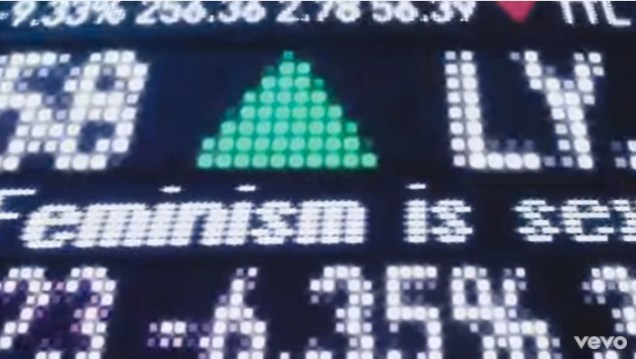
Lesson Plan: Popular Music, Gender Representation, and Media Effects

fifth_harmon_video-screenshot
Fifth Harmony feat. Kid Ink, “Worth It” (2015, music video directed by Cameron Duddy)

Ian here—

For three quarters in a row, I used Stanley J. Baran’s Introduction to Mass Communication textbook for my Mass Communication course. However, during that time, I drifted away from assigning Baran’s chapter on media effects. I was very upfront to students about the reasons why: I find it dull, and dry. It provides a thorough historical overview of various theories of media effects, from the Frankfurt School to George Gerbner’s “cultivation analysis,” but it doesn’t provide meaty examples of studies of effects in action. So, instead, I decided to turn my media effects week into a feminism week, and use Susan J. Douglas‘ wonderful observations on popular music and its effect on perceptions of gender roles in her book Where the Girls Are: Growing up Female with the Mass Media. The book’s breezy, first-person style is far removed from the distanced overview of sociological theories found in Baran, and a good model for the types first-person observations and analysis I hope to provoke when teaching this material.

Continue reading

Lesson Plan: Su Friedrich’s Sink or Swim

sink_or_swim-screenshot-03

Ian here—

Back on Halloween, I posted a fitting lesson plan. For Thanksgiving, I guess I’ll go with a perverse one.

I taught Sink or Swim (Su Friedrich, 1990) in a week in my course “Avant-Garde Film and Video Art” devoted to the use of biography as argumentative grounds in film criticism. Since this course served as a writing seminar, one of my learning objectives this week was to get students to consider how they could marshal biographical details of an artist’s life into an analysis, without falling prey to the intentional fallacy by assigning the artist’s views and experiences too much weight. To this end, we watched some Joyce Wieland films, and I had students read Lauren Rabinovitz’s chapter on Wieland in Points of Resistance: Women, Power, and Politics in the New York Avant-garde Cinema, 1943–71. My plan here was threefold: 1) I wanted students to enunciate the specific sorts of arguments we could make about the films when we drew upon knowledge of Wieland’s status as a Canadian artist living and working in the US, her political commitments, and her status as a woman artist too often playing second-fiddle to her more-famous husband. 2) I wanted the students to acknowledge the scope and limits of what we can learn from these things, and to understand that a work of art’s meanings are not entirely determined by the artist’s biography. 3) I wanted students to recognize the difference between acknowledging biography when dealing with a filmmaker like Wieland, versus acknowledging biography when dealing with a filmmaker like Friedrich, whose work tilts further into the genres of personal essay film and diary film. While one could imagine an analysis of Wieland’s Patriotism (1964) that doesn’t dwell on issues of Wieland’s biography, it is impossible to imagine and analysis of Sink or Swim that doesn’t acknowledge Friedrich’s biography. It belongs to a genre in which acknowledgement of the filmmaker’s lived experience is absolutely essential.

Continue reading

Swimming in the Valley of the Moon

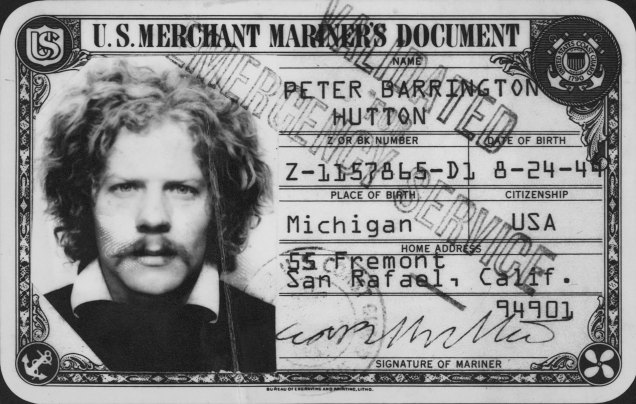
peter-hutton_merchant-marines1

Ian here—

Peter Hutton died on June 25, 2016. I could tell anecdotes here about having him for a professor across three courses at Bard College, about things he said to his students, places he took his students, and the impact he had on me as a young film student. I’ll spare you that, though, for now. For now, I’ll just say that I am extraordinarily grateful to Jesse Malmed and Patrick Friel for programming White Light Cinema and The Nightingale’s retrospective of Hutton’s work this past Sunday. It is, if I’m not mistaken, the first time Peter’s work has shown in Chicago since I first arrived here in 2008. It was wonderful to revisit it, and I am saddened that it took Peter’s death for this to happen.

What follows isn’t analysis, just some impressions, as a way of expressing gratitude to the programmers. I make such extensive use of visual aids normally in my writing that it can be reinvigorating to write about films that are only distributed on 16mm, and actually rely on the author to describe their experience. (I apologize if I’m out of practice!)

Continue reading

New Post Category: Critical Musings

thats_just_like_your_opinon_man

When I first set up this blog, I intended it to be used for student projects. Over the last couple of months, I’ve been posting my own material with greater regularity: lesson plans, and the odd conference paper.

I have enjoyed being able to share material in this way, and as of now I’m going to be adding a new category to my posts: critical musings. These will be moments where this blog becomes, well, bloggier: serving more as a critic’s journal than an academic’s lesson plan folder.

Although some of these posts will intersect with my academic interests, in general they’ll be less theory-bound and more evaluative. I’m not sure that I entirely agree with Noël Carroll’s position that the primary task of criticism is evaluation, but I do find it disheartening that the evaluative dimensions of criticism are so often squelched out of academic writing.[i] In private conversation, academics constantly offer well-reasoned, evaluative opinions on the artistic merits of a film to each other. It’s always seemed strange to me that when we get up to a podium to deliver a talk, this particular critical impulse drains away, and we treat our objects as mere delivery mechanisms for theory.

So: posts arriving under this category will be a place to acknowledge that I have opinions about things, and occasionally just want to expound upon them.

[i]. Carroll, Noël. On Criticism. New York: Routledge, 2009. (Look at me here, adding citations on my post announcing more casual writing. Typical.)
The Emergence of the First-Person Body

Among the Sleep Screenshot.png

Ian here—

What follows is my talk from the Society for Phenomenology and Media’s 2015 annual conference in San Diego, CA.

Let us begin by cautiously approaching a looming term within the history of film theory: identification. It is a massive concept, one that has gained criticism over the past few decades due to this massiveness, weathering the charge that it is so all encompassing as to be irretrievably vague.

Continue reading

Lesson Plan: The Politics of Punching in American Comedy

punch_the_trump_promo_image
Promotional image for mobile game Punch the Trump (Brutal Studio, 2016)

Ian here—

Hoo, boy.

Since November 9th, I’ve been coasting on lesson plan blog posts that I already had previously finished and scheduled. Now, here we are, with my first real “live” post since the 2016 election.

In the coming months, many peoples’ lives will be disrupted more than mine, and it is on me to make sure I contribute as much as possible to make those people feel welcome in this country, and to oppose the policies, appointment, and general behavior of our new president elect. I acknowledge that the disruption I will be facing is much lesser than the disruption many others will be facing. Nevertheless, my own life has been disrupted in its own small ways—as I’m sure many peoples’ has in this nation, even those who are not undocumented, or Latinx, or Muslim, or women, or disabled, or LGBTQIA, or, well, children (who, after all, will bare the brunt of Trump’s bullish climate denial). For me, the most immediate effects (as small as they may be, in the long run), were grappling with the syllabus I had created for my course “Comedy and the Moving Image” at the School of the Art Institute of Chicago.

Continue reading

Lesson Plan: You’re There. You’re a Square. Get Over It.

lim_screenshot-01
Lim (merritt kopas, 2012)

Ian here—

The first time I taught a unit on the concept of procedural representation, it was in my course “The Moving and Interactive Image” at the School of the Art Institute of Chicago. The theme I wanted to explore that week was the limits of thinking about games as moving images, at all. Are there some games that get such a large percentage of their meaning from rules and interactions that it is not even productive to think about them as images at all anymore? To this end, I assigned students the chapter “Art” from Ian Bogost‘s book How to Do Things with Videogames, where he lays out the idea of what he calls the “proceduralist style” in art games. Bogost characterizes this style of games in the following way:

In these games, expression arises primarily from the player’s interaction with the game’s mechanics and dynamics, and less so (in some cases almost not at all) in their visual, aural, and textual aspects. These games lay bare the form, allowing meaning to emanate from a model.[i]

I also set up a unit on proceduralist games in my Intro to Mass Communication course at DePaul University, which I taught three times, in the Fall 2015, Winter 2016, and Spring 2016 quarters. As I repeatedly taught this unit, I segued away from using Bogost’s “Art” chapter from How to Do Things with Videogames. (I found that the chapter’s engagement with the tired “are videogames art?” debate was too much of a lure, pulling student attention away from the core issues I wanted to address.) Instead, I subbed in “Procedural Rhetoric,” the first chapter of Persuasive Games, with very heavy excisions. (It really is a shame that, at 64 pages, that chapter is so unreasonably gargantuan. It definitely makes for some headaches when deciding on reading assignments.) And, over time, I gravitated toward some specific games to play in-class: a group of games I affectionately refer to as “games about squares.”

Continue reading

Lesson Plan: Peter Greenaway’s Vertical Features Remake

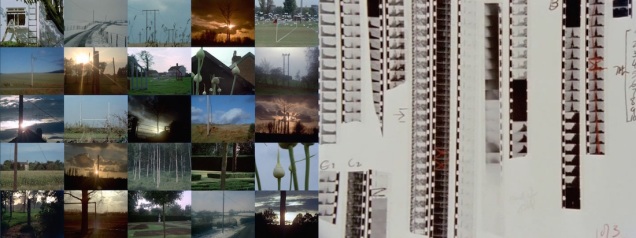
Greenaway-Vertical_Features_Remake-banner_mosaic.jpg

Ian here—

This particular lesson came late in my “Avant-Garde Film and Video Art” course, late enough where it could act as a sort of a postscript on many of the movements we had talked about so far in the course. Thoughts on structural film, narrative, and theories of play below!

Continue reading