The Return of the Obra Dinn: An Introspective

By Bruno Pasquinelli

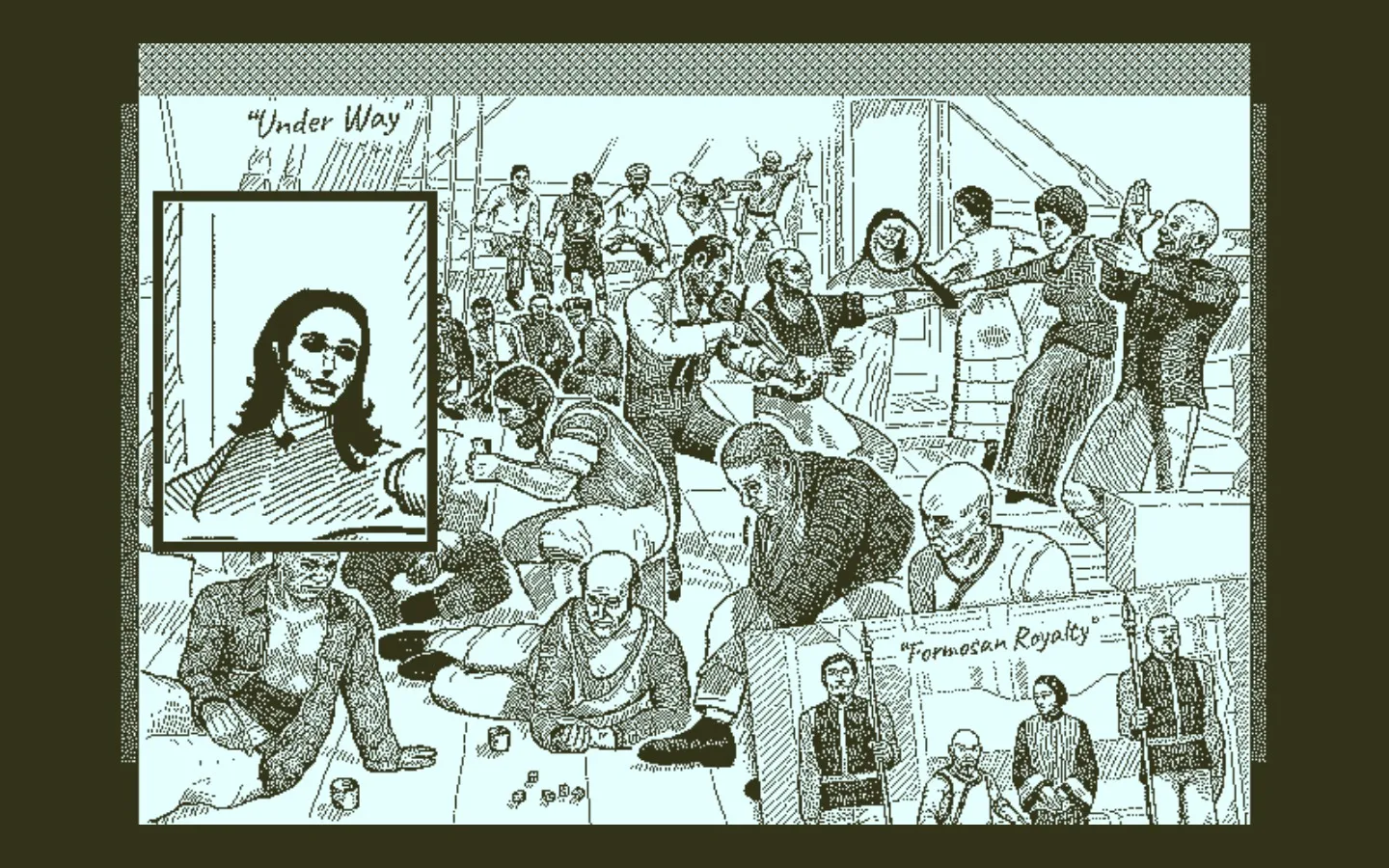
Return of the Obra Dinn, released by Lucas Pope in 2018, took me by storm when I first experienced it. During spring of my freshman year, I had a weekend that was empty, and I decided to start it on a Friday night, unaware of what I was about to unleash upon myself. After playing for about 20 minutes, I was absolutely hooked, but had to go to sleep. The next day, I woke up, went directly to my computer, and played through the entirety of the game, stopping only to eat and use the bathroom. After singing its praises for months, I was recommended The Outer Wilds, which is the only game to date that has had a comparable hold on me. In hindsight, Return of the Obra Dinn is what set me down the path of studying and making games in my college career.

Beyond my personal engagement, Obra Dinn is an incredible example of developing and iterating upon a mechanic to keep the player on their toes. Whether it’s the introduction of death replays within death replays (within death replays within death replays,) or the death of a cow, or even the question of the fates of those that did not die onboard, Obra Dinn takes its central active mechanic, the Momento Mori, and fully explores it on the ship. In my own playthrough, the process of discovering another corpse and its subsequent replay was a wonderful ritual, with me excitedly following around the spirit trail thing around the ship, however, I know that others found this repeated sequence onerous and frustrating. Obra Dinn does little to explicitly guide the player at any point, and these animations, the difference between spearing spiking and stabbing, as well as the difficulty of traversing the ship to watch a specific sequence adds a lot of friction. I appreciated this friction, giving me time to think about what was occurring on the boat and retracing my steps (literally) often gave me inspiration for what I should do next. However, I contribute a lot of this to my playing of the game in one sitting. For others who may be playing across days in 2 hour chunks (I really, really recommend against this, play it in one day if you can!)

This added friction exacerbates the difficulty of playing it across an extended period of time. Essential details can be small and scattered across scenes, and having to walk across the boat, spending precious time could be really bothersome. However, in a time of vapid, vacuous open world games filled with endless slop. Having each and every item in a scene be important feels very rewarding as a player who enjoys taking the time to look at these details. For instance, in the sequence of the sailors playing cards, different characters can be identified by the number tag on their sleeping bag, which corresponds to their number on the crew list. All of this is to say that Obra Dinn is not a game for everyone, and not just from friction. There are no hints, and fates are only confirmed in batches of 3, which may feel like a boon early on, allowing you to guess and check, becomes brutal when you’re down to the last 10 or so fates. Additionally, with nearly the whole game taking place on a boat, the rocking and bobbing can cause intense motion sickness as well – there are minimal graphical options, and none that can really reduce this sensation.

Finally, my thoughts on the story – I found the characterizations very powerful, considering many characters only get a handful of lines and brief moments to memorialize them. The voice acting is fantastic, and there are many lines like “Enough! Captain cannot be trusted.” that have stuck with me for years since I first played this game. The time period on display is one that is really different from the one we live in now. You play as an insurance investigator, meaning your goal is not one of justice or knowledge, but rather one of appraisal and write-offs. Everyone must be accounted for, not because of a nation’s responsibility to its citizens, but instead for payout purposes.

However, this difference in time also poses some issues that don’t sit well with me, and illuminate comfort levels with various forms of profiling. The nationality of every character is listed, and this often plays a role in their identification. The one Irish character has a strong Irish accent, giving him an identifier, and something similar happens with the Bosun onboard. These were forms of identification that I felt comfortable with when playing, however, that comfort changed when the game indicated that I could identify Maba, the only New Guinean crewmate on board.
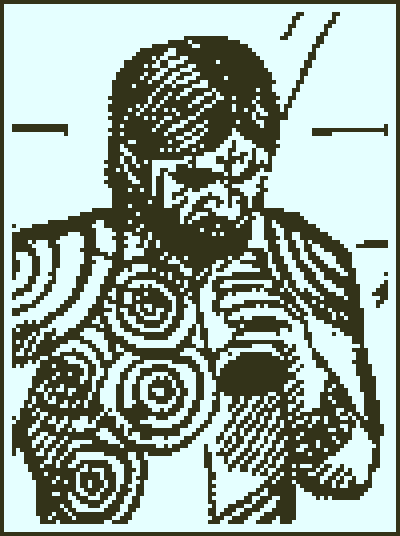
For those who haven’t played Obra Dinn, character’s faces become unblurred when they are potentially identifiable based on the replays you’ve seen, and the fates you’ve confirmed. Maba is torn apart by a kraken, and is immediately identifiable afterwards based upon his tattoos. His identification difficulty rating is 2/3, suggesting it is not too difficult. When I first played through Obra Dinn, I didn’t feel comfortable profiling Maba solely off of his tattoos, rather believing that I had missed some other aspect of information to identify who this poor soul was. While I appreciate the historical dynamics at play, Obra Dinn is expecting me to racially profile this man in a way that felt distinct from the other examples, based off my limited knowledge of New Guinea and other Pacific Islands. More specifically, “This man has pacific island-y tattoos, and there’s one guy from the pacific islands” as a train of thought is not one that I like to entertain in my life. There are some other small issues I have with the plot of the Formosan Royalty, but those aren’t as pointed or as coherent so I shall save them for another time.
Setting and Storytelling in Obra Dinn

by Jacob Wilson.

The Return of the Obra Dinn is a truly interesting game in the mystery genre. I played it for about 3 hours and enjoyed it. Set in 1807, the premise is that you, as an insurance investigator for the East India Company’s London Office, must figure out what happened to the 60-person crew of the titular ship that was declared lost at sea in 1803. Did they all die? And if yes, how?

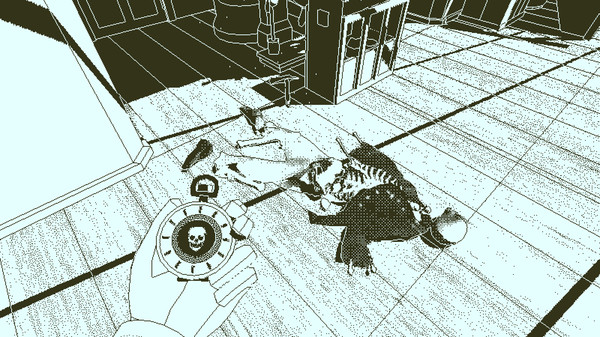
If that sounds like a daunting task, that’s because it is. Realistically, it’d be impossible, but if one finds a corpse (whether it is physically there or not) and uses a magical pocket watch, they can travel back in time to explore the exact moment when a character dies and hear some of the preceding dialogue. This device may initially seem to defy the rules of detective stories as we discussed due to its supernatural powers. In effect, though, it’s really not much different from having a third-person narrator like in And Then There Were None, wherein this style of narration was well used.

The pocket watch also quickly becomes normalized in this world once you realize that the legendary Kraken and odd spider-like creatures that shoot spikes also exist. I did not expect to find these elements in the story, but in retrospect, one could’ve expected it due to the magical watch. In its mixing of history and fantasy, the setting is thus reminiscent of Pirates of the Caribbean and quite unique in the mystery genre. Said monsters also behave consistently and do not seem to violate the laws of physics, effectively making them bizarre animals as opposed to devices that would violate the rules of detective stories by leading the player to unnatural and illogical conclusions – they are, perhaps in a twisted sense of the word, natural. One may compare this usage of animals to the snake in The Case of the Speckled Band or the orangutan in The Murders in the Rue Morgue. However, Obra Dinn’s use of animals is, rather than being the key to a puzzle that you aren’t supposed to expect, entirely unconcealed, which feels fairer to me.

The game’s way of revealing information makes for an engaging if perhaps imperfect blend of storytelling and puzzle-solving.

Players can identify the crewmates by their social standing on the ship (an expansive list of naval terms is used), their names, their appearance (clothes, facial features, tattoos, etc.), or their accents/nationality. Since you are only granted a split second of visual information, the visuals don’t give you the most exact portrayal of events, and neither does the audio, which doesn’t always tell you who exactly is speaking and at what time. This implores the player to use their imagination and pay attention to what few details they get. It makes for a fun challenge that can be solved in multiple ways, which allows for a varied player experience, but at the same time, the spread-out and sporadic pacing of revelations along with the paucity of information given in each scene made me feel that I was making very little (if any) progress. This remained true even as I binge-watched the stories of so many corpses, a process that eventually became exhausting. That said, I think Obra Dinn has an interesting way of storytelling that may only be possible in a game… the omission of so many details might seem more out-of-place in a movie or book.

The dialogue and overall narrative also suffer slightly due to the game’s structure. Some aspects of character interactions feel obligatory rather than natural, such as one crewmate addressing another as “you bloody Dane” or one of the Austrian characters saying “Verdammt.” To me, the former seems like too weak of an insult to use against the man who you think killed your brother, and the latter feels like a silly cliche equivalent to a French character in something unnecessarily saying “bonjour” and “mon dieu!” Nevertheless, I recognize that Lucas Pope had a very difficult job when trying to balance the difficulty in this game, so it’s a forgivable sin. These clues did help me pin down some identities after all.

The presentation of events out of order and with limited context also shifts the game away from properly employing the three standards of detective stories: means, motive, and opportunity. Means and opportunity naturally remain in play, perhaps only because they integral to the gameplay, but motives may remain a mystery for a long time or are stated very bluntly as in the case of that “bloody Dane.” Even if events are presented out of order, this order is thankfully indicated, unlike in Cain’s Jawbone. I could imagine myself eventually figuring out motives through playing more of the game and seeing how more of the story unfolds, but the lack of attention towards them means the story lacks the psychological depth and stakes it could otherwise have. It’s interesting enough that the first thing you see is the captain killing two crewmates and then himself at the start – it’s unexpected and also something that incites curiosity within me. Why did he do that? How did we get here? Other scenes taken out of context may arouse curiosity in this way, but after playing the game for longer, that curiosity waned due to having very few clues about people’s identities. It’s truly an interesting game and truly an interesting narrative, but it’s a bit unsatisfying in this sense.

Overall, I’d say the narrative execution of the Return of the Obra Dinn isn’t quite as solid as in other stories we have read and perhaps other games we’ve played… but don’t let my critiques detract from the fact that this is a fun game with a great, mood-enhancing soundtrack. I highly recommend it if you’re up for a challenge.

The Women of Rear Window – Sallie Hinkle

In general, Alfred Hitchcock’s treatment of women in his films is a subject of considerable analysis and debate. On one hand, some critics argue that Hitchcock’s portrayals of women can be seen as problematic due to the recurring themes of obsession, manipulation, and violence against female characters in many of his films. These portrayals often fit within the framework of the “Hitchcock Blonde” archetype, characterized by icy beauty, vulnerability, and often serving as objects of desire or victims of male aggression.


However, others argue that Hitchcock’s treatment of women is more complex and nuanced. While his female characters may sometimes fall victim to violence or manipulation, they are also often depicted as resourceful, intelligent, and capable of agency. Many of his films feature strong female protagonists who actively engage in the plot and challenge traditional gender roles. Additionally, Hitchcock’s films often explore themes related to gender, power dynamics, and the complexities of human relationships. His portrayal of women can be seen as a reflection of these broader themes rather than a straightforward endorsement of sexist attitudes.


While watching Rear Window, I found the gender dynamics particularly intriguing, especially concerning the roles each character assumed in the unfolding investigation. As the narrative progressed, a notable shift emerged in the portrayal of women and their involvement in the investigative process. Initially, Lisa was depicted solely as Jeffries’ youthful, fashionable girlfriend. Similarly, Stella was confined to the role of a nurse, “Ms. Torso” served as little more than eye candy, and Mrs. Thorwald appeared as a stereotypical nagging wife.


During the film’s early stages and well into the investigation, these women predominantly functioned as objects of desire and victims of male dominance (with Stella being a possible exception, albeit still constrained within a nurturing, feminine role). However, as the plot advanced, a transformation unfolded, granting these characters opportunities to showcase resourcefulness, courage, and intelligence. This evolution is what captivated me the most and what I intend to explore further in the rest of this blog post.

For starters, Lisa is often seen as the epitome of the Hitchcock Blonde archetype I previously mentioned—beautiful, elegant, and sophisticated. Initially, she appears to be the quintessential socialite, concerned primarily with fashion and parties. However, as the film progresses, Lisa’s character evolves. She demonstrates intelligence, courage, and a willingness to challenge societal expectations. Her determination to prove herself to Jeffries by participating in his investigation of Thorwald is seen as a departure from traditional gender roles. Despite initial skepticism from Jeffries and others, Lisa’s determination and resourcefulness ultimately prove invaluable to the investigation.


Her willingness to challenge traditional gender roles by involving herself in the dangerous pursuit of truth signifies a shift within her, and allows her to become more aligned with Jeffries (who, as a photographer, regularly pursues the truth in dangerous situations). Ultimately, we see this shift represented in the final moments of the film that depict Lisa, now wearing jeans and reading Beyond the High Himalayas by William O. Douglas, as she lounges in Jeffries apartment. The more casual nature of their duo in this scene suggests that the character arc Lisa had through the movie was significant in moving her and Jeffries relationship to the next level.


In addition to this, Stella serves as Jeffries’s pragmatic and down-to-earth confidante. As his nurse, she provides valuable insight and commentary on the events unfolding outside Jeffries’s window. Stella is portrayed as wise and observant, offering a contrast to the more glamorous Lisa. Her role highlights the importance of female intuition and practicality in navigating the complexities of life.


Stella possesses keen observational skills and an interest in the gorey details that rival even those of Jeffries himself. Her pragmatic insights and practical advice contribute to Jeffries’ understanding of the events unfolding outside his window. As a character, Stella serves to reinforce the idea that effective investigation often requires a combination of intuition and practicality, qualities traditionally associated with femininity. While, ultimately, Stella’s role in the investigation is not as in depth as Lisa’s, her contributions are incredibly helpful to the team as they attempt to piece everything together. Also, like Lisa, the investigation changes Stella as a person, evolving her character from “the nurse” to a key investigator.


Lastly, Mrs. Thorwald is a key figure in the film, despite her limited screen time. Her absence from the apartment and Jeffries’s suspicions about her well-being drive much of the suspense. Mrs. Thorwald’s character is largely defined by her relationship with her husband, Lars Thorwald, and her mysterious disappearance is what fuels Jeffries’s investigation. As the victim, Mrs. Thorwald is one of the only main women in the film to not go through a significant transformation, instead relegated only to an object of mens aggression.


Some interpretations suggest that Mrs. Thorwald’s plight serves as a commentary on the vulnerability of women within the confines of domestic life, with her mysterious disappearance, as well as the glimpses of other women observed through Jeffries’s window, offer a lens through which to explore the themes of vulnerability and victimization. Throughout the film, Jeffries observes various women in the apartments across from his own, each offering glimpses into their lives and relationships, indicating unequal power dynamics between them. Despite being physically confined to his apartment, Jeffries exercises a form of voyeuristic control over the women he watches, a dynamic that raises questions about agency, consent, and the ethics of surveillance.


Overall, though, I believe women are portrayed in a very positive light in this film. I believe it to be intentionally subversive to have these women begin the film in very limited roles, as objects of men’s desire and/or aggression, but then through the course of the film and the investigation to break those gender roles, to be transformed by the experience. – Sallie