SHAPE UP!: Possibility Space

Ian here—

Here is the first real episode of my new Shape Up! series of video essays about form, structure, and pacing in games. My central case study is Skeleton Business’ 2019 game Vignettes, although before I get there I spend a whole lot of time placing it in the context of what Joel Goodwin has termed “secret box games” or “himitsu-bako games.” This has been a topic I’ve written quite a few blog posts on. For years, I wanted to coalesce some of those disparate ideas and game appreciations into a video essay, but I never found the proper way to do that until I inaugurated this series.

Script below the jump.

Continue reading
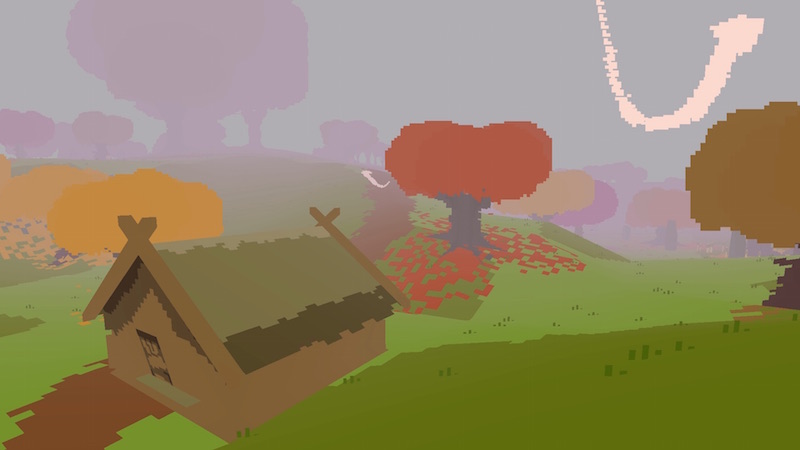
A Hodology of Videogames: Proteus

proteus_screenshot_01

Ian here—

Welcome to the third of a series of posts I’ll be doing on hodological space in games. “Hodological space” refers to the space that humans inhabit: not a space made up of strict coordinates, but a thicket of preferred paths, affected by factors such as interest, distraction, fatigue, and urgency. It’s a term that originated in the writings of psychologist Kurt Lewin, and which traveled by way of Sartre into the realm of phenomenology.

If, as Jean-Luc Godard once famously said, all you need to make a movie is a girl and a gun, than all you need to make a videogame is an island.

The island-game gave us Myst (Cyan, 1993), and it gave us last year’s The Witness (Thekla, Inc., 2016). It has also already made an appearance in this very series, with Miasmata (IonFX, 2012). But my favorite island game of all time might be Proteus (Ed Key and David Kanaga, 2013). And to really talk about what it gets right, we have to dip into issues of genre. So, buckle up: it’s going to be a bumpy ride.

Continue reading