Horror: Realism and Fiction

By Ellis

It appears to me based on what we have seen so far in class and from the readings from this week that horror relies on blurring the line between reality and fiction. Too real, and monsters won’t be allowed to appear; too fake, and we wouldn’t see our own lives reflected in the fear of the characters. As such, in this week’s readings, reality and fiction blur to create media panics that strike the right chord between what is real and what could be. They make us question our own realities. This reliance on a blurred line between the real and the fictional can be seen in three genres of horror we have studied so far: slasher films, found footage, and media panics.

Slasher films: This genre is used to encompass the “real” of horror. Friday the 13th for instance is significantly more realistic than Paranormal Activity. Murders do exist; serial killers do exist. The monsters in these movies are nothing more than people. And yet, they are given supernatural abilities to heighten the terror. Use of things like the Killer POV and suspenseful sound editing make it seem like the killer is everywhere all at once. If doesn’t matter that we’ve just saw him kill a counselor by the lake, we’re still worried about the girl in the woods. In addition, it doesn’t matter that he’s been stabbed, shot, fought, strangled etc—like a zombie, he keeps coming. He doesn’t stay dead. This doesn’t include later variations of slasher films where the supernatural is made explicit: even when the monster is entirely human, there is an element of the impossible. Lastly, masks. Even when the villain is human, we are restricted from viewing his face. This unknown keeps us unsure of where we stand or who we’re fighting. It falls in line with movies like Jaws that knew to keep the monster hidden.

Found footage: this genre demonstrates the fictional side of horror. So far in this class, we have seen ghosts, aliens, zombies, and demons appear in our found footage media, a dramatic departure from the “mundane” murders of slasher films. These monsters do not exist in our world, they are other, they are scary in that they are unknown. And yet, the very function of this medium is to make the fictional appear real. By framing these encounters with ghosts or demons in found footage, or by explicitly stating that what we are seeing actually happened as in the case with Paranormal Activity, reality is reintroduced to the fiction. These people are normal people—the location of Grover’s Mill is repeated regularly in War of the Worlds, anchoring the narrative in our world; Katie and Micah’s house is a regular home filmed with a nonprofessional camera—and we are therefore able to put ourselves in their shoes.

Media panics: this isn’t a genre so much as a response to horror, but it shows another perfect blend of the real and the fictional. It relies on a combination of realistic thinking and an emotional illogical response. At its heart, media panics, according to the readings we’ve seen, appears to come from a place of fear as well as being reliant on a degree of condescension. Concerned for the “youths,” promoters of these panics assume that “other people” aren’t smart enough, godly enough, or simply too impressionable to protect themselves from this occult threat. And yet, this doesn’t seem to be based on any fact, it assumes the worst of people. It is dependent on the belief that everyone else is, unlike yourself, susceptible. This is taken in concert with the belief that certain media—rock and roll, vinyl, etc—has the ability to corrupt. Take the McMartin preschool. These stories are obviously ludicrous, but fear came first and rationalized these children’s stories. The absurd was made real, and in doing so, became truly scary. Or take the War of the Worlds, the media panic is the result of the absurd being made believable and taken as fact. Scientists in the story commented to describe how insane concepts like “heat rays” worked, making them believable. Meanwhile, the fears of backmasking also relied on scientific explanation to explain why unconscious messages can influence the conscious mind. These experiences that are not at first scary are made so by adding an element of realism. Eventually, viewers rationalize the experience into something that isn’t just realistic but currently actually happening. The absurd situation, a belief in the foolishness of others, and a logical explanation turns births an actual horror.

These are the three genres of horror that we have seen in class, and each relies on a combination of the real and the fictional, the absurd and the logical. It appears that horror relies on the blurring of the line between the invented and the real, and stories that are based primarily on one must incorporate elements of the other in order to scare. Horror must make one question what is real and what isn’t, it must keep you wondering even after the television or radio set or book has been turned off and closed. It must make you question innocent technologies. It must keep you looking over your shoulder even when you know you’re alone.

From Creepy to Comedic: How Does a Villain Die?

by Meira Chasman

This is a question that has been looming in the background for me for a long time, and I think that Slenderman is a good target to focus on, because the phenomenon is recent enough in my memory that I watched the downfall in real time. 

Many people my age are simply not very scared of horror pre-2000 (which is sad because 80s horror is one of my favorite subgenres out there!). I remember when, out of context, my 10th grade music teacher showed the famous shower scene from Psycho. Most of the class couldn’t stop giggling, because they could see through the editing tricks and the scene was presented without the disturbing atmosphere of the overall film. It also didn’t help that the twist is so widely known. Obviously, Psycho isn’t the only example of outdated scares: the 50s monster B-movies, 80s slashers and schlocky found footage also lost their reputation for being genuinely ‘scary.’ Slenderman and internet creepypastas more broadly were just next in line. 

Shot by shot breakdown of the shower scene

Some would argue that the Slenderman mythos was always filled with self-awareness and irony, so it was never truly, seriously scary. But is that not true of every genre listed above? All horror is fictional and is clearly recognized as such. A better reason could perhaps be oversaturation of a market, where the familiar tropes and copycat structure become predictable and unscary shortly afterwards. Yet some trends, despite oversaturation, still manage to chug along for a decade and a half whereas Slenderman was dead far before that point. 

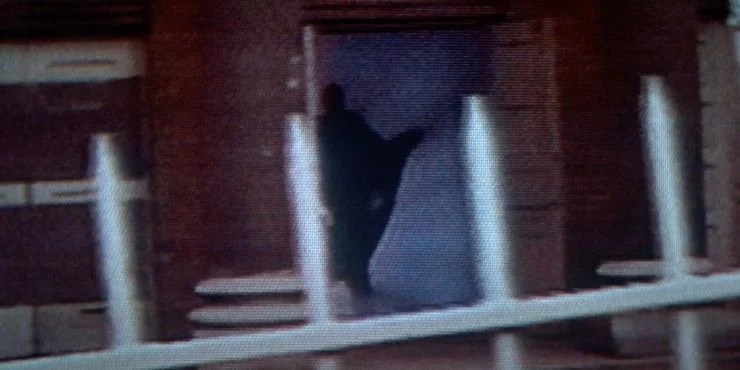
Another piece of this puzzle is the youtube series “Marble Hornets.” This series managed to scare the whole class, and Slenderman, a long dead meme, is the ultimate antagonist! On paper (aka the wikipedia summary), this series overall seems uneventful with low stakes– few characters actually die over 90% of the series. Still, the tension and mystery remain high due to the unique presentation. So, that’s the easy answer, right? It is not about the villain itself but how skilled the presentation of the story is. However, this brings us right in another loop: Psycho, The Thing, Halloween, The Shining and more were always well made even though younger audiences (unfortunately) might not take them seriously. So, in order to understand why Slenderman is not scary, and why villains die out, it is important to identify what’s scary about “Marble Hornets”. 

Part Two: Marble Hornets and the Glitch

Marble Hornets Entry #16: Shakycam Haunted House

Episodes of “Marble Hornets” often start with a short introduction from Jay, simple white text on a black background, no music. This setup in and of itself is already unnerving, but I soon began to breathe a sigh of relief any time his narration returned- it’s a connection to reality, a voice to identify with. Additionally, once the ‘totheark’ videos are introduced the Alex tapes suddenly become more bearable and grounding. “Marble Hornets” continuously raises the stakes of what counts as creepy, leading the audience down a rabbit hole where even the uncanny presentation is not as bad as the videos to come. The audience experiences horror on multiple levels but also builds a higher tolerance for what appears on screen. 

Next, the series relies on glitchiness, voice distortion, random cutting, shaky cam, and out-of-focus horrors, tools that were not as available in previous times but were elements that contemporary audiences recognized back in 2009. It took everyday technology and distorted it, much in the way that older generations of horror distorted everyday experiences (like summer camps) to lean into unspoken paranoia. Glitchiness is scary because it cuts off the audience’s connection to the world of the film, adding to the fear of the unknown. Attacks, creatures, blood, and danger are intentionally out of focus, a significant shift from the focus on intricate gore and special effects in the 1980s-90s.

Even though no one films on VHS anymore, glitchiness still appeals to modern audiences. For example, ‘glitch’ is at the forefront of lots of experimental music nowadays (pioneered by producers like SOPHIE). The distortion of familiar sounds and the hints of incomprehensible and otherworldly experiences is an appealing tool for innovation in many mediums that older generations of horror did not have broad access to/did not tap into. Obviously past filmmakers relied on glitchy things like TV static (Poltergeist) and used camera techniques to avoid showing the monster (Evil Dead demon cam) but this was not the primary mainstream horror style.

[In fact, one of the most terrifying moments of 80s horror for me actually comes from a nightmare sequence in the John Carpenter movie Prince of Darkness. I won’t spoil it but it relies on fuzzy VHS glitch in order to communicate something apocalyptic, otherworldly, and incomprehensible. Highly recommend!]

The scenes from Prince of Darkness that traumatized me

Finally, “Marble Hornets” understands how to punch above its budget and skill level. In general, it tries to avoid large dialogue scenes because the actors are not great. The cinematography is intentionally bad in order to add realism. Scenes are shot at night to avoid expensive set design. Half of the series is shot in the woods because they did not need a permit to shoot there, so the woods become a prominent element of the story. It was uploaded in 480p! By understanding its budgetary constraints, “Marble Hornets” was able to create a creepy atmosphere while not being too campy and killing the tension.

Part Three: Slenderman’s Limits

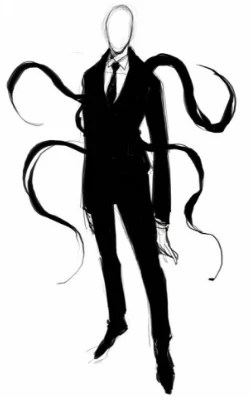
Slenderman as 1080p fanfic? Not scary
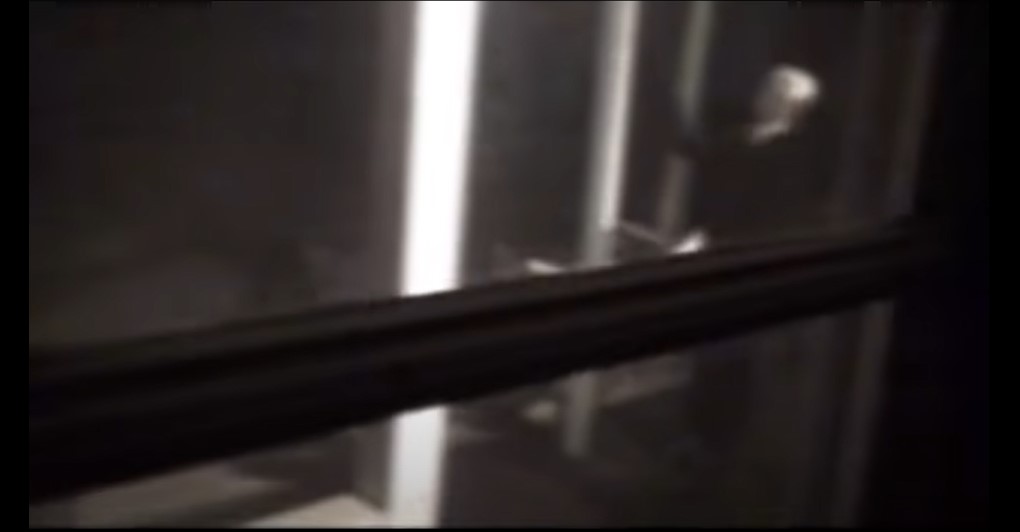
Slenderman at night in 480p? Hmm

From this, I believe there are multiple factors in what makes something scary and then unscary: these include presentation, stylistic appeal to current audiences, and levels of saturation. “Marble Hornets” is scary because it caters to contemporary horror techniques while still relying on the classic fear of the unknown to make its story more timeless. Slenderman himself is an image, and once one sees a million copies of the same static picture it loses its bite, while “Marble Hornets” offers far more than photoshop in the realm of horror. Similarly, serial killer flicks still make tons of money nowadays (See: Halloween remakes). While characters themselves can become outdated, their archetypes do not necessarily. As long as style is continuously updated for the next audiences these films can continue to scare. Gore itself is not outdated, but its old presentation has been abandoned (extreme focus on practical effects), due to modern audiences’ comfort with CGI and studio cheapness crutches. (RIP).

Another example: Possession and haunted house horror films are more popular than ever, and they heavily borrow from Gothic and Victorian horror, a genre over a century old! Broad concepts seem to be far more timeless than old styles, no matter how advanced or artful. This post might have stated the obvious, but it does go to show that while concepts can be timeless, once filmmakers start to coast on trends rather than understand which formats appeal to current audiences, their villains will die. 

Media, Panic and Reality

By Eren

For my blog post following my discussion animation on the War of the Worlds, I wanted to go deeper on the role that the media has in our conception of reality – and why Orson Welles’ War of the Worlds broadcast had the far-reaching impacts and lasting implications that it did.

In 1938, the world was living in a time of tension, where people were glued to their radios to receive entertainment, but also world news – especially with the rise of the Third Reich gaining power and territory in Europe, threatening global safety with the encroaching threat of war. The radio became a method of information technology in 1894 with Gugliemo Marconi developing his wireless telegraph messaging system to deliver fast and accurate communications across great distances. Over the next twenty years, this technology was developed to bring in the golden age of radio, during the late 1920s and 1930s. Because of the post-war economic boom that accompanied the Roaring twenties, more and more families were able to purchase radios, and enjoy listening to the available programming during leisure time – bringing way to diverse programming alongside news broadcasts. With channel programming such as the New York Philharmonic’s weekly concert broadcasts, Texaco’s Metropolitan Opera broadcasts and famous comedians including the Marx brothers, and Abbott and Costello providing their talents on air – the radio became a point of access for all to receive quality entertainment and news programming in the comfort of their own homes. However, news programming was a major staple of radio broadcast content, President FDR addressing the nation himself with his Fireside Chats from 1933 to 1944, and local and national news companies providing information on unfolding events in real time – a new concept due to technological innovation of the time.

Orson Welles’ 1938 broadcast adaptation of H.G. Wells’ 1897 novella came at a time when the intensity of reality reflected something out of a fictional novel, and the heightened nature of people’s worry for the near future intensified the anxiety of listening to the news – something most of us can relate to having over the past two years with the unfolding of the Coronavirus pandemic, tensions during the 2020 election, and even now with the war in Ukraine and threats of nuclear attacks. While War of the Worlds was originally written during the turn of the 20th century and taking place in England – Orson Welles adapted the language and setting to better fit the 1930’s American audience, making the story even more contemporary and believable. Adding to the believability that began panic was the usage of the radio medium to tell this story – making the story into an unfolding event broadcasted over the air. While an enjoyable life-like dramatic scenario for listeners who heard the opening prologue stating that it was a production by the Mercury Theatre, people switching through channels who happened upon the reputable CBS channel hearing that people had been killed by an unidentified object in Grover’s Milll, New Jersey would be more inclined to not think that it was a dramatic performance. The life-like manner that the broadcast had with interruptions of breaking news and updates, musical interludes, broadcast static and “eyewitness accounts” incited fear in listeners, despite the announcements that it was a fictional production during, and halfway through the broadcast. Because of limited technology available, people who believed the broadcast weren’t able to fact-check what they were listening to in real-time, causing genuine reactions of fear and panic to an oncoming, extra-terrestrial threat.

With that, I was curious if there should be clearer lines drawn to distinguish real from fiction, especially in the time we’re in with “fake news”, deepfakes, and media platforms who both willingly and unknowingly allow fraudulent information sources to circulate more easily than ever before – causing perceptions of real and fake to be blurred. With misinformation running rampant and fake media resembling reality so much more now than ever, should reality-based horror be clearly distinguished from real life to provide more safety and assurances for viewers? Or do disclaimers prevent the art from having its’ full effect? Should some mediums be left just for reality, or can horror be implemented through any platform/medium?

With this piece and others we’ve covered in class including Unfriended, Pontypool, and Ringu all infusing horror with commonplace and interact-able technology/mediums we use in our daily lives, the lines are blurred between fiction and reality to make the fear induced by the scenarios all more realistic, and empathetic for audiences to relate to the characters in the scenarios. For Orson Welles who made this production to bring a sci-fi horror to a new audience the day before Halloween using the popular mass technology of the time, having his production being consumed as reality almost ended his career in its infancy, and continued to follow him around for the rest of his life. War of the Worlds crossed an unseen line to take horror reality into the homes of everyone with a radio, bringing the terror into everyday life. In times when reality is scary enough to be lived – is found footage horror and other practices of reality-horror too much for us (collectively) to handle?

On Spiritualism

Calahan

From Telegraphs to Text Chains

The invention of the telegraph brought with it a bevy of confusion regarding its stunning capability to transmit messages over such long distances. People were baffled at how this technology could possibly work, and so, naturally, many turned to the supernatural to explain its function. Wild ideas of communicating with other dimensions and ghosts were popular among those “true believers” who were a part of the growing spiritualism movement of the 19th century. But as ridiculous as these claims may sound today, one would be remiss to say that we as a society have moved past such antiquated notions regarding the paranormal. Rather, it would seem that with every step forward in technology, we take a step backward in our collective reason (depending on your perspective regarding the supernatural, of course). The most prominent of these steps has been through the growth of the internet and social media. In the web’s early days, it wasn’t uncommon to be sent an email chain regarding some sinister haunting or conspiracy. As frightening as it may have been to be a sixty-year-old or especially a young child receiving an email that said if they don’t forward this chain to five other people they will be visited in the night by Bloody Mary, the more damaging messages came in the form of political misinformation. And as ready as people were to believe in ghosts, they were just as ready to believe in any wild conspiracy that was told to them in the email. With this newfangled technology, it was easy to convince and rope people into the alt-right pipeline, and this only continued with the rise of social media platforms like Facebook and Twitter. The internet, with its many niche spaces and corners, is a world full of echo chambers, making it easier than ever to be convinced of something outlandish. Back when the telegraph was invented, as out-there as many claims were, everybody was still living in the same world. After a while, and as the general population began to catch up on its science, these claims became less popular. However, that’s not to say we stopped believing. Technology such as the telegraph, the radio and even the phonograph still carry with them a sort-of “haunted” connotation. It’s common knowledge that self-proclaimed “ghost hunters” try to carry around radios to try and reach a frequency through which a spirit can communicate. We still have an odd obsession with these devices. It would appear that, rather than having fallen by the wayside, we as a society accepted this notion of the telegraph and such as being gateways to the paranormal.

Glass Half Empty

It is important to note the tone of the Spiritualist movement. Today, we might look back and assume that this was a frightening phenomenon spurred on by figures who wished to torment themselves and others. However, the reality is quite the opposite. Those who sought out mediums, or a spirit photographer like Mumler, were not doing so seeking a cheap thrill. They wanted assurance that their loved ones were alright. They wanted to know that they were happy in Heaven, or the like. It was not horror-based at all but rather a quite positive and optimistic movement. Which is why the assumption of horror and spookiness from today’s perspective is so fascinating. Why has there been such a shift in mindset? Why do we view the concept of a ghost as being scary, rather than reassuring? Stanley Kubrick once noted in a conversation with Steven King that any ghost story is surely a rather optimistic one, because it confirms the existence of an afterlife, that we don’t just cease to exist upon our death. And yet, ghosts scare us. Perhaps this has something to do with Spiritualists themselves. As time passed, we began to see these people more as swindlers with bad intentions rather than goodhearted people wishing to help us see our loved ones. But, almost paradoxically, as our mistrust in mediums grew, our superstition remained the same, if not was strengthened. Because we associated the paranormal with these people who we start to view as bad, we naturally began to ascribe those bad intentions to the paranormal as well. We cannot help but believe in ghosts, but humans are easy to lose faith in. Therefore, as the reputations of the people associated most heavily with the supernatural began to sour, so did the that of ghosts. Nowadays, a picture that claims to have captured a ghost will not only be met with skepticism, but also fear, fear of an unknown to which we no longer have a trustworthy human connection. Without that human connection provided by mediums, ghosts become more alien, less like us. We don’t understand them anymore, and so we are afraid.

No turning back now

Audra 

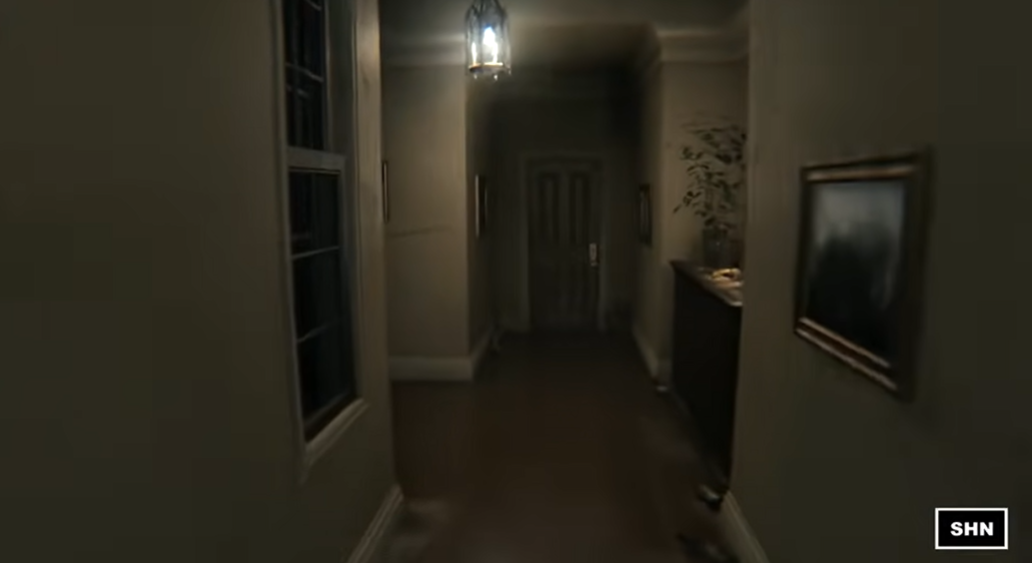
My discussion animation drew from the terminology Alison Gazzard outlined in Mazes in Videogames: Meaning, Metaphor and Design to ask two questions about PT. 

Question 1: Is PT a maze?

Alison Gazzard immediately differentiates between real-world mazes and video game mazes, stating that real world mazes are pathways of experience while video game mazes are pathways to completing an objective (42). PT does not seem to fit into either of these categories; its paths do not stand alone as entertainment because you solve puzzles within them, but the final objective is never explicitly defined. The game just starts from a first-person POV waking up on the floor of a dark room and you are able to walk through a door. 

Gazzard developed a “morphology of paths” that defines set path structures. While PT’s path aligns with the defined structures, “maze-emes”, there are not enough maze-emes present for PT to be considered a maze. The relevant definitions are as follows:

  1. Core path = “any path that has no other use than to guide us between the other parts of the path”, can also contain keys or rewards
  2. Blind turn = “it is a breaking of the direction of the path, while the same path still continues”
  3. Loop-back = “starts to take the walker/player somewhere new, and then continues back on itself”

PT is made up of one core path with a blind turn in the middle. There is a “start door” and “end door”. The end door, when unlocked, opens up to the view of coming out of the start door. The end door to start door travel represents a loop-back, but is physically missing the connection path. See the image below for a representation:

The missing loop-back path and single core path with a bathroom constitute the entirety of PT’s world. Kendrick argued in class that PT is strictly a game of solving puzzles within a space. He said it was not a maze, but a series of puzzles. Building off of this, PT is a single path, not multiple. Gazzard defines video game mazes as pathways to completing an objective. PT does not have pathways, which removes the confirmation of interaction that is present in video game mazes with paths to choose from. PT players do not get to choose their path. 

In class, Ben suggested that if PT is not a maze, it could be a labyrinth: a single, non-branching path that leads to a center. Gazzard discusses two types of labyrinths in video games: spaces of illusion and tracks. There are many video games that exist on a unicursal path like PT, but the game designers have chosen to make the area feel expansive and explorable to give players a sense of freedom. These are called spaces of illusion, which PT clearly does not fit into as it was designed to feel repetitive and claustrophobic. Additionally, spaces of illusion incorporate obstacles to movement that subconsciously direct the player to move along the single path, rather than exploring the false expanse. PT does not have any specific obstacles to movement because the entire space acts as the obstacle. PT is most similar to the space of illusion labyrinth in that “the path is not restricted once it has been walked” (67). This is a superficial similarity, however, because retracing your path in a space of illusion does not benefit the player, while in PT solving the puzzles is dependent on the player re-walking the path. For example, you need to dash between the radio and the phone to trigger the first baby laugh. The second type of video game labyrinth is the track, where the player cannot choose where to go on the single path. The player can control the speed of the avatar or initiate certain actions, but ultimately they do not control the player’s movement through space. PT does not fall into this category because, as discussed earlier, complete freedom of movement and control over the only action, focusing, is imperative to solving the puzzles.

From class discussion, PT does not seem to align with any of Gazzard’s video game maze or labyrinth definitions. It may align with an entirely different video game category, and its similarity to an escape room could be explored further.

Question 2: Can an entire game be a dead end?

A dead end is a closed path with no way through, requiring the player to retread their steps if they want to continue their journey (62). Before discussing if PT overall is a dead end, a potential dead end within the game is the “end door”.

The PT end door can be categorized as both a gate and a dead end, at times simultaneously. A gate hides the path beyond it and forces the player to wait for it to open onto the next section of the path. After the end door is unlocked early in the game, the door is a gate because it allows the player to pass through it while hiding the path beyond it. However, upon failing to solve a puzzle, like the “Hello!” puzzle, the end door remains a gate because the player can pass through it, but brings you back to the exact same path. It makes the player double-back while physically moving forward. Gazzard describes video game dead ends as paradoxical because they prompt movement through the denial of movement (62). In PT, the denial of movement is denying progression towards the end goal, like resetting the “Hello!” puzzle. The end door may not be a physical dead end, but it serves the same purpose.

In class, we discussed two ways in which PT could be classified as a dead end overall. PT is a game of puzzles that must be solved with a specific methodology, none of which are told to the player. PT forces the player to retrace their steps until they solve each puzzle. We experienced this ourselves in our class attempt, where we tried upwards of ten times to get the second baby laugh at the end of the game. We never knew if we had failed the attempt or just needed to wait a little longer. Each time we had to choose a time to double back and start again. In this way, PT is a game of doubling back until something in the limited space changes, a continuous dead end. Additionally, my classmates explored how PT could be a metaphorical dead end. PT is a playthrough teaser-trailer for a Silent Hill video game that was never released. Therefore, the final objective of PT, drawing players to a new complete video game, is left unaccomplished, making PT a dead end.

Mother isn’t Mother anymore

by Selma

I found Relic to be a much more interesting film when it ditched the shadowy figure and addressed the audience head on with its commitment to the real horror: growing old. 

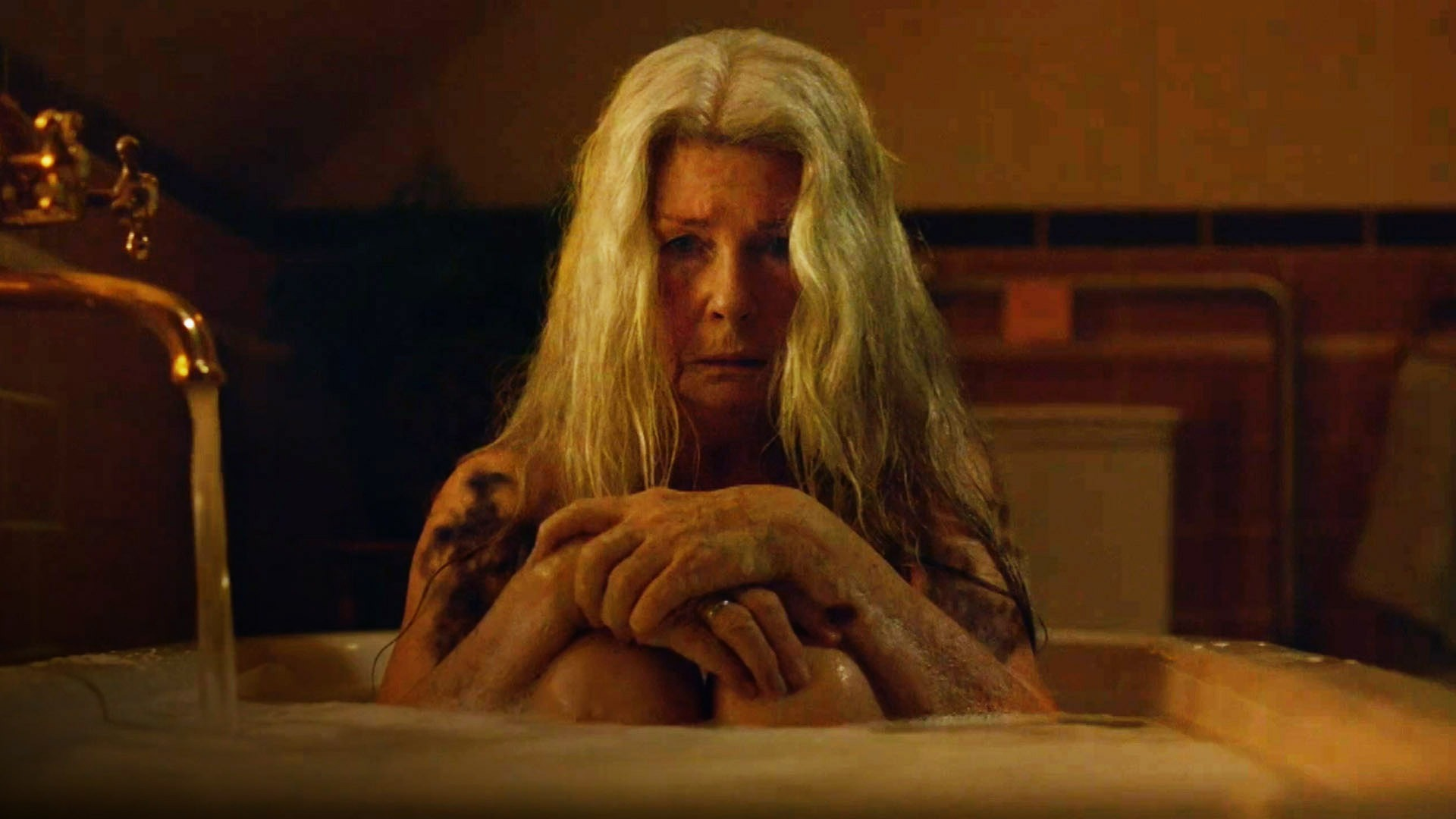
Relic (2020) begins in a dark house. An old woman– her name is Edna, but I’ll call her Grandmother– stands naked in the living room, water running from the bath upstairs is spilling down. Grandmother seems unconcerned. She is distracted, looking at a thin, dark figure, unseen by the audience until its hand moves out of frame. The opening scene ends there. It’s disturbing. And it generates a huge question: who is the dark figure? 

We transition to Mother and Daughter, they fill in the other two generations of Grandmother’s relatives. Mother and Daughter are driving to visit Grandmother. The police contact them because Grandmother hasn’t been seen for a few days. Grandmother is old. She is prone to forgetfulness, bouts of anger, signs that some audience members may recognize as dementia in their own aging relatives. Relic traverses the line between supernatural hyperbole and the reality of growing older. 

And that might be an issue for the film. 

I liked Relic but I only started to like it during its final 20 minutes. Throughout the film I was understanding the haunting of the three women to be literal. It’s a horror movie after all, and anything is fair game: ghosts, zombies, demons, you name it. And the viewer was told to expect that in a sense. As mentioned before, the shadowy black figure is established immediately in the opening scene. It seems like it should be an antagonistic force throughout the film. There are even numerous nightmare sequences in which the shadowy figure’s identity could be hinted at. Mother has a recurring nightmare about her great-grandfather whose old house makes up the foundation of Grandmother’s home. The great-grandfather is shown in a horrifying montage of decay and his figure is black and skeletal, it seems like a precursor to what the black figure developed into. 

So with those scenes, the foundations of the old house within Grandmother’s now haunted house, the shadowy black figure, etc. It was hard not to take the haunting as a literal and specific occurrence. However, I found Relic to be a much more interesting film when it ditched the shadowy figure and addressed the audience head on with its commitment to the real horror: growing old. 

After a dizzying and anxiety-inducing maze sequence toward the end of the film. Mother and Daughter successfully escape a deranged Grandmother who has turned completely against them and has been trying to harm them. Daughter wants to run. She beckons Mother to come and to leave Grandmother who, to her, is no longer Grandmother. But Mother can’t. She sees the decay and realizes her responsibility– wonderfully foreshadowed by an earlier quote “she changed your diapers, now you change hers.” A reversal of care from parent to child to child to parent. Daughter flees, seemingly unable to fathom this kindness and grace Mother is showing to Grandmother. 

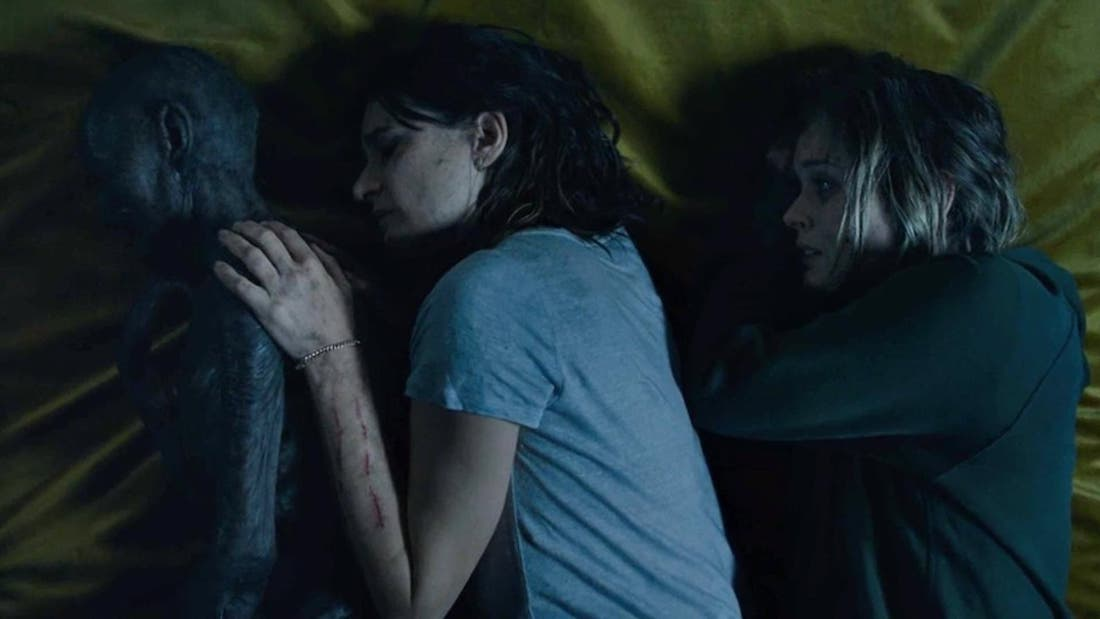
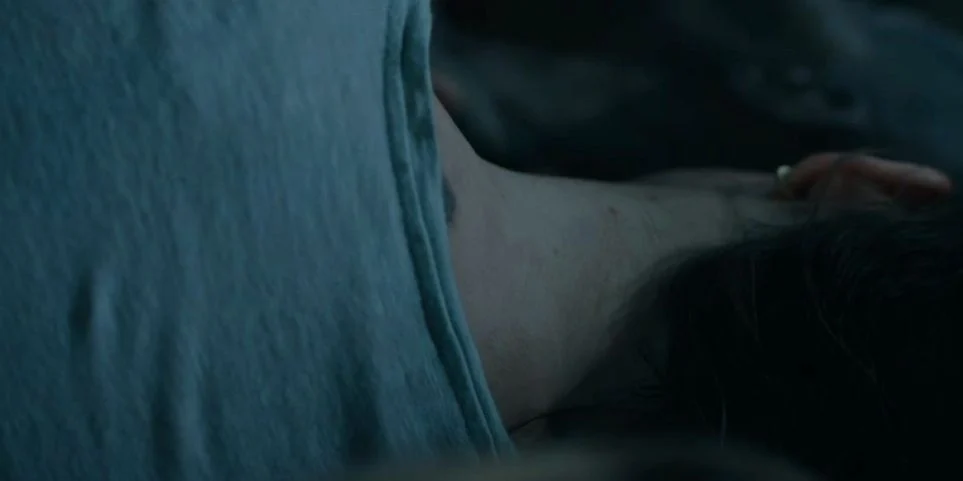
A disgusting yet tender moment follows. Mother carries Grandmother upstairs to her bedroom. Grandmother is covered with black flesh wounds that have been growing deeper throughout the film. Mother slowly begins to peel the skin away, revealing a black, tar-like skeletal body– just like the great-grandfather’s body of the nightmare sequences. After skinning Grandmother and laying her down on the bed, Mother cuddles her, in a fetal position. The Mother’s duty to her parent has been completed. Now, Grandmother can rest and be at peace. Daughter even returns. She sees the passiveness of Grandmother and realizes that she was no monster, she was just alone and afraid. Daughter joins the two on the bed and completes the generational cycle. As she stares at the back of Mother’s neck, she notices the beginnings of the black decay…

So what does this say? The ending of Relic left me with a really fantastic metaphor for the cycle of aging. The decaying process from the ending scene altered the literal grounding that might have been established by the decay Grandmother undergoes at the beginning. It might be taken as a specific curse, but as the decay spreads to Mother, the film seems to be saying that this is a process that happens to everyone. What is unique is the conditions by which it happens. For the great-grandfather, it seems that he was abandoned, left to rot by his family who could have cared for him but didn’t. Grandmother seemed to be heading towards that fate, but the appearance of Mother and the tenderness of the final scene indicate that Grandmother has completed her transformation somewhat gracefully. Now, looking toward the future, Daughter must maintain the relationship she has with Mother and make sure that she does not have a demented breakdown like Grandmother did. The decay seemed to be presented as an inevitability. What happens during that inevitability of aging is dependent on who is there for you in your older years and the support they can offer. 

Relic sort of misleads you to thinking there is more to the haunting until it tells you, by the end, that this was no haunting after all. It is simply a terrifying reality. 

A QUEST FOR HORROR

by Sterling

INTRODUCTION

Putting Spiritualism and Spirit Photography in conversation with modern-day examples of our interaction with horror experiences, I want to consider humanity’s enduring fascination with its connection to the afterlife and the supernatural realm. By exploring this fascination, one finds that there are a few different avenues and reasons for our desire to interact with the dead. 

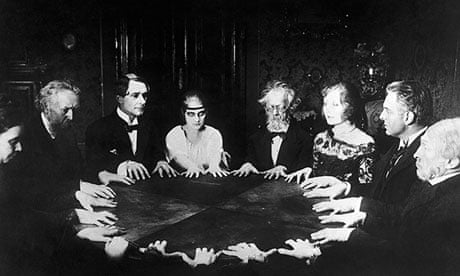
ON MEDIUMS, SEANCES, AND PSYCHICS

Going to mediums is a popular form of interacting with the dead. This is indicated by its use in reality entertainment (shows like Long Island Medium and Hollywood Medium with Tyler Henry come to mind), but also by the popularity of small shops or stands with psychic readers. Coming from Los Angeles, I can definitely attest to the prevalence of psychics and new age spiritualism all over the city. (I could go on a long spiel about the city itself embodying this fascination with the dead, but that would definitely be its own post!) 

Mediums and psychics are an easy way to engage with the spiritual realm, but this horror experience is one of fascination with the unknown and clearing up one’s insecurities or confusions about what is to come (either during one’s life or in the afterlife). Mediums in particular showcase this fascination in the form of achieving closure. Many people go to mediums in order to have a final chance at interacting with a deceased loved one (just as Mumler’s customers desired a final photo); this opportunity is not a moment of horror for them even though, in and of itself, interacting with the dead is a horrifying concept. Instead horror transforms into a moment of healing, perhaps because of the strength of the emotions one experiences during a meeting with a medium. 

An example that immediately pops to mind from the horror genre is Ari Aster’s film Hereditary. The seances held in the film are both held out of curiosity (does this actually work?!) and in the name of closure (reconnecting with a dead loved one). While the mother, Annie, participates in her friend’s seance with skepticism and fear, this soon turns into excitement and happiness when she is able to channel her daughter, Charlie, through these means. Horror and fascination play with each other in this film heavily, but the classification of mediums, seances, etc. as part of the supernatural realm will always lend a level of horror within its use.

ON GHOST HUNTING, HAUNTED HOUSES, AND RANDONAUTING

Discovery through interaction with the dead or supernatural is another manner in which horror manifests itself as fascination. 

This is embodied in ghost hunting videos and even videos of people going into abandoned buildings or haunted buildings with the goal of finding creatures or spirits and capturing them on camera (sometimes not finding these entities, but still managing to create an ambiance of fear and anxiety through the viewer’s anticipation). It is not merely for the thrill and adventure of the horror experience, but also as a means of proving to oneself (and others!) that the afterlife indeed exists and that phenomena beyond our understanding are out there waiting to be seen and heard. In the case of those who go so far as to take their spiritual practices in their own hands (i.e. astral projection), one might even argue that this need to interact with the supernatural is also a means of learning and understanding what cannot be taught or understood in our realm. 

Yet what is interesting about all of these adventurous forms of interaction with the dead is that, although they may induce fear and anxiety, often these people go into this experience with a positive excitement. The adventure is not punctuated or defined by the horror involved with ghosts or hauntings or astral beings, instead it offers its participants a chance at seeing what is unbelievable–almost as if it were a spectacle (and, indeed, it is a spectacle for those watching these horror experiences on shows like Ghost Hunters). 

The adventure of hunting for the supernatural is now also becoming a bit more mainstream/accessible to all with the Randonautica App. While, of course, this app does not need to be used to find creepy or spooky items/places, many people set their intention on this type of atmosphere around the location they wish to manifest. So the question here is, “Why?” Why would people want to see something creepy in real life? There seems to be an innate magnetism for horror as an adventurous experience or as a way to pique one’s curiosity even when it’s not necessarily something someone would want to admit.

ON CURSED CONTENT

Continuing on the question of why people want to experience horror, examining horror in the form of cursed content, specifically cursed games like Bloody Mary (or cinematically in Candyman), is one attempt at figuring out our attraction to the supernatural. Interacting with cursed content seems to be a test of bravery and out of everything I have discussed, embodies the purest form of the horror experience. It is engaging with horror for horror’s sake. The goal is to conquer the horrifying while also encountering the horror and living to tell the tale the next day. It is no longer an adventure, but a date with danger (or at least perceived danger). There is almost an empowering component to interacting with cursed content in that one’s survival of the experience makes them transcendent. 

This transcendence can also be extended to those who interact with cursed objects, like those found in the Warren’s Occult Museum. Having the bravery to share a space with an item that supposedly contains dark energy or the soul of a malevolent being seems to elevate the status of the person willing to do this. In this sense, the horror experience here contains the thrill factor of an adventure, while also pushing the limits of human fear/phobia. Implied within these tests of bravery and discipline is also a supernatural component onto the person who is able to endure these moments of fear or battles with malignant spirits. 

Conclusion

Ultimately, I want to point out that, while these horror experiences may go awry, the motivation to have these experiences is not to experience horror. The subject matter defines these experiences as horror experiences, but for the participants, it seems that they are not going into these processes with fear in mind. Much like Mumler’s customers, the desire could be driven by an interaction with a deceased loved one (i.e. seances), capturing something that has never been caught on camera before (i.e. ghost hunters), or simply the curiosity of what the afterlife entails (all of the above honestly). The purest horror experiences that I have listed above mostly entail those regarding tests of bravery when interacting with the supernatural realm (i.e. ouija boards and cursed games).

the horror of voyeurism

jeremy

i’d like to use this space to talk about the topic of the voyeuristic nature of the slasher film that we briefly touched on in class. there were several long, sexualizing shots (often in the killer pov) of multiple campers, especially of terry. we saw terry walking alone in tight short jorts through the woods, with the camera focusing on her butt, terry undressing and entering/exiting the lake, and ginny/vickie undressing alone in their cabins. each of these give a feeling of spying, seeing something we aren’t supposed to see. dr. jones touched on this class, pointing out that the audience (which would presumably be full of horny teenage boys) get to “enjoy the benefits” of taking on the perverted figure’s point of view (in the case of Friday the 13th, Part 2, primarily scott and jason) by viewing the form of a sexy, scantily clad woman. although the audience members (hopefully) personally condemn the spying and observation, they are certainly “benefitting” from the perversion of the characters in the movie. however, it can be argued (especially with a modern viewing) that by tying these perspectives to perverted or evil characters, the films take a stance against this brand of voyeurism. i take issue with that interpretation for the following reasons:

consider that

  1. these films are old enough to be considered foundational in the slasher genre: they were the blueprints that many sequels and much of the rest of the genre were based on. they are not camp; rather, they are the source material that campy movies attempt to imitate and capture the spirit of
  2. these films are primarily (almost entirely) directed by men
  3. sex sells

i don’t think that the form of voyeurism that these films force the audience to indulge in is as intentional or intellectual as filmmakers would like you to believe. my interpretation is supported by film theorists laura mulvey and vivian sobchack, who both wrote (to the effect) that by combining the viewpoint of the camera and characters, it effectively hides the voyeurism taking place by explaining it away not as what the filmmaker is thinking, but passing that title of perversion to the character, when the character isn’t really punished for their actions. in Friday the 13th, Part 2, scott is killed, by not in a horribly more gruesome, vicious, or painful way than any other character. were he not ensnared by the bear trap that paul set, he likely would never have agreed to stop harassing terry, and never seemed to show remorse for his actions even after being caught. only after being put into a position where terry has extreme power over him (essentially being responsible for his life), does he negotiate with terry and agree to stop completely dehumanizing her. there is also no real guarantee scott gave that he would stop his behavior, as he could very easily have been lying in order to get out of that position, and the instant terry lost her physical dominion over him, he could very easily go back to his previous horrendous behavior. scott’s actions are treated with heavy overtones of “boys will be boys”, as a (MAYBE) annoying but ultimately harmless intrusion on terry’s privacy that isn’t taken very seriously. in fact, audience members are often relieved that, after utilizing killer pov, the “killer” turns out to “only” be scott, and not the actual killer (jason) instead. by contextualizing the alternative to the objectification of women as actual murder, it becomes very easily for the audience to swallow scott’s behavior as “the lesser of two evils”, when it’s in reality a far more likely behavior to occur in real life. without even going into the effects of gruesome murders of women onscreen on public perceptions of femicide, i believe that these portrayals lead to attitudes of complacence and apathy, or even an unwilllingness to report/call out these behaviors in real life. terry never moves to punish scott by making his behaviors known to either paul or his peers, possibly because she knows that his behavior would simply be tolerated by them. it’s as if she never even thinks that relying on outside forces to put a stop to his harassment is a possibility, or that his behavior is not a serious enough problem to rely on others to help bring a stop to. ultimately, i feel like the crux of the problem with these portrayals is the deception employed by these directors and filmmakers. by using abhorrent, unrealistic behavior (being murdered by a crazed serial killer), these men are able to minimize the harm and vileness of the blatant objectification of women by opportunistic men, and reduce the likelihood that these problems will be taken seriously by their viewers and audience. if anyone has any other interpretations or would like to disagree, feel free to respond.

(if the lowercase formatting is a problem i can reformat it, i just think it’s a kind of nice stylistic choice)