The Forest: Spatial Narratives in a Subversive Robinsonade

Group presentation summary by Peter Forberg. This post will contain small spoilers for survival horror game The Forest.

The history of the Robinsonade is the history of shipwrecks: by boat, by plane, or by spacecraft, hapless travelers find themselves stranded on the shores, hidden beneath the canopies, or lost in the sands of some remote island or labyrinthian forest or sprawling desert. In this sense, The Forest (2013) begins much like any other transit disaster, sending the player crashing down into the trees of a mountain-lined peninsula with no other survivors—no other survivors except the player’s adolescent son, who is immediately pulled from the wreckage by a looming, naked mutant. And so, at the outset, The Forest announces that it is not merely a sandbox for enterprising colonizers, nor does it hide the fact that this brave new world is filled with dangerous mystery and lush with stories. Understanding that The Forest emerged during the survival-crafting game boom of the early 2010s, the developers needed a way to differentiate their game from the endless explore-mine-build games that followed Minecraft’s (2009) massive success. Thus, they took a different approach to the genre, with the director of the game Ben Falcone stating, “Our focus is much more on a survival horror experience, letting players experience being in the world of ‘The Hills Have Eyes’ or an 80’s Italian cannibal film” (Savage 2013). Seven years out of the initial alpha release, Falcone’s vision has been realized (with a sequel in the works), so what exactly does The Forest accomplish within this generic category; more specifically, how does it apply and subvert the tropes players will associate with popular survival games such as Minecraft or Terraria (2011)?
Continue reading

Gone Home and Spatial Storytelling

Group project summary, by leader Guadalupe Godinez

Gone Home is a first-person exploration video game, or interactive exploration simulator as described on Steam, developed and published by The Fullbright Company. The game opens up to you standing in front of the doorway of your house, having just arrived from a trip abroad to a dark and empty home on a rainy night. The beginning of the game introduces exploration and looking for clues as its main mechanics to enter the house and progress further into it and figure out where everyone has gone. As the character, you can interact with objects, pick them up and inspect them, walk around, basically everything you should be allowed to do in your own home. The main story in the game is you should look around the house and figure out where your family has gone. Meanwhile, the atmosphere stays uneasy with tension throughout your journey.

Continue reading

Gone Home as Melodrama and Gothic Fiction

Group project summary, by leader Counti McCutchen

Gone Home utilizes several of the themes that serve in melodramas and gothic fiction. The staples of melodramas include, well, drama—exciting characters and events that play on the viewer’s emotions. Gone Home delivers on that perfectly. The characters have secrets, even characters other than Sam. The mother is showing concern about Sam and might be getting too close to her coworker, Rick. The father is struggling with his books and potentially alcohol. Both parents are struggling in their marriage. These are familiar tropes in drama that Gone Home makes its own through the lens of the player and how Sam reacts. Historically, melodramas also have interspliced songs, which Gone Home has with cassette tapes that can be played throughout the house. Unlike most melodramas, however, there is not hammy or unrealistic acting. Since no actual actors are present, this would be hard to deliver on anyway. Sam’s diary readings come off as sincere and realistic, hinting more toward drama rather than melodrama. However, they are emotional, especially with their culmination at the end.

Continue reading

Tragedy in Last Day of June, Through Murray

Group project summary, by leader Joe Gill

The Last Day of June is a beautiful, heart-wrenching game that effectively utilizes Janet Murray’s constructions of Agency and Transformation in order to create an effective tragic video game. The game centers on Carl and June, a couple whom tragedy strikes. After a car accident takes the life of June, Carl gains the power to control his neighbors in the past, and through changing their actions the day of the crash, he hopes to ultimately change the fate of his wife. The tragedy of the game is brought to its full emotional power in part due to the effective construction of bounded player agency and creative character transformation.

Continue reading

Tragedy

Group project summary, by leader Loki Aguilera-Keifert

So I went through the two readings from Janet Murray, and while they don’t necessarily cover Tragedy across the board, I thought there were a decent amount of really key thoughts that she expressed.

For instance, when she talked about the game Myst, I enjoyed reading her analysis that the “most dramatically satisfying endings are the near-identical losing branches” in which you choose to free either Achenar or Sirrus instead of their father. Regardless of who you choose between the two, you end up imprisoned in the “very same dungeon from which he has escaped…throughout the game you have peered into each brother’s dungeon through a static-ridden, credit-card-size window embedded with the parchment page of an enchanted book” as both a last laugh sorta move and a sudden 180 flip in spatial positioning. Your mobility significantly reduced, your realization that you are the superimposed static image in the window–it’s pretty damn tragic hahaha.

I also thought the following question would be good to raise, also from Murray’s work:

Continue reading

The Legacy of Der müde Tod in Last Day of June: Creating Tragedy in Games

Group project summary, by leader Leo Alvarez

Tragedy is hard to pull off in video games, a medium so driven by the player’s desire to accomplish tasks and achieve the goals set forth by the game designers. What’s more, joining the formerly separated roles of the viewer and the on-screen character into one presents unique challenges in terms of creating motivation and working with the newly bridged psychical distance to create an effective tragedy. With all of these obstacles in its way, how can a game like Last Day of June possibly hold a candle to a tragic film like Der müde Tod? In its use of an episodic structure, a “retry narrative” and a final sacrifice, Last Day of June carries and builds on the legacy of Fritz Lang’s silent film Der müde Tod, ushering the death-defying romantic tragedy template into the era of video-games, and exemplifying how tragedy can be possible in a game.

Continue reading

Siren: Tension, Frustration and Visibility

Group project summary, by leader John Churay

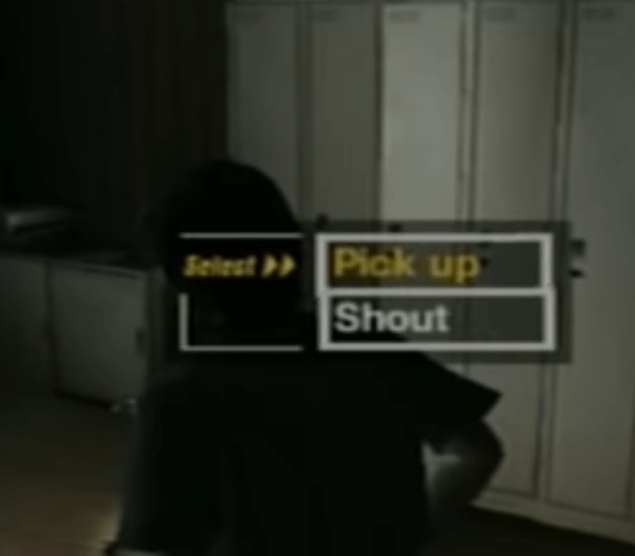
Siren is a survival horror/stealth game developed by Sony Computer Entertainment Japan Studio. The game takes a third-person over the shoulder point of view. Movement in the game uses tank controls, so left and right on the movement stick rotate the character instead of moving them. Unlike more traditional third-person viewpoints, the camera does not move around your avatar. Moving the right stick can change the camera’s orientation, but it is stuck squarely behind your character. The game consists of levels that often revolve around moving from one spot on a map to another. Along the way, you pick up items, defeat enemies known as “Shibito,” and escort AI companions. To pick up items, you must open a menu using triangle and select to pick up that item.

Screen Shot 2020-04-16 at 11.12.31 PM.png(Image credit: exceeding09 at https://www.youtube.com/watch?v=A7zmvKPlC8g)

You use this process to interact with almost all objects in the game, including unlocking doors and entering specific key locations. In the reboot Siren: Blood Curse, this process is streamlined to pressing the X button. However, using the flashlight in the remake requires using a menu, which is not the case in the original. In each level, you can access a map of the area. In the remake only, this is decorated with your position and the locations you need to visit to accomplish tasks. There are multiple characters who you will play as throughout the game; however, there is no choice on who you play in any given level.

Continue reading

Videogames and Genre Storytelling Week 2 Video Lecture: Special Topics in Horror and Character Alignment

Please find some time to view this 22-minute video lecture between now and our Zoom conference call, which will convene at the normal time. You can expect our Zoom conference call to be shorter and more discussion-based as a result.