A Zone Is a Zone Is a Zone: Narrativization in the Digitized Remnants of Chernobyl (A Journal)

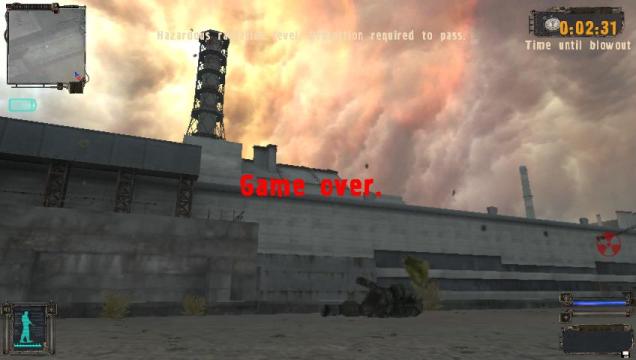
stalker_screenshot-01_header_image

Ian here—

What follows is an essay I wrote in 2007, one of the first things I ever wrote on the topic of videogames. I originally intended it to be an alumni submission to the Bard College Journal of the Moving Image. That publication, however—which I had previously been an editor of—had fallen on some hard times in the 2007–2008 academic year, and so that plan fell through.

For nearly a decade, now, this piece of writing has never seen the light of day. It’s absurdly long for a blog post, but I nonetheless figured I might as well belatedly make it publicly available here (even though its psychoanalytic underpinnings seem quite foreign to me now).

Continue reading →

Off Menus

rcalendula-screenshot_header_image

Ian here—

Ah, the game menu. So often in PC games, it is accessed by hitting the “esc” key, and so often it is just that: an escape from the pressures of the game. A place where players can put things on pause, and can retreat into a familiar suite of low-pressure activities. Saving. Loading. Inventory management. Party management. Gamma settings. Resolution settings. Pretending to know the difference between trilinear and anisotropic texture filtering, and then getting up to pee. So calming. So safe.

Except when it’s not.  Because sometimes, one encounters a menu that is just a little … off. An “off menu,” shall we say.

Below the fold, an appreciation of two games, including one from 2016. Tis the season for year-end retrospectives and “best of” lists. Unfortunately, I had neither the time nor the budget to expose myself to many of 2016’s releases in the calendar year of 2016, so I’m not well-positioned to mount a case that CALENDULA (Blooming Buds Studios, 2016) is actually one of my “favorite” games to release this year. But I did want to slip in a write-up of it before December gives up the ghost. (Spoiler warning for both games … including one that’s over a decade old.)

Continue reading →

Shattered Memories Scattered Thoughts, Pt 2

shattered_memories-screenshot_01

Ian here—

Welcome to part 2 of a 2-part post on Silent Hill: Shattered Memories (Climax Studios, 2009). I’ll admit to a bit of wordplay here. In my first post, “scattered thoughts” referred to my own train of thought, since I’ll be the first to admit that my thoughts in that post weren’t guided by a single, coherent thesis. This post, however, does have a coherent guiding line: it is about how Shattered Memories itself uses distraction and split attention to heighten anxiety. So, the “scattered thoughts” in question here are the player’s.

Continue reading →

Shattered Memories Scattered Thoughts, Pt 1

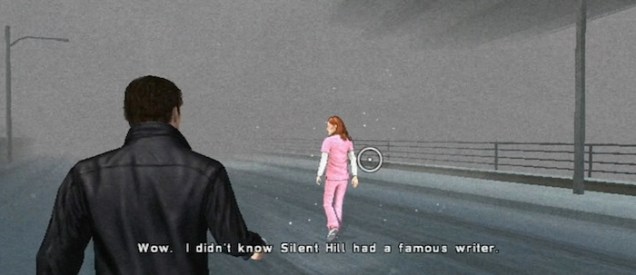
Shattered_Memories-Screenshot_02.jpg

Ian here—

It is 2016. Sam Barlow is widely appreciated today for revitalizing the full-motion video adventure game with HER STORY (2015). Why, then, return to Silent Hill: Shattered Memories (Climax Studios, 2009), which Barlow served as writer and lead designer of, which released seven years ago today? Am I prepared to claim that it is a lost masterpiece, a testament to Barlow’s skill at expanding the narrative possibilities of the videogame medium? No, I am not. Shattered Memories is certainly interesting. But it’s also flawed in too many ways to be considered a masterpiece.

Why these critical musings, then? Well, a bit of biographical detail: Silent Hill: Shattered Memories is the reason I bought a Wii. I had no prior interest in the console until word of this title started leaking out in mid-2009. I had played the first three Silent Hill games (all earlier that year, in fact) and loved them, but skipped the most recent iterations due to a seeming consensus that the series had subsequently lagged, especially following the departure of the original Team Silent. But here was something new: a game that actually seemed as if the designers were using the Wii remote in interesting ways, a game that seemed like it had a shot at leveraging the bodily engagement of the Wii platform in the service of horror, a game that was promising to rescue the survival horror genre from its seemingly inexorable slide into the action genre. In 2009, all three of these things seemed like breaths of fresh air.

So I have a personal attachment to this game, even if my feelings on it are complicated. What follows, as the title of this post suggests, are somewhat messy thoughts—although I’m planning to post a more organized follow-up soon.

Continue reading →

Knowing More Than We Can Tell

knowing_more_than_we_can_tell_header_image

Ian here—

What follows are three quick case studies on a favorite topic of mine: the knowledge differential, or epistemic gap that can sometimes open up within the player-avatar relation. I find all three of them fascinating for the questions they raise about narration in videogames, as well as the alignment between player and player-character.

What follows does not yet qualify as analysis. This is simply a critical appreciation of a few moments that have made me think. Perhaps it will act as a prolegomena to further, more properly analytical, writing.

Continue reading →

Swimming in the Valley of the Moon

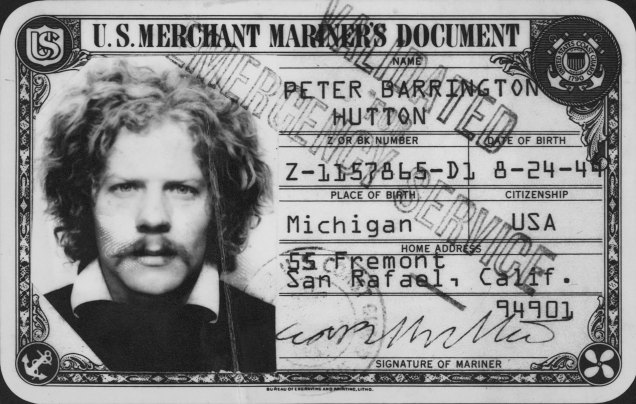
peter-hutton_merchant-marines1

Ian here—

Peter Hutton died on June 25, 2016. I could tell anecdotes here about having him for a professor across three courses at Bard College, about things he said to his students, places he took his students, and the impact he had on me as a young film student. I’ll spare you that, though, for now. For now, I’ll just say that I am extraordinarily grateful to Jesse Malmed and Patrick Friel for programming White Light Cinema and The Nightingale’s retrospective of Hutton’s work this past Sunday. It is, if I’m not mistaken, the first time Peter’s work has shown in Chicago since I first arrived here in 2008. It was wonderful to revisit it, and I am saddened that it took Peter’s death for this to happen.

What follows isn’t analysis, just some impressions, as a way of expressing gratitude to the programmers. I make such extensive use of visual aids normally in my writing that it can be reinvigorating to write about films that are only distributed on 16mm, and actually rely on the author to describe their experience. (I apologize if I’m out of practice!)

Continue reading →

New Post Category: Critical Musings

thats_just_like_your_opinon_man

When I first set up this blog, I intended it to be used for student projects. Over the last couple of months, I’ve been posting my own material with greater regularity: lesson plans, and the odd conference paper.

I have enjoyed being able to share material in this way, and as of now I’m going to be adding a new category to my posts: critical musings. These will be moments where this blog becomes, well, bloggier: serving more as a critic’s journal than an academic’s lesson plan folder.

Although some of these posts will intersect with my academic interests, in general they’ll be less theory-bound and more evaluative. I’m not sure that I entirely agree with Noël Carroll’s position that the primary task of criticism is evaluation, but I do find it disheartening that the evaluative dimensions of criticism are so often squelched out of academic writing.[i] In private conversation, academics constantly offer well-reasoned, evaluative opinions on the artistic merits of a film to each other. It’s always seemed strange to me that when we get up to a podium to deliver a talk, this particular critical impulse drains away, and we treat our objects as mere delivery mechanisms for theory.

So: posts arriving under this category will be a place to acknowledge that I have opinions about things, and occasionally just want to expound upon them.

[i]. Carroll, Noël. On Criticism. New York: Routledge, 2009. (Look at me here, adding citations on my post announcing more casual writing. Typical.)