A Hodology of Videogames: Breath of the Wild

Breath_of_the_Wild_hodology

Ian here—

“Hodology” is, according to its Greek roots, the study of paths. These days, its primary associations seem to be with neuroscience. But I want to resurrect an older, more literal use of it: the study of how people move throughout a landscape, the ways in which they chart routes that are particular to the human body, human perception, and human culture.

This sense of the term “hodology” owes much to the psychologist Kurt Lewin. In his 1934 essay “Der Richtungsbegriff in der Psychologie. Der spezielle und allgemeine Hodologische Raum” (a mouthful, I know), Lewin coined the term hodological space to refer to the unique characteristics that landscapes take on when perceived by, and navigated by, human beings.[i] Lewin’s original essay remains untranslated into English after all these decades, but its influence was widespread. Jean-Paul Sartre took up Lewin’s term “hodological space” in Being and Nothingness, and from there it spread to a number of humanistic geographers interested in phenomenology, including Christian Norberg-Schulz and O.F. Bollnow. Norberg-Schulz offers a pithy English-language explanation of Lewin’s contribution:

Rather than straight lines, hodological space contains ‘preferred paths’ which represent a compromise between several domains such as ‘short distance,’ ‘security’, ‘minimal work’, ‘maximum experience’ etc. The demands are determined in relation to the topographical conditions.[ii]

I’ve often thought that preferred paths are an interesting lens through which to look at videogame space, and so I’m inaugurating a series of posts that deal with them. What better to do the honors than one of the most talked-about games of the moment, The Legend of Zelda: Breath of the Wild (Nintendo EDP, 2017)?
Continue reading
The Line of Innocence in Context

Screen Shot 2017-05-04 at 12.18.18 AM.png

Genevieve Andrews

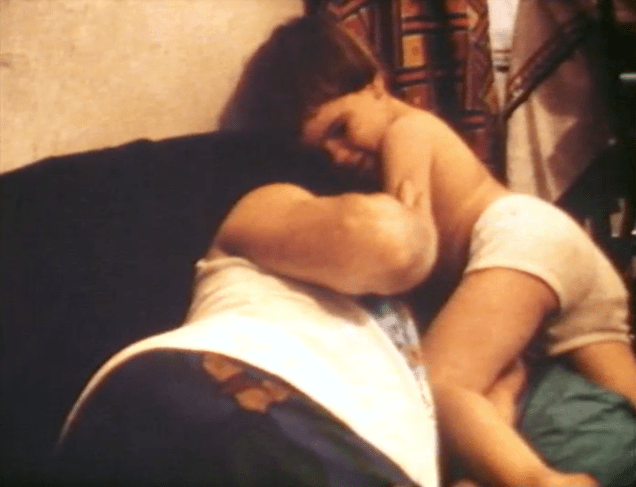
The execution of creating a reality through the consideration of film strategies is one of the many expertise a good filmmaker possesses. Their capability in provoking feelings through manipulation of editing is a talent and a skill. But, keeping attention on the point they are making is of the utmost importance for their final production. Immediately, rendering the ideas of childhood and sexual intimacy in unison tends to make even the strongest of stomach feel uneasy. However, in our culture there is a common widespread sexualization of innocence, and misunderstanding of family related interactions. While this varies in severity, Peggy Awesh, the 63 year old experimental filmmaker, calls this to our attention with no escape of the elephant in the room.  Her careful curation of the film “Martina’s Playhouse” (1988)  is a twenty minute film, recorded on a super 8 then blown up to 16mm.

Continue reading

The Degradation of Carolee Schneemann’s Fuses

Screen Shot 2017-05-02 at 8.24.58 PM

Isabella Blewett-Raby

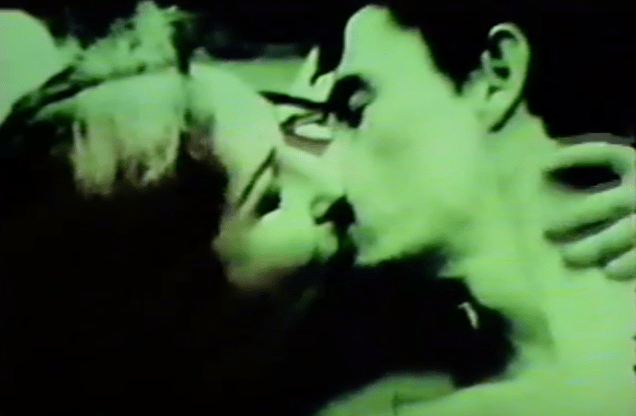
When discussing any piece of art it is very likely that the artist will become a part of the conversation. However, many artists do not wish this upon the viewer. The artist as a not to be acknowledged entity has been around long before avant-garde cinema. The male-dominated realm of avant-garde cinema participates in this trope and wishes for the work to speak for itself. However, when it comes to Carolee Schneemann you will find she comes attached with her work. In Fuses, her first of three films created in 1967, Schneemann inserts herself physically into the film by including shots of her having sex with James Tenney. The film also consists of close shots of her vulva and his penis, shots of her cat, them kissing, as well as the outdoors. It becomes very obvious why for many people Schneemann appears too connected to her art, and for this supposed reason she was rejected from the avant-garde cinema community. Scott McDonald shares his perspective on the reason men in avant-garde cinema shied away from Fuses, “In a culture where men still tend to be trained to deny their emotions, the assumption that the making of ‘serious’ art must involve detachment implicitly promotes art produced by males” (135).  McDonald makes a good point about detachment as a product of the patriarchy, however, I do not see Schneemann’s marginalization as so polite.  To me, this was just an excuse for dismissing a confident woman who has chosen to provide a reality many people have lost sight of. As a result of making men uncomfortable, Fuses was unfairly cast towards the genre of pornography. This begs the question, was Schneemann’s Fuses marginalized because it was not detached from its artist or because it was made by a woman who refuses to be a prisoner of sexual standards created by men?

Continue reading