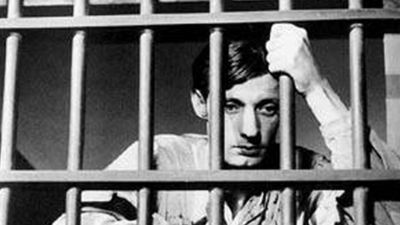
by Niky Charouzová
Robert Bresson’s A Man Escaped is set in a prisoner of war camp in Nazi Germany and through the revealing nature of the title itself, depicts the themes of liberty and confinement. The film follows the imprisonment of Fontaine, a French soldier during World War II, who throughout the film devises an escape plan from the prison and uses the materials from his room to aid him. He ends up having to escape with his cellmate, François Jost, with whom he ends up walking away into the night after they have succeeded. The black and white film is unlike many others mostly due to its lack of special effects or emotion of its characters, which helps draw significant attention to perhaps the key component of the film: sound, or rather, silence. Additionally, the fact that the film is devoid of these special effects forces the audience to focus on the actual events of the storyline without any distractions. Many times throughout the film, however, sound is even more important to the story than the image itself, and if the image is restrictive, sound often guides us and replaces it to some extent.






 Intermittent Mechanism