What’s in a RomCom?

by Jorge Sanchez

Bringing Up Baby - Wikipedia

Howard Hawk’s classic Bringing Up Baby is a prime example of the screwball comedy at the height of its popularity in the 1930s. It has quick dialogue, zany characters and an ultimately light hearted story filled with comedic moments. The story does however deal with the romance, albeit maybe one sided, between its two protagonists Katherine Hepburn and Cary Grant. With elements of both comedy and romance, the next logical question would be to ask if Bringing Up Baby could be labeled as a RomCom? I’ll use this blog post to go over the narrative of the film, then using definitions of the narrative structure of RomComs  by Geoff King and Tamar Jeffers McDonald, try to identify the elements in Bringing Up Baby that mirror tropes of the modern RomCom. In doing so, I hope to paint Bringing Up Baby, not as a definitive RomCom, but as a precursor to what would become the modern version of the genre.

Continue reading
A Hand With Many Fingers: A Detective’s Journey

by Nico Giunta

One of my favorite experiences playing a tabletop role playing game is one called Monster of the Week. It puts a more modern spin on the typical fantasy genre, with characters using computers, guns, cell phones, and more to take down monsters in the present day. Character archetypes include tech savvy scientists, mysterious cultists, and my personal favorite: the hard-boiled detective. You get lots of cool detective abilities, like the ability to avoid lethal damage while you have a case on your hands, and the ability to detect when a criminal is lying. The character archetype is all about uncovering information, and sleuthing out the truth. This driving motivation is a common character trait detectives have across different forms of media, and games are no exception.

Enter A Hand With Many Fingers.

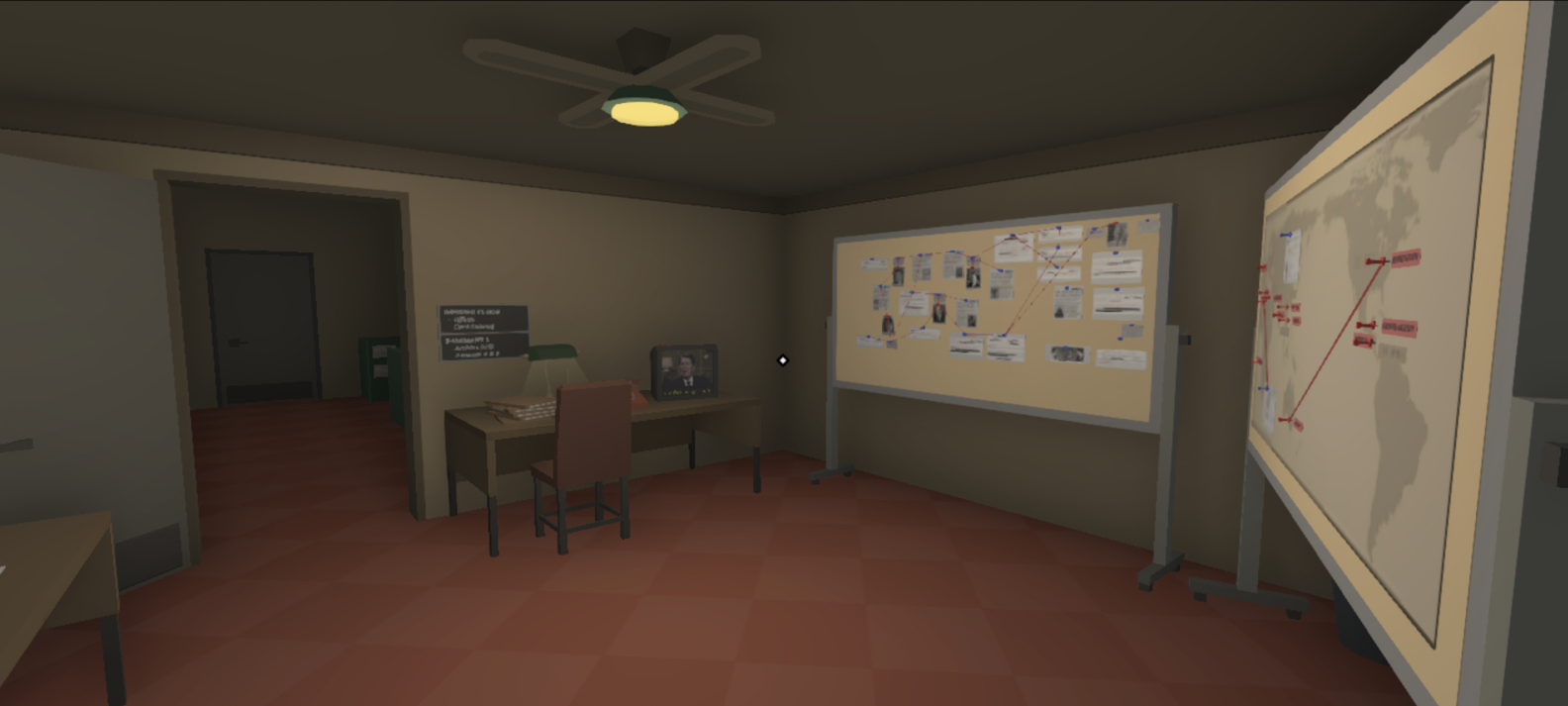
The player’s office
Continue reading

Dream Daddy: The Intersection of Fatherhood and Romance

by Joseph Wiltzer

Game Grump’s 2017 surprise indie darling Dream Daddy: A Dad Dating Simulator was not only an unexpected hit, but also a major step for diversity and inclusion within an established genre. I vividly remember the overwhelming influx of memes and discourse Dream Daddy spawned in the LGBTQ+ gaming spaces I frequent. Screencaps of irresistibly cute, dateable dads having meaningful discussions with each other were certainly enticing, but dating sims were never really my genre, so I only first played the game for the class. I am glad I finally did.

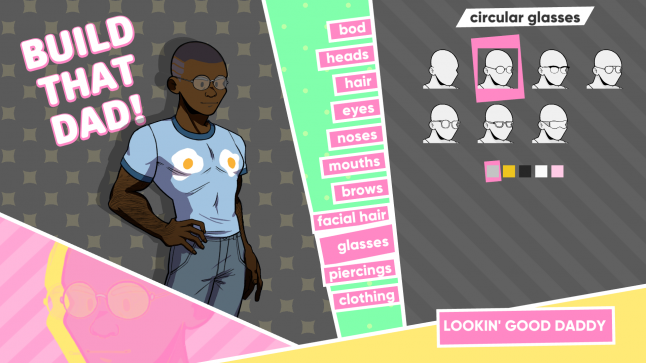
On the surface, Dream Daddy looks and plays a lot like many other dating simulators. You begin by designing your self-insert daddy and are then immediately informed of your backstory. A single father who recently lost their partner, you and your daughter Amanda are moving across town and starting new. Once you arrive at the Cul-de-Sac where you now live, you begin to meet the cast. Attractive, archetypical dads welcome you to the neighborhood where you can get to know them better by going on dates.

The “Dad-Builder”
Continue reading

Katawa Shoujo, Romantic Comedy/Tragedy, and the “Top of the Knowledge Hierarchy”

by Oren

            Katawa Shoujo is defined by its official website as a “bishoujo-style visual novel set in the fictional Yamaku High School for disabled children, located somewhere in modern Japan.”[1]There are a couple of translations of the title circulating around the web, but the one that’s on the official website is “Disability Girls.”[2] While the game credits its development to a company named “Four Leaf Studios,” that’s actually a name for a coalition of 4chan forum users, who created this game over the course of five years based on an illustration posted there in 2007.[3] Even the game’s opening credits use the usernames of the 4chan users as opposed to full names.[4]

           Before I continue, I want to acknowledge a few points. Firstly, this discussion will contain some major spoilers for Katawa Shoujo. Given how the game’s narrative is so tightly wound up with its mechanics, as I’ll discuss soon, it’s not really possible to meaningfully talk about Katawa Shoujo as a romance, comedy, tragedy, or even a game without spoiling things. Secondly, I am not an expert on portrayals of disability in media and fiction and can’t speak with any sort of proficiency to whether or not Katawa Shoujo’s portrayals of disabilities are realistic or not, or sensitive or not. (Or a mix of all of those, depending on which character and scene in the game.) Lastly, this game does contain adult content and sex scenes, although all subsequent content and screenshots below are safe for work.

Continue reading

The Imaginary World of Rom-Coms

by David Naples

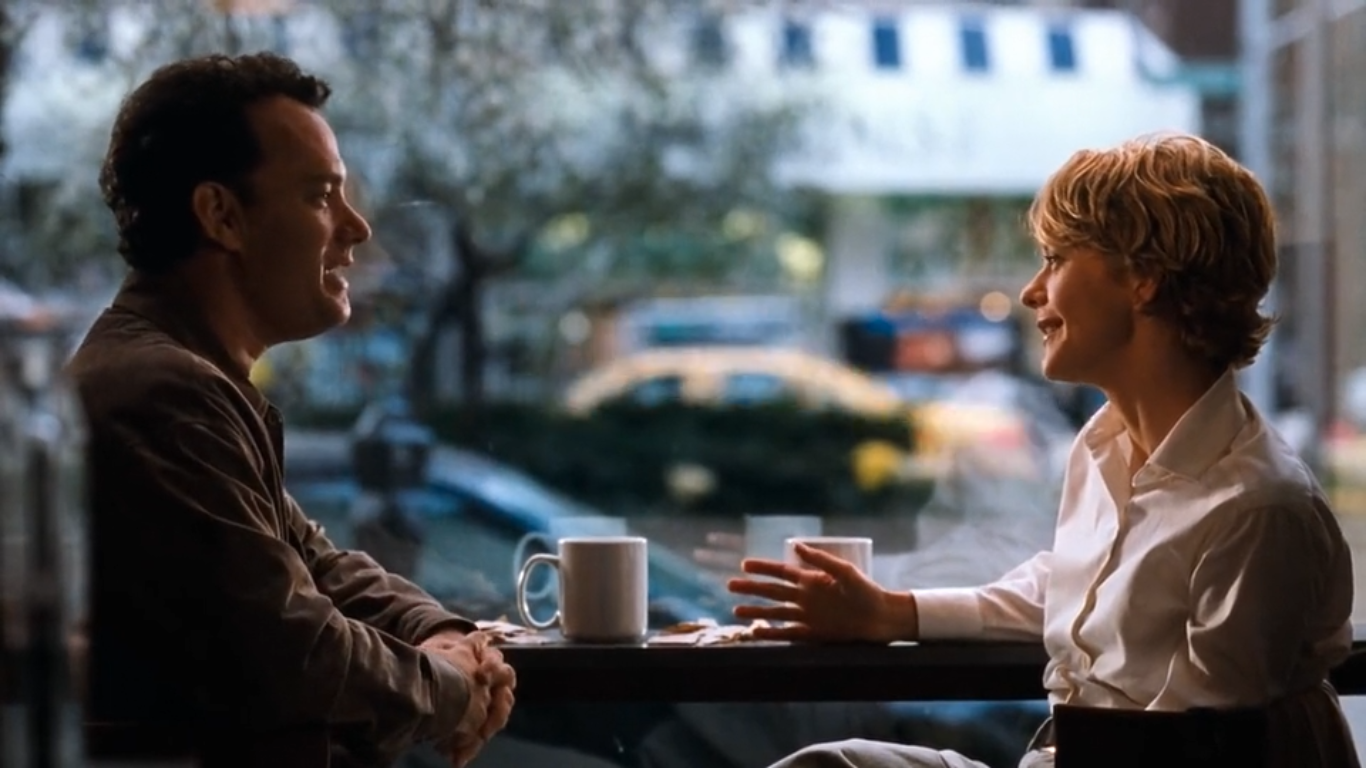
The world of You’ve Got Mail, directed by Nora Ephron, at first appears much like our own.  That is until you realize you are watching a romantic comedy.  Now this is not to say that the genre makes the film any less good, as is sometimes associated with the notorious rom-com.  As I watched the film, I found myself genuinely feeling either sad or happy for the characters and either laughing with or at them.  What is it about the rom-com genre that just works?  I am no stranger to the genre, in fact, I have seen so many of the Hallmark Channel’s low budget holiday rom-coms.  However, whether the film is produced by Hallmark or being played on the big screen, the format of the rom-com remains fairly consistent.  There is almost always the budding love, followed by conflict, ending in a resolution of forgiveness and love.  There are also other themes and tropes sprinkled throughout, some relating to the main love story, others not so much, however these themes can sometimes add extra conflicts, or other ideas, that end up not resolved in the end.  These contradictions between the real word and movie world can in some cases pull the audience out of the main story, yet in the rom-com, this seems not to matter.  

Continue reading

Her Story: Do We Really Know What it Is?

by Brooke Werdlow

Her Story (video game) - Wikipedia

Her Story is a 2015 FMV detective mystery game by Sam Barlow. Throughout the game, the player acts as an unidentified investigator of sorts, gleaning through a police database of video clips from seven interrogations of a woman, Hannah Smith, to solve the murder case of her husband Simon (initially presumed missing) in 1994. The only information on the game’s objective right off the bat comes in the form of saved files on the desktop that explain the premise of searching through clips and compiling the story behind the murder case. As a player, you type keywords into the database’s search bar to unlock clips that include the words you searched, but only have access to the first five clips that appear from the interrogations chronologically. The game begins with the word “MURDER” already typed into the search bar, which primes the player for perceiving the game as a murder mystery. Other functions accessible as a player are the tagging function, which allow you to add tags to video clips to sort them into related categories, and the add to session function, which saves video clips in a bar at the bottom of the database to return to later. The Database Checker on the home screen indicates how many clips out of 271 available, varying in length and content, the player has already viewed. The ChitChat app, a messenger program, appears on the screen after unlocking most of the story, at which point the player can finish the game without having viewed all of the interrogation clips.

Continue reading

Sandbox Games and Mechanic-based Storytelling in Minecraft

by Daniel Stein

Minecraft is a lot of things. Its best description is an open-world sandbox survival game first published by Mojang in alpha version 1.0 in 2010. Although the type of game can be narrowed down in this way, approaching the particular genre of story Minecraft provides is a bit more difficult. In the original (and most well-known) game mode, “Survival Mode,” The player spawns into a randomly generated world of colorful blocks representing the materials that the world is constructed out of. The player can immediately begin exploring and collecting resources to craft tools and to build structures within this natural world. Throughout a single playthrough in Alpha 1.1 the player can traverse plains, hills, mountains, rivers, oceans, and caves. The only things the player will never find in this world is a hint of an existing story.

Although each world of Minecraft is essentially infinite as they generate new biomes as the player explores farther from spawn, the Alpha version was completely devoid of generated structures. The player can travel as far as they desire, but they will never encounter any objects, terrains, or structures hinting at a sign of “civilization” nor will they find any type of story or objective to follow. The world is open for exploration and change driven solely by the player. In this way, the world exists for the player to do with it whatever they wish to do. The state of Minecraft remained relatively static for over a year, except for the addition of The Nether, an alternate realm only accessible by constructing a portal. The Nether also lacked structures, goals, and story elements, but it provided several new materials to be acquired, opening the door for new possibilities for the player to build.

Continue reading

The Forest: Robinsonade and Meta-Robinsonade

by Andi Taylor

The Forest is a first person open-world survival game with a horror twist. In the opening sequence your character, survivalist Eric Leblanc, experiences a plane crash while traveling with his young son Timmy. The crash disorients your character, and one of the last things you see before falling unconscious is a human figure picking up Timmy and carrying him away. Once you regain consciousness, the game truly begins. Armed with a survival guide, a small axe, and whatever small items you pick up around in the plane, you step out into the forest to begin your adventure.

Continue reading

Subnautica: Exploring the Depths of the Survival Narrative

by Jared Zuker

“Attention. Hull failure imminent. All personnel abandon ship.” Heavy breathing as we climb into the escape pod. “Launch in 3…2…1”. The pod falls apart as a panel hits us in the head and renders us unconscious. Everything is black. We open our eyes to see fire and need to put it out and leave the escape pod. Our ship is in the distance, but we are completely and totally alone. We look out into the infinite ocean and as survival seems a daunting prospect, we know that is the only option. 

Continue reading

A closer look at the paradox of Tragedy in Hellblade: Senua’s Sacrifice

by Abdelrahman Mohamed

CONTENT WARNING
This game contains representations of psychosis. People with experience of psychosis as well as professionals in psychiatry have assisted in these depictions.

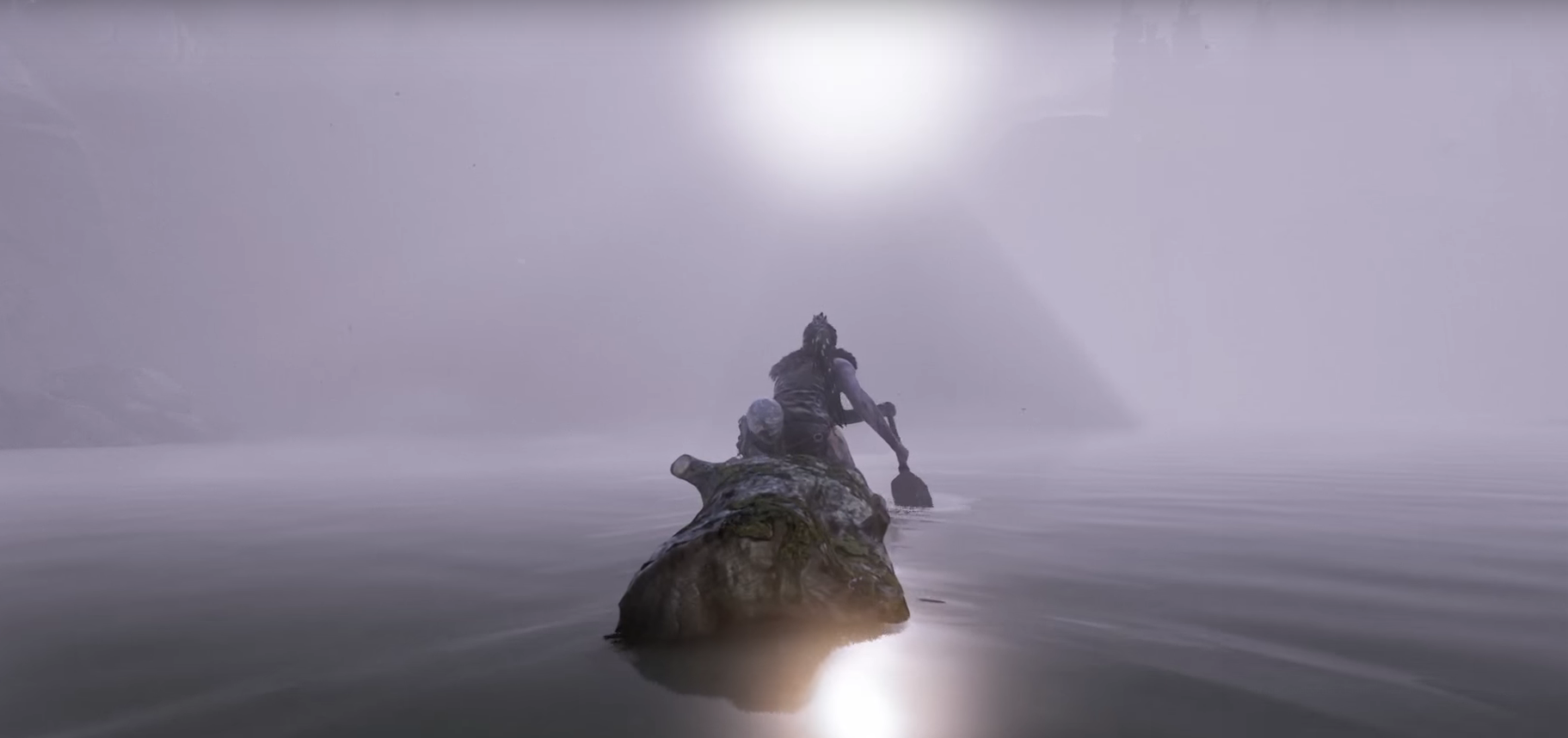
Hello, who are you? …It doesn’t matter. Welcome. You are safe with me. I’ll be right here, nice and close so I can speak without alerting the others. Let me tell you about Senua. Her story has already come to an end but now, it begins anew. This is a journey deep into darkness. There will be no more stories after this one.

Hellblade: Senua’s Sacrifice opening scene
Continue reading