Asphyx: The Paradoxical “You”

While “immersion” is often considered the ideal tenet of modern videogames, the unification of the player and avatar on a physical, kinaesthetic level is a generally overlooked aspect of that goal. Players are rarely asked to consider their own body as a controller, aside from their fingers (or feet, occasionally). What new games could be created, simply by implementing mechanics with the player themselves in mind? Asphyx, a Flash game created by Droqen, takes the universal bodily experience of breath and makes it crucial to its gameplay in an attempt to simultaneously merge game with reality and force a greater acknowledgement of one’s own experience of playing.

Asphyx presents itself as a straightforward two-dimensional platformer, a format instantly recognizable to a vast majority of the game-playing public. The game’s pixel-art graphics and low-detail spelunking draw on a long history of titles, perhaps the most recognizable being Super Mario Bros. Players are instructed by Droqen to use the arrow keys to move side to side and to jump — also useful for jumping is the X key — and that is virtually all one needs to begin. This ease of gameplay as well as the game’s original publishing in Flash as a browser game meant that Asphyx was a highly accessible title upon its release, insofar as it was simple to comprehend and to begin playing on the Internet. It is one artifact amongst the legions of similar Flash browser games created in the 2000’s and early 2010’s that were simple to pick up, comprehend, and move on from. Though, if Asphyx was so straightforward a game there would be no real merit in dissecting it as I am about to do. Droqen implemented one crucial mechanic (though more like a house rule) into Asphyx that sets it apart from games of its time and caliber: when the player is underwater, they are instructed not to breathe, in real life. 
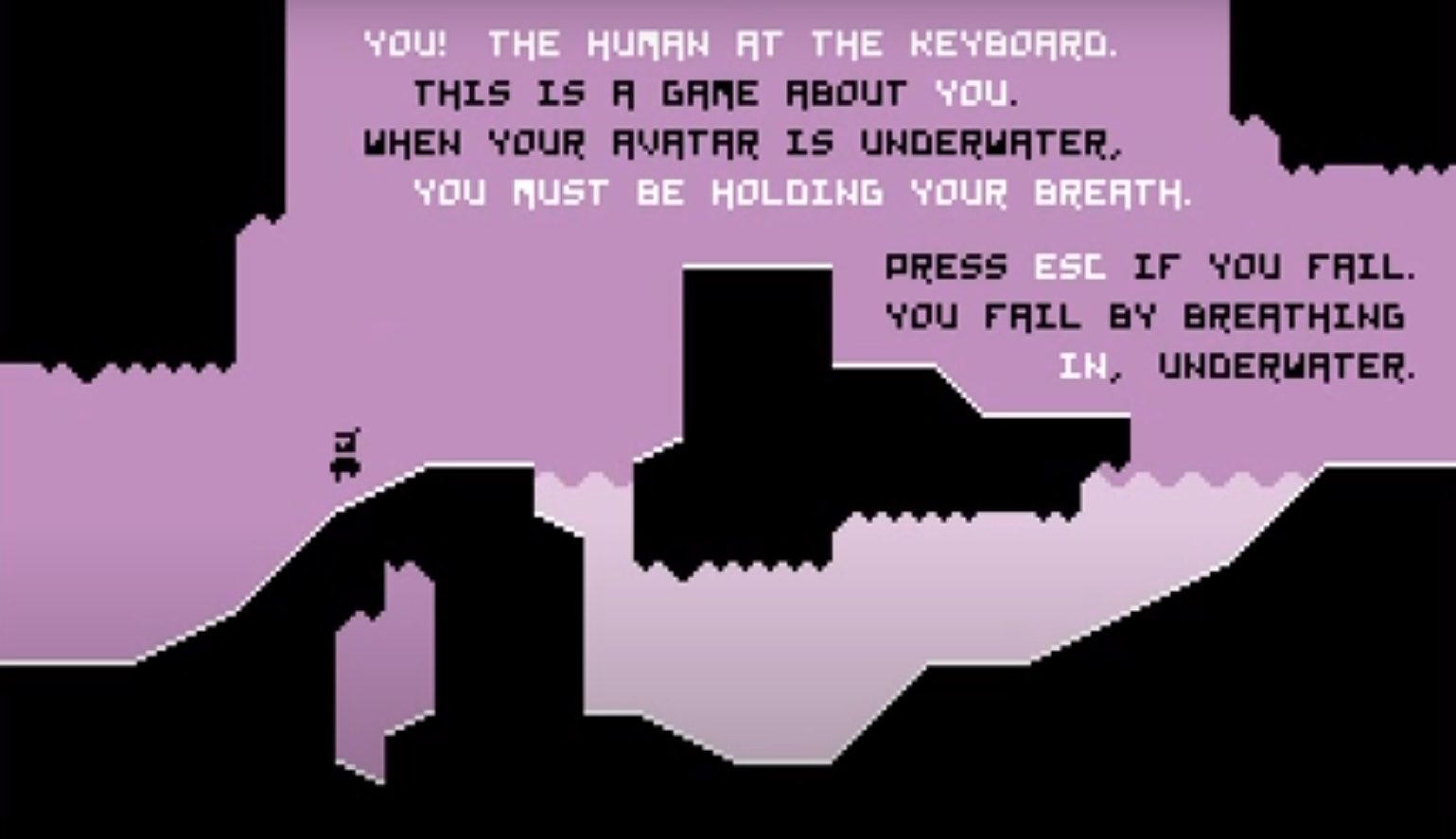
A thorough explanation of Asphyx’s breath rule is crucial to understanding the project of this game, and the experience that Droqen is attempting to simulate. Addressing the player directly, environmental text in the earliest section of the game (see above) declares: “WHEN YOUR AVATAR IS UNDERWATER, YOU MUST BE HOLDING YOUR BREATH. PRESS ESC IF YOU FAIL. YOU FAIL BY BREATHING IN, UNDERWATER.” Water, represented by a lighter purple color, is everywhere in this cave system. Its manipulation and traversal is the essential challenge of the game, which the breathing rule adds a layer of bodily difficulty to. Though, this system has a caveat that makes me hesitant to call it a true “mechanic.” There is no implemented measurement of the player’s breath, nor any punishment for not following the rules in real life. Essentially, Droqen is leaving adherence to the rules up to the player. “IT’S UP TO YOU TO FOLLOW THE RULES… OR TO NOT, BUT I PERSONALLY THINK YOU SHOULD TRY,” the disembodied text explains.

While there are no punishments for not following the rules, there are no rewards present in the game, and no stated goal to the exploration that the player undergoes. All that they encounter is a series of empty rooms typical of a platformer, and some simple obstacles involving buoyant blocks that must be moved with water to progress. While one would think that the breath rule would completely shift the requirements to succeed at this game, the player need only hold their breath for a few seconds, at least in the first part of the game. Pressing the escape key at this point returns the player to the moment before they entered the water last.

At a certain point the player will happen upon the second section of the game, in which the caves are being continuously flooded with water with no way of draining it. Asphyx then becomes a race against time, to get as high as possible to escape their drowning. However, Droqen’s level-building actually makes it impossible to escape the water permanently, as platforms fall when stepped on, causing a long fall into the depths of the cave. Even if the player does find a pocket of air, there is nothing more to explore at this point in the game; they must press the escape key, at which point they make it to the ending levels, now being “worthy.”

So, why is Asphyx so fixated on breath? What does it aim to explore with its unique rule, and exploration of bodily functions? If the game refuses to actually verify that the player is following its set rules, then what is the point of incorporating them at all?

To answer the first few of these questions, I wish to draw on and extrapolate Melanie Swallwell’s theory of “becoming,” as well as Brendan Keogh’s identification of “embodied literacy.” In her essay Movement and Kinaesthetic Responsiveness, Swallwell writes about the experience of reacting with one’s own body to movements, sounds, and sensations from the gameworld. It is a well-known phenomenon that some players will react, emphasize, or otherwise feel things in their real bodies while focused on a game, as if their virtual avatar and their physical form were linked. Swallwell mostly discussed high-intensity, motion-centric games like Quake II and Grand Prix Legends, and how players will either be affected by the game’s movement mechanics or project their lived experience onto the game. She writes: “Though (sadly) I don’t usually get around in a vintage Porsche, I do know the sound and feeling of gear changes and the way that one is thrown around within a car by hard driving […] While my physical response to the sound of Grand Prix Legends was a surprise, the game was not introducing me to anything new.”

Part of Asphyx’s project is to induce this kinaesthetic response within the player, albeit on a smaller scale than the powerful sensations that Swallwell discusses. By limiting the player’s breath, the author seemingly hopes to induce frustration, annoyance, fear, and some level of panic (particularly in the final flooding section) by drawing on the universal human experience of not being able to breathe when wanting to. It also hopes to counteract the usual “flow state” of gameplay that typifies Keogh’s “embodied literacy.” As he write in  A Play of Bodies: “The literate videogame player […] has a basic understanding of the performative grammar of different videogame genres […] and is able to transport and adapt this literacy from one videogame to the next.” 

Asphyx, as an easily understood game for a literate player, distinguishes itself from the norm by incorporating its unique breath mechanic, working against the usual understanding of embodied literacy. Rather than merging the avatar and the player, the text of the game’s minimal narrative always distinguishes between the human at the screen and the controlled character. By often referring to the player directly, and telling “you” to think about your own breathing, Asphyx essentially forces a simultaneous physical unification and separation of the avatar and the player’s body; they both “breath” at the same time, but the player is also encouraged to be aware of their own body. At the end of the game, the player is told to “judge themselves,” and ask if they are worthy of truly “winning,” though it is mechanically impossible to do so. 

In creating Asphyx, Droqen tested the limits of what immersion in games is. The game is seemingly paradoxical, as it asks for a level of bodily identification with the avatar — something rare in games even a decade later — while simultaneously instructing the player to think about and judge themselves and their physical experience. It combines aspects of Swallwell’s “becoming,” while trying to avoid the deeper ramifications of embodied literacy as defined by Keogh. In the years since Asphyx’s release, the world has seen games that place less trust in the player, or do seek to create the flow state that embodied literacy necessitates. Before Your Eyes actually tracks player blinks, merging to a remarkable degree the player and the game’s character. SUPERHOT VR does the same, creating a flow state in a VR world that can be easily understood by even the newest gamer, as long as they can look around. With these new horizons on both sides of the spectrum, Asphyx’s place is awkward, as a middle child that plays with both. Yet still today, the question of breath is left largely unexplored, possibly due to its accessibility issues and health hazards, while movement and other physical activities are gamified. What new frontiers in game immersion would there be, if the world were to follow Droqen’s lead?

-Leo Alvarez
Twine and Stories of Intimacy

By Vanessa Hellner-Born

While currently a shadow of its former self, the Twine scene of the early 2010s revealed a representational gap in the largely corporate video game industry that seemingly had little space for taboo topics such as sexuality, gender, abuse, and mental health. Due to its accessibility, communities of aspiring game developers from marginalized and minority groups formed around the platform, producing a plethora of narrative-driven hypertext games based on their own experiences. In stark contrast to its Storyspace counterpart, in which both game developers and players are heavily curated, Twine has very little gatekeeping. It is completely free to creators and players and requires only a computer and an Internet connection to use. There is little learning curve for game devs since Twine uses a graphical interface that does not require knowledge of any coding languages. Likewise, most Twine games require players to use their mouse as a controller to simply click links, something most Internet users are already familiar with. Finally, games on Twine can be about any topic or be as long or short as desired. This allows it to be a platform for creative freedom and a hobby for even those with little free time. 

Anna Anthropy, a trans game developer and one of the most vocal members of the Twine community, speaks about her experience with the corporate industry and her hopes for a shift away from it. She expresses that a rise in independent game developers is important to promote creativity in a gaming landscape that is largely devoid of it due to censorship and a hyperfocus on marketability. Her goal is “…a world where everyone is capable of sitting down at a computer and making a game by herself” (Anthropy 103).

And Twine seems to have fulfilled that wish for a brief time at least. From using the hypertext format as a sort of diary-like Jeremy Penner’s There Ought to Be a Word to making a compelling and branching narrative about queer cyberpunk “banditas” like Anthropy’s And the Robot Horse You Rode In On to making choose-your-own-adventure gay erotica like Benji Bright’s Fuck That Guy, Twine has been used for self-expression to make gaming narratives and experiences utterly unique to traditional corporate games. 

Even Cowgirls Bleed – Christine Love

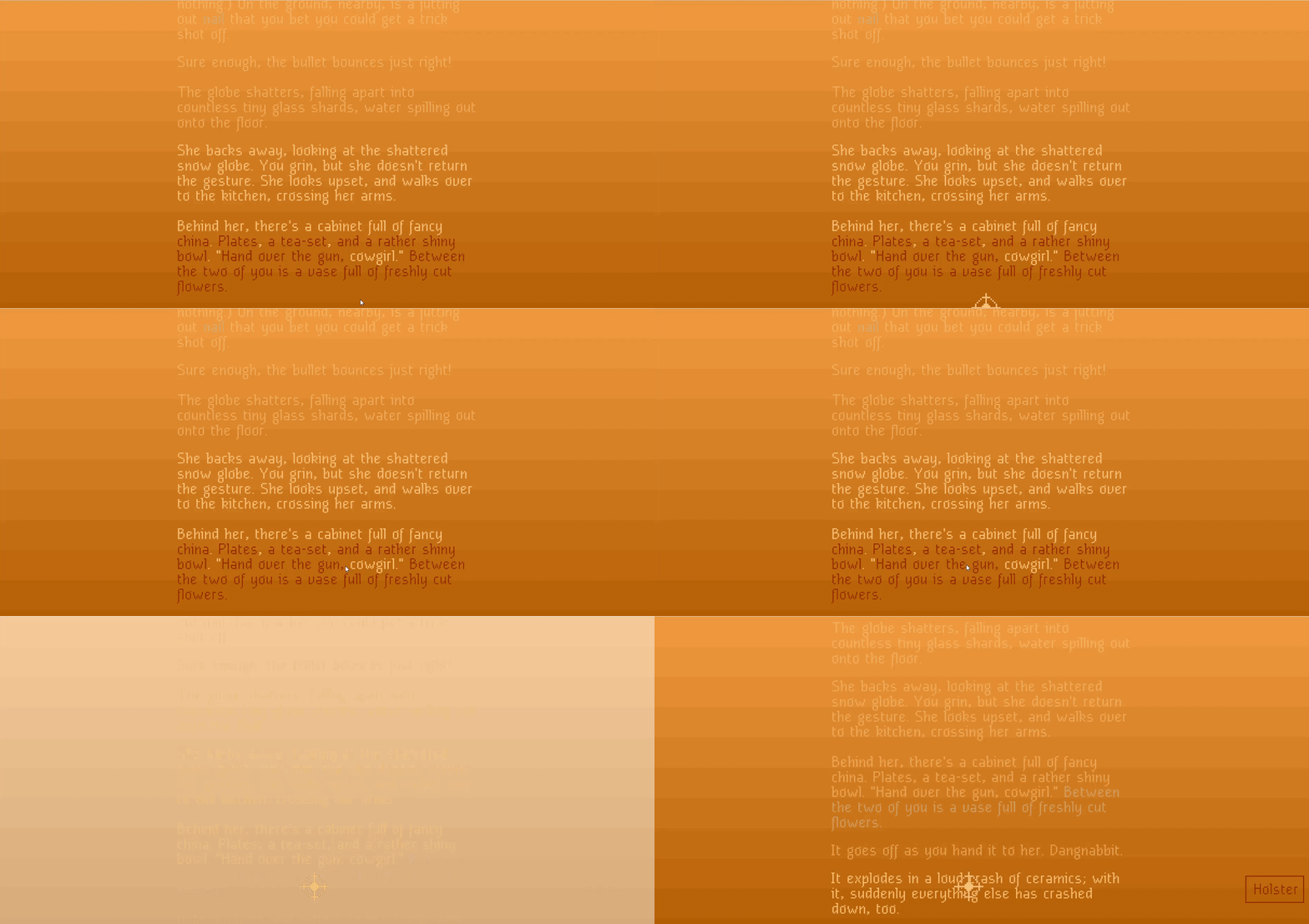
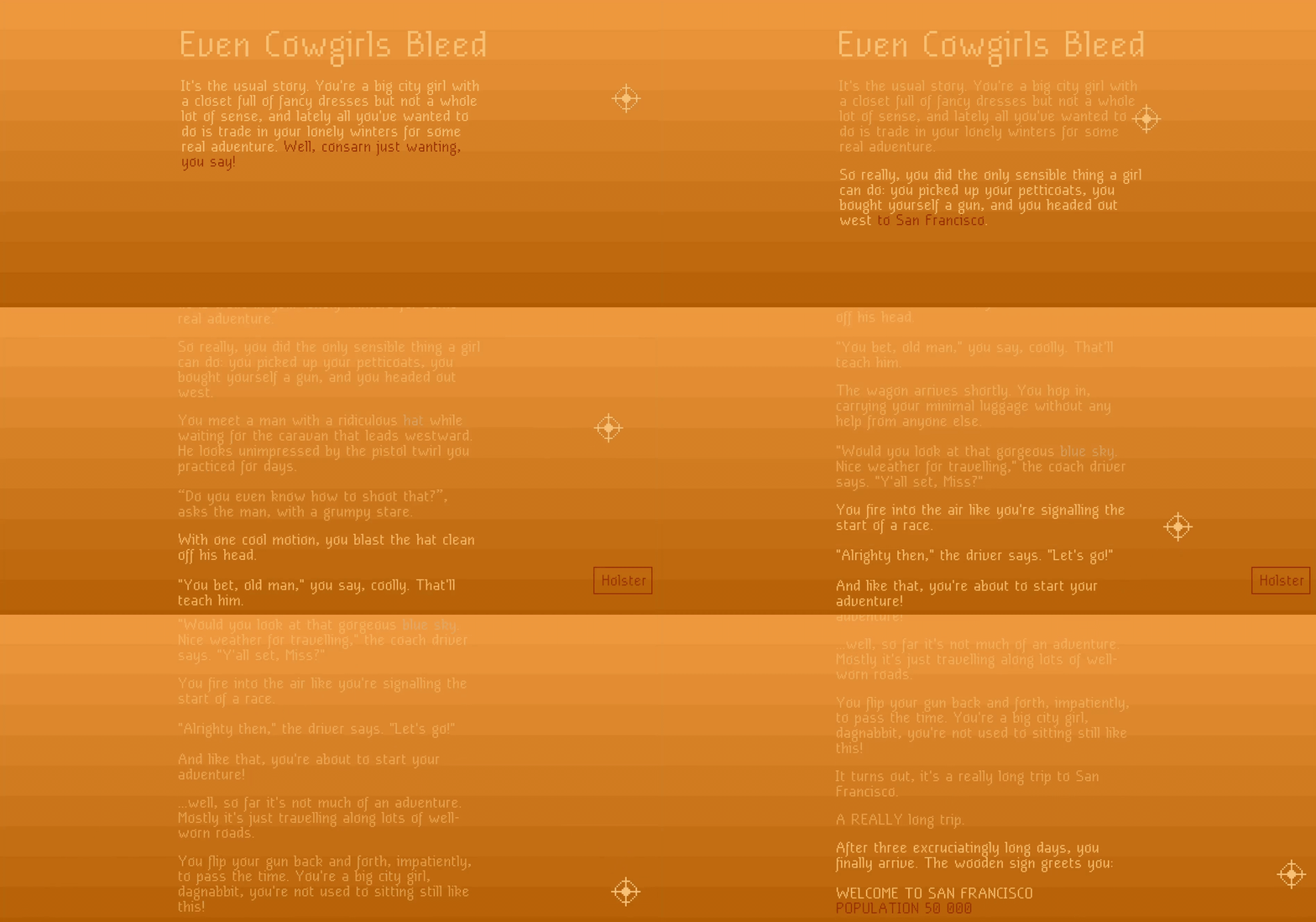
Even Cowgirls Bleed is a second-person narrative game where you play as a trigger-happy city girl moving to the Wild West town of San Francisco. Rather than clicking links to traverse different pages, the mouse cursor is transformed into a crosshair which shoots highlighted text when hovered over. To progress the narrative, you have to either shoot words or put your gun into its holster.

Gameplay from the beginning of Even Cowgirls Bleed

This mechanic, accompanied by a linear storyline, largely eliminates player choice. Interestingly, this creates tension with the use of second-person writing. As a player, you are forced into the role of the protagonist who is given character traits and a personality, regardless of if you actually fit these traits. To some players, this lack of autonomy may feel frustrating or alienating. Ultimately, your choices in this game do not matter, and even attempts to rebel against the narrative mold are shut down. For example, there is a part in the game after you go home with a cowgirl you met at a bar where it seems like you are given the option to put away your gun or shoot more of your potential lover’s possessions. The option to put your gun away is surrounded by objects you can shoot and even creative methods such as right-clicking to center your cursor over the “hand over the gun” text has you shooting a vase of flowers.

The player is unable to select “Hand over the gun” even by using unconventional means
Final line of Even Cowgirls Bleed

However, if you choose to embrace the non-malleable narrative and take on the persona of the protagonist, this inability to break free of the protagonist’s trigger-happy curse serves as an immersive mechanic instead of a restrictive one. Gameplay elements like making you move the cursor from holster to holster as the protagonist waits impatiently to get to San Francisco connect your actions more directly with that of the protagonist. I found myself sympathizing more with the protagonist as I was forced to literally shoot her (and myself in a way) in the foot repeatedly until reaching the conclusion that we’re both helpless city girls in this narrative; she is trigger-happy and can’t help but scare her lover off by shooting her in the shoulder, and I can only forward her tragedy and sympathize with it instead of being able to change her fate. While incredibly short and largely comedic in tone, Even Cowgirls Bleed explores ideas of queerness, overcompensation, and self-loathing through a narrative accompanied by interesting and restrictive gameplay mechanics that allow the player to feel a similar inevitability and inadequacy to the protagonist they are forced to inhabit.

In addition to providing characterization, the gameplay mechanics make this game quite difficult to classify using Montfort’s definitions of hypertext and interactive fiction. As there are no links to click or additional pages to see, it is hard to call it a hypertext game; however, it is also not interactive fiction as there is no choice or direct input on the player’s part. This puts Even Cowgirls Bleed into a unique category of its own that shares traits of hypertext and interactive fiction while not fitting neatly into either.

And the Robot Horse You Rode In On – Anna Anthropy

Anthropy’s And the Robot Horse You Rode in On also puts the player into a characterized protagonist’s shoes through the use of second-person. In this game, you play as a “bandita” in the cyberpunk Wild West future where you have just pulled off a heist with your lover Di. Trying to take the money for yourself, you sneak away in the middle of the night to hide it but are inevitably caught by Di and must lie about where the money is hidden. 

This game fits much more into the category of hypertext since you play the game by selecting links that take you to new pages. The game has three branching paths that all result in the same ending, so while this game features much more choice than Even Cowgirls Bleed, your decisions are ultimately inconsequential to the outcome. 

However, I don’t believe this game completely fits into the category of hypertext either. It features a sort of inventory system unique to the other Twine games I studied. For example, if you choose to tell Di you hid the money in the mine, you have to go to a side chamber to grab a rope before you are allowed to go deeper into the mine (see video).

It also plays with both space and visuals to tell its story. There is a section in the game where you can choose to move in the cardinal directions, and while you will inevitably end up at the same signpost regardless of your choices, this mechanic and the pseudo-inventory system felt very similar to interactive fiction games such as Adventure despite having no text-parsers or direct player input involved. 

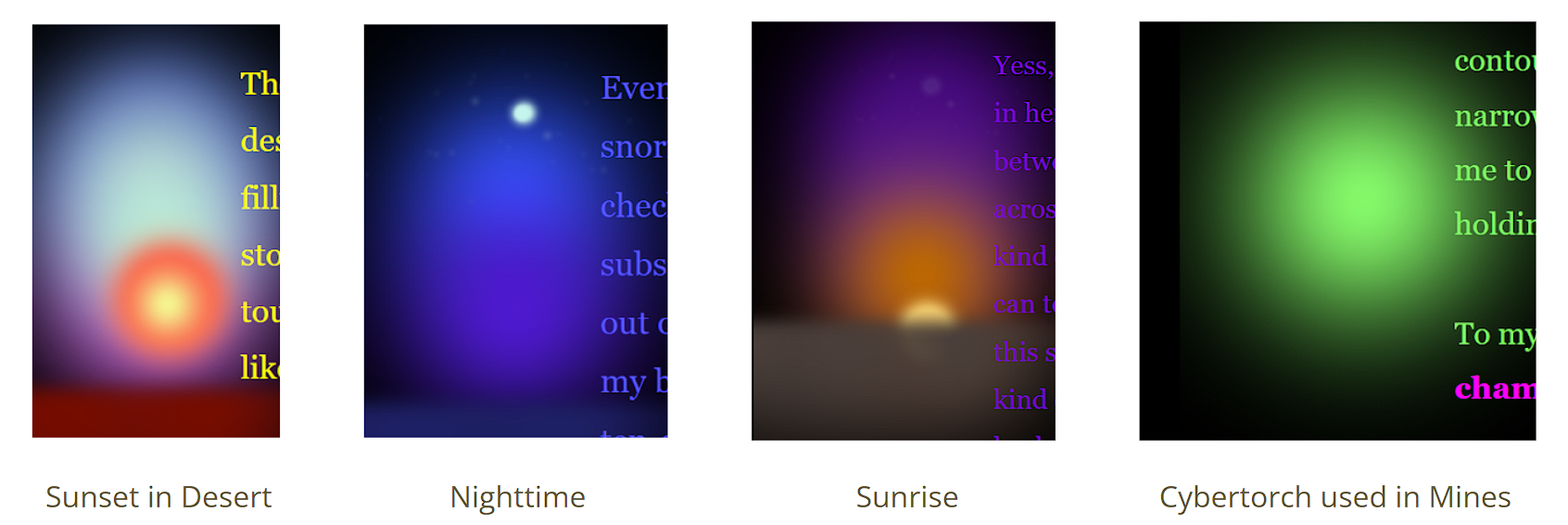
Visually, simplistic pictures and changes in text color are used to represent the time of day and location the protagonist is in. These images helped to make time skips more clear as well as add to my visualization of the world as the player. This addition to the atmosphere was very interesting and served to immerse me more in the story as I took on the persona of the protagonist.

Examples of the visuals used to denote the time of day and location

Like in Even Cowgirls Bleed, the use of second-person complicates the player’s immersion in the story. Cat Fitzpatrick, a trans woman who described her experience while playing, writes about such tension: “I have a new dilemma: to balance my desire, as the reader, to find out as much as possible against my desire, as the protagonist, to conceal as much from Di as possible” (Kopas 340). There is a large discrepancy between what you as a player know and what the protagonist–whose persona you are meant to take on–knows. As such, there is a conflict of interest where the player needs to both lie to Di to fulfill the protagonist’s goals while exploring and discovering as much as they can about the world to make up for their ignorance compared to the protagonist. Here, the differences between player and protagonist are even more apparent, leading to tensions that do not arise in narratives written in third-person or where the protagonist is silent and the player is given greater agency.

Fitzpatrick’s commentary is also insightful into the communities that formed around Twine. She is ecstatic to find out that Di is a trans woman just like herself. As a Twine creator, Anthropy has the freedom to put trans characters like Di in her games and address other topics that are relevant to her identity, and players like Fitzpatrick can see themselves represented in a form of media that usually lacks it.

There Ought to Be a Word – Jeremy Penner

There Ought to Be a Word is markedly different from the previous two games. It is written mostly in the third person, fits neatly into the category of hypertext, and is largely linear with few choices for the player to make. The game follows Jeremy, a 31-year old Canadian man who is going through a divorce. Jeremy tells the player about his grief regarding the separation, his struggles to find direction in his life, and the loneliness that leads him to create an OkCupid profile to make more friends. 

Gameplay from There Ought to Be a Word

Partly due to the use of third-person, the player’s choices in this game feel more inconsequential than in the previous games. You can help Jeremy construct an OkCupid profile but these choices do not impact the plot and are even sometimes rejected by Jeremy—specifically if you tell him to say he is single instead of married. While this can make the game feel frustrating or trivial to some, I found it very effective in creating greater intimacy between myself as the player and Jeremy. Because he does not agree with all of the player’s choices (for instance, he will question you if you say he is unhappy with his life), the game feels like you are giving Jeremy advice as a friend rather than controlling his actions. The lack of power your choices hold creates a separation between you as the player and Jeremy which makes this game feel very personal and as if Jeremy is opening up to you as a friend.

While the game does not do anything visually or mechanically unique, it is able to set up a very intimate experience precisely because the choices the player makes are inconsequential, and I believe this was one of my favorite Twine games to play.


Whether or not Twine games have a space in the gaming landscape today is debatable. The Twine scene is largely dead and its major players such as Anna Anthropy and Porpentine have moved on to bigger and better projects. However, with the rise of Scratch and other low-barrier game-making tools, game development is becoming increasingly accessible to anyone who is interested. While the industry is still dominated by large corporations, there seems to be more room for the creativity Anthropy yearns for in the rising field of indie games. And at the end of the day, Twine is still as accessible as ever for new generations to find and make their own hypertext adventures.


Sources:

Anthropy, Anna. Rise of the Videogame Zinesters: How Freaks, Normals, Amateurs, Artists, Dreamers, Dropouts, Queers, Housewives, and People like You Are Taking Back an Art Form. Seven Stories Press, 2012.

Kopas, Merritt. Videogames for Humans: Twine Authors in Conversation. Instar Books, 2015.

Gone Home as a non-binary space between games and narratives

By Helen Zhou

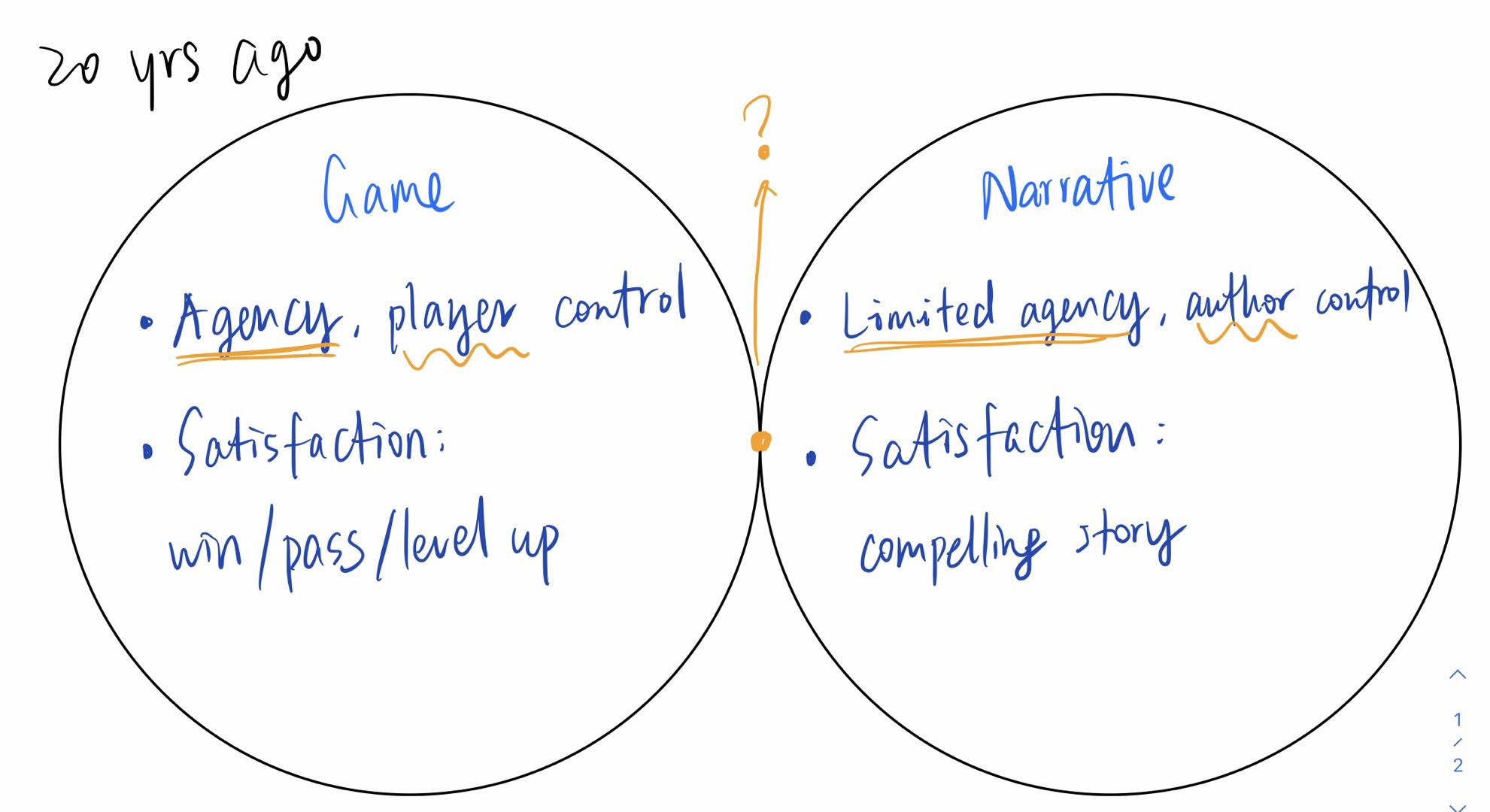
Between games and narratives exists a decades-long debate about whether games constitute good narratives. Ludologists want to shift the focus of game study to game mechanics and regard narratives as a secondary aspect of games, while narratologists are interested in studying games as a form of storytelling medium. A long-standing binary of game and narratives are created out of the debate, which delineates their boundary using agency/interactivity. According to this binary, games and narratives are in direct conflict with each other because narratives need to remain under the author’s control, which calls for minimum agency/participation from the players. On the contrary, the agency of players offered by the game’s interactivity is the primary feature of the game as a medium. In addition, gaming satisfaction might be in opposition to narrative satisfaction, which adds to their incompatibility. E.g., when a losing ending of the game provides a better story, the player is pushed into a conflict of whether to seek the narrative satisfaction which requires losing the game, or to seek the gaming satisfaction, which is to win at the stake of losing a better story.

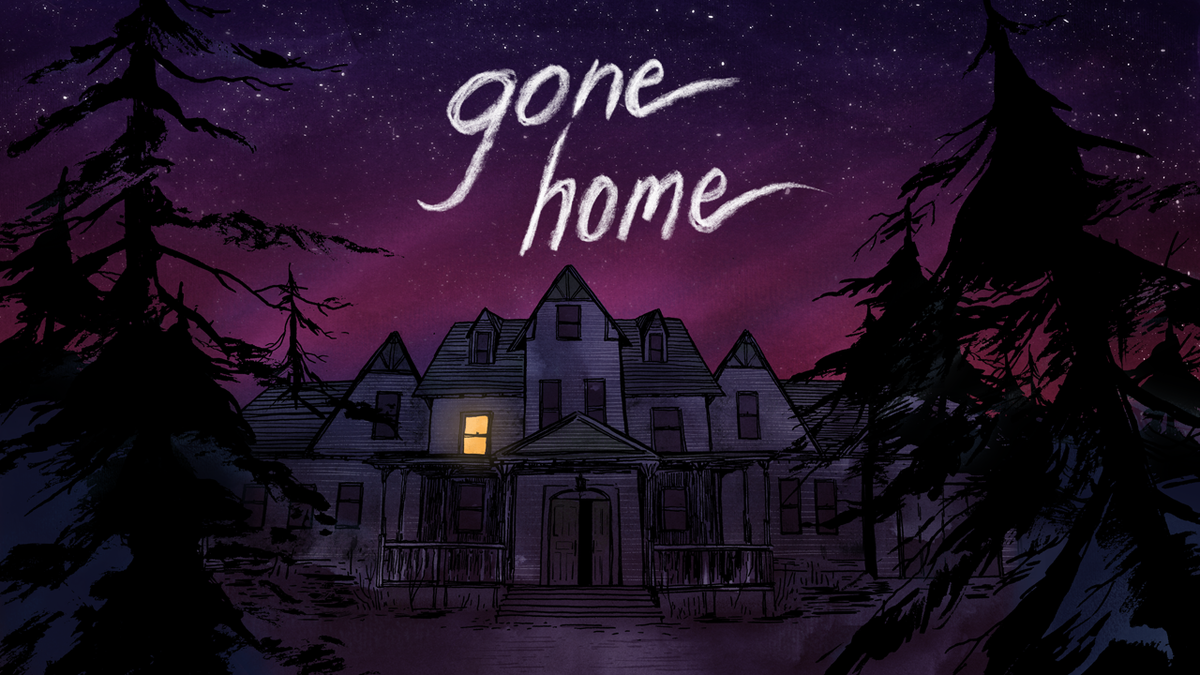
However, as people experiment more with game design and storytelling, the line is not as clear anymore and an in-between area of narrative games starts to be sketched. Gone Home, a 3D first-person exploration/adventure game released in the August of 2013 by the Fulbright company, lies in this middle ground. This blog post aims to provide an insight on how Gone Home, as a narrative game, opens a non-binary space between games and narratives and carefully combines the two sides of the binary through expanding player agency and breaking traditional gaming binaries (e.g., win vs. lose). These moves help align gaming satisfaction with narrative satisfaction and thus construct a coherent emotional experience for the players.

In Gone Home, the player plays as the big sister Katie of a 4-member household, who just returned home from her one-year overseas trip in 1995. It was 1 AM. She arrived at the new house in Oregon that her family had moved into, only to find out that the house was empty, and no one was there to greet her. The only information was a note from her sister Samantha stuck to the door, saying “don’t come looking for me, and don’t tell mom and dad what happened”. Clearly, something went wrong during her one year of absence. Thus, she set out to explore the house, entering every room and examining different objects, to find out the truth behind the emptiness and the history of her family.

(The family portrait: Katie is the one standing behind and her sister is the one on the left)

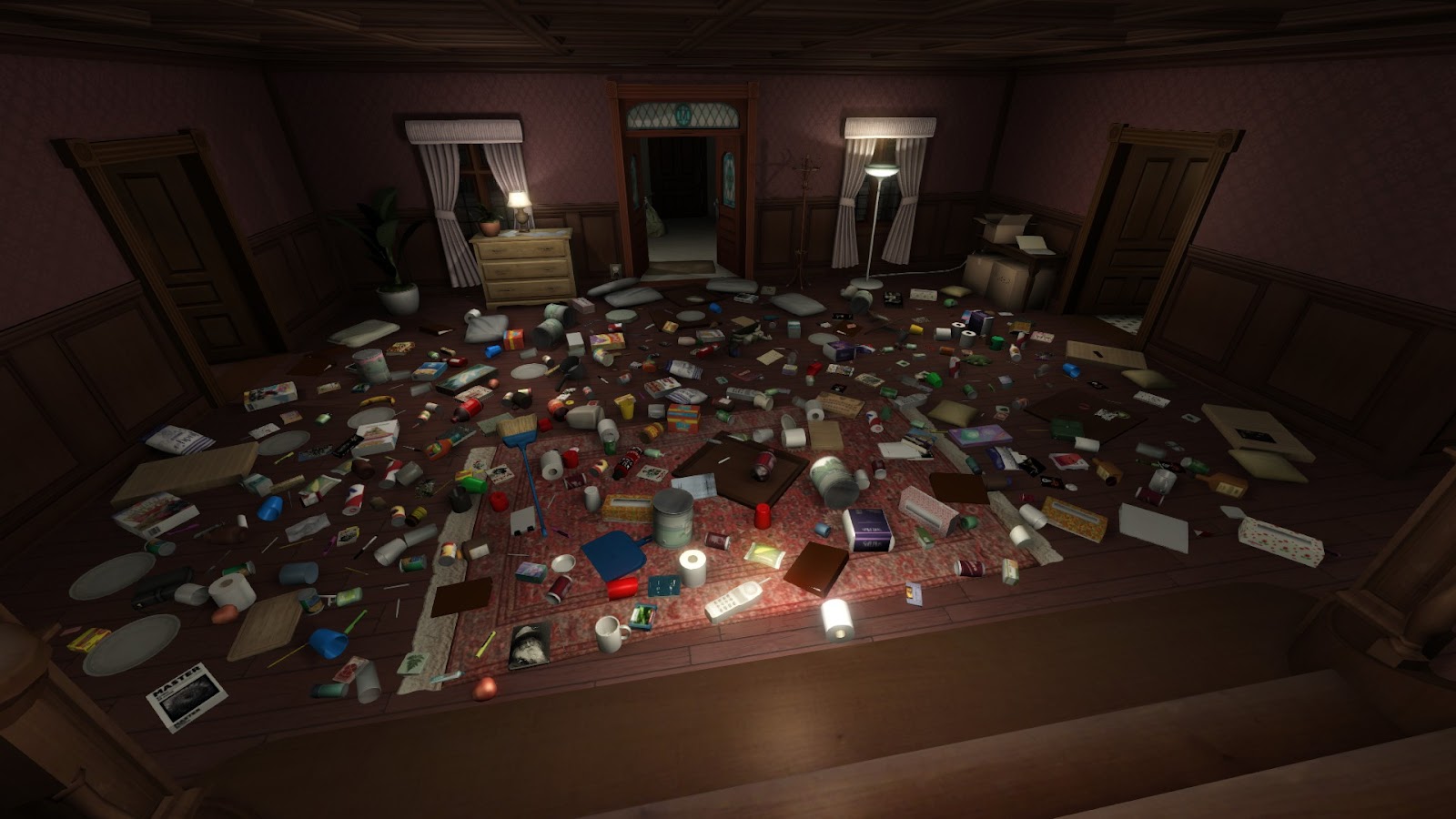
With this premise in mind, we can start analyzing the game and how it combines game and narrative without undermining one with the other. As a videogame, Gone Home not only preserved but also well expanded the player agency by expanding the range of interactivity available in the gaming space. Through embedded narrative, a mode of game storytelling invented by Henry Jenkins, the interactivity got tied to the process of progressing in the narrative, making the agency serve the narrative purpose well without undermining it. To start with, the extent to which objects were interactable in Gone Home is amazing. While a lot of games, due to design budget limit and intention to give players instructions, usually only design interactivity for objects that are “useful” for the gameplay, e.g., you are likely to be able to interact with coins or weapons, instead of a random rock that serves as part of the background. However, in Gone Home, pretty much all objects were interactable. You could open any drawer or cabinet, whether they would be useful for making progress in the game, and in fact, a lot of them were empty and were NOT related to the narrative. You could also pick any object up and examine them, such as toilet paper rolls, film tickets, etc., which were not necessarily relevant to the story but were there to increase the player’s range of choice. This amazing range of interactivity greatly expanded the sense of agency players felt, as there were more choices lying ahead and more actions one could take to investigate the house, along with different sequences of exploration and your own way of interpreting each object. However, this immense freedom of exploration did not go outside of control and went against the narrative. It was rather tamed well through embedded narrative, which allowed the game to “become a kind of information space, a memory palace, embedded within the mise-en-scene awaiting discovery,” according to Henry Jenkins. The bits and pieces of information were stored in the objects and the layout of the house, making the scene saturated with narrative, waiting to be explored and discovered. Thus, the freedom of exploration of the space is harnessed to make progress in narratives, instead of creating different goals that distract the storytelling.

(Someone moved all the items from Gone Home into one room; from Reddit)

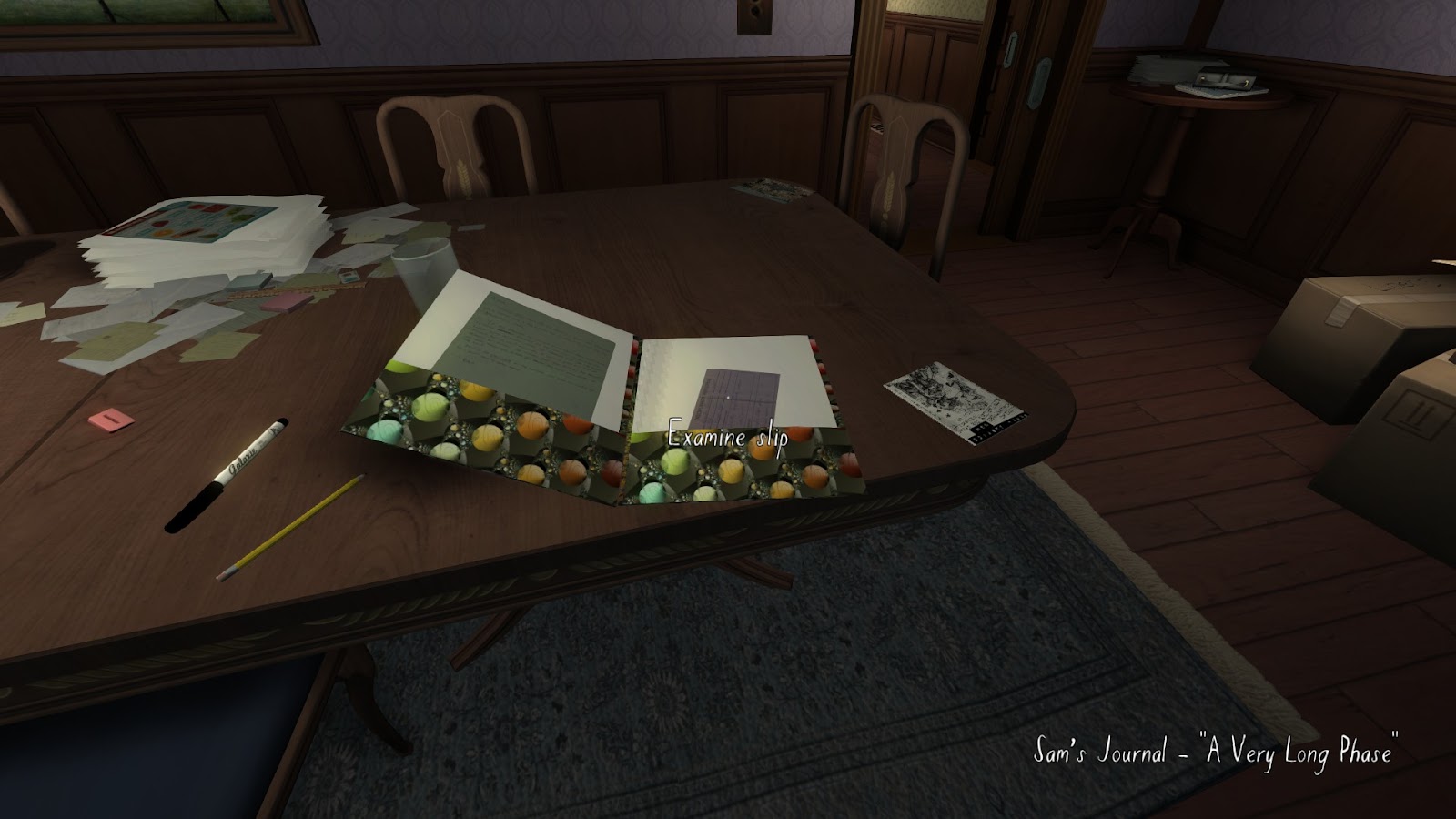
On the other side, the narrative was protected well under the author’s control, stored in individual audio journals narrated by Samantha’s voice, which was a story vastly unrelated to the protagonist’s action/choice. The gloomy space of the house that provided the potential of evocative narrative also turned out to be unrelated to the actual story of the game, further protecting the narrative’s own emotional flow. The house, other than providing a free range of interactivity and embedded narrative, also appeared to be an evocative narrative, which are spaces “built upon stories or genre traditions already well-known to visitors”, according to Henry Jenkins. Staged in a big abandoned empty mansion with dim lights and disappearing family members on a stormy night, Gone Home was for sure evoking the players’ previous knowledge of the classic setting of horror films and games. The carefully constructed gloomy vibe provided a very natural ground for imagining a suspense and mystery story behind the missing family. However, the story itself turned out to be nowhere close to a horror/suspense story. Told through Samantha’s audio journals, the narrative was about Samantha’s new high school life, specifically the story of her and a girl named “Lonnie”, who she later fell in love with. The themes were centered around LGBTQ identity discovery and exploration, along with subsequent confusion and denial from the family, which stirred emotions that were far from being scared and afraid as in usual horror games. The content delivered was also completely independent of the player’s action as it’s predetermined and narrated through Samantha’s monologue. What the player’s action did affect were just the sequence that the journals were unlocked, or how many times that they got replayed. In this way, the narratives remained intact as an encouragement for the player’s exploration, while players gained their agency through their unique way of exploring the space and unlocking the narratives.

(When you unlock a new journal in Gone Home)
In addition, Gone Home also pushed the boundary between games and narratives by breaking certain traditional gaming binaries, such as win vs. lose and reward vs. punishment, and making room for more compelling and coherent storytelling. Unlike most games, there was not a clear winning or losing state in Gone Home. Although the space construction was reminiscent of the horror genre, there was neither monster chasing you nor a character death of anyone. In fact, you would never die or lose in the game, as it was just you walking around in an empty house, exploring in whatever way you like. What to interpret from all the individual objects that might or might not be tied to the narrative and what to do with them was left to players and they could freely do whatever they want, e.g., throwing it, hiding it, putting it away, carrying it, etc., without having to bear any consequence. Similarly, there were neither punishments nor material rewards. No matter how much stuff you threw away or how messy you made the house be, there would not be any punishment on you, which is unlike a lot of games that use punishment/reward to instruct players to learn an intended way of playing or the way to successfully navigate the game. You would also not get any reward more than your sister’s voice in the air narrating her high school story, no matter how hard you try. Thus the only thing close to any kind of reward in this game became the narrative itself. In this way, the game resorted its gaming satisfaction to narrative satisfaction, as the gaming satisfaction was aligned with completing the narrative, without extra goals of winning the game or leveling up.

In conclusion, Gone Home serves as an excellent example of a narrative game that breaks the binary between games and narratives alienated by agency and satisfaction dissonance. It strived to expand player agency in a way that aligned with the purpose of providing a compelling narrative, while the narrative remained intact and preserved its original form, unsusceptible to the player’s action or choices. It also further blurred the dividing line by breaking certain traditional boundaries that a game would have, for example, distinguishing a clear win or lose state. Gone Home illustrates that it’s possible to present compelling narratives through video games, and it’s plausible to provide players with the agency to complete the story exploration.

How Devotion Transforms the Player

Premise

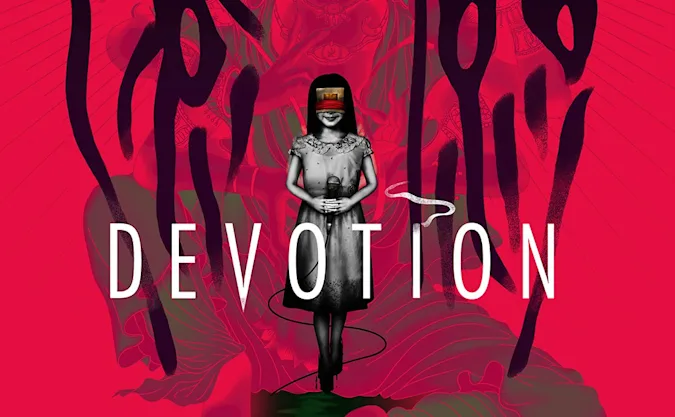
Devotion is a first person psychological horror game set in 1980s Taipei. In it, you play as the father in a family of three as he explores his clearly haunted apartment through the years. As the player, you must investigate and interact with the apartment to learn what happened to this home and the family in it.

Gameplay and How Devotion Tries to Transform the Player

Devotion is a game that can be progressed by completing puzzles, collecting notes, and interacting with objects. For the first half of the game, this is all done in the same apartment unit. The entire game seeks to investigate the past, so there are four different years that you explore the apartment through. Though the apartment regularly transforms, often due to shifts in time, the general map remains the same.

This refrain of space, coupled with puzzles necessary to master knowledge of this space, triggers a common desire from players who tend to play puzzle-heavy, story-based games: master the space. Devotion does satisfy the desire of learning, as all players learn the entire story to complete the game. However, to maintain the horror element, the predictable and classic experience of complete puzzles and learning in a linear way is warped. Jumpscares and flashbacks push the player out of the apartment regularly, only for them to re-enter and have the space look almost completely different. Rapid changes to the environment curtail the player’s perceived ability to complete a puzzle or task presented in front of them. However, the embedded narratives in these relatively unfamiliar environments contain the sort of information the player was attempting to find in the first place.

A good example of this would be the player’s first interaction with the apartment. When getting oriented with the space, the player is able to interact with different objects to learn about the Du family. The apartment is entirely open for interaction except for the locked bathroom. This gives the player their first perceived objective: find something in the apartment to unlock the bathroom and learn more. This pushes the player to keep interacting with different objects in the apartment, in search of a key. However, there is no key. Rather, there are so many different puzzles and pieces of information presented to the player that they may forget about or give up on unlocking the door. The information that’s provided in this non-linear way of storytelling seeks to do two things. One, stem the player’s desire to focus on one immediate, seemingly unimportant object. Two, this stemmed desire is in favor of the amount of exposition that player receives from going with the game’s mashed up way of storytelling. 

Bringing this back to the door example: 

One, the interest in unlocking the door pushes the player to search for a key

Two, the player’s search for a key is intercepted by jumpscares, other puzzles, and general flow of storytelling. These are the ways that Devotion tries to stem desire for spatial mastery.

Three, the initial objective of unlocking the door is either forgotten or deemed unimportant in comparison to the other things brought to the player’s attention

Four, the player is eventually taught about the locked door’s importance in a way that they weren’t expecting to.

Synopsis

Devotion centers on a family of three. The mother is Gong Li Fang, a retired actress. The father is Feng Yu, a failing playwright. Together, they have a daughter named Du Mei Shin. All three members of the family hope for Du Mei Shin to succeed as a famous singer. She was featured on a televised singing competition for some years where she experienced a winning streak. Unfortunately, many unfortunate events occur for the player to end up in Devotion’s destroyed, clearly haunted apartment. As the father continues to fail with his plays, the family is met with financial struggle and stress. This stress gets to their daughter Mei Shin who eventually experiences difficulty breathing. She loses her winning streak and, due to the amount of hope that her parents have pinned on her, this is a great cause of frustration for the entire family. Mei Shin sees multiple doctors who find nothing physically wrong with her, and eventually suggest psychiatric evaluation. Mei Shin’s parents are in denial of any mental health issues, and seek out religion to help. The mother turns to traditional prayer while the father turns to a cult. Feng Yu throws a lot of money and focus on this cult which, given their financial situation, causes a rift in his marriage, resulting in the mother leaving their home. This, as a result, worsens Mei Shin’s anxiety and, ultimately, Feng Yu’s desperate devotion for a cult cure. The story ends with Feng Yu completing a cult ritual that causes him to gouge out an eye, remove his tongue, and trap his daughter in a rice wine bath for one week straight. This kills Mei Shin, ending their story.

Embedded Narratives in Devotion

A large amount of Devotion’s exposition and storytelling is rooted in embedded narratives. When speaking of embedded narratives, Henry Jenkins states that “a story is less a temporal structure than a body of information.” Devotion really demonstrates this with its use of collected and interactive items. To aid in storytelling, these items are scattered and repeated to create a story in the player’s head that, despite not being shown in a connected way, forms a linear and comprehensive story.

The role of embedded narratives in storytelling is well-explained as Henry Jenkins states, “One can imagine the game designer as developing two kinds of narratives – one relatively unstructured and controlled by the player as they explore the game space and unlock its secrets; the other prestructured but embedded within the mise-en-scene awaiting discovery.” Embedded narratives in Devotion are relatively unstructured, but a lot of the cutscenes, jumpscares, and exposition waiting is carefully placed to uncover a coherent, “pre-authored narrative.” Embedded narratives can exist to enrich the main, planned-out story, and devotion does this well.

Here is an example of an embedded narrative in Devotion:

Tulips are littered throughout Devotion. Our first interaction with tulips in Devotion comes when we interact with a page from the father’s play. In it, we see a scene where the daughter, Mei Shin, folds a paper tulip for her father Feng Yu. On the page, we learn that the father’s play was met with unsuccess, and that Mei Shin folded paper tulips as an act of love. We see a paper tulip again in the back of a storybook that Feng Yu always read to Mei Shin before bed. At the end of the game, we see many paper tulips as the gameplay shifts from Feng Yu’s perspective to Mei Shin’s. In this scene, Mei Shin’s love for her father coupled with Feng Yu’s angst toward his failed dream connect to portray a more whole narrative in the final image: Mei Shin and Feng Yu’s love for each other (depicted by the storybook tulip) was impacted by Feng Yu’s failure (indicated in the play). This adds up to the final narrative of Mei Shin riddled with anxiety as she folds paper tulips alone. In the face of difficulty, her father stopped paying attention to the things that brought them joy.

The importance of this embedded narrative is that it gives the player a greater understanding of the amount of loss experienced in this family. The tulips, along with other embedded narratives, help to increase Devotion’s emotional stakes, allowing the family’s tragic end to be considered truly devastating.

These embedded narratives are so effective because they speak to the past in a nonlinear way that does not give the player the full picture initially. However, as more embedded narratives come into play, the pre-planned narrative continues to grow into full effect. With this, the puzzle-piece thought process that comes as a result is even more effective than either of these storytelling methods being used on their own. Completely linear storytelling allows for predictability, whereas a complete lack of linearity leaves room for unresolved convolution.

And, going back to how Devotion stems the idea of mastery, embedded narratives help by widening the parabolic scope of the game. Learning the importance of the tulips in Devotion, for example, is satisfying because it gives the player deep insight into the characters’ relationships to each other. In my own experience, the tulips are emotionally evocative enough to make the player thankful for the ability to learn about them. This, in part, distracts the player, temporarily or otherwise, from the desire to do a simple cut-and-try gameplay that looks and feels completely linear.

Bandersnatch: Choose-your-own Adventure on Streaming

            “Bandersnatch” is a special choose-your-own adventure episode of the critically acclaimed show Black MirrorBlack Mirror is an anthology series that focuses on the effects of futuristic technology on society often with a dark and pessimistic view. Bandersnatch is no different. Despite featuring five different “true endings,” the special episode continues the trend of dark and unhappy Black Mirror endings. Although some endings may seem better than others, there is no doubt that this story has no happy ending despite the best efforts of the viewer in making the correct choices. 

            The episode centers around a young video game developer named Stefan Butler (Fionn Whitehead), who is attempted to adapt a choose-your-own adventure book with the name Bandersnatch. Stefan struggles to deliver his game as he must make choices (or more accurately the viewer to choose for Stefan) on how to preserve the integrity of the game while also staying sane. As he continues developing the game Stefan becomes more unhinged until eventually, he learns the truth. 

Narrative Structure

            The first half of the episode has a similar composition regardless of the choices that the viewer makes. The first two choices, for example, are seemingly inconsequential. You choose what Stefan eats for breakfast, then you choose the soundtrack that Stefan (and yourself) listens to on the way to the meeting at Tuckersoft. These choices do not create and forking paths but instead are simply there to introduce viewers to the mechanics of the show. The early forking choices the game is not truly forking as after a certain sequence has occurred the two paths converge together which again unifies the experience for all viewers during these sections of the story. These choices, unlike the breakfast and soundtrack, have a significant impact on the game. They unlock certain choices and thus certain paths at future choice nodes. The variability of the over-arching story is dependent on two major choice nodes, the password Stefan inputs in his father’s safe, and the answer to who is controlling Stefan. 

The password choice node has multiple choices dependent on the experiences and choices made earlier. The TOY choice is the only one that creates a new path which allows the viewer to access the Childhood Trauma ending. This ending is only accessible through looping through a false ending at the “whose there” choice node twice. The other options all converge to the “whose there” choice node. However, each of the other options set the viewer on a specific storyline which decides what choices they have at the crucial “whose there” choice node. Although there is no divergence in the database itself, the password node is the point in the show whether the story begins to diverge into different paths as each choice follows a specific narrative. 

            The next important choice node is the “whose there” node where Stefan uncovers what is controlling him. This node has hard forks where both the narrative and the database diverge into different paths. However, these separate paths do not determine the endings as there are still choices along these paths that create new branches which will converge to one of the other four true endings. 

             The 5 true endings are branches at which the narrative ends and there is no way to progress further even by changing earlier choice. The true endings are the furthest that the story can progress and most of these endings are conclusive. However, there are 3 distinct ways that a branch (and thus the narrative) can “end” in Bandersnatch: Looped Endings, False Endings, and True Endings.

Looped Endings

            Looped endings are the rarest narrative endings in Bandersnatch as they are also some of the most complicated ones. A looped ending occurs when a narrative branch ends, and the viewer must change an earlier choice in order to progress the story. The loop, or return to an earlier choice, is accounted for in the database and thus it changes the narrative. The first example of this occurs at the first important choice in the story. Stefan has finished his presentation at Tuckersoft when the owner, Mohan Tucker (Asim Chaudry), presents and offer the Stefan where he will develop the game at Tuckersoft with a team. 

A person in a blue shirt

Description automatically generated with medium confidence

If Stefan accepts the deal, then the show flashes forward to the release of the game where Stefan and his father are watching it get reviewed on television. Stefan’s game receives a rating of zero out of five stars and this is the end of this branch. The show starts the day over again but this time things are a bit different. Mohan introduces Stefan to Colin Ritman (Will Poulter), a genius videogame developer, Colin asks if they had met before. Further Stefan is able to identify a bug in Colin’s game when in the first iteration of this sequence only Colin was able to. In the first iteration of Stefan’s pitch, Colin does not know about the book Bandersnatch. After the loop, Colin has read Bandersnatch and loves the novel. This is the first instance of a looped ending, where the loop creates a new set of events that seem like a new branch. In the underlying database, the path converges to the normal storyline but the database records that the viewer has looped. This is important as it may unlock certain choices at future nodes. 

False Endings

            False Endings, similar to looped endings, are when a narrative branch ends, and the viewer must change one of their earlier choices in order to progress further into the story. The difference between false endings and looped endings are that the database does not record the false ending. It bears no significance in the paths within the database, nor does it unlock future paths at future nodes. Once the viewer goes back and changes their choice it has no effect on the path as if the choice had never been made. 

Diagram

Description automatically generated

            An instance of this occurs when Stefan chooses to take the pills prescribed to him by his therapist. If he takes the pills, then the show flashes forward to the review of Bandersnatch where it gets 2.5 out of 5 stars. The show that prompts you to go back to the pills choice or to and earlier choice. This choice has no impact on the episode as far as the database is concerned.

True Endings

            As stated earlier there are 5 true endings for Bandersnatch. These endings are for the most part conclusive and there really isn’t much further the story can go. The most common ending is the Jail Ending as there are multiple paths that converge to this ending. In the Jail Ending, Stefan kills his father but finishes his game. Stefan goes to jail for murdering his father, but his game receives a perfect five out of five. Every other ending in the show has exactly one path that leads it there, making these endings much rarer than the Jail ending. And then there is the Childhood Trauma ending which has also been referred to as a secret ending since you need to reach a specific looped ending two times to unlock it. 

Database Narrative

            As a choose-your-own adventure special, Bandersnatch employs a database with forking paths in order to tell its story. A major element in the narrative is the availability of choice, whether we are free to choose or if choices even matter. This is what attracted Black Mirror show-runner Charlie Booker to agree to Netflix’s request for a choose-your-own adventure episode. He wanted to create a show with choices about choices. Throughout the narrative the binary choices presented to the viewer don’t exactly align with how the story will go. Choices that would seem to help Stefan and makes his life easier tend to backfire such as taking pills to help him focus on his game or accept help from Tuckersoft. Each choice that the viewer makes is important for the narrative and the story that the filmmakers are telling, even if it does not affect the path in the underlying database. The act of choosing is just as important as the path it sets you on. 

            While the choose-your-own adventure medium may seem videogame-like, Bandersnatch certainly seems like an episode of a TV show. The primary reason that creates the rift is that the viewers have no objective when watching/playing this episode. All the depressing endings may be interesting and connect well with the over-arching theme and story that filmmakers want to tell, but they do not represent an intended resolution that is an important aspect of video game. While Stefan may have no control over his decisions, the viewers that are making the decisions don’t really have any control either. The connection between the choices the viewer makes and the path it sets them on seems entirely arbitrary.

Conclusions

            Bandersnatch is an interesting a unique piece of media that pushes the boundary of what cinema can be with in the modern age. Although the interaction does not feel immersive due to the disconnect between the choices and the paths it sets you on, the interactivity does feel authentic and utilized effectively.

Future of choose-your-own-adventure

Since the release of Bandersnatch, Netflix has continued developing choose-your-own adventure episodes. They have primarily focused on children’s shows and have occasionally reached out to different genres such as the sitcom with Unbreakable Kimmy Schmidt and a documentary/pop quiz style show with You vs Wild. They also have an extensive choose-your-own adventure experience in Minecraft: Story Mode which is more similar to a video game and is developed by Telltale Games. It is unclear if Netflix will continue to promote this blend between cinema and videogames or if they will focus more heavily on videogames. They have announced plans to release videogames which will be free to subscribers, similar to Microsoft’s Game Pass. 

Sources:

https://www.hollywoodreporter.com/tv/tv-news/black-mirror-bandersnatch-netflixs-interactive-film-explained-1171486/

Telling Lies: Double Lives and the Horrors of Undercover Policing

By: Leila Pulaski

Sam Barlow’s “Telling Lies” (2019) is a gripping piece of interactive fiction anchored by moving, artful acting performances. In shedding light on the practices and history of David Smith, an undercover FBI agent, the work brings to mind questions of authority, discretion, and manipulation in law enforcement while promoting an often ignored storytelling format. 

Consequences of database-as-database

On a user interface designed to look much like a Mac desktop, “Telling Lies” (2019) allows players to search for keywords or phrases in a bank of webcam footage in order to piece together a story. What story might that be exactly? The answers vary. At its simplest level, “Telling Lies” (2019) follows two years of webcam footage from the devices of four different people. These characters are connected in initially unclear ways. Players eventually realize that they are witnessing the narratives of undercover FBI agent David Smith and three women he’s involved with. Personal curiosities and biases will determine how exactly you categorize these entanglements and the story at large; is it a love triangle, a horror, a classic detective story, perhaps even a tragedy? By choosing to search for certain terms rather than others, you unknowingly ignore a wealth of other footage. Given that you don’t need to watch every clip in the database in order to finish the game, it’s possible for players to come away from it with vastly differing opinions on its leading man. Herein lies one of the principal dangers and benefits of the database-as-database method in this piece: you are free to sort through the information yourself and come away with an experience that is entirely your own. You’re given free rein to determine what story you are witnessing, with the result that you may miss incredibly grievous criminal behavior, threats against women, and serious anger issues from the main character. In my gameplay, the story was a horrifying and cautionary tale about the abuses of undercover policing operations, but yours may be a somber tale about a man whose demanding job keeps him away from his wife and child who he would do anything to protect. While the structural openness of “Telling Lies” (2019) makes it a particularly intriguing game, it also leaves open the possibility to miss the critical social commentary which Barlow is attempting to make.

Social commentary and Barlow’s history

Barlow has focused his gaming narratives on social commentary in the past, with “Telling Lies” (2019) following in the footsteps of its predecessor, “Her Story” (2015). “Her Story” (2015) also conquered a law enforcement theme and revolved around a database of clips from police interviews with one woman. Set two decades before its release, the game asked users to search through a similar database of video footage in order to uncover what the story of the game was. Both games feature a very straightforward database system and don’t allow the user’s actions to change the source material. Your search terms, exploration of the desktop interface, and fervent note-taking whilst going through the story don’t have any bearing on what may happen; there is only one ending to the game. Everything you witness as a player has already come to pass, and you’re only an observer attempting to work out an understanding of the sequence of events for yourself. This strategy, fun and unique as it is, does allow for players who approach the game with a low level of critical thinking and a taste for meeting all the Steam accomplishments to sort through only the most necessary of clips and miss the allegorical heart of the story. Though I acknowledge that to say this is to think very lowly of the average person, it’s worth mentioning that Barlow’s game structure– at least in his two most recent and critically acclaimed games– leaves room for players to ignore his intended messaging.

With respect to “Her Story” (2015), Barlow aimed to critique the viewer themself, commenting that the game drew heavily from “the modern phenomena of the Youtube Jury, in which police forces distribute the footage of intimate suspect interviews for armchair detectives to dissect [and] the suspects’ stories themselves get lost amongst the torrent of cliches and prejudices” (The Guardian). Looking forward to “Telling Lies” (2019), we see that the subject of scrutiny has changed. While “Her Story” (2015) challenged its users to think about their own uninformed or premature judgements on a suspect, its successor reveals the gross violations of law enforcement officers themselves. 

Undercover policing and the terrifying true stories behind “Telling Lies” (2019)

In “Telling Lies” (2019), we witness David Smith receive and carry out a deeply sinister mission: to lie to a young woman and con her into a relationship for the sake of infiltrating her environmental activism group. David’s target, Ava, is not a high ranking activist, a militant individual, or even a member of what he deems the most crucial group. She is, however, young, kind, and trusting. The pair meet in late 2017 and quickly begin their romantic relationship. David convinces Ava to move in with him, meets her parents, and even gets her pregnant. When it comes out that David has a child, he tells Ava that he is a single father to her. All the while, David’s wife is struggling to take care of their daughter Alba on her own while dealing with a full time nursing job and a dying mother. David continually lies to his wife Emma about his mission and becomes infuriated when she admits to having a brief affair with a doctor, at which point Emma brings up that she has been terrified of David for a long time. In the course of elaborating on this fear, Emma reveals to the players that David murdered her abusive ex-boyfriend in front of her and was celebrated for it by his law enforcement colleagues. Though there is no confirmation that he physically abused Emma, there are multiple hints towards the possibility (aside from Emma’s own admission that she was scared of him for many years). Losing his position within the family he has abandoned for over a year, David refocuses on his mission by abandoning a pregnant Ava and doubling down on his attempted entry into a more militant activist group. By the end of 2018 he has alienated himself from both Ava and Emma and commits suicide by bomb. Though he states his intentions for the explosion were to stop a pipeline, we never see the results of that action. The phenomenon at present here– domestic abuse in police relationships, celebration of violence within law enforcement communities, and infiltration of activist groups by manipulative undercover police– are all tragically grounded in reality.

Donna McClean and the Metro PD

There are women all over the world whose stories mirror Ava’s in harrowing detail. Take for example Donna McClean, whose experience with the Metropolitan London Police Department follows Ava’s in almost all respects. Donna, though not herself a socialist or labor unionist, was friends with many members of labor unions and socialist party figures in the early 2000s. An undercover member of the London Metro PD named Carlo infiltrated her life starting at an Iraq war protest where he posed as an event facilitator. The couple were together for two years and followed a relationship timeline largely similar to David and Ava. They got together quickly after meeting and moved in with each other rapidly. She introduced him to her parents, brought him to her little brother’s graduation, and got engaged to him. When it came out that he had a child, he (like David) told her he was a single father. All the while, he was going by a fake name and had a wife and child just down the road. Donna is not alone in this experience, as countless numbers of women have been tricked into sexual relationships with undercover police officers. In 2015 alone, 8 women held a press conference about their experiences with manipulative, violatory undercover officers from the London Metro PD. In one case, the officer even fathered a child under his false identity before finishing his mission and disappearing. As a result, the London Metropolitan Police have given out millions of dollars to these women who were duped into relationships with men that never existed. In almost every case, the women targeted were not members of terrorist organizations or dangerous hate groups, but political or environmental actors. The previously mentioned child was the product of a relationship between the officer and an animal rights activist. These women– targeted for their kindness, young age, and good connections– nearly always stood for causes rooted in hope, healing, and generosity. By making very dubious the nature of consent through constant lies and manipulation, these officers commit grievous violations against the women that the target. Somehow, those violations are made even worse by means of the fact that most of the women are sought after for non harmful activity. In some cases, it is not the activists but the police themselves who encourage an escalation to harm. Northern Irish Police, for example, recently published a report admitting that the gun used in a 1992 massacre which killed 5 people was provided to the known terrorist loyalist shooter by a police officer (Irish Times). How this action and many others are not clear examples of entrapment I could not say, but Barlow also puts a spotlight on this behavior. David pushes the members of Ava’s Organizing Group to blow up a bridge in order to stop a pipeline project. Ava quickly rejects the idea, informs David that she’s pregnant, and decides that she wants to leave behind her active role in the group to lead a normal life; “ordinary can be magical”, she says. It’s challenging to follow up this clip by watching David stalk Ava for months before meeting her while commenting on how the 19 year old will be very trusting of an older man. That is the power of the non-linear structure of “Telling Lies” (2019). The tragedy, violation, and abuse of David’s actions are made most clear by the sharp discontinuity between the footage of David Jones, the man he pretends to be, and David Smith, the man he really is. 

Conclusions

Sam Barlow has created a truly fantastic game with “Telling Lies” (2019). His interface allows a thoughtful, curious viewer to find the story for themselves and his deeply talented cast moves you to seriously reconsider your notion of undercover policing. From its structure to its cast to its script, “Telling Lies” aptly points out the abuses of undercover policing, puts a face to the devastation caused by it, and facilitates a unique gameplay experience. 

Sources:

Hutton, Brian. “Police ‘handed’ gun used in 1992 Sean Graham massacre to loyalist terrorist”. The Irish Times, 8 February 2022, https://www.irishtimes.com/news/crime-and-law/police-handed-gun-used-in-1992-sean-graham-massacre-to-loyalist-terrorist-1.4796117.

“‘I was duped by an undercover policeman’ – BBC Newsnight”. BBC Newsnight, YouTube, 18 January 2016, https://www.youtube.com/watch?v=540XUH-OSsM&ab_channel=BBCNewsnight.

“Son grew up not knowing his father was an undercover police officer”. Channel 4 News, Youtube, 7 October 2020, https://www.youtube.com/watch?v=TCPCMW5ruN0&ab_channel=Channel4News.

Stuart, Keith. “Her Story: The computer game where True Detective meets Google”. The Guardian, 27 February 2015, https://www.theguardian.com/technology/2015/feb/27/her-story-computer-game-true-detective-meets-google.

The Infectious Madness of Doctor Dekker: I’m not Mad, You are!

By Elias Bernstein

Doctor Dekker was a therapist. He has been murdered by one of his patients. You are his replacement. You must figure out who killed him by giving his patients therapy while trying to remain as sane as possible. Good luck.

Developed and published by D’Avekki Studios Ltd in 2017, The Infectious Madness of Doctor Dekker is a Full Motion Video (FMV) game playable across all mainstream platforms. It features over 1600 fully acted HD videos, a random murderer every new game, and multiple endings dependent on how insane you are, calculated using the hidden “Insanity Points,”
at the conclusion of the game. There are six main patients/suspects—Marianna who suffers from blackouts, Claire who murdered and resurrected her husband, Elin who believes she can shapeshift, Jaya, your secretary who needs grief counseling, Nathan who lives in a time loop, and Bryce who has an extra hour in the day—as well as a few side patients that are optional to progress the story.

Full Motion Video

So what is an FMV game? Basically, it’s a game that uses videos shot with real actors as the visual component of the game instead of the animation that we’ve become so accustomed to seeing. FMV games were first introduced as a proof-of-concept in the early ‘80s through interactive arcade games made by Sega (Astron Belt) and Cinematronics (Dragon’s Lair) as a way to make games more immersive. However, after the releases of a few not-so-sophisticated horror games in the ‘90s, FMV games quickly fell out of the mainstream market. Recent years have seen the return of FMV to the indie market through games like Her Story (2015), The Bunker (2016), and The Infectious Madness of Doctor Dekker (2017). Outside of video games, other types of media are also experimenting with interactive video, the most prominent example being Black Mirror: Bandersnatch (2018).

FMV, with the advanced photography technology and techniques that we currently have access to, allow games to reach beyond the graphical and animation limitations that currently exist, with the downside that the resulting games are usually less interactive, after all it (currently) is impossible to make videos with real actors fully interactive. To me, this is a pretty big downside. Compared to a game like L.A. Noire (2011), famous for its then groundbreaking facial tracking, Doctor Dekker certainly adds more subtlety and realism, but definitely feels less like a “game.” Despite the recent surge in FMV titles, I personally believe that FMV games will remain in the indie world for the foreseeable future, but they can be a nice break from animated games.

Gameplay

The gameplay of The Infectious Madness of Doctor Dekker actually works very well with the FMV format. The game uses a text parser where players can type in their questions for the patients. The game then does its best to interpret the question and plays the video corresponding to the keywords used in the question. For example, asking a patient “who are you?” will play a short introduction scene. The text parser does not require a full, grammatically correct sentence to work—typing “doctor dekker” may prompt the patient to speak about their experiences with Doctor Dekker. Sometimes the text parser will interpret a question incorrectly but recognize a keyword, in which case it will play a scene related to the keyword but not the question itself, for example I asked Claire “how did you meet David?” and she replied with something akin to “are you saying I killed David?” Obviously not what I meant, but the game picked up on the keyword “David” and played a corresponding video. Obviously, this can be pretty un-immersive, but these misinterpretations still help propagate the story. Sometimes patients will ask you yes-no questions. Your responses to these questions will lower or raise your “Insanity Points” which, if you remember, are used to determine the final ending you experience, separate from discovering the murderer. There are three modes of completion per patient: red—you have not asked enough questions to progress the story—yellow—you have asked an acceptable amount of questions and can progress the story once all patients have reached yellow completion marks—and green—you have asked all questions available to this patient at this point in the story. This mechanic requires the player to be a competent conversationalist in order to progress, something I evidently am not since I found it very difficult to pick out keywords from the patients’ responses. If you, like me, are not a conversationally inclined person this game may prove to be extremely difficult. But fear not! The game developers were gracious enough to provide pre-written questions that will be sufficient to bring every patient into the yellow mode of completion. This feature was added because of the console releases of the game—it would be annoying for console players to quickly type out their questions into the text parser. If it weren’t for the console releases, it’s very likely that the game would not have pre-written questions, but there is a hint system so it wouldn’t have been unfinishable for non-therapist players. The hint system is very easy to use: you type “hint” into the text parser and it will tell you a question that you have not yet asked to the current patient. Some of these seemed impossible to pick up on without the use of the hint, for example one hint told me to ask Marianna if she saw somebody behind me, something that was not mentioned in any response up to that point.

Skill vs. Labor

In Jesper Juul’s essay “The Art of Failure: An Essay on the Pain of Playing Video Games,” he describes three paths to success in video games: skill, chance, and labor. A game of skill is exactly what it sounds like: you need to be good at the game to beat it (think Call of Duty/CS:GO). In games of chance, players must rely heavily on luck in order to win (think casinos/gambling games). Games of labor require some sort of “grind” in order to “beat” the game. Many games of labor do not have a real end, instead the player becomes more and more rich/powerful the more hours they spend playing the game (think World of Warcraft/Farmville). I firmly believe that if you are observant and you are able to pick up on keywords, The Infectious Madness of Doctor Dekker can be one-hundred-percented (completing all patients with green marks) without using hints or pre-written questions. I do believe that there are people who would find that this game is more of a game of skill. That being said, the vast majority of players may find playing the game without the pre-written questions and hints an impossible task. The hints have a 90 second cooldown after each use, meaning if you are intent on “going green” with each patient, it may take a very long time if you are reliant on hints (it took me 30 minutes to “go green” on Nathan!). Energy is to Farmville as hints are to Doctor Dekker, and reliance on these hints truly makes the game more of a “grind.” For this reason, I am tempted to label Doctor Dekker as a game of labor. Thankfully, the labor portion of the game can be avoided if you use the pre-written questions or if you’re a genius. The only chance element found in the game is the random murderer selected at the very beginning, so the game is not one of chance.

Databases

As an FMV game, Doctor Dekker requires a lot of database elements in order to work well. A database is basically a set of data organized for quick retrieval of information; think Wikipedia, where you can type in a search and a corresponding article will be displayed. There are a few different types of databases, but I will focus on three: database as a database (retrieval of information for the sake of information), database as a branching tree (choices change the course of the database à la Bandersnatch), and database as a simulation which is what Doctor Dekker is a good example of. Doctor Dekker has elements of database as a database—you can access replays of patient responses as well as a couple other videos and pictures unlocked by progressing the story at any time—as well as branching tree elements—the yes-no questions that patients ask you resemble a branching tree since your responses to these questions will change the end of the game. Doctor Dekker ultimately combines both of these types of databases to form a simulation: a therapist who needs to discover the murderer of his/her predecesor. The databases in the game serve to help the player to progress the story. Without the ability to replay responses, zeroing in on keywords would be much more difficult, as one missed detail could be the difference between knowing the best follow-up question and spamming “hint” into the text parser.

Conclusion

A unique story with a unique storytelling medium, The Infectious Madness of Doctor Dekker makes great use of databases to complement text parser gameplay, simulating (with decent immersion) a conversation between a therapist and his/her patients. However, the game is not without its flaws. First off, the text parser is not perfect. It is not uncommon for the text parser to misinterpret a question; this will usually be beneficial to the player and propagate the story, but it can be pretty un-immersive. I also found the game to be extremely, forgive the pun, maddening at times: I would spend a non-trivial amount of time re-watching responses only to be unable to find the next keyword to progress the story. I was very thankful for the pre-written questions and hints, but they also made it feel like I wasn’t even playing the game—it might as well have been a movie.

If you can put up with everything above, or you’re just looking to complete the story as quickly as possible using the pre-written questions, then by all means pick up the game. I think that the game can be a very rewarding experience when played by the right people. However, if you are more like me, somebody who likes to complete games using their own ability, you may wish to avoid this particular title. It’s not bad by any means, in fact I found the story to be quite compelling and the acting was very good. It just isn’t for everyone.

Sources

Boo, Bernard. “Black Mirror, Her Story, and the Return of FMV Games.” Den of Geek, September 25, 2019. https://www.denofgeek.com/games/black-mirror-fmv-games/. 

The Infectious Madness of Doctor Dekker. D’Avekki Studios Ltd. Accessed February 12, 2022. http://www.doctordekker.com/. 

Juul, Jesper. The Art of Failure: An Essay on the Pain of Playing Video Games. Cambridge, MA: MIT Press, 2016. 

Manovich, Lev. The Language of New Media. Cambridge: MIT Press, 2000. 

Hades: Escaping From Failure

By Shannon Kong

'Hades' review: supergiant's latest is, quite literally, a god-tier game

“Again”. You, as Zagreus the son of Hades, emerge from the Pool of Styx at the House of Hades after yet another unsuccessful run. Hypnos, sleep incarnate and de facto receptionist of the House of Hades, makes another witty remark about the way you just died. But you laugh with him, knowing that the next time you emerge from the pool, Hypnos will still be there to greet you with another piece of unhelpful advice. In Hades, failing and dying are engrained in the gameplay experience in a way that doesn’t punish the player, but rather presents an opportunity to explore, build relationships, and most importantly: to try again. To fail in Hades is to progress, and the game masterfully utilizes its roguelike structure to encourage the player to treat failure as a necessary component of the gameplay experience, and to navigate through randomness and unfamiliarity in a way that enhances both the game’s combat systems as well as the narrative journey.

Combat Variety, Skill vs. Chance, and Perceived Strength

The combat system in Hades is a roguelike hack-and-slash dungeon crawler in which Zagreus uses a chosen weapon and a combination of Olympian boons, weapon upgrades, and other combat enhancing mechanics to fight through procedurally generated rooms of monsters in order to escape to the surface.  As you clear each room, you get to choose what type of reward you’ll receive after clearing the next room; you could collect another Olympian boon to further strengthen the effects of your abilities, take a break at the shop to purchase upgrades with gold, chat to one of the few underworld deities that you’ll encounter along the way, or even pick up currency that you’ll use back at the underworld hub. Due to the sheer amount of upgrades to choose from, every run will always be unique and different to previous runs, ensuring that the gameplay loop feels fresh no matter how many times you’ve gone through it. Although the list of rewards and their specific benefits may seem long and daunting for many players, the game simplifies the process of choice in such a way that it both gives the player a strong sense of agency to design their own run, but also ensures that the player isn’t overwhelmed and can instead focus on the actual combat experience. After completing a room, the game would present at most 3 ‘doors’ for you to choose from, corresponding to the different types of rewards you could potentially receive. Additionally, when you pick up a boon, a Daedalus hammer, or enter the upgrade shop, you will be met with a tab that only presents three choices for you to choose from. In doing this, the game asks you to ignore the long list of boons that freaked you out the first time you opened your codex, but instead to make a simple and swift decision between choices 1, 2, and 3. On top of that, the combat system is designed to indicate which boons or upgrades you’ve used in previous runs, so that you may decide to choose an upgrade you knew to work, or to roll with something entirely new.

However, such a combat system could be thought to create an over reliance on chance or ‘luck’ to succeed in a run. A streak of unlucky rewards could lead to you having too much health but not enough damage to comfortably clear each room, or being one hit from dying with an incredible set of upgrades desperately hoping for a way to restore your health. Nevertheless, Hades’ roguelike structure forces the player to treat failure as a natural process of the gameplay loop, and encourages failure as a means to experiment and reconsider one’s strategy; in turn this teaches the player to become skillful at handling ‘chance’. Each time you fail a run, you would most likely find yourself wondering “was that extra boon worth it?”, or “should I have used the other Daedalus hammer upgrade?”, or “when should I dash back in to hit the enemy?” But as you continuously go through the loop and fail again and again, you begin to be able to answer these questions, and better understand how to maximize damage output with specific weapon aspects while staying healthy, how specific monsters and bosses move and act, which boons synergise well with other Olympian boons, and so on. The long lists of upgrades and erratic enemy movements start to become recognisable and predictable; that is to say, the roguelike structure of Hades turns the unfamiliar into something familiar. As Greg Kasavin, creative director of Hades, explains: “Your knowledge of the game world is shared with Zagreus, right, so you’ll both be like, ‘Oh, it’s this boss again,’ and we really wanted to harmonize the player experience with the narrative experience.” Even when the game presents the player with too many centaur hearts or simply a series of Olympian boons that don’t synergise well with each other, the player would be able to recognise and accept a failing run, and dedicate their attention to advancing relationships with the underworld deities or collecting more currency to spend rather than struggle to finish the run. Kasavin also said in an interview: “Life is a bunch of randomness that you try to exert control over. You wish that you could just script your life in which case you would just script it perfectly. But you can’t, so the best you could do is just try to navigate, and so roguelikes are about navigating the unknown and trying to prevent randomness from killing you.”  Through recognising and learning from failure, the player is able to utilize the chance components of the game as a practicable skill to inform the choices they make in the game and further enhance their gameplay experience.

Going back to the discussion of variety, one of my personal criticisms of Hades’ combat system is in how it doesn’t incentivize the player enough to actively experiment with different build paths. As the saying goes, “if it ain’t broke don’t fix it”. Despite being a completionist myself I often found myself gravitating towards certain boons and upgrade combinations that I knew worked in the past – I knew they “weren’t broken”. The extent to which I ‘experimented’ often came down to selecting specific upgrades in order to “try them out once” or progress certain side quests and dialog events or just for general achievement purposes, but the fact of the matter was that I simply found them lackluster compared to boons like Athenas’, Artemis’, or Demeters’. What I think this criticism sheds light upon is the fact that the game plays upon each players’ conceptualization of what is ‘strong’ or what is ‘good’ – what we perceive to be strong. Hades’ single-player nature makes it such that our perception of what is strong is ultimately influenced by our preferences and our playstyles; whether we like to keep distance between ourselves and the enemies or be right up in their faces, or whether we prefer to burst down the enemy’s health over whittling them down with status and damage-over-time effects. That isn’t to say that certain boons and upgrades are wrong or not worthwhile, there are plenty of people that love a specific boon, upgrade, or weapon aspect that others may deem weak or difficult to work with. What’s interesting about this phenomenon is that when we look at the Hades player base as a whole, each player would offer wildly different weapon aspects and builds that they found to be strong and comfortable to use, so ultimately while build diversity on the individual level may not be great for every person, there is a substantial amount of build diversity across the entire playerbase.

Immersion and Reflection

On the flip side, what Hades’ roguelike structure enables from a narrative perspective is a greater degree of immersion. As I mentioned before, characters such as Hypnos have specific dialogue recorded to respond to key parts of your previous or current run; such dialogue may respond to how you died in the previous run, your weapon choice for the run, or an Olympian that you received a boon from earlier in the run. What ties these quirky lines of dialogue together is that they are (for the most part) choices that the player actively made as part of their run. So when such lines of dialogue appear, an extra layer of immersion is added because it makes the player question whether the character is speaking to Zagreus, or the player directly. Immersing the player in such a way harmonizes the player’s experience with Zagreus’ experience throughout the narrative. When you grow stronger and better at the game, so too does Zagreus grow stronger and more capable of escaping; when you encounter failure he also (by default) encounters failure. These instances of player-to-character harmonization are strung together by the bits of dialogue and interaction that you get at the end of every run, and brings you through each step of Zagreus’ physical and emotional growth, ultimately making the emotional moments of Zagreus’ story feel more personal.

Additionally, due to the large cast of characters that Hades has adapted over from Greek Mythology, the roguelike structure of the game allows the player to explore various branching narratives and ponder on the question of “how do you reflect on and make peace with choices that you made when death is not the definitive end?” For many of the characters that you meet in the underworld, Supergiant’s adaptation of their personalities and ideals probably do not match up with what we would envision them to be. For example, Achilles, famed for his strength in battle and near-invincibility, shows an incredibly humble personality and often takes on the role of a mentor and a source of support for Zagreus. Sisyphus, who is tasked with rolling a boulder up a hill for all of eternity, has appeared to make peace with his punishment; he presents a cheerful demeanor whenever he greets you, and he even went as far as to call his boulder – the physical manifestation of his punishment – “Bouldy”. This juxtaposition between our expectations and the reality we are met with emphasizes the idea that people can change; we can reflect upon the actions that brought us suffering and punishment, and improve upon ourselves in such a way that we can seek forgiveness and reconcile with others. Hades’ roguelike structure complements this idea as it allows the player to witness each characters’ emotional growth and story in bite-size chunks; by continuously interacting with these characters the realization of their dissatisfaction, their efforts to change their circumstances, and their reconciliations are presented to the player in such a way that feels gradual and not rushed.

Conclusion

Overall, Hades is a beautifully made game that emphasizes the importance of failure and perseverance in achieving one’s goals. Through repeated encounters with failure we can grow familiar with things that we were previously scared of, we can learn to adapt and adjust our strategies in ways that give us better likelihoods at success, and we can seek the support of others and eventually grow alongside one another. Finally, Hades tells a story of escaping. Whether it be escaping our literal physical spaces, or escaping the very mindsets that have kept us discontent, Hades shows to us that with enough time, effort, and reflection, we can always take steps forward and better ourselves. It was an absolute pleasure playing and writing about this game, and I would highly recommend this game to people regardless of their experience or interest in roguelikes.

Sources

know. “Hades Creative Director Interview.” YouTube, YouTube, 28 Dec. 2020, https://www.youtube.com/watch?v=NmpmLF7xi6g.

King, Jade, and Jade King (650 Articles Published) . “Greg Kasavin on the Success of Hades, Diversity in the Pantheon, and Zagreus in Smash.” TheGamer, 25 Mar. 2021, https://www.thegamer.com/greg-kasavin-on-the-success-of-hades-diversity-in-the-pantheon-and-zagreus-in-smash/. 

Hades. Windows PC Version, Supergiant Games, 2020.