Adapting Lovecraft: Making the Incomprehensible Known

By Yammile

H.P. Lovecraft, in my opinion, is both one of the greatest writers to ever live but also one of the most controversial people to live as well. Born and raised in Providence, Rhode Island, he lived there for much if not all his life. Since he rarely left home, it is reasonable to conclude that this was why Lovecraft was afraid of almost everything. He was afraid of the unknown and has been described as a racist, homophobe, and xenophobe, amongst many, many other things. The one thing it seems he wasn’t afraid of was white, middle-class, educated, well-to-do folk like those who are often the protagonists of his novels. They also almost solely take place in or around Arkham, a town in New England that is predominately white, and around the ‘famed’ Miskatonic University, which is described as being as prestigious and exclusive as Harvard. Furthermore, the actual creatures that the make can sometimes be seen as analogous for racism or xenophobia towards another race. Stories like The Shadow Over Innsmouth when it comes to the most direct form of analogies. However, when it comes to other things, most of his monsters are entirely based in the unknown and the unknowing because Lovecraft was afraid of just about everything, especially things he didn’t understand, which in this case applied to the entirety of anything outside of New England.

         Lovecraft’s most infamous story is without a doubt the Call of Cthulhu, which details the story of man going through the notes of his deceased uncle which eventually leads to the discovery of an eldritch old god lying dormant beneath the remnants of a civilization. While this story is full of plenty of early 20th century racism, none of the actual monsters draw on that. The eldritch old god, Cthulhu, is depicted as this creature that is so horrifying that the people who see it are driven to insanity at the mere sight of it, if they aren’t eaten by it first. This theme of things being so horrifying that they drive you insane is very common in Lovecraft’s writings. It’s something that commonly permeates into adaptations around his mythos, especially in games. Almost every Lovecraft based game I have come across in some way incorporates an insanity system into the game. This insanity always makes the game harder and is usually equated to being the death of a character, since they are driven so insane, they can no longer function as part of normal society. It is this aspect of Lovecraft, the horrifying and the deranged, that make it so hard to adapt into fiction.

         Capturing the abject fear and horror that is intertwined into Lovecraft’s narrative is something that adaptations have struggled with for decades. Games seem to be the only medium able to properly convey this horror through a mix of game mechanics and unconventional storytelling that is not suited to cinema. When we watched clips from the Color Out of Space adaptation, it was startlingly clear that these directors were struggling for a proper solution to how to represent something that is so horrifying and capable of driving people to insanity. Apparently, in 2 out of the 3, it was to turn the color into this blinding shade of hot pink which is somehow an improvement on the option the 3rd adaptation took which was to just equate it to nuclear radiation and boil the color down to being a more-complicated version of uranium. Neither of these options quite encapsulate the actual horror of Color Out of Space: the horror of the unknowing. Because the audience can see the color, we can thus rationalize it and then explain it. Even more so, looking at it doesn’t drive them to insanity or shock as it often does with characters in Lovecraft’s story. In doing so, it takes away the most horrifying element of Lovecraft: the unexplainability of the unknown.

         I think that this inability of cinema to properly capture the horror of Lovecraft is why certain stories like the Call of Cthulhu and the Shadows Over Innsmouth haven’t been adapted as much. Stories like Color Out of Space only need the color to be adapted while other stories require the actual monster be adapted well and if it’s not, it won’t have that same horrifying effect as it did in the book. It is the horror of Lovecraft and his ability to craft his many many fears into horrifying monsters and stories that make him such a great writer. If an adaptation isn’t able to properly capture that, then it’s doomed to fail. This is why games have such an edge over cinema in terms of adaptation, especially tabletop games that don’t require you to physically see the monster in question. It leaves the horrifying nature up to your imagination. In my opinion, the best way to sell the horror of Lovecraft is to keep the horror out of sight until the very last moment. And then, when their guard is down, strike in one single horrifying instant that the viewer will never forget.
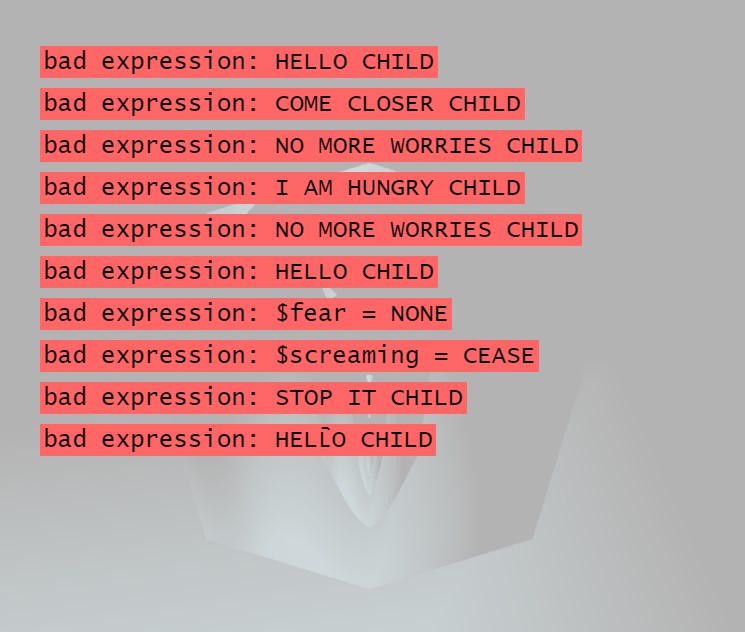
Thoughts on Medium-Specific Idiosyncrasies

by Nathan

In “Medium-Specific Noise,” Arild Fetveit explores the titular subject in detail, as well as how medium-specific noise contributes to nostalgia and authenticity for that specific medium. Something I have noticed over the past few years is a desire to appear “retro.” I specifically remember an Instagram filter that would make the picture appear older than it actually was, and it would provide a date on the bottom corner. The date would be the month and day on which the user applied the filter to the picture, and it would also add a “‘98”, which was a whole 20 years before the filter was introduced. In addition to that, Polaroids have become pretty popular in the past decade, something that logically would be rendered useless by digital cameras, but has managed to stay relevant. Similarly, there has been a great increase in the popularity of vinyl, and I know a lot of people my age in Generation Z who have built small vinyl collections for themselves.

All of these trends are clear signs that people have some sort of connection to and desire for older mediums, and these mediums can be brought back to life through digital replication of their idiosyncrasies. What I mean by that is how certain newer objects and forms of media will try to replicate, for example, graininess in film or audio. I would posit that these forms of replication derive from nostalgia for past mediums. There are certainly plenty of adults now who reminisce about the days of vinyl, as well as the graininess of the audio that comes with it. It allows for the medium to appear authentic and human, as these small idiosyncrasies are likely to bring back fond memories.

In the context of video games, medium-specific noise, or rather medium-specific idiosyncrasies, is not as direct. The medium of audio is simple to make sound older: simply apply graininess and it should sound like vinyl. Similarly, the medium of film can be made to appear older by replicating the retro celluloid aesthetic, as well as graininess in audio if need be. But in the context of video games, there is more that can be altered. For example, are worse game mechanics an effective way at replicating medium-specific idiosyncrasies? On one hand, this method might be able to replicate the feeling players had back in the day when they would play their favorite video games that had worse controls, but on the other hand, this might make the gaming experience equally as frustrating and less accessible. Moreover, while graininess in film and audio might not be the most distracting thing to a modern day listener who never experienced those mediums in the past, I would argue that worse game mechanics and movement would certainly inhibit the player’s experience and most likely make the playing session an aggravating one. As someone who never played Super Mario 64 back in the 90s, I was definitely burdened by the game’s poor mechanics, slippery movement, and terrible camera controls when I played the game in the Super Mario 3D All-Stars collection in 2020. And this can be applied to modern horror games that try to replicate the idiosyncrasies of past horror games; it may end up just yielding a worse-off experience for the players who never played older games.

Another way to replicate the older aesthetic of video games is of course to bring back the wobbly graphics of the PS1 era of video games. After watching the Modern Vintage Gamer video “Why PlayStation 1 Graphics Warped and Wobbled So Much”, it is evidently clear that those graphics were not intended, but rather a byproduct of farther back technology and production constraints. However, these wobbly graphics can obviously be nostalgic for gamers who experienced them in the 90s, but I would posit they make the experience more frustrating for new gamers revisiting them today. Most likely, these graphics would likely come off as hard on the eyes and honestly not very inviting.

As for how effective the horror of these wobbly graphics is, it is more than likely subjective to each person’s experience. On one hand, these graphics might be able to make the game seem even creepier, and the backgrounds and textures being less rendered might contribute to a sense of emptiness and eeriness within the game. On the other hand, the wobbly graphics might end up being off putting for many players, thus taking them out of the experience. Ultimately, this may make the game less scary and possibly too uninteresting or inaccessible. However, I would argue that wobbly graphics have a higher chance at being effective at horror than worse game mechanics because the latter would most likely inhibit the player and make the experience more frustrating than immersive or scary, while the former still may have the potential to be scary to the player.

The Repairer of Reputations’ Unreliable Narrator

by Clarissa

In The Repairer of Reputations, Hildred is an unreliable narrator. I felt that his role could be compared to the governess’ narration in The Turn of The Screw and our discussion of the “fantastic.” 

The story heavily implies that Hildred is insane. First, we hear that years ago, he suffered a fall from his horse, hit his head, and was committed to an asylum for a period of time afterwards. Hildred, of course, tells us that this was a mistake and that his mind has always been sound, but that’s hardly a convincing claim in itself. We also learn that Hildred has read The King In Yellow, a script that is known to drive its readers insane. His behavior and his attempted political conspiracy certainly sounds like the delusions of someone experiencing some sort of paranoid psychosis, and his only confidante in this scheme is Mr. Wilde, a man who is regarded by others as a lunatic. Eventually, his schemes fail entirely, and he dies in an asylum for the criminally insane.

We do not, however, know for certain that Hildred is delusional. If his conspiratorial claims were true, they would still sound mad to people who didn’t know the truth; and it’s plausible that his enemies would thwart his plans by having him arrested and declared insane. There is nothing in the story that directly, conclusively disproves Hildred’s theories about the world, or Wilde’s network of information & profession as Repairer of Reputations. 

As is the case with Turn of The Screw’s governess, it doesn’t seem like Hildred is simply knowingly lying to us – after all, he leaves in many incriminating details that point to his insanity and seem to weaken his story. This includes his descriptions of the reaction of various people around him, who clearly seem to think he’s insane. Also similarly to the governess, much of the ‘evidence’ we see for Hildred’s claims is provided by his internal interpretation of other people’s emotions and reactions, which, for all we know, he could be imagining. For example, when Hildred accuses Hawberk of secretly being the Marquis of Avonshire, this is seemingly confirmed by Hawberk’s and Constance’s reactions, which, from Hildred’s descriptions, seem guilty and defensive. However, they verbally deny these accusations, and all Hildred really tells us is that they look a bit taken aback/disturbed – which seems like a reasonable way to react if a friend is saying such strange and outlandish things to you.  

However, unlike in Turn of the Screw, there are many events within The Repairer of Reputations which seem like they should be impossible if Hildred and Wilde are both completely mad. For example, someone claiming to be “Mr Steylette” visits Wilde’s apartment; Wilde claims this is the newspaper owner Arnold Steylette, seemingly confirming his profession as Repairer of Reputation and his role as orchestrator of this political conspiracy. At the very least, this event is hard to explain if we believe Hildred and Wilde are both entirely delusional. But there’s also plausible deniablity here: we don’t know for sure why this man came to visit; whether he’s really employed by Wilde to influence reputations, as Wilde claims; we also only hear his last name, so we don’t know for sure whether this is even Arnold; and, of course, this could all be a hallucination within Hildred’s mind. 

Another similar event: Hildred tells Hawberk that Wilde knows where some missing pieces of important armor are; Hawberk is shocked that Hildred could even know they were missing, and he later says the armor was indeed found where Wilde said it would be. There’s no explanation for this if we accept that Hildred’s and Wilde’s grand claims are purely born of madness. 

On the other hand, the story also depicts events directly suggesting that Hildred is mad. For example, Hildred describes the crown kept in a safe in his room; Louis sees both as unremarkable, describing the crown as made of “brass and paste” and the safe as a “biscuit-box.” 

At the story’s climax, Wilde and Hildred attempt to blackmail a man – supposedly “Vance” – into killing Hawberk and Constance, while Hildred claims that he’s already killed Dr. Archer (despite the fact that we never directly see that happen). Wilde seems to have been commissioned to repair Vance’s reputation, which led him to discover Vance’s embezzlement. However, “Vance” doesn’t actually follow through on his execution. Also, we don’t know for sure that this man is really Vance – only Hildred’s observations of the man’s reactions seem to suggest this. We also know that “Vance” has read The King in Yellow, so it’s possible this is just another madman. 

In this way, the unreliable narrator of The Repairer of Reputations is quite different from that of The Turn of The Screw. While there’s nothing stopping us from questioning any given detail in the governess’ account, we don’t need to do so in order to believe that she is mad. Only the appearance of the ghosts themselves needs to be a hallucination; the only other ‘evidence’ of the supernatural comes from the governess’ subjective interpretations of other people’s behavior. By contrast, in The Repairer of Reputations, we either have to believe that some amount of Hildred & Wilde’s information network/conspiracy is true and real, or we have to dismiss many directly depicted events as hallucinations totally fabricated by Hildred’s mind. By the end, it seems like anything could have been untrue. Mayne Wilde wasn’t even real, or at least, didn’t say the things Hildred thought that he did. “Vance” could have been anyone, or not existed. The events surrounding the missing armor may not have occurred at all. 

The inclusion of the script of The King in Yellow in the world at large (and its presence in the other stories within the book) seems to indicate that there is definitely something supernatural afoot here, even if The King himself is not literally real, and even if Hildred’s particular conspiracy is imaginary. The text of The King In Yellow itself, at least, has some sort of supernatural effect. But we are not sure just what sort of threat it poses. Does the script cause people to become servants of The King, a real, evil, supernatural entity with an agenda? Or does it merely cause them to go mad and do dangerous things in the name of a fictitious king? The Repairer of Reputations leaves these questions up to the reader. 

Suspension of disbelief in Pontypool

by Coulter Johnston

Suspension of disbelief is an aspect present in many horror films, as the production may require the viewer to accept the existence of the supernatural, whether it be through demons, zombies, or even humans that seem to have supernatural powers. In Pontypool, however, the use of suspension of disbelief by the audience is seemingly unique. Here, the viewer must accept a novel form of viral transmission: through the English language. For someone with a scientific background, this may appear difficult as spontaneous generation has been disproven, and therefore the idea that a virus would be able to spontaneously infect someone merely through spoken word even transmitted through radio waves would be impossible. While the existence of zombies or demons would similarly be impossible, these acts seem more plausible to believe and thus the act of suspension of disbelief seems easier to accept. I believe this is in part due to the vast exposure in popular horror media of such supernatural phenomena, where the idea of viral transmission through audio is relatively unique to Pontypool. For me, this detracts from the plausible reality of the story of Pontypool, particularly through the speed at which the doctor is able to identify the causal relationship between the English language and the spread of the virus. The idea that this doctor can identify 1. That the transmission is viral without reference to any tests performed and 2. Describe a novel form of transmission that would disprove many fundamental scientific theorems that would have been significant parts of his training all within the afternoon of the disease coming to be seems excessively quick, and may have served more as the provision of any somewhat plausible storyline for the audience to be able to follow more easily. However, I believe that an alternate approach may have better fit the requirements of a story such as Pontypool. Like in many other horror films, much of the terrifying aspects of the movie seem to come from the unknown: whether it be where the location of the killer/monster is, or what the killer/monster is, or even whether they exist, this sense of the unknown shared between the protagonists and the audience is what builds the necessary tension and suspense. Similarly in Pontypool, throughout a large portion of the film, this sense of the unknown is strongly manifested through the radio crew who, while picking up aspects of the story through their field reporter Ken, are unable to confirm any of the facts or even begin to understand the cause of the disease, with the only hint coming from the message they translated from French, recommending to not use the English language. I believe that this sense of the unknown could have been further developed throughout the film if the doctor were less certain of his diagnosis of the cause of this disease, as well as held up a greater aspect of realism throughout this story. While this may have detracted from the ability of Mazzy to attempt to save people from transmission through sheer confusion, I believe this would have made an ultimately more terrifying story. Additionally, this part of Mazzy understanding how to overcome the disease and attempting to share this knowledge is portrayed much more in the film than in the radio drama, which opens a question as to whether this was truly necessary or not to the overall plot of the story.

            I also wanted to touch on some of the stylistic choices of the movie, particularly in their choice to remain inside the radio studio for all shots, never showing the outside world apart from seeing the hands of many infected individuals banging on the windows as they attempt to enter the studio. While this is in part due to the adaptation of a radio drama as a film, and therefore by default the majority of dialogue coming from radio segments, I believe this was also a stylistic choice to develop this sense of the unknown, as we as viewers maintain the same level of knowledge of the outside world as the protagonists stuck inside the studio. Additionally, as this is a horror film that tunes us as the viewer to audio cues of a potentially infected person, the fact that our vision is so limited to exclusively inside the studio helps in strengthening this fear of the English language; if this is all the virus requires to infect someone, then even blockading all infected from coming into the studio is insufficient in preventing the spread of the virus. Ultimately I felt that this choice helped in portraying a sense of helplessness, as whether the protagonists try to run or stay and protect themselves, these attempts are relatively useless, elucidating this horrifying concept of an infected language.

Hacker Aesthetics and the Factor of Frustration

Last week, we contested the necessity of the fear factor in the genre of horror, particularly as it pertains to the case of “haunted interfaces” as the primary antagonist. In our previous discussions, we experienced how mediums can terrify us due to how the artists and producers exploit the fact that we take mechanical functions for granted as we navigate virtual spaces. For instance, when we played P.T., the player and their audience felt unnerved listening to technological objects in the maze-like hallway. I recall us mumbling, “Oh, God, nooooo” when Lisa sobbed through a grainy-sounding phone call—we expected Lisa to jump-scare us or at least send another creepy sound our way through the radio. Even when we knew that at the game’s climax we had to follow her cries to track her presence down, I think we hesitated because we feared approaching her terrifying presence.

The movie Unfriended also took advantage of glitches within digital interfaces to haunt Laura’s former friends and by translation, to unsettle us as witnesses to the computer’s malfunctions. We saw through Blaire’s screen that the Facebook “block” button mysteriously vanished; while we might have quickly dismissed that as a bug in Facebook’s programming, we came to slowly accept that Blaire and her friends were cursed to die through Laura’s haunting of their digital devices. After all, an anonymous phantom entered their Skype calls without permission, and when their screens “froze” or “glitched,” the next frame showed us (and Blaire) that the friends died grisly deaths at Laura’s hands. It was almost as if we were trained to anticipate death after glitches interrupt the normal flow of computer interfaces… In other words, we expect glitches and digital unreliability to manifest on-screen scary, horrifying, and disturbing consequences to those who bear witness to the technology’s deviance from standard function.

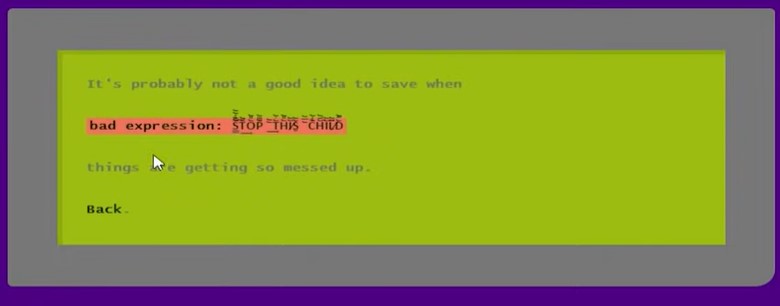
The two games we played last week subverted these experiences somewhat. The Uncle who Works for Nintendo indeed started off creepy in my initial playthrough. When the Uncle appeared for the first time to eat my character, I jumped at the successive knocking sounds, then at the cacophonous noise that accompanied the glitching, “erroneous” Twine commands, which made clear that my character faced certain death. However, as I progressed through different endings of the game, the “haunted interface” took on a contrasting tone—rather than anticipating the Uncle, I found myself eagerly awaiting the malfunctioning interfaces because I knew it meant I would progress in the story. At that moment, the “fear factor” that I would have felt toward the Uncle transformed more into a feeling of curiosity: unlike the anxiety-induced hesitation we experienced bracing ourselves for Lisa’s appearance, an urge to “find” the alternate endings trumped any notion of fear. 

My anticipation was answered by the final “secret” ending of the game, when the Twine layout itself transformed as the Uncle threatened to take away my friend’s life. As the Gameboy/Uncle became deadlier and stranger, as the player I began to not fear a threat on my own avatar’s life, but on my friend’s life. Hence, when I unlocked the final ending, in which I saved my friend from becoming a missing child (as other endings implied), I came to see The Uncle who Works for Nintendo as a game about friendship that contained horror elements. In its use of untrustworthy interfaces, I found a narrative about love between friends—how far is one friend willing to go to brag about how “special” their own video games are, and how far am I willing to go to save an annoying, but beloved, friend? 

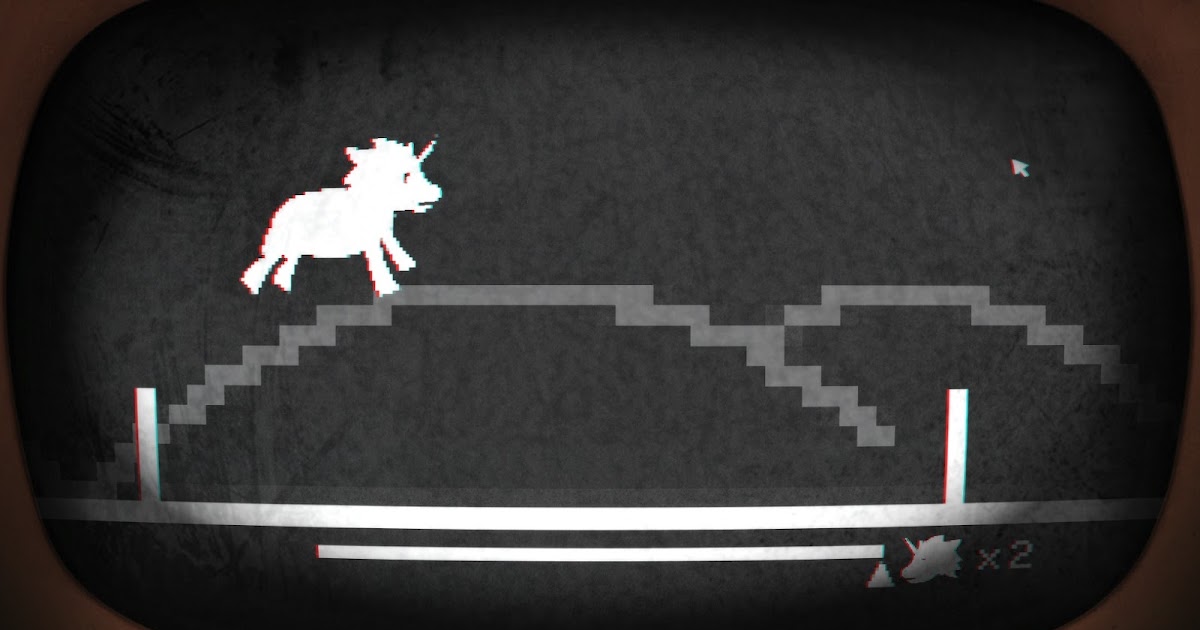
Pony Island’s subversion of the fear factor is more clean-cut. Upon its first clicks, immediately my group sensed that the hacker aesthetic was not curated to necessarily scare us with its devil antagonist, unlike the historical Satanic Panic incidents we talked about in class (backmasking, etc.). Rather, we were laughing at the interface’s whimsical tone, and we thought that the self-awareness that Lucifer and his demon horde possessed actually enhanced an otherwise mundane game. At its core, Pony Island is a platformer game—and a tedious, repetitive, uninspiring one at that. The player controls a pixelated unicorn who can only jump over obstacles in a mostly horizontally-scrolling environment. There are no enemies to take down, no power upgrades to look forward to, and no change in the speed or intensity of the scrolling. 

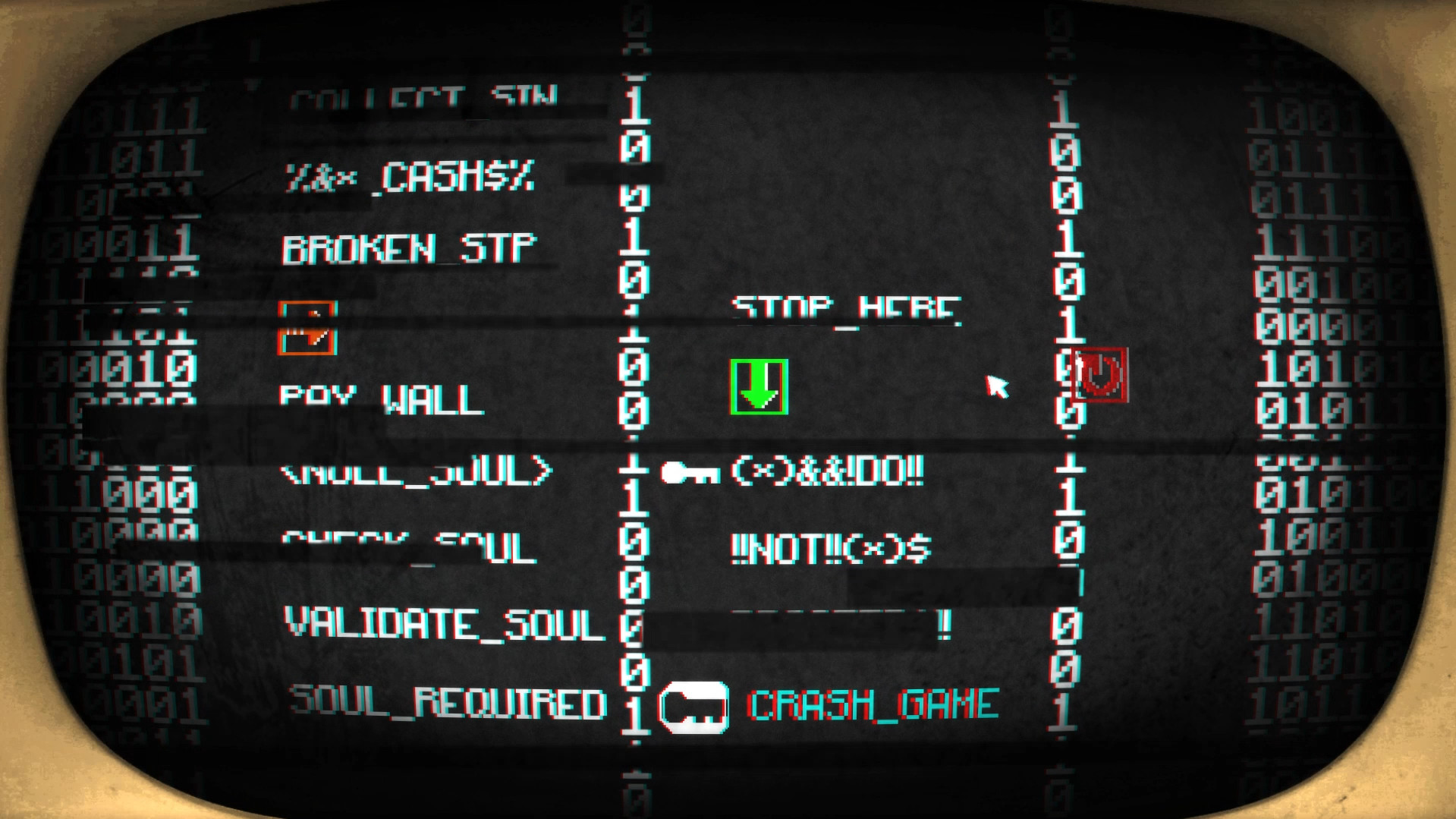
This dramatically changes, though, as Lucifer attempts to make the player’s gameplay unbearably impossible to conquer—the inclusion of enemy targets and bosses, demons who play Tic-Tac-Toe-like puzzle games, and hidden glitches within the virtual desktop that the player can exploit to gain hacks (like the laser). Suddenly, the game ramps up its stakes, but in the process of creating harder game “challenges,” the more Pony Island felt like it was creeping closer to something as enjoyable as the Super Mario Bros franchise. Thanks to my classmates who spoke during my presentation, we concluded that Pony Island was a playful, mischievous parody of both the horror and platformer genres, reminding us that fear may be a sufficient feature of scary video platformers, but not mandatory. Indeed, as gamers, we constantly worry about “failing” the level by falling off a platform or getting overwhelmed by enemy targets. And as horror fans, we also feel scared as we brace ourselves for a horrifying villain to lunge out and kill our beloved characters. Somewhat departing from both, Pony Island’s addition of fun, new mechanics as the Devil tried harder to inhibit us from entertaining ourselves with the game ironically felt less stressful and terrifying, yet still retained a sense of stimulated excitement by introducing something new the moment we sensed tedium in the mechanics. Strangely, in a way, I felt like I was “hacking” the horror genre to disturb its conventions of utilizing “fear.” Playing with and counter-hacking Lucifer’s malicious intentions, then, questions horror game’s conventional reliance on fear, but I do wonder if the future of unreliable interface games will lean toward it again…

—Alina K.

Pontypool: Radio and Film

by Counti 

I talked a little about this in my discussion post, but I wanted to talk more about it here. 

Why change the endings? 

There is a little bit of trivia that said that initially, the movie was only going to be the radio waves on screen, similar to the beginning of the movie. If that was the case, would the movie have been the short 46 minute version, or would it have still been the longer version? Part of the differences in the endings can be attributed to the movie justifying taking place as a visual medium: there are changes in scenery, more characters, and more action—as well as the inclusion of Grant trying to save others, the bombing, the post credits scene, and the fact that Blair survives a bit longer. This changes the tone that the radio drama has and really pulls away from the horror and suspense that the radio drama cultivates. I truly believe that if I had listened solely to the radio drama, or heard it first, I would have been far more terrified, because I believe the radio drama is a stronger piece or horror media. I think it would be interesting to have part of the class listen to the radio drama first and the other half the movie first, and see what is more horrifying and what has a greater impact—as well as what ending fits the theme and makes the most sense. 

Furthermore, what purpose do the different endings serve? To be completely honest, I was unsure of what the movie (and the radio drama) was trying to say at the end. Not every piece of media needs to be clear cut, but I did feel that towards the end (mainly of the movie) the horror had fallen to the wayside and my confusion had won over. I would have liked to hear what others thought about the strengths of both endings, both in terms of story and in terms of a horror story. It also made me wonder about the use of horror as genre or horror as a plot device, which is something I hadn’t thought about before. The horror of the movie was very strong during the first half (which was the majority alike to the radio drama) but it fell off as the movie continued. Not only that, but the pacing of the movie felt like it should have ended about halfway through, and now that I’ve listened to the radio drama, that makes sense–I think it was supposed to end halfway through, but they tacked on a bunch of things to the end. I would be interested in reading the book and seeing what other differences there were. From the reviews I read, the book is said to be somehow more vague. I am curious, however, about the ways it is vague. I feel like confusion has a key role in horror. You want just enough to have people interested, curious, and on the edge of their seats. The horror of the unknown is important and definitely causes my heart to race. But too much confusion and frustration comes into playIf people are too confused, then that confusion replaces the horror, and I wonder if that happened with anyone else while watching or listening to Pontypool

The realism of the radio drama:

I was curious if there was a way to reach a similar effect of horror and confusion if we as the audience only received what the people of Pontypool got to listen to. As is, a lot of the story would be incomprehensible without backstage access, and we would lose some character development and some neat moments. However, thinking about War of the Worlds, I think that it could be interesting to do a re-write that focused on a listener’s perspective. What could be changed or added? Could a character accidentally leave the broadcast on so the audience could hear a pivotal moment? Could Laurel-Anne, since she was taken over by the virus, turn the radio broadcast on in an effort to infect more people? Would that add some suspense and fear if you were listening to the radio version, provided it was the right type of confusion (akin to going through the situation in real life) versus just the confusion of bad writing? 

My thoughts on the obituaries: 

I think the obituaries were more fitting in the radio version. In the radio version, the obituaries  are given at the very end, making the fact that Grant would need information he has no way of getting to tell the obituaries make a little more sense. It feels more poetic, and it’s more like a ghostly explanation rather than an in-world part of the plot. However, in the movie, it seems to function more like it was a real thing he had really said, which took me out of the terror of the moment because I started questioning how he could know, rather than basking in the poetics of what the obituaries were saying. 

The Manifestation of Fear in Slenderman

by Kerry

Slenderman’s presence in media is especially intriguing due to its origin as a viral subreddit post. The concept of Slenderman therefore was not created through a movie, video game, book, or anything of that nature, as many similar characters are. Because of this, a lot of the content created about Slenderman, whether that be other internet posts, video games such as “Slenderman: The Eight Pages”, or Marble Hornets, are made by a variety of different people, rather than just one person or company. This leads to more variety between the different depictions of Slenderman in media, and a lot more additions to the lore that comes with Slenderman that is not seen with a lot of other similar horror characters. This overall variety in the media able to be consumed for Slenderman makes a lot of the content more unexpected despite the fact that the lore is something that many people already have prior knowledge of. 

Beyond this, Marble Hornets specifically is able to invoke fear in the viewer for reasons beyond the creature of Slenderman himself. Marble Hornets plays heavily on the common fear that one is being watched or stalked. The characters in their videos are consistently depicted as stressed about someone following them, and even feel a need to film everything they do for this reason. Marble Hornets also shows Slenderman himself coming into one of their homes while they are sleeping, and then later the man in the mask standing over the main character as he sleeps. This builds upon the fear that the show is invoking that one is being watched, and begins to play with the fear of someone or something actually breaking into your home, and your home no longer being somewhere you can feel safe. On top of both of these, Marble Hornets depicts the characters as having to essentially leave everything behind and focus all their time and energy on escaping their situation. Because of this, they end up isolated, and isolation and loneliness are another largely had fear, especially when it is forced the way it is here. So through these means, Marble Hornets, and Slenderman lore in a more general sense, are able to very easily invoke fear and unease in the viewer despite the fact that the amount of times Slenderman is actually depicted in the show is rather low.  

Further, Marble Hornets has a unique characteristic to it that adds an extra layer of horror many others in the “Found Footage” genre do not have. This comes from the premise being that Jay is watching all the old film from his friend Alex, which is the “found footage” in question, and trying to figure out what happened to him. There are often even written comments on each clip before or after the clip plays, giving the show the feel that you are watching them at the same time as Jay. However, as Jay watches the film, and begins to get an idea of the situation that Alex was in, the same situation begins to happen to him, and the clips become footage Jay takes of his own experiences. This gives the viewer the feeling that because Jay watched the footage, he then ended up in a horrifying situation himself, and that this could possibly happen to anyone watching the footage, including the viewer themselves. This added layer in Marble Hornets also plays on the viewers fears similarly to the ways mentioned above by implying the possibility that actually viewing this could be a danger. 

Outside of Marble Hornets, Slenderman lore also creates horror beyond just Slenderman appearing scary by playing on common fears. Many creepypasta and subreddit posts involving Slenderman would involve someone creating a photo with Slenderman photoshopped in the background, and a caption implying something bad happened after it was taken. A good example of this was a post with Slenderman in the background of a photo of many children playing, and the caption describing that they all went missing following the photo. This post plays on the very real fear most parents have about their children being kidnapped. 

It can be seen how Slenderman manifested itself in a very real and scary way through the tragic Wisconsin stabbing involving the young girls. This incident has brought about the discussion of whether this sort of event would be inevitable and could have manifested through any viral horror entity, or if there was something about the Slenderman lore specifically that invoked it. While it seems this incident could have been inevitable and inspired by other pieces of horror, it does seem that the nature of Slenderman, and horror with similar lore, could more heavily inspire this than some other entities.  As discussed above, the lore of  Slenderman and Marble Hornets do a very good job at playing at people’s fears and creating a strong sense of unease for viewers with this subliminal threat of being watched, and isolation.

The American ‘Moral Panic’ Problem

by Sofia

Hopefully, this isn’t just of interest to me, but I’ve been really eager to try to understand or place what is uniquely American about this myth of the ‘satanic cult.’ To be clear, that isn’t me trying to say that this is a trope that is somehow only been expressed as part of American film tradition and cultural lore—because, truthfully, that would be one of the sillier crosses to die on. If nothing else, I mostly just want to use this post to think about how American culture might encourage an especially sympathetic relationship between itself and moral panics.

Something nodal that emerged for me from this particular line of inquiry was a contention with the United States’ relative cultural youth. Even though a lot of this comes down to subjective conjecture, compared to most other countries, I’ve always been taught that America is on the naïver end. Again, it is possible that I’m totally off, here, but, from my experience of history, it seems as though the United States has lagged centuries behind other nations in crystalizing certain parts of its cultural identity. 

What does this have to do with moral panic, you might be asking? Well, if you take a historical perspective on social scourges like the ‘Satanic Panic’ of the 80s, you’d see that the timeline of most of these scandals share a pretty prescriptive formula: rapid societal change meets the knee-jerk reaction of fear and, next thing you know, people want a scapegoat to externalize their fears onto. For a country that reads more like a crash course in political upheaval and moral freefall, you could see how things might take off. What’s more, the United States is largely considered to be a pretty culturally Christian society, which means it doesn’t take much to conjure a Devil in the imagination of the average American. So, between those two, say, ‘cultural pressures,’ I think it is easy to see how people might’ve gone running with conspiratorial theories in an attempt to make themselves feel safe in an otherwise largely turbid, disordered world. 

This, of course, doesn’t excuse the fact that a lot of people’s lives were ruined by these social contagions, it’s more just an attempt to flag the ways that people understand themselves as acting within this broader tradition of heroism. I think that is, in large part, what makes these moral panics so fervent: barring those bad actors who just want to turn a profit on others suffering, or sow seeds of chaos, there seem to be a lot of people—parents especially, as evidenced by the Tipper Gore reading—who are well-intentioned, but can’t seem to quiet their desire to cocoon and, ultimately, control the vulnerable populations around them in the name of ‘safety’ (think slices of our population like children, the elderly, animals, so on and so forth).

This also helps to explain how these movements come to snowball and almost ritualize themselves into our shared cultural conscious: if people think a witchhunt is protecting kids from something like a shadowy realm of people who live among and take pleasure in abusing us, then it’d make sense that those same fantasizing ‘heroes’ would be willing to look past the appalling lack of physical evidence that usually accompanies these sorts of movements. When everything is conveniently clandestine and truth can operate as needing to be recovered or prompted back by some mediating authority, as was the case in the 80s, then it follows that audiences would have been more lenient in their appraisal of what is factual information and what is anxiety/fear masquerading as such.

 As a final thought of sorts, I think it is interesting to think about how, with ‘Satanic Panic’ specifically, there was no Jonestown, or David Koresh scenario, and yet that didn’t stop people from buying into the validity of these claims! It seemed that with fewer touchpoints to any verifiable crimes, preoccupation with these stories only grew. This, in my understanding of things, is a really fascinating parrot or mime of how people negotiate the lore/specter of the supernatural and occult. Because these claims crucially existed beyond the metaphorical court of peer-reviewed methodology and hard evidence, means that these allegations were allowed to take hold in the same place that the monsters from horror movies do: our own imaginations.

With that in mind, the next time you see the alarm bells of hypervigilance take precedence over incontrovertible fact, step back and seek perspective: is this really about evil being perpetrated in the world, or is this more in line with a projection of someone’s fear of difference or change? Using that lens to revisit the years of Satanic Panic would tell us that it is more than likely the latter. 

Slenderman and Moral Panics

by Kat

Slenderman was uniquely suited to create a moral panic because its imagery and lore played into tropes associated with moral panics and worked well on creepypasta forums. Slenderman first appeared on the Something Awful forum in 2009 with only two photos and a very bare description. Both photos are just specific enough to inspire fear specifically surrounding the safety of children but vague enough to allow the reader’s imagination to run wild with the possible meanings of the threat. The first caption showing a crowd reads “We didn’t want to go, we didn’t want to kill them, but its persistent silence and outstretched arms horrified and comforted us at the same time…”. A lot of work is done in this sentence. The first half suggests that slenderman is capable of causing innocent adults to commit violence against other humans. This is a very tangible threat, but leaves the specifics of who was murdered and how they were killed up to the reader’s imagination. The second half of the sentence is what makes this quote so effective. It does not attribute any action to slenderman. Slenderman’s presence alone is the source of corruption of innocence into committing violence. The second photo posted adds validity to this threat. It ties slenderman to the disappearance of children, citing false sources to add credibility. When combined, these two images and a few sentences become a very effective fear tactic. There is just enough specificity for parents to be afraid of their children being corrupted by slenderman , but leaving the details of this process vague enough to excite their imagination. This vagueness also allows it to inspire other creepypasta writers to contribute to the mythos.

Slenderman isn’t real to parents in the sense that they believe that there is a supernatural creature that is going to find and corrupt their children. However, there are parents that believe in the corruptive force of the slenderman myth. There is an ever-present societal fear of new media, particularly with the internet. Parents were afraid of what their children might see and how it would affect them if they were left unsupervised on the internet. Slenderman made this abstract fear tangible. Parents no longer needed to be afraid of what the internet would do to their children. They are afraid of what seeing slenderman would do to their children. In this way, slenderman was very real. Its lore as a mysterious figure that corrupts the youth was able to scare parents about their kids’ saftey, even if the parents knew slenderman was fictional.

Where other stories that had the potential to terrify parents died out, slenderman was uniquely suited to take advantage of the structure of creepypasta subreddits and become viral. Notably, slenderman’s character design is easily recognizable and easily inserted into images. Slenderman is simply a tall, long limbed figure with a white, blank face and a suit. All it takes to create a slenderman image is rudimentary photoshop skills or a friend in a white, nylon mask. This character design allows photographs and videos of slenderman to be easily recognizable, even when the figure is in the distance or only seen briefly as well as when the image is blurry, grainy, or otherwise distorted. These characteristics made it very easy for slenderman to spread as a copypasta. Each contributor was easily able to add their own photograph, video, or story of an encounter to expand upon the myth. This allowed slenderman to quickly go viral and develop an ever-expanding lore generated by the readers.

Slenderman’s proxies is also a key component of both slenderman’s virality and the following moral panic. A proxy is someone who has been chosen by slenderman to perform actions on its behalf. This premise is the base inspiration for a lot of slenderman stories and supposed encounters. It also allows the line between reality and myth to be blurred. Creepypastas often function as a place for roleplay in which online users pretend to believe in the stories they are writing in order to make their posts seem more authentic. This means that a child who comes across slenderman has the potential to engage in roleplay around slenderman, not realizing that it is only roleplay. This makes the potential for moral panic even greater. Children are not only at risk of encountering slenderman posts specifically designed to scare or trick them. They can also fall victim to roleplay channels where users scare or trick the child, not knowing that the child believes it is real.

In essence, slenderman was uniquely suited to create a widespread moral panic. The initial story was just the right level of frightening and vague in order to inspire others to want to contribute. The character design and the few key components of its lore made it easy for the idea to go viral across the internet. This combined with parents’ preexisting fear of the internet scaring, tricking, or corrupting their children, generated a widespread moral panic that few other stories would have been capable of.

The Fear of the Known and Unknown in Media

Ben Ho

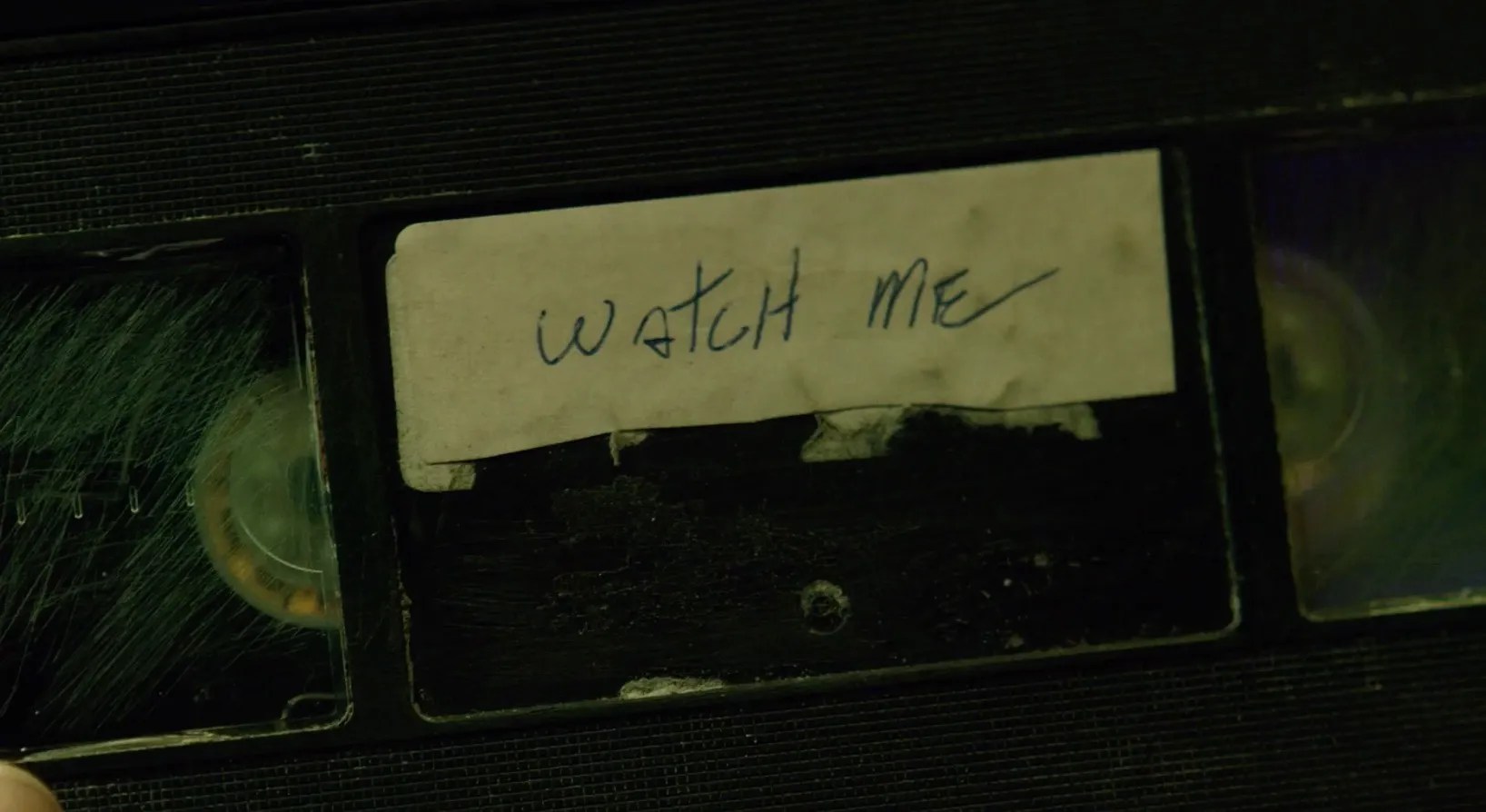
When asking the question, “What is scary?” immediate answers might include things or feelings we know: spiders, heights, clowns etc. But when thinking about what makes horror movies scary, it is often the things we cannot understand that drive the fear throughout the movie. Perhaps it is a string of deaths that seem to be connected, but we do not yet know how. Or maybe it’s some movement in the background of a shot that has an unknown source. In the case of Ringu, it’s a VHS tape that kills you seven days after viewing it. The tape itself is a string of footage some might consider disturbing, but besides that, we never see how the tape kills its victims. Despite there being no physical killer and having no idea what causes the people who watch the tape to die, the tape evokes a sense of fear in viewers, even decades after when VHS tapes were popular forms of media. Which then begs the question, “why do we find Ringu and other forms of dark media scary?”

VHS tape from the movie Rings

Our discussion in class first centered around old vs. new media. Specifically, we talked about how viewing Ringu today, with streaming services being the predominant mode of media consumption, affects the way we watch it. For some, the “oldness” of the VHS tape creates a heightened sense of fear, both because we have a slightly lowered idea of how VHS tapes work and also because of some other less distinct factor that gives objects a scarier aura with age. For others, the it wasn’t necessarily the fact that VHS tapes were somewhat antiquated, but rather, that unlike modern technology, where movies are converted from 1’s and 0’s by our computers into pictures, a VHS tape has a physical form that can be haunted. This point brought about another discussion about whether or not a piece of media needs a physical form to be scary. Our answers to both questions ultimately left us with conflicting opinions, pointing towards the possibility of technology we consider cutting edge today becoming dark media in the future in a way we might find scary.

Another take on this topic comes from Thacker’s “Dark Media” which he describes as media or mediation which “… have, as their aim, the mediation of that which is unavailable or inaccessible to the senses”. While he doesn’t specifically touch on the ways modern media might be construed as dark media, for him dark media is not concerned with the age of the media or the form. Rather, it’s all about there being something within or behind the media that we perceive but isn’t the media being presented. Note that this is not limited to any technological form since the media only becomes dark media when we perceive it. In other words, whether it be a radio broadcast, VHS tape, DVD, or stream, when we view the media we are viewing and, in a sense, creating whatever dark force, be it demon or otherwise, that makes the media dark media.

I’ll now offer some of my own thoughts on these topics and their implementation in movies. I don’t think a VHS tape is uniquely scary or that technology must be old for it to be scary. The latter is evident since VHS was at its peak when Ringu came out and smashed the box office. Horror movies and games might turn to VHS for their preferred form of haunted media because of the aesthetics and ease of story telling offered by having a physical object. This way, there is a sense of unique-ness to that one particular tape that cannot be shared with as much ease as digital media today. For the viewer, it also makes more sense that the tape itself could be haunted, instead of the digital signal that is reproduced as video on our screens when we stream. Ultimately, I think that what makes an object or piece of media scary is how it is presented to us as viewers. The reason it becomes increasingly difficult for us to pin down ‘the thing’ that makes something scary, is because there are many aspects that factor into such an opinion: visual effects, music, setting, lighting, and the time and place we actually watch the movie as well. Perhaps we can expect haunted iPhones or a demonic Oculus Quest in the future, and, if done right, be warned! What might seem mundane today, could terrorize your nightmares tomorrow.