Energy and the American Landscape

Stratman, Deborah - Energy Country (USA, 2003).mp4 2017-04-26 17-12-35

Grant Fryc

As humans, we rely on the land we live on. Though we might not always respect it or take care of it the way we should, it is the most important thing…ever. The landscape of a given area and the way it is treated can tell you a lot about the people who live in that area. The underlying theme of this week’s films, with the exception of Ito Takashi’s Spacey (1981) is the American landscape and the relationship between the land and its occupants.

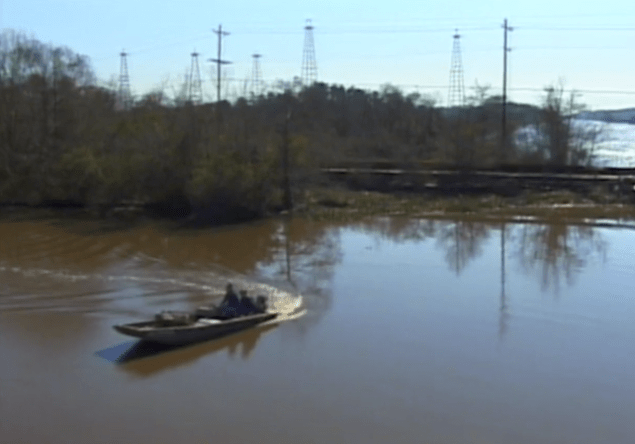
Deborah Stratman comments quite directly on this relationship in her film Energy Country (2003). Energy Country paints a harsh portrait of southeastern Texas and the oil industry that resides there. As the oil industry and American nationalism often go hand & hand, Stratman critiques US involvement in the middle east using a combination of both documentary and experimental film techniques. Visually, the film has the cues of the typical avant garde film in the way that the shots are composed and strung together; sonically, Energy Country takes a more  experimental approach than a typical documentary in some instances Stratman layers several audio tracks upon one another to create a chaotic effect. Clips of oil refineries and energy production facilities are layered on top of each other interspersed with clips of bombs dropping while found audio clips from christian radio play in the background. The voices playing over the fiery imagery speak of god and how he loves america. They speak of Islam and how threatening the religion is to the American way of life, mentioning that for the president to say that Islam is a peaceful religion is to “jeopardize all of the free world and America.” All the while Stratman is  showing us American bombs being dropped on a landscape below. Energy Country raises questions about  the ethicacy of the oil industry and the landscapes it affects. Internationally, the destruction caused by the American pursuit of foreign oil is disgusting. Domestically, though the destruction isn’t caused by the dropping of bombs, the effects of the polluting of American landscape by the oil industry are nauseating. This film focuses mainly on the domestic side of the industry and its effects on the landscape of Texas, but Stratman doesn’t shy away from the international issues surrounding energy.
Continue reading

The Influence of Time in Architectural Spaces

Screen Shot 2017-04-25 at 11.07.49 PM.png

Claire Bentley

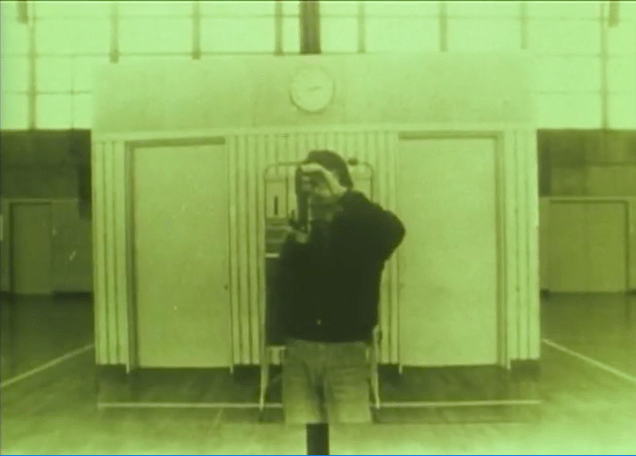
It is simple enough to begin with the fact that all films have some sort of setting. Whether avant-garde or not, films take the viewers somewhere. It might be just one place; a classroom, a wall, or a high school gym. It might be of many places; a hundred different areas of a metropolis, the path of a freight train or an array of factory buildings. Where and how the filmmakers choose to take us is just as important as other components of filmmaking – storyline or lack thereof, background/context and subjects. In four different films made in a period extending from the 1960s to early 2000s, Go, Go, Go! (1964) by Marie Menkin, Spacy (1981) by Ito Takashi, Energy Country (2003) by Deborah Stratman, and Castro Street (1966) by Bruce Baillie, filmmakers tamper with different methods of effect to change our perspective on setting and architectural space, as well as elicit the importance of place in avant-garde film.

Continue reading

Architectural Kaleidoscope

Screen Shot 2017-04-25 at 7.08.51 PM.png

Manon Piernot

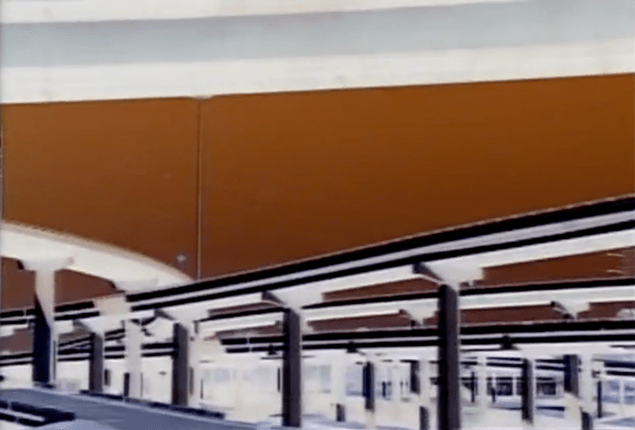
The following films explore the disappearance of nature and the taking over of the natural world by humans. Architectural kaleidoscope films show images of industrialized cities and portray them as somewhat dangerous and sinister. In Deborah Stratman’s film Energy Country, she shows energy companies in Texas fenced off with warning signs as eerie music plays in the background. Images of industrial buildings letting out smoke into the atmosphere feels toxic and unnatural. The mood of this film is rather melancholic. The point of these films seems to be exposing what mankind has done to our Earth. Bruce Baillie’s Castro Street shows scenes of flower fields interrupted by a train making loud industrial sounds. It feels unnatural to simply look at the train going through the field as an aesthetic choice, it instead gives off the impression that the train is disturbing this natural scenery.

Continue reading

What Went Wrong?

Screen Shot 2017-04-18 at 10.36.09 PM

JB Fry

The avant-garde, experimental films of the late 1960s put their audience in the darkness of the theater with radical images and speculative subjects. The viewers were left to wonder “What am I watching,” “Why is this happening,” and ultimately “What went wrong?” Which is the same question that Blonde Cobra presents at the end of its duration. Naturally, we question the intentions of artists in this movement. Blonde Cobra flaunts its awareness of failure to unravel film and identity. It reminds us the world is not a spectacle easily observed but a reminder that we are cinema. We are no longer bought into the heteronormative conventions in the mainstream of Hollywood. Thus we begin to realize our position as spectator in relation to what is being viewed. In the “Introduction (to Flesh Cinema)” by Ara Osterweil, we are immersed into the ideas behind Ken Jacobs’ Blonde Cobra of embracing failure and queering the image in the corporeal turn of the avant-garde.

“Failing” is pivotal in the films of the American underground cinema. “Losing, forgetting, unmaking, un­doing, unbecoming, not knowing may offer more creative, more cooperative, more surprising ways of being in the world” is what Judith Halberstam has manifested in the ‘queer art of failure.’ Osterweil introduces us to the platform in which Jack Smith performs for Jacobs’ Blonde Cobra. Described as “the worst film ever made” by critic David James, Blonde Cobra is the composite of Bob Fleischner’s parody films of Blonde Venus (1932) and Cobra Woman (1944) with the narration of a live radio. Jacobs deconstructs the fictional world that lives in cinema by taking away the image, playing the audio throughout the theater opposed to speakers behind the image. The blackout of the image, a persistent feature in the film, is the instance of what could’ve been a mistake. Rather its failures are key and used to queer cinema from heteronormative commerciality that is capitalism.

Continue reading

The Reality of Failure

blonde_cobra_ken_jacobs_550x238-detail-main

Daniel Champion

One theme that seems to have come up consistently throughout this semester, is the idea that the avant-garde film makes the viewer aware of the medium of film itself.  This quality can make a film like Stan Brakhage’s material inspired “Mothlight” modern under Greenberg’s definition of modern art that we looked at in the reading “Modern Painting.”  A realist painting tries to seduce the viewer into giving in to the illusion of the scene while a work of modern art is fully aware of it’s position as an object in a gallery.  In his article for Film Comment “Bad Movies”, J. Hoberman takes on this abstract push and pull between the modern and the classic view of art and puts these ideas into the context of mainstream film in the 20th Century.

With film, it seems, the relationship between art and reality becomes slightly more confusing than it is with painting for example, due to the nature of the medium.  With painting the original goal was to capture reality and try to render three dimensional objects on a two dimensional surface.  A film camera however, is always capturing some piece of reality, no matter what it is pointed at.  For many commercial films today, the film maker’s goal is also to capture a piece of reality, but one that is not the actual reality of the people the camera is pointed at and is instead a fictional space that is created when the people in front of the camera pretend to exist in that fictional space.

Continue reading

Migration and the Poor Image

how_not_to_be_seen_screenshots.jpg

Ramona Beattie

In this time of mass information, of the digital bureaucracy of the internet mirroring the real almost entirely, systems are built for fracture; instability of systems becomes the rule, and not the exception. Across the board, mistrust of those in positions of power, and in the nature of these positions in the first place. As frantic, constant, in-flux response, makeshift environments of fear and deterrence are pinned up in order to maintain control of individuals. If everyone’s gonna get crushed, something’s gotta splash out from the sides of the shoe. If we think of stomping as the mechanism of control, and the guts flying out of the sides are those who are pushed to the edges: those who are marginalized, degraded, sent into exile. And in a time of mass dissociation and mass frantic control, the realest experience is that of these individuals, traditions, objects and symbols. The imprint of the real chaos and cruelty and stomping of the world is all too heavy on the exiled.

Continue reading

Alternative History of Visual Music

Lola Dement Myers

Sound and film have been ubiquitously grouped together since the development of sound in cinema in the mid 1920s. Last week, we covered what sound and music are in relation to film, how sound aids or detracts from visual cinema, and the differences between sound and music. Sound, in relation to picture, usually comes second in the process of making a film. In traditional cinema, the sound of the film is often determined by the visuals. But what happens when an artist creates a film where sound is the dominant medium? When sound determines the visuals of an avant-garde film, Visual Music is created. This type of film includes work by Mary Ellen Bute, Oskar Fischinger, Norman Mclaren, and Stan Brakhage.

Continue reading

The Presence of The Hand in Alternative Animation

Alexander Popejoy

When looking at a garment, one of the first things one might notice is the presence or absence of “the hand.” Are the seams perfectly sewn and pressed, or do we see some threads unraveling at the finishes, some hand stitching? When we see the absence of the human hand as a force of creative work, there are instant connotations that come with this. Some connotations could be considered positive, such as refinement or perfection, but others not so much, such as anonymous labour and mindless production. While watching the material for Week 11’s topic of alternative animation, the presence or absence of the hand as a mark making tool was something that really struck me as important. The following paragraphs are my thoughts on the videos we will watch in class through this lens, with the exception of Night Hunter by Stacey Steers.

Continue reading

Dissynchronicity in Sound and Film Art

deserter

Izzy Adams

Soviet filmmakers spent their lives defining and redefining montage film. Montage is the central genre in experimental film in Soviet Russia. Earlier in the course we discussed and read S.M. Eisenstein’s theories on montage. Precisely, he defines the genre as such: “montage is an idea that arises from the collision of independent shots.” Montage revolves entirely around editing, and when the soviets coined the term they introduced a new kind of cinema to the film world which would greatly affect the future of narrative filmmaking and filmmaking in general.

In their essay titled “A Statement,” S.M. Eisenstein, V. I. Pudovkin and G. V. Alexandrov discuss the introduction of sound to the art of film and its merits and possible detriment it could bring to the medium. Throughout, they seem to go back and forth on what good they think sound can do for film.

Continue reading

Soviets and Their Theories Around Sound in Experimental Film

deserter4

Aspen Stanley

The idea of montage is heavily explained, and defended by early soviet film-makers such as Eisenstein, Pudovkin, and Alexandrov. They would discuss theories in the construction and purpose of montage. When the introduction of sound into the cinematic experience, sure enough, the same soviets had much to say about the way sound should exist and interact with the montage.

The Soviets introduce a few possibilities for how sound can serve a purpose in montage, and also how sound could be the detriment of the piece. In attempts to stray away from the theater and grow into the potential film has apart from it use to capture theatrics, rather as a medium of constructing montage, the automatic adherence of sound to film is what is could be the driving detriment of a film. A “backing track”, so to speak, is what these thinkers are referring to: the purpose of adding sound for the sake of adding sound. This addition of a “backing track” to film is curious in early film because, often the music added to a film was being performed by a live orchestra in the cinema. In order to avoid “destroying the culture of the montage” a few applications for sound in film are introduced.

Continue reading