Michel Chion’s Soundscapes

by Charlie Donnelly

The majority of meaning in film is derived from association. Whether this association is present in the form of the eyeline effect or the Kuleshov effect, no larger message can exist without relying on the audience’s ability to join elements in their minds. To Michel Chion, the associations made between visuals and sound seem equally important as any visual association.

In his discussion of the association between sound and visuals, Michel Chion, a prominent film theorist and the author of Film, A Sound Art claims there are three categories of sound that can be coupled, blended, and traversed in a multitude of different ways as opposed to the simplistic categories of only “offscreen” and “onscreen” audio.

Continue reading

A Man Escaped (1956) – The Many Uses of Sound in Film

A-Man-Escaped.jpg

by Aditya Tandon

A Man Escaped, directed by Robert Bresson, is a film based on the remarkable escape of Andrew Devigny from the Fort Montluc prison in Lyons during the Nazi occupation of France during the Second World War. It tells the tale of Fontaine, a man from the French Resistance, his experiences in prison, the other inmates he meets, the escape plan he hatches, and a young boy named Jost who joins him in his final days.

Given the title of the film, there is obviously little suspense as to the outcome of Fontaine’s period at Fort Montluc, and yet, Bresson succeeds in keeping the audience fully invested during the 101 minutes duration of the film. Principally – although certainly not purely – he does this by giving enormous importance to the sounds in the film and the various purposes they serve, amplifying the volume to such a great degree during many parts that he is almost forcing us to pay extremely close attention to them.

Continue reading

Invisible Cinema: The Creative Processes of Post-Production Sound

by Julian Spencer

There’s a very different air in the room when a screening begins: “Our feature film today, a revolutionary work in silent film…” Already, sporadic blips of white electronic light begin to pervade the otherwise uninterrupted darkness of the theater as students prepare alternative entertainment to the silent spectacle on screen. Whispers run through the crowd. I hear a neighbor ask: “Why can’t we just watch a normal movie?” Even if a score accompanies a work, there’s no denying that a lack of dialog makes a movie a much less appealing choice for a filmgoer; when is the last time you sat down to watch a Chaplin for family movie night?

Continue reading

Montage in Cinematography—Lev Kuleshov and Sergei Eisenstein

by Renato Corghi

Reading 1: Montage as the Foundation of Cinematography by Lev Kuleshov

Purpose: Lev Kuleshov makes his purpose for writing this piece clear: to familiarize reader with the work of the Kuleshov group. More specifically, he is relating the process by which he developed his theory about montage and what his findings were. He breaks this process down into separate chronological stages.

Continue reading

Barry Jenkins’s Moonlight: A Masterclass in Expressive Camerawork

Moonlight_Chiron's_mother_in_pink_doorway

by Jacob Benigeri

Moonlight is a film directed by Barry Jenkins and is based off the play In Moonlight Black Boys look Blue, written by Tarell Alvin McCraney. Moonlight was both a critical and a commercial success, grossing $65.2 Million and winning three Academy Awards. Moonlight tells the story of Chiron, a young sensitive African American, who feels pressured to conform to the hyper masculine norms in his Miami environment by hiding his sexuality and personality. The film is divided in three chapters, Little, Chiron, and Black. The three chapters show the how Chiron evolves as a character, and does so effectively by casting three different actors for each stage of his life. Little is about the lost young boy who deals with other kids who bully him, Chiron is predominantly about him dealing with his mother’s addiction and discovering more about his sexuality, and finally Black is where Chiron has completely repressed his real self and portrays himself in a hardened, stereotypical gangster facade. The actor, Trevante Rhodes, who plays adult Chiron summed up one of the most important points of this film in an interview when he said “films like this, allow you to understand that life is a growing process and it’s important to understand that that’s okay.” The film is predominantly about growth and Chiron’s struggles with being different, how he becomes okay with who he is.

Continue reading

Reading Susan Sontag’s “Against Interpretation” for Film Studies: Transcendence and the ‘Vocabulary for Forms’

BD77F51E-A700-42C1-A982-584A5543E97C

It’s easy to interpret a painting. You might say, “the boy’s stance in this piece is a symbol of his lost innocence,” or “the triangle represents the futile project of man to escape his own death.” But Susan Sontag would ask us to re-evaluate these statements, as for her, they demonstrate not an understanding of a work of art, but an evasion of it.

What exactly does this mean? In her famous essay, “Against Interpretation”, Sontag clarifies: “In most modern instances, interpretation amounts to the philistine refusal to leave the work of art alone. Real art has the capacity to make us nervous. By reducing the work of art to its content and then interpreting that, one tames the work of art. Interpretation makes art manageable, comfortable” (5). Interpretation is, then, a reductive process… When we make art legible to us by disassembling it into digestible parts, we miss it entirely. Naturally, this dissection leaves a work of art incapable of being viewed as a whole—and thus, as Sontag argues, of being enjoyed for what it is and what emotions it could elicit within us. In this bog of interpretation, something like the the glitz and glamour of the parties in F. Scott Fitzgerald’s novel, The Great Gatsby, are transfigured: we disallow them from making us feel, from captivating and enthralling us, because we know that they are nothing more than signs of the corruption and decadence of the American Dream. 

Continue reading

Rainbow Road: Technicolor’s Journey to Dominating the Silver Screen

techni

By Jake Fauske

New developments in film, as in many veins of technology, take time to build momentum. The moving picture itself first wowed small audiences at the tail end of the 1800’s, and yet not till the early 1900’s did audiences receive grand, edited story pieces such as The Great Train Robbery. It took time for this new form of entertainment to gain its foothold, just as it subsequently took time to ease audiences into the dialogue of a “talkie” and inevitably, as discussed here today, bringing the rainbow into the movies. 

Today we take for granted how movies give us a realistic view into an untold story. Though the characters, places, and plot points may be unfamiliar, because of the color provided on screen, the movie could be a window into real events. Everything on screen COULD be real, though it is almost always movie magic. Life isn’t black and white, and it is through the introduction of Technicolor that film finally began to take strides forward towards truly recapturing reality. Of course, the process took time to perfect, and needed to be pitched to the industry.

Continue reading

An exploration of “Photograph and Screen” in Stanley Cavell’s The World Viewed, and “Nana, or the Two Kinds of Space” in Noël Burch’s Theory of Film Practice

Catherine Hessling as Nana

By Nick Nowicki

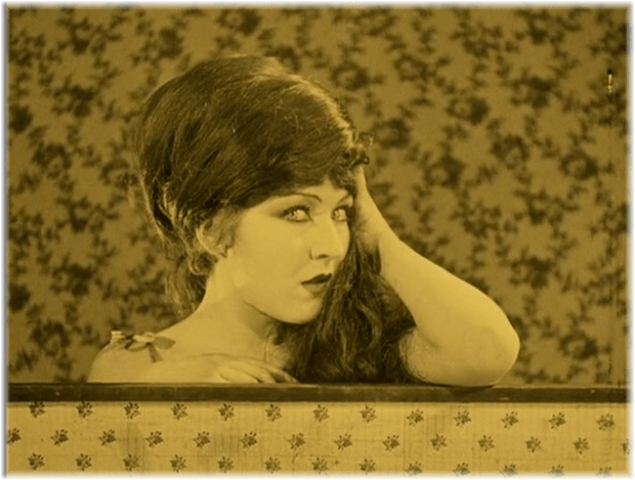
We will first focus on “Photograph and Screen” in which Stanley Cavell discusses the different “realities” and “worlds” that viewers are presented in paintings, photographs, and films. The painter chooses a world to show his audience: one that may not exist in reality and is limited by what is present on the canvas. Photographs, on the other hand, are strictly images of the world. So, any question the viewer might have about what is obstructed in the frame or what lies outside the frame have definite answers. Cavell claims that the “implied presence of the rest of the world and its explicit rejection, are as essential in the experience of a photograph as what it explicitly presents,” (Cavell, 24). What do you make of this claim?

Continue reading

The Line of Innocence in Context

Screen Shot 2017-05-04 at 12.18.18 AM.png

Genevieve Andrews

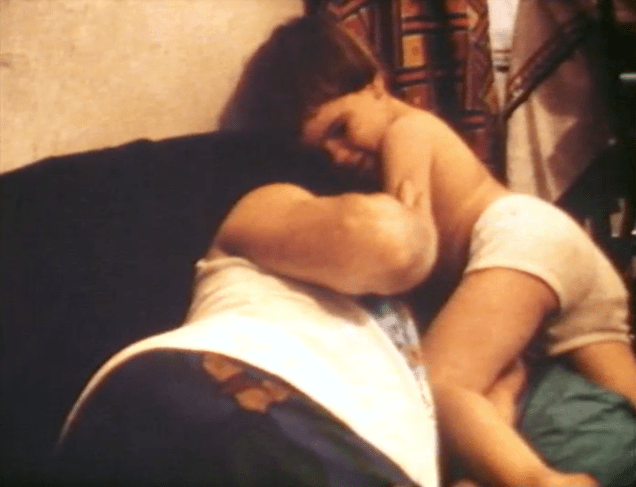
The execution of creating a reality through the consideration of film strategies is one of the many expertise a good filmmaker possesses. Their capability in provoking feelings through manipulation of editing is a talent and a skill. But, keeping attention on the point they are making is of the utmost importance for their final production. Immediately, rendering the ideas of childhood and sexual intimacy in unison tends to make even the strongest of stomach feel uneasy. However, in our culture there is a common widespread sexualization of innocence, and misunderstanding of family related interactions. While this varies in severity, Peggy Awesh, the 63 year old experimental filmmaker, calls this to our attention with no escape of the elephant in the room.  Her careful curation of the film “Martina’s Playhouse” (1988)  is a twenty minute film, recorded on a super 8 then blown up to 16mm.

Continue reading

The Degradation of Carolee Schneemann’s Fuses

Screen Shot 2017-05-02 at 8.24.58 PM

Isabella Blewett-Raby

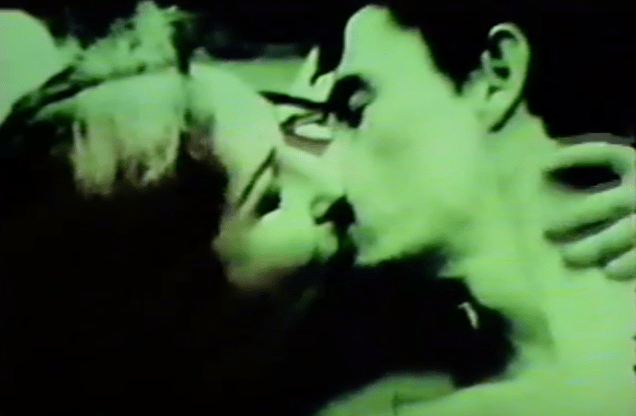
When discussing any piece of art it is very likely that the artist will become a part of the conversation. However, many artists do not wish this upon the viewer. The artist as a not to be acknowledged entity has been around long before avant-garde cinema. The male-dominated realm of avant-garde cinema participates in this trope and wishes for the work to speak for itself. However, when it comes to Carolee Schneemann you will find she comes attached with her work. In Fuses, her first of three films created in 1967, Schneemann inserts herself physically into the film by including shots of her having sex with James Tenney. The film also consists of close shots of her vulva and his penis, shots of her cat, them kissing, as well as the outdoors. It becomes very obvious why for many people Schneemann appears too connected to her art, and for this supposed reason she was rejected from the avant-garde cinema community. Scott McDonald shares his perspective on the reason men in avant-garde cinema shied away from Fuses, “In a culture where men still tend to be trained to deny their emotions, the assumption that the making of ‘serious’ art must involve detachment implicitly promotes art produced by males” (135).  McDonald makes a good point about detachment as a product of the patriarchy, however, I do not see Schneemann’s marginalization as so polite.  To me, this was just an excuse for dismissing a confident woman who has chosen to provide a reality many people have lost sight of. As a result of making men uncomfortable, Fuses was unfairly cast towards the genre of pornography. This begs the question, was Schneemann’s Fuses marginalized because it was not detached from its artist or because it was made by a woman who refuses to be a prisoner of sexual standards created by men?

Continue reading