Video lecture for week 5, class 1 of CMST 10100, “Introduction to Film Analysis.”
Online Teaching
Gone Home and Spatial Storytelling
Group project summary, by leader Guadalupe Godinez
Gone Home is a first-person exploration video game, or interactive exploration simulator as described on Steam, developed and published by The Fullbright Company. The game opens up to you standing in front of the doorway of your house, having just arrived from a trip abroad to a dark and empty home on a rainy night. The beginning of the game introduces exploration and looking for clues as its main mechanics to enter the house and progress further into it and figure out where everyone has gone. As the character, you can interact with objects, pick them up and inspect them, walk around, basically everything you should be allowed to do in your own home. The main story in the game is you should look around the house and figure out where your family has gone. Meanwhile, the atmosphere stays uneasy with tension throughout your journey.
An Analysis of the End of Tell No One by Guillaume Canet (2:00:05–2:06:44)
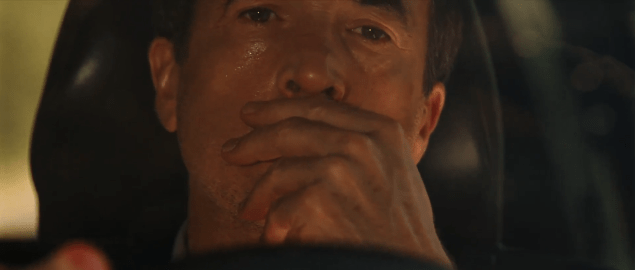
by Joalda Morancy, Shahrez Aziz, Wyn Veiga, Ashwin Prabhu, and Frank Martin
Plot & Occurrences
As the film comes to an end, it becomes apparent that Alexandre will finally receive closure in regards to the dark conspiracy that was revealed to him in the previous scene. After learning of the absolute truth from Margot’s father, he heads to the lake where he initially fell in love with Margot as kids. After finishing his drive, he exits the car to see the damaged dock where the initial incident occurred. A reflection of his relationship, the dock has broken as a result of the damage over the last eight years. He continues to the tree where they would mark each year together, reflecting on their relationship. A crucial element of the scene in this is Alexandre’s bloodied hand in the everlasting beauty of the forest, a signal of how their relationship has been through so much torment.
The Cinematography of Retrospection in Guillaume Canet’s Tell No One
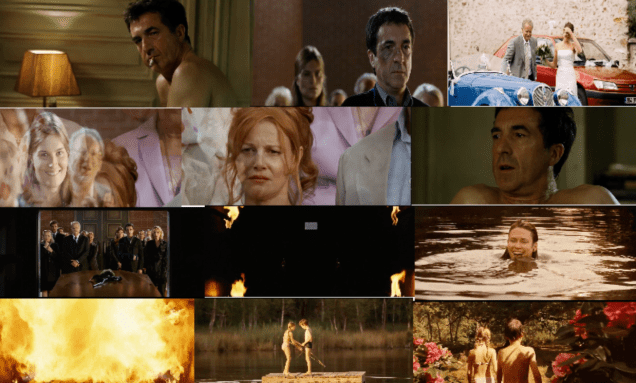
by Meagan Johnson, Joon Choi, Meira Chasman, Matthew Martinez, Dylan Kanaan
Editing:
As Alex reminisces, there is an intertwining of two contrasting scenes: the funeral of his presumed deceased wife and their joyous wedding day. This style of cinematography and editing closely resembles cross-cutting; this ultimately promotes the feeling of parallel action. Cross-cutting is defined as the switching back and forth between two or more scenes in different locations that appear to be occurring simultaneously. Tension is increased as the cinematographer accelerates the rhythm of the cross-cutting.
Gone Home as Melodrama and Gothic Fiction
Group project summary, by leader Counti McCutchen
Gone Home utilizes several of the themes that serve in melodramas and gothic fiction. The staples of melodramas include, well, drama—exciting characters and events that play on the viewer’s emotions. Gone Home delivers on that perfectly. The characters have secrets, even characters other than Sam. The mother is showing concern about Sam and might be getting too close to her coworker, Rick. The father is struggling with his books and potentially alcohol. Both parents are struggling in their marriage. These are familiar tropes in drama that Gone Home makes its own through the lens of the player and how Sam reacts. Historically, melodramas also have interspliced songs, which Gone Home has with cassette tapes that can be played throughout the house. Unlike most melodramas, however, there is not hammy or unrealistic acting. Since no actual actors are present, this would be hard to deliver on anyway. Sam’s diary readings come off as sincere and realistic, hinting more toward drama rather than melodrama. However, they are emotional, especially with their culmination at the end.
Intro to Film Week 4 Video Lecture: Classical Continuity Editing
Video lecture for week 4 of CMST 10100, “Introduction to Film Analysis.”
Tragedy in Last Day of June, Through Murray
Group project summary, by leader Joe Gill
The Last Day of June is a beautiful, heart-wrenching game that effectively utilizes Janet Murray’s constructions of Agency and Transformation in order to create an effective tragic video game. The game centers on Carl and June, a couple whom tragedy strikes. After a car accident takes the life of June, Carl gains the power to control his neighbors in the past, and through changing their actions the day of the crash, he hopes to ultimately change the fate of his wife. The tragedy of the game is brought to its full emotional power in part due to the effective construction of bounded player agency and creative character transformation.
Videogames and Genre Storytelling Week 4 Video Lecture: Melodrama + The Gothic
Please find some time to view this 15-minute video lecture between now and our Zoom conference call, which will convene at the normal time. You can expect our Zoom conference call to be shorter and more discussion-based as a result.
Tragedy
Group project summary, by leader Loki Aguilera-Keifert
So I went through the two readings from Janet Murray, and while they don’t necessarily cover Tragedy across the board, I thought there were a decent amount of really key thoughts that she expressed.
For instance, when she talked about the game Myst, I enjoyed reading her analysis that the “most dramatically satisfying endings are the near-identical losing branches” in which you choose to free either Achenar or Sirrus instead of their father. Regardless of who you choose between the two, you end up imprisoned in the “very same dungeon from which he has escaped…throughout the game you have peered into each brother’s dungeon through a static-ridden, credit-card-size window embedded with the parchment page of an enchanted book” as both a last laugh sorta move and a sudden 180 flip in spatial positioning. Your mobility significantly reduced, your realization that you are the superimposed static image in the window–it’s pretty damn tragic hahaha.
I also thought the following question would be good to raise, also from Murray’s work:
The Legacy of Der müde Tod in Last Day of June: Creating Tragedy in Games
Group project summary, by leader Leo Alvarez
Tragedy is hard to pull off in video games, a medium so driven by the player’s desire to accomplish tasks and achieve the goals set forth by the game designers. What’s more, joining the formerly separated roles of the viewer and the on-screen character into one presents unique challenges in terms of creating motivation and working with the newly bridged psychical distance to create an effective tragedy. With all of these obstacles in its way, how can a game like Last Day of June possibly hold a candle to a tragic film like Der müde Tod? In its use of an episodic structure, a “retry narrative” and a final sacrifice, Last Day of June carries and builds on the legacy of Fritz Lang’s silent film Der müde Tod, ushering the death-defying romantic tragedy template into the era of video-games, and exemplifying how tragedy can be possible in a game.
 Intermittent Mechanism