by Jacob Wilson.
The Return of the Obra Dinn is a truly interesting game in the mystery genre. I played it for about 3 hours and enjoyed it. Set in 1807, the premise is that you, as an insurance investigator for the East India Company’s London Office, must figure out what happened to the 60-person crew of the titular ship that was declared lost at sea in 1803. Did they all die? And if yes, how?
If that sounds like a daunting task, that’s because it is. Realistically, it’d be impossible, but if one finds a corpse (whether it is physically there or not) and uses a magical pocket watch, they can travel back in time to explore the exact moment when a character dies and hear some of the preceding dialogue. This device may initially seem to defy the rules of detective stories as we discussed due to its supernatural powers. In effect, though, it’s really not much different from having a third-person narrator like in And Then There Were None, wherein this style of narration was well used.
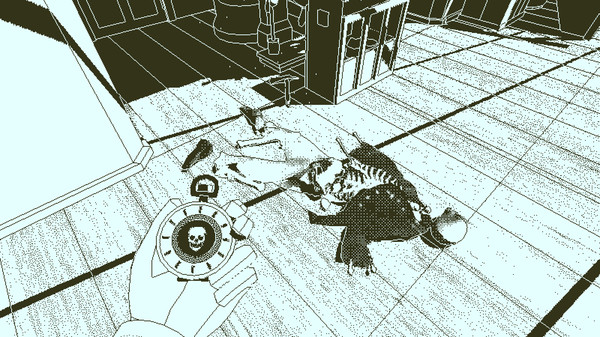
The pocket watch also quickly becomes normalized in this world once you realize that the legendary Kraken and odd spider-like creatures that shoot spikes also exist. I did not expect to find these elements in the story, but in retrospect, one could’ve expected it due to the magical watch. In its mixing of history and fantasy, the setting is thus reminiscent of Pirates of the Caribbean and quite unique in the mystery genre. Said monsters also behave consistently and do not seem to violate the laws of physics, effectively making them bizarre animals as opposed to devices that would violate the rules of detective stories by leading the player to unnatural and illogical conclusions – they are, perhaps in a twisted sense of the word, natural. One may compare this usage of animals to the snake in The Case of the Speckled Band or the orangutan in The Murders in the Rue Morgue. However, Obra Dinn’s use of animals is, rather than being the key to a puzzle that you aren’t supposed to expect, entirely unconcealed, which feels fairer to me.

The game’s way of revealing information makes for an engaging if perhaps imperfect blend of storytelling and puzzle-solving.
Players can identify the crewmates by their social standing on the ship (an expansive list of naval terms is used), their names, their appearance (clothes, facial features, tattoos, etc.), or their accents/nationality. Since you are only granted a split second of visual information, the visuals don’t give you the most exact portrayal of events, and neither does the audio, which doesn’t always tell you who exactly is speaking and at what time. This implores the player to use their imagination and pay attention to what few details they get. It makes for a fun challenge that can be solved in multiple ways, which allows for a varied player experience, but at the same time, the spread-out and sporadic pacing of revelations along with the paucity of information given in each scene made me feel that I was making very little (if any) progress. This remained true even as I binge-watched the stories of so many corpses, a process that eventually became exhausting. That said, I think Obra Dinn has an interesting way of storytelling that may only be possible in a game… the omission of so many details might seem more out-of-place in a movie or book.
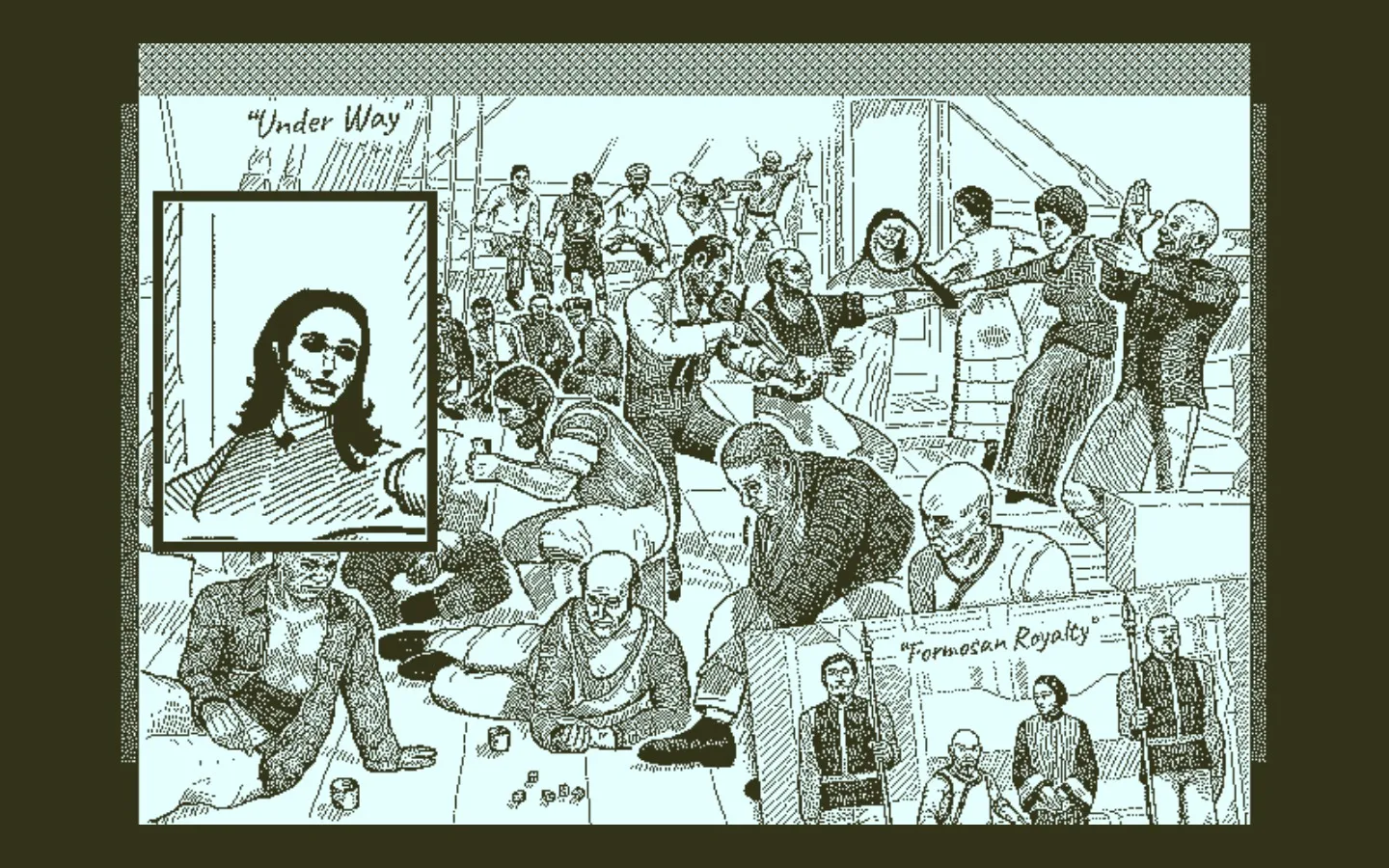
The dialogue and overall narrative also suffer slightly due to the game’s structure. Some aspects of character interactions feel obligatory rather than natural, such as one crewmate addressing another as “you bloody Dane” or one of the Austrian characters saying “Verdammt.” To me, the former seems like too weak of an insult to use against the man who you think killed your brother, and the latter feels like a silly cliche equivalent to a French character in something unnecessarily saying “bonjour” and “mon dieu!” Nevertheless, I recognize that Lucas Pope had a very difficult job when trying to balance the difficulty in this game, so it’s a forgivable sin. These clues did help me pin down some identities after all.
The presentation of events out of order and with limited context also shifts the game away from properly employing the three standards of detective stories: means, motive, and opportunity. Means and opportunity naturally remain in play, perhaps only because they integral to the gameplay, but motives may remain a mystery for a long time or are stated very bluntly as in the case of that “bloody Dane.” Even if events are presented out of order, this order is thankfully indicated, unlike in Cain’s Jawbone. I could imagine myself eventually figuring out motives through playing more of the game and seeing how more of the story unfolds, but the lack of attention towards them means the story lacks the psychological depth and stakes it could otherwise have. It’s interesting enough that the first thing you see is the captain killing two crewmates and then himself at the start – it’s unexpected and also something that incites curiosity within me. Why did he do that? How did we get here? Other scenes taken out of context may arouse curiosity in this way, but after playing the game for longer, that curiosity waned due to having very few clues about people’s identities. It’s truly an interesting game and truly an interesting narrative, but it’s a bit unsatisfying in this sense.
Overall, I’d say the narrative execution of the Return of the Obra Dinn isn’t quite as solid as in other stories we have read and perhaps other games we’ve played… but don’t let my critiques detract from the fact that this is a fun game with a great, mood-enhancing soundtrack. I highly recommend it if you’re up for a challenge.
 Intermittent Mechanism