By Lucy Huang
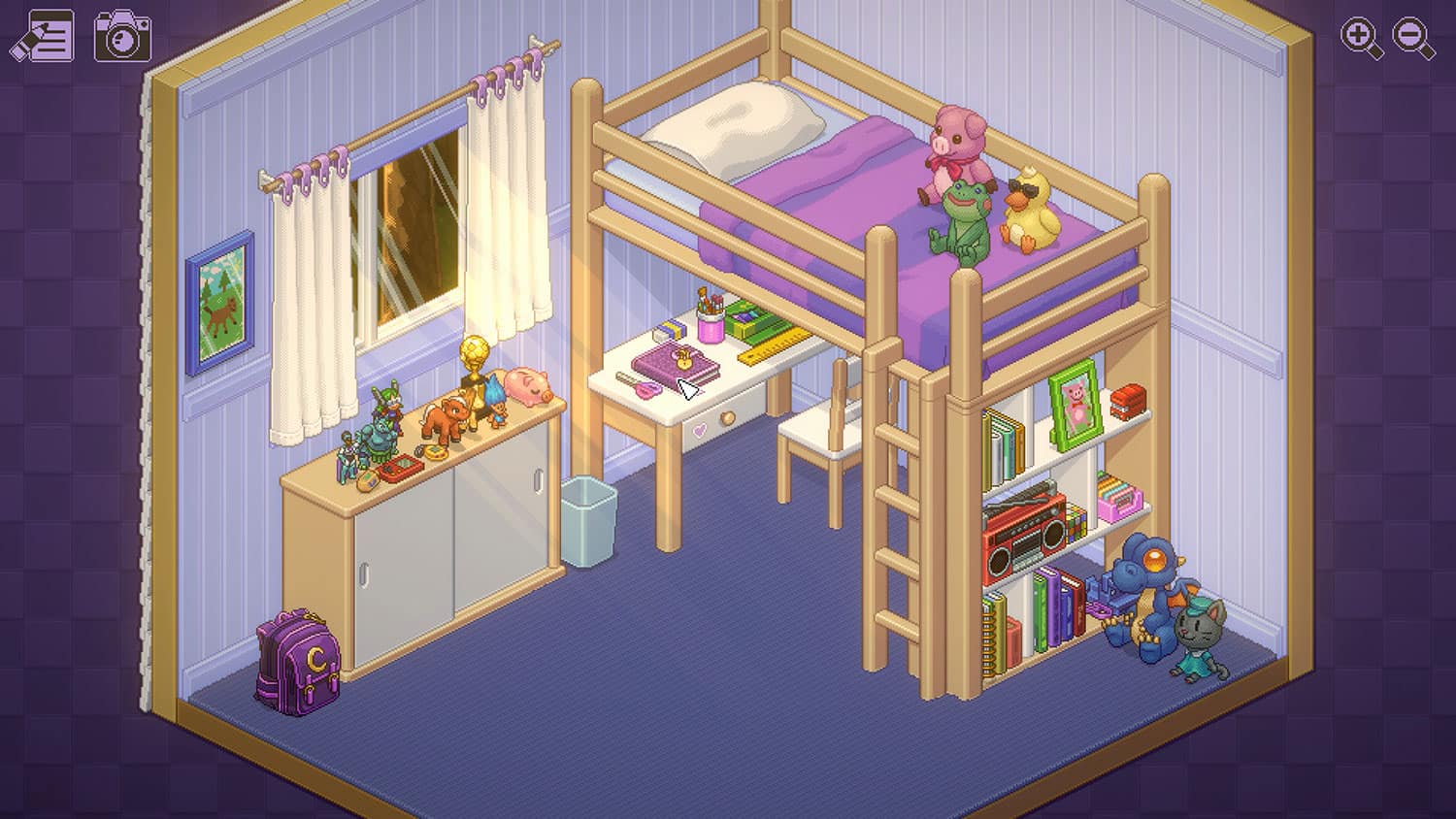
From the moment I laid eyes on Unpacking, its vibrant interface drew me in. As I delved into it, the gentle background music accompanied my exploration of various items hidden in cardboard boxes and navigation of different spaces. Transitioning from one time period to another, from one home to the next, I began to discern distinct trends and a developing storyline. Each year brought changes in interior design and room layouts, symbolizing the character’s personal growth from childhood to adulthood, from a dorm room dweller to a homeowner with a family. The gradual introduction of modern objects, like upgrading from a heavy computer to a laptop with a drawing pad, echoed the passage of time, while subtle shifts in lighting from the window as you are unpacking enhanced the immersive experience of unpacking. Repetitive objects, such as art supplies and musical instruments, hinted at the character’s interests and pastimes. I started learning more about this character personally-She is an artist, gamer, musician, and her earlier soccer trophies also indicate that she might have used to play football as a kid.
In class, we discussed the role of “failure” in games. Unpacking‘s form of failure is its rules on specific object placements, and sometimes they are asked to be placed in unexpected places. Specifically, players are asked to place certain objects in unexpected or unconventional places, which requires multiple “failures” or attempts to be able to achieve. However, the multiple attempts to discern the correct positioning, often revealing hidden narratives. For example, one of the 5 photos is asked to be placed in a corner of a cabinet. We could guess for example, that the photo must have been a photo with her ex and our character went through a break up that year. While these unconventional placements contribute to the game’s narrative depth, they can also frustrate players if it takes too long after it happens multiple times. Others in class have also raised similar concerns that sometimes the placement did not make sense and while some unveiled interesting narratives, some just created pure frustration for them.
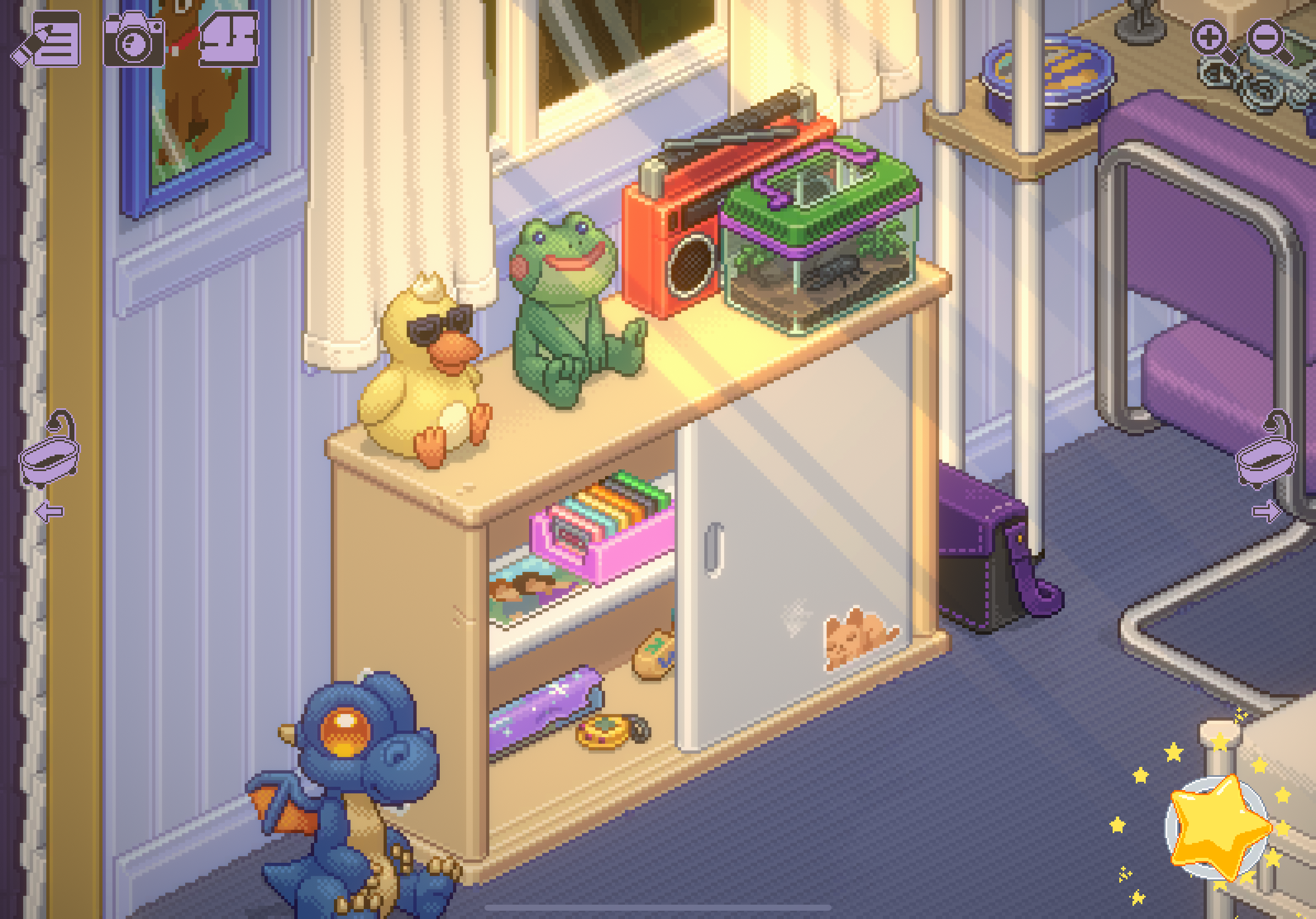
Photo of ex in the cabinet ^
This was a game with limited dialogue, and the narratives are discovered almost purely through the player’s interaction with the space and objects. Although the overall narrative can be discovered through different methods I have mentioned above, there are still small details I realized I missed through conversations with other players. For example, the rock climbing gear that was replaced by painkillers in the next house, and that one year where her boyfriend moved into the same house that she is in. These details discovered by different people made me realize that there are still more narratives I can unveil even if I have played through the whole game. I could see myself returning back and discovering new narratives in the next play through.
Comparing Unpacking to other spatial narrative games raised questions about player perspective and agency. Unlike first-person games where the player is discovering the space as one of the characters in the game, Unpacking makes the player look from above the room, and makes it clear that you are simply unpacking the room for someone else. Does this make the game less immersive and engaging? Although some people might agree, I started thinking about the role I assigned myself in the game. It almost felt like I was a parental figure of the character, seeing her growth, and it reminded me of times where I moved around dorms or houses, and my mom helped me with unpacking the room. As I play through different time periods, I find myself feeling a sense of empathy for the character, feeling bad for her when I discovered the photo of the ex, and cheering when finding out she has a baby. The cozy interiors depicted by the graphics and gentle music also helped to contribute to the heartwarming atmosphere. In regards to limited agency, it was interesting to play this game after playing contrasting “choose your own adventure” game, where the player decides or contributes to the narrative. Here, the interaction is not from shaping the narrative, but discovering the story through interactions with the objects and space. I do not feel like I prefer one over the other, but it was inspirational to see another methodology of interactive narrative.
Through this project, it has inspired me to think about my experience growing up too. Some objects stay with you and some do not— some just need to be thrown or originally important objects are now put underneath your bed. It got me thinking about the theme of nostalgia, time, and how individual objects hold their value and carry unique narratives despite looking ordinary to others. It also inspired me artistically. Having moved around a lot, and it being core experiences in my life, Unpacking gave me ideas of potentially implementing similar techniques in future personal projects. I would like to narrate my life story through interaction design with spatial elements and the objects acquired during various life stages, and tell my journey around different cultures and environments this way.
 Intermittent Mechanism