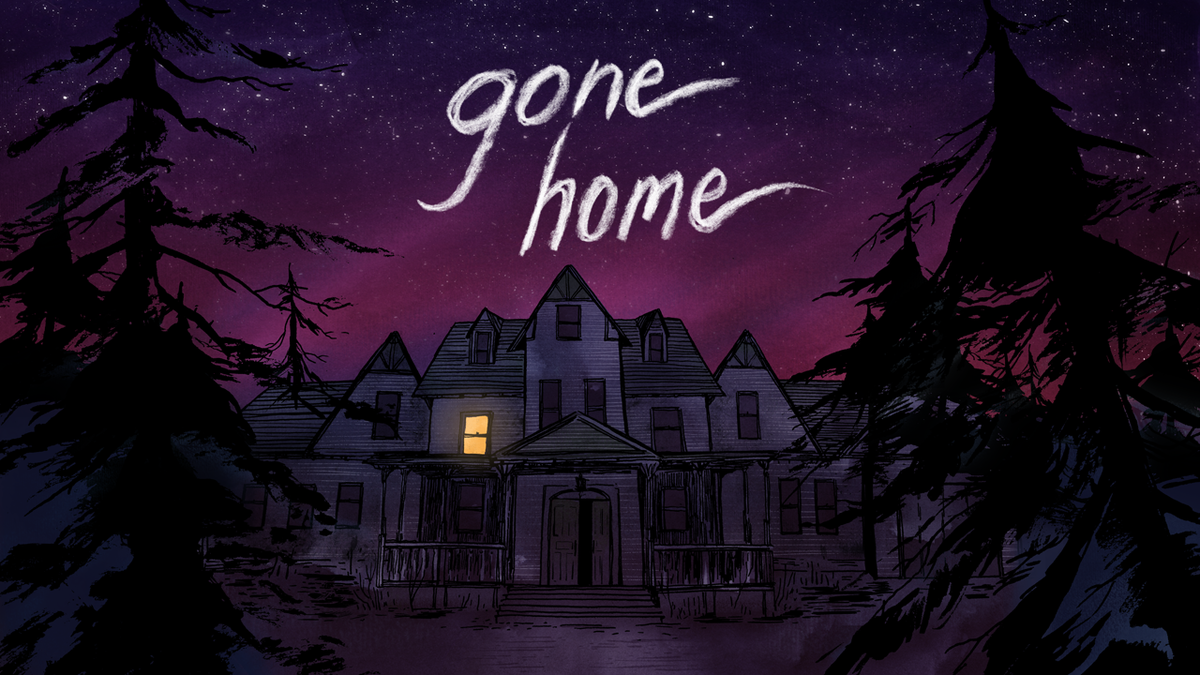
As someone who avoids any film, show, or game with even the slightest hint of horror, I felt a sinking sensation in my chest as I laid eyes on the cover art for Gone Home. In it, we see an ominous mansion nestled amidst desolate woods, under an eerie purple sky, with a solitary light illuminating from the house, hinting at a presence within its seemingly abandoned walls. In Gone Home, you play as Katie Greenbriar who has just returned from her travels abroad to her family’s new residence. Before stepping inside, you linger on the porch, reading a foreboding letter from your younger sister, Samantha (Sam), which hints at her possible disappearance. Along with that mysterious note, when you enter the house it’s suspiciously empty. Through letters, journal entries, and other artifacts found throughout the house, you can gradually piece together the story of Katie’s family and the mystery of the bare house.. As I navigated the dimly lit corridors of the aged mansion, my heart raced with anticipation. The eerie ambiance, punctuated by creepy noises, set the stage for what I presumed would be a classic horror ordeal. Little did I know, the game held something entirely unexpected—a hidden romance that would resonate with me in ways I never imagined.
As we step into the house, we’re greeted by a series of recorded messages playing from the family’s answering machine. Among them is the haunting sound of a woman’s voice crying out for our sister. Could this be a distress call, a warning of danger lurking within the shadows, or perhaps a clue to Sam’s whereabouts? It’s a disconcerting start to our exploration, made all the more unsettling by the eerie ambiance of the rainy night, the creaking floorboards that seem to groan with each step, and the looming shadows that hint at potential jumpscares around every corner. The atmospheric setting, reminiscent of a stereotypical horror scenario, casts the abandoned mansion as a character in its own right, evoking memories of classic titles like the 1980 video game Mystery House. With each passing moment, it becomes increasingly evident that all is not as it seems within these walls, and it falls upon the player to unravel the mysteries hidden within.
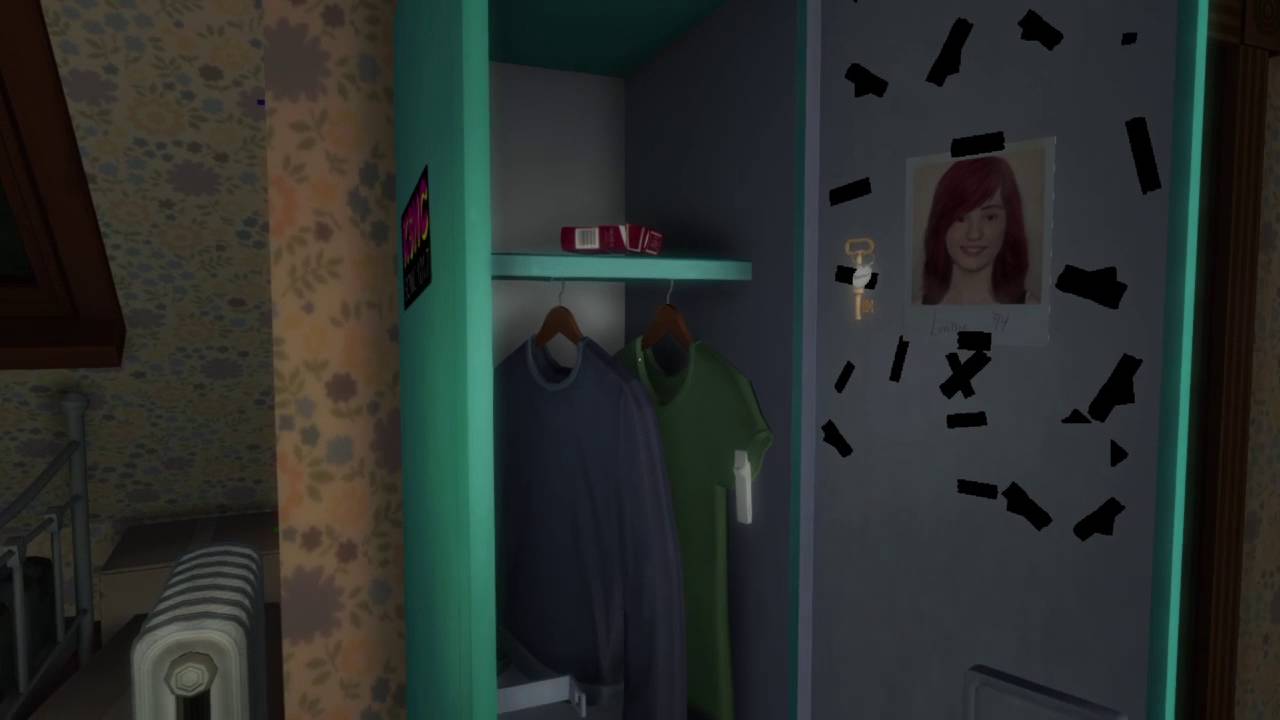
While exploring, we uncover more about Sam, who serves as the central character in this narrative. Surface details about her emerge through easily accessible items like her cassette tapes, which reveal her music tastes, and early short stories that hint at her passion for writing. Additionally, the playful letters exchanged between Sam and Lonnie hint at the blossoming of a friendship. However, the story’s most profound narrative elements are concealed within the house’s hidden compartments. One might wonder why a house would require so many clandestine spaces—perhaps to conceal family secrets? In reality, each compartment we unlock unveils more about Sam than we could have anticipated from merely exploring the accessible rooms. These hidden spaces provide insights into Sam’s struggle with her sexuality. For instance, within Sam’s locked locker, we discover a photo of Lonnie with her vibrant red hair—a dye job Sam had assisted with, leaving behind a mess resembling blood in the tub. As we peer into Sam’s locker, one of her journal entries plays, recounting one of her and Lonnie’s early intimate moments: a kiss that leaves Sam giddy. Despite the lengths we must go to uncover the compartment’s code, scattered across different areas of the house, Sam isn’t harboring a shameful secret. Instead, she’s safeguarding a part of herself she’s beginning to understand, but doesn’t know how those around her (her parents) will respond.
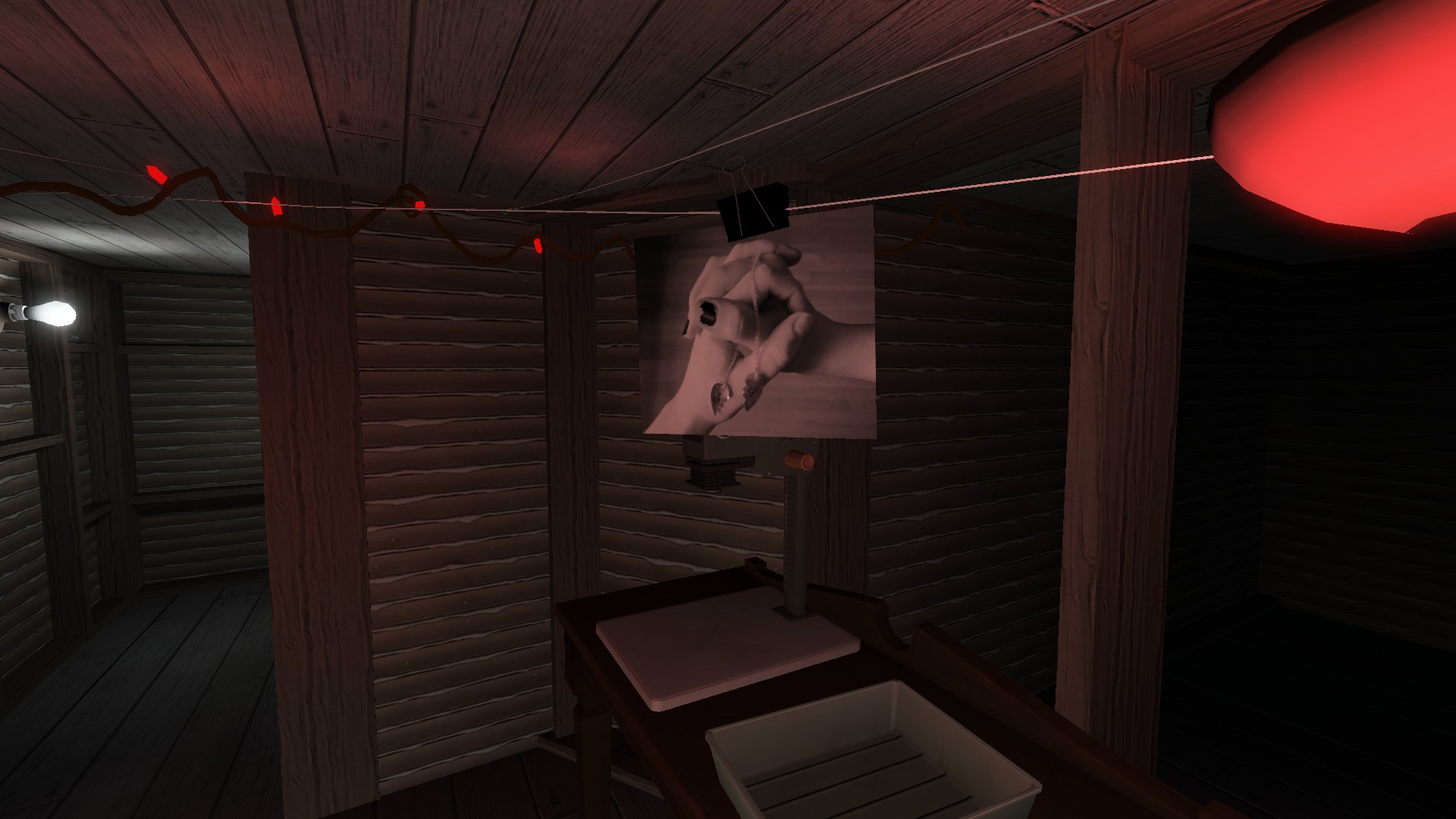
Earlier in the story, we discover that our family home has earned the nickname “the psycho house” due to our reclusive great uncle, Oscar Masan, who lived there until his passing. The game initially suggests the presence of a supernatural entity, possibly Oscar himself, with the discovery of an Ouija board and a paper indicating communication with him. This narrative thread continues as we unlock a secret compartment next to the foyer stairs, revealing what appears to be a seance setup for Oscar, complete with a pentagram, a “Possession and Exorcism” book, and his picture. However, a pivotal revelation occurs when we learn that the Ouija board and the contents of the room were a result of Sam and Lonnie’s last night together, aiming to create a fond farewell memory. The once-feared “psycho house” transforms, as all the eerie elements are revealed to stem from Sam and Lonnie’s final, fun moments with one another. This moment underscores the transformative power of Sam’s personal experiences and memories, suggesting that what initially appeared as sinister/haunted actually had more heartfelt sentiments. In this room, we also find the key to Sam’s ominous attic, lit with an array of red lights that reminded me of Stranger Things. As we ascend the stairs, we encounter pictures and items that indicate this was a cherished, safe space for Lonnie and Sam. The picture that particularly caught my eye shows the two holding hands, which are wrapped with a connecting heart necklace—an emblem echoed throughout the home.
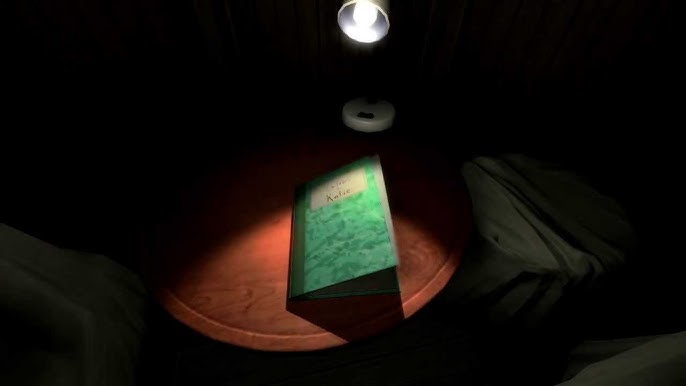
This room offers vital answers to any lingering questions the player may have. Here, we discover that the voice message heard at the beginning of the game was from Lonnie. She was calling to inform Sam that she had decided not to join the Army so that she and Sam could run away together—a plan to which Sam eagerly agrees to. We also find a book containing all of Sam’s journal entries addressed to Katie, reassuring her not to worry. Sam hopes that we can understand her decision, and promises a reunion, which marks a poignant and hard hitting end of the game.
To truly find her place in the world, Sam had to break free from the confines of her family’s home and embrace a love that felt undeniably right with Lonnie. While I’m curious about the adventures that await the duo, I think it’s fitting that Sam’s whereabouts remain unknown. I felt a bit guilty sifting through her personal belongings, unraveling the secrets she left behind in the house, so it’s only fitting Sam gets a little bit of privacy now. Now, Sam can embark on a new chapter of her life with the person who brings her the greatest joy. As her trusted sister, we can find a sense of closure in the meticulous journal she left for us, knowing that she is living true to herself and following her heart.
The brilliance of Gone Home lies in its ability to subvert genre expectations and deliver a narrative that is as captivating as it is unconventional. By seamlessly blending elements of horror with themes of romance and identity, the game challenges players to look beyond the surface and explore the deeper, more meaningful stories hidden within its walls. If you haven’t played Gone Home, I urge you to embark on this unforgettable journey. Prepare to be surprised, moved, and forever changed by the unexpected romance that lies within the haunting halls of Arbor Hill.
 Intermittent Mechanism