Her Story: Do We Really Know What it Is?

Her Story (video game) - Wikipedia

by Brooke
University of Chicago MADD 25630: Games, Rules, Stories, Genres
Winter 2021

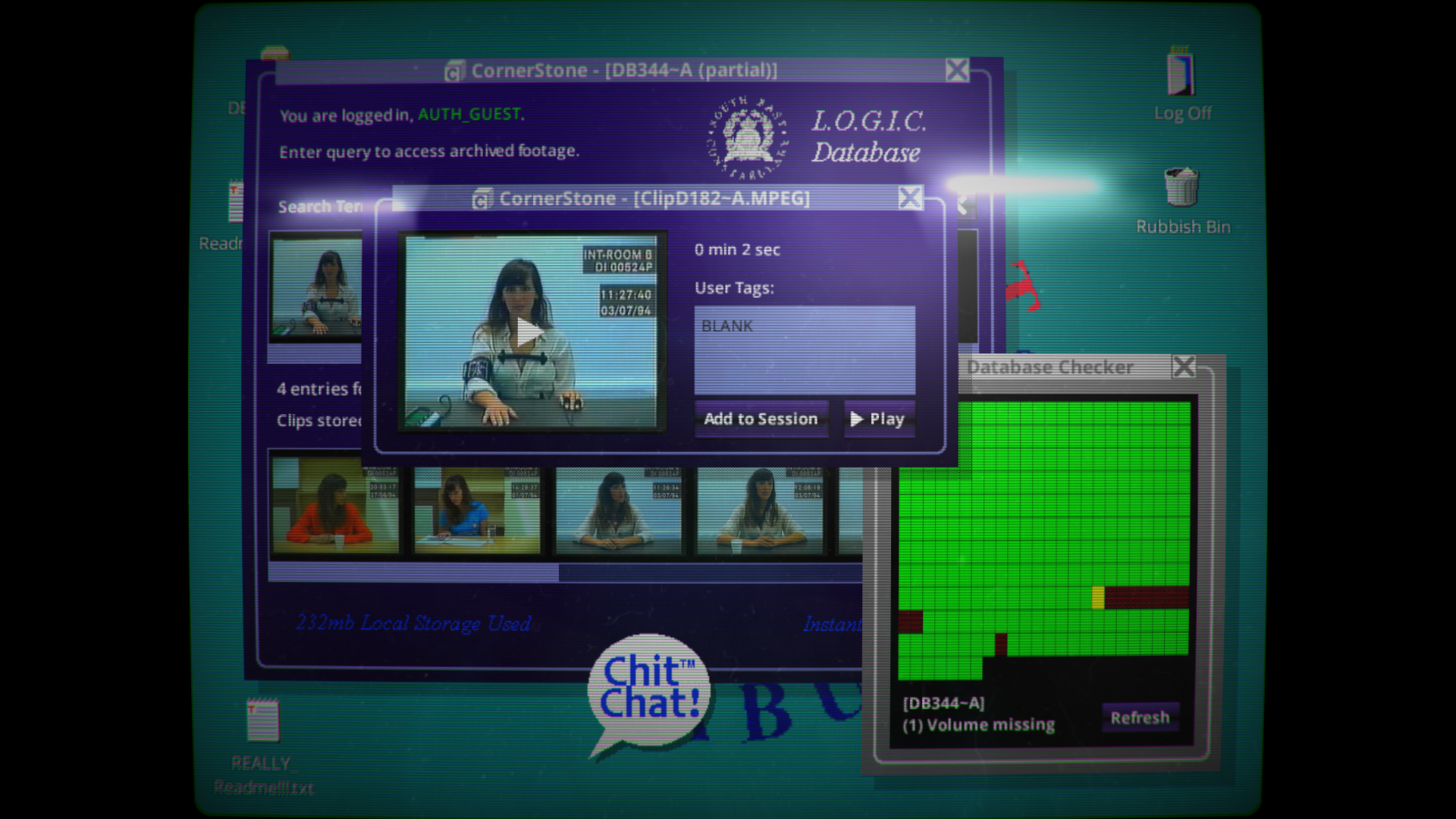
Her Story is a 2015 FMV detective mystery game by Sam Barlow. Throughout the game, the player acts as an unidentified investigator of sorts, gleaning through a police database of video clips from seven interrogations of a woman, Hannah Smith, to solve the murder case of her husband Simon (initially presumed missing) in 1994. The only information on the game’s objective right off the bat comes in the form of saved files on the desktop that explain the premise of searching through clips and compiling the story behind the murder case. As a player, you type keywords into the database’s search bar to unlock clips that include the words you searched, but only have access to the first five clips that appear from the interrogations chronologically. The game begins with the word “MURDER” already typed into the search bar, which primes the player for perceiving the game as a murder mystery. Other functions accessible as a player are the tagging function, which allow you to add tags to video clips to sort them into related categories, and the add to session function, which saves video clips in a bar at the bottom of the database to return to later. The Database Checker on the home screen indicates how many clips out of 271 available, varying in length and content, the player has already viewed. The ChitChat app, a messenger program, appears on the screen after unlocking most of the story, at which point the player can finish the game without having viewed all of the interrogation clips.
On Her Story's 5th birthday, Sam Barlow looks back at his breakout game—and  talks about what's next | PC Gamer

The game’s lack of chronology emphasizes the self-directedness of the player unravelling the narrative. Beyond the initial keyword given, “MURDER,” it’s entirely possible for players to find clips in arbitrary orders as there’s no set approach to uncovering the mystery. Where one player might decide to search “Simon” after watching a few clips, another may opt to look up “Dead,” which would result in an entirely different set of search outcomes. This feature ensures the game doesn’t feel simply like a passive movie-watching experience, but instead like a proactive deep-dive hunt into a tangled web of secrets, searching for discrepancies in the story. The player never hears the questions asked to Hannah Smith, only the responses she gives to the questions, although the game’s dialogue does well to suggest what might have been asked.

As the player progresses through the database of clips, getting bits and pieces of the full, convoluted story based on seemingly important phrases uttered by Hannah Smith in her tapes, it quickly becomes clear that the narrative isn’t as simple as a vengeful wife murdering her husband. Through various keywords that are casually dropped into the dialogue, like “blonde,” or “mirror,” the player soon realizes that Hannah Smith might not be just Hannah Smith. Or that, perhaps Hannah isn’t the only one involved in Simon’s death.

Her Story Review - GameSpot

Her Story as a Detective Game

Marie Rodell in Mystery Fiction, Theory and Technique explains that clues in the detective fiction genre come in two varieties: tangible and intangible. Of the tangible variety, those pertaining to the five senses, clues must be adequately described in words such that they are recognizable to the reader (50). For intangible clues, such as the appearance of an item whose function or origin is unknown, the reader must be given a realistic opportunity to determine its significance in the plot (51-52). Because of Her Story‘s FMV video game format, most tangible clues in the game are not presented to the players themselves, but instead to the detectives within the game who investigated the diegetic crime scene; clues like fingerprints, fibers from a wig, a guitar, and a broken watch all appear as key clues within the game, but are revealed to the player through Hannah’s acknowledgment that the detectives discovered that evidence, not the player’s own discovery. The few tangible clues given to the player in the game come through the form of visual observation, things like a tattoo, hairstyles, and a bruise. Intangible clues on the other hand, which are important to deciphering the mystery of twins at the heart of the game, result from close observation of the dialogue. Once the player has discerned that Hannah could also be Eve, a secret twin sister, the way the two sisters talk about subjects as mundane as coffee versus tea or as personal as sex is potentially the only way to rule out who is who. Additionally, some of the clips to uncover during the investigation process are essentially duplicates of the same question or scenario answered in slightly different ways, such as clips on separate interrogation dates regarding Hannah and Simon’s wedding, answered from what seems like different perspectives, or two “blink and you’ll miss it” clips of both Hannah and Eve staring into the camera and asking if it’s recording. Rodell argues, “It is from the actions and words of such suspects, and their behavior toward other characters in the story, that the detective and the reader deduce the probability of motive in the suspect,” (56). Actions and words are at the core of uncovering what “her story” is.

Actions on behalf of Hannah and Eve, such as theories regarding which twin uses her left hand as the dominant one and which uses her right, or attempts to decipher the “knock-code” that Hannah and Eve use to communicate to each other in the interrogation, are of great importance. Words, however, are potentially even more important than actions. Because of the twin mystery at play, Eve and Hannah’s attempt to line up their stories occasionally fall short, their details not adding up to one coherent story. While one accidentally claims infertility before correcting herself, the other mentions being pregnant at the time of the interrogation. Where one, as mentioned previously, seems to prefer coffee and talking openly about sex, the other prefers tea and keeping intimate affairs private. The player’s ability to keep track of these minute details affects the ultimate interpretation of the game’s ending, considering there is arguably some ambiguity regarding who truly killed Simon in the end, and who is subsequently sent to jail for committing the crime. One of Her Story’s major strengths is that its subtlety allows for several interpretations to the ending. Have these interrogations clips been Eve pretending to be Hannah the whole time? Did Hannah and Eve collaborate in covering up the murder and from then on been tag-teaming the interrogation and struggling to keep their stories straight? Did Eve kill Hannah in an attempt to lead her own life for once? These, among other theories, are all plausible.

Rodell also argues, however, that, “If the criminal is caught in the end because he forgets at some moment to be alert, praise for the solution of the mystery cannot fairly go to detective or reader: the solution has depended on a weakness of the murderer’s, not on a talent of the detective’s,” (57). Slip-ups in the twins’ narratives are pretty crucial in realizing that they are, in fact, twins. While this may be considered a weakness in detective fiction, because the ability to pick up on the discrepancies or failure to be “alert” on Hannah/Eve’s behalf is dependent upon the player’s listening ability amongst a large number of clips found on their own rather than being guided toward specific details by an author, Her Story never comes across as a disappointment in terms of discovering its myster/y/ies.

The nonlinear format combined with the ability to only view five chronological clips at a time delays the revelation of mystery over time, since the majority of the story is revealed in the seventh and final interrogation, which is likely to be hidden from the player in the first five clips accessible on any search. The game’s dialogue drops heavy-handed hints, however, that lead the player down a trail that early on suggests where the story is going. For instance, the repetition of words and themes like “mirror,” “reflection,” and “symmetry,” even in the protagonists’ names–palindromes Eve and Hannah–as well as the Easter egg of a mini game called “mirror tiles” hidden in the trash on the desktop clues the player in to the fact that twins are a possibility. Additionally, clips that reiterate the fantasy-like narrative by mentioning fairy tales such as Rapunzel thematically manifest the game’s plot: the storybook tale of twins separated at birth, one bound to the other by the fact that her identity is intrinsically linked to the other’s existence, share a life together and fall for the same Prince Charming.

Her Story‘s mystery comes not only through deciphering how exactly Simon was murdered, who committed the crime, and why they did it, but also who exactly you as a player are embodying. Because the player isn’t sure who they are, the motivation behind wanting to explore this mystery is also unknown, and isn’t revealed until the very end. Before suggesting via the ChitChat function that you are done investigating, which prompts the ending sequence of the game, the only clues to suggest the player’s identity are flashes of a reflection on the computer monitor which only appear whenever a key video clip to the story has been viewed. The layered mysteries presented in Her Story add not only intrigue to the experience of playing the game, but also push back against complacency in its completion. Will finding all 271 clips result in a more fleshed-out understanding of the plot than ending the game? In terms of the ultimate ending that every player receives, no. But, the player’s individual opinion on the story is likely to be determined by the clips that they found and what they gleaned from each individual clip.

Works Cited:

Rodell, Marie. “Clues.” Mystery Fiction, Theory and Technique, Duell, Sloan, and Pearce, 1943, pp. 49-60. 

A closer look at the paradox of Tragedy in Hellblade: Senua’s Sacrifice

by Abdo
University of Chicago MADD 25630: Games, Rules, Stories, Genres
Winter 2021

CONTENT WARNING
This game contains representations of psychosis. People with experience of psychosis as well as professionals in psychiatry have assisted in these depictions.

Hello, who are you? …It doesn’t matter. Welcome. You are safe with me. I’ll be right here, nice and close so I can speak without alerting the others. Let me tell you about Senua. Her story has already come to an end but now, it begins anew. This is a journey deep into darkness. There will be no more stories after this one.

Hellblade: Senua’s Sacrifice opening scene

In Hellblade: Senua’s Sacrifice, Senua embarks on a journey through Hel (the land of the dead in Norse mythology) to save her beloved Dillion. On her quest, Senua fights monsters and gods from Norse mythology. Now, unlike every classic hero story, Senua also suffers from psychotic mental illness that makes her journey of suffering happen in the real world as well as the world constructed in her mind. Joined by her inner voices and haunted by the insulting and demoralizing Shadow, Senua powers through immense combat challenges, traumatic flashbacks, and vivid hallucinations. 

Physical Battles vs. Mental Battle (Courtesy Ninja Theory)

While Senua does indeed fight Surtr, Valravn, and Gram on her quest, Senua’s story situates itself as a journey of emotional and mental change rather than a physical one. In the end, Senua is unable to save Dillion even though she confronts Hela about it. However, Senua manages to identify the Shadow as none other than the inner manifestation of the treatment she received from her abusive father growing up. She accepted the voices in her head not as a curse but as a part of who she is. 

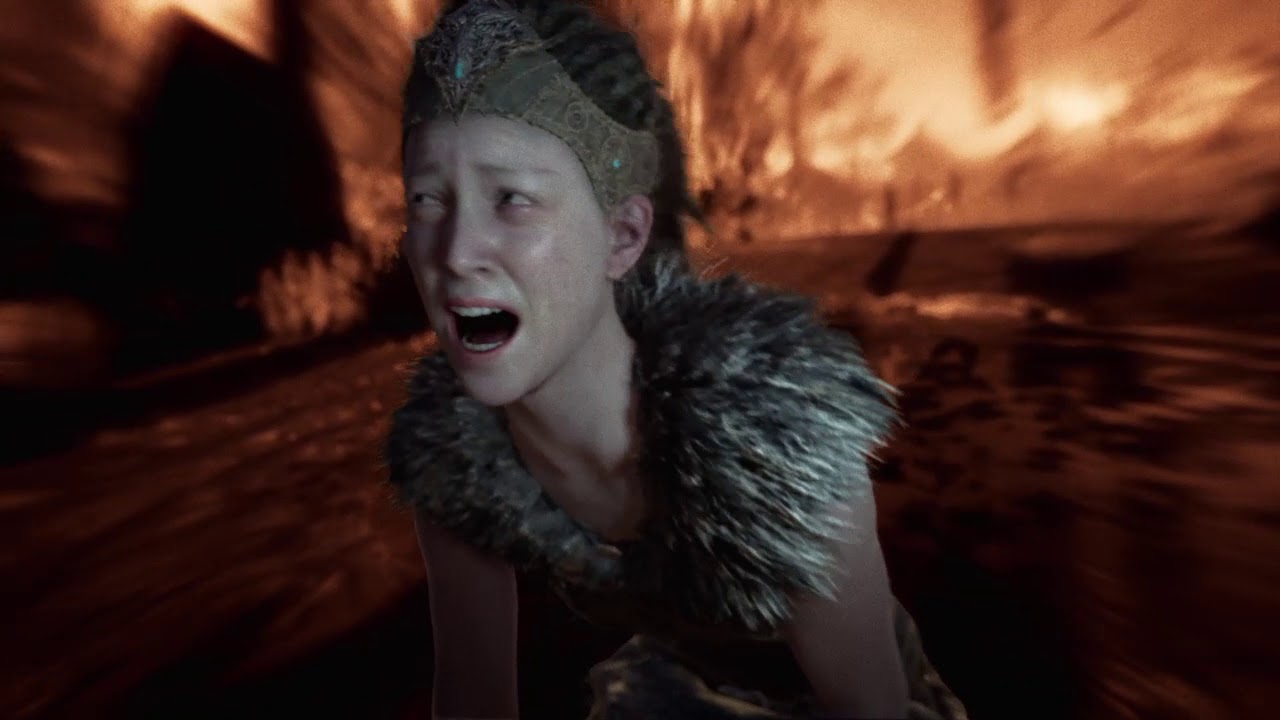
As one might imagine, Hellblade: Senua’s Sacrifice is an intensely tragic game. One hears when Senua screams, sees her go through an emotional breakdown multiple times, and gets a courtside ticket to witness her suffering. One goes through the game and is forced to “weep for the misfortune of a hero, to whom we are attached” (Hume 260). Nonetheless, as the credits roll, one is left with “agreeable sorrow, and tears that delight us” (Hume 260).  Hellblade: Senua’s Sacrifice is another entry on the list of tragic games that highlight the paradox of tragedy.

The tragic story of Senua (Courtesy Ninja Theory)

In Of Tragedy, David Hume addresses this essential paradox as he attempts to reason about how one can be delighted with a spectacle that tells a tragic story filled with sorrow, terror, anxiety, and grief. While Hume starts his essay referring to catharsis when he says “employ tears, sobs, and cries to give vent to their sorrow, and relieve their heart” (258), he addresses the paradox by analyzing the role of fiction, the impact of stylistic means, as well as the relationship between competing emotions. Hume’s essay presents us with tools to analyze some of the key details presented in Hellblade: Senua’s Sacrifice. Through this analysis, we look at the historic background of the game, the process that went into producing it, as well as some of the critical emotions in the story being told.

Nothing but a Fiction 

Hume argues that while the spectacle might capture all one’s attention, the spectator’s awareness that they are viewing a fictitious performance diminishes the pain and affliction. In other words, one can digest this agreeable sorrow and comfort themselves as it is “nothing but a fiction” (Hume 258). If one is to look at Senua’s story, Hume’s argument gets complicated. The game tells a story of a Pict warrior living in a village in the 8th century near Orkney, Scotland. This game setting is emphasized in the narrative and is used to construct the environment and characters to reflect the Pictish history from blue body painting and hairstyle to costume design (Adcock 0:50 – 1:30). Moreover, the game is set in a historic period full of stories of the brutal Vikings raiding the isles where Orkney now stands. This poses a question as to whether Senua’s story might have occurred at one point or another. Given the setup, the line between the fictitious and the real parts of Senua’s story becomes blurry. Hume’s point on the role of fiction in tragic stories can account for a large sum of stories like the myth of Orpheus and Eurydice where Orpheus (Senua) decides to descend to Hades (Hel) to see his (her) wife (boyfriend). However, it does not explain the full paradox displayed in Hellblade: Senua’s Sacrifice.

Details Inspired by the history of the Pict tribe (Courtesy Ninja Theory)

Eloquence, Genius, Art, Expression

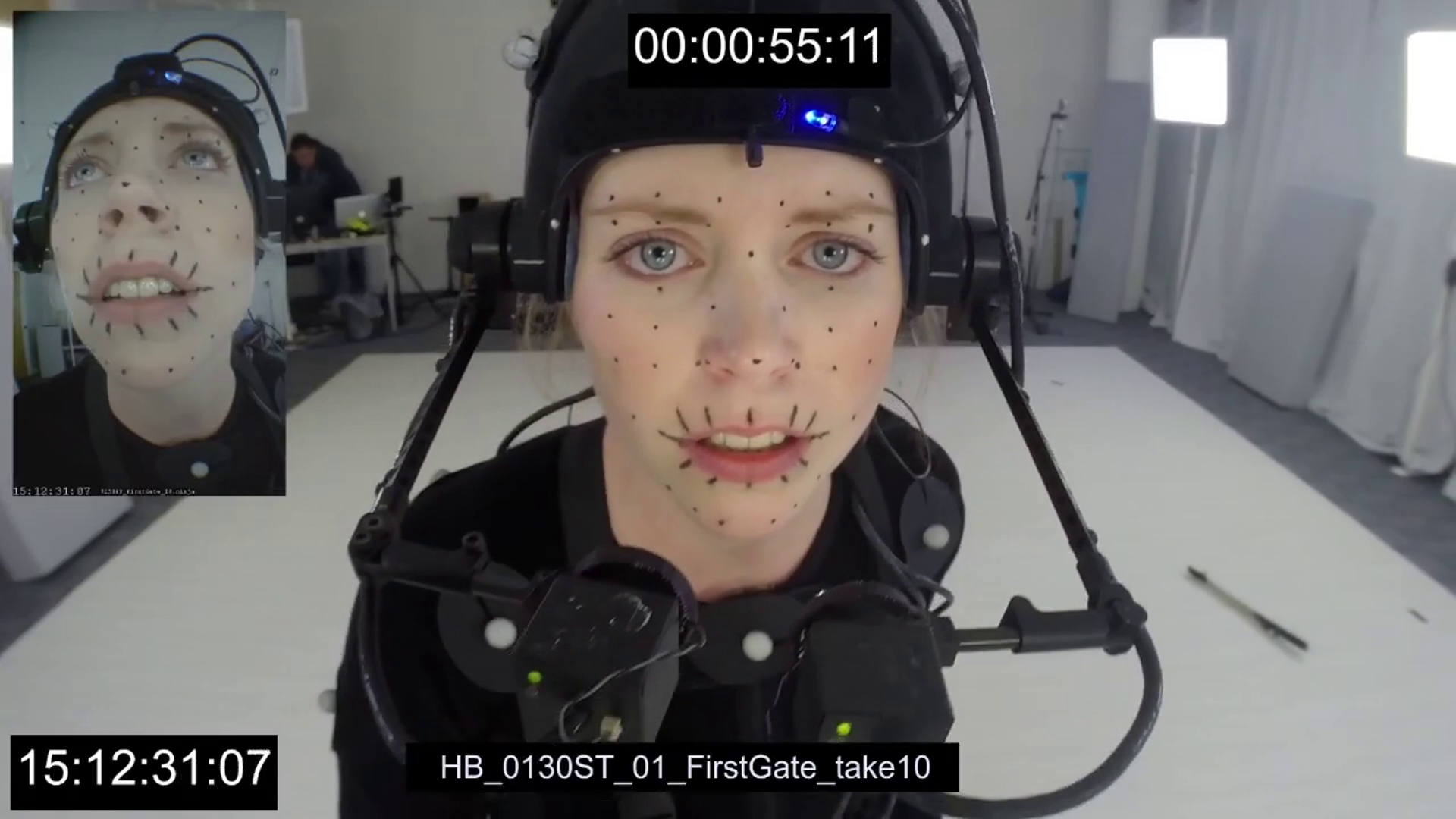
Another way to understand the paradox presented in the game is to consider the “very eloquence” with which the game is delivered. Hume pays attention to the poetic and rhetorical elements of delivering tragic spectacle. He talks about “the genius required to paint objects”,   “the art employed in collecting all the pathetic circumstances”, and “the judgment displayed in disposing them” as talents that allow the orator to provide the most delightful movements. If one is to map these talents to modern-day game development, then Ninja Theory (the development studio) has managed to exercise them in Hellblade: Senua’s Sacrifice. This can be seen in the process of perfecting Senua’s movement and emotions through using professional actors and employing cutting-edge motion capture techniques and. It can also be seen in the authentic audio design in the game. As detailed by Ninja Theory in their developer diaries (Antoniades 0:20 – 1:53; Fletcher 0:47 – 2:12; Antoniades & Matthews 0:24 – 0:50), the game audio was built using binaural voice recording methods so players would feel the voices whispering in their ears and circling them. What’s more, Ninja theory developed the game under the supervision of professional psychiatrists to provide a detailed and immersive adaptation of psychotic mental illness. This attention to detail plays a key role in taking the emotions of uneasiness and sorrow presented in Senua’s story and converting them into a delightful strong movement as one is “rouzed by passion and charmed by eloquence” (Hume 261).

A Shift of Emotions

Hellblade: Senua’s Sacrifice takes the player on an intense emotional journey as the player must face various setbacks during the whole gameplay. For example, a few hours into the game, Senua is defeated by Hela while crossing the bridge to Hel and is forced to recollect herself, obtain a new sword through the Odin trials, and attempt to go back to Hel. The tough moments for Senua do not stop here as she ends up losing Dillion’s skull five minutes after entering Hel during a chase, and the player is forced to descend into Hel to obtain the skull again. The game is full of these recurring moments where things go wrong, and the player is forced to find their way around it. Nonetheless, all the grief and sorrow from these recurring misfortunes is transformed once the player hears the upbeat notes in the ending scene and sees Senua accepting the voices in her head. 

This is exactly what Hume talks about when he acknowledges that just the mere suffering of a hero does not fill us with delight (265). Thus, a tragic story ought to end in noble courageous despair or have the vice receive proper punishment to have this transformation of grief and sorrow to delight and pleasure occur. Hellblade: Senua’s Sacrifice utilizes this concept to its benefit extremely well. When Senua confronts Hela in the final scene, she realizes that saving Dillion is not possible and asks Hela to kill her as there is nothing left to live for. At this point, the player had gone through an exhausting journey emotionally and mentally only to be left disappointed. However, to turn this climactic grief into delight, the player gets to see Senua waking up and throwing Dillion’s head into the abyss to show that Senua is now ready to move on. The scene continues with Senua accepting the voices in her head and getting ready to tell a new story as a sequence of upbeat notes play in the background.

Senua’s story comes to an end / is just beginning (Courtesy Ninja Theory)

Concluding Thoughts

As you might imagine, Hume was not the only philosopher to discuss the paradox of tragedy. However, in Hume’s framework of tragedy, Hellblade: Senua’s Sacrifice checks a lot of the boxes on how uneasy emotions can be transformed into delightful ones. Now, it would be difficult to attribute the paradox of tragedy effect in the game to any single element discussed above. The effect takes place as a result of the interactions between the game background, the behind-the-scenes development work, as well as the story writing itself. What’s more, the game is filled with details from the environment building to the very few voice gasps. This means that another replay of the game ought to allow for an even more in-depth analysis of the tragedy element of Senua’s story. 

Having considered all the elements, one can understand the different aspects of the tragic story told in Hellblade: Senua’s Sacrifice. Senua’s story is filled with gloomy and traumatic moments that convey uneasiness, sorrow, and grief. At moments, the player is only left with unaccountable anxiety as they are one hit away from dying in a boss fight. The player witnesses Senua’s pain as she navigates her way through Hel. However, through genuine acting and formidable directing, these uneasy emotions are delivered meticulously as a part-fictional, noble, courageous story from which the player can derive satisfaction and delight. With Hellblade: Senua’s Sacrifice, Ninja Theory delivered an intense, emotional game filled with sorrow, terror, and anxiety that leaves its players with unaccountable pleasure, completing the paradox of tragedy as it has always been addressed.

Resources

Adcock, Stuart. “Hellblade Development Diary 2: Art Inspiration” YouTube, uploaded by Ninja Theory, 1 September 2014, https://youtu.be/1ysfmiN-aSs.

Antoniades, Tameem. “Hellblade Development Diary 18: The Shoot Set Up” YouTube, uploaded by Ninja Theory, 4 December 2015, https://youtu.be/FACTByOjqyQ.

Fletcher, Paul. “Hellblade Development Diary 12: The Mind of Senua” YouTube, uploaded by Ninja Theory, 10 June 2015, https://youtu.be/zS6wHzwUDI4.

Hume, David. Essays Moral, Political, and Literary. Vol. 1, Longmans, Green, and Co, 1875. Edited, with preliminary dissertations and notes, by T.H. Green and T.H. Grose

Matthews, Dominic. “Hellblade Development Diary 15: Binaural Audio Tests” YouTube, uploaded by Ninja Theory, 12 October 2015, https://youtu.be/gFdPXCzxMg8.

Elsinore: The Tragedy That Never Ends

by Ella
University of Chicago MADD 25630: Games, Rules, Stories, Genres
Winter 2021

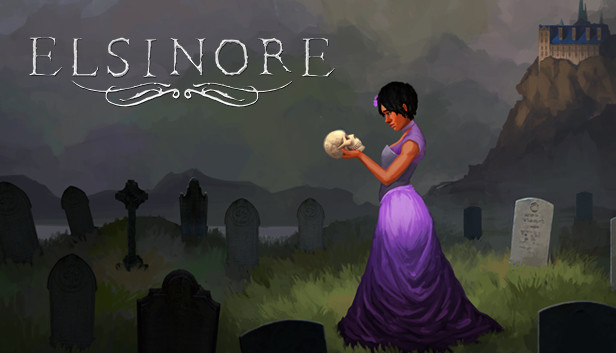
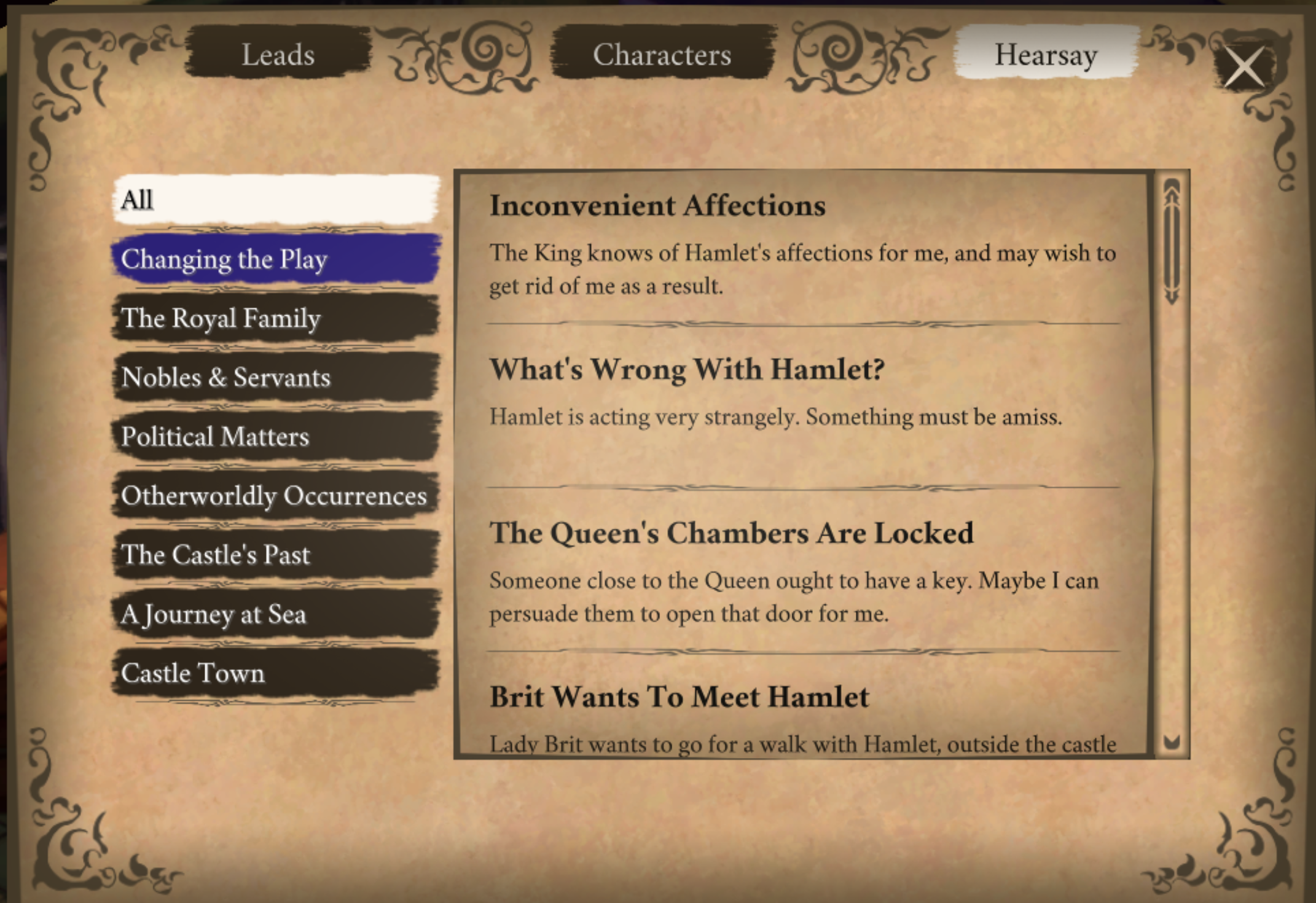
At its most simplistic description, Elsinore is a click-and-point adventure game where the player embodies Hamlet’s Ophelia. As the game unfolds, your abilities as a player expand. At the start, you learn that you are living through Shakespeare’s tragedy but you are able to interact with it by clicking on the characters around you and either following them or talking to them. You can only talk to people about information that you gather from others, stored in your electronic journal as “hearsay.” You also gain hearsay by following characters and listening in on their conversations. One of your main sources of agency in the game comes from your ability to distribute information to characters that might change their course of action— something we often long for as viewers of tragedy, when we want to warn Romeo that Juliet is simply sleeping or tell Hamlet that it’s not his uncle behind the curtain.

Screen grab of Ophelia’s journal, here is the tab where all your “hearsay” is stored, when you are talking to another character you choose from this list.

Another large source of agency comes at the end of Saturday (the story of Hamlet begins on a Thursday morning) after Hamlet has mistakenly killed your father, a hooded and masked figure simply titled “The Spy” (who you’ve likely heard about from listening in on royal meetings) walks up to your character and murders you. A black screen with a small animation of a lily pad and skull pops up and offers that you try again. You wake up in your bedroom as Ophelia on Thursday morning before all the tragedy has transpired. 

Screen grab of Ophelia’s room where you wake up after the reset, in the top left corner you can see the pause button, journal button, timeline button, reset button, and the clock button which you can press to speed up time. In the right-side corner you see the map.

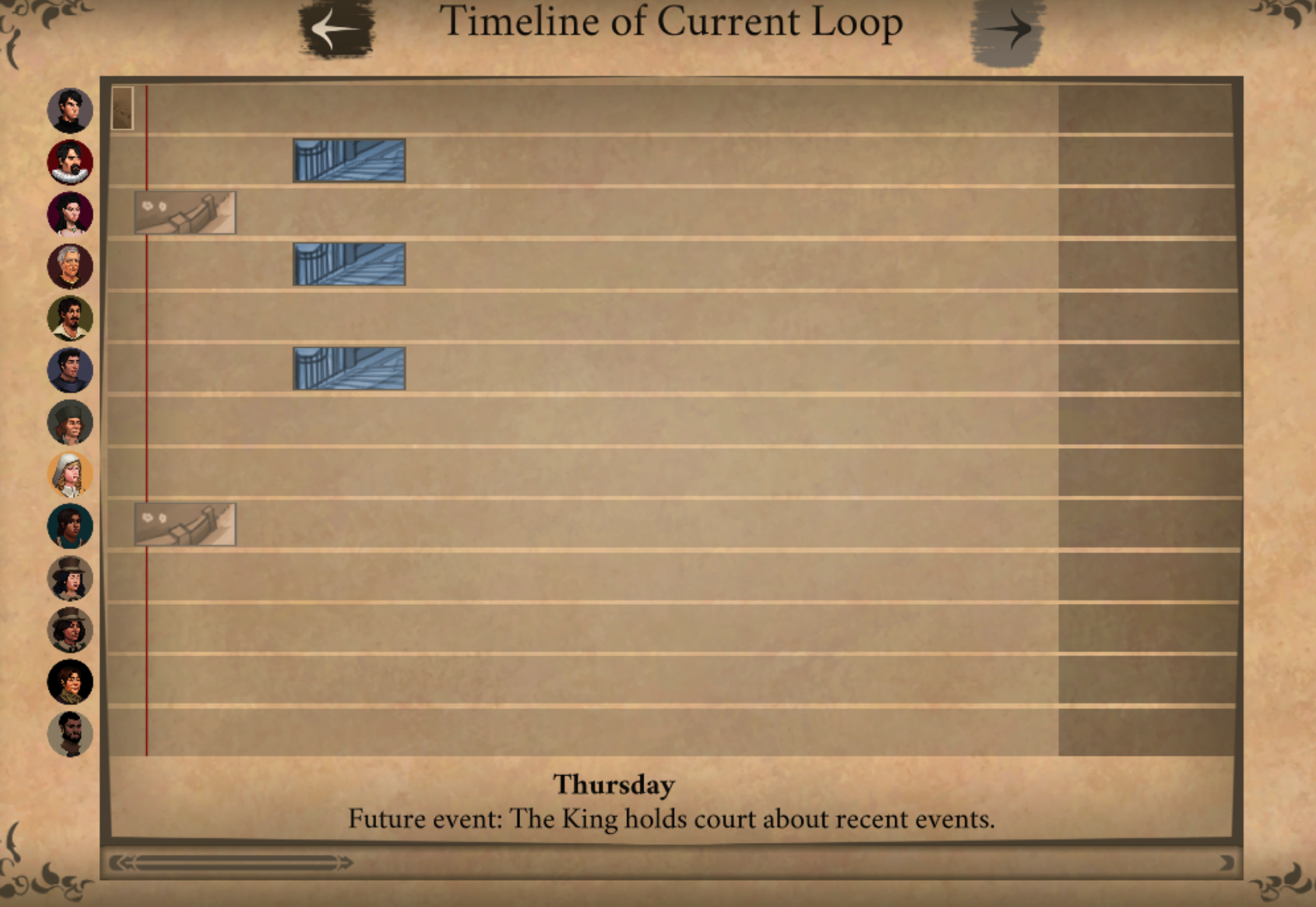
You realize that you are somehow moving outside the flow of time and you gain the ability to both fast-forward time and to reset the time loop. The timeline feature that the player is introduced to in the first cycle suddenly takes on a new meaning. As you hear about events in the future or even set them into motion you will see them pop up on your timeline, if you want to jump ahead to this event you can simply fast forward your time to it. If you set something in motion that is unlikely to occur (perhaps it’ll be after the Norwegian Army invades or your father won’t go to a meeting because Hamlet will have killed him at that point) a faint blue X will appear on the timeline, indicating to the player that if you really need this event to happen, you’ll have to try again after a reset.

In addition to having a timeline, your character also has a map that you can click on at any point and see where all the characters are. If you haven’t overheard someone talking about an event that’s about to transpire you might be able to find out it’s happening by seeing a collection of characters meeting at a location and go there and listen in. The map allows you to go to virtually every space in the game, however, occasionally you will need to convince people to let you into spaces, for instance you are not allowed to leave the castle walls and go into town until you catch the guards gambling at night and basically blackmail them into letting you come and go as you please. You cannot enter the Queen’s chambers until you do a favor for one of her ladies and they tell you where the key is hidden.

Seven-hundred words later, it’s obvious that the mechanics of this game are complex. However, the even more complex part of the game might be your character’s objective. One helpful way to unpack the objective of Elsinore might be through some of the various lenses that Janet Murray writes about in her book Hamlet on the Holodeck: The Future of Narrative in Cyberspace.

Elsinore as a Contest Story

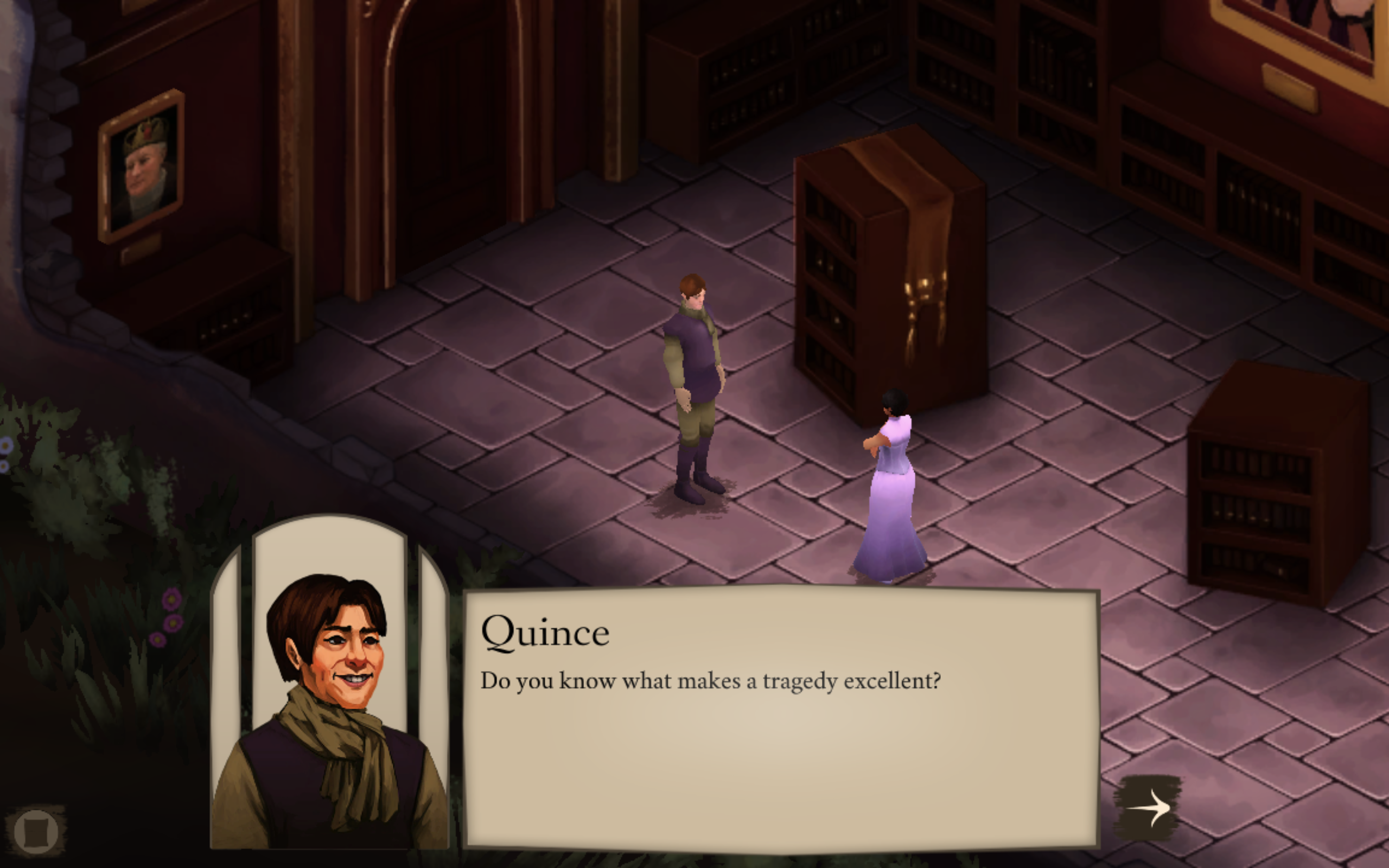
When you are first murdered and the game resets, the natural conclusion is that you are now playing a contest game. Your obvious adversary is the spy who killed you, so now, to save yourself from dying and presumably win the game you need to eliminate the spy. However, once you find and eliminate the spy the game doesn’t stop. You are able to arrest the spy and live to the next day but time keeps looping. Moreover, Peter Quince, who is the playmaster who Hamlet invites to put on a replica play of his uncle killing his father in order to get him to confess, moves from a background character to the foreground. After your first reset it’s revealed that he is also moving outside the flow of time, and he often discusses tragedy and how to craft a tragic story with Ophelia. After you finish the time loop where you get the spy arrested and evade your own death, Quince appears and says he’s bored of that plot line and eliminates it, meaning that the spy is no longer trying to kill you. He then gives you a new objective, to find the Book of Fates, and in order to do this you must befriend your old murderer, flipping the idea of the contest story on its head.

The horrifyingly creepy face of Peter Quince, who’s name is from a character from Midsummer’s Night Dream that is sometimes thought of as Shakespeare inserting a character of himself.

You could also view the game as a contest story in light of the original play. Hamlet and his allies being the good guys versus murderous King Claudius, and you as Ophelia can try to warn everyone in the castle of Claudius’ misdeed or even get him killed. However, this isn’t your only option. Murray writes, “We need to find ways of drawing a player so deeply into the situated point of view of a character that a change of position will raise important moral questions” (Murray, 147).  Indeed, you have the agency to switch sides, to seduce King Claudius and even marry him and become the Queen of Denmark, and the more you conversate with him and listen in on him you realize that his brother he murdered was not innocent or even benevolent, thus further complicating the idea of a bad opponent and a righteous hero in a contest. Every character is dynamic and has both moral and immoral qualities. 

Elsinore as a Kaleidoscope Narrative 

When explaining the concept of kaleidoscope narratives Murray compares them to an interactive dinner theater, one where you are sat at the table of the actors and are able to hear their different stories. In many ways, this is exactly what Elsinore is: a play made to be interactive. The key difference is that in a dinner theater the actors are still ultimately going to proceed with the same ending regardless of your interaction and in Elsinore you have the ability to change what will transpire. 

Murray also writes about how kaleidoscope narratives require the viewpoints of multiple people to understand it fully. She writes, “In order to find the whole story, they have to take the trip again, making different choices” (Murray, 159). Obviously the time-looping features on Elsinore not only make this possible but requires it, in order to get some information you might need to be in a scenario where someone dies but is alive in the next time loop.The reset is imperative to finding out others motivations and discovering the full narrative. 

Elsinore as a Rhizome

Murray also invokes Gilles Deleuze’s rhizome model of thought where all the points are connected. Elsinore undoubtable fits into this category, mainly because there is no end. There is a way to get a credit roll, if you are able to find the book of fates you can choose one you lock into it and stop the time looping, but the game doesn’t restart after that. If you want to keep playing you don’t restart Elsinore but rather return to it, and while you are returning Hamlet’s father’s ghost keeps warning you not to come back and not to reopen the book. You could, however, play out each of the 11 possible fates, or try different secret endings like burning the book or killing Peter Quince, but if you wanted you could just keep living in time-looping Elsinore Castle for eternity. 

Murray writes that, “As we navigate its tangled, anxiety-laden paths, enclosed within its shape-fitting borders, we are both the exasperated parent longing for closure and separation and the enthralled child, lingering forever in an unfolding process that is deeply comforting because it can never end” (Murray, 134). Indeed, as a player it can be both frustrating that there is no tangible objective in sight, no complete and satisfying narrative end, but there is also comfort in the rhizome. The game itself often nods to this, after it’s necessary for you to, for instance, let your father die in a time loop, Ophelia will often say to herself something to the effect that she’s sorry but it won’t matter for long and that she’ll see him in a couple days. The deaths lose a lot of their gravity that they have in Hamlet because you watch them happen over and over, but it always resets. 

Elsinore as the Ultimate Tragedy Game

Screen grab from when you return to the game after completing a fate.

As I mentioned previously, there is no real ending to Elsinore but there are 11 different fates from the Fate Book that you can choose to play out. These fates all have one thing in common, they are tragic. Every fate is structured as a trade, for instance if you choose the path of marrying King Claudius the fate is called “Trade Innocence for Power”. Even if you opt out of the Fate Book endings, the secret endings still have tragic ends. In Murray’s imagining of the ultimate tragic video game she writes that by the end, “The reader would have both enacted and witnessed the decision and feel the sense of understanding, inevitability, and sorrow that we call catharsis” (Murray 177). Indeed, this is what every (non)ending of Elsinore provides, the agency of choosing your own fate and still experiencing a kind of tragedy. 

Works Cited

Hamlet on the Holodeck: the Future of Narrative in Cyberspace, by Janet Horowitz Murray, The Free Press, 1997, pp. 126–182. 

“You Can’t Please Everyone:” Identity Formation and the Procedural Rhetorics of Signs of the Sojourner

by Abigail
University of Chicago MADD 25630: Games, Rules, Stories, Genres
Winter 2021

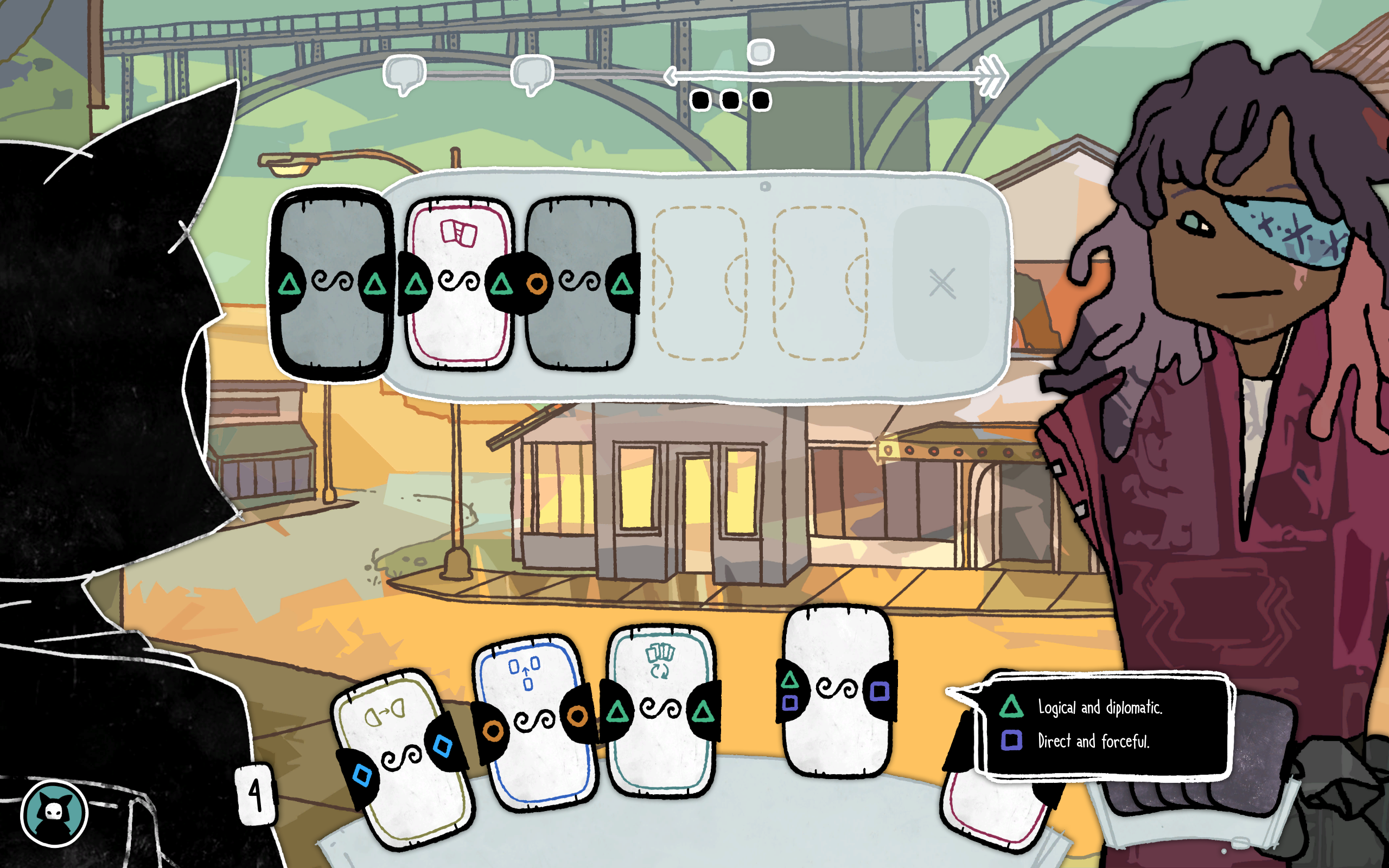
Signs of the Sojourner uses its deck-building structure as a jumping off point for creating a procedural rhetoric that encourages empathetic, compassionate communication. Players can only succeed in conversations–and therefore receive the items they need to complete goals and the information to unlock new paths–by forming matches with characters. In order to form a match, players have to recognize the right-hand symbol of the other character and mirror it. In order to set up a subsequent match, the player must introduce a new symbol that corresponds to the kinds of symbols the character they are talking to is likely to have. There can only be a match when characters listen to each other and recognize their partner’s conversation style. And in order to do this, players need to intentionally build a deck suited to the characters they want to talk to.

A mismatch occurred because Klaus didn’t have a card that could match with mine. 
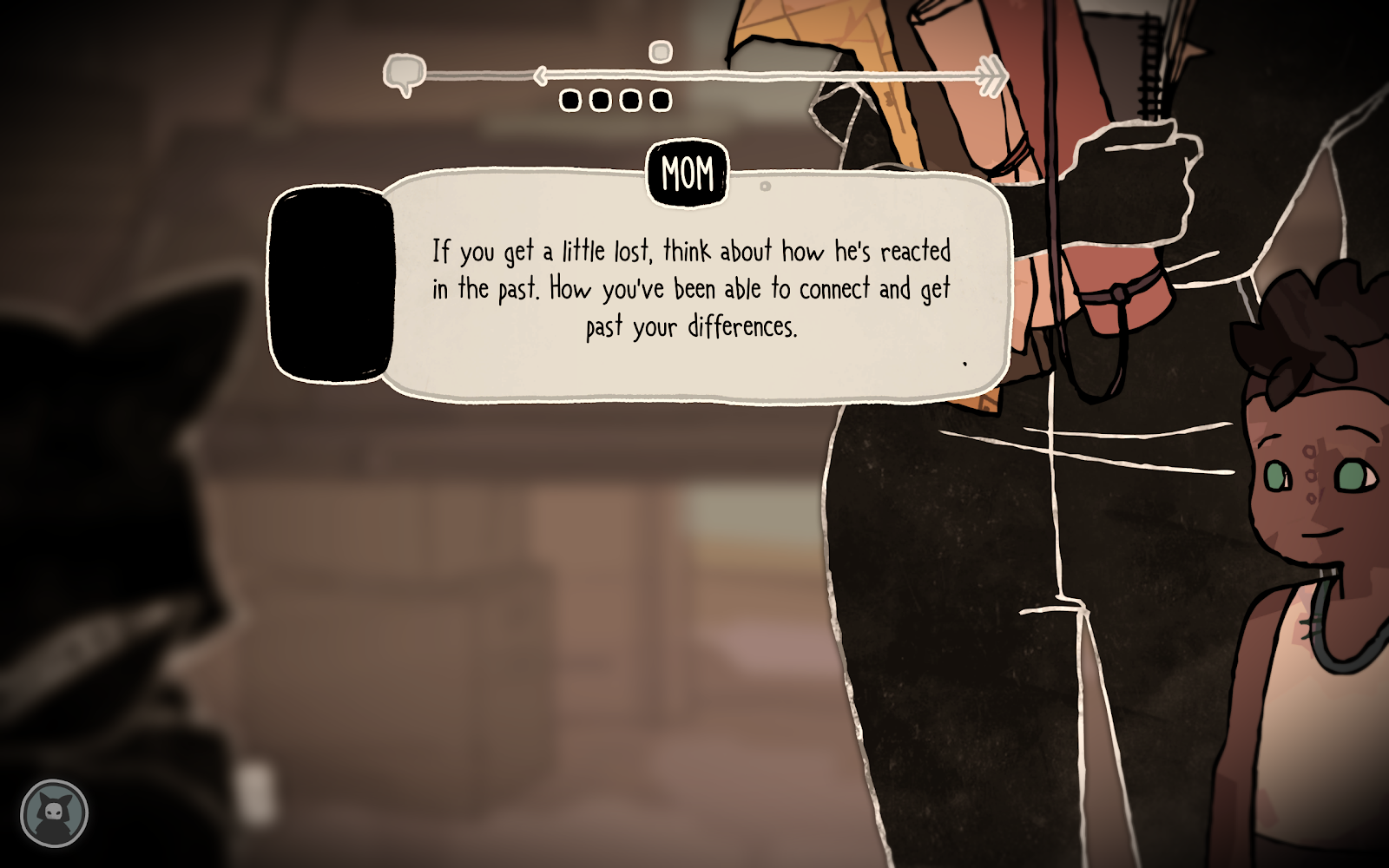
Mom provides an explicit instruction to connect and overcome differences, as well as to base conversations on characters’ past conversational modes. These instructions are reinforced through the game’s processes. 

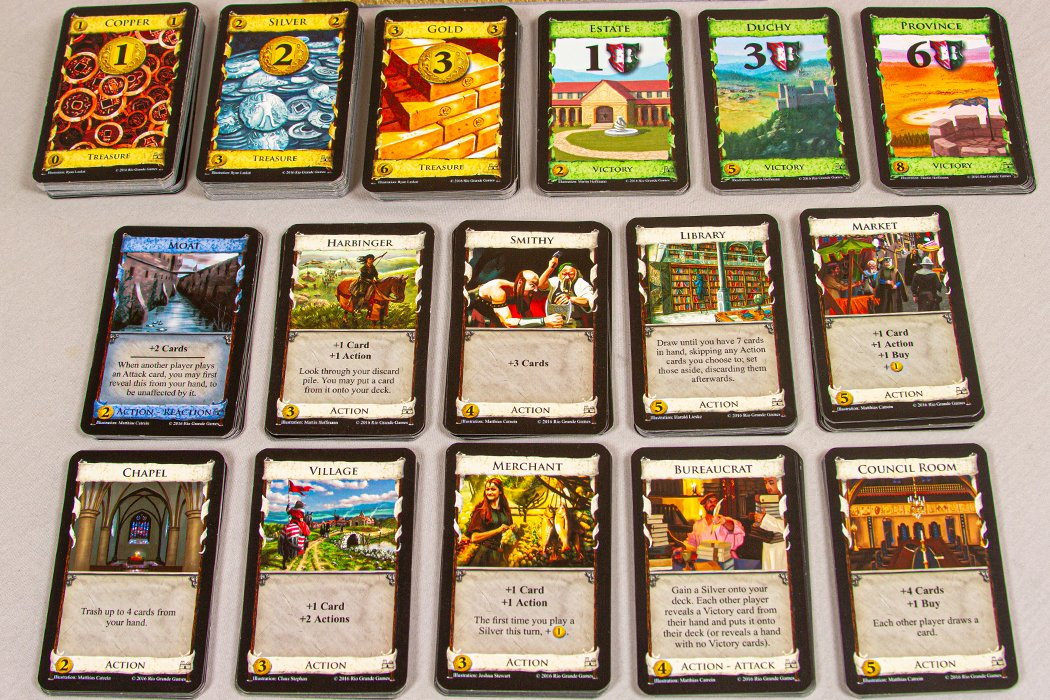
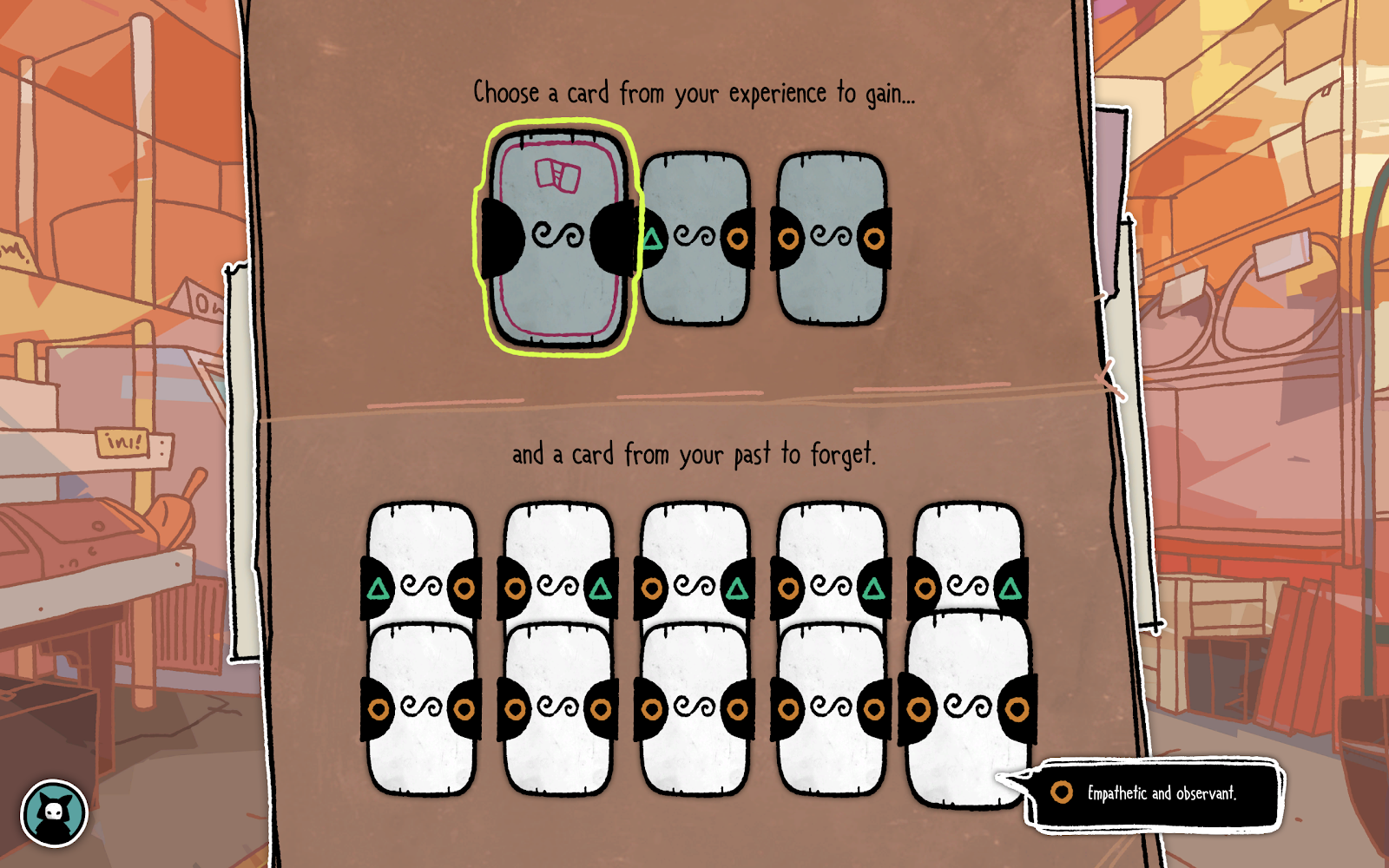
Deck-building games originated with Dominion, a game in which players add cards to their decks and try to gather victory points. Dominion is a competitive multiplayer game. It spawned numerous other deck-building games, some competitive and some collaborative. Signs of the Sojourner is a more collaborative one. In most conversations, both participants want a positive result, but may be constrained by cards in such a way that they cannot reach it. Unlike many other deck-building games, including Dominion, Signs of the Sojourner limits how many cards can be kept in a deck. It also forces players to switch out a card at the end of each conversation, with the new card mimicking an attribute of the conversational style of the character to which the player just spoke. In game, this is described as gaining experience and forgetting old memories. Characters literally rub off on Rhea (the playable character), so that their conversational style and identity shift based on the people they meet. Conversations, whether positive or negative, are incorporated into Rhea’s personality in a way similar to how in a bildungsroman, “only by stringing together ‘experiences’ does one build a personality” (Moretti 48). 

Dominion was the first deck-building game. 
Switching out cards is framed as gaining experiencing and forgetting parts of the past. 

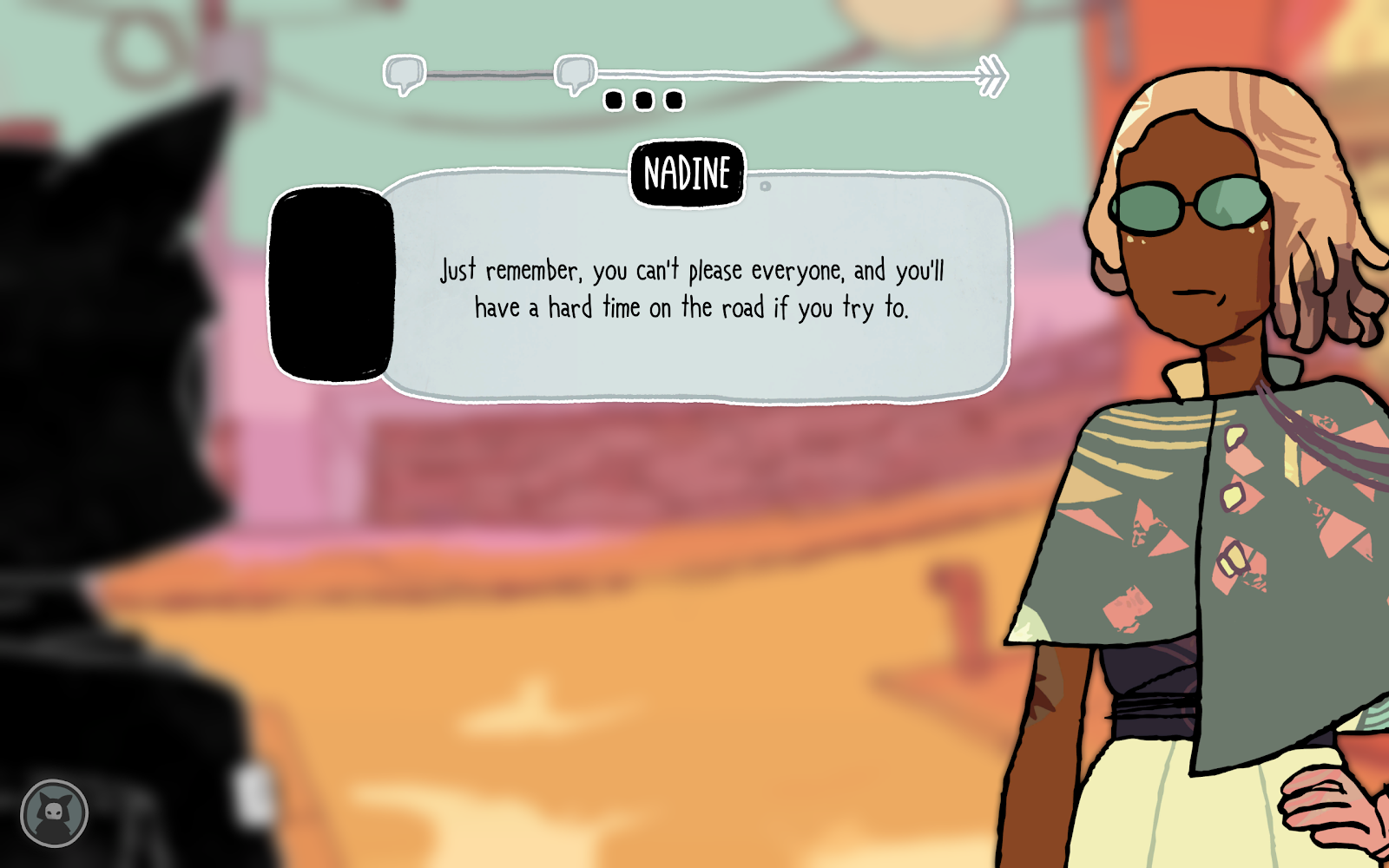
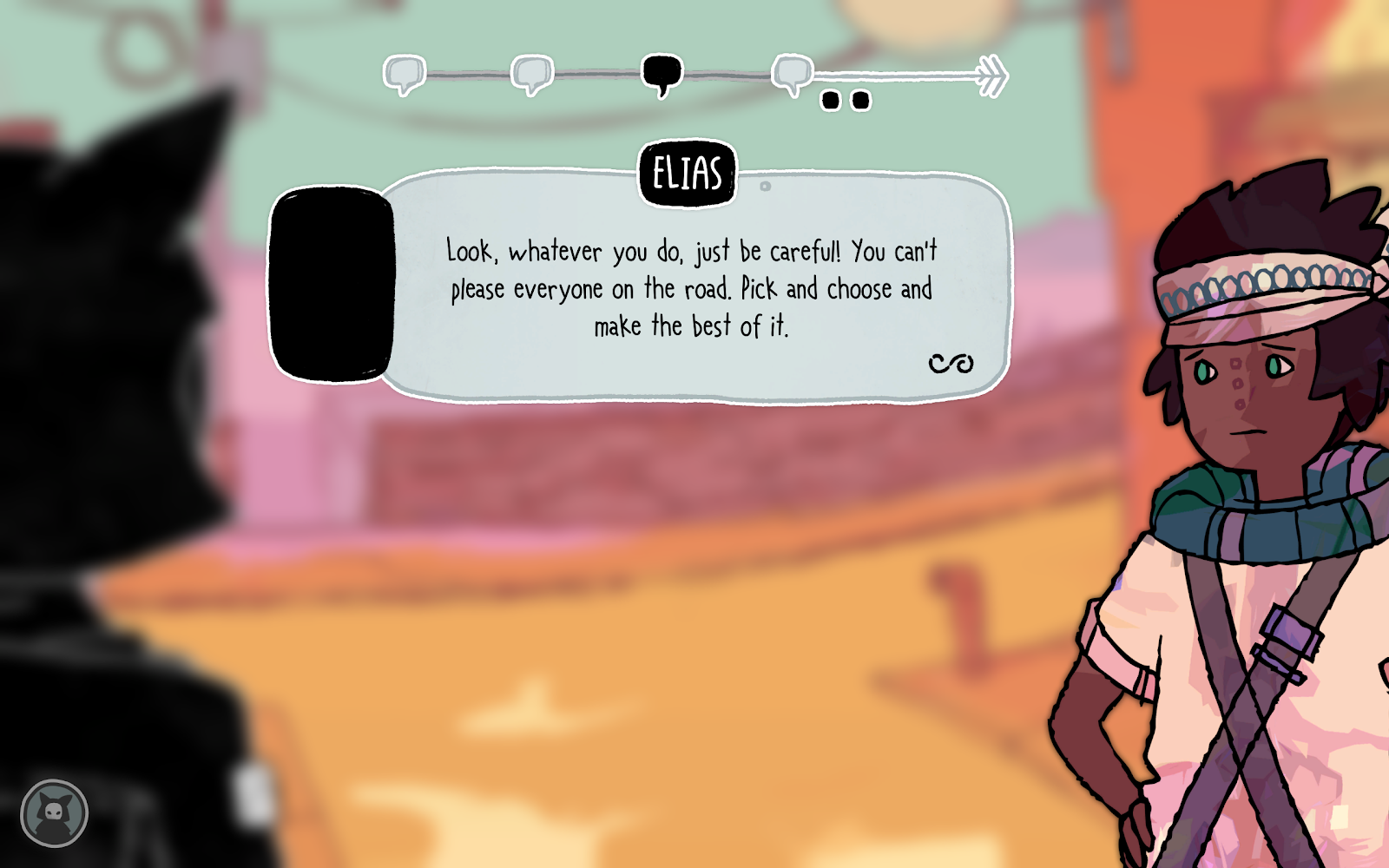
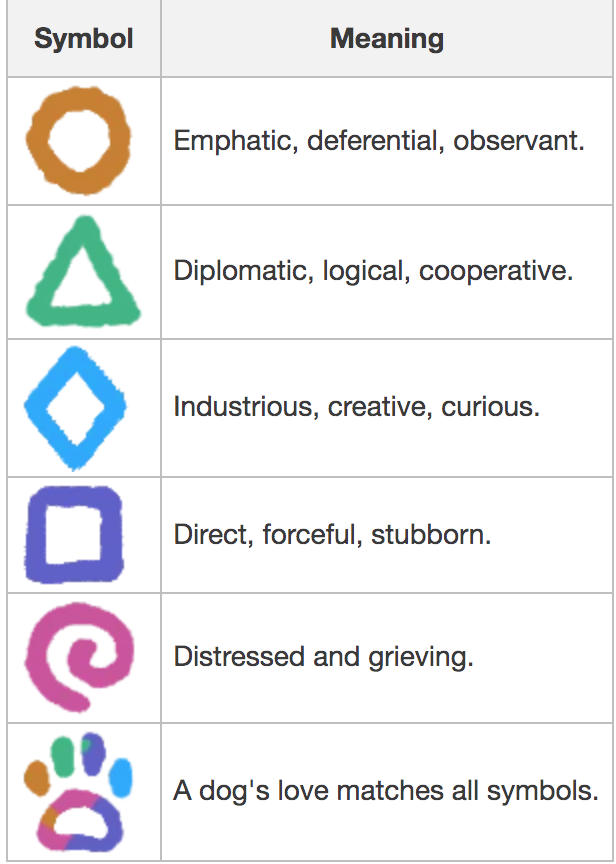
To maximize the number of successful conversations, players eventually need to choose certain conversational traits (symbols) for Rhea to specialize in. This is another procedural rhetoric: it’s impossible to connect to everyone, and it’s okay to prioritize certain people that you want to build relationships with. Characters in different regions of the map tend to have different styles of speaking. For example, characters further east tend to be more industrious and direct. This can disincentivize players from travelling to different regions in which the speaking styles may be radically different, and players might not have the right cards for successful conversations. Adopting a different conversation style may also make it harder to connect with characters back in Bartow, who tend to be empathetic and diplomatic. Many of us noted that our conversations with Elias, our childhood best friend, became more strained as we acquired more diverse cards that made matches with him more difficult. We also noticed that talking with him often forced us to take cards that were weaker than the ones we had acquired through traveling (although according to the Wiki, he is the only player who can provide Accommodate cards, one of the most useful). We felt like we were drifting away from him. On the other hand, characters like Nadine who also traveled tended to diversify their cards more, like us, over the course of the game. The cataclysm introduces a new set of symbols, the distressed ones. When Rhea acquires several of them, it can make it harder for them to talk to characters who don’t feel similarly distressed. It seemed odd to us that the orange “empathetic” symbol couldn’t match with distress. According to the game’s logic, only people who actually share distress can relate to each other. 

Nadine and then Elias reiterate that it’s impossible to please everyone. 
Different conversational traits in Signs of the Sojourner (the top should read “empathetic” not “emphatic”).

The card effects mimic conversational styles in clever ways, furthering the impression that the game mechanics are a good imitation of conversations. It makes sense that “Clarify” would allow you to go back into an earlier part of a conversation, and that it usually has a positive effect, and that “Chatter” would allow you to place two cards. We liked using the “Chatter” card to quickly advance conversations, although it seemed a bit in tension with the procedural rhetoric of empathetic listening being necessary for a conversation’s success. Still, as the game’s Wiki notes, playing “Chatter” is not always advantageous, since “Chatter” chains cannot lead to accords and may use up matching cards, forcing the player to draw less useful cards. The Wiki also emphasizes the power of “Accommodation” cards, even claiming that “a run can be accomplished while succeeding at over 90% of all conversations by working towards a deck filled entirely with Accommodate cards” (although it does not provide evidence for this claim). This privileging of “Accomodation” fits with the procedural rhetoric that encourages empathetic listening. 

Like in an archetypical bildungsroman, Rhea moves from a pre-modern world (Bartow) to a larger, more modernized surrounding world. As they travel, they encounter not only more urban settings, but technologies like railroads and humanoid robots. With these industrialized technologies come industrialized problems, like the Rilkers’ cruel treatment of the robots eventually leading to a strike in Tosende Canals. (The antagonistic Rilkers are mentioned several times in Signs of a Sojourner and were enemies of Rhea’s mother, but from the Wiki it does not seem like Rhea ever directly encounters them.) Different endings complete the process of Rhea’s identity formation in more or less satisfying ways. In one ending, Rhea fails to convince the caravan to continue coming to Bartow, leading to the town’s abandonment. This seems like it would be a “bad” ending: the player/Rhea did not complete their goal. However, this ending is not framed negatively. Rhea and Elias move to Aldhurst, where they run a more successful business. This arc seems fitting for a bildungsroman. It is a happy ending, in which Rhea has incorporated their trials into their development and found stability in their new life. In contrast, the supposed “good” ending, seems to be less satisfying. Bartow is stable, but there is still a restlessness to Rhea as other characters encourage them not to get stuck in the town. In a third ending, Rhea starts a revolution in Old Marae, cementing a new identity as a revolutionary.  

Gynoid Maya organizes a strike. 

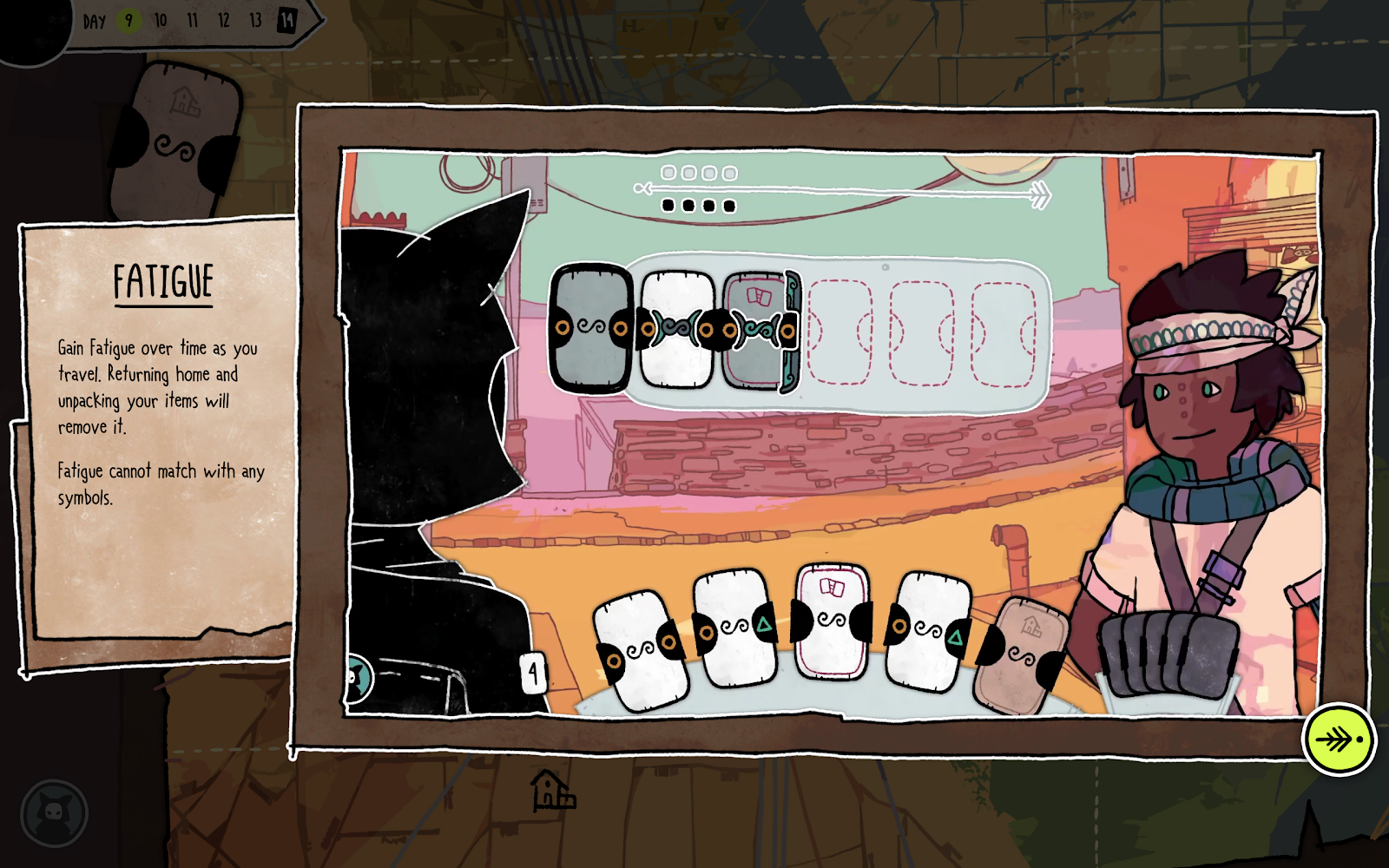
One constraint that Signs of the Sojourner puts on its conversations is the Fatigue cards, which accumulate as Rhea takes longer trips between towns. These cards, which mismatch on both sides, are never useful to play and make it less likely to get more valuable cards. There is a maximum time constraint on Rhea’s trips (50 days), but these cards provide another constraint: accumulating too many forces the trip to end. These cards mean that trips need to be chosen thoughtfully and that exploring specific regions is easier than travelling across the map. They also have a procedural rhetoric: it is harder to communicate well when you are tired. Fatigue cards can make it even harder to connect with Elias after longer trips, further distancing Rhea and him. There are some ways to get rid of Fatigue cards, including interactions with Thunder. Still, we found them to be a frustrating and perhaps overbearing constraint on gameplay. Perhaps having less of them could have had a similar effect but allowed players to have more interactions before having to return to Bartow. Another suggestion that came up in class was to reduce the hand size as the journey progressed instead of diluting it with the fatigue cards. Our frustration with the fatigue cards raised a larger question of how to balance a game that uses its mechanics as heavily for storytelling as Signs of the Sojourner. Most of us agreed we were invested in the deck-building gameplay only in so far as it let us explore the larger narrative. 

Fatigue cards make it difficult to communicate. 

And explore does feel like the right verb–as Jenkins discusses, this is a story that’s told over space. Characters are tied to specific spaces, although they, like Rhea, may migrate as time passes. The depth to which we know certain characters may change depending on our route. I deviated from the caravan as early as my second trip, so I didn’t meet Lars, the farmer from Tosunde Canals, until he relocated to Aldhurst after the cataclysm. At that point, he didn’t want to talk to me (I didn’t have the right cards to match with him, but he was grumpy anyway). I didn’t understand his backstory or why he was so distrustful of other humans (if you meet him earlier, you learn this is because he lived among robots at Tosunde Canals and rarely interacted with humans). As Jenkins discusses, although Signs of the Sojourner progresses literally, much of what Rhea comes to learn is about the past, including about their mother. There’s a depth to the story world through its history. The game progression is also grounded in time. Each trip has 50 days and events happen at specific times. You can miss certain interactions if you miss characters on certain trips. And you can strengthen or weaken relationships depending on if you visit or skip. I missed Pachenco on my fourth trip and came back on my fifth to find the Marques blaming me for Tomas’ leaving (even though Tomas and I were on good terms). 

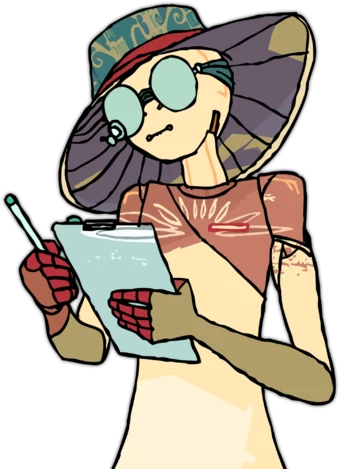
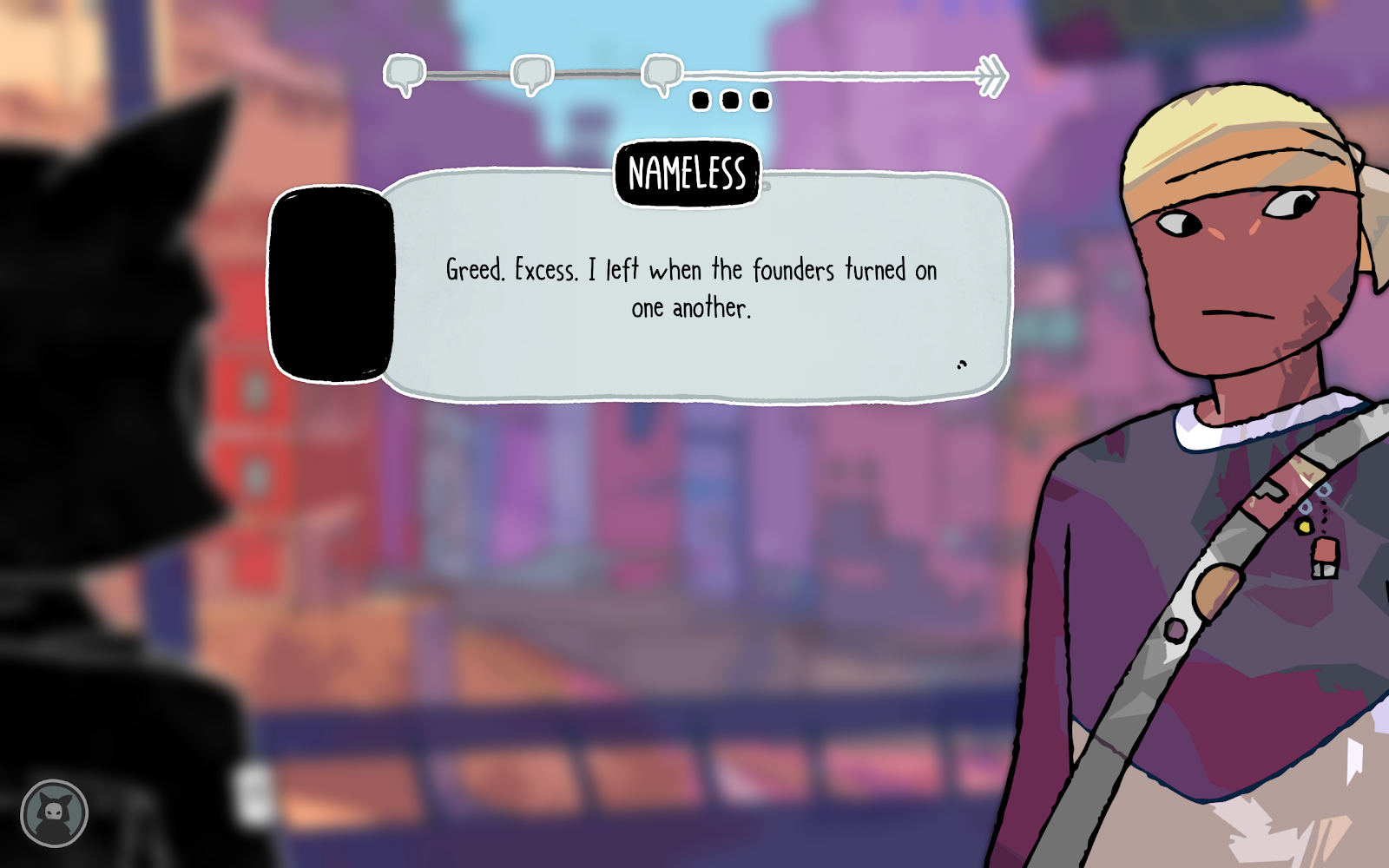
Nameless discusses his past with Rhea’s mother and the Circle. 

Through its deck-building mechanics, Signs of the Sojourner persuades players of the power of conversation and that they should use it compassionately. While it may not be beneficial for every conversation to have a positive result (like when you catch Lil’Basilio trying to steal from you if you fail a conversation with him), the majority of the time the game processes encourage connection. Positive conversations are the only way to acquire objects and learn useful information. The game processes also suggest that identity formation comes from these kinds of connections and the people we choose to relate to. The game’s processes reveal how socialization develops identity. 

Sources:

Bogost, Ian. Persuasive Games: The Expressive Power of Video Games. The MIT Press, 2007.

Jenkins, Henry. “Game Design as Narrative Architecture.” First Person: New Media as Story, Performance, and Game. The MIT Press, 2004, pp. 118-130. 
Moretti, Franco. The Way of the World: The Bildungsroman in European Culture. Verso, 1987. 
https://signs-of-the-sojourner.fandom.com/wiki/Signs_of_the_Sojourner_Wiki

What is Slapstick? From Comedia dell’arte to Chuchel

group project submission, created by group leader Annie
University of Chicago MADD 25630: Games, Rules, Stories, Genres
Spring 2020

Introduction

Chuchel is an absurd, zany, surreal point and click game where you guide a character named Chuchel. You go through a series of puzzles and minigames with the goal of getting the object of Chuchel’s desire, which is a ripe juicy cherry. Chuchel finds himself in all sorts of ridiculous and silly situations, and his primary partner in crime/nemesis/pet is this cute little companion whose name is Kekel. It’s a very playful game with a lot of interesting interactions, sound, and animation, and is extremely slapstick in nature.

In this video, I’m going to talk about how the game Chuchel emulates traditional slapstick found in movies, shows, theaters, and cartoons. Made by Amanita Design and released in 2018, Chuchel is a great take on classic slapstick humor in a more modern, untraditional medium – that is to say, a game! I’m also going to talk about how Chuchel differs from traditional slapstick, but that comes quite a bit later.

The idea that Chuchel has a lot of slapstick comedy is usually quite obvious when you play the game – this ridiculously fuzzy, orange, temperamental ball named Chuchel constantly undergoes a series of physical mishaps — there are plenty of pratfalls, objects thrown, clumsy tripping and falling, and so on and so forth — and these mishaps are often accompanied by the sounds of squeaks, boings, squelches and plops.

What I really want to do here is articulate why Chuchel feels so slapstick-y, and explicitly explain how it embodies traditional slapstick. Recognizing that Chuchel is slapstick is one thing, but understanding the why and how of it is quite another .

What is Slapstick Comedy?

So, what is slapstick, in a more traditional sense? What might you see in more veteran mediums, like film or theater or cartoons? I’m going to mainly rely on Louise Peacock’s article “Slapstick and Comic Performance”. One of the definitions Peacock provides is the following:Slapstick is “a mode of performance that relies on broad physical comedy…derived from performed violence and comic pain and is likely to involve trips, falls, beatings, and throwing of items”

Live Performance

Let’s now take a quick look at the history of slapstick, starting with live performance: Commedia dell’arte, otherwise known as “Italian comedy,” dates back to the 16th century, and was performed by theater troupes from Italy throughout Europe. The performers often wore masks, forcing them to project their characters’ emotions through bodily movement and action, such as — leaps, obscene gestures, tumbles, and all sorts of physical performance.

Additionally, the characters were often meant to satirize Italian stereotypes, like the foolish old man, or devious servant. Peacock notes that the highly stylised performance combined with the masks worn by the actors discourage the audience from developing an empathic relationship with any of the characters.

There are clearly elements of slapstick present in Commedia dell’arte — the costumes and exaggerated movements dehumanize the performers and allow the audience to laugh, even when conflict or violence arise. The exaggerated caricatures of Italian stereotypes combined with an absurd comic frame give us something we can all point to and laugh at — the characters and their stupidity are recognizable, yet exaggerated enough so as to be foreign, as are the absurd situations and circumstances the characters find themselves in.

Circus clowning is another early form of slapstick, dating back to the mid-nineteenth century across the UK, Europe and America. Circus clowning relies mostly on physical gags, and similar to performers of Commedia dell’arte, the clowns perform with exaggerated movements, outlandish costumes, and face make-up. Peacock points out that such hyperbolized movement and appearance “go some way towards establishing an otherness about the performance that mitigates the appearance of pain.” However, unlike Commedia dell’arte, these characters are not satirizing stereotypes that can be found in reality; rather, the humor in circus clowning comes from the exaggerated movements and behaviors of the performers. The humor, then, is heavily grounded in the physicality of the performers.

Through their costumes and make-up, circus clowns become entirely “other”. The “gags” performed by circus clowns, further their ‘otherness’. The gags involve comic violence between clowns and dubious props, and are often of an excessive and unexpected nature. 

The props used often take a spin on our expectations of those objects: for example, props might include  a flower that squirts out water, or a Pringle can that actually contains a snake inside. They enable the performers to physically act in a greater variety of ways by offering more potential and surprising interactions – they can touch, engage, and react to the props with highly stylized and hyperbolized behavior. All of this ultimately contributes to the clowns’ “otherness”. 

From these stage examples, we can see how important dehumanization is for slapstick to be successful. Through the usage of masks in Commedia dell’arte and the makeup of circus clowns, performers distance themselves from their characters and establish a lack of reality, which lets the audience know that the violence and pain being portrayed isn’t real. We laugh at rather than sympathize with them. 

Of course, the dehumanization never goes so far as to render the characters and their actions entirely unfamiliar – rather, slapstick works by juggling between the real and unreal. Real enough that we can recognize the circumstance – unreal enough such that we can laugh. “Otherness”, established by masks or makeup, emphasize the ‘unreal’, but maintains the realness required to identify what’s occurring. 

Props, too, also go a long way in enabling the performers to establish the lack of reality or a hyperbolized one through actions, as briefly explored earlier in circus clowning, what with the flowers shooting water and all…but we can really see how props enable slapstick performers in silent films, such that the lack of reality can be found in the hyperbolized stunts and interactions performers might have with the props. 

Film and Television

Buster Keaton, for example, is an icon when it comes to slapstick, known for his silent films from the early 20th century. His films usually focus on his outrageous stunts, such as…jumping across the top of buildings, falling through awnings, or approaching Jean Claude Van Damme levels of flexibility. His stunts often rely on props in the scene, like a car that falls apart on its own, or pieces of lumber in the way of a moving train. The usage of props is vital to highlighting unreality in such films. Without quirky sounds to emphasize the action, the props combined with Keaton’s elaborate stunts provide the circumstances of some central absurdity. 

Keaton’s performances with these props are often outrageous and risky. Peacock connects this risk to notions of excess, and points to the example of Keaton narrowly fitting through the hole of a window on the falling facade of a house. While we are aware that the facade itself is made of real building materials that threaten real harm to Keaton, this interestingly does not prevent us from laughing. The threat itself is so unrealistic that it lends itself to the characteristic nature of slapstick, which is to say: excess. We never really believe that something as outrageous as a falling facade would happen, much less hit the fictional character Keaton portrays.

Moving a few decades forward, Tom and Jerry is another classic example of slapstick comedy. What’s notable about this show is that it implements sound and is animated, which contrasts against the silence in Buster Keaton films and the genuine physical skill of Keaton. Nonetheless, the foundation of slapstick humor remains the same, despite the stark difference in auditory and visual stimuli. The show Tom and Jerry still seeks to establish notions of excess and a lack of reality, the same as Keaton films. The sounds that accompany actions in Tom and Jerry are often exaggerated and unrealistic; for example, the show makes use of slide-whistles when someone falls or gets confused, or cymbals when crashes occur. This auditory input adds to the unreality by further emphasizing the excessive nature of the interactions that unfold.

Additionally, the performers – aka, Tom and Jerry, are extremely malleable and resilient due to their animation. There are more opportunities for exaggeration and unexpected events; characters can shatter like glass or be flattened into a pancake. Obviously, stage actors cannot survive being pancaked the same way animated characters can, so the unrealistic aspects in slapstick can be exaggerated tenfold. Animation really opens windows for slapstick humor as the characters are no longer dependent on the skills, contortions, and acrobatics of the performers, but rather, the creativity and imagination of the animators, which significantly carry and enable more potentiality for slapstick humor. 

Also, what sets Tom and Jerry apart from the other examples I have mentioned is its reliance on a central double act. While double-acts are certainly present in Commedia dell’arte and circus clowning, it isn’t always at the forefront, as it is with Tom and Jerry. Having two characters in conflict with one another not only sets the stage for hilarious situations, but also gives the audience some choice over whom to identify with. The main characters use just about everything at their disposal to mess with each other, leading to oodles of comic pain and violence. The absurd dynamic between Tom and Jerry is an ever-present source of conflict and hilarity, which nicely sets up absurd situations that add to the excessive nature of the show. 

Elements of Slapstick

So what do these traditional examples of slapstick have?

Peacock identifies the following as essential elements of slapstick comedy:

  • A central double act
  • Comic pain and comic violence
  • Falling and tripping
  • Malicious props
  • Throwing of objects
  • And stunts and acrobatics

Going on to also mention the use of:

  • Sound
  • Excess and transgression

We’ve certainly seen some of these elements in the traditional examples we just examined.

Chuchel Slapstick

Double Act

So how is Chuchel traditionally slapstick? Well, it certainly has all the elements of slapstick! You have the central double act of Chuchel and Kekel, which is reminiscent of the double act between Tom and Jerry, though Chuchel and Kekel don’t antagonize each other as much. The dynamic between Chuchel and Kekel is primarily that between an owner and a pet, but of course, with that comes scenarios in which they are in conflict, and scenarios in which they are collaborative. 

Comic Pain

There is plenty of comic pain in Chuchel, as is found in traditional slapstick. Comic pain occurs because of some accident or some type of incompetence, and you could see this in this example of circus clowning, where a clown accidentally drops a sandbag on his foot. So in Chuchel, you find many examples that manifest comic pain, particularly through falling and tripping. Chuchel here attempts to get the cherry, but falls over himself. Comic pain can manifest not just through the actions of the performers, but also through the use of malicious props. For example, we can guide Chuchel to press the red button, but shortly after pressing it, a heavy weight flattens Chuchel like a pancake. In this case, both the player and Chuchel does not expect this to occur from pressing the red button, and the red button acts as a malicious prop that causes Chuchel’s pain. Malicious props often subvert our expectations, as seen earlier in the example of a flower unexpectedly shooting water.

Comic Violence

Not only do you find a lot of comic pain in Chuchel, but you also find many examples of comic violence. Comic violence occurs when either one of the central double act attacks one another or when a third party attacks both of them. Comic violence is abundant in Tom and Jerry, as we can see here. Jerry throws a brick at Tom, who shatters like glass. In Chuchel, we can see comic violence occur in the double act of Chuchel and Kekel – they’re both in mech suits, punching and boxing each other. Additionally, it occurs when Chuchel and Kekel team up, precariously balanced on one another to hammer open an egg, which acts as the third party. 

Throwing of Objects

When you think of objects that are thrown in slapstick, you might first think of the classic pie in the face or rotten tomatoes. In Spongebob, Squidward attempts to do an ‘interpretative dance’, which is unfortunately not received well by the audience, and gets tomatoed. Chuchel draws on this scenario in this particular example, where Chuchel gets an egg thrown at his face after he lifts his name up and flexes. He also gets a variety of objects thrown at him by you, if you are the player, as he is singing – and presumably, he’s singing poorly. 

Stunts and Acrobatics

Stunts and acrobatics are also found in Chuchel, as they are in Buster Keaton films. Keaton obviously does things with his body that most people cannot – he can dangle upside-down on a rope, perched precariously by a waterfall and save a woman. And Tom in Tom and Jerry can fly through the air with flimsy-looking wings and bounce off a needley house, only to land perfectly in an inflated pool. Chuchel is  like Tom and Jerry in that Chuchel is animated as a performer, and the things that he can withstand and do are also quite amazing and unrealistic. For example, Kekel can act as an object to be tossed to knock down a door frame of wood, and bounce off a variety of objects without accruing any actual harm. The exaggeration that can be created in animation is impressive. Bodies can contort in ways that even the best human contortionist could not mimic. Stunts and acrobatics, in animations found in Chuchel or Tom and Jerry, very much emphasize the sense of unreality required to establish a comic frame. 

Sound

Additionally, one of the most important aspects of slapstick is sound. Unfortunately, Buster Keaton films lacked that, but we know of the unrealistic nature of the presented scenarios by context and the skill of the performers. However, other traditional forms of slapstick, like theater or shows that have sound, have that in abundance.

Chuchel also utilizes sound effects to establish distance from reality. The sounds are highly stylized and exaggerated, and reinforce the excessive nature of the violence. Chuchel has a lot of conventional punchy sounds that you might normally hear in slapsticks, like a fall or punch might be accentuated by ham-smacking noises and cymbals. But Chuchel has really amazing unconventional, unique sounds too, like jello creatures emitting synth noises, or birds singing like an alarm clock. These are really unexpected and add to the surreal, zany nature of the game, and heighten the sense of unreality that enables us to laugh at everything that’s going on. 

Excess (Physical)

Excess is also important for audiences to derive satisfaction from slapstick performances. Physical excess involves stunts that would normally be physically impossible for the average person, as we can see here in this Buster Keaton stunt.

Excess (Violence)

Excessive violence is also commonly found, but it must be excessive to the point that a lack of reality is clearly depicted such that the audience doesn’t gasp in horror, but laugh instead. Tom and Jerry, for instance, has excessive violence, but it is so exaggerated that we don’t empathize with Tom, but rather, laugh at him. Chuchel clearly contains physical excess and excessive violence, like when he gets cut in half here.

Transgression

Transgression is also a vital component for audiences to derive satisfaction from slapstick performances, particularly, social transgression. Transgression is particularly satisfying because it allows the audience to get a form of vicarious pleasure and amusement from the action – Peacock describes slapstick as a “safe form of rebellion”, where we can enjoy the breaking of status quos without suffering the repercussions.

 In Chuchel, Chuchel gets egged in the face, and normally this is a no-no in day-to-day customs, but here the player can break social custom without any judgment or fear of retaliation. Additionally, transgression can be seen when Chuchel pees on a snowman, and peeing in random places or anywhere you want is a no-no. This is meant to amuse and satisfy the player, as the player guides Chuchel to pee on anything he wants to. 

Interactivity

This brings me to my closing remarks about Chuchel and gaming as a medium for slapstick. Interactivity adds a new dimension to the genre, and Chuchel gives you a variety of ways to participate, as it is highly interactive.The player participates in a way that a passive audience cannot. 

You can not only guide Chuchel and act like his ‘God’, such that you practically interact as Chuchel, but you can also at times be the audience and interact with Chuchel. For example, you not only are able to guide Chuchel to pee, but you can also chuck objects at Chuchel. 

This dynamism allows for a much greater, enhanced degree of vicarious pleasure that more traditional mediums don’t have – it grants the player a greater feeling of autonomy and variety. The player essentially experiences slapstick in a more intimate way, as the interactivity amplifies  the vicarious pleasure he or she feels. 

Other slapstick games, like Untitled Goose Game, or Octodad, also allow the player to choose how they experience the humor. Ultimately, I believe that interactive forms of media, like video games, provide unique opportunities for the genre. We can finally participate in the fun of slapstick comedy.

Characterizing the Costumes in Clueless

by Mimi
University of Chicago CMST 10100, Intro to Film
Spring 2020

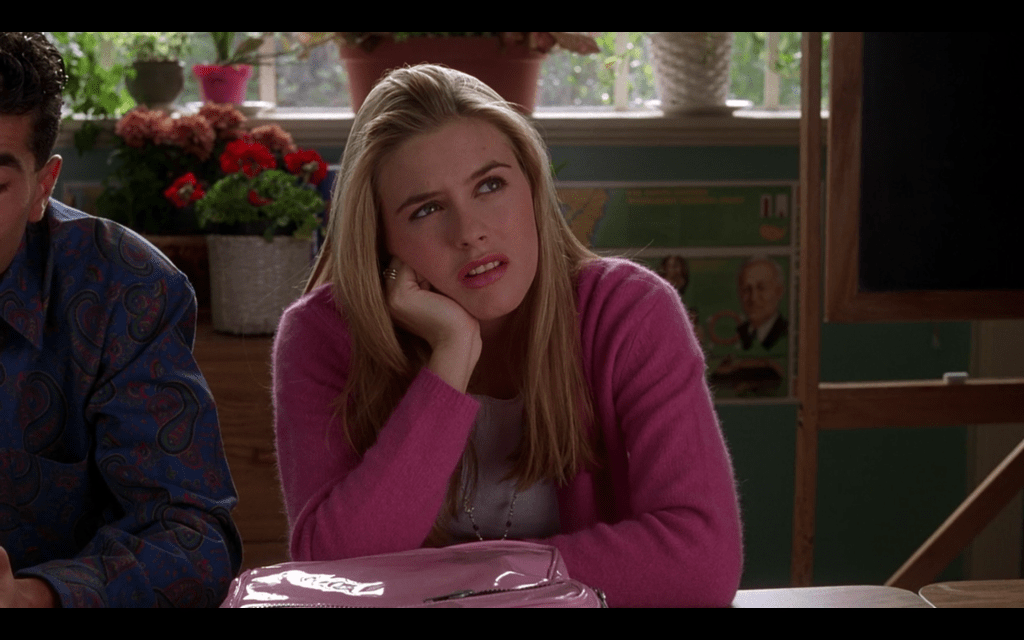
Clueless by Amy Heckerling includes some of the most memorable costume design from the 1990s. Anyone who has seen the movie, even if they cannot remember a specific outfit, remembers the fashion as distinctly bold and of the moment. The movie is about a girl who loves shopping, so naturally the costumes reflect that. I counted and the protagonist, Cher Horowitz, wears 42 distinct outfits throughout the movie. That is a new costume roughly every two minutes. These outfits, and those of others in the movie, provide insight into character, demonstrate relationships and showcase the power of fashion for a teenage girl with a credit card.

Mad for Plaid

The most iconic outfit of this movie, one that has been recreated over and over, and still sells as a Halloween costume is, of course, Cher’s yellow plaid coordinated school look:

The first thing Cher does at the beginning of the movie when she’s introducing herself to the audience is to put together this outfit. This costume says a lot about Cher. For one, it speaks to a level of perfectionism. There are several pieces in this outfit and they all perfectly match with each other. Even her chewing gum matches.

Not only is the outfit coordinated within itself, but it is coordinated with her location. It’s a plaid schoolgirl-esque outfit and she’s wearing it to school. Cher sports a number of these looks throughout the movie, exclusively at school.

She is someone who cares about and knows how to dress for an occasion, and plaid becomes a signifier of that in the movie. She even has coordinated plaid pajamas!

We see other characters adopt similar looks but always in relation to Cher. The outfit Dionne is wearing when she is introduced is also a coordinated plaid schoolgirl look, showing her and Cher’s affinity and their like-mindedness when it comes to the importance of fashion. It’s significant however that Dionne never wears a coordinated plaid outfit again. For Dionne, plaid serves only to demonstrate her connection to Cher.

Tai’s first post-makeover outfit at school includes a plaid skirt and color coordination. Cher has transformed Tai in her image and the outfit reflects that. Later in the movie, when Tai reveals her crush on Josh and is seen flirting with him, she wears an entirely coordinated plaid schoolgirl look.

This second plaid outfit is a culmination of Tai threatening to replace Cher’s status, beginning with her increased popularity after her dramatic experience at the mall and coming to a head with trying to usurp Josh’s affection. The callback outfit shows how much of a threat Tai is to Cher, and the power that Cher’s makeover had on Tai’s social status. The rest of the movie, Tai wears no plaid.

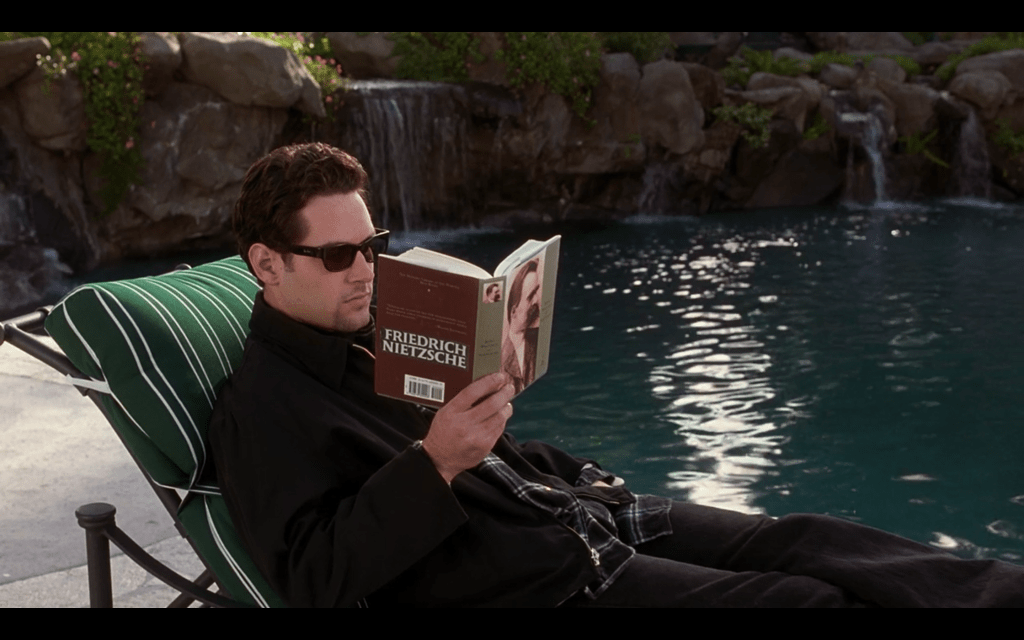
In fact, the only other major character who wears plaid as consistently as Cher is Josh. With Josh however, it is not a coordinated, event-appropriate outfit. It’s grungey plaid flannels fit for a Nietszche-reading college freshman.

On Cher, plaid highlights her dedication to perfection and fashion. On Josh, plaid shows a similar dedication to aesthetic but that of someone who “doesn’t care” about fashion. He aggressively signals the opposite message that Cher does, but with the same pattern. The way they both employ plaid shows how their characters are different sides of the same coin. They have differing world-views but at the end of the day they have an undeniable chemistry and compatibility. Their matching plaid outfits visually demonstrate this for the viewer.

My final note on plaid is on how it coincides with Cher’s growth throughout the movie. At the beginning of the movie she is a somewhat silly schoolgirl who emphasizes appearance and shallow approval too much, and her schoolgirl plaid skirts reflect that. After realizing this about herself and performing her “makeover on her soul” Cher has ditched these schoolgirl skirts and now almost exclusively wears pants. However — plaid pants!

She has not abandoned her love of fashion or her perfectionist ways. Cher is more serious and grown-up but she still remains true to herself and her love of fashion, and the proof is in the plaid.

Cher as a Beau Ideal

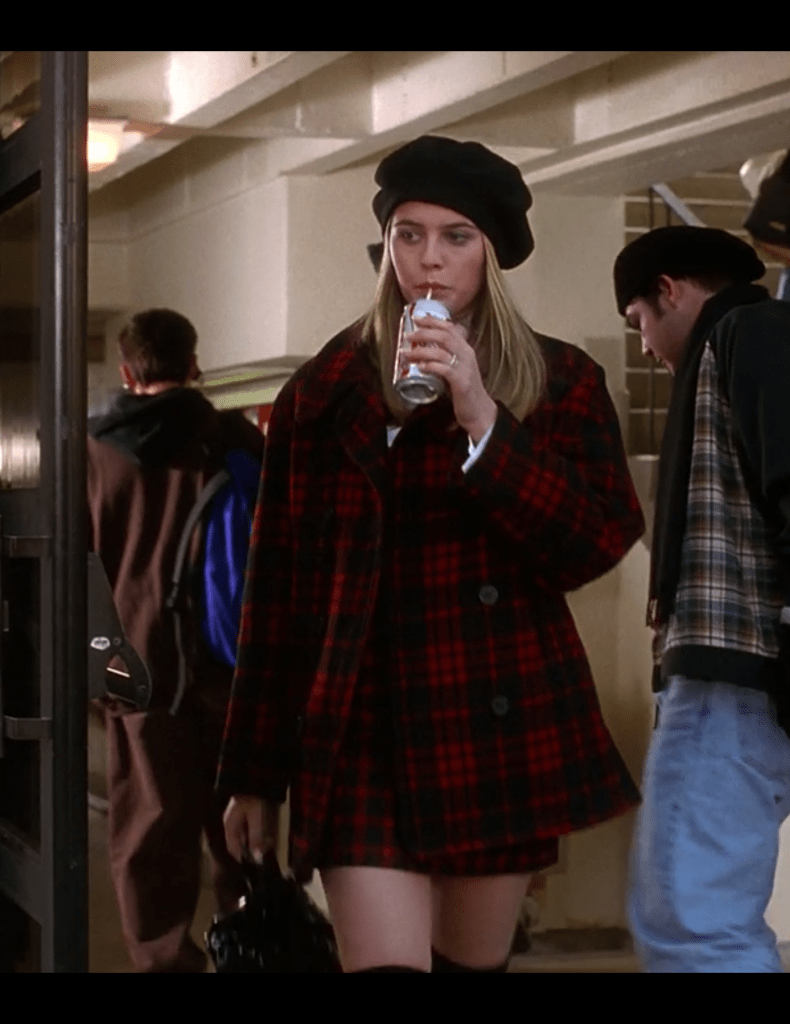
Cher isn’t the only fashionista at Beverly Hills High. Every single peripheral character has their own fashion statement. These peripheral characters are largely fleshed out through their fashion and serve as foils to Cher’s clothes. Through their clothes these side characters establish their own personalities, and when compared to Cher’s clothing, carve out nuances in her character as well.

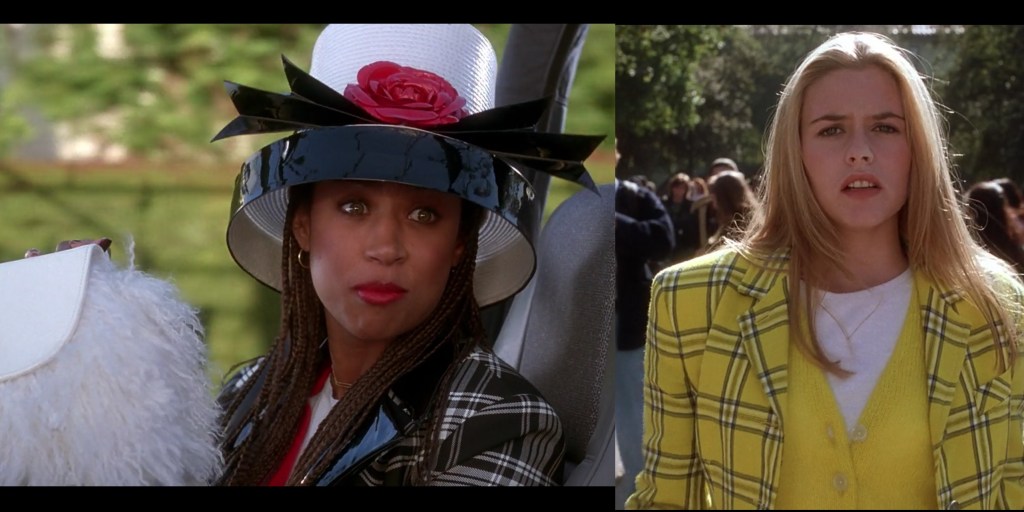
Take Dionne as an example. Clearly, she is just as fashion-conscious as Cher, and that is their main bonding point. However, her clothes are typically more garish and revealing than Cher’s. For instance, she accessorizes with plastic-looking hats where Cher leaves herself unadorned.

Where Cher wears short schoolgirl skirts Dionne does the same but in pleather and with fishnets.

Dionne matches the thread in her braids to her top, in equally bright colors. At the same party, Cher wears a bright bold outfit but in a solid color, and her hair is in an elegant and effortless updo.

Dionne’s actions go along with her brighter, bolder, and tackier style. She gets in dramatic fights with her boyfriend for everyone to see. She is also bad at driving, but to the point where she has a screaming fit on the freeway. Cher has similar qualities – being whiny with Josh and running through stop signs come to mind – but hers are more subdued than Dionne and in general Cher has a more genteel demeanor. Their clothes reflect this and provide a visual aid that establishes these aspects of their personalities.

Another peripheral character that really sticks out through her clothing is Amber. I discussed previously Cher’s coordination and perfectionism, and Amber shares those qualities when it comes to her fashion but takes it to an extreme level. Look at this outfit:

It’s a callback to an earlier scene when Cher is picking up Dionne for school and pokes fun at her hat saying, “Shopping with Dr. Seuss?” and Dionne retorts “Well at least I wouldn’t skin a Collie to make my backpack!” holding up Cher’s fluffy purse. Amber has a similar purse, but much larger, and her entire outfit is constructed around that material. Not only is she coordinating to an extreme level, but with a fabric established within the world of the movie to be gaudy and over the top.

All of Amber’s outfits are meticulously coordinated like this, to the point where it becomes cartoonish: 

Also, her hair is always perfectly coiffed, with obvious effort and a lot of hairspray going into it.

This stands in contrast to Cher’s easygoing blonde locks that seem to effortlessly fall from her head looking naturally beautiful.

Amber has even less screen time and fewer lines than Dionne, but her personality is clearly demonstrated through clothing. She is attention-seeking, image-obsessed, and lacks elegance. All of these traits are established through her boldly cartoonish looks that portray her as a “fashion victim.” Cher, in contrast to Amber is much more effortless and stylish. Although Cher’s outfits are meticulously accessorized and coordinated, she knows when to stop.

A famous saying in fashion, from Coco Chanel, is “Some people think luxury is the opposite of poverty. It is not. It is the opposite of vulgarity.” Chanel’s designs were known for their luxurious elegance and effortless class. Cher’s outfits in contrast to Amber’s and Dionne’s show this side of her. They establish her as more level-headed and mature in comparison to her friends and place her as the beau ideal of fashion and teenage girlhood at Beverly Hills High.

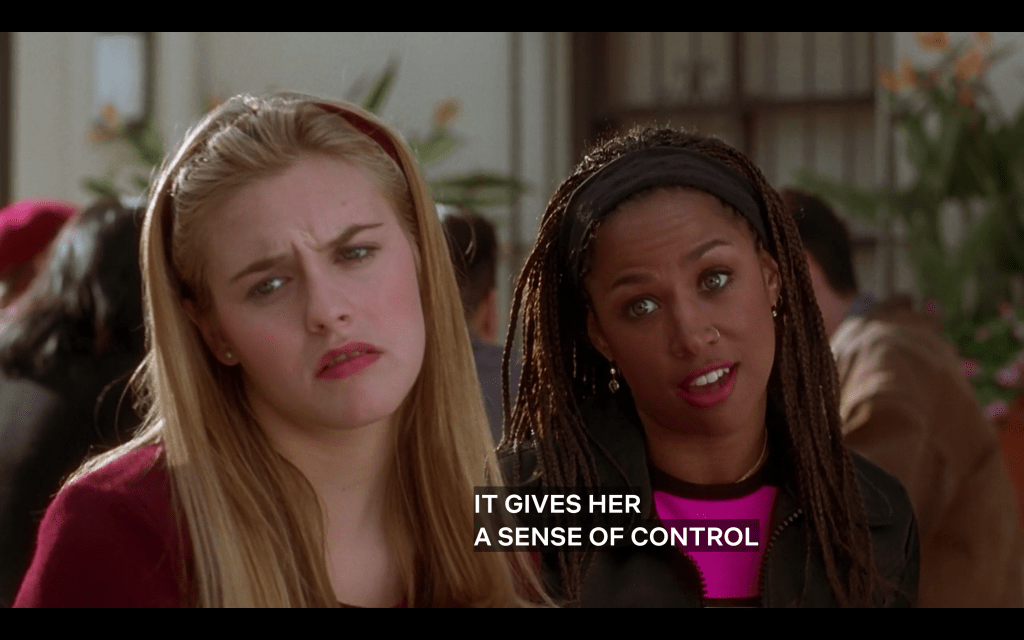
A Sense of Control

Right after Cher and Dionne meet Tai, they offer to give her a makeover. Tai originally declines and, among their pleas, Dionne says this about Cher:

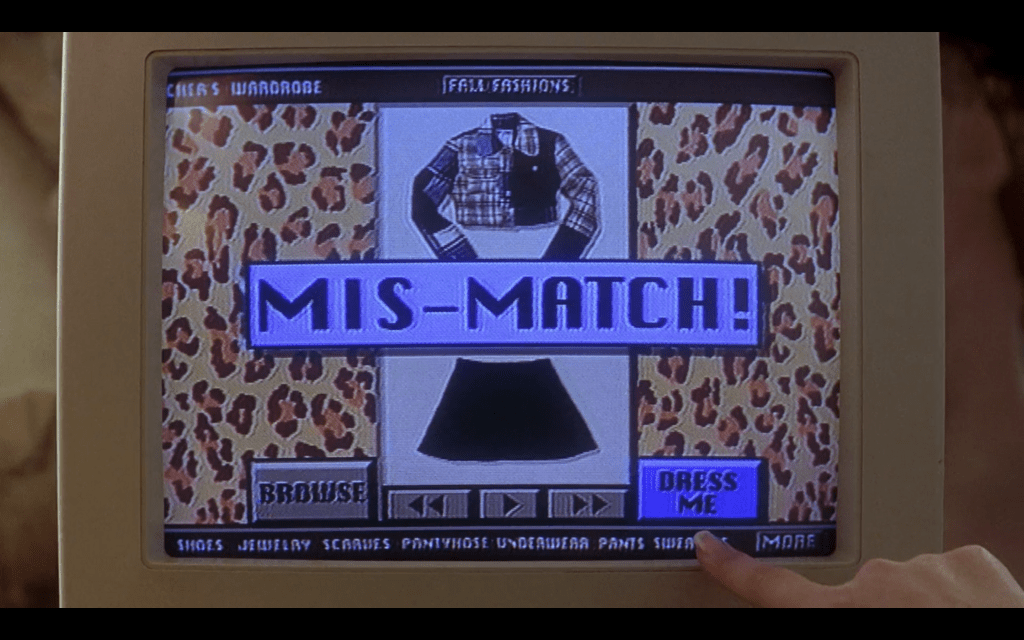
More than just makeovers, the movie shows time and time again how Cher gains a sense of control through fashion and shopping. The first thing we see her do is assemble the iconic yellow plaid outfit. Perhaps even more than the outfit, the process of choosing the outfit reveals Cher’s character. She has a computer system in her room that scans her clothes for mismatches and provides a mockup of her wearing the clothes.

Cher is a savvy woman who seeks control over her life through clothing. She treats fashion as more than a hobby. It is something that involves precision. There are right and wrong answers. It is a tool for her to wield, and the most important one in her arsenal.

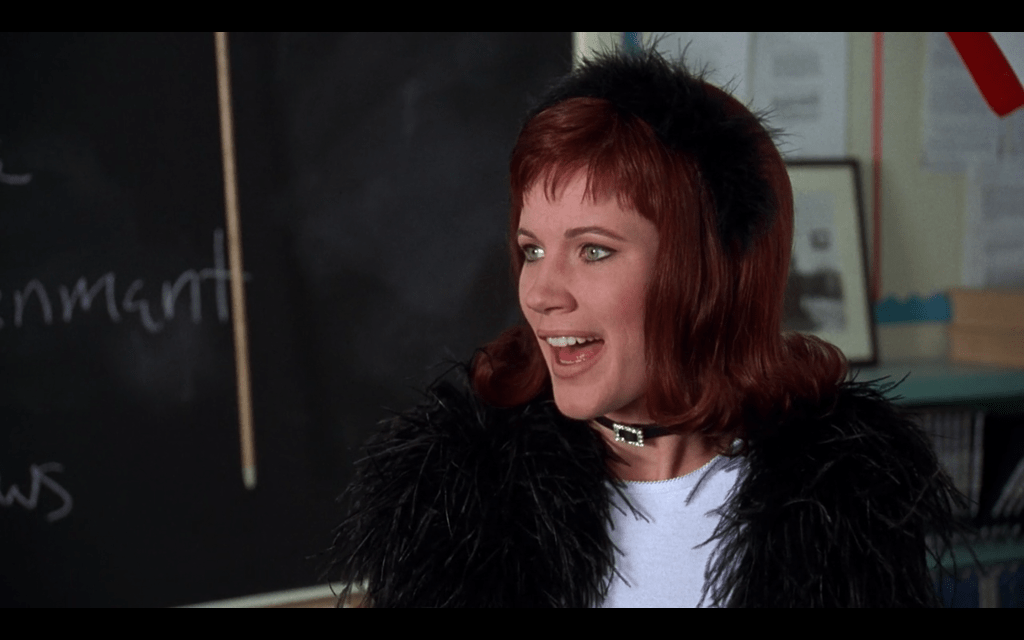
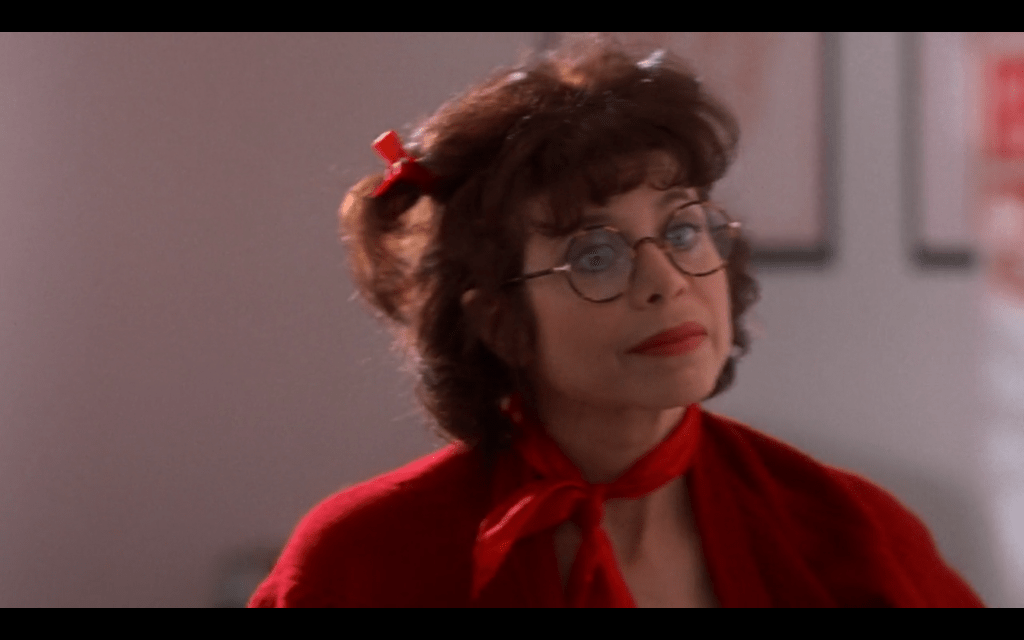
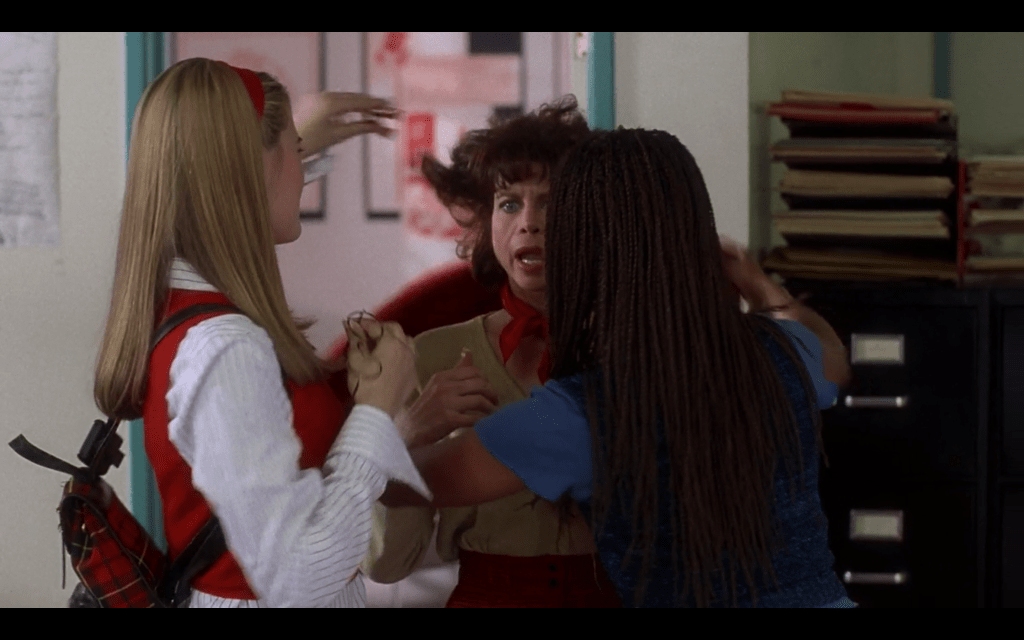
Cher demonstrates this ability to use fashion as a tool for her own gain when she gives her teacher a makeover. Her grades are lackluster in two classes, so she gives one of those teachers a makeover and sets them up with each other, and sure enough, they change her grades in her favor.

Later, Cher uses fashion to control a situation with her father. When Christian picks her up to go to a party, her Dad tells her to cover up because her clothes are too revealing. Cher obliges, but covers up with a see-through garment. Here she uses clothing to stop a fight and be able to wear the clothes she wants, so she can try to get the guy she wants.

Her relationship with Christian is one where she has an unprecedented lack of control. Before finding out he is gay, she wants to seduce him. Even if he weren’t gay, wanting someone to see you in a romantic way is still a pretty powerless position to be in. Discounting lying and plastic surgery, there is not much one can do to control whether someone will like you or not. But, Cher still attempts to gain power in this situation through her clothing. She wears more revealing clothes to attract him, and when he is coming over for a night alone, she spends almost all day picking an outfit with Dionne.

Because fashion has worked like this for her in the past, Cher believes the right outfit will give her the power to control whether a boy likes her.

Cher has a similar approach when it comes to her driving test. We continually see Cher drive poorly and never really see her practice or attempt to get better. Then, the day of the test she throws a fit when she can’t find her “most responsible ensemble” – a “white collarless shirt from Fred Segal.” However, like with Christian, her outfit would have made no difference. She still fails, no matter how capable she looks. Her losing her ability to control her world through fashion plays into her character’s turning point in the story.

After failing her driving test, when she is at her lowest point and is soul searching for why she is so affected by Tai’s crush on Josh, Cher stops her inner monologue and goes into a boutique to buy a dress. The scene cuts to her with a shopping bag, still soul searching. Her life has been turned upside down when she realizes that she can’t talk her way out of failing her driving exam and her friend likes the same boy as her – and her response is to go shopping. At the most unstable moment in the movie Cher seeks a sense of control through fashion.

When Cher realizes that she loves Josh and needs a “makeover for her soul” she also involves fashion, but this time not for her own benefit. She acts as Captain for a group that is collecting items, like clothing, for families affected by the fictitious “Pismo Beach Disaster.” It’s notable that Cher is using fashion for good, but also that the Pismo Beach relief involves more than clothing. She also collects things like canned goods and kitchen wear. This is a small development that shows Cher’s overall growth. She is still trying to find control in a chaotic world, but now it is not just for herself, and not just through fashion.

The costume design in Clueless illustrates all the nuances in Cher’s character, and all the steps she takes in her maturation. She goes from a silly schoolgirl who wants to always has to get her way to a level-headed woman that gives back to the world – and remains effortlessly elegant throughout. Both the costumes worn by the characters and her character’s attitudes towards the costumes in the movie flesh out her personality and its evolution.

The Revolutionary Power of Clues in Return of the Obra Dinn

group project submission, created by group co-leader Kellie
University of Chicago MADD 25630: Games, Rules, Stories, Genres
Spring 2020

Return of the Obra Dinn is a distillation of the mystery genre that manages to make a player a true detective while adding its own intimate flair. Unlike many detective games that give the player god-like powers or modes to highlight clues and select the correct choice from a pre-written plot, the player must investigate environments without hand-holding. And it does this well. Many players comment on the way that the game makes them feel empowered, and this is the key to which Obra Dinn revolutionizes the mystery game genre.

How does the game do this? Roger Caillois states that the pleasure of reading a mystery novel is “not that of listening to a story, but rather that of watching a “magic” trick which the magician immediately explains. The author has set everything up in advance. The story opens on a rigged set; we do not even see the main event, but only its disturbing consequences” (4).

This is what Obra Dinn does well: rather than a single scene set up with clues whose mystery is resolved immediately, the vignette format lets players see the same characters in different settings and contexts, allowing them to build theories and confidence. Game tools of multiple formats, like the passengers’ log and the sketches, allow players to track and cross-reference clues. The stage is set. The player’s job is to make the journey from impossible to possible through deductive guessing; the player decides what is impossible in order to guess what is possible in a manner similar to Sudoku.

This is how the game creates a procedural system where players discover what they are “allowed” by the game to use as a clue. (Hint: almost everything.) Language can be used as a clue; dress is a good indicator of status, and is consistent; in fact, the hammocks’ number tags are also clues; these people who walk together often are probably related in status; the person who stands at the head of the seamen is not necessarily a seaman.

Clues are resources. As players discover more types of clues, they unlock increasing arsenal of resources, like a player character in another game might unlock new weapons or tools. This becomes a core loop of gameplay: finding dead bodies unlocks more dead bodies; finding clues to determine fates reframes the realm of possibility for the rest of the characters, so that clues in this new frame can be used to determine the fates of more characters.

Ultimately, this clue system celebrates not the cleverness of a pre-written plot or of sets of mechanics, but of players—your own cleverness. The satisfaction of the game is not to roleplay as a godlike detective who has special access to clues, but to become a detective whose powers unfold and grow as you as a player construct your sets of clues. If this were where Return of the Obra Dinn finished exerting its powers, it would still be a technically inspiring game, and a revolution for the genre. But it goes beyond: its clues serve for more than the mechanical, explicitly game-driven benefit of finding more clues and completing fates.

Clues and searching for clues give insight into the relationships, emotions, and attitudes of characters aboard the ship, which drive players’ emotional investment. With the fate of the midshipmen, we learn that the three of them were young officers-in-training who all died heroic deaths. Charles Hershtik throws up when he sees blood in his first vignette and another midshipman teases him, but he eventually sacrifices his life to kill a crab-riding sea monster. As Thomas is dying, his mind goes to his fellow midshipman Peter’s fate—Thomas tried to save Peter from being grabbed by the Kraken, but the powder Peter held exploded and killed him. The premise of the game creates a compelling tragic genre: tragedy is about the how, and what was accomplished along the way. The midshipmen grew from teasing boys to young men who cared about the lives of the crewmen and of each other.

To solve fates through finding small clues of why/how characters died leads to finding more about their characters leads to the larger narrative of the chronological order of events in the Obra Dinn. Seeing different characters in different situations grows our intimate understandings of them and reinforces our desire to learn their fate by exploring more vignettes. Clues in Return of the Obra Dinn form a game loop that keeps players motivated to return to the game to understand its tragic story. Finally, once players complete the game, there is not much replay value if they have determined all the fates. Yet, the emotional power of the game make players want to return to the Obra Dinn, and that is the lasting power of a compelling mystery game: it is not just a revolution of genre, but also a revolutionary experience.

See a separate post for more details about the mechanics of clues.