Life on the Inside: Living in a Post-Skinner World

by Steven H
University of Chicago MADD 15300: The Loop as Form
Spring 2023

B.F. Skinner was an incredibly influential psychologist from Harvard who made massive strides in the field of behavioral psychology. His most famous experiments involved animals inside deprivation chambers having access to seemingly innocuous levers or buttons that would cause some kind of change in the animals’ environment. However, the conditions under which a change would occur were controlled by Skinner. For instance, he could make a rat pull a level ten times before receiving one food pellet, or he could make a rat wait until the first lever pull after an hour to receive the same reward.

His work is especially notable, particularly in our modern world, for its definition of learning. Skinner defines learning as a multistep process, beginning with an environmental stimulus, followed by a response, and then tail-ended by feedback from the environment. As this cycle repeats, it will become clearer with every iteration which behaviors lead to desirable outcomes and which lead to unfavorable outcomes. For example, if someone notices that the forecast says it will rain and they don’t bring an umbrella, the displeasure created by getting rained on will motivate them to try a different response. So the next time it rains, the person decides to bring a metal rod taller than all of the objects in the surrounding area. As you can imagine, the result of that really will disincentivize that particular behavior. When this individual finally settles on a beneficial response, like bringing an umbrella, they will be happy, on some level, with their current situation, which motivates them to continue to bring their umbrella in the future.

Now, what does this mean for us as individuals in the modern era? More specifically, what does this mean for us as individuals with constant access to devices that provide stimulus and feedback? As a further complication, all of these devices that we have access to and that respond to us and get us to do tasks were sold by a company for profit and host apps that elicit money from users. In summation, we are constantly holding a device created for extracting profit at the point of purchase and throughout its use that can make us react and can also provide feedback conducive to the profit motive. We all own devices that interact with us in a way that fits Skinner’s definition of learning—namely, we are prompted by our phones to do things, we pick a response, and then are given a type of feedback as a result—and they train us to make money for them.

For example, an app like Instagram shows us things that we may enjoy. If we decide to engage with this content, we get more of it. The same is true of things like YouTube, TikTok, and Facebook. In order to maximize user enjoyment, an important modification has been made to Skinner’s original design. That is, there is no response on the part of the user that will lead to negative feedback from the app itself. Every engagement is positive to the app, and the feelings you get from seeing more of the things that you like, as well as having people like your posts, will have you coming back for more. The consistent user base created who become increasingly dependent on these positive feelings equates to a consistent stream of data for advertisers and a platform that is guaranteed to have an audience for advertisers to market to.

Mobile games are another opportunity for some old-fashioned newly-fashioned learning experiences. As we discussed earlier the rate at which feedback is administered is highly adjustable and can lead to different results. In recent years, as it relates to games, researchers have found a variable schedule of feedback distribution to lead to the most player engagement. Consequently, many games such as Candy Crush makes players wait for powerups or even additional chances to play the game for variable intervals of time. This conditions users to acquire their happiness in bursts, as just like in the Instagram example, the negative feedback element has been removed, although here the penalty for waiting is definitely harmful to players’ enjoyment. To circumvent this problem that they created, these games typically provide cash-based get-out-of-jail-free cards, which allows the companies to be quite forward in their profit-seeking. The “apt” among mobile gamers may download many of these kinds of games and schedule their playtime in such a way that they never have a time in which they are locked out of at least one of their games, but this is akin to thwarting McDonald’s by ordering a Whopper Junior, Dave’s Single, and a Famous Star With Cheese, in addition to a Big Mac; the more of their product that you consume, the more you are going to want to partake, and the more you partake, the more data you provide, and the more exposure you give to the app.

This positive feedback loop in particular is not something to take lightly. Other corporations are stuck with much longer wait times between engagement with products, regardless of how enticing they make them. For instance, no matter how beautifully you craft a hotel experience, it is unlikely that consumers will stay in a hotel unless the need arises. Additionally, unless one has an infinite amount of money, one cannot stay forever. In fact, even if getting a hotel room had been previously pleasurable if one were to purchase one while under tight financial constraints, the stress created may completely outweigh any of the luxuries the hotel can offer, ultimately damaging one’s view of hotels, at least for a little while.

The same kind of refractory period does not exist for those who spend most of their time in apps or online; there exists an endless amount of interesting content and most of it is readily accessible for free. The consequences for engaging with that content in a serious fashion long-term are not yet socially accepted, usually being alluded to as something that everyone experiences but accepts as a part of life. However, stripping away one’s sense of consequence in terms of actions harms interpersonal relationships, work ethic, motivation, and mental health overall, potentially, to an alarming degree. By teaching users that fun things should be repeated as much as one desires, as that repetition actually will make things more fun, companies are steadily increasing your reliance on their products for their own gain, regardless of how it may affect your personal life and ability to function. The scariest part about seeing parallels to the behavior of rats within ourselves is seeing the parallels between their cages and the way that we live. Ultimately, we must disengage from such content. Despite the short-term negative consequences of doing so, it is never too late to enjoy a life outside of the box. Out there, as opposed to in here, pleasure is derived from making the best of unpredictability and accepting hardship, which provides a greater sense of being than anything appealing to our lowest instincts can provide.
Repetition Compulsion in Popular Media: Art Imitates (and Implicates) Life?

by Mai V
University of Chicago MADD 15300: The Loop as Form
Spring 2023

From the catchy tunes of Britney Spears’ Oops!…I Did It Again to the binge-worthy plotline following Walter White in Breaking Bad, perhaps nothing screams “Art Imitates Life” more than the relentless and fascinating portrayal of repetition compulsion in popular media. Laying bare the intricate human struggles of self-destructive loops, modern media has the power to intimately connect with its audience and implicate their lives away from the screen. 

Rooted in Freud’s psychoanalytic theory, repetition compulsion is the individual’s disposition to reenact painful and/or self-destructive behaviors because of past traumas. This process can unfold in various ways: a false sense of self and defensive attitude towards the bad behavior, a yearning for familiarity in past experiences however unpleasant, a desperate attempt to master anxious and helpless feelings, or the mere inability to see beyond flawed behavioral models learned in early life.

Entertainment media eagerly adopts the story of the vicious cycle, especially those with potent narrative powers like songs and television series. 

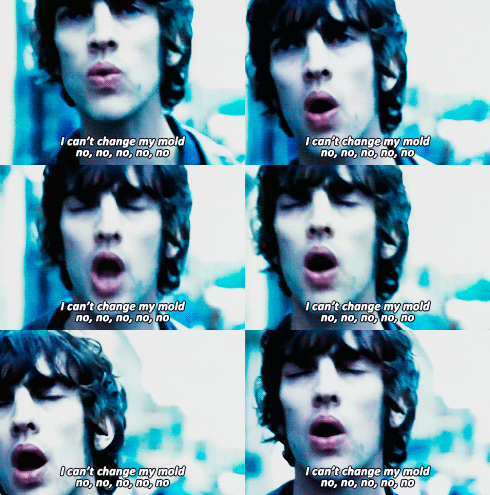
Britney Spears’ character in chart-topper Oops!…I Did It Again embraces a corrupt self-image, whistling “That is just so typically me” before transitioning to the iconic chorus. The Verve’s 90s hit Bitter Sweet Symphony resounds, “You know I can change… But I’m here in my mold,” echoed by Current Joys in A Different Age with the lyrics, “And I wish I could change, but I’ll probably just stay the same.”

The Verve — Bitter Sweet Symphony

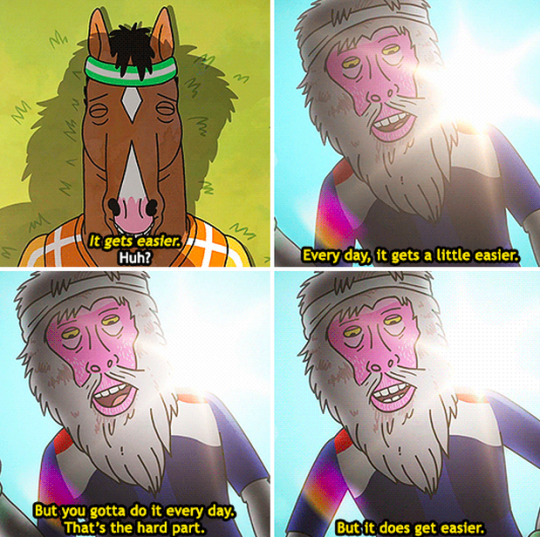
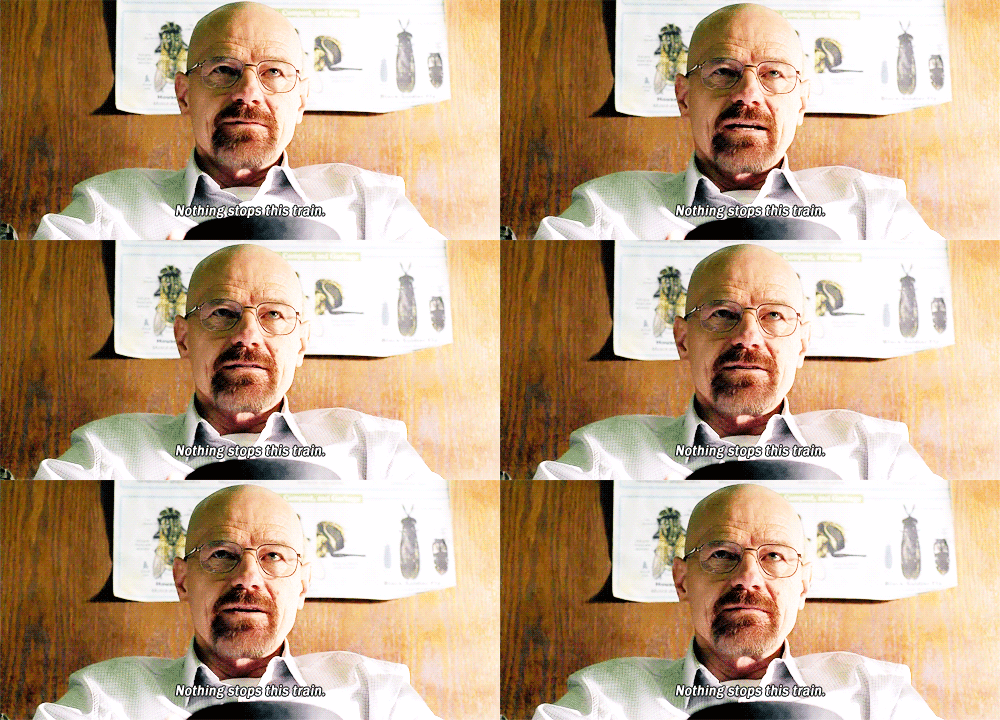
Some of the most popular and critically acclaimed TV series of all time, namely Breaking Bad, The Sopranos, Euphoria, and BoJack Horseman, all observe characters trapped in behavioral loops. In Breaking Bad, high-school teacher Walter White embarks on a journey of increasingly dangerous and immoral actions following his cancer diagnosis, uncovering a deep-rooted egoism that detonates against the powerless fear of death. In The Sopranos, mob boss Tony Soprano acknowledges his violent past and dysfunctional family dynamics as he attempts to salvage his emotional well-being. Euphoria follows Rue, a high school student grappling with drug addiction and mental health issues amidst the turbulence of adolescence and the loss of her father. Also an addiction story, BoJack Horseman chronicles a self-centered yet self-destructive Hollywood celebrity as he confronts the depraved nature of his actions. 

Walter White from Breaking Bad

Beyond mere content in lyrics and character plots, these artistic creations embrace the behavioral loop in their form, the materiality of their very production. In both the songs Oops!…I Did It Again and Bitter Sweet Symphony, the verses seem to vary only as a backdrop to, and in anticipation of, the amplified and repetitive chorus chanting “I did it again” and “I can’t change my mold.” Similarly, the format of seasons and episodes in TV series is ideal for crafting a character-led cyclical narrative. BoJack Horseman, for instance, consistently reserves the few final episodes of each season for a dramatic climax concerning the protagonist’s entanglement in repetition compulsion. The media’s structural repetition oppressively reminds its viewers of the behavioral loop around which everything revolves. 

Does popular media’s success in portraying repetition compulsion mean anything for audiences grappling with similar issues? In Remembering, Repeating, and Working-through, Freud proposes therapy as a possible cure. If the patient can recall and reenact their trauma in a safe and controlled environment, they may gain valuable insights into the roots of their behaviors and eventually correct them. However, Freud asserts the first step of the treatment must be to “bring about a change in the patient’s conscious attitude to his illness” (152). According to Freud, all victims of repetition compulsion may initially resist help. Someone, or something, must show the victims their illness “has solid ground for its existence” and matters for “things of value for [their] future life” (152). 

This is precisely where popular media comes in. Nothing rivals the appeal and accessibility of entertainment products, and the audience’s engagement with these pieces is as crucial as their ingenious production. Whereas the latter is the message, the former is its delivery. Songs are often saved and listened to on repeat, while TV series allow audiences to closely observe the destructive nature of repetition compulsion and the potential for change from a third-person perspective. Although removed from technical terminologies, these media effectively convey the need for a victim to reverse the course through persistent efforts. 

Green Day’s single She poses the question, “Are you locked up in a world that’s been planned out for you?” and suggests smashing the loop “with the brick of self-control.” Linkin Park’s Breaking the Habit repeats, “I don’t know how I got this way. I’ll never be alright. So I’m breaking the habit. I’m breaking the habit tonight.”, evoking relatability and inspiration to change in victimized listeners.

Similarly, the aforementioned TV series’ thorough depictions of repetition compulsion in the characters’ daily life highlights the illness’s intrusive nature and the devastating consequences of inaction. Audiences cannot help but introspect on their own terms, and numerous individuals have shared how these artworks spurred awareness within them and encouraged them to seek professional help, including Euphoria and BoJack Horseman. 

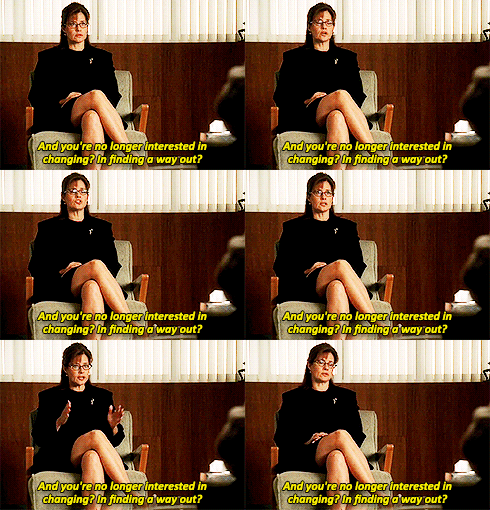
However, the process of instilling awareness and inspiring change in victims of repetition compulsion is far from straightforward. Freud attests to the concept of resistance, whereby individuals refuse to acknowledge their illness and defy change for various reasons (149). They might be protesting the idea that they need “fixing,” like Walter White and BoJack Horseman did, or they fear not being able to return to familiar situations, as seen with Rue’s refusal to attend rehab. Even when these individuals enter a therapist’s office and recount their behaviors, they may still construct a resistant wall, selectively narrating their stories to avoid accountability and justify their harmful actions, as happened in The Sopranos. Pink Floyd’s classic hit Comfortably Numb depicts a fictional artist, Pink, found overdosing on heroin in his hotel room. The lyrics, “I can’t explain, you would not understand. This is not how I am.” perfectly encapsulate the denial rhetoric commonly used by victims of repetition compulsion.

A therapy scene from The Sopranos

Similar to these fictional characters, real-world audiences who are not ready for change may force these media to conform to their distorted and destructive worldviews. In this way, the media intended for awareness could inadvertently exacerbate their behavioral looping process. The episodic structure and dramatic cinematography of TV series actually enable audiences to selectively view the characters, downplaying consequences while fixating on “success moments,” for example, through online fan-cam edits. As a result, they validate and glamorize harmful behaviors of repetition compulsion, evade confrontation, and remain in their comfort zone.

This duality of TV shows in the individual’s processing of repetition compulsion holds true for the broader digital landscape. On the one hand, mental health awareness is more accessible than ever, with concepts like “trauma,” “healing,” or “triggers,” and even specific manifestations of repetition compulsions, such as “toxic relationships” or “trauma-related drug abuse,” becoming increasingly prevalent across social media platforms. Multiple YouTube self-help videos discuss the need to recognize and break bad habits or toxic patterns (this one is from two months ago and has 1.4B views.) This public blog post is another drop in the sea. On the other hand, however, an increasingly enabling algorithm shows individuals only what they want to see, as exemplified by glamorizing fan-cams of corrupt characters or platforms that promote manipulation of romantic partners (please take the time you need to process that.)

Ultimately, the journey to escape repetition compulsion requires not just awareness, but courage, vulnerability, and readiness from the individual. As we consume these media on repeat, seeking out the next melancholic song and moving from one TV show featuring flawed characters to another, we cannot help but confront the loops in our lives. The illness is not linear, and neither is the healing process. The best we can do is put in consistent efforts, and perhaps with a little help from these “relatable” media, we may at last find hope.