by Domitille
University of Chicago CMST 10100, Intro to Film
Spring 2015
Ari Folman’s Waltz with Bashir first stands out to us because of its use of animation despite its identification as a documentary film– how can a non-fiction narrative be justly portrayed using highly stylised illustration? Yet it is evident by the end that the medium of animation not only allows the viewer to easily cross over any visual and temporal boundaries but also turns around and forces the boundary to be redrawn in a harsh awakening. Thus the documentary footage, hallucinations and flashbacks can all be presented on the same visual plane, that is, until the film’s final clip. Similarly, the characters themselves are enveloped in their own safety nets of self-induced amnesia and coping mechanisms that at once shield them from PTSD symptoms but also help to propagate them.
An essential manifestation of these protective mechanisms are the hallucinations that plague many of the characters and exist in a halfway point between memory and dreamscape. Among these hallucinations is the reoccurring motif of the sea and its role as a protection from enemies and a shield from reality. The sea manifests itself in three key scenes, Ari Folman’s first hallucination of the beach, Carmi Cna’an’s dream of the woman, and Ronny Dayag’s escape at sea. These three all reveal the sea to be a place of escape and protection, as Dayag states, a place of “fear [and] feelings.”
Folman’s Hallucination of the Rise from the Sea
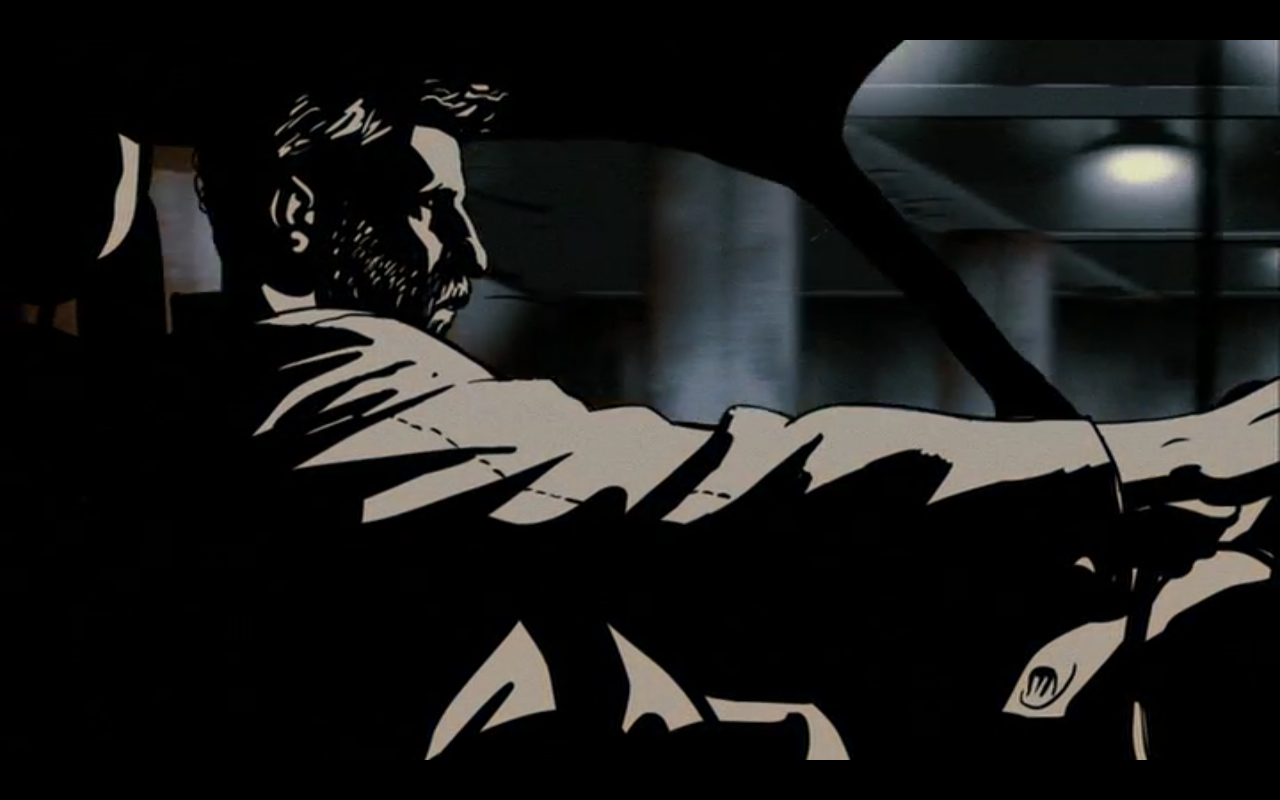
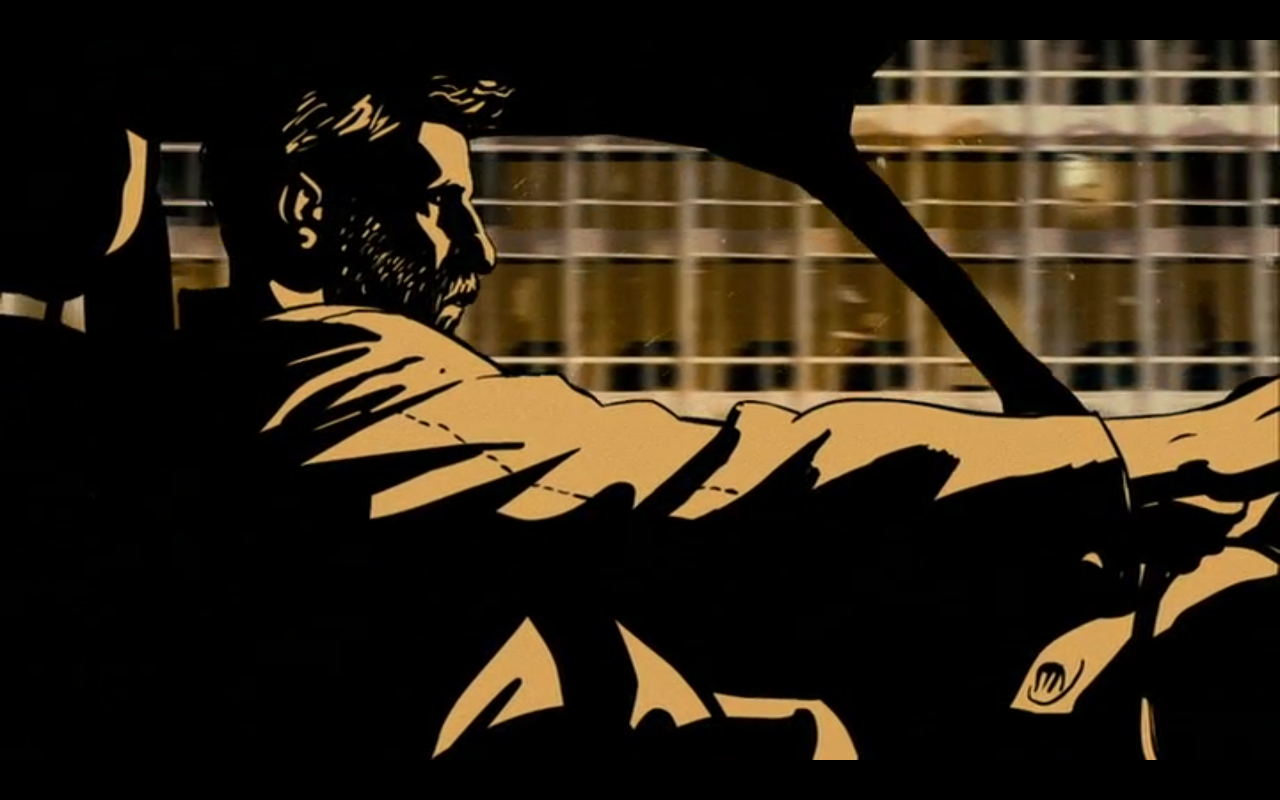
Folman experiences his first hallucination after meeting with his friend Boaz; in fact the drive from this meeting mirrors the gradual delving into Folman’s mind. Not only do the flashing colours indicate distance traveled and lend an otherworldly “down the rabbit hole” aspect, but they also show a movement through time. The continuity of direction towards the right, sustained until Figure 4 when Folman reaches the beach depicts the arrival at a mental destination– the recesses of Folman’s consciousness.
![[Figure 1]](https://intermittentmechanism.blog/wp-content/uploads/2015/06/screen-shot-2015-06-05-at-20-32-25.png)
![[Figure 4]](https://intermittentmechanism.blog/wp-content/uploads/2015/06/screen-shot-2015-06-05-at-20-32-44.png)
This is a prelude into the scene of the rise from the sea, which reappears three times throughout the film and serves as the driving force behind Folman’s desire to recover his memory. Not only does it portray a strange amalgam of destruction and birth through its evolutionary appearance, but also introduces the trend of blurring reality and illusion.
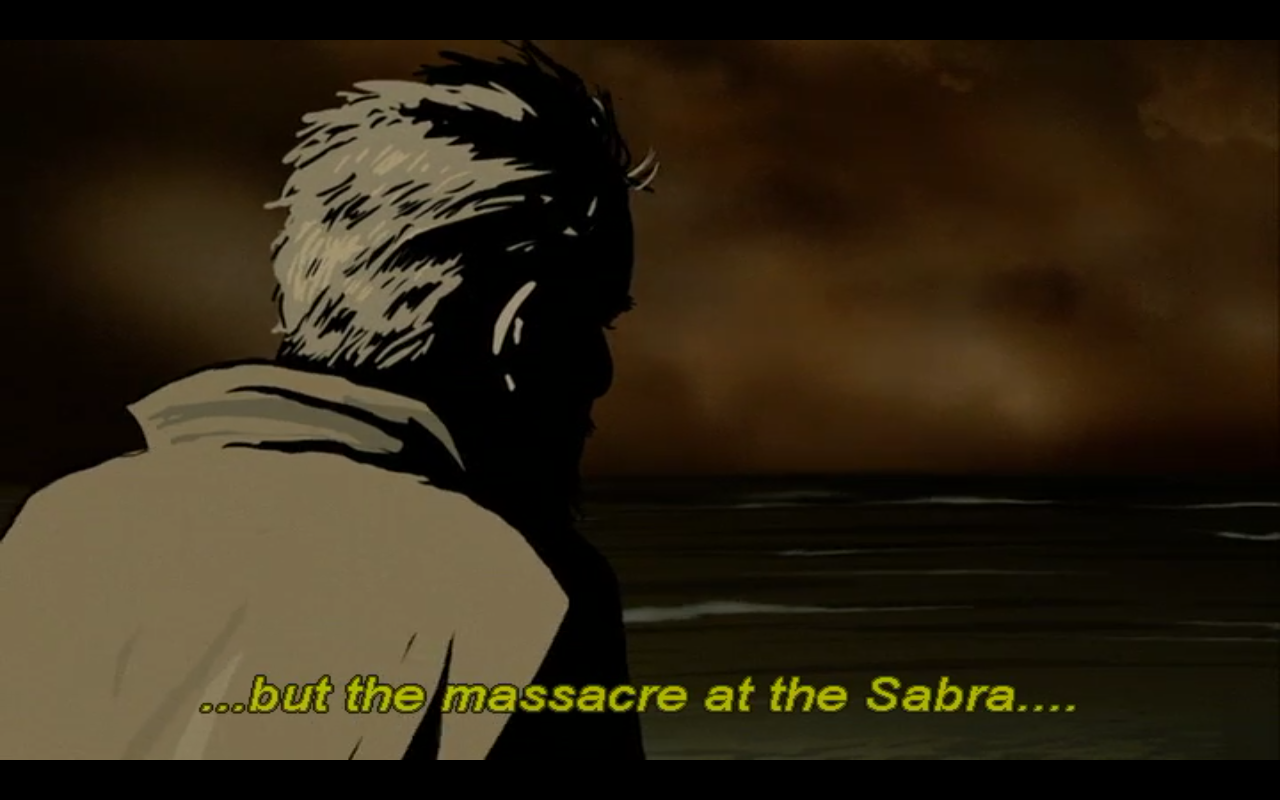
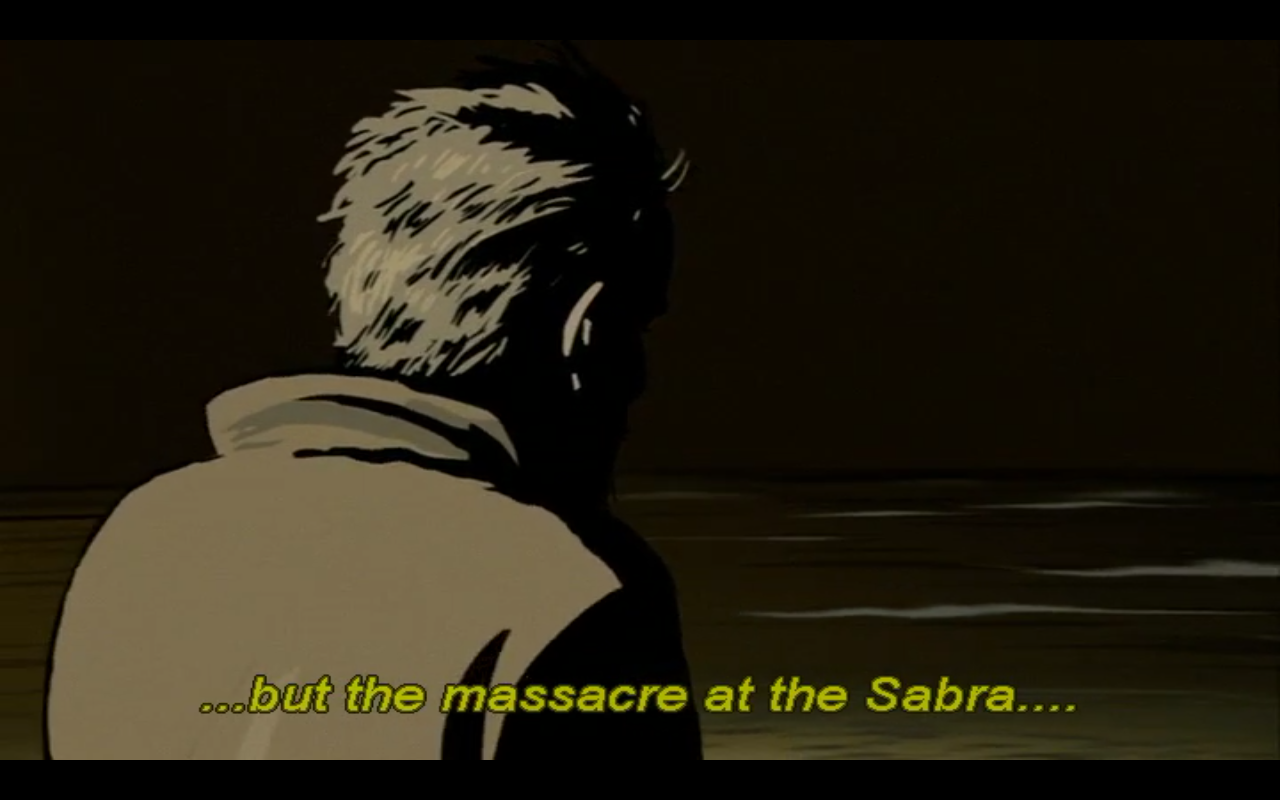
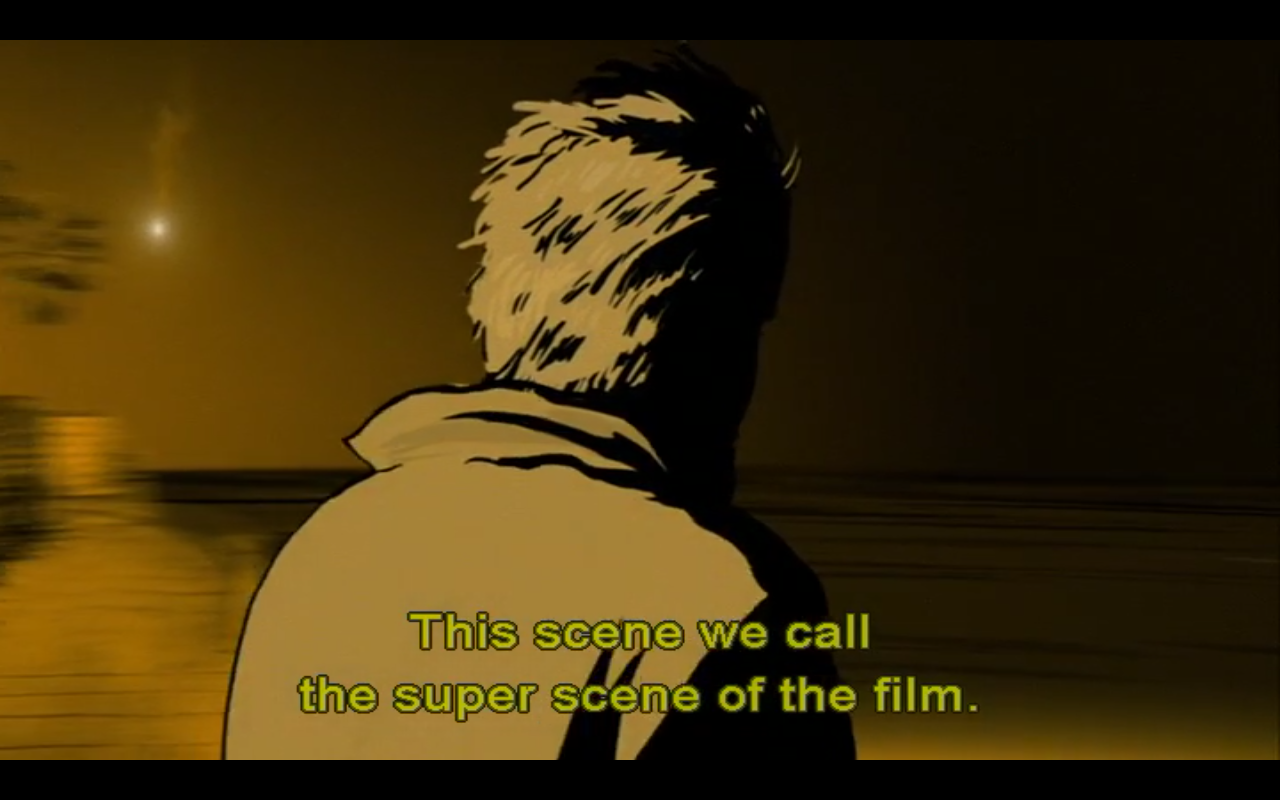
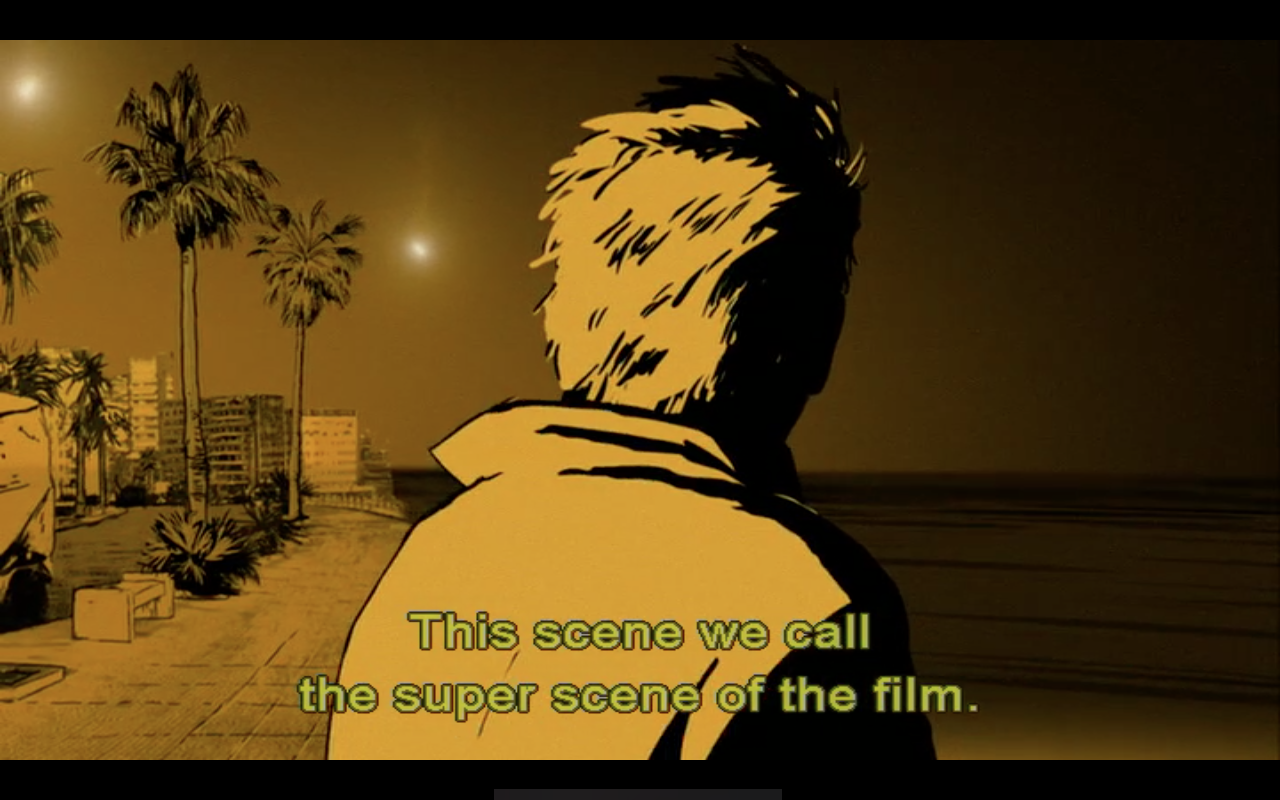
The sequence extending from Figure 5 to Figure 8 exemplifies the nearly imperceptible visual change from Folman’s reality, as he broods along the sea to a close-up that follows his head movement to the left, into another realm. The colour change into sepia, despite being the indicator of a removal from reality is very gradual and appears to be due to the flares. However the use of the falling lights as well as the ensuing sparkles in the water serve to reinforce the hallucinatory and surreal aspect of the scene, and the setting as one removed from physical reality. Two shots later this is confirmed as we see a younger Folman floating in the water, followed by a POV shot of the beach.

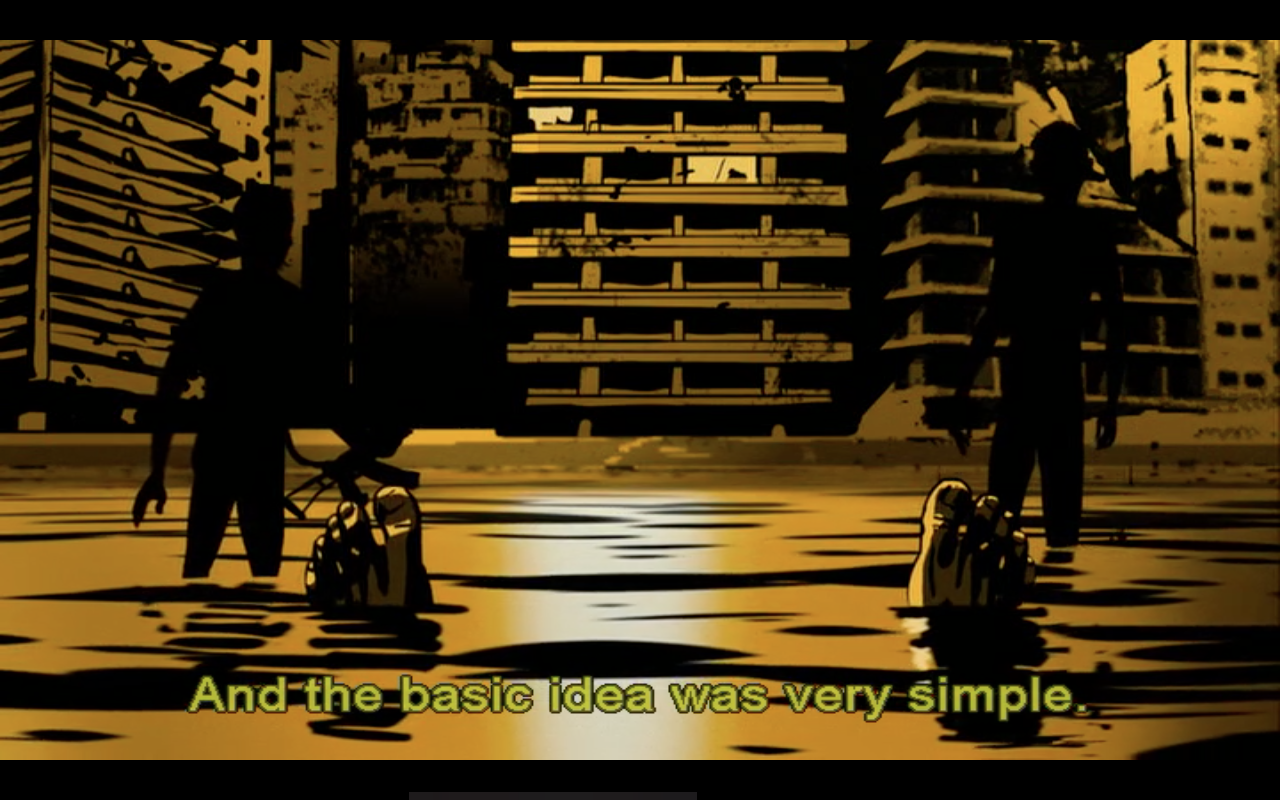
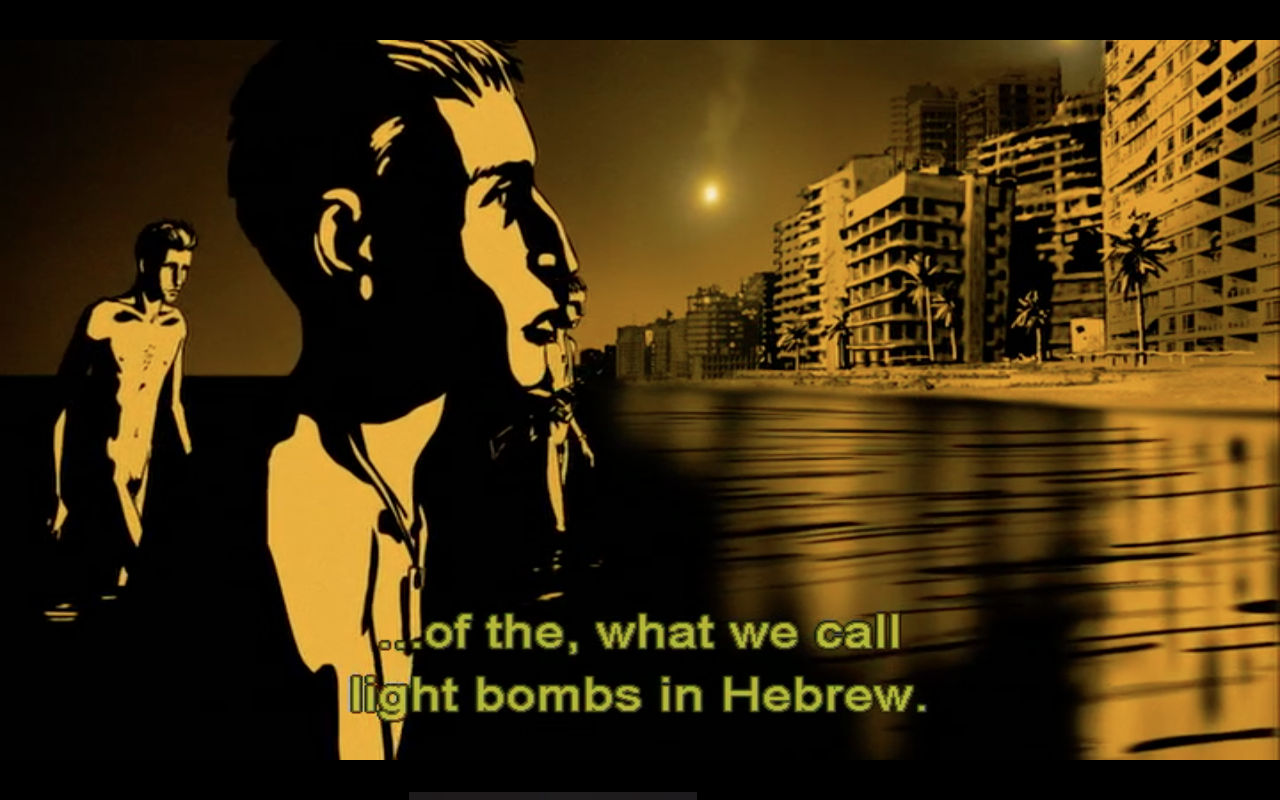
The change in location of the subject in Figure 9, as well as his younger face illuminated by the flares and the sparkling lights surrounding his naked body bring the viewer fully into a different space. The use of the POV shot transports the viewer closer to Folman but also creates a disorienting perception of narrative that goes between this POV shot and a wider angle (Figure 11) that depicts Folman in the background and instead highlights Cna’an’s presence and importance at the location. Yet as the narrative focus becomes opened even further, created through the use of the following silhouette shot in Figure 12, a more universal image is introduced.
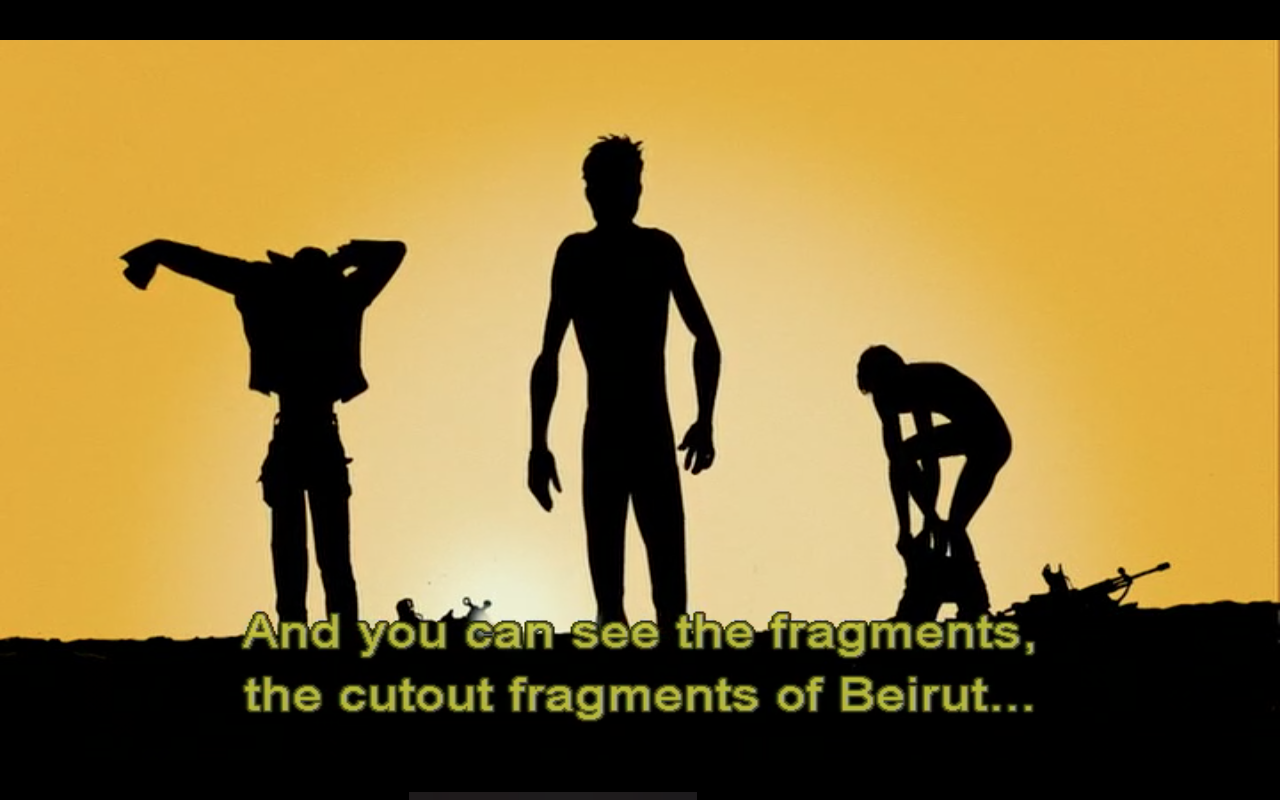
The rise of the men, vulnerable and elementary through their nudity, from a limbo-esque state of protection within the sea speaks to the greater experience of war for many of the soldiers. Furthermore, the low-key lighting casts harsh shadows that often obscure the subjects’ expressions (Figure 9 to Figure 11) and render obsolete any clear grasp of what they are thinking; in fact in Figure 11 they just seem to be inexplicably drawn towards the shore without much of an emotional reaction to the setting around them. Thus the almost mechanical rise from the safety of the sea and the donning of clothing reveals a sudden growth despite being psychologically unprepared for the consequences. Figure 12 helps to further illustrate the various stages of development, and closely ties the three subjects together through the use of the silhouettes that blur individuality.
Cna’an’s Dream of the Woman at Sea
Similarly, Cna’an has his own hallucination involving the sea that is embodied as a woman come to “take [him] for the very first time.” It is revealed that as a very bright but “nerdy” eighteen year old, he had an urge to prove his manliness and capability, which included being acknowledged by women. And thus he slips into sleep as a means of escape from reality, stating that “even now, I escape into sleep and hallucinate.” The hallucination here is clearly distinguished from reality through the mysterious tone of the music that accompanies the swimming woman in Figure 15, as well as the sudden and almost eerie brightening of the background between Figure 13 and Figure 14 (similar to the sudden flares that appear in Folman’s hallucination).
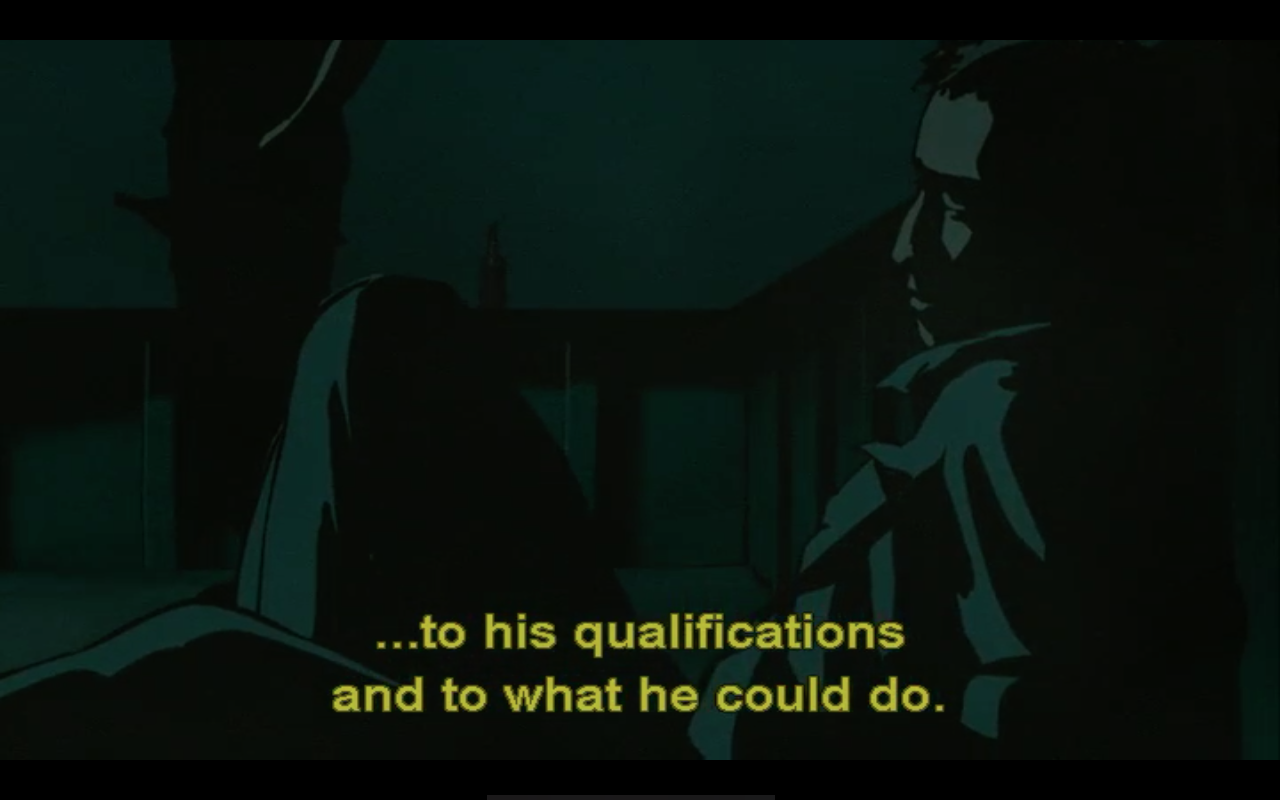
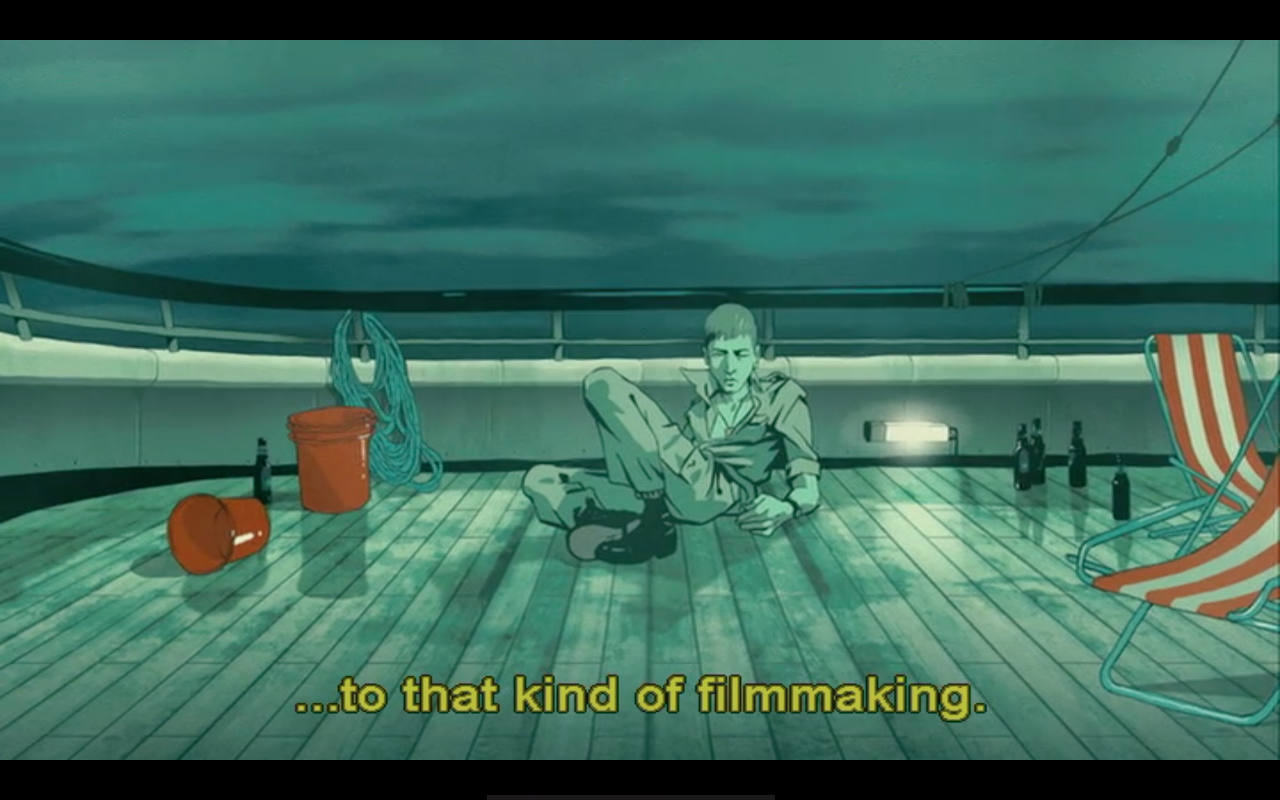
Additionally, the woman comes from the sea and is a similar blue colour, which assimilates her to it as part of it and maybe a personification of the sea itself.

The otherworldly shine on her body (Figure 17) and her blending into the scene itself makes her appear larger than life, and also much larger than Cna’an himself– the woman does not portray so much a sexual being as a maternal figure and Cna’an, her child she cradles to her breast.
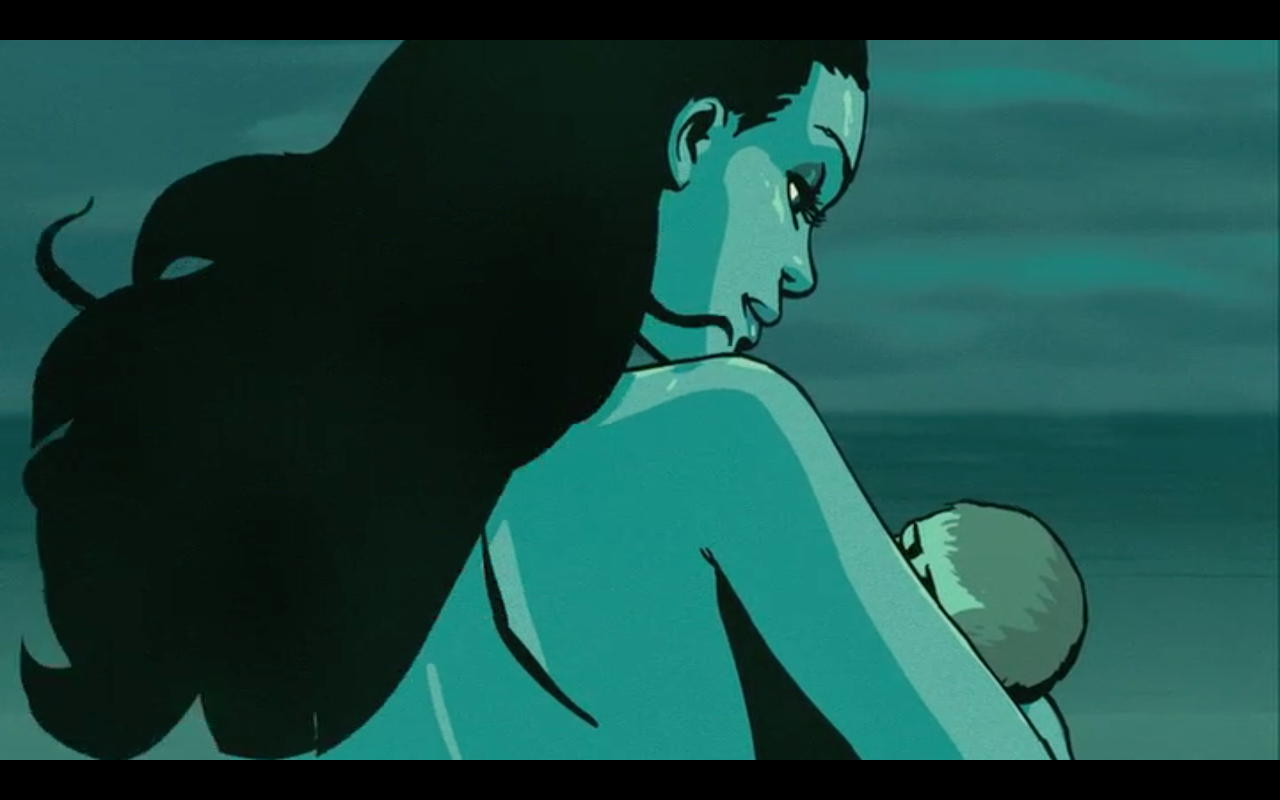
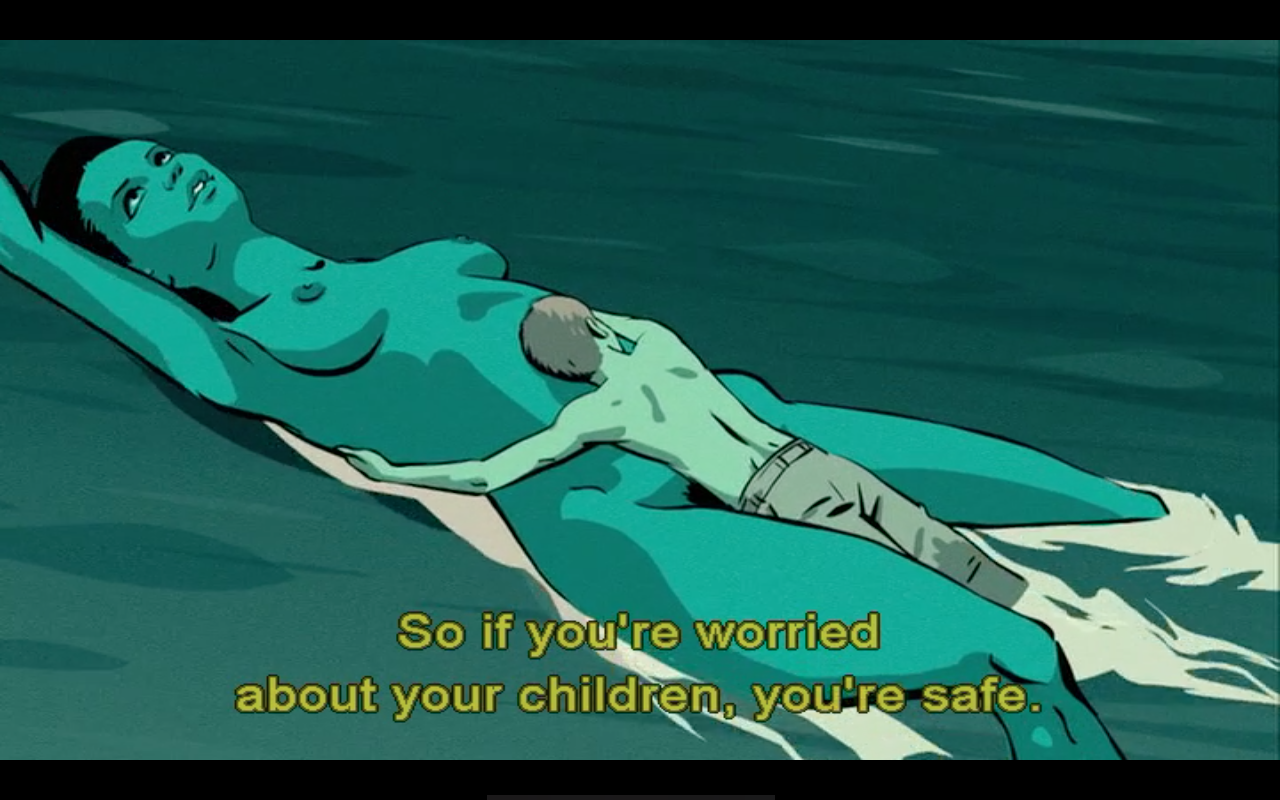
The maternal aspect of the woman is shown in Figure 18 and Figure 19, through the allusion to the cradling of a baby. The difference in size between the two in Figure 18, as well as the placement of Cna’an’s head also suggests breast-feeding. Furthermore, the clinging onto the body of the woman and resting upon her stomach emphasises the motherly aspect and protection she provides; there is a lack of autonomy as he simply lets her take him away from the real world and ultimately the bombing of the ship.
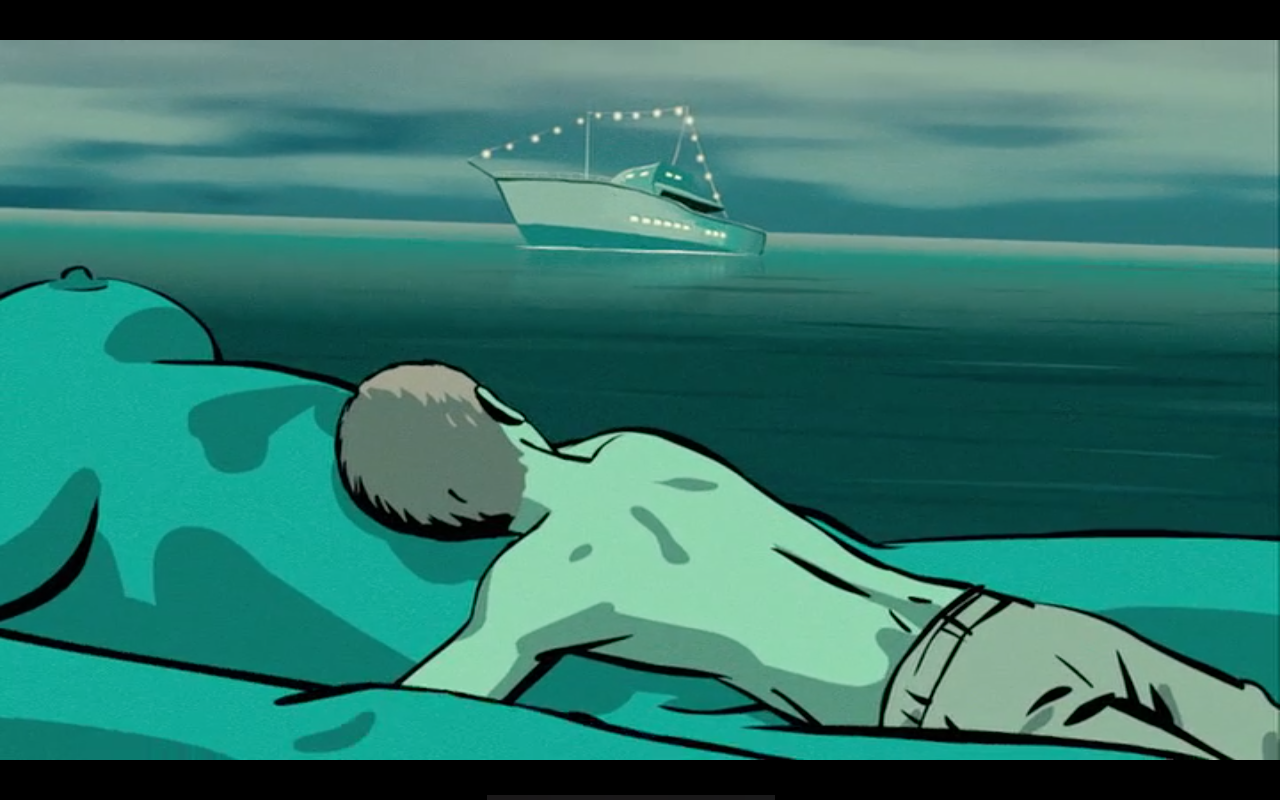
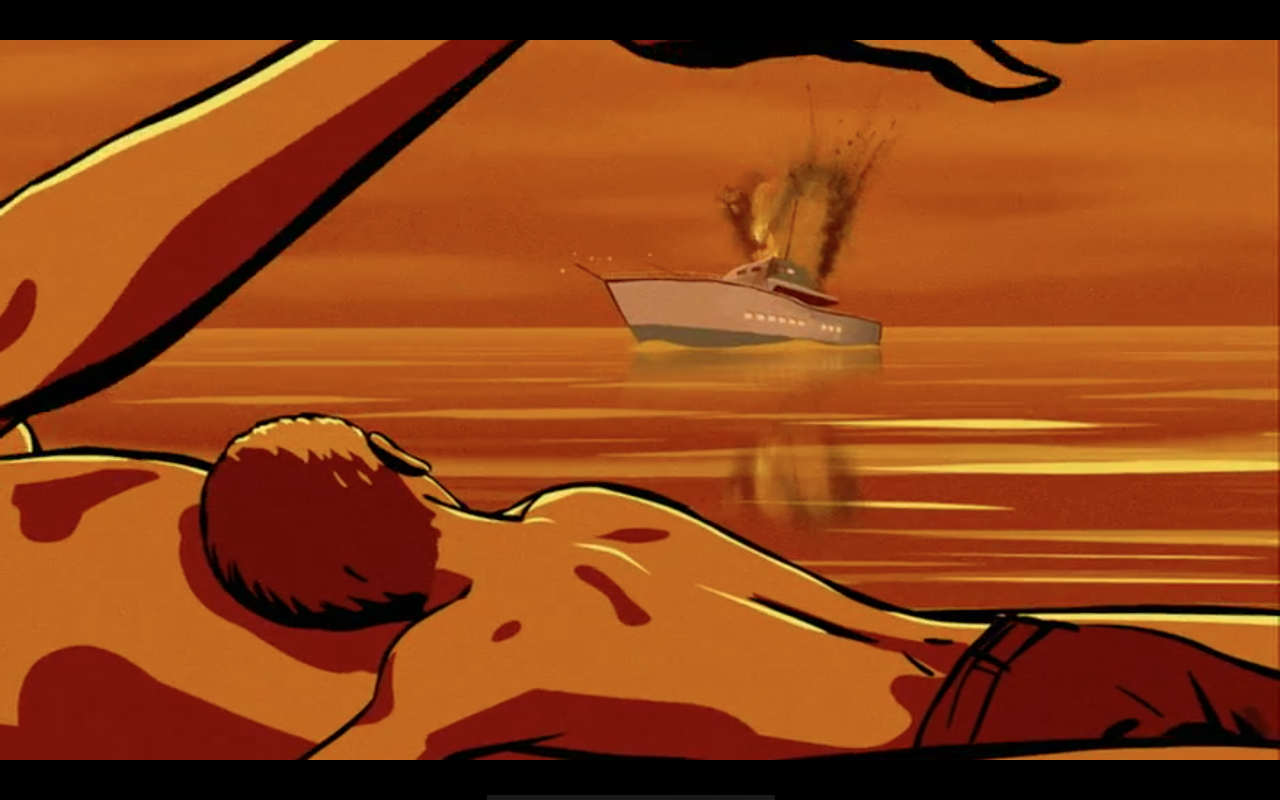
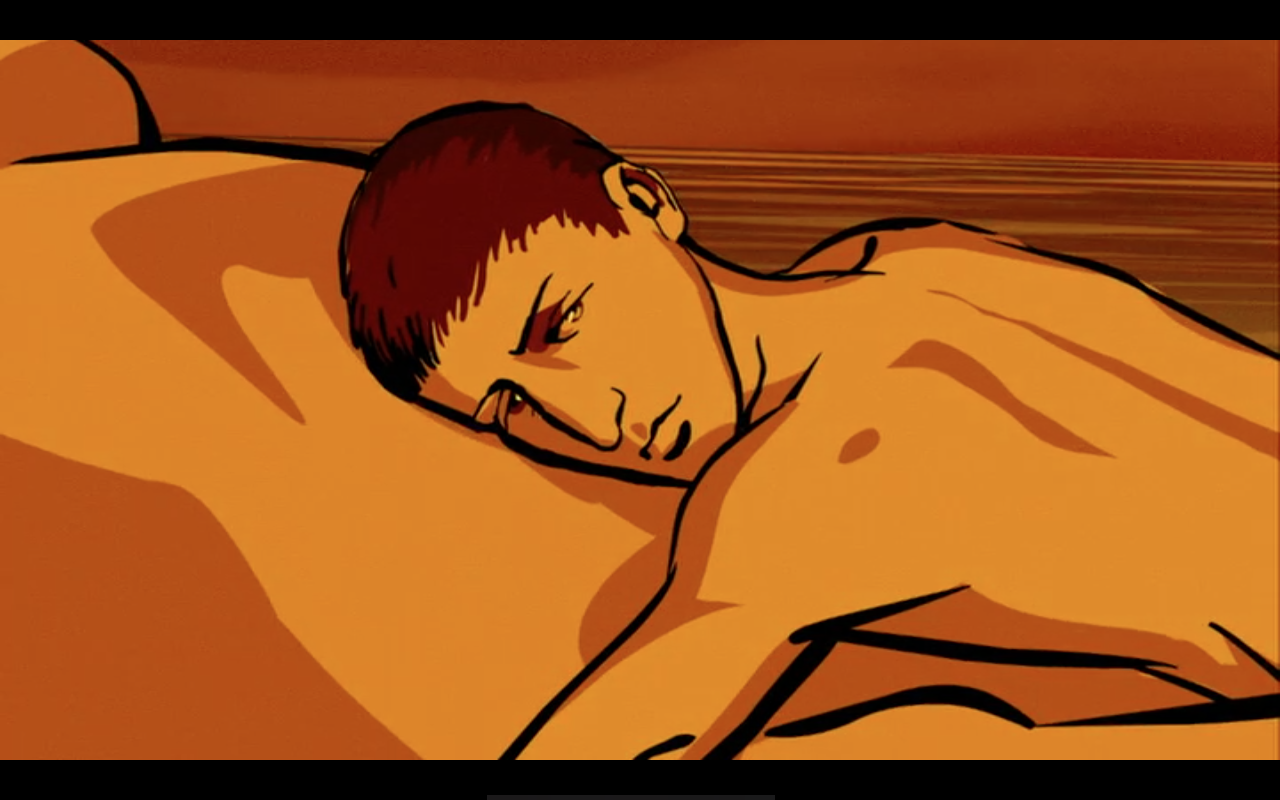
The removal from this reality is emphasised by the vivid change of colour between Figure 20 and Figure 21, which puts into focus the lack of movement of Cna’an. Despite the following close-up reaction shot on Cna’an’s face, we are not given much indication of his emotional interiority and are instead presented with an almost confused face of resignation and uncertainty.
Dayag’s Escape at Sea
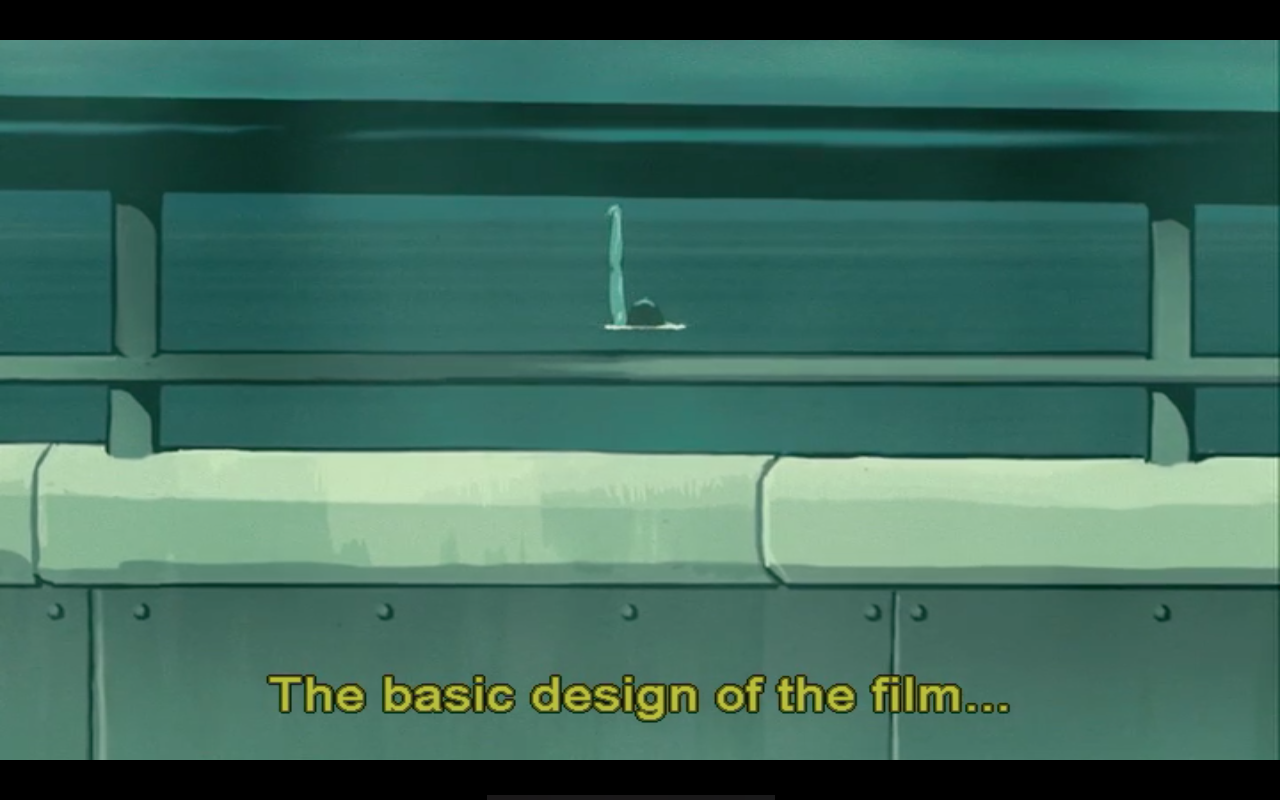
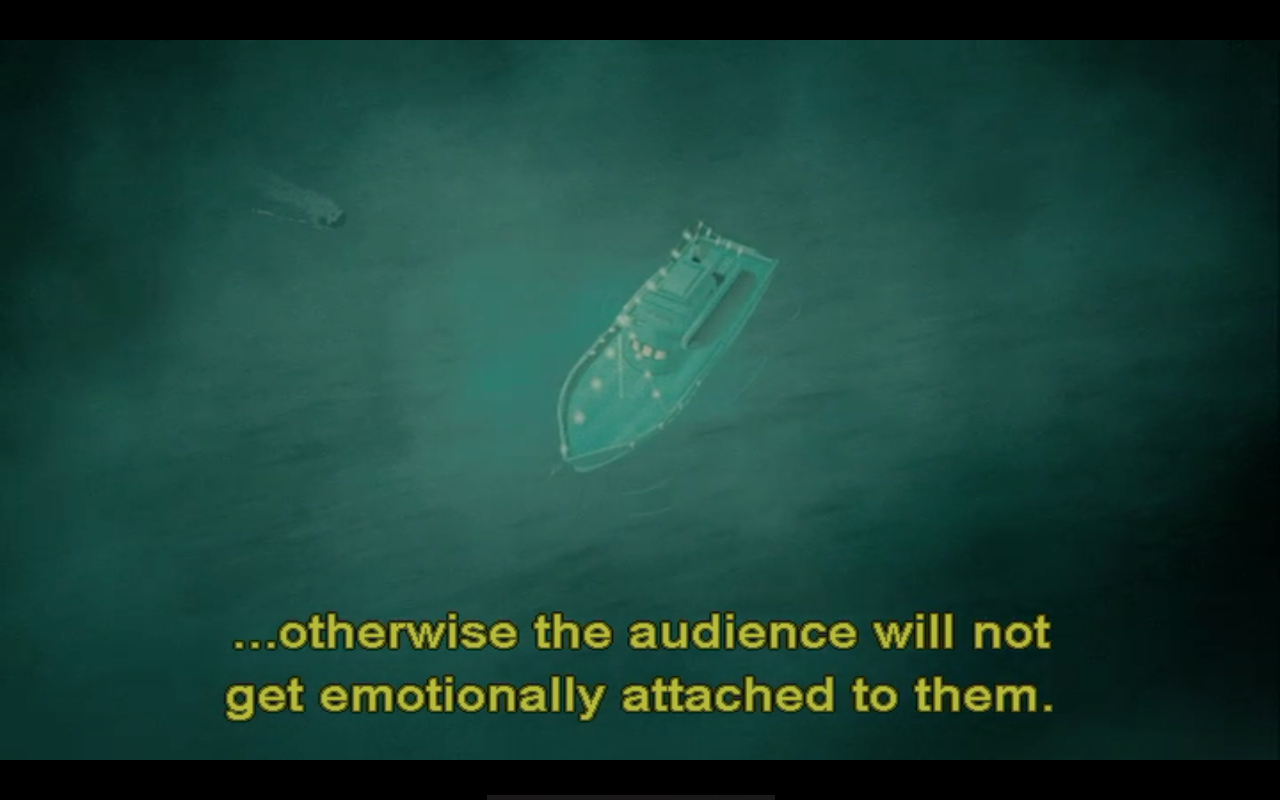
The case of Dayag’s escape by swimming is not, as the other two, closely tied to hallucination but still presents the sea as a place of escape and protection. He swims for 6 miles, despite being a weak swimmer and is transported by the water miraculously back to his regiment. Additionally despite it being a real occurrence, the combination of exhaustion as well as fear transforms the sea into a more surreal and dream-like setting.
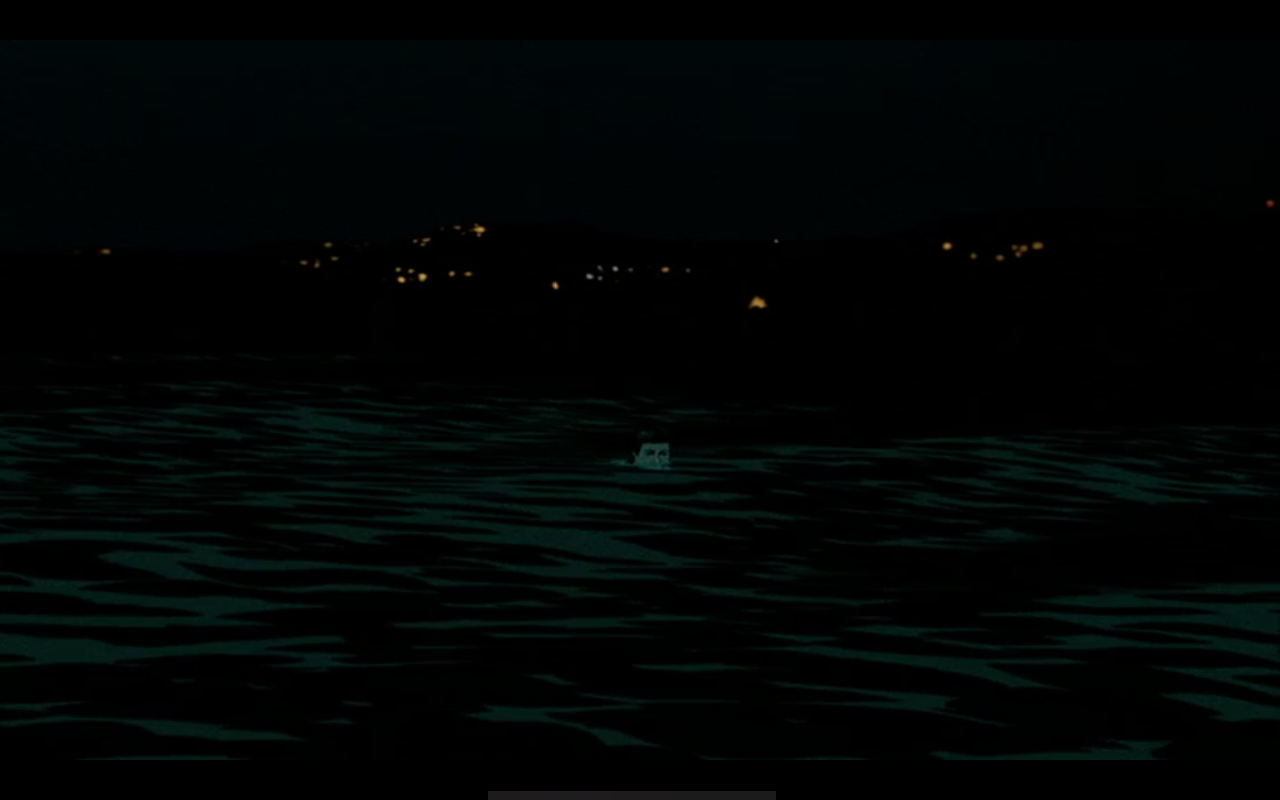
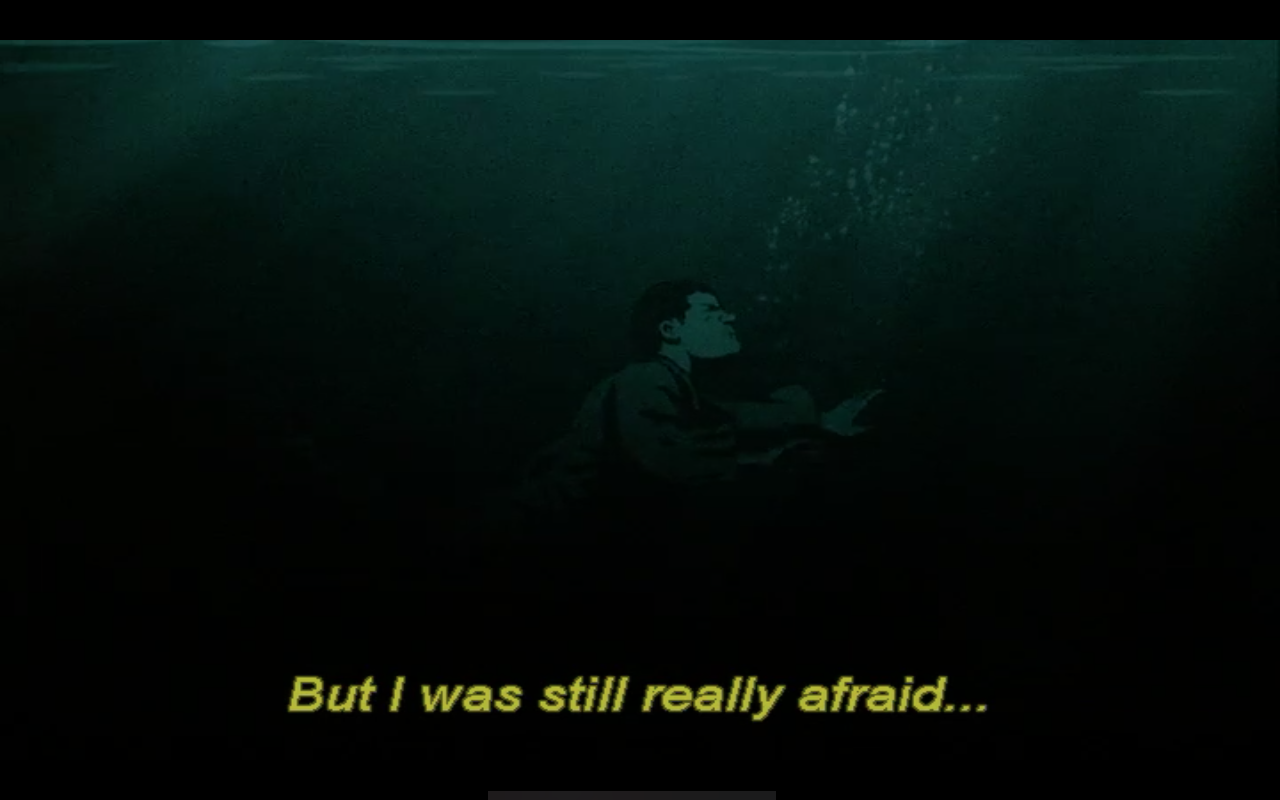
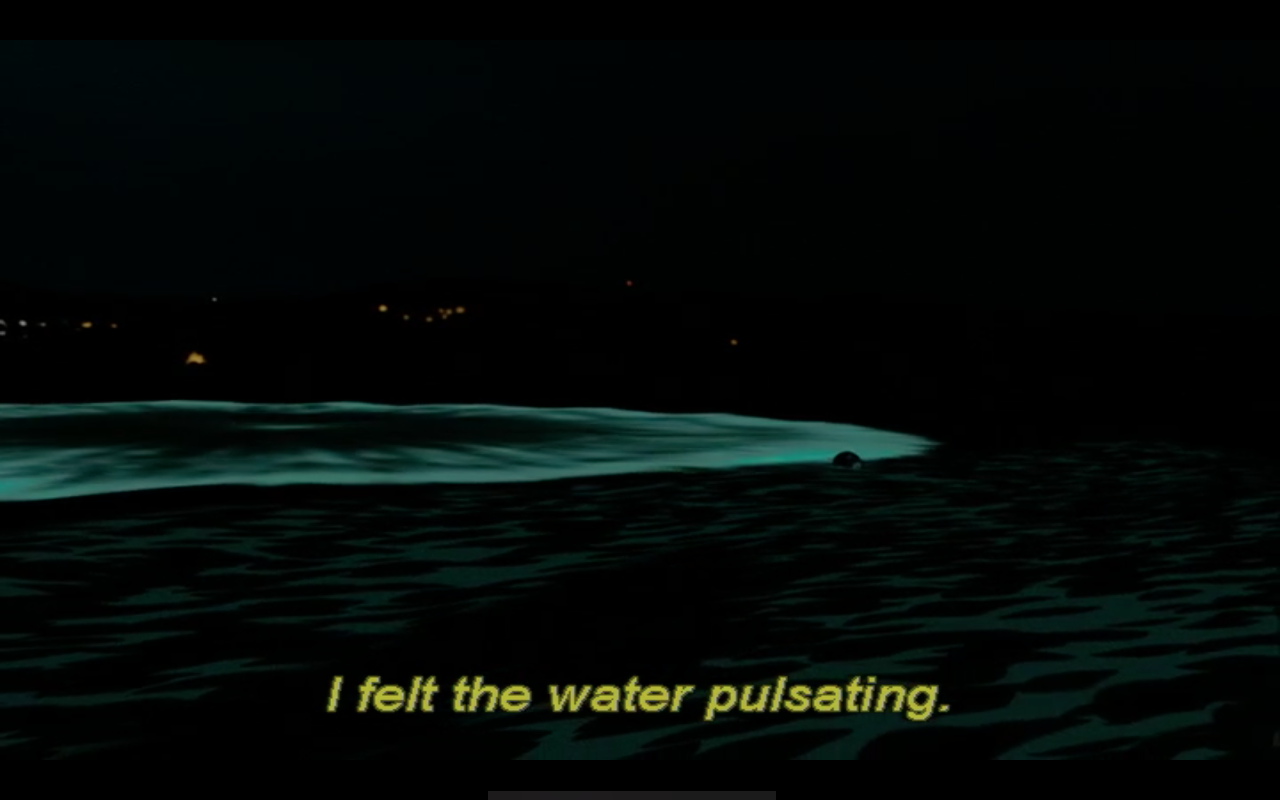
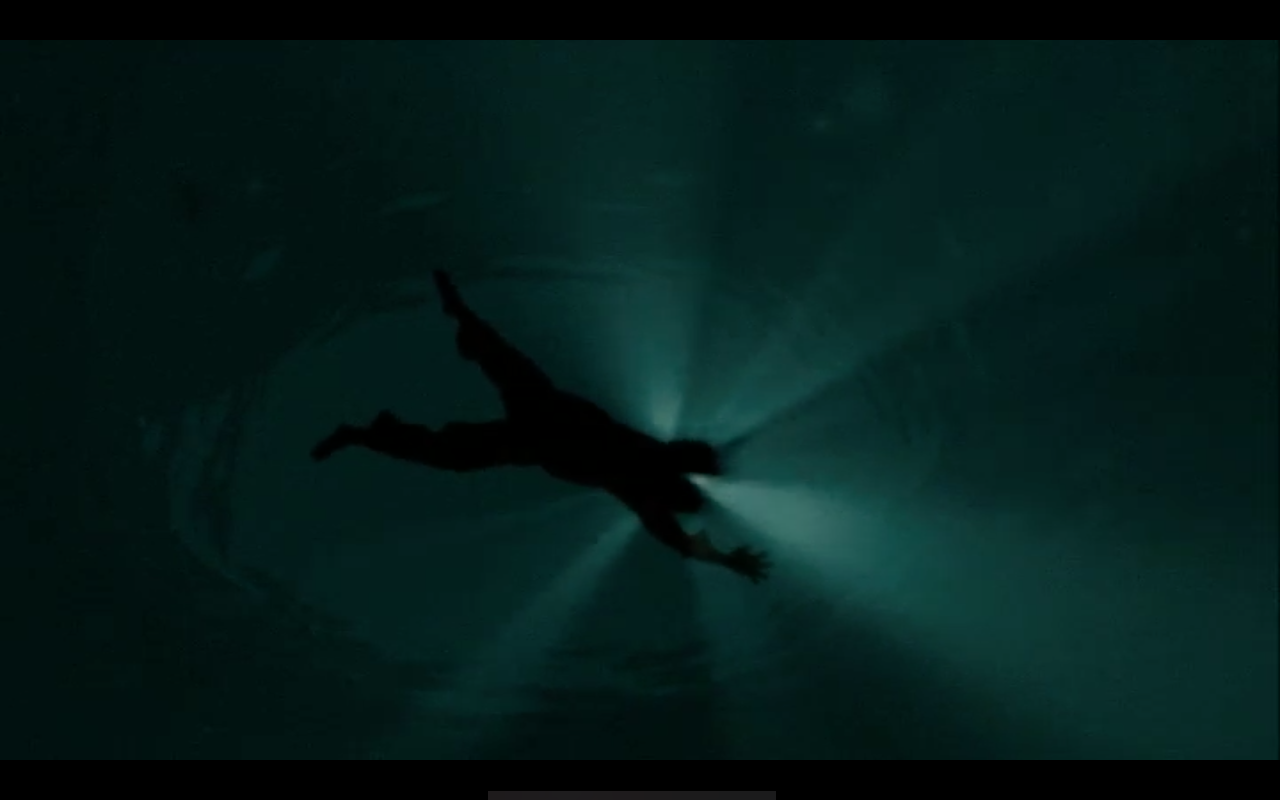
The surrealism of this journey is demonstrated by the darkness that blurs the landscape and envelops Dayag in Figure 23 and Figure 24. He often is pushed under the water and he describes that the water “enveloped him,” and in this way becomes more closely connected to it and its movements. The after-effects of a bomb being dropped made him feel “the water pulsating” in Figure 25, and likewise his body also pulses with fear. The use of different shot angles, such as the shot from underneath of Figure 26 allows for further blending together of the body with the water.
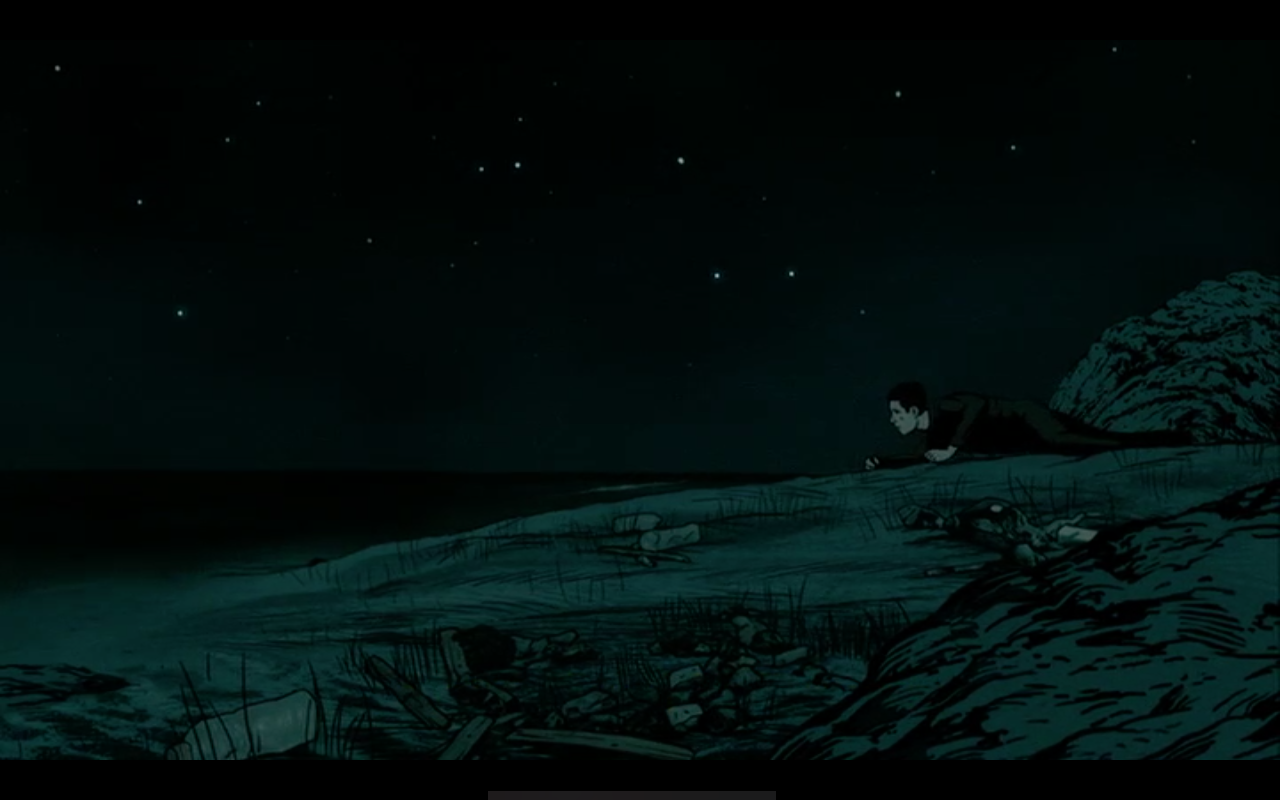
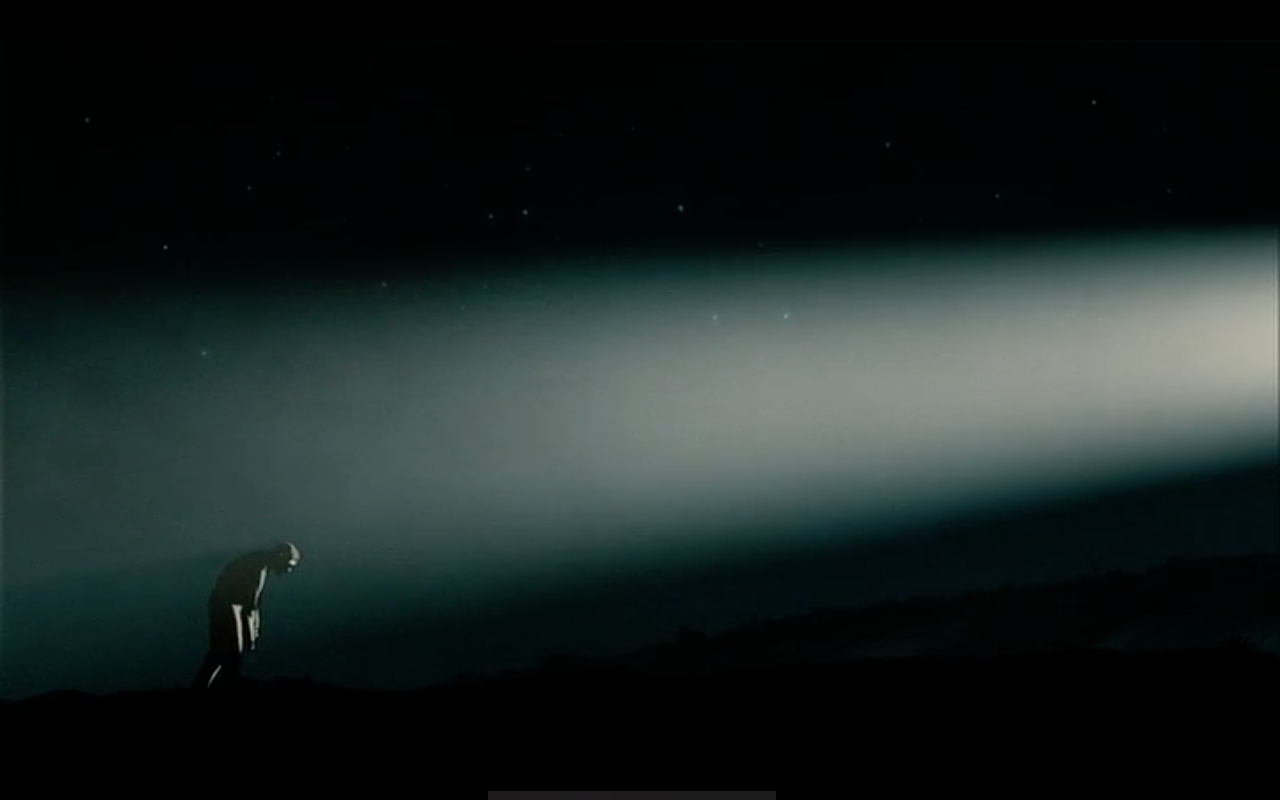
Lastly, the crawling into the water from the beach in Figure 27 illustrates a regression into a space of protection and infancy similar to Folman and Cna’an’s child-like state when in the sea. Then Figure 28 portrays a coming out of a protected state and future confrontation with reality– in Folman’s case the realisation of the massacre as he is surrounded by the wailing women, and in Dayag’s the guilt of survival and cessation of visiting his friends’ graves.
Final Thoughts and the Confrontation with Reality
The sea thus represents a space of protection and sheltering for the wounded minds of Israeli soldiers, just as Dayag states that the “sea is calm and peaceful.” Yet at the same time, he is also terrified of drowning or being shot at– there is a sense that while the sea offers safety, it is only temporary and it can also lead to a loss of memory and drowning in one’s own fear and hallucinations. One can only remain in this space of security for so long until he must confront reality, and in the final shots of the film that work as an actual extension of the hallucinatory beach scene, Folman suddenly awakens.
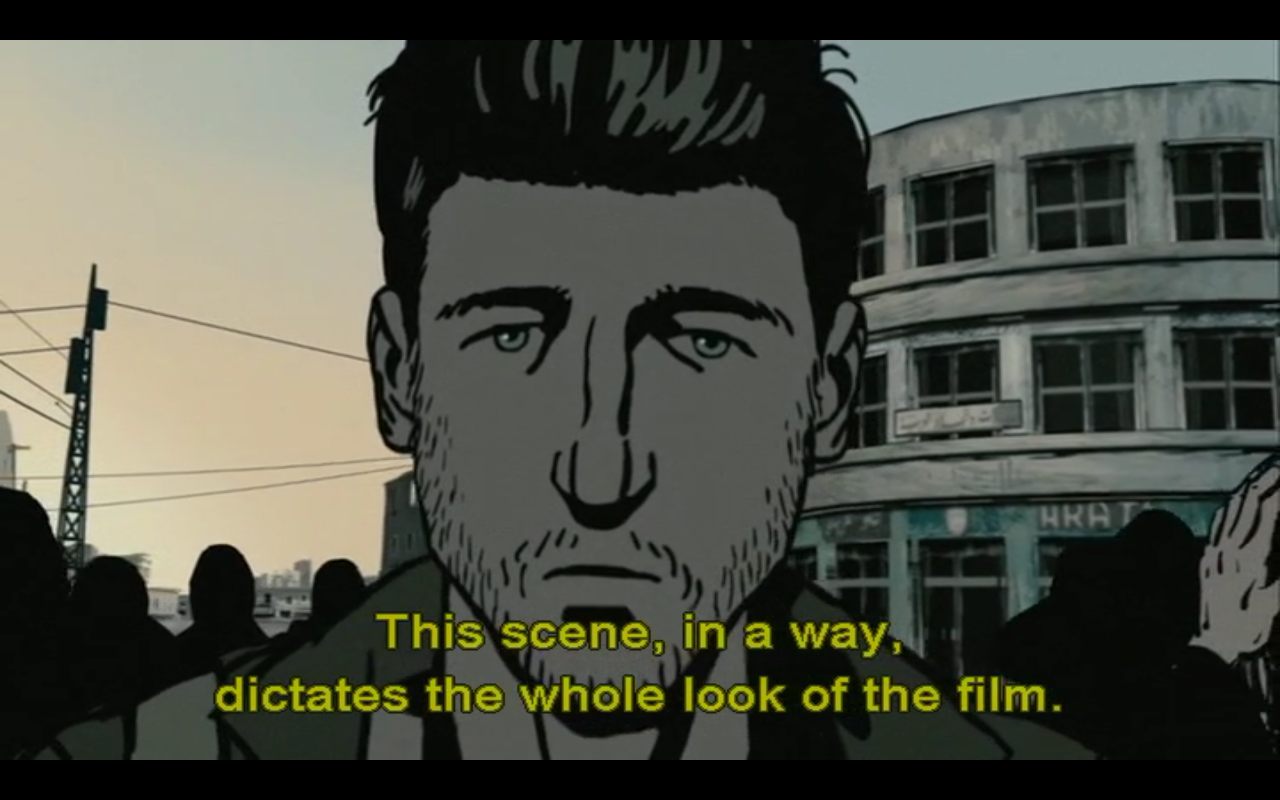
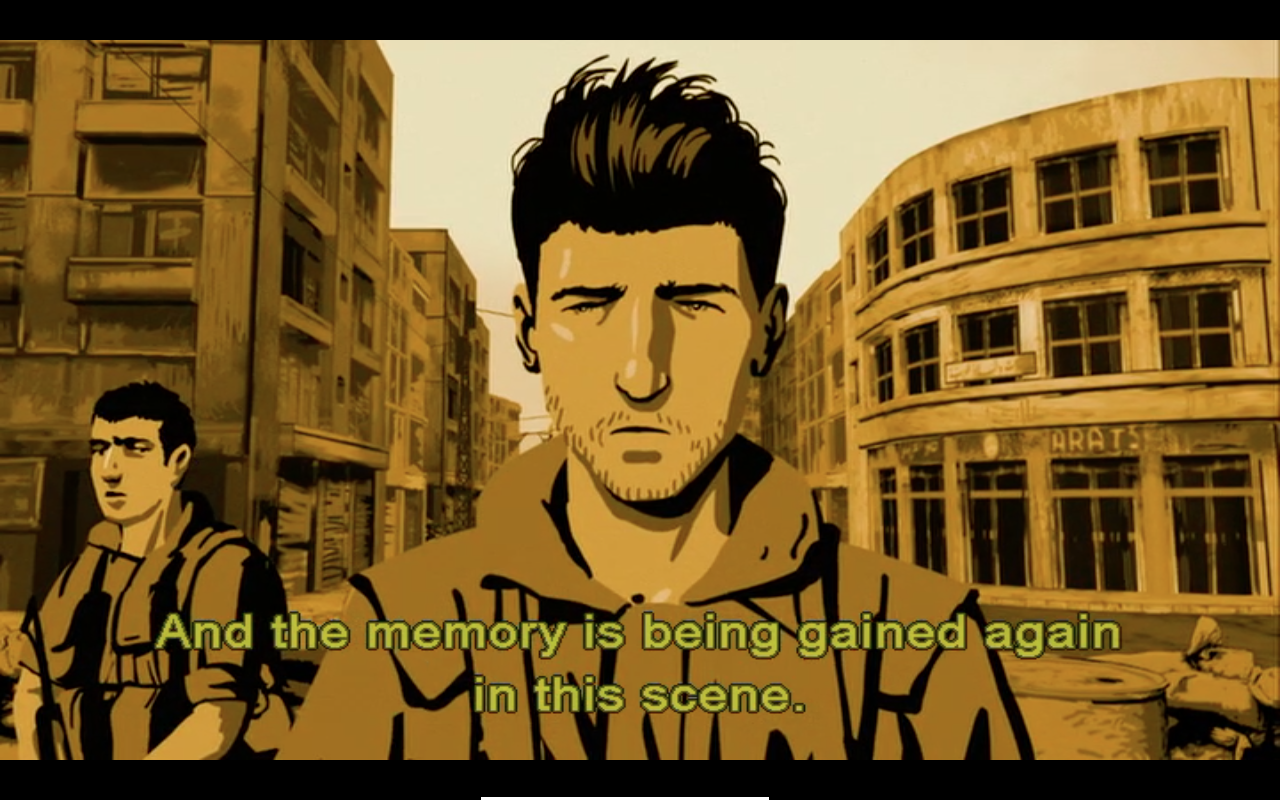
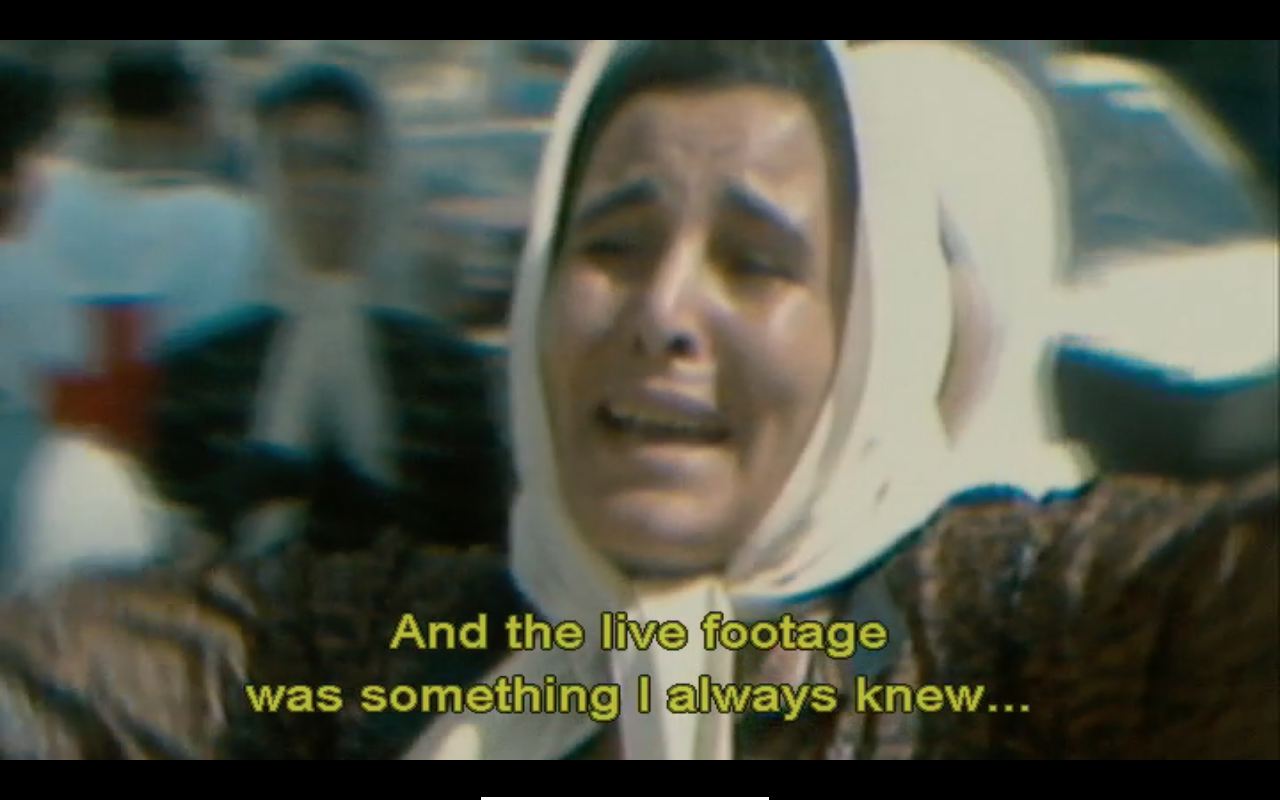
Thus one can observe the change in facial expression between the blank stare that usually concluded Folman’s hallucination in Figure 29 and the expression of realisation in Figure 30. Likewise, the audience itself despite feeling more aware at this point of the reality behind the film is not awakened until it is shown the last shots of the film (Figure 31). And thus Folman ultimately reestablishes the crucial divide between reality and hallucination, and documentary footage and animation, while simultaneously breaking down the boundary of disassociation between the films’ subjects and the audience in a confrontational demand for awareness.