-
Continue reading →: Videogame Cat of the Week: Aisha
Xenoblade Chronicles X (Monolith Soft, 2015) an enormous game—too big, in fact—and so there is a very real possibility that players will miss the side mission “Nine Lives” when they play. This would be a shame, as they would also miss the opportunity to be acquainted with Aisha, the game’s cat. Aisha is a badass. In Xenoblade…
-
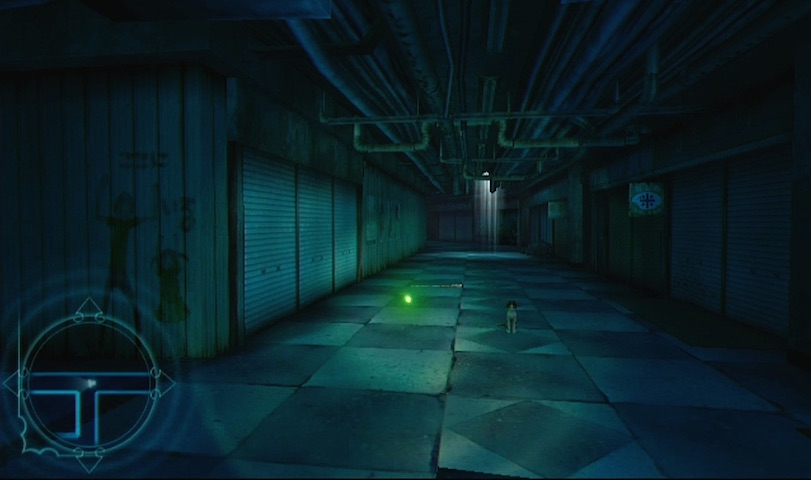 Continue reading →: Videogame Cat of the Week: The Post-Apocalyptic Cats of Fragile Dreams
In most Western post-apocalyptic videogames, the broken and ruined remnants of society are populated by bandits, mutants, and Max Max-style ruffians. In the Japanese-developed Fragile Dreams: Farewell Ruins of the Moon (Bandai Namco / tri-Crescendo, 2009), post-apocalyptic Tokyo is populated almost entirely by ghosts, robots, and cats. Based on what I know about contemporary Japanese society, this seems…
-
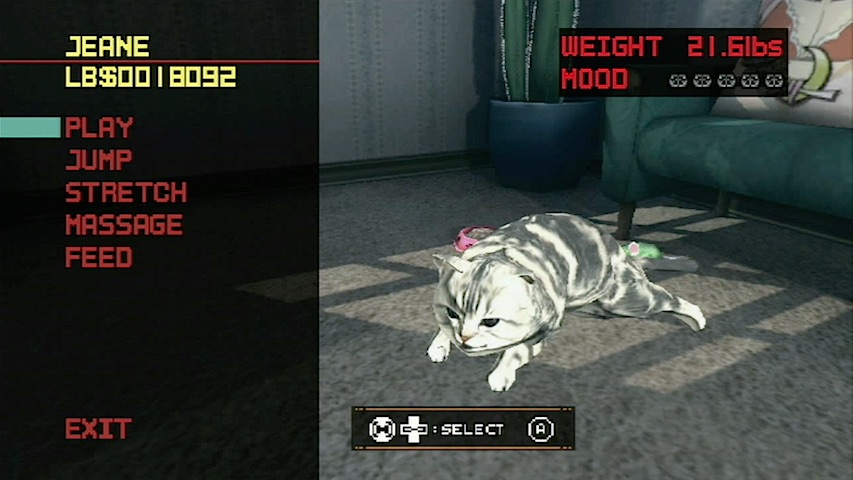 Continue reading →: Videogame Cat of the Week: Jeane
In No More Heroes (Grasshopper Manufacturer, 2007), otaku assassin Travis Touchdown has a kitten named Jeane. In No More Heroes 2: Desperate Struggle (Grasshopper Manufacture, 2010), Jeane has is full-grown, and is now fat. These things happen. Travis’ main interaction with Jeane in Desparate Struggle takes the form of an exercise regimen. He has decided that Jeane could lose some weight,…
-
Continue reading →: Here on My Side of the Screen
(I’m officially retiring my usual “Ian here” greeting, as, in the absence of student posts, there will be no one but me posting on this blog for the foreseeable future.) Early in his book Pilgrim in the Microworld, a phenomenological account of videogame expertise that stands as landmark work of first-person game criticism, David Sudnow…
-
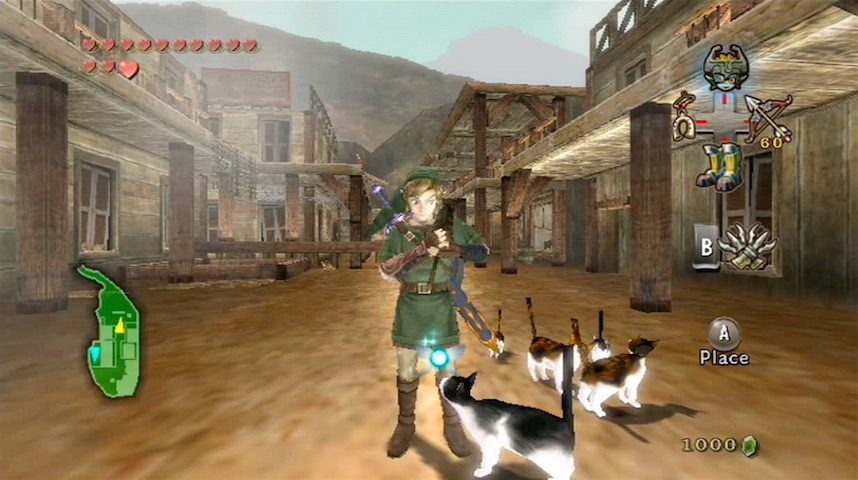 Continue reading →: Videogame Cat of the Week: Hidden Village Cats
Among home consoles, the library of the Wii is not particularly well-regarded. I consider it to be underrated in several respects. This is especially true in regards to cats. Judged purely on the quality of the cats it offers, the Wii is probably the greatest home console in history. I’ve chosen three titles from its library…
-
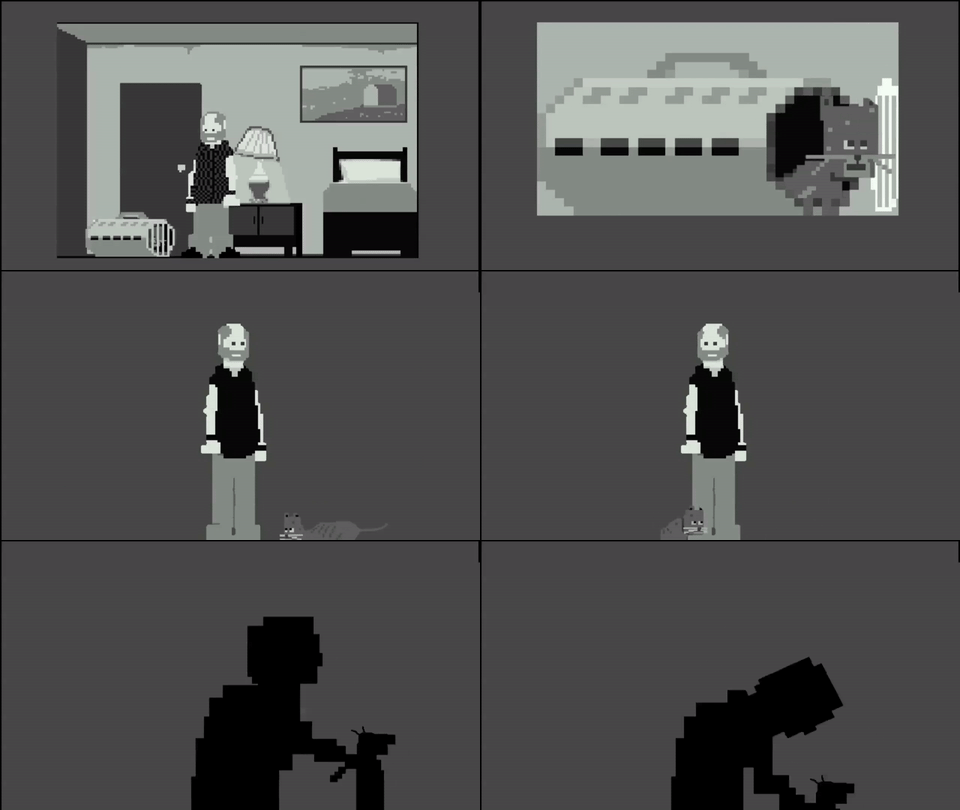 Continue reading →: Videogame Cat of the Week: Mr. Glembovski
If you want to read my serious thoughts on Richard Hofmeier’s Cart Life (2011), you should go here. For now, though, let us consider Mr. Glembovski, the cat that Andrus keeps in his hotel room, against the wishes of the management. As a secret cat, Mr. Glembovski’s life is cruelly constrained, consisting of nothing more than a small room, and…
-
 Continue reading →: Job Change
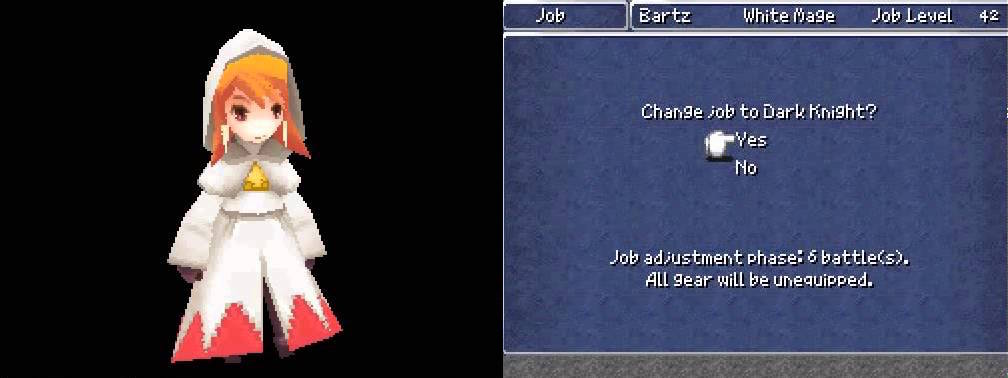
Ian here— This week, I began a new job as a writer for the University of Chicago’s Center for Interdisciplinary Inquiry and Innovation. In that capacity, I will be writing grants and papers to help fund and publicize the work of its three constituent labs: the Game Changer Chicago Design Lab, the Transmedia Storytelling Lab, and the Design…
-
 Continue reading →: Double Blind
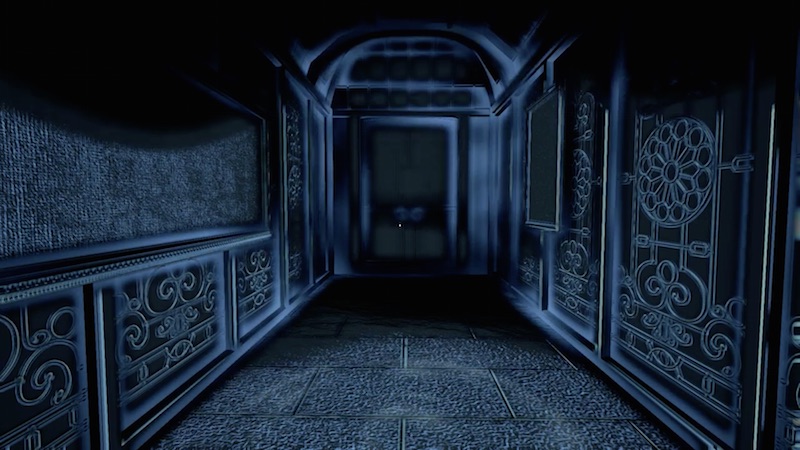
Ian here— I’ve written about synesthetic interfaces before: that is, interfaces that perform a sensory substitution, translating the information normally associated with one sense modality into the phenomenal forms normally associated with another. In my previous work, I’ve usually focused on forms of nonhuman perception and certain modes of perceptual expertise. The release of Perception (The Deep End Games, 2017)…
-
 Continue reading →: Prolegomena to a History of Cats in Videogames
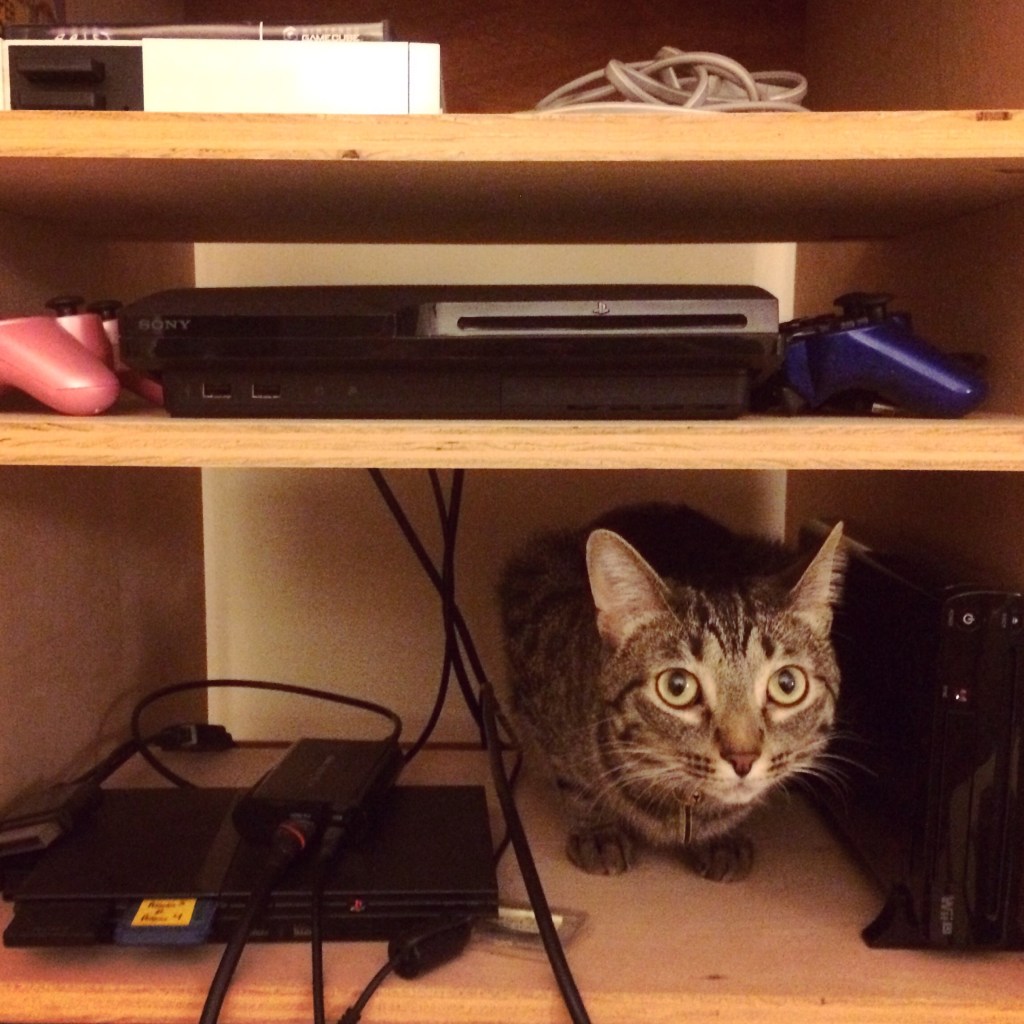
Ian here— By now, every right-thinking person on the internet knows that omgcatrevolution is the most essential Tumblr in existence. (Perhaps even the greatest site, bar none, on the internet.) But although it is an ever-more-exhaustive archive of cats in mainstream cinema, cats in experimental cinema, cats in animation, cats on television, cats in music videos,…
-
 Continue reading →: A Hodology of Videogames: Proteus
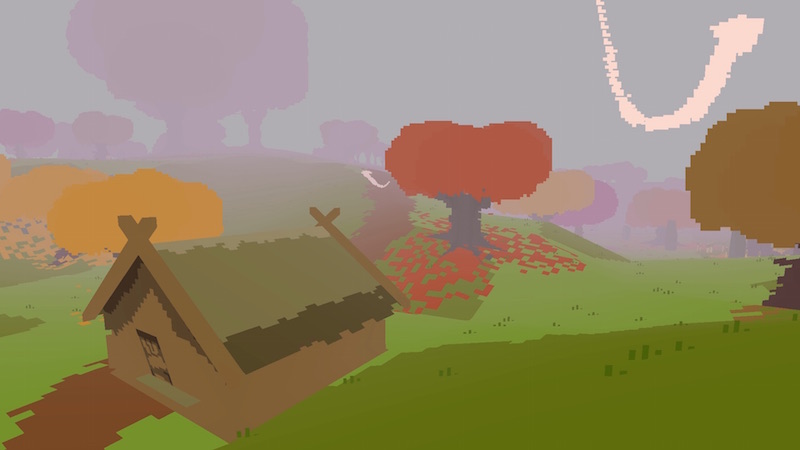
Ian here— Welcome to the third of a series of posts I’ll be doing on hodological space in games. “Hodological space” refers to the space that humans inhabit: not a space made up of strict coordinates, but a thicket of preferred paths, affected by factors such as interest, distraction, fatigue, and urgency. It’s a term that originated in the writings…
-
 Continue reading →: Postmortem: Frames, Claims, and Videogames
Ian here— Well, it’s that time of the semester. Grades for the School of the Art Institute of Chicago’s Spring 2017 semester were due Sunday, so it seems that it’s time to offer up a postmortem. Last time around, I opted to do a postmortem on “Comedy and the Moving Image,” as I felt that it…
-
 Continue reading →: A Hodology of Videogames: Miasmata
Ian here— Welcome to the second of a series of posts I’ll be doing on hodological space in games. “Hodological space” refers to the space that humans inhabit: not a space made up of strict coordinates, but a thicket of preferred paths, affected by factors such as interest, distraction, fatigue, and urgency. It’s a term that originated in the…
-
 Continue reading →: The Coming of Age in Metal Gear Solid IV
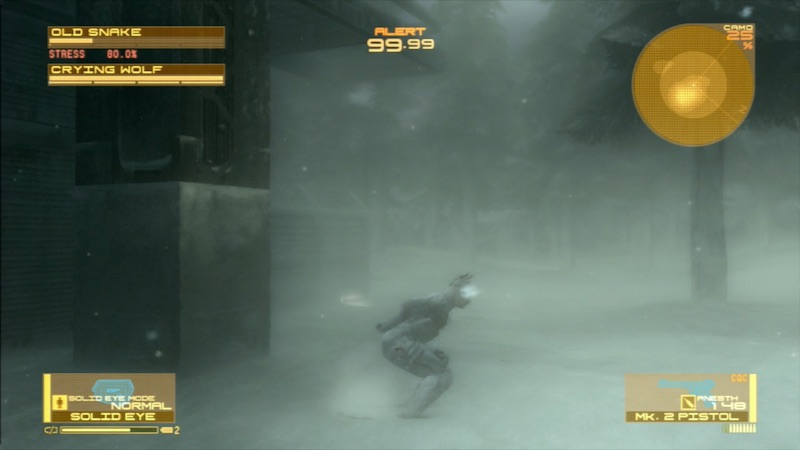
Ian here— The level “Twin Suns” in Metal Gear Solid IV (Kojima Productions, 2008) ranks as one of my favorite videogame levels of all time. Smack dab in the middle of a game with more than its share of problems—the usual problems of unconscionably long cut-scenes and unconscionably short periods of genuine interactivity, plus new problems such…
-
 Continue reading →: Adobe Plug-ins in 2017: A Tale of Five Browsers (on two operating systems)
Ian here— Some of this material used to be over in the “Practical Pedagogical Notes on Games” section of the site. I’ve decided to migrate it to a blog post, however, for logistical reasons. It’s an HTML5 world out there. The plug-ins that used to define the landscape of the internet—Flash, in particular—are a dying…
-
 Continue reading →: Lewis Klahr’s Sixty Six
Ian here— The University of Chicago’s Film Studies Center has been having a fantastic year so far when it comes to experimental cinema. Hot on the heels (-ish) of their “Troubling the Image” series, last night they booked Lewis Klahr’s twelve-part, feature-length Sixty Six (2015), for what is I believe its Chicago debut. Klahr was there in…
