by Rami
University of Chicago CMST 14400: Film and the Moving Image
Autumn 2019
Hansel and Gretel is a story that remains with me from my childhood. It was the fairy tale my mother repeated to me most often, with my sticky fingers and penchant for lying. Even as a second grader, the thought of a witch that would cook me alive for my sweet-tooth did little to instill in me any desire for temperance. It wasn’t until I watched Spirited Away (2002)—that I marveled in disgust and fear at the transformation of Chihiro’s parents into pigs—that I learned to put down the cookies.
Why is this? How does Miyazaki’s world in Spirited Away arise such strong reactions from its viewers, and does the work of a fairy tale without relying so heavily on its formal narrative structures? Hansel and Gretel need their Witch, as a personification of the ills of greed, to carry out the moralizing message of their tale. Animation transcends the need for such interpretive plot devices; even more so than live action photography, it is capable of making the moving image convey meaning on an affective and sensorial scale. Through its use of exaggerated features, body-morphing, and the grotesque, Spirited Away achieves just this: the creation of a world beyond our own, one that leaves its audience hanging onto themes of generosity, environmentalism, and individuality, without ever requiring its audience to interpret their meaning through a dissection of the film.
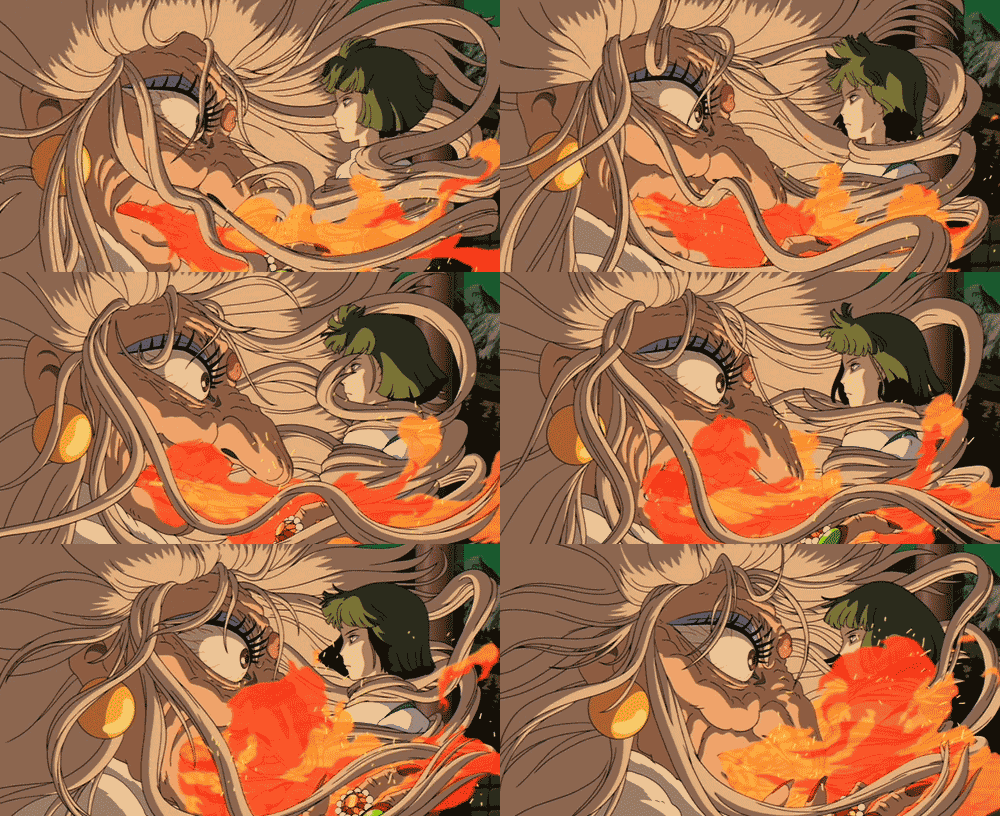
Perhaps that’s just what makes Miyazaki’s masterpiece such a puzzle to unpack — its bright colors, whimsical animations, and clever distortions of the human world embody what Susan Sontag would call “the erotics of art.” They present themselves to us as one coherent whole, so marvelous and fast-paced as to defy their viewer’s impulse towards interpretation. In Spirited Away the artistry is the thing itself: we need not search beyond the work of the film’s animators in order to find a ‘greater depth’ to the film than what is made readily apparent to us on screen. In animation, the key to meaning lies not so much in depth as in width; that is to say, in the stretching and warping of reality that gives cartoons their distinct style, that establishes its mood, tone, and message. An elongated nose and hair whipping in the wind like snakes, as we see in Yubaba, remind us just how far away from our own world we really are, and tell us all we need to know about the witch even before she has opened her mouth. Yes, narrative moves us from scene to scene… but the story reveals itself to us best in moments where animation and design are given reigns to communicate with—as well as enchant—the viewer all on their own.
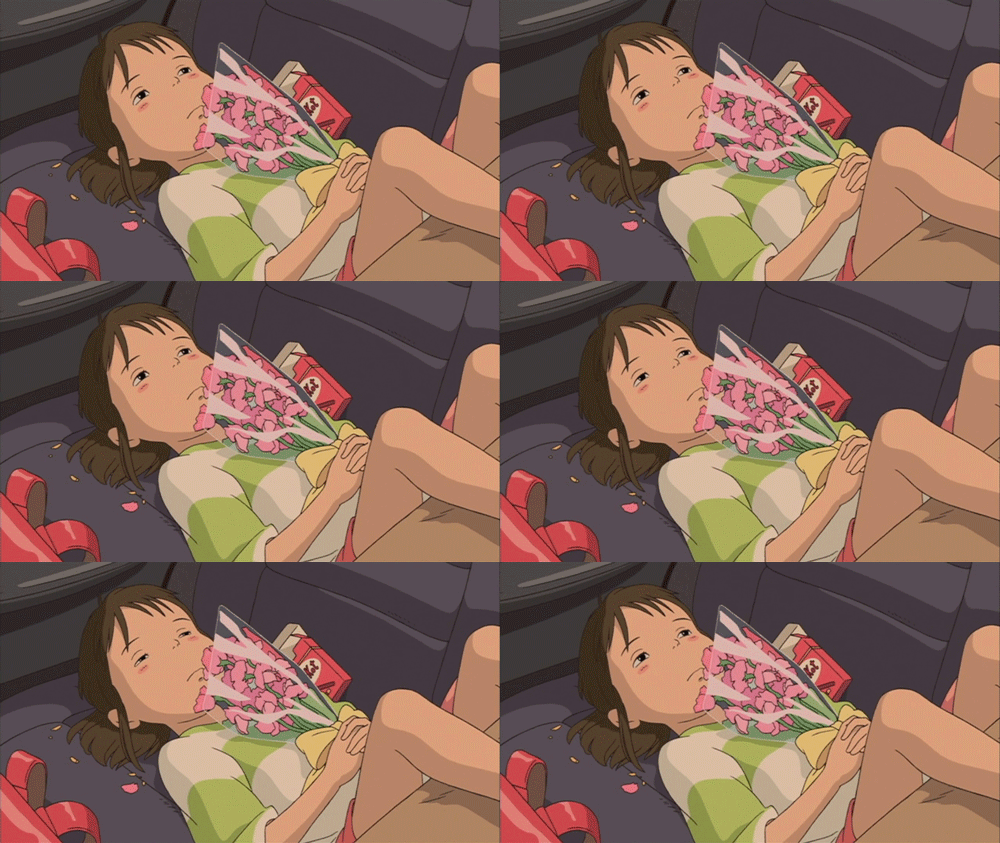
To explore these points, we’ll start with that first engrossing moment of the film, in which Chihiro’s parents are transfigured into pigs after eating from a seemingly-abandoned carnival stall. This early scene reveals the distinct power of animation to distort our image of reality, and in doing so imbues itself with moral and meaning. In its opening montage, no part of the film suggests to its audience that we are to encounter anything extraordinary: petals fell from battered roses, the car grumbled and jolted down a gravel path, no different than they would in real life.
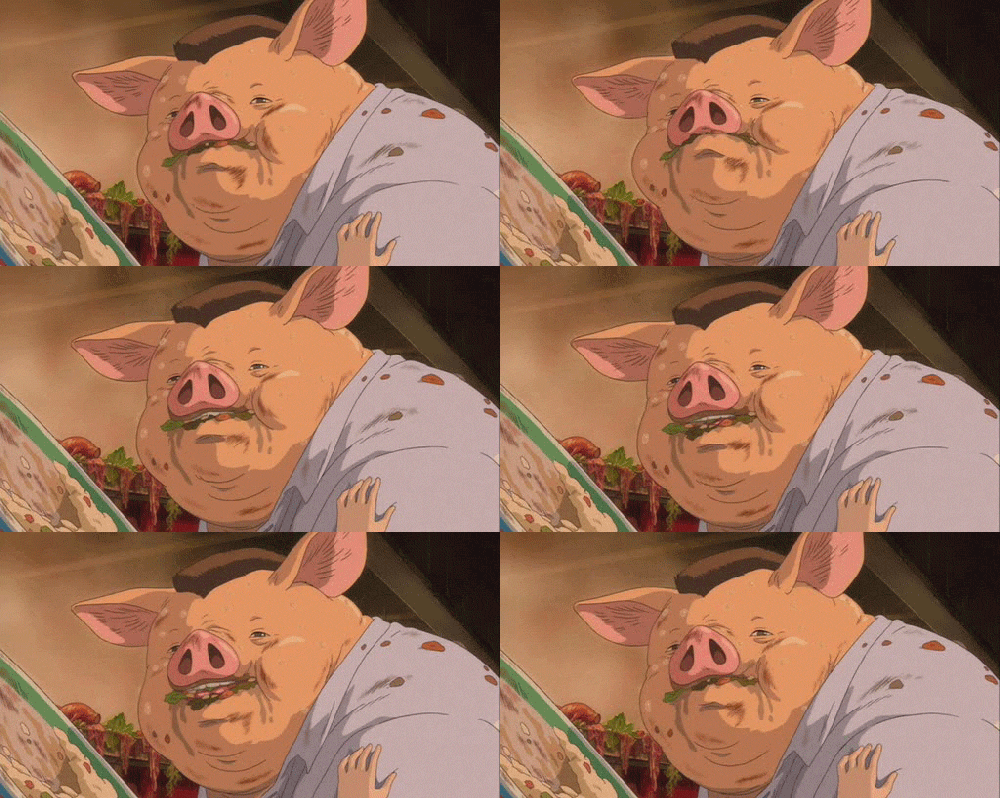
With the family’s arrival at the fairgrounds, however, stylistic changes in the animation began to indicate to us the character’s passage into somewhere unknown. The bright glow and steam coming from the stall—the most vivid colors and enticing textures used in the film up to this point—instill in the viewer a sense of both danger and awe. And by the time Chihiro’s parents start eating, even in their human form, they already have begun to demonstrate the properties of this newly emerging world: her father opens his mouth superhumanly wide to scarf down a giant fish and a crab stick in one gulp, her mother swallows noodle after noodle—we see their piggish qualities before snouts and tails ever appear.
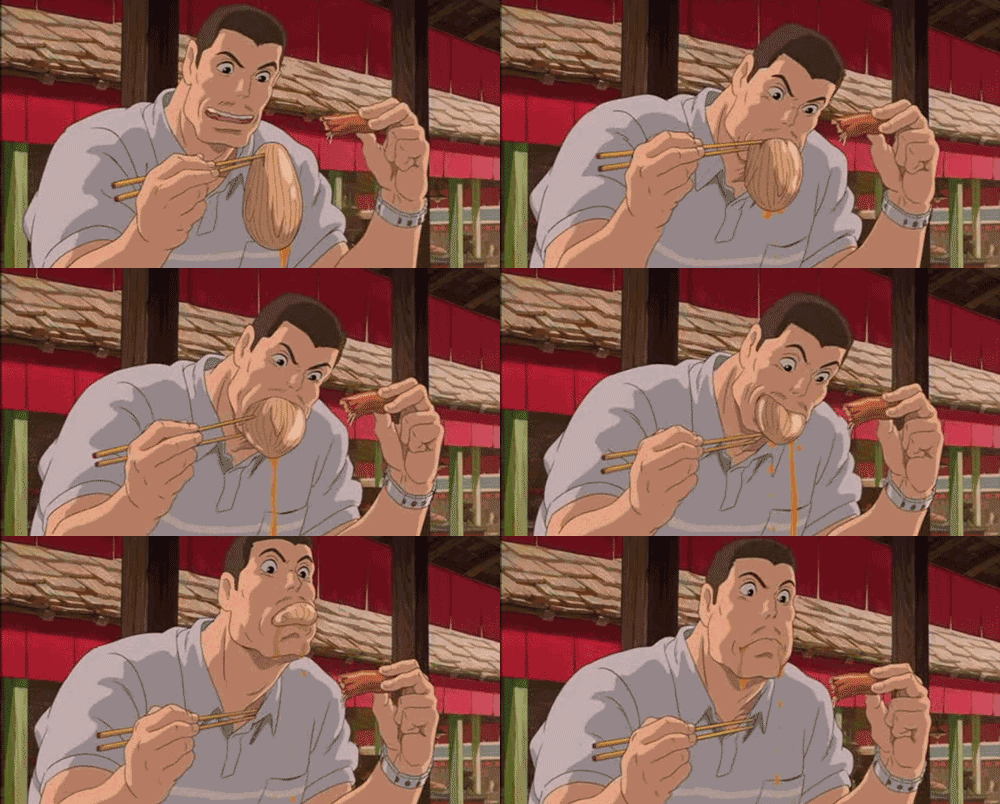
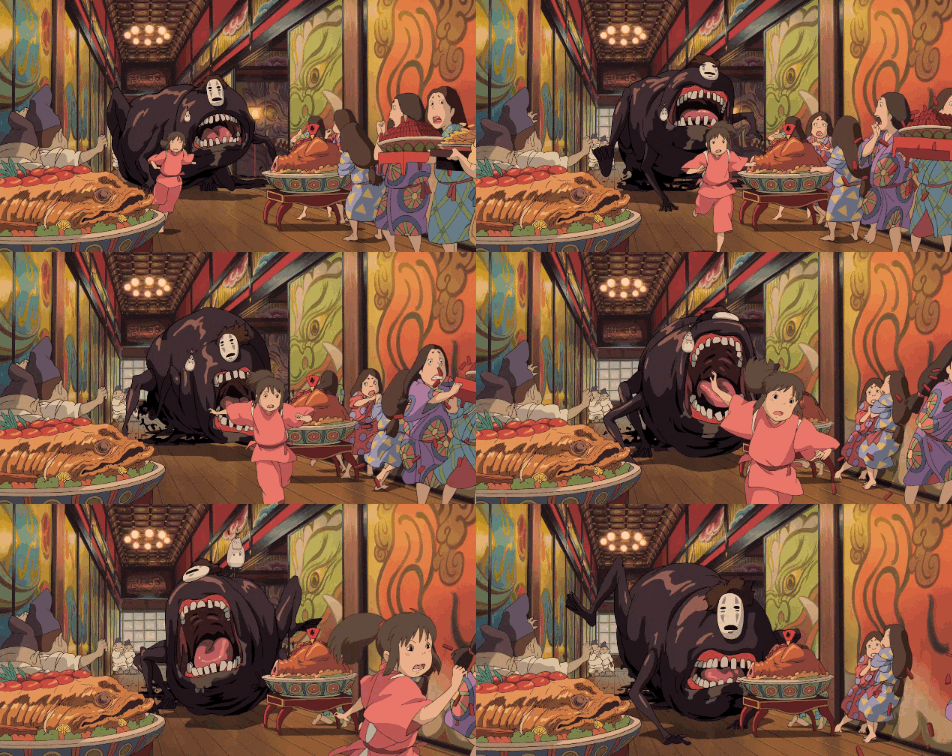
In witnessing the transformation, and being made to gawk as Chihiro’s pig-eared parents hoard bowls of food into their mouth, we ourselves are fed the film’s central theme of temperance against excess and gluttony, in the most subtle of ways. When the filmmaker chooses to animate a certain way, he sets not only the film’s style, but its very significance: the dancing flames in Flowers for Madame (1935) are a very different beast than those that kill the mother of the titular Bambi (1942), for example. In live action, this plasticity of form is stifled; a fire is a fire; to be run away from, warmed by, or, in the most thrilling of features, thrown into. But for animators, form is the playground on which the story is set, such that distortion, transfiguration, and imagination can be made to carry the story’s most impactful points. In this pig scene, the depiction of therianthropy and the grotesque achieves a kind of reorientation of the viewer through affect. The effect is ultimately uncanny: a horrifying perversion of our own reality, so close to our own realities that we can almost imagine it happen to ourselves. The transformation haunts us because it presents itself as the natural end to our own greed — a feeling we encounter over and over again in the film, whether through Yubaba’s spoiled and oversized baby, or No-face’s unending, fattening hunger. But these pigs invest, from very early on, each of the generous acts undertaken by Chihiro with a kind of redemptive and heroic quality. As an audience, the fear we feel when confronted with the girl’s swinified parents sets us firmly alongside her on her hero’s journey. And without it needing to be mentioned in the film’s plot, we understand this journey to be one defined by remedying this act of greed.
This ability of animation to capture and orient its audience through the manipulation of form in the moving image is mastered by Miyazaki in Spirited Away — and nowhere is it more visible than in the scene where Chihiro bathes the river spirit. Even more so than generosity, environmentalism is a theme that is woven through the film in its most formal aspects. The natural world is celebrated as a canvas, its beauty—and its corruption—highlighted aesthetically throughout. Chihiro accesses the spirit world, of course, by passing over a dried-up riverbed. The grey of the rocks in the bed and the emptiness of the surrounding infrastructure situates us in an ecology violated by man, and ‘primes us’ to the significance of the river in this fairy tale. Consciously, we twitch with anticipation as Chihiro leaves the riverbed behind her, the sun sets, and the first creatures set out into the night. But on the subconscious level, we are made aware that the spirit realm exists as a refuge from the anthropocentrism of the human world, and Yubaba’s bathhouse as a place to cure oneself from its ills.
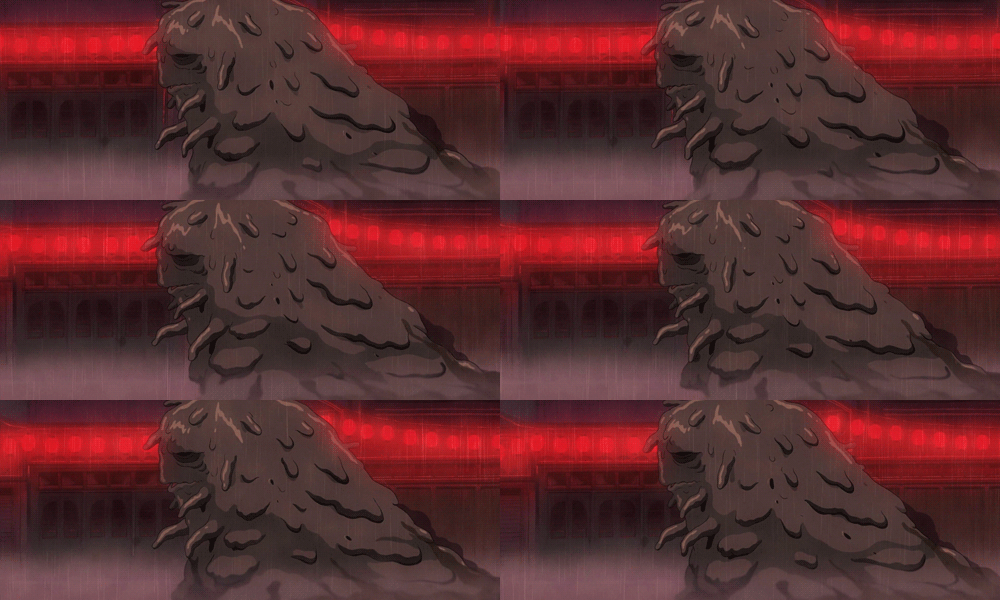
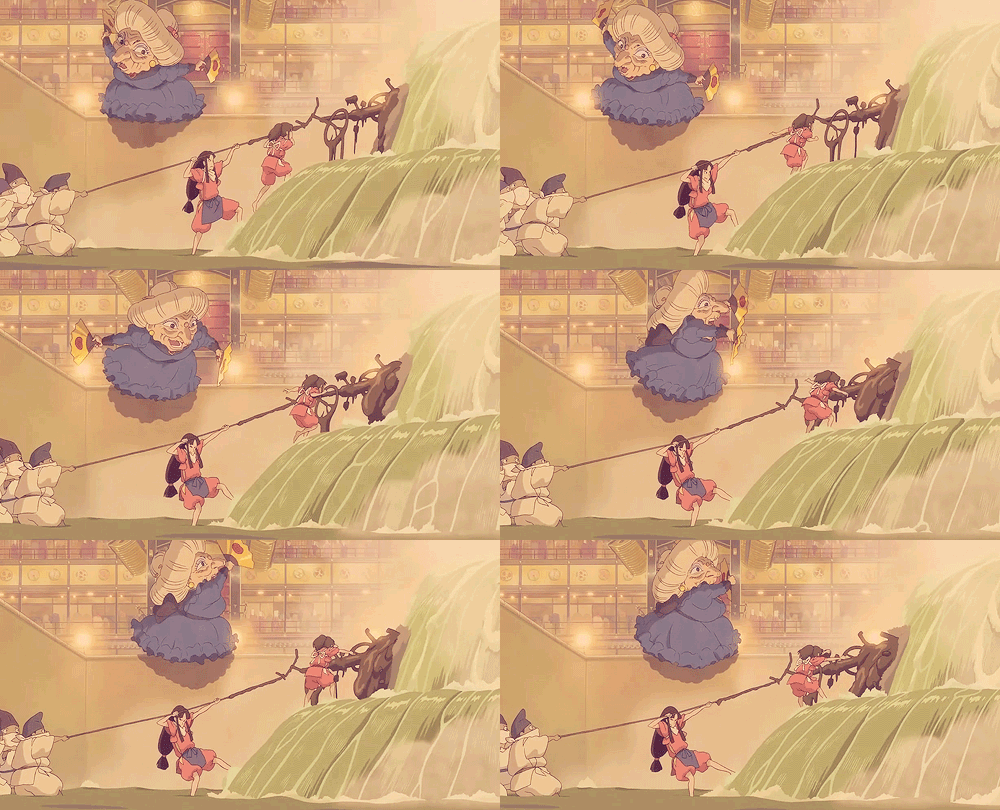
It’s upon the arrival of the ‘stink spirit,’ however, that these ‘affective reorientations’ really come to head, leading us to reflect, in the most gruesome shots of the film, on our own environmental negligence and impact. At first glance, the stink spirit is a fearsome, gloopy thing, and we react emotively to its shape before ever trying to make sense of what it is. Chihiro, armed with a compassion and perceptiveness unlike our own, is capable of seeing past this—intuitively, she takes the spirit into her care, and pulls muddied objects from deep inside it with a rope. First a bicycle, then a refrigerator, then tables, chairs, and oil tanks, the waste of human lives comes spilling out onto the bathhouse floor, freeing the body of the spirit from pollution by splaying it out onto the floor for the audience to see. The effect is not lost; in seeing the remnants of our own lives vomited up like a brown poison, and understanding that the spirit is one of a river, our disgust at the animation turns into a disgust of our own patterns of consumption, making us complicit in the garbage we see on screen. Chihiro’s bravery—echoing the days of an actual summer Miyazaki spent cleaning up a river in Japan—saves us alongside the river spirit, and gestures to the changes that we as an audience must make to repair our own world, and redeem the blind greed of those that came before us.
The lessons we learn from Spirited Away are taught through the moving image. In depicting acts of contortion and body-morphing, the film elicits an affective connection from its viewer that guides us along the story, making perception more than ever generative of meaning. Even just witnessing Miyazaki’s creatures, registering their dissimilarities to our own flesh, becomes a practice in world-building, a mode of understanding the film as text. What is achieved is the use of animation as both medium and message, as both the storybook and the story in itself. How something is animated defines what it is, how it makes us feel: it is nothing if not the way it looks, the way it moves, the way it distorts our understanding of reality.
To animate is, at its core, to bring something to life: to create a fantastical world out of the moving image, and give it all the properties that make the filmic medium so hyperreal to us. Its the symbiotic marriage of content and form that gives animation its distinct power as a medium. But to combine this with the immediacy and transparence of film is to create a work of art that leaves its viewer emotionally raw and morally changed, without once diverting their eyes and minds from the narrative and images unfolding before them on the screen. This is the triumph of Spirited Away — its genre-defining sensory experience that cements animation’s capability of harnessing the ‘erotics of art.’