The Uncle Who Works for Nintendo Reminded Me of Home

by Adayan M
University of Chicago MADD 14920: Comparative Media Poetics – Horror
Autumn 2022

Michael Lutz’s game, The Uncle Who Works for Nintendo, is definitely one of the most dynamic iterations of a Twine game that I have played during my time in college, considering the limitations of the medium. The implementation of replayability as a key mechanic that creates a sense of intertextuality between each playthrough is something that felt as though it lent itself to Twine pretty well, since looping is one of the easiest things to do on the platform. Because of this, I want to think about the replayability in this game in three distinct ways: as it relates to the horror of the game, as it relates to reading the game itself, and as it relates to my own childhood. My goal is to flesh out replayability as not just a mechanic, but as a form of critique. As a reading practice. As a memory. 

Michael Lutz’s game, The Uncle Who Works for Nintendo, is definitely one of the least terrifying games I’ve played. The implementation of horror within the game was most salient in its first playthrough, where the loud sounds were startling and I was not anticipating to “lose control” of the end scene through the Uncle seemingly taking over the game. But perhaps, there is something deliberate within the loss of fear within the game. The familiarity that is built over time through the visuals, the narrative, and the mechanics serve as a way of situating the player alongside the child visiting their best friend. Of course, the space would feel familiar and you would be able to guess what your friend would say, you know them. There is something powerful in the ordinariness of the game as it progresses, that I don’t necessarily think is captured by the ending where one finally overcomes the uncle because the mundaneness overpowers any affect that is evoked. And it is this unremarkable familiarity that makes the game stand out within the genre, because horror is evoked from suspense and the unknown not from what you do know. Because of this, I see the game more so as a critique of horror and our fixation on fear. Why do we crave it? Why are we critical of it? Why is it often indicative of the success of horror media? Why is it a genre that is tied so closely to affect? Why do we rewatch our favorite horror films? Why are we not frustrated by the lack of fear in our subsequent screenings? Why is there not a genre or term for horror that loses its ability to evoke fear through replay or rewatch?

Michael Lutz’s game, The Uncle Who Works for Nintendo, is definitely one of the games I’ve had to replay the most in my life, admittedly this is due to my inability to properly execute the steps in the guideline… But thankfully this allowed me to sit with exploration within the game longer. There is a tension that is brought to the fore through this replayability insofar as it does create this feeling of familiarity that detracts from its horror but also a sense of defamiliarization of the narrative. And by defamiliarization, I am referring to it as a reading practice that involves paying attention to the smaller details of things that would otherwise be performed without thinking. I believe that the specificity of distinct game paths through each replay conditions you to do this, as you try to track the changes that emerge from ending to ending. Oftentimes, not leading to much beyond expanding options and flavor text through the interaction with your friend’s inactive parents. Here, the replayability of the game pushes you towards wanting to feel estranged from the familiarity it evokes, as a form of making an otherwise boring experience feel interesting. This form of active defamiliarization as something the game conditioned me to do felt like a challenge from the game to see what would give: my desire to completely understand it or the content that it had for me to play through. 

Michael Lutz’s game, The Uncle Who Works for Nintendo, is definitely a game that reminded me of my own childhood. Particularly, it’s position as being a game that contends with accessibility and affordability within the gaming industry. I can say that as a child, there was always a part of me, like any other gamer, that wanted to constantly keep up with the newest releases of popular games. Though this was not possible for my family and it was something that stuck with me as I grew up. As I began to be more cognizant of this reality, I found ways to reinvent how I related to videogames that I did have. This was often through replay, as a form of queering normative playing experiences to make the game stretch in between purchases. My replay was driven through my own desire for a new challenge, but also perhaps from a feeling of indebtedness to my parents; a feeling of making the most out of the game so that they know they didn’t waste their money on it. Therefore, replay is a key mechanic within the game that itself can be reread in multiple contexts, that can be a movement towards reflection and care, that serve as a reminder that there is no end to replay.
Hacker Aesthetics and the Factor of Frustration

by Alina K
University of Chicago MADD 14920: Comparative Media Poetics – Horror
Spring 2022

Last week, we contested the necessity of the fear factor in the genre of horror, particularly as it pertains to the case of “haunted interfaces” as the primary antagonist. In our previous discussions, we experienced how mediums can terrify us due to how the artists and producers exploit the fact that we take mechanical functions for granted as we navigate virtual spaces. For instance, when we played P.T., the player and their audience felt unnerved listening to technological objects in the maze-like hallway. I recall us mumbling, “Oh, God, nooooo” when Lisa sobbed through a grainy-sounding phone call—we expected Lisa to jump-scare us or at least send another creepy sound our way through the radio. Even when we knew that at the game’s climax we had to follow her cries to track her presence down, I think we hesitated because we feared approaching her terrifying presence.

The movie Unfriended also took advantage of glitches within digital interfaces to haunt Laura’s former friends and by translation, to unsettle us as witnesses to the computer’s malfunctions. We saw through Blaire’s screen that the Facebook “block” button mysteriously vanished; while we might have quickly dismissed that as a bug in Facebook’s programming, we came to slowly accept that Blaire and her friends were cursed to die through Laura’s haunting of their digital devices. After all, an anonymous phantom entered their Skype calls without permission, and when their screens “froze” or “glitched,” the next frame showed us (and Blaire) that the friends died grisly deaths at Laura’s hands. It was almost as if we were trained to anticipate death after glitches interrupt the normal flow of computer interfaces… In other words, we expect glitches and digital unreliability to manifest on-screen scary, horrifying, and disturbing consequences to those who bear witness to the technology’s deviance from standard function.

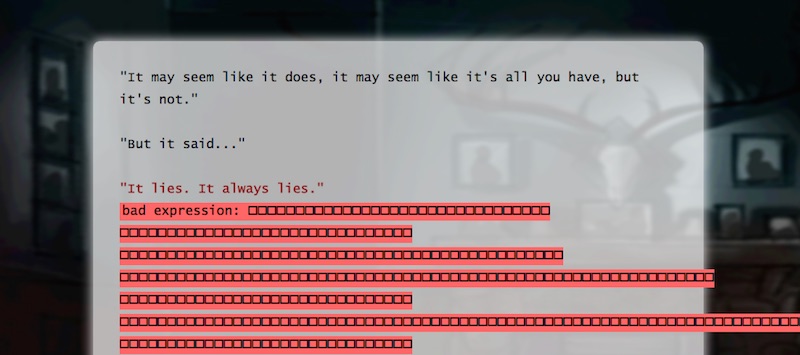
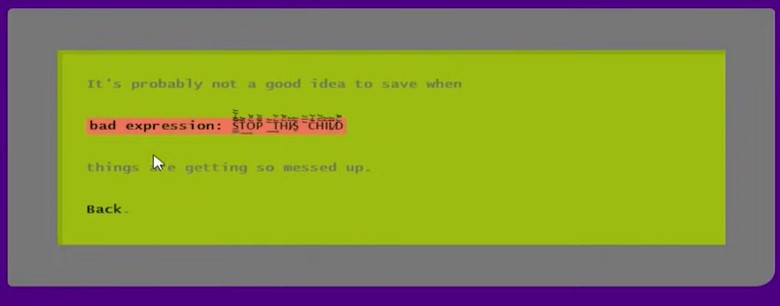
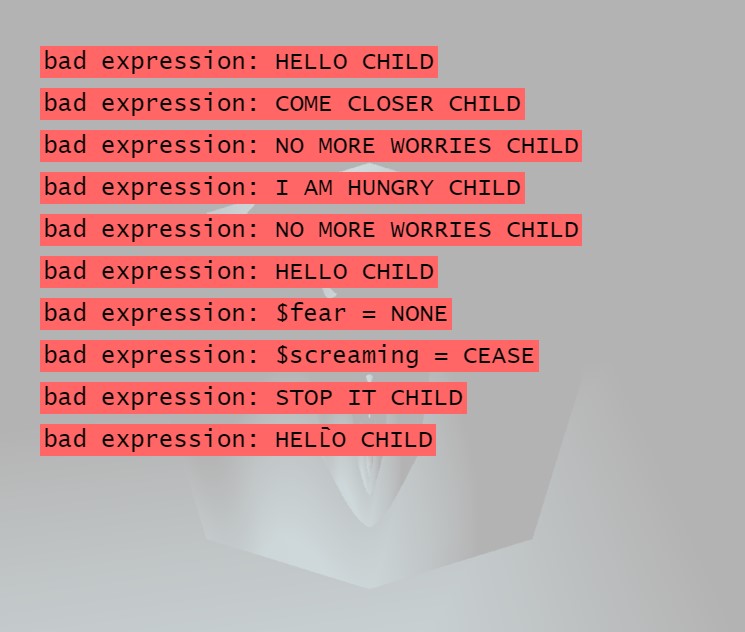
The two games we played last week subverted these experiences somewhat. The Uncle who Works for Nintendo indeed started off creepy in my initial playthrough. When the Uncle appeared for the first time to eat my character, I jumped at the successive knocking sounds, then at the cacophonous noise that accompanied the glitching, “erroneous” Twine commands, which made clear that my character faced certain death. However, as I progressed through different endings of the game, the “haunted interface” took on a contrasting tone—rather than anticipating the Uncle, I found myself eagerly awaiting the malfunctioning interfaces because I knew it meant I would progress in the story. At that moment, the “fear factor” that I would have felt toward the Uncle transformed more into a feeling of curiosity: unlike the anxiety-induced hesitation we experienced bracing ourselves for Lisa’s appearance, an urge to “find” the alternate endings trumped any notion of fear. 

My anticipation was answered by the final “secret” ending of the game, when the Twine layout itself transformed as the Uncle threatened to take away my friend’s life. As the Gameboy/Uncle became deadlier and stranger, as the player I began to not fear a threat on my own avatar’s life, but on my friend’s life. Hence, when I unlocked the final ending, in which I saved my friend from becoming a missing child (as other endings implied), I came to see The Uncle who Works for Nintendo as a game about friendship that contained horror elements. In its use of untrustworthy interfaces, I found a narrative about love between friends—how far is one friend willing to go to brag about how “special” their own video games are, and how far am I willing to go to save an annoying, but beloved, friend? 

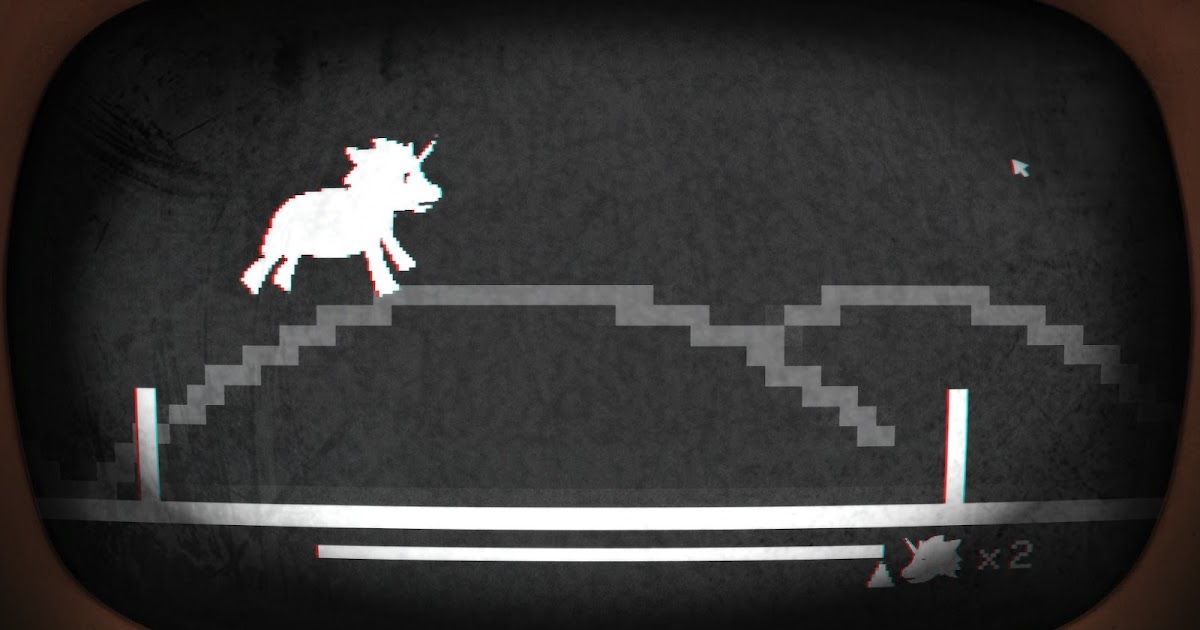
Pony Island’s subversion of the fear factor is more clean-cut. Upon its first clicks, immediately my group sensed that the hacker aesthetic was not curated to necessarily scare us with its devil antagonist, unlike the historical Satanic Panic incidents we talked about in class (backmasking, etc.). Rather, we were laughing at the interface’s whimsical tone, and we thought that the self-awareness that Lucifer and his demon horde possessed actually enhanced an otherwise mundane game. At its core, Pony Island is a platformer game—and a tedious, repetitive, uninspiring one at that. The player controls a pixelated unicorn who can only jump over obstacles in a mostly horizontally-scrolling environment. There are no enemies to take down, no power upgrades to look forward to, and no change in the speed or intensity of the scrolling. 

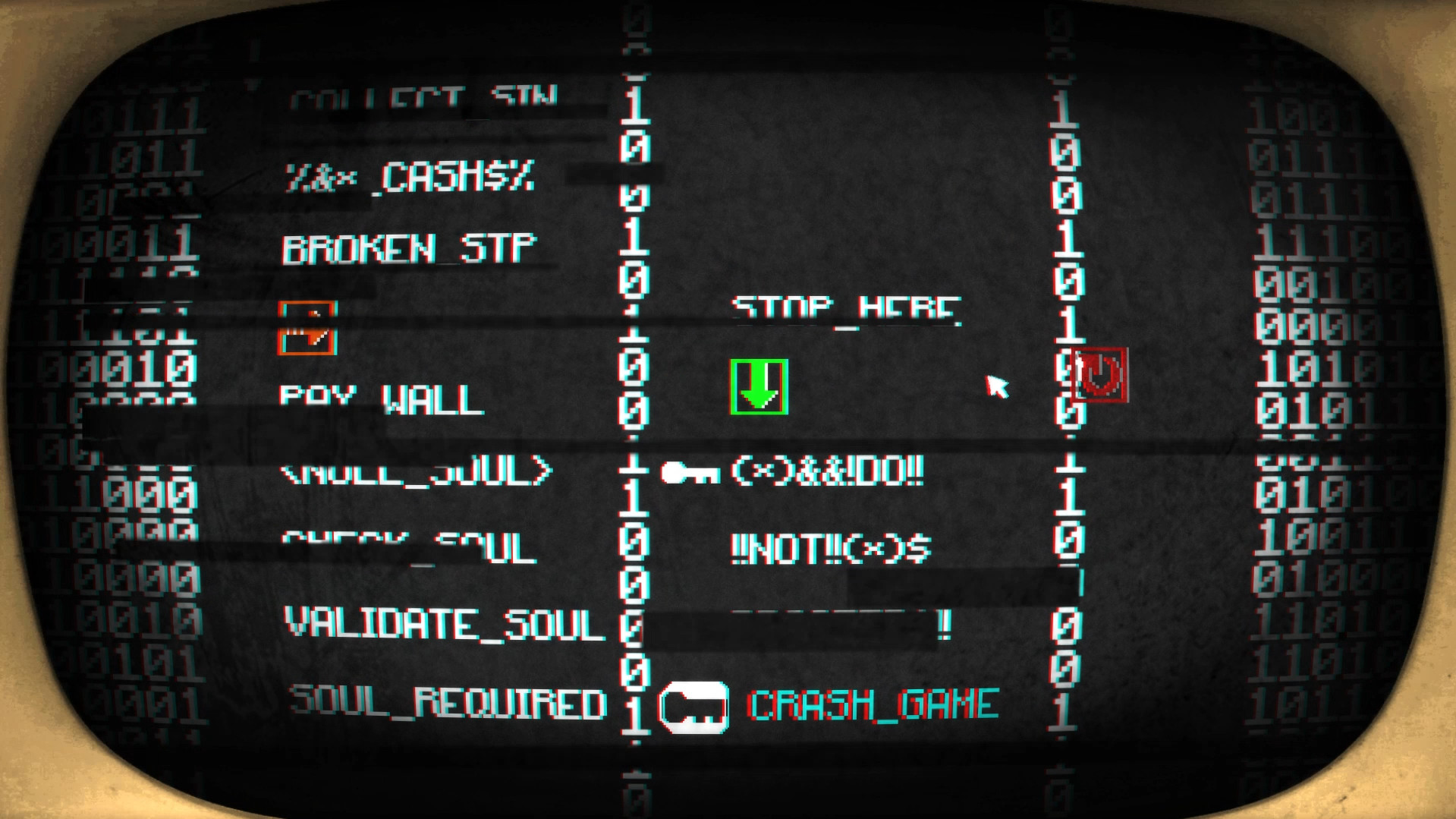
This dramatically changes, though, as Lucifer attempts to make the player’s gameplay unbearably impossible to conquer—the inclusion of enemy targets and bosses, demons who play Tic-Tac-Toe-like puzzle games, and hidden glitches within the virtual desktop that the player can exploit to gain hacks (like the laser). Suddenly, the game ramps up its stakes, but in the process of creating harder game “challenges,” the more Pony Island felt like it was creeping closer to something as enjoyable as the Super Mario Bros franchise. Thanks to my classmates who spoke during my presentation, we concluded that Pony Island was a playful, mischievous parody of both the horror and platformer genres, reminding us that fear may be a sufficient feature of scary video platformers, but not mandatory. Indeed, as gamers, we constantly worry about “failing” the level by falling off a platform or getting overwhelmed by enemy targets. And as horror fans, we also feel scared as we brace ourselves for a horrifying villain to lunge out and kill our beloved characters. Somewhat departing from both, Pony Island’s addition of fun, new mechanics as the Devil tried harder to inhibit us from entertaining ourselves with the game ironically felt less stressful and terrifying, yet still retained a sense of stimulated excitement by introducing something new the moment we sensed tedium in the mechanics. Strangely, in a way, I felt like I was “hacking” the horror genre to disturb its conventions of utilizing “fear.” Playing with and counter-hacking Lucifer’s malicious intentions, then, questions horror game’s conventional reliance on fear, but I do wonder if the future of unreliable interface games will lean toward it again…

Lesson Plans: The Definitions and Expectations We Have of Games

uncle_nintendo_screenshot.jpg

Ian here—

This post serves as a little mini-postmortem on two difficult class sessions in my “Frames, Claims, and Videogames” course. There are multiple overlapping reasons why these class sessions were difficult for me. One is that my lesson had to pivot strangely from seemingly-academic debates on the definition of games to a sudden dive into matters of harassment in game culture. Harassment itself is, needless to say, a difficult thing to discuss in class. It becomes exponentially more difficult when one is teaching  a class with a high percentage of international students, many of whom (thanks to the registration realities of late-scheduled courses) have no particular interest in games, and who simply cannot fathom the cultural forces that align to drive a certain subset of American men to use things like changing conceptions of videogames (videogames!) as an opportunity to harass women online. I mean, how do you explain this, really—to anyone at all, let alone someone completely on the outside of American “gamer” culture?

I won’t go so far as to claim that my approach to this material was entirely successful. (The class did not, for instance, become a platform for thoughtful discussion in the same way my unexpectedly post-Trump-election lesson on the politics of American comedy did.) It was, though, a learning experience for me, so it’s worth sharing some details.

Continue reading →