Lewis Klahr’s Sixty Six

Klahr_sixty_six

Ian here—

The University of Chicago’s Film Studies Center has been having a fantastic year so far when it comes to experimental cinema. Hot on the heels (-ish) of their “Troubling the Image” series, last night they booked Lewis Klahr’s twelve-part, feature-length Sixty Six (2015), for what is I believe its Chicago debut.

Klahr was there in attendance, taking part in a very animated Q&A after the screening. I don’t think I’ve ever attended a Q&A with such an extreme questions-asked-to-time-filmmaker-talked ratio, and while some might have accused Klahr of self-indulgent rambling, I really rather enjoyed his tangents, and found that he had quite a lot of fascinating points to make about his process.

Continue reading →

Inscrutability in Game Design: Perils and Possibilites

rooftop_cop_screenshot_01

Ian here—

Earlier this week, I sat down with some friends to play David OReilly’s Everything (2017). We were all suitably hyped, and ready for an evening of being different things while chuckling over the political indefensibility of object-oriented ontology. (Yes, really. We’re those people.)

But our evening hit a snag. Somewhere along the line, in our first playthrough, beginning as a cougar, we encountered a weird bug. One of the little “gain a new ability” thought bubbles failed to pop up in the environment. No matter how far we traveled, or how many objects’ thoughts we listened to, we simply could not unlock the ability to scale up or down into bigger or smaller entities. We were doomed to be a cougar. (Or, cougars, rather. We were able to expand our ranks, and become about a dozen cougars, rolling across the rocky landscape. But being a dozen rolling cougars is small consolation in a game that promises that you can be, well, everything.) For 75 minutes, we wailed at the screen. “I thought you could be lint particles and galaxies and stuff!”

We tried, to no avail, to look up walkthroughs for Everything. Everywhere we looked, we found glowing reviews of how chill the game was, how it allowed you to sit back and let the experience of being everything wash over you. We couldn’t fathom how we got stuck in a game with no real objectives. To pour salt in the wound, the game seemed to be actively mocking us. “As long as you keep moving, in any direction you choose,” thought a tree, “that will take you where you need to go.” “Over time,” thought a rock, “you might find there’s no right or wrong path to take here.” We were seriously stuck, and the only feedback we were getting were Zen aphorisms that told us to take it easy and not worry so much.

Eventually, we deleted our save file and started over. Thankfully, this solved the problem, and we spent the rest of the evening enraptured. But it did get me thinking about the trickiness presented by purposefully inscrutable game design.

Continue reading →

A Hodology of Videogames: Breath of the Wild

Breath_of_the_Wild_hodology

Ian here—

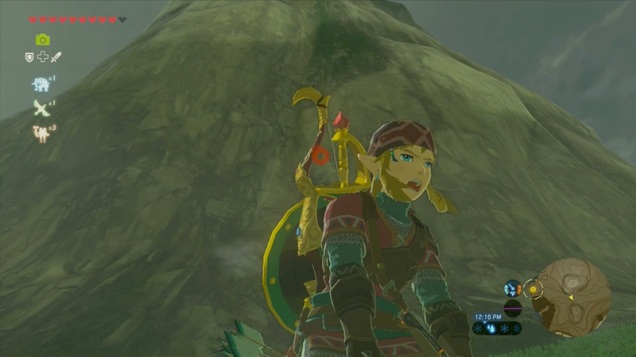
“Hodology” is, according to its Greek roots, the study of paths. These days, its primary associations seem to be with neuroscience. But I want to resurrect an older, more literal use of it: the study of how people move throughout a landscape, the ways in which they chart routes that are particular to the human body, human perception, and human culture.

This sense of the term “hodology” owes much to the psychologist Kurt Lewin. In his 1934 essay “Der Richtungsbegriff in der Psychologie. Der spezielle und allgemeine Hodologische Raum” (a mouthful, I know), Lewin coined the term hodological space to refer to the unique characteristics that landscapes take on when perceived by, and navigated by, human beings.[i] Lewin’s original essay remains untranslated into English after all these decades, but its influence was widespread. Jean-Paul Sartre took up Lewin’s term “hodological space” in Being and Nothingness, and from there it spread to a number of humanistic geographers interested in phenomenology, including Christian Norberg-Schulz and O.F. Bollnow. Norberg-Schulz offers a pithy English-language explanation of Lewin’s contribution:

Rather than straight lines, hodological space contains ‘preferred paths’ which represent a compromise between several domains such as ‘short distance,’ ‘security’, ‘minimal work’, ‘maximum experience’ etc. The demands are determined in relation to the topographical conditions.[ii]

I’ve often thought that preferred paths are an interesting lens through which to look at videogame space, and so I’m inaugurating a series of posts that deal with them. What better to do the honors than one of the most talked-about games of the moment, The Legend of Zelda: Breath of the Wild (Nintendo EDP, 2017)?
Continue reading →

Personal Puzzles

sym_screenshot_header_image.jpg

Ian here—

When you first start playing Eli Piilonen’s The Company of Myself (2DArray, 2009), it feels as if someone found a way to perfectly weld together a diary entry with a puzzle platformer. This was back in the heady days in the wake of Jonathan Blow’s Braid (Number None, 2008), when the public at large was still reeling over the idea that puzzle mechanics could mean something. And, at first glance, The Company of Myself seems to take this trend and go somewhere quite confessional with it. Its central mechanic of cloning yourself to solve puzzles stood as a perfect expression of feelings of self-reliance. And not just any self-reliance, either, but rather that specifically incorrigible mode of self-reliance that emerges when one is a bit too much of an unreconstructed introvert, refusing even the most basic forms of assistance because you desperately wish to not bother, or to be bothered by, anybody.

The “cloning” mechanic has popped up elsewhere in games—for instance The Misadventures of P.B. Winterbottom (The Odd Gentleman, 2010)—but The Company of Myself was more ambitious, wedding the mechanic with a personal story of interior life. Or, at least, it seems to do this, until you realize the whole thing is bullshit. The story takes an eleventh-hour delve into the lurid, revealing itself as an over-the-top fiction, rather than a form of sincere self-expression on the part of its creator.

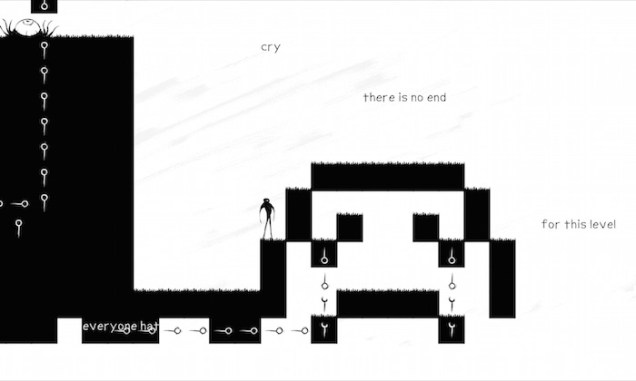
The Company of Myself takes the easy way out, tacking on an over-dramatic denouement that destroys its potential as a diary-game. But … what if it didn’t? Could one actually use puzzles to communicate the intricacies of internal lived experience, in an emotionally sincere way? In this entry, I’ll be looking at two games that try: Liz Ryerson’s intimate and beguiling Problem Attic (2013), and Atrax Media’s more slick and straightforward Sym (2015). Along the way, I’ll also be dipping a bit into Braid, just because it’s hard to talk about contemporary puzzle platformers without doing so.

Continue reading →

I’ve Been Everything, Man

you_are_mountain.jpg

Ian here—

2017 marks the year of animator David OReilly’s return to to the medium of videogames, following up on his strange and serene digital-art-toy-screensaver-thing Mountain (2014). His new game, Everything, released on PS4 on March 21st, and releases on Windows, Mac and Linux this Friday.

The game’s title, Everything, is also the game’s premise: It is a game about everything. Specifically, it is a game in which players can be everything, switching at will from trees to koalas to rocks to quarks and back. I haven’t had a chance to sit down with it yet—I suspect I’ll make time for it once it’s out for PC—but I did want to take the advent of its multi-platform release as an opportunity to muse on this premise’s history in gaming.

Everything may be the first game that explicitly promises to allow us to be everything, but games have previously offered the ability for us to step into the role of quite a lot of things, including a surprising range of inanimate objects. “The child plays at being not only a shopkeeper or teacher,” wrote Walter Benjamin, “but also a windmill and a train.”[i] Games have proved to be a continuing outlet for this childhood animist fantasy—why, in just a couple weeks’ time, we’re going to be able to play as a coffee mug!

Join me, won’t you, in a breezy tour of some of the stranger things games have let us be.

Continue reading →

Five Questions About We Are Chicago

we_are_chicago_screenshot_02

Ian here—

Wow, okay, so, deep breaths. Let me repeat the mantra: “I critique, because I care.”

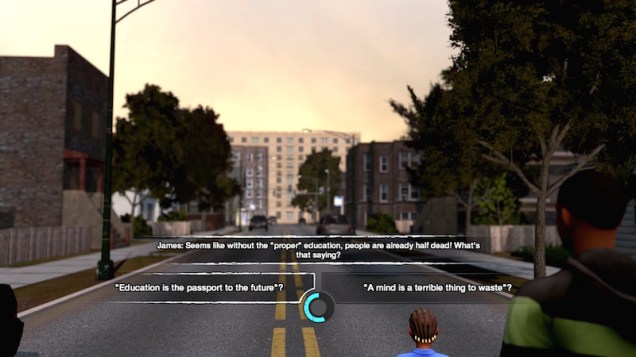
We Are Chicago (Culture Shock Games, 2017) arrives at very particular time for me. I just finished up with a panel on Chicago game cultures for SCMS 2017, and I have also been working through some ideas on the limits of the concept of “empathy” in games.

Given these two facts, there’s no real way I could get away with not playing it, and not taking a couple of moments to try an translate my thoughts on it into some coherent writing. This task, though, is one that needs to be approached with care. In order to be fair, an acknowledgment of the commendable intentions of Culture Shock games must be balanced with a corresponding acknowledgment of the very real shortcomings of their final product. It does nobody any good to mince words, and to pretend that intention can overcome execution.

So, buckle up. I have five questions to ask about We Are Chicago.

Continue reading →

Joana Pimenta’s An Aviation Field

an_aviation_field.jpg

Ian here—

So I’ve done a couple dispatches now from the University of Chicago Film Studies Center’s “Troubling the Image” series. I’ve especially like the recent material that Julia Gibbs and Patrick Friel have pulled together from filmmakers and video artists around the world. As it turns out, 2016 was an especially good year for experimental cinema.

In fact, although there’s a truly embarrassing array of films I need to catch up on from 2016 (been playing too many games …), I think it’s likely the case that my favorite film from 2016 will be an experimental short: Portuguese-American filmmaker Joana Pimenta’s video An Aviation Field.

Continue reading →

Cursory Knoweldge

outlast-screenshot-01

Ian here—

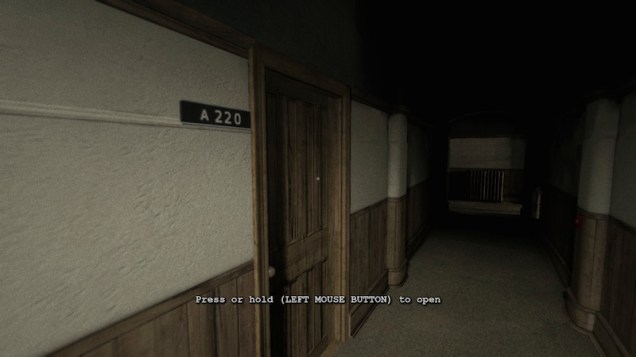
If I had to sum up a significant portion of the writing I do on videogames, I would offer the following formulation as a précis: The establishment of character in videogames isn’t achieved solely through writing. It is also established through user interface design.

Sometimes, something as simple as how a cursor behaves can tell us a lot about a character. Be forewarned—the breezy tour through the issue below contains significant spoilers for Firewatch (Campo Santo, 2016).

Continue reading →

The Process Genre in Videogames: Sunset

sunset_screenshot_header_image
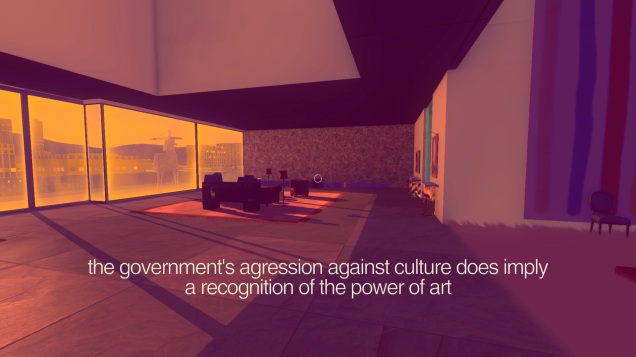
In all seriousness, call your elected representatives and tell them to oppose defunding the NEA and NEH.

Ian here—

This post is part of a series that borrows the term process genre from Salomé Aguilera Skvirsky’s work in cinema studies, and explores its utility for videogame analysis. A quick definition: “process genre” films are films about labor, films that focus on processes of doing and making, that are fascinated with seeing tasks through to their completion. They are deliberately paced, meditative, and often political, in that they cast a penetrating eye on labor conditions. Are there games that the same chords? Posts in the series so far can be seen here.

I reserve the right to sporadically post future entries in this series, but with Sunset (Tale of Tales, 2015), it really does feel as if things have come full circle. As I laid out in the first post in this series, the process genre finds its most archetypal manifestation in Belgian filmmaker Chantal Akerman’s Jeanne Dielman, 23 Commerce Quay, 1080 Brussels (1975), and Skvirsky has been tracking its development in contemporary Latin American cinema. Sunset was created by Belgian artist duo Auriea Harvey and Michaël Samyn, and is about the daily life of a housekeeper in a (fictional) Latin American country. The parallels are easily drawn, but there’s also more going on here than this brief description suggests.

Continue reading →

Arash Nassiri’s Darwin Darwah

darwin_darwah-frame_grab

Ian here—

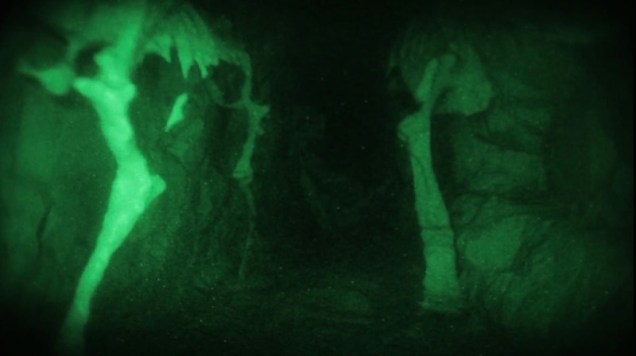
Another quick reflection on something screened for the Film Studies Center’s so-far excellent “Troubling the Image” series. This time, Arash Nassiri’s video Darwin Darwah (2016), screened as part of their “Tales of Sound and Vision” night, last Friday. The screening was full of great stuff—including The Inner World of Aphasia (Edward R. Feil, 1958), which I would recommend to anyone who always wished Sam Fuller and Owen Land had made a film together—but Nassiri’s piece left me with the most coherent thoughts.

Continue reading →